While you wait for Breaking Bad to come back on the air, you try to fill the ‘TV-show void’ with things like Enlightened, The Walking Dead, Californication, or even Dexter (this is one I’m embarrassed to say I did). In modern TV show canon, Breaking Bad is unparalleled in its caliber of acting, characters, and writing. Dare we say it, perhaps the greatest TV show ever (besides The Wire)? The genius behind Breaking Bad is Vince Gilligan. Vince grew up in Richmond, Virginia, bringing his southern charm to the medium. He tells dark tales that remind one of the Coen brothers (Fargo, No Country for Old Men) and Joe Dante (Gremlins, The ‘Burbs), effortlessly mixing together comedy, horror, and thriller while not seeming like a trite mixture of the three.
A perfect example of these sensibilities is when in Episode 2 of Breaking Bad, Jesse and Walt have to dispose of a body. Walt suggests using acid that eats through flesh and bone but not a particular kind of plastic barrel, he sends Jesse to the store, but Jesse gives up after a cursory search for said barrel. While in the midst of a meth bender, Jesse decides to use the upstairs aluminum bathtub instead; and you can probably guess the rest. Before Breaking Bad, Vince Gilligan was responsible for some of the more strange, gory, and borderline-funny episodes of The X-Files, which if you look closely contain some of the kernels that would later be used as the groundwork for Bad.
Vince Gilligan’s X-Files Work
Pusher Season 3’s “Pusher” pitted Mulder and Scully against a ‘mentalist’ who could convince another person to commit suicide simply by whispering in his ear. This killer is tracked down via a classified advertisement he places in a mercenary magazine offering his services. Gilligan showed his affinity here for the expert criminal mastermind ‘hiding in plain sight,’ much like Gus in Breaking Bad. One notable scene involves a SWAT team going after the Pusher, only to find one SWAT member returning covered in gasoline and holding a lighter, mumbling incomprehensibly before setting himself ablaze.
Leonard Betts Even before ‘Bad you can see that Gilligan was interested in pushing the censorship boundaries. Season 4’s ‘Leonard Betts’ that singlehandedly pushed the limits of what you could show on network television. The episode opens up with a pair of paramedics on an ambulance helping a man who’s dying of an unknown illness (Leonard knows simply by touching the man that he has cancer). The ambulance crashes in a high speed collision. At the scene of the accident you see Leonard’s severed head lying on the street. Later you find out that he can ‘grow’ another head (which they show you with no cut away) because you see he is part Lizard, oh and eats cancer to survive.
Bad Blood “Bad Blood” from Season 5 (where Vince Gilligan and the show itself really hit it’s stride), follows the team to a remote trailer park in the south where a vampire is drugging people unconscious and sucking their blood. The episode starts with Mulder using a piece of a broken wooden chair to kill what appears to be a child; Mulder in fervor thinks he just killed a vampire. He pulls out of the kids mouth a pair of fake sharpened vampire teeth and exclaims, ‘Oh, … Shiii’ interrupted by the X-files theme. Again, the hiding in plain sight theme is present with vampires sleeping in coffins inside their RVs. Could this scenario have been inspired by Vince’s affinity for the trailer park meth underworld?
Folie A Deux Using the background of a cold call in center for an employee going postal, but not because he’s depressed, but because his boss is a insect hybrid who creates human zombies out of his own employees by injecting them through the neck with poison fangs. In the episode, Mulder finds the clue ‘hiding in the light’ linking back to an old case about a shape-shifter who appears normal until seen in the dark. We don’t want to be redundant, but Vince seems to really like this theme.
Hungry Alan Moore likes to deconstruct and flip upside-down super-hero tropes with Watchmen, where super heroes are portrayed as flawed destructive human beings. Vince takes the X-files trope of ‘monster of the week’ and shows us the inverse effect. What if you were a cannibal mutant working at a shitty fast food restaurant but were also a nice guy? The entire episode revolves around the monster this time instead of Mulder and Scully.
Other Notable Gilligan Episodes “Field Trip,” Season 6 “Dreamland,” Season 6
Vince Gilligan’s Film Work
Vince Gilligan has also taken a stab at full length movies, not just writing scripts, but also directing his own material. His first film was Wilder Napalm that he wrote, but not directed—a very uneven first theatrical film attempt starring Dennis Quaid about two life-long best friends with supernatural powers to manifest fire. Mixing a love triangle romantic comedy with some really dark and strange subject matter, the movie never quite coheres. Some parts work, like the idea of portraying grown men who have god-like powers in shitty jobs like a circus clown. The full movie is viewable on YouTube.
Home Fries, the first film Gilligan directed. The marketing for this film was completely wrong, giving the impression it was a throw-away romantic comedy when, in fact, it was a movie about a very dysfunctional family whose matriarchal mother, through passive-aggressive behavior and coercion, gets her two grown military sons to commit murder for her. In the opening scene Luke Wilson plays opposite Jake Busey who chases down a man leaving a fast food drive-thru with an attack helicopter. They fire at him when he tries to surrender. They just wanted to ‘scare him’ by using blanks, but the man has a heart attack.
It turns out this man was their stepfather who was caught cheating by their mother.
The mother won’t let it end there, however, and sends her boys out on a scouting mission to find out who the woman is. Luke Wilson’s character quickly discovers it’s a totally innocent fast-food employee played by Drew Barrymore. The rest of the movie involves him trying to misdirect Busey’s character into getting closer to assassinating her. It has its flaws but the plot and acting is top tier and there aren’t very many if any movies like it. Catherine O’Hara as the psychotic mother should have garnered an Oscar nomination. Home Fries may be viewed in it’s entirety on YouTube.
Hancock, a more recent film starring Will Smith as a drunk, abusive, and destructive super hero was by all accounts a misfire. Directed not by Gilligan, but by Peter Berg (who can’t direct his way out of a paper bag) and based on a script by Gilligan. Some decent ideas thrown into the mix but has a third act, which completely ruins the entire film.
So, while you have your Gilligan withdrawals try some of those in the meantime (and go here if you need even more). After all Breaking Bad’s 5th will be its final season. In many interviews, Gilligan has said that his goal from the very beginning was to turn ‘Mr Chips into Scarface,’ in reference to Walt. If you have watched Breaking Bad up until its most recent conclusion, and you are familiar with Scarface, short of trying his own product and shooting a family member dead, Walt has pretty much surpassed Scarface. I, for one, am excited to see where this man’s mind takes us next; maybe somebody will see his value as a filmmaker, similar to how studios plucked J.J. Abrams from TV. Let’s hope, for his next project, he’s not as prescient as he was in The Lone Gunman pilot.
MEDIA ROOTS — Has the U.S. two-party dictatorship completely saturated Election 2012 media
coverage? Can you recall when you last heard news coverage of any
alternative party candidates?
At least one third-party candidate
is resisting this year’s media blockade against alternative Presidential
candidates who are not partisans of the Wall Street Democrats and
Republicans. (No, it’s not Ralph Nader, who has done more than his fair
share of working for electoral justice. And, no, it’s not the Green Party, which sold out to the Democrat Party by 2004.)
Considered one of the greenest U.S. mayors, recovering
Democrat Rocky Anderson, now with the Justice Party, recently stopped by KPFA (Berkeley,
CA) to discuss with Project Censored his 2012 campaign for U.S. President, the
collusion between Democrats and Republicans to further parallel plutocratic
goals, his history of resistance to U.S. imperialism, and more.
“[The U.S.] Constitution has been eviscerated while Democrats have stood by
with nary a whimper. It is a gutless, unprincipled party, bought and paid for
by the same interests that buy and pay for the Republican Party.” —Rocky
Anderson
Messina
***
PROJECT CENSORED — “This morning, the theme is Criminalizing Dissent: Updates on the Animal
Enterprise Terrorism Act.
“Before we get to our
first guest today, we have a surprise and drop-in guest. And we are very pleased to introduce to you;
we have live in our studio Rocky Anderson, the former mayor of Salt Lake City,
Utah, who courageously stood up in the Bush years from Utah, one of the reddest
states in the Union to call for the impeachment of then-President George W.
Bush. Rocky Anderson is in the [S.F.]
Bay Area all weekend doing several events.
And he is running on the Justice Party for President of the United
States. Rocky Anderson, thanks for
joining us.”
Rocky Anderson (c. 10:15):
“Thank you, Mickey. And [it’s]
great to see you and Andy here today.”
Mickey Huff (c. 10:18): “So, we just have a few moments here in the
beginning. Can you tell us a little bit? Remind people about what you were doing in
the impeachment phases when you were pushing for this against George W. Bush
and then segue a little bit into what you’re doing now.”
Rocky Anderson (c. 10:31):
“Well, I had huge concerns, of course, even before the invasion of Iraq,
given the run-up to the invasion and occupation. I never call it a war because it really
wasn’t a war. It was completely illegal,
[an] aggressive war, if you can even
use that term war. We knew from the U.N.
inspectors that the representations of President [G.W.] Bush were a complete
lie. He wasn’t disclosing to us the huge
disagreement within the intelligence community with what he was telling us,
with what he was telling Congress. And,
so, I was urging everyone that had any leadership position in this country to
push back against that run-up to ‘war.’ And then when it became even clearer, not
only the lies but the human rights violations, the massive death and
destruction in Iraq and the tremendous hatred and resentment throughout the
Muslim world, I felt like it was all of
our responsibilities.
“And the really
frightening thing is those who would say, as mayors did from around the country,
they didn’t want toget involved, itwasn’t their job, it was too controversial. What I saw was this narrowing of people’s
lives and leadership to exactly what they saw their role was. And, all of a sudden, there were no leaders
standing up. It was a dismal eight
years; and I was wondering, okay, if it’s not gonna be the leaders, if it’s not
gonna be people in elected office, at least the people need to rise up. We need to be closing down cities. We need to be out in the streets. We need to be doing everything we can to
stand up against the gross abuses and the whole notion of war of aggression and
empire building. And, yet, this nation,
in large part, remained so quiet and complacent—and I must say even the artist
community. We weren’t hearing the
mainstream music and the lyrics that drove so much of what we did in the ‘60s
and ‘70s, and even during the ‘80s with the disaster in Central America and
United States policy there.
“So, I think it’s
really heartening now to see the Occupy Movement, to see people becoming more
aware, taking action, understanding that our destiny really is in our
hands. And, for more of that, I really
urge people to go to our website, VoteRocky.org, and see why it is that the Justice Party was
formed. This isn’t just about moving
people around within this perverse game that people play utilising these roles
that the Democrat and Republican parties have made up and from which they’re
thriving. We need to get together,
organise in every way, do it in a sustained way, not just during an election,
but all of us hanging in there to push for major changes in what has become a
plutocracy, government by the wealthy, when all of our interests are getting absolutely
shafted.”
Andy Roth (c. 13:47): “This is Andy Roth from Project Censored; and
we’re here with Rocky Anderson, Presidential Candidate for the Justice
Party. Rocky, as mayor of Salt Lake City
from 2000 to 2008, you’re record on the environment was especially strong. You certainly weren’t quiet or
complacent. You stood up for the issues.
“Our theme later in
the hour, today, is the Animal Enterprise Terrorism Act. I just wanted to ask you, very quickly, in
the moment or two we have left now. Do
you think it’s right to use terms like terrorist
and terrorism to describe members and
actions of the environmental movement in the United States?”
Rocky Anderson (c. 14:24):
“Absolutely not. It is such a
perversion of our language. And these
people are brilliant at the way they frame things. It’s like calling what we’re doing around the
world a‘war on terrorism’ when, in fact, what we’re doing is terrorising
the lives of millions of people and really creating so many obstacles to real
security, probably for generations.
“But, you know, you
hear war on terror, war on drugs. George Lakoff points out in his excellent book Don’t Think of an Elephant; he talks
about how the Right is so successful in framing issues by the use of these
kinds of terms. Think about it. And one of the examples he uses is tax relief. Well, right there it connotes that taxes are
a bad thing and something we should be relieved from. And
what happens on the Democrat side?
They end up using the same terms.
They’ll use the same vocabulary.
And it’s not just a matter of timidity.
It’s a matter of collusion
between the two parties.”
Mickey Huff (c. 15:31): “Well, that’s the voice of Rocky Anderson,
running for [U.S.] President on the Justice Party. Rocky, could you give the website one more
time?”
Rocky Anderson (c. 15:37):
“Yes, it’s VoteRocky.org.”
Mickey Huff (c. 15:40): “Okay, so that’s the voice of Rocky
Anderson. He’ll be at 10am at Provo
Park [in Berkeley, CA] rallying with fired steelworkers. This evening, I believe, you’ll be at the
Occupy the Truth: Whistleblowers Conference at UC Berkeley. I’ll make announcements for that. I don’t believe you’re on the programme, but
I believe you’ll be there, if people want to meet and talk with you.”
Rocky Anderson (c. 15:54):
“No. But there will be great friends
of mine on the panel.”
Rocky Anderson (c. 16:02):
“And these are messages that need to get out to all the American people because
what we’re seeing under this [Obama] Administration is a more aggressive
campaign against those who are responsible for getting the truth out to the
American people and people around the world and, yet, all of the illegal
conduct, including cold-blooded murder that’s being disclosed by these people,
nobody’s doing anything about that. The
real perpetrators, again, under our two-tiered system of injustice in this country are not being held accountable.”
Mickey Huff (c. 16:35): “That’s Rocky Anderson. Thanks so much for dropping in.”
Rocky Anderson (c. 16:37):
“It’s great to see you. Thank you
so much.”
Mickey Huff (c. 16:38): “Again, this is the Project Censored show,
free speech radio, KPFA. We’ll be right
back with the Animal Enterprise Terrorism Act, Will Potter, and Odette Wilkens.
Please stay with us.”
MEDIA ROOTS — Project Censored has become a centrepiece at KPFA, free speech radio, the flagship motherstation of the national Pacifica Radio network. During this season’s fund drive, on Friday, February 17, 2012, Project Censored broadcast a two-point-five-hour special programme entitled ‘Brought to Justice? The Indefinite Detention and Targeted Killing of the Rule of Law’ with music by David Rovics. Abby Martin and Mickey Huff speak with Center for Constitutional Rights attorney, Pardiss Kabriaei. Also, author and investigative journalist Andy Worthington and organiser Stephanie Tang of World Can’t Wait join the dialogue, raise public class-consciousness, and encourage support for KPFA free speech radio.
MR
***
PROJECT CENSORED — “Welcome to a KPFA Fund Drive Special with
Project Censored. I’m Mickey Huff, in
studio with Dr. Peter Phillips and, Associate Director of Project Censored,
Andy Roth. We’ll also be joined for the
next two and a half hours by Abby Martin of Media Roots.
“Today’s special programme is: ‘Brought to Justice? The Indefinite Detention
and Targeted Killing of the Rule of Law.’
Again, welcome. This is a special
broadcast by Project Censored on Pacifica Radio.
Joining us, each half-hour segment, we’ll have a special guest.
“We’ll begin with investigative journalist Andy
Worthington, author of The Guantánamo
Files and Co-Director of the film, ‘Outside the Law: Stories from Guantánamo.’
“At 1:30pm, we’ll be joined by Pardiss Kabriaei, an attorney for the Center for Constitutional Rights, who has
represented a number of the men detained at Guantánamo and is also counsel in al-Awlaki vs. Obama. That will be a pre-recorded interview that we
did with Pardes last week. [See transcript below.]
“We will also have music and commentary from one of the
most notable and political folk musicians of our time, that would be the one
and only David Rovics. You just heard David Rovics’ music; that was
[his song] “Guantánamo Bay” [you heard opening this broadcast]. We’ll be playing David Rovics’ music today; and
it will be available for a premium. We’ll
also be interviewing him later on this afternoon.
“We’ll also hear from Dr.
Almerindo Ojeda, professor of linguistics and Director of the Guantánamo Testimonials Project[of
the Center for the Study of Human Rights in the Americas] at the University of
California, Davis.
“And we will round out today’s special with Stephanie
Tang, of World Can’t
Wait, talking about indefinite detention and targeted killings. And when we wrap up today, we’re going to be
focusing on who is working on trying to stop these types of things. What can be done about it?
“So, today’s programme
is not simply to bemoan the evisceration of the rule of law. It’s also to be looking at positive ways that
we can be confronting these types of measures.”
PARDISS KABRIAEI, ATTORNEY, CENTER FOR CONSTITUTIONAL RIGHTS
Mickey Huff
(c. 32:46): “That’s the music of David Rovics. You can get his new CD, ‘Red Sessions’ with a
$50 pledge [to KPFA]. You can get [the]
Andy Worthington [film] ‘Outside the Law’ on Guantánamo; you just heard from
Andy Worthington in the first segment of today’s special fundraiser here at
KPFA. We’re talking about, essentially,
the evisceration of the rule of law and the rise of targeted killings stemming
from the rise of torture. You can call
and pledge your support to free speech radio anytime this afternoon; but we
have a lot of content.
“This show originally sprang from a programme we did
about a month ago with many of the guests you’re hearing today. But there was so much to cover that we
expanded this into a two and a half hour fundraising special because you’re not
gonna hear this information on any other media outlet. You’re gonna hear it here on KPFA.
“Again, I’m Mickey Huff, joined by Peter Phillips of
Project Censored, Andy Roth and Abby Martin, again, of Media Roots. Please call in 510.848-5732,
800.439-5732. You can pledge online at
KPFA.org. And here’s Abby Martin to tell
you about the interview we did with Pardiss Kabriaei, of the Center for
Constitutional Rights.”
Abby Martin
(c. 33:55): “This is Abby Martin with Project
Censored. Pardiss Kabriaei is an attorney
with the Center for Constitutional Rights, specialising in the Center’s Global
Justice Initiative. She’s represented
men from Yemen, Syria, Algeria, and Afghanistan who have been detained at Guantánamo
Bay working on theirhabeas corpuschallenges. Her work
includes seeking accountability for torture and arbitrary detention at Guantánamo,
including representing the families of two men who died there in June
2006. We spoke with her last week about
the targeted killings in light of Obama’s expansive global drone killing
apparatus. And here’s the interview with
Pardiss Kabriaei.”
Mickey Huff
(c. 34:30): “Welcome to the show Pardiss Kabriaei,
attorney with the Center for Constitutional Rights. We’re very happy that you could join us again
today on our two and a half hour special covering issues from torture to the
evisceration of the rule of law in the United States. Could you please remind our audience a little
bit about our discussion we had a few weeks ago, stemming from the Guantánamo
programme we did?”
Pardiss Kabriaei
(c. 35:00): “Sure.
And thank you for having me back. We were talking before, around the time right before
the tenth, unfortunate, anniversary of the opening of Guantánamo, the day in January
of 2002 when the first men were flown to the prison camp, and the fact that 171
people still remain, despite President Obama’s promises to close the prison. It is alive and well and will remain open for
the foreseeable future. So, we were
discussing the issues around Guantánamo and the unjust detentions of the people
still there and some of the challenges to closure that the [Obama]
Administration has put out that we actually feel are not difficult. That’s the problem of closure; it’s actually
a simple one, but it’s become a political issue. That’s why it remains open.”
“I’ve worked on Guantánamo at CCR since I’ve been here,
since 2007, and have represented a number of men there and have gone to the
base and met with them. Some of them,
thankfully, have been released. And, as
an extension of that work, challenging unjust detention policy by the United
States, in this context of terrorism, have, from that work, started looking at
other manifestations of abusive Executive [or Presidential] policy in this
context. And, specifically, have been
looking at the policy of targeted killing by the [Obama] Administration.”
Mickey Huff
(c. 36:26): “And the website, by the way, for listeners, is
CCRjustice.org. And if you go to that
site, the Center for Constitutional Rights, there is a fact sheet, Government Kill Lists Target
U.S. Citizens Far From Any Armed Conflict.
And we actually covered this at Project Censored in the 2012 book when
we talked about the Executive Branch claiming the right to assassinate U.S.
citizens abroad and the complete evisceration of the rule of law, again, and
due process.
“Could you talk a little bit about what are the government kill lists? And why would you say this is illegal. I mean, it seems obvious; but you could
explain that for us.”
Pardiss Kabriaei
(c. 37:07): “Sure.
The basic policy we’re talking about in our concerns within it are, you
know, if we were all worried about a policy of global detention, indefinitely,
without review, of hundreds of people held at Guantánamo and elsewhere that the
[U.S.] government said were all the worst
of the worst and that we know now, after judicial review, we’re not, in
fact, terrorists or whose detentions were not founded, we’re talking now about
a, effectively, a global assassination policy
of killing people who are only suspected of being involved in terrorism. Our concern is that many of them were
actually not involved in any
fighting, even if it were lawful to kill individuals wherever they may be found
who are engaged in terrorism. Our
concern, in part, is that many of them are actually not even involved in
terrorism.
“We have questioned the standards the government is using
to determine who is and who is not targetable.
But the policy we are now talking about, and this is a policy that
existed under Bush, but that has very much escalated and expanded under
President Obama. And it is, effectively,
killing individuals wherever they may be found who are unilaterally deemed to
be dangerous to the United States, unilaterally deemed without any outside
meaningful check on what criteria are being used, what evidence supports those
targeting decisions. And these are
targeting decisions and targeting practices that are happening outside of
recognised war zones. So, we’re not
talking about the use of drones or airstrikes against individuals fighting in
Afghanistan or, previously, in Iraq. We’re
talking about people who are being killed far from those battlefields in places
like Yemen; Somalia, there was a reported strike in the Philippines,
reportedly, that was assisted or led by the United States. There are many concerns we have about the
policy.
“Our particular focus, and the focus of the al-Awlaki
case, was targeted killings that are occurring outside of ‘war’ zones and questions and concerns we have about what criteria
are being used, where these targeted killings are being carried out. What was not at issue in the al-Awlaki case,
but we’re very much worried about is the issue of civilian casualties resulting
from these strikes. So, there are many
issues we could talk about.”
Abby Martin (c. 39:34): “Pardiss, this is Abby Martin. You were talking about the unfounded claims
behind the global assassination campaign and the indefinite detention; a recent
poll that just came out in a Washington Post/ABC News talks about how 70% of
respondents approve of Obama’s decision to keep Gitmo open and 83% approve of
the U.S. drone policy that he’s expanded.
I wonder if you could speak to those [statistics] and the rebranding effort
and the danger of the conditioning.”
Pardiss Kabriaei
(c. 40:00): “M-hm.
I guess I have to believe that those poll numbers are what they are because
people still don’t know. I have to hope
that that’s the reason why we’re not authorising or sanctioning the [U.S.]
government to go after people who are innocent and should not be killed. Despite what I think is fair, and in fact
there is plenty of evidence to show, at least in Guantánamo, that of the almost
800 people that were held there most of them have been released by the Bush
Administration or the Obama Administration, the government themselves. And others, one there was an opportunity to
have their detentions reviewed by courts, courts have found most of their
cases, the majority of those cases found that the detentions were
unjustified. But I have to hope that
people still believe, as the government has, as the Obama Administration has, either
been perpetuating this myth of ‘dangerous’
people still being held at Guantánamo or just failing to educate the public
about the truth and reality of who’s still there. But that they believe the 171 people still
there must actually have been involved in fighting and need to be there. And that Guantánamo is necessary for the
national security of the United States.
“But, again, in fact, if you break down the number of the
171 people only about 30 of them were, according to the [U.S.] government
itself, only about 30 of them, according to the government itself will ever
actually be charged with anything. 89 of
them have been cleared by the Administration, by every government agency with a
stake in the matter has been cleared.
So, I have to believe that people don’t know that and we just have to
continue educating.”
Mickey Huff
(c. 4134): “This is a Kafkaesque black hole to be
sure. And you’re really on to
something. There’s been a relentless and
endless propaganda campaign under the Orwellian guise of the nebulous war on ‘terror.’
And people really, sort of, throw their own projected beliefs and ideas,
sort of a motivated reasoning: ‘There must be a reason that they’re there.’ And, again, that’s among the people that are
aware of it, as you pointed out. There’s
many people that really don’t know
what goes on and what’s going on here.
“And, going back to the Bush years, George W. Bush, in a
rare joint press conference with then-Prime Minister, at the time, Tony Blair
of Great Britain, when asked by a seemingly intrepid reporter about how they
knew these were the most dangerous people, right? Because as you said, there’s this endless
rhetoric about how: ‘These are the most dangerous people. These people are gonna get us. We
have to lock ‘em up. And they’re so especially dangerous that they absolutely
need to be put in Guantánamo. Never mind about what we did after World War II in
Nuremberg and put the Nazis on trial. These people are in a special class all
of their own, outside of any real judicial system or oversight.’
“And Bush was asked, well, how do you know they’re
dangerous? And this is after he just got
done saying that the most dangerous people in the world are in Guantánamo. And the answer to that question was: ‘Well because they are at Guantánamo Bay.’ It’s that circular kind of reasoning that
comes from the top down and reverberates throughout our culture.
“Just to be more specific with our listeners—again, we’re
talking to Pardiss Kabriaei, of the Center for Constitutional Rights,
CCRjustice.org—what laws are the [U.S.] government actually violating in these
procedures, in these policies?”
Pardiss Kabriaei
(c. 43:17): “For talking about the issue of targeting,
our legal position is that when you are in recognised war zones, we are talking about Afghanistan. A situation of war triggers a different set
of rules, it triggers the laws of war within that context.
“Factually, and within that legal framework, there is
greater leeway in terms of detaining people and even killing them. It doesn’t mean that every detention is
lawful, every killing is lawful, but the rules are different. And that’s because in situations of immediate
fighting the exigencies of wartime ordinary Constitutional provisions
just don’t apply the same way. They can’t
apply the same way.
“But what we’re talking about is, for example in the
al-Awlaki case, a targeting that occurred in Yemen and, despite conflict in
Yemen and a certain level of violence, certainly, there’s a high bar to call
something a war and an armed conflict. And the United States is not ‘at war’ in
Yemen. It is not ‘at war’ with Yemen or within it.
There may be a presence of Al Qaeda, but, again, there are legally
defined criteria that need to be satisfied to call something an armed conflict to trigger those
different set of rules.
“So our position in the case, and the position that we
continue to take is that outside of immediate battlefields and zones of active
hostilities, the law that should apply is the Constitution and international
human rights law. And under that
framework you can only kill someone, and what we were talking about in the
al-Awlaki case is a U.S. citizen with
respect to whom, clearly, the Constitution applies. And on that point the majority of the people
who are bearing the brunt of these policies are not actually U.S. citizens. They are non-citizens, foreign citizens.
“So, the government could make arguments; and they would
try to in court about the fact that the Constitution does not apply, maybe, to non-citizens. But it is, at least, clear that vis a vis
U.S. targeting and killing by the U.S. government of its own citizens, that due
process and the Constitution applies. According
to that standard, the government can only kill someone if they’ve been afforded
process, there’s been a conviction for a capital crime, and there’s been a
sentence of death. Outside of that
process, you can only kill in self-defence.
And that means that there has to be an imminent threat, an immediate
threat, of deadly harm. And lethal force
has to be a last resort.
“And what happened in the al-Awlaki case was that this
person, despite what the government was saying about him, was on a kill list of some kind, maintained by
the CIA and secret military forces. But,
reportedly, these lists maintain these people’s names for months at a time;
they are reviewed periodically every few months, reportedly. And this is what ‘credible’ news sources, like the New York Times, the L.A. Times,
the Washington Post, have reported. Just
that very fact of keeping people on lists that are reviewed months at a time
undermines this idea of immediacy.
“And what we know in the actual killing that took place
against al-Awlaki in September of last year, September 30, 2011, was when the
U.S. actually carried out the strike, is that they had been surveilling him for
weeks, potentially before he was actually killed. That also undermines this idea of an imminent, immediate, threat. And that
the killing was, based on facts that have been reported, in cooperation and in
coordination with Yemeni officials, which undermines the idea that there couldn’t
have been, potentially, other measures taken, non-lethal measures taken.
“I think what’s important for people to remember is even
if you think, and if you believe the government’s story about who this person
was and that he presented a threat, killing, again, really has to be a last
resort. And when we don’t accept that,
and that’s another standard we’re putting forward. It’s a Constitutional standard. When we don’t accept that it leads to a very
slippery, very scary slope of what is possible.
And that’s our concern looking forward; and when there are reports of
the CIA’s drone programme expanding, what they are doing in Pakistan expanding
to places like Yemen, and hearing reports of potential U.S. involvement in
strikes in the Philippines and definitely in Somalia and who know where else,
there’s a real concern about the escalation and the expansion of war and
violence led by the United States in the name of national security.”
Abby Martin
(c. 47:51): “Pardiss, exactly. And I wanted to touch upon Pakistan. I just read, you know, it seems like every
time I read about the drone strikes under Obama it’s just getting more
expansive more far-reaching. I was
wondering if you could speak upon these signature
strikes and the indiscriminate group targeted assassinations that are
happening in Pakistan.”
Pardiss Kabriaei
(c. 48:14): “Yeah, the signature strikes, I think part of the problem with this programme
is the secrecy and the lack of transparency.
And just to be clear about some factual things, the strikes, the drone
strikes and strikes carried out in other ways that we’re talking about outside
of situations of wars—so, outside of Afghanistan, for example—are mostly
carried out by the CIA and the Joint
Special Operations Command, which is a secret unit of the military.
“In Afghanistan, because our military forces carry out
these strikes, the rules by which we operate are known. There can be, and there often is after the
fact of a killing, an investigation and some kind of accounting and, in some
cases, compensation, even.
“What we are talking about in Pakistan and Yemen and
Somalia and wherever else is an entirely, well, bizarre situation where we know
the drone strikes are occurring—we see the deaths; we see drone pieces—we
certainly have independent researchers documenting, or trying their best to
document what’s happening, we still have an [Obama] Administration that
officially refuses to acknowledge that this programme even exists, let alone
disclose any meaningful information about the criteria they use, or the rules
that govern the procedures, or where it operates, who’s being killed, how many
are being killed.
“So, just going back to the signature strikes, there’s very little known exactly about the
criteria that are used or how the strikes are governed and what procedures are
used. My understanding of the signature strikes is that they are
strikes carried out based on observing patterns of behaviour and patterns of
life. And they are not necessarily
people who are on kill lists. They are
just individuals who, based on unknown criteria, are deemed to be engaging in
threatening behaviour or conduct and that are killed.”
Mickey Huff (c.
50:08): “Well, you mentioned, Pardiss Kabriaei, you
mentioned that ‘scary slippery slope.’
And here we are sliding further into it.
And this was reported in Wired magazine.
There was a piece in the Wall Street Journal, even. Again, these are pretty mainstream, even
corporate, media sources here. One
article, ‘CIA Drones Kill Large Groups Without Knowing Who They Are.’ This is a quote
from the Wall Street Journal: ‘Men
believed to be militants associated with terrorist groups, but whose identities
aren’t always known.’
“So, the CIA is killing people without even knowing who
they are on suspicion, suspicion of association ‘with terrorist groups.’ I
mean how many degrees away from certainty are we here?”
Pardiss Kabriaei
(c. 51:00): “Right.
Many degrees. And just in terms
of context, too, on these signature
strikes, when you consider just family relationships and the context in
Pakistan where sometimes you’ve got 30, 40 people in one home, family members
living together, or entire communities living under one roof, if you’ve got one
individual the government has been tracking and deems to be a threat, when they
are in that home and a missile strikes everyone dies. And that is how we’ve got, then, the numbers
that have been reported. And according
to, sort of, moderate estimates, for example the New America Foundation that
is, I think, even by the [Obama] Administration, perceived to be a
non-partisan, non-biased, group that has been documenting these strikes there
have been hundreds of civilian deaths in Pakistan alone just over a period of
years that were strikes that have actually been documented. If you talk to the government, though,
amazingly, a U.S. official said there were zero civilian casualties in Pakistan
for the year of 2011.
“I mean there is something wrong between how the United
States is defining civilian or militant and how the rest of the world and
people who actually are on the ground documenting this stuff, what they are
seeing.”
Mickey Huff
(c. 52:19): “It’s simply propaganda and deception.”
Pardiss Kabriaei
(c. 52:22): “I agree with you. But I think wherever you stand I think there
is growing consensus, at least on the need for some transparency. And the [U.S.] government says, well, we’ve
given transparency. Well, how can there
be transparency when you still have an [Obama] Administration that still doesn’t
officially acknowledge that this programme exists?”
Abby Martin
(c. 52:37): “Right.
It seems like whatever the [U.S.] government says, this is an insurgent—that must be true; anyone we just killed
with a drone must be an insurgent without any sort of due process or evidence
against him. Can you expand upon now the
Congressional approval of the domestic use of drones in the United States and the
surveillance that we are going to be seeing in a couple of years? What do you think about that?”
Pardiss Kabriaei
(c. 53:03): “Well, I know that the drone technology
is another piece of this. The legal
issues with drones to the extent that there may not be legal issues—the [U.S.] government’s
talking about how ‘they are more precise’
and ‘actually as a method of killing they
are not problematic, legally’—there are certainly ethical issues, at least.
“These Drone operators sit in rooms thousands of miles
away, for example in Nevada, watching targets and people on video screens and
with the press of a button kill, make decisions to kill people. And then drive home to their families, pick
up their kids from soccer practice and have dinner. There is something very scary and concerning
about how the use of drones is further dehumanising the act of killing and
war. I think that’s something people should
be thinking about, separate from the legal issues, just the ethical and moral issues
with that and how much easier it makes killing
and warfare.”
Abby Martin (c.
53:58): “Yeah.
Just the chilling effect, just curbing political activism, knowing that
there are these drones surveilling the country.”
Pardiss Kabriaei
(c. 54:06): “Absolutely.”
Abby Martin (c.
53:58): “And there’s certainly a privacy issue.”
Pardiss Kabriaei
(c. 54:08): “Yeah.
And then there are billions of dollars being poured into research and
drone technology and advancements for drones.
And the way we’re seeing them being used in the United States so far is,
as far as what’s been reported, they’ve been used and are being used for
surveillance along borders. There’s talk
of them being used by law enforcement, by police departments for surveillance
purposes. I mean the capacity for drones
is really limitless. And we know that
there’s a lot of money that’s being poured into research and technology to
further advance the technologies. So,
what’s possible and what may come in the United States is unknown. So far they are being used for surveillance
by law enforcement, for border patrol.
I know that there are some groups in the United States
that have filed Freedom of Information Act requests to get more information on
exactly how these things are being used and the basis for authorising them in
the United States. But, certainly, they
are present here. They are in the skies
in the United States. And it’s really a
question and a concern about what may come here to the extent that people are
not concerned about what the United States is doing abroad.”
Mickey Huff
(c. 55:20): “That’s right. Pardiss Kabriaei, you were also talking about
priorities. And when we hear these cries
of austerity coming from on high, they ring pretty hollow when one sees so much
is being sunk into these incredibly dubious and problematic policies of
targeted killing, of surveillance, not just abroad, but here at home [in the
U.S.], potentially.
“We have one minute left, Pardiss. Could you tell us, what are you trying to
accomplish, then, through the courts?
Why is this important? Why should
people get active? And where can they
get more information?”
Pardiss Kabriaei
(c. 54:06): “M-hm.
What we were trying to do with the courts in our last case was just to
impose a process of review over these decisions and to force some level of
transparency. And we will continue those
efforts in the courts and take them as far as we can.
“What I would say is, with Guantánamo and the poll
numbers, what they are in the United States, there are still a lot of people, I
think, who are outraged by Guantánamo because it was so known. And I think we still talk very much about the
detentions there. I think what people
need to do is educate themselves about this killing policy as well. And we need the same level of outcry and the
same demand for transparency and information.
People should know, at a minimum, what the United States government is
doing in their name and with their money.
“I think that, for more information, please go to our
website CCRjustice.org. We have
information about the prior case we fought on behalf of al-Awlaki. And we’ll be putting out more
information. And I think, at this point,
just the basic minimum is educate yourself about what the United States is
doing in your name.”
Mickey Huff
(c. 56:56): “That’s the voice of Pardiss Kabriaei from
the Center for Constitutional Rights.
And that’s certainly what we’re trying to do here at [KPFA] free speech
radio. We are trying to get the word out
and get people to really understand what’s going on and understand what’s at
stake.
Pardiss, thanks so much for your time and for taking time
out of your very busy schedule and your important work. Thank you, again.”
Abby Martin
(c. 57:15): “Thanks, Pardiss.”
Pardiss Kabriaei
(c. 57:16): “Thank you so much. Bye-bye.”
Transcript by Felipe Messina
Photo by Flickr user Art Makes Me Smile
***
Fund Drive Special – Guantanamo and the Gulag with Project Censored – February 17, 2012 at 1:00pm
MEDIA ROOTS — On January 28th, 2012, Occupy Oakland moved to take a vacant building to
use as a social centre and a new place to continue organising. This is
the story of what really happened that day as told by the participants. The video features raw footage of police brutality and interviews with Boots Riley, David
Graeber, Maria Lewis, along with several other witnesses to the events.
MEDIA ROOTS — The 2012 GOP primary debates have given
people many things to make fun of—and worry about. Bill Maher, along with other comics, has poked
fun at GOP candidates’ risky remarks regarding foreign policy. Abby Martin, of Media Roots, joins RT in their DC studio to
discuss what this means for the U.S. people.



.jpg) While you wait for Breaking Bad to come back on the air, you try to fill the ‘TV-show void’ with things like Enlightened, The Walking Dead, Californication, or even Dexter (this is one I’m embarrassed to say I did). In modern TV show canon, Breaking Bad is unparalleled in its caliber of acting, characters, and writing. Dare we say it, perhaps the greatest TV show ever (besides The Wire)? The genius behind Breaking Bad is Vince Gilligan. Vince grew up in Richmond, Virginia, bringing his southern charm to the medium. He tells dark tales that remind one of the Coen brothers (Fargo, No Country for Old Men) and Joe Dante (Gremlins, The ‘Burbs), effortlessly mixing together comedy, horror, and thriller while not seeming like a trite mixture of the three.
While you wait for Breaking Bad to come back on the air, you try to fill the ‘TV-show void’ with things like Enlightened, The Walking Dead, Californication, or even Dexter (this is one I’m embarrassed to say I did). In modern TV show canon, Breaking Bad is unparalleled in its caliber of acting, characters, and writing. Dare we say it, perhaps the greatest TV show ever (besides The Wire)? The genius behind Breaking Bad is Vince Gilligan. Vince grew up in Richmond, Virginia, bringing his southern charm to the medium. He tells dark tales that remind one of the Coen brothers (Fargo, No Country for Old Men) and Joe Dante (Gremlins, The ‘Burbs), effortlessly mixing together comedy, horror, and thriller while not seeming like a trite mixture of the three. 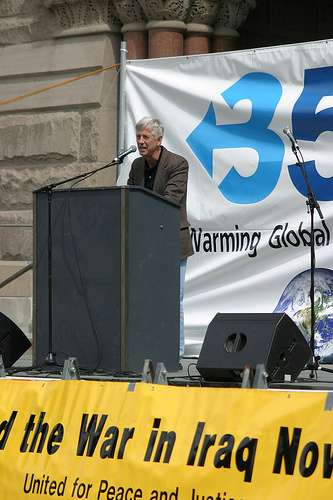 MEDIA ROOTS — Has the U.S. two-party dictatorship completely saturated Election 2012 media
coverage? Can you recall when you last heard news coverage of any
alternative party candidates?
MEDIA ROOTS — Has the U.S. two-party dictatorship completely saturated Election 2012 media
coverage? Can you recall when you last heard news coverage of any
alternative party candidates? 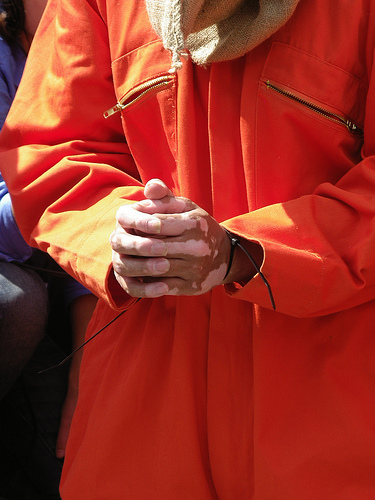 MEDIA ROOTS — Project Censored has become a centrepiece at KPFA, free speech radio, the flagship motherstation of the national Pacifica Radio network. During this season’s fund drive, on Friday, February 17, 2012, Project Censored broadcast a two-point-five-hour special programme entitled ‘Brought to Justice? The Indefinite Detention and Targeted Killing of the Rule of Law’ with music by David Rovics. Abby Martin and Mickey Huff speak with Center for Constitutional Rights attorney, Pardiss Kabriaei. Also, author and investigative journalist Andy Worthington and organiser Stephanie Tang of World Can’t Wait join the dialogue, raise public class-consciousness, and encourage support for KPFA free speech radio.