’06 Zogby Poll: Over 70% of US Troops Want War to End Immediately

ZOGBY INTERNATIONAL– Le Moyne College/Zogby Poll shows just one in five troops want to heed Bush call to stay “as long as they are needed.”

*While 58% say mission is clear, 42% say U.S. role is hazy

*Plurality believes Iraqi insurgents are mostly homegrown

*Almost 90% think war is retaliation for Saddam’s role in 9/11, most don’t blame Iraqi public for insurgent attacks

*Majority of troops oppose use of harsh prisoner interrogation Plurality of troops pleased with their armor and equipment

An overwhelming majority of 72% of American troops serving in Iraq think the U.S. should exit the country within the next year, and more than one in four say the troops should leave immediately, a new Le Moyne College/Zogby International survey shows.

The poll, conducted in conjunction with Le Moyne College’s Center for Peace and Global Studies, showed that 29% of the respondents, serving in various branches of the armed forces, said the U.S. should leave Iraq “immediately,” while another 22% said they should leave in the next six months. Another 21% said troops should be out between six and 12 months, while 23% said they should stay “as long as they are needed.”

Different branches had quite different sentiments on the question, the poll shows. While 89% of reserves and 82% of those in the National Guard said the U.S. should leave Iraq within a year, 58% of Marines think so. Seven in ten of those in the regular Army thought the U.S. should leave Iraq in the next year. Moreover, about three-quarters of those in National Guard and Reserve units favor withdrawal within six months, just 15% of Marines felt that way. About half of those in the regular Army favored withdrawal from Iraq in the next six months.

Continue reading about the Thoughts of Soldiers.

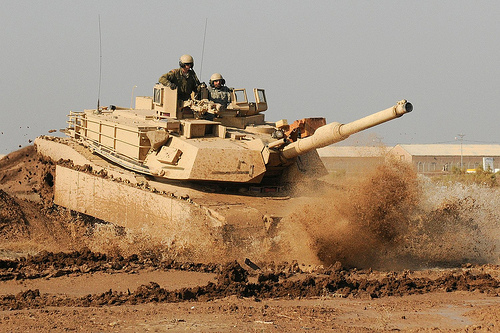
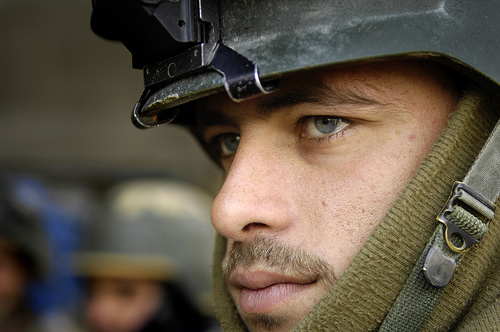
Photo by US Army flickr

© ZOBGY, 2006
US Embassy the Size of Vatican City in Iraq a Mystery

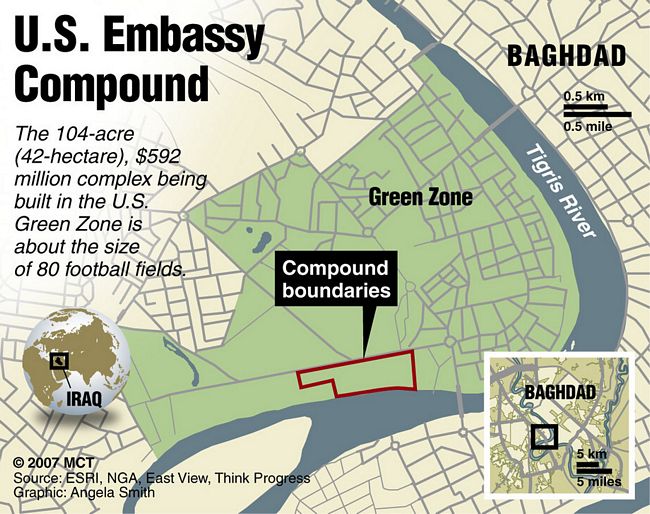
MSNBC– The fortress-like compound rising beside the Tigris River here will be the largest of its kind in the world, the size of Vatican City, with the population of a small town, its own defense force, self-contained power and water, and a precarious perch at the heart of Iraq’s turbulent future.

The new U.S. Embassy also seems as cloaked in secrecy as the ministate in Rome. “We can’t talk about it. Security reasons,” Roberta Rossi, a spokeswoman at the current embassy, said when asked for information about the project.

A British tabloid even told readers the location was being kept secret — news that would surprise Baghdadis who for months have watched the forest of construction cranes at work across the winding Tigris, at the very center of their city and within easy mortar range of anti-U.S. forces in the capital, though fewer explode there these days.

The embassy complex — 21 buildings on 104 acres, according to a U.S. Senate Foreign Relations Committee report — is taking shape on riverside parkland in the fortified “Green Zone,” just east of al-Samoud, a former palace of Saddam Hussein’s, and across the road from the building where the ex-dictator is now on trial.

The Republican Palace, where U.S. Embassy functions are temporarily housed in cubicles among the chandelier-hung rooms, is less than a mile away in the 4-square-mile zone, an enclave of American and Iraqi government offices and lodgings ringed by miles of concrete barriers.

Continue reading about the Giant US Embassy in Iraq.

© 2010 The Associated Press.

“War on Terror” Changed to “Overseas Contingency Operations”

WASHINGTON POST– The Obama administration appears to be backing away from the phrase “global war on terror,” a signature rhetorical legacy of its predecessor.

In a memo e-mailed this week to Pentagon staff members, the Defense Department’s office of security review noted that “this administration prefers to avoid using the term ‘Long War’ or ‘Global War on Terror’ [GWOT.] Please use ‘Overseas Contingency Operation.’ ”

The memo said the direction came from the Office of Management and Budget, the executive-branch agency that reviews the public testimony of administration officials before it is delivered.

Not so, said Kenneth Baer, an OMB spokesman. “There was no memo, no guidance,” Baer said yesterday. “This is the opinion of a career civil servant.”

Coincidentally or not, senior administration officials had been publicly using the phrase “overseas contingency operations” in a war context for roughly a month before the e-mail was sent.

Peter Orszag, the OMB director, turned to it Feb. 26 when discussing Obama’s budget proposal at a news conference: “The budget shows the combined cost of operations in Iraq, Afghanistan and any other overseas contingency operations that may be necessary.”

And in congressional testimony last week, Craig W. Duehring, assistant secretary of the Air Force for manpower, said, “Key battlefield monetary incentives has allowed the Air Force to meet the demands of overseas contingency operations even as requirements continue to grow.”

Monday’s Pentagon e-mail was prompted by congressional testimony that Lt. Gen. John W. Bergman, head of the Marine Forces Reserve, intends to give today. The memo advised Pentagon personnel to “please pass this onto your speechwriters and try to catch this change before statements make it to OMB.”

Continue reading about Obama Changing the Name of the War on Terror.

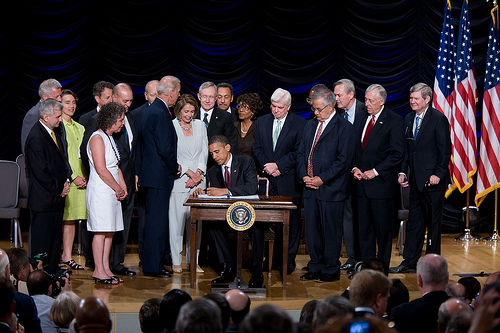
Photo by flickr user LeaderNancyPelosi


Vice president Joe Biden explains why this war is no longer a global “War on Terror.”


© COPYRIGHT WASHINGTON POST, 2009

Totally Occupied: 700 Military Bases Sprawl Across Afghanistan

ALTERNET– In the nineteenth century, it was a fort used by British forces. In the twentieth century, Soviet troops moved into the crumbling facilities.  In December 2009, at this site in the Shinwar district of Afghanistan’s Nangarhar Province, U.S. troops joined members of the Afghan National Army in preparing the way for the next round of foreign occupation.  On its grounds, a new military base is expected to rise, one of hundreds of camps and outposts scattered across the country.

Nearly a decade after the Bush administration launched its invasion of Afghanistan, TomDispatch offers the first actual count of American, NATO, and other coalition bases there, as well as facilities used by the Afghan security forces.  Such bases range from relatively small sites like Shinwar to mega-bases that resemble small American towns.  Today, according to official sources, approximately 700 bases of every size dot the Afghan countryside, and more, like the one in Shinwar, are under construction or soon will be as part of a base-building boom that began last year.

Existing in the shadows, rarely reported on and little talked about, this base-building program is nonetheless staggering in size and scope, and heavily dependent on supplies imported from abroad, which means that it is also extraordinarily expensive.  It has added significantly to the already long secret list of Pentagon property overseas and raises questions about just how long, after the planned beginning of a drawdown of American forces in 2011, the U.S. will still be garrisoning Afghanistan.

400 Foreign Bases in Afghanistan

Colonel Wayne Shanks, a spokesman for the U.S.-led International Security Assistance Force (ISAF), tells TomDispatch that there are, at present, nearly 400 U.S. and coalition bases in Afghanistan, including camps, forward operating bases, and combat outposts.  In addition, there are at least 300 Afghan National Army (ANA) and Afghan National Police (ANP) bases, most of them built, maintained, or supported by the U.S.  A small number of the coalition sites are mega-bases like Kandahar Airfield, which boasts one of the busiest runways in the world, and Bagram Air Base, a former Soviet facility that received a makeover, complete with Burger King and Popeyes outlets, and now serves more than 20,000 U.S. troops, in addition to thousands of coalition forces and civilian contractors.

Continue reading about the Sprawl of US Military Bases in Afghanistan.

© ALTERNET, 2010

Photo by flickr user US Army

Posted in Uncategorized | 1 Reply