Media Roots Radio – Obama’s Syrian War

On the latest edition of Media Roots Radio, Abby and Robbie Martin discuss how a new war against Syria seems all but inevitable.

They talk about the eerily similar establishment rhetoric between the Iraq war buildup and today’s Syria war mongering – specifically the potential unilateral US military action in defiance of the UN, the ‘humanitarian’ justification and the scare tactics of ‘chemical weapons’. A recent speech by Secretary of State, John Kerry, marked a distinct turning point in the ferocity of the Syria rhetoric, which is dissected by Robbie and Abby in its entirety.

***

The above timeline is interactive. Scroll through it to find out more about the show’s music and to resources mentioned during the broadcast. To see a larger version of the timeline with clickable resources go to the soundcloud link below the player.

If you would like to directly download the podcast click the down arrow icon on the right of the soundcloud display. To hide the comments to enable easier rewind and fast forward, click on the icon on the very bottom right.

This Media Roots podcast is the product of many long hours of hard work and love. If you want to encourage our voice, please consider supporting us as we continue to speak from outside party lines. If you donate, we want to thank you with your choice of art from AbbyMartin.org as well as music from RecordLabelRecords.org. Much of the music you hear on our podcasts comes from Robbie’s imprint Record Label Records, and Abby’s art reflects the passion and perspective that lead her to create Media Roots.org.

$40 donation: One 8×10 art print and one RLR release (You choose! Tell us in the Paypal notes.)

$80 donation: Two 8×10 art prints and two RLR releases (You choose!)

$150 donation: Four 8×10 art prints and four RLR releases (You choose!)

Even the smallest donations are appreciated and help us with our operating costs.

Thanks so much for your support!

Listen to all previous episodes of Media Roots Radio here.

Posted in Uncategorized | 1 Reply

The Most Dangerous Man in the World

The most dangerous man alive is not the President of the United States or a terrorist. He is not thought of as a mass murderer, and he is not a Premier or a military dictator. The often referenced Adolf Hitler was only known to have killed one person, and that person was himself. Osama Bin Laden did not kill anyone. Stalin did not kill anyone. Pol Pot did not kill anyone. This is not to say that these were good men. They were not. They were sociopathic monsters. But they were impotent without the help of the most dangerous man alive. They were probably, of their own accord, cowards.

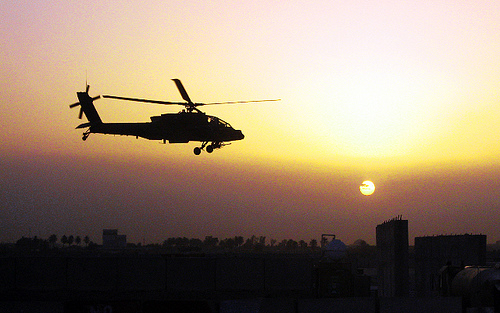
The most dangerous man alive killed all the Jews who died during the holocaust. He was the one who killed all the innocent civilians on both sides of World War II and all other wars. He dropped The Bomb on Hiroshima and he flew aircraft into the World Trade Centers. This man is known as The Troop.

The Troop kills.  The Troop is not necessarily strong or intelligent, although he can be both.  The Troop has no conscience, or if he does have one, he does not use it. The Troop believes.  Facts that contradict The Troop’s beliefs are considered false by definition.  The Troop has a weakness for sociopathic monsters. The Troop follows orders and has never heard an order he will not try to obey.  The Troop dominates, and uses force to ensure that others cannot do as they please.  The Troop works for money.  The Troop finds what he does to be glorious.

The Troop is self-replicating.  His actions lead to the creation of other Troops. The Troop obeys the laws of physics. For every Troop there is an equal and opposite Troop.  In spite of his penchant for violence, The Troop needs lots of support. He is particularly bolstered by unconditional praise and small tokens of gratitude from anyone, including people who do not know him or anything specifically he has done.  The Troop is parasitic. He lives off the sweat of taxpayers.

On some possible future night, when there is a knock on your door and a man in a uniform holds a gun to your head and demands your computer, that man will be a Troop.  If someone destroys your home with a bulldozer, or your village with artillery and missiles, that someone will be a Troop.  When people die in a drone strike in a far away land, a Troop pulled the trigger.  When prisoners are tortured, a Troop attached the electrodes to the testicles and flipped the switch. When your freedom is gone, The Troop will be the enforcer. If you are killed for resisting, The Troop will be the killer.

Like Zombies, Troops start out as normal people.  But Troops are real-life.  As horrible as it may seem, your son or daughter, or your best friend might become a Troop.  To prevent this from happening, it is best to get to Troops while they are still normal people.   That is when they are most open to reason.  One must be vigilant. Almost any normal person between the ages of 18 and 35 can become a Troop. The initial warning signs can start much earlier.

To be successful in stopping Troops, it is important to know what things can cause a normal person to become a Troop.  Sociopathic monsters, who are often found in high governmental positions, need Troops to be their henchmen. For this reason, they use the resources of government to attempt to turn normal people into Troops.  Government advertising makes becoming a Troop sound lucrative and adventurous and glorious. The government will claim to provide valuable training to normal people that become Troops, and also claim that becoming a Troop will give one discipline and direction.

Let your loved one know that the government propaganda they hear is, after all, produced by sociopathic monsters.  Given them real-life examples such as, Waco, Texas or Tiananmen Square, or the occupied West Bank to prove your point.   Point out the remarkably small percentage of high ranking politician’s children who are Troops.

A person who is looking for glory or adventure is at risk of becoming a Troop.  If your child or friend is looking for glory or adventure, talk to them. Let them know that it is not glorious to be a henchman for a sociopathic monster. Offer to go on a camping trip to an underdeveloped country with them.   Get flying or sailing lessons for them.  Explain to them that these things can be done without the need for killing other people.

If your loved one needs discipline or direction, show them how to polish their shoes.  Have them do some pushups.  Have them sleep on a cot.  Show them that one does not have to join the armed forces to do these things, and that with a little imagination; they might get discipline and direction by doing something entirely different like attending college or learning a trade.

Your loved one might be looking for camaraderie.  Don’t be afraid to show them the love you have for them. Do things together.  Demonstrate how fulfilling it is to spend time with one’s family and friends.  Remind them that you love them and want them to remain close to you and safe, and not in some faraway place killing or getting killed.

Money is probably the most common reason a normal person becomes a Troop.  A man has to survive and provide for his or her family by whatever means is necessary.  This is where the government, with its virtually unlimited financial resources, has leverage.  Talk to your loved one about self-respect and self-reliance.  Assure them that as friends or family you will stick together and ensure each other’s well-being.  Explain to them that someone with the motivation and the willingness to sacrifice that they have demonstrated will find a way to provide for themselves and their family, and that they won’t have to sacrifice their morals or self-respect to do it.

The task is not easy, but working together, the people of our world can cure Troopism in our lifetime.  With love and perseverance we can prevail.  As the number of Troops worldwide decreases, so will the incidence and extent of war.  Sociopathic monsters will still exist, but they will be impotent and easily managed by traditional law enforcement.  Ultimately, a world without troops would truly be a world without war.  In that glorious day, together we will have stopped the most dangerous man in the world.

Written by David Wiggins

Flickr user US Army

MR Transcript: Dr. Noam Chomsky on Imperialism, Drones & Propaganda

Abby Martin talks to professor, political critic, and author of over 100 books, about the Boston bombings, US terror inflicted abroad, drones, Obama’s re-branding of Bush administration policies, the National Defense Authorization Act & Holder v. Humanitarian Law, conventional wisdom, the evolution of media propaganda, and education as a form of elite indoctrination.

***

RT: As someone who was living in the aftermath of the Boston bombings, the chaos, what did you think of the police and media response to them?

Noam Chomsky: I hate to second guess police tactics, but my impression was that it was kind of overdone. There didn’t have to be that degree of militarization of the area. Maybe there did, maybe not. It is kind of striking that the suspect they were looking for was found by a civilian after they lifted the curfew. They just noticed some blood on the street. But I have nothing to say about police tactics. As far as media was concerned, there was 24 hour coverage on television on all the channels.

RT: Also zeroing in on one tragedy while ignoring others, across the Muslim world, for example…

NC: Two days after the Boston bombing there was a drone strike in Yemen, one of many, but this one we happen to know about because the young man from the village that was hit testified before the Senate a couple of days later and described it. It was right at the same time. And what he said is interesting and relevant. He said that they were trying to kill someone in his village, he said that the man was perfectly well known and they could have apprehended him if they wanted.

A drone strike was a terror weapon, we don’t talk about it that way. It is, just imagine you are walking down the street and you don’t know whether in 5 minutes there is going to be an explosion across the street from some place up in the sky that you can’t see. Somebody will be killed, and whoever is around will be killed, maybe you’ll be injured if you’re there. That is a terror weapon. It terrorizes villages, regions, huge areas. In fact it’s the most massive terror campaign going on by a longshot.

What happened in the village according to the Senate testimony, he said that the jihadists had been trying to turn over the villagers against the Americans and had not succeeded. He said in one drone strike they’ve turned the entire village against the Americans. That is a couple of hundred new people who will be called terrorists if they take revenge. It’s a terrorist operation and a terrorist generating machine. It goes on and on, it’s not just the drone strikes, also the Special Forces and so on. It was right at the time of the Boston marathon and it was one of innumerable cases.

It is more than that. The man who was targeted, for whatever reason they had to target him, that’s just murder. There are principles going back 800 years to Magna Carta holding that people cannot be punished by the state without being sentenced by a trial of peers. That’s only 800 years old. There are various excuses, but I don’t think they apply.

But beyond that there are other cases which come to mind right away, where a person is murdered, who could easily be apprehended, with severe consequences. And the most famous one is Bin Laden. There were eight years of special forces highly trained, navy seals, they invaded Pakistan , broke into his compound, killed a couple people. When they captured him he was defenseless, I think his wife was with him. Under instructions they murdered him and threw his body into the ocean without autopsy. That’s only the beginning.

RT: The apprehension of bin Laden and the assassination and dumping his body into the ocean, of course the narrative completely fell apart. You’ve said that in the aftermath of 9-11 the Taliban said that we will give you Bin Laden if you present us with evidence, which we didn’t do…

NC: Their proposal was a little vague.

RT: But why are people so easy to accept conventional wisdom of government narratives, there is virtually no questioning…

NC: That’s all they hear. They hear a drumbeat of conventional propaganda, in my view. And it takes a research project to find other things.

RT: And of course at the same time of the Boston bombings, Iraq saw almost the deadliest week in 5 years, it was the deadliest month in a long time. Atrocities going on every day, suicide bombings. At the same time our foreign policy is causing these effects in Iraq…

NC: I did mention the Magna Carta, which is 800 years old, but there is also something else which is about 70 years. It’s called the Nurnberg tribunal, which is part of foundation of modern international law. It defines aggression as the supreme international crime, differing from other war crimes, and it encompasses all of the evil it follows. The US and British invasion of Iraq was a textbook example of aggression, no questions about it. Which means that we were responsible for all the evil that follows like the bombings. Serious conflict arose, it spread all over the region. In fact the region is being torn to shreds by this conflict. That’s part of the evil that follows.

Every great power that I can think of… Britain was the same, France was the same, unless the country is defeated. Like when Germany was defeated after the WWII, it was compelled to pay attention to the atrocities that it carried out. But others don’t. In fact there was an interesting case this morning, which I was glad to see. There are trials going on in Guatemala for Efrain Rios Montt who is basically responsible for the virtual genocide of the Mayans. The US was involved in it every step of the way. Finally this morning there was an article about it saying that there was something missing from the trials, the US’s role. I was glad to see the article.

RT: Do you think that we will ever see white war criminals from imperial nations stand trial the way that  Rios Montt did?

NC: It’s almost impossible. Take a look at the International criminal court (ICC) – black Africans or other people the West doesn’t like. Bush and Blair ought to be up there. There is no recent crime worse than the invasion of Iraq. Obama’s got to be there for the terror war. But that is just inconceivable. In fact there is a legislation in the US which in Europe is called the ‘Netherlands invasion act’, Congressional legislation signed by the president, which authorizes the president to use force to rescue an American brought to the Hague for trial.

RT: Speaking of the drone wars I can’t help but think of John Bellinger, the chief architect of the drone policy, speaking to a think-tank recently saying that Obama has ramped up the drone killings as something to avoid bad press of Gitmo, capturing the suspects alive and trying them at Gitmo. When you hear things like this what is your response to people saying that ‘his hands are tied, he wants to do well’?

NC: That was pointed out some time ago by a Wall Street journal military correspondent. What he pointed out is that Bush’s technique was to capture people and torture them, Obama has improved – you just kill them and anybody else who is around. It’s not that his hands are tied. It’s bad enough to capture them and torture them. But it’s just murder on executive whim, and as I say it’s not just murdering the suspects, it’s a terror weapon, it terrorizes everyone else. It’s not that his hands are tied, it’s what he wants to do.

RT: I would rather be detained then blown up and my family with me… 

NC: And that terrorizes everyone else. There are recent polls which show the Arab public opinion. The results are kind of interesting. Arabs don’t particularly like Iran, but they don’t regard it as a threat. Its rank is rather low. They do see threats in Egypt and Iraq and Yemen, the US is a major threat, Yemen is slightly above the US, but basically they regard the US as a major threat. Why is that? Why would Egyptians, Iraqi and Yemeni regard the US as the greatest threat they face? It’s worth knowing.

RT: The controversial Obama policy, the National Defense Authorization Act (NDAA), which you are plaintiff on the case, you’ve also said that the humanitarian laws are actually worse, providing material support for terrorism. Do you think that all these policies are quantifying what has been in place for decades?

NC: The NDAA is pretty much quantifying practices that have been employed, it went a little bit beyond , and the court case is narrow, it’s about the part that went beyond –  authorization to imprison American citizens indefinitely without trial. That is a radical violation of principles that go back as I said 800 years ago. I don’t frankly see much difference between imprisoning American citizens and imprisoning anyone else. They are all persons.

But we make a distinction. And that distinction was extended by the NDAA. The humanitarian law project broke no ground. There was a concept of material support for terrorism, already sort of a dubious concept, because of how to decide what is terrorism?

Well that’s an executive whim again. There is a terrorist list created by the executive branch without review, without having any right to test it. And if you look at that terrorist list it really tells you something.

So for example Nelson Mandela was on the terrorist list until three or four years ago. The reason was that in 1988 when the Regan administration was strongly supporting the apartheid regime in South Africa, in fact ruling congressional legislation in order to aid it, they declared that the African national Congress was one the most notorious terrorist groups of the world – that’s Mandela, that’s 1988, barely before apartheid collapsed. He was on the terrorist list.

We can take another case: 1982 when Iraq invaded Iran, the US was supporting Iraq and wanted to aid the Iraqi invasion, so Saddam Hussein was taken off the terrorist list…Its executive whim to begin with, we shouldn’t take it seriously. Putting that aside, material assistance meant you give him a gun or something like that. Under the Obama administration it’s you give them advice.

RT: Let’s talk about the linguistics and language of the war on terror. What did Obama’s re-branding of Bush’s policies to do consciousness?

NC: The policy of murdering people instead of capturing them and torturing them can be presented to the public in a way that makes it look clean. It is presented and I think many people see it like that as a kind of surgical strike which goes after the people who are planning to do us harm. And this is a very frightened country, terrified country, has been for a long time. So if anybody is going to do us harm it is fine for us to kill them.

How this is interpreted is quite interesting.

For example there was a case a year or two ago, when a drone attack in Yemen killed a couple little girls. There was a discussion with a well-known liberal columnist Joe Klein, he writes for the Time, he was asked what he thought about this and he said something like – it’s better that four of them are killed than four little girls here.

The logic is mind-boggling. But if we have to kill people elsewhere who might conceivably have aimed to harm us and it happens that a couple little girls get killed too, that’s fine. We are entitled to do that. Well, suppose that any country was doing it to us or to anyone we regard as human. It’s incredible! This is very common.

I remember once right after the invasion of Iraq, Thomas Friedman, the New York Times, Middle East specialist, columnist, was interviewed on the Charlie Rose show, a sort of intellectuals show. Rose asked him ‘what we ought to be doing in Iraq?’ You have to hear the actual words to grasp it, but basically what he said is something like this: ‘American troops have to smash into houses in Iraq and make those people understand that we are not going to allow terrorism. Suck on this, we are not going to allow terrorism in our society! You’d better understand that.

So those terrorized women and children in Baghdad have to be humiliated, degraded and frightened so that Osama Bin Laden won’t attack us.’  It’s mind-boggling. That is the peak of liberal intellectual culture supposedly.

RT: Famous atheists like Richard Dawkins saying that Islam is one of the greatest threats facing humanity, that is a whole another form of propaganda…

NC: Christianity right now is in much greater threat.

RT: The media is obviously instrumental in manufacturing consent for these policies. Your book ‘Media control’ was written a decade before 9-11 and it outlines exactly how sophisticated the media propaganda model is. When you wrote that book did you see how far it would come and where do you see it in 10 years?

NC: I’m afraid that it didn’t take any foresight because it has been going along a long time. Take the US invasion of South Vietnam. Did you ever see that phrase in the media? We invaded South Vietnam, when John F. Kennedy in 1962 authorized bombing of South Vietnam by the US air force, authorized napalm, authorized chemical warfare to destroy crops, started driving peasants into what we called strategic hamlets – it’s basically concentration camps where they were surrounded by barbwire to protect them from the guerrillas who the government knew very well they were supporting. What we would have called that if someone else did it.

But it’s now over 50 years. I doubt that the phrase ‘invasion of South Vietnam’ has ever appeared in the press.  I think that a totalitarian state would barely be able or in fact wouldn’t be able to achieve such conformity. And this is at the critical end. I’m not talking about the ones who said there was a noble cause and we were stabbed in the back. Which generally Obama now says.

RT: It’s become so sophisticated, but I don’t know maybe beсause I am younger and I’ve seen it only in the last 10 years in the post 9-11 world. With the internet do you see the reversal of this trend when people are going to be making this form of media propaganda irrelevant? Or do you see a worsening?

NC: The internet gives options, which is good, but the print media gave plenty of options, you could read illicit journals if you wanted to. The internet gives you the opportunity to read them faster, that’s good. But if you think back over the shift from say of the invention of the printing press there was a much greater step then the invention of the internet.

That was a huge change, the internet is another change, a smaller one. It has multiple characteristics. So on the one hand it does give access to a broader range of commentary, information if you know what to look for. You have to know what to look for, however. On the other hand it provides a lot of material, well let’s put it politely, off the wall. And how a person without background, framework, understanding, isolated, alone supposed to decide?

RT: Another form of propaganda is education. You’ve said that the more educated you are the more indoctrinated you are and that propaganda is largely directed towards the educated. How dangerous is it to have an elite ruling class with the illusion of knowledge advancing their own world view on humanity?

NC: It’s old as the hills. Every form of society had some kind of privileged elite, who claimed to be the repositories of the understanding and knowledge and wanted control of what they called the rebel. To make sure that the people don’t have thoughts like ‘we want to be ruled by countrymen like ourselves, not by knights and gentlemen’.

So therefore there are major propaganda systems. It is quite striking that propaganda is most developed and sophisticated in the more free societies. The public relations industry, which is the advertising industry is mostly propaganda, a lot of it is commercial propaganda but also thought control.

That developed in Britain and the US – two of the freest societies. And for a good reason. It was understood roughly a century ago that people have won enough freedom so you just can’t control them by force.

Therefore you have to control beliefs and attitudes, it’s the next best thing. It has always been done, but it took a leap forward about a century ago with the development of these huge industries devoted to, as their leaders put it, to the engineering of content. If you read the founding documents of the PR industry, they say: ‘We have to make sure that the general public are incompetent, they are like children, if you let them run their own affairs they will get into all kind of trouble.

The world has to be run by the intelligent minority, and that’s us, therefore we have to regiment their minds, the way the army regiments its soldiers, for their own good. Because you don’t let a three-year-old run into the street, you can’t let people run their own affairs.’ And that’s a standard idea, it has taken one or another form over the centuries. And in the US it has institutionalized into major industries.

**

AFRICOM: America’s Continued Dominion

MEDIA ROOTS – The Pentagon’s budget has grown from $267 billion in 2000 to $708.2 billion in 2011. In addition to budgetary increases, the Pentagon is expanding its arrogation of global jurisdiction. The Unified Combatant Command of USAFRICOM (est. 2007) is of particular concern.

The Pentagon spins AFRICOM’s presence as a boon for all parties. According to former AFRICOM commanding General William “Kip” Ward, AFRICOM allows African nations to first choose “African solutions to African problems.” Other U.S. military leaders emphasize the benefits African countries receive from the United States’ implicit dedication to helping local communities.

U.S. military officials also claim AFRICOM allows for the relentless pursuit of shadowy, devious terrorists. “Violent extremist organizations [residing in Africa] have very clearly articulated an intent to attack the United States, its allies, its citizens and its interests both within Africa and also more broadly, in Europe,” according to AFRICOM commanding General Carter Ham. To help shape public discourse, various militant groups are presented as terrifying, inexplicable threats to the United States. Among these “threats” are Ash-Shabaab in Somalia, Boko Haram in Nigeria, al-Qa’ida in the Islamic Maghreb (AQIM), anti-Western rulers in Libya, and the Lord’s Resistance Army (LRA) in central Africa.

AFRICOM officials cite Ash-Shabaab’s proximity to the Middle East and links with al-Qa’ida as reason to pursue them relentlessly. In pursuing Ash-Shabaab, Washington uses CIA assets, drone strikes, U.S. special mission units, and African proxy forces.

General Ham referred to Boko Haram in Nigeria as a “growing threat to Western interests,” while Admiral William McRaven, Commander of USSOCOMcalled them a “terrorist group.” Such allegations from top U.S. military officials serve to expand U.S. military activity across Africa, while keeping an eye on oil in Nigeria, from which USA receives 8% of its petroleum imports.

The Pentagon’s press service hinted at the importance of oil in the Defense Department’s strategic calculus when stating Boko Haram’s challenge to the Nigerian government is troubling, considering how “Africa’s vast natural resources compound the region’s strategic importance… particularly oil that’s exported to the United States.” Since Boko Haram has yet to display a sufficiently threatening posture, General Ham ties it to AQIM in terms of training, funding, and activities in order to take Boko Haram’s profile to the next level and implicate it as a threat to the USA. By wrapping up Boko Haram in the same ball as AQIM, which according to General Ham has “very clearly” shown an intent and desire to attack U.S. citizens, AFRICOM is able to spread its forces across the rest of the Sahel without raising questions from the U.S. citizenry.

General Carter Ham asserts “each of those three [Ash-Shabaab, Boko Haram, and AQIM] pose a significant threat not only in the nations where they primarily operate, but regionally, and I think they pose a threat to the United States.” In addition to gross hyperbole, Ham points to these groups’ potential to collaborate and coalesce as further rationale for the Pentagon to assist African nations with “anti-terrorist capabilities” [read: spread U.S. forces throughout Africa]. Ham reiterated these same points earlier this summer.

In order to counter the inflated “terror” threat, General Ham follows a “theater engagement strategy,” which includes a wide variety of exercises, operations, “security cooperation programs,” training programs, and equipment sequences. Admiral Eric T. Olson (ret.), former Commander of USSOCOM, framed it as shifting the Pentagon’s “strategic focus” “largely to the south… certainly within the special operations community, as we deal with the emerging threats from the places where the lights aren’t,” referencing what is often referred to prejudicially as the “dark continent.” Hence, Pentagon strategists aim to “turn the lights on” across Africa.

Seizing upon any excuse and justification to expand AFRICOM’s jurisdiction, General Ham cites successful military operations in Libya, specifically Operation Odyssey Dawn. Even though Colonel Qaddafi is deceased, General Ham uses AFRICOM to try and fill the vacuum, which Qaddafi left behind:

“It’s very clear that extremist organizations, notably al-Qaida, with some direction from al-Qaida’s senior leaders, would seek to undermine that good governance that the Tunisians and the Libyans seek… And so I think that’s the real threat that is posed… I think we need to partner very closely with the security forces [and] armed forces of Tunisia and Libya to prevent the reestablishment of those networks [and] to prevent those violent extremist organizations from undermining the progress that both countries are seeking.”

Ham recently succeeded in normalizing military relations with the new Libyan leaders. Ham recalled how he visited Tripoli “a number of times, and has had “Libyan officials visit us in our headquarters in Germany, and we have started to map out what the U.S. assistance might be for Libya well into the future.” Ham’s words portend inauspicious obstacles in the form of U.S. interference with Libyan self-determination.

Several hundred miles south of Libya lays the Central African Republic, to where President Obama deployed over 100 “combat-equipped” U.S. troops in order to assist in fighting the Lord’s Resistance Army. These troops, augmented by U.S. civilians, headquarters personnel, communications equipment, and logistics experts, also roam Uganda, South Sudan, and the Democratic Republic of the Congo. By depicting the LRA as a nothing more than a “terror group,” the Pentagon is again able to expand AFRICOM’s territory with minimal objection from the domestic U.S. audience, while acting as if its entire existence is altruistic and humanitarian in nature.

In order to justify this particular operation, General Ham invoked a classic public-relation ploy, referring to today’s enemy as “evil.” Ham remarked, “if you ever had any question if there’s evil in the world, it is resident in the person of [LRA leader] Joseph Kony and that organization.” Many other enemies-of-the-day have been deemed “evil” during recent years, including Russia, Iran, Iraq, North Korea, Colonel Qaddafi, various “terrorists,” drug traffickers, those who resist U.S. imperialism, Afghanistan, Syria, et cetera. Meanwhile, the State Department couches the deployment to central Africa as consistent with Washington’s concern for “increasing civilian protection” and “providing humanitarian assistance.”

Harmful Presence

Contrary to the Pentagon’s illusion, AFRICOM’s existence is extremely detrimental to all involved. It perpetuates Africa’s dependency on external support. With AFRICOM looming large, African politicians and states-people can easily defer to the U.S. military instead of focusing on their respective internal and AU security apparatuses. This ease of deference is shown well in how the Pentagon is involved in “training, equipping and funding the African Union Mission and Somali forces from Uganda, Burundi, Djibouti, Sierra Leone and Kenya.” Furthermore, since the U.S. military’s FM 3-24 assumes responsibility for economic and diplomatic territory, AFRICOM’s presence now allows African politicians and states-people to defer to U.S. economic powerhouses and diplomatic initiatives. In allowing AFRICOM to assume manifold responsibilities across diplomatic, economic, and military fields, U.S. policymakers ignore Africa’s own proven capacity to stabilize violent internal strife, as evident in the Economic Community of West African States’ 1990 response to the Liberian civil war, as Danny Glover elucidated. After all, if Washington, D.C. were to admit Africa can take care of itself, then new pretexts must be invented in order to expand U.S. military operations across the continent.

Additionally, AFRICOM’s establishment and expansion provide another aperture through which Pentagon generals and politically-appointed policymakers exploit the uniformed troops. With little economic opportunity outside of corporate America’s increasingly dismal career prospects, more and more U.S. citizens are turning to the Armed Forces to make ends meet. With increasing frequency, the U.S. government and its corporate overlords send these troops to all corners of the globe to fight for mineral wealthoil, and natural resources.

What may be most patent is AFRICOM allows the U.S. military to expand throughout the African continent. Many corollaries ensue, specifically an unbridled military-industrial complex; pretexts of chasing “terror” continue unabated, U.S. access to Africa’s natural resources is ensured militarily, and live targets abound against which the Pentagon and CIA may practice. 

Far from altruistic, the Pentagon’s presence across Africa is entirely self-serving. As the Pentagon’s own propaganda machine readily concedes, AFRICOM’s “aim is to promote a stable and secure environment in support of U.S. foreign policy” [my emphasis]. General Ham states, “We’ve prioritized our efforts, focusing on the greatest threats to America, Americans and American interests.” AFRICOM’s selfish drive is remarkably similar to USA’s traditional military policies towards Latin America, described candidly as always working to improve “internal security capabilities” in support of U.S. foreign policy (Chomsky: 49). Sound familiar? 

AFRICOM’s presence simply allows Washington to shape domestic African laws, to alter internal policy decisions regarding resource extraction and counterterrorism, to coerce African governments into adjusting their foreign policies to fit U.S. military and economic objectives, and to interfere with internal litigation (Lutz et al.: 118).

The Washington Post Editorial Board recently wrote of the Chinese arms trade in Africa:

“…an investigation might shed light on China’s undisciplined arms trade, which is driven by relentless mercenary interests and a desire to cozy up to oil-soaked and mineral-rich African leaders.”

Replace “China” with “USA,” and we’re treated to the candid truth, which Washington and the Washington Post may have a tough time swallowing: An investigation might shed light on USA’s undisciplined arms trade [and militarization of the African continent], which is driven by relentless mercenary interests, [corporate interests], and a desire to cozy up to oil-soaked and mineral-rich African leaders. The truth hurts.

Former AFRICOM commanding General William Ward still claims the United States’ presence doesn’t amount to further militarization of the African continent, but merely supports “the efforts of other U.S. government agencies,” like “State Department or U.S. Agency for International Development programs.” If this is truly the case, then the United States would have established an AFRIAID command or a massive diplomatic hub instead of numerous military facilities. Economic development and educational initiatives do not necessitate military intervention.

On a continent already rife with conflict and excess weapon imports, General Ward nonetheless focused AFRICOM on “promoting regional cooperation through military-to-military engagements that strengthen regional capabilities,” and “further strengthening the unity of efforts with other U.S. agencies and, as appropriate, the international community.” Regrettably, neither one of these primary AFRICOM objectives helps Africa meet its true wishes: less foreign military interference and more African unity.

Full Coverage

U.S. policymakers who approved AFRICOM’s formation, specifically the 2007 Senate Armed Services Committee, neglected to consider USA’s history of military and espionage intervention across the African continent. Cold War games, postcolonial proxy wars, and chess matches with the USSR destabilized the continent almost beyond repair. These events were detailed lucidly in former Defense Secretary Robert Gates’ 1996 memoir From the Shadows. Given Africa’s recent history as a colonial punching bag and such a lurid history of military and espionage exploitation, U.S. policymakers ought to have deliberated AFRICOM’s formation with greater care. Instead, U.S. Congress ignored mass opposition to AFRICOM from an array of African nations, including South Africa and Nigeria.

AFRICOM is off to a fine start from a hegemonic perspective, having increased its footprint on the African continent by 1,500 personnel in less than a year, from the summer of 2009 to the spring of 2010. By the fall of 2011, the U.S. military had a presence in the Djibouti, Seychelles, Ethiopia, and Sao Tome & Principe. The Washington Post later revealed that U.S. ISR platforms and Special Operations Forces were also operating out of Burkina Faso, Mali, Mauritania, Uganda, and Kenya. According to Reuters, the U.S. military has a presence in over 34 sub-Saharan African countries. Adding to this troop saturation, the Pentagon will deploy U.S. infantry troops to Africa next year, a move which permanently aligns a stateside combat brigade with continuous, rotational deployments to the African continent.

Concerned citizens should rest well, because the former commanding officer of Camp Lemonnier, Djibouti, assures us the U.S. “must always be transparent in our operations.” One surmises that such statements are not applicable to the counter-terrorism operations stemming from the Combined Joint Task Force – Horn of Africa (CJTF-HOA), with an Area of Responsibility covering “the countries of Kenya, Somalia, Ethiopia, Sudan, Eritrea, Djibouti, and Seychelles, and an Area of Interest including Yemen, Tanzania, Mauritius, Madagascar, Mozambique, Burundi, Rwanda, Comoros, Chad, the Democratic Republic of the Congo, and Uganda.”

The Trans-Sahara Counterterrorism Partnership (TSCTP), whose motivation and strategic outlook were approved by a National Security Council committee in 2005, is AFRICOM’s instrument of choice when implementing counterterrorism efforts in Africa’s Sahel and Maghreb regions.

One must also consider the orientation of the American Army’s Third and Fifth Special Forces groups, which are by design geared towards operations in sub-Saharan Africa and Northeast Africa respectively.

Whether Washington utilizes CJTF-HOA, TSCTP, a random drone, conventional troop deployments, a Special Forces A-team, or a covert military flight, U.S. foreign policy remains committed to interference on the ground in sovereign African nations. Based on the preceding evidence, it is reasonable to conclude that the Pentagon effectively operates at will throughout the entire African continent. The implications are profound: no African is safe and accountability is nil. Barring a few competent U.S. journalists, like Jeremy Scahill and Nick Turse, the U.S. military’s expansion throughout the African continent receives little attention from the United States’ press.

Tricks of the Trade

Despite all evidence to the contrary, the Pentagon still insists it has no intent or plans for establishing permanent bases in Africa. Concerned citizens wonder how AFRICOM is able to claim such a small “footprint” in Africa, even though U.S. military forces clearly infest the continent. It does so in two ways. Firstly, AFRICOM defines the term “base” as a facility of a specific, size, scale, and composition. Since only one of the Pentagon’s numerous military facilities in Africa meets “base” criteria, Washington can continue to claim AFRICOM has only one base on the continent and no interest in constructing long term bases in Africa. Secondly, the Pentagon claims a small “footprint” in Africa by not assigning troops directly to AFRICOM. Instead, the Pentagon has AFRICOM draw its forces from tangential commands and European-based forces. When used together, the aforementioned bureaucratic loopholes allow the Pentagon to claim innocence and idealism vis-à-vis operations on the African continent, while evidence clearly shows the U.S. military operating there relentlessly.

The United States’ gluttonous military-industrial-corporate behemoth finds Djibouti quite attractive as a main base of operations on the African continent. From a strategic perspective, Djibouti rests across the vitally important Bab-el-Mandeb, a narrow chokepoint connecting the Gulf of Aden with the Red Sea, overseeing traffic to and from the Suez Canal. In this capacity, Djibouti is a regional transit port, an international trans-shipment node, and a refueling center for many. Local, unelected elites welcome USA’s presence, since these rulers benefit greatly from USA’s foreign assistance. Last fall, Camp Lemonnier was upgraded, receiving runway additions and a new dining facility, indicating AFRICOM’s intent to remain indefinitely. (Curiously, the leader of Djibouti, Ismail Omar Guelleh, who plays host to USA’s Camp Lemonnier, doesn’t even conform to USA’s professed standards of “spreading democracy.” This is never mentioned in the U.S. corporate media).

In military parlance, Djibouti is “a great strategic location. It facilitates not only our operations for U.S. Africa Command, but also U.S. Central Command and U.S. Transportation Command. It is a very key hub and important node for us, a good location that allows us to extend our reach in East Africa and partner with the countries of East Africa,” according to General Ham.

Rubbing salt in the imperial wound, U.S. Defense Secretary Leon Panetta thanked the U.S. servicemen and women who are deployed to Camp Lemonnier for “their role in maintaining stability and preventing conflict in the region.” Panetta oozed, “I can’t tell you how proud I am as Secretary of Defense to visit you… thanks on behalf of a grateful nation… You’ve done everything the nation has asked you to do.” Concerned U.S. citizens do not recall asking fellow countrymen and countrywomen to travel across the world in order to protect U.S. corporate greed or imperial configurations. Panetta later thanked the Camp Leomonnier crowd for “continuing the American dream of ensuring a better life for the next generation.” Details are not forthcoming regarding how a military presence in Djibouti helps perpetuate the so-called “American dream.”

The Pentagon press service describes the U.S.-Djibouti relationship as “‘a very important partnership’ in dealing with counterterrorism, counter-piracy and outreach into Africa.” Educational initiatives, stipulation-free economic assistance, and non-militarized humanitarian aid fall by the wayside. Any humanitarian aid, like the East and West African Malaria Task Forces, is wielded selfishly in order to co-opt African nations, improve the health of their militaries, and protect U.S. troops operating in the region.

According to AFRICOM’s chief medical doctor, Colonel John Andrus, combating malaria supports AFRICOM’s chief goal of promoting regional stability. In other words, combating malaria in Africa is not altruistic or sincerely benevolent, but rather employed as a selfish strategy in order to achieve imperial military objectives. Chief of AFRICOM’s health protection branch advises us how “each person [deployed to AFRICOM] is critical. If you have one person go down, that person can’t do his or her job.” If only we cared equally about the anonymous millions of non-military personnel who die annually from starvation, disease, and bullets across the African continent.

Yet the Pentagon still insists USA’s presence on the African continent is purely selfless. The Undersecretary of Defense for Policy claims creating peaceful political processes, which provide conditions essential to development, “is the name of the game in Africa.” USA’s strategy “puts a premium on supporting democratization and the emergence of democracies in Africa,” the Undersecretary affirms. Her verbal piffle completely disregards U.S. support for Hosni Mubarak, U.S. support for Mobutu Sese Seko in Zaire, U.S. involvement in the coup against Ghana’s Kwame Nkrumah, CIA collaboration with the South African apartheid state, and the Cold War games USA played in AngolaLibyaChad, et cetera.

As if it hasn’t suffered enough through slavery, colonialism, and decades of resource pillaging, the African continent is going to be plundered even more in the future. In the words of Professor Chalmers Johnson, “While the globalization of the 1990s was premised on cheating the poor and defenseless and on destroying the only physical environment we will ever have, its replacement by American militarism and imperialism is likely to usher in something much worse for developed, developing, and underdeveloped nations alike” (Johnson: 281). Reality contrasts starkly with the Pentagon’s artifice.

A Beacon of U.S. Journalism

This background on AFRICOM and its activities serves as a primer for Nick Turse’s stellar journalism. Nick Turse is the premier U.S. journalist covering Pentagon expansion across the African continent. Turse excels at highlighting Pentagon excess and imperialism. After publishing a candid portrayal of AFRICOM, Turse received an email from Colonel Tom Davis, an AFRICOM public affairs official. For their ensuing, riveting correspondence, click here.

For further reading on the excess of AFRICOM and militarized U.S. foreign policy, consult The Counter-Counterinsurgency Manual by the Network of Concerned Anthropologists. (Chicago: Prickly Paradigm Press, 2009).

***

Christian Sorensen for Media Roots.

Photo provided by Flickr user The U.S. Army.

Posted in Uncategorized | 1 Reply

Israel Curious, Part 2 of 3: UN and Colonialism

Read part one of this series about Israeli espionage against the U.S.

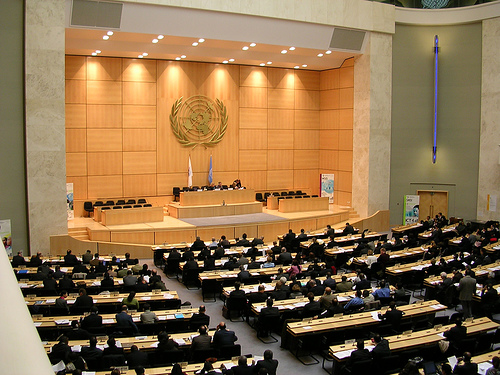
MEDIA ROOTS – The United States boasts a storied history of protecting Israel on the United Nation Security Council (UNSC) and was the lone dissenter against the most recent UN resolution that condemned Israeli settlements in the West Bank. The fourteen other Security Council members backed the resolution. One could almost hear the global community’s collective wheeze when U.S. Ambassador Susan Rice voiced the United States’ incongruence on 18 February 2011.

While claiming the United States strongly opposes Israeli settlement activity, Rice still refused to vote in line with the decency of the international community. Instead, she opted to pepper the world with diplomatic platitudes, as if that lessened the blow. By claiming her actions are somehow helpful to the peace process – although one cannot be sure how voting to perpetuate colonization in violation of international law is helpful – Susan Rice vetoed the resolution and continued the U.S. tradition of irresponsibility. Employing the utmost diplomatic circumlocution, Secretary of State Clinton deemed the colonies “illegitimate,” not illegal.

Reaction to the February 2011 veto was enlightening:

“The Anti-Defamation League, the American Jewish Committee, the Jewish Council for Public Affairs, B’nai B’rith International and the American Israel Public Affairs Committee all issued statements expressing appreciation for the veto. “Exercising the veto is a painful decision, particularly for an administration with a deep and sincere commitment to multilateralism,” said David Harris, the executive director of the American Jewish Committee. “That is why we salute President Obama and his team for their courage in vetoing this mischievous resolution, which would have caused irreparable damage to the future prospects of direct talks between Israel and the Palestinian Authority.”

Contrary to David Harris’ assertion, the only mischievous behavior is the United States’ tradition to abuse its power. From 1972 – 2006, the U.S. vetoed over forty UN Security Council resolutions that criticized or condemned Israel’s actions.

Russia and China have vetoed a series of UN Security Council resolutions, which condemn Syria over its harsh crackdown on anti-government protestors. Susan Rice condemned the Russian/Chinese October 2011 veto, saying it was a “cheap ruse by those who would rather sell arms to the Syrian regime than stand with the Syrian people.” She then concluded “the United States is outraged that this council has utterly failed to address an urgent moral challenge and a growing threat to regional peace and stability.” Surely she sees the irony in her words. Firstly, USA’s use of the veto to protect Israel from criticism is also a “cheap ruse,” whereby the United States government prefers to bow to AIPAC pressure and give Israel weaponry (paid for by the U.S. taxpayer) rather than stand with the Palestinian people and the Israeli citizens who want justice. Secondly, the council’s failure “to address an urgent moral challenge and a growing threat to regional peace and stability” is precisely what the United States does each time it vetoes resolutions critical of Israel’s destructive policies. Israeli foreign policy can easily be categorized as a “growing threat to regional peace and stability, yet the U.S. government continually blocks any progress confronting this particular “urgent moral challenge.” Syria’s brutal internal crackdown and Israel’s ethnic cleansing of historical Palestine are worthy of international condemnation. To condemn the former while protecting the latter exposes the United States’ double-standards and failed policies.

German Chancellor Angela Merkel’s words are an accurate reflection of the international community’s frustration in dealing with Israel’s obstinacy and the United States’ complicity. She reportedly communicated to Prime Minister Netanyahu, after Germany voted in favor of condemning Israel’s settlement activity: “How dare you? You haven’t made a single step to advance peace.” The Chairman of the Bundestag’s Foreign Affairs Committee clarified Chancellor Merkel is “trying to explain to the Israeli government that with the extraordinary changes taking place across the Middle East, time is not on its side when it comes to resolving the conflict with the stateless Palestinians.” British politician Lord Dykes acknowledged the United States’ tradition of harm by stating: “a seemingly unanimous decision in a moderately worded resolution asking Israel to obey its international law duties in occupied Palestine was deliberately – I am sad to use the verb – wrecked by the U.S.” Notably, Netanyahu’s former colleagues, such as Ehud Olmert and Ariel Sharon, have referred to him as a liar (Sharon). The former French President Nicolas Sarkozy also referred to Netanyahu in one word: “liar.” The list goes on, as even the former chief of Shin Bet has no confidence in Netanyahu as a leader.

A leading Zionist pundit unintentionally describes Netanyahu’s view with alarming candor: “Israel, of course, says it’s all the Palestinians’ fault. It says their UN gambit is just the latest move in their campaign to isolate and delegitimize Israel, proving again that they won’t accept Israel’s existence. Israel has no choice but to resist their assault using the tools at its disposal, including the American veto.”

This pundit’s view is enlightening in many ways. Firstly, Netanyahu and many in the Israeli government view the U.S. veto as a “tool at its disposal.” Israel uses the United States’ position on the UN Security Council as an instrument to be manipulated, similar to the manner in which AIPAC views the U.S. Congress. During a 2006 interview with Bill Maher, Netanyahu insinuated as much when he noted: “the secret is that we have America.” In his capacity as Prime Minister of Israel, Ariel Sharon had conveyed a similar, disturbing view during a 3 October 2001 interview with Kol Yisrael radio. Secondly, instead of viewing the Palestinian bid for statehood as an attempt at self-determination, the Israeli propaganda machine spins it as a refusal to accept Israel’s existence. Israel and the United States both declared independence unilaterally but the populaces seem quick to forget. Haaretz columnist Gideon Levy underscored this severety from the Holy Land: “Five million Israelis are deeply convinced today that they are right and seven billion people of the world are wrong.”

Continued Colonialism

The Israeli government persistently colonizes the West Bank, facilitated by the U.S. government’s unconditional, unapologetic support. In referencing the war of 1967, former Israeli Attorney General Michael Ben Yair concedes the war “continues to this day and is the product of our choice. We enthusiastically chose to become a colonialist society, ignoring international treaties, expropriating lands, transferring settlers from Israel to the occupied territories, engaged in theft and finding justification for all this” (Stern: 103). Yair frames the situation well.

This sad political reality, implemented by a relentless ideology, has moved roughly half a million Israelis into more than 100 colonies across the West Bank and East Jerusalem since 1967, amounting to a de facto annexation of land for Israeli use. Over 20,000 Israeli colonists now live in the Golan Heights alone, which was Syrian territory prior to 1967. Meanwhile, Israel’s separation barrier in the West Bank, which many refer to as an apartheid wall, carves chunks out of the future de facto Palestinian state and places favorable amounts of water resources on Israel’s side of the wall. Israeli colonies, which Democratic National Committee Chairwoman Debbie Wasserman Schultz (D – Florida) prefers to call “suburbs,” elsewhere receive a disproportionate share of the water supply.

USA and Israel walk hand in hand. For example, Shimon Peres’ April 2011 visit to Washington, D.C., coincided with a Jerusalem planning committee’s approval of 942 housing units in the Gilo neighborhood, south of Jerusalem, which the international community considers illegal. On 4 August 2011, the Israeli Interior Ministry approved of 900 new homes to be built in the Har Homa area, amounting to a de facto slice between Palestinian neighborhoods in East Jerusalem and Bethlehem. Less than two weeks later, Israeli officials approved 277 new homes in the West Bank colony of Ariel. One month later, Israel’s government approved 1,100 additional housing units to be built in the Gilo area of occupied east Jerusalem. Another 2,600 housing units were given the green light two weeks later. After Palestine received membership in UNESCO, Israel expedited construction of roughly 2,000 homes in East Jerusalem and the West Bank, all of which would “remain in Israeli control under any future peace agreement,” according to Prime Minister Netanyahu. One month later, the Israeli government approved more colonial construction in the dead center of a Palestinian neighborhood in Jerusalem. In April 2012, the Israeli government threw its full weight behind this misery and authorized the West Bank colonies of Bruchin, Rechelim, and Sansana. Israel’s ethnic cleansing of Palestinians in the West Bank in 2011 rose eighty percent when compared to 2010 rates, while the Israeli government increased its spending on West Bank colonies by 38 percent over the same period. 600 Palestinians lost their homes in the first five months of 2012. Israeli officials cite lack of “proper permits” as one pretext for bulldozing Palestinian homes, restaurants, schools, and even demolishing residential solar panels. On 6 June 2012, Netanyahu ordered the construction of 300 new homes in the West Bank colony of Beit El.  Zionism marches on, enabled by the U.S. government.

Israeli officials point to symbolic, menial efforts as proof they care to comply with international consensus. As of 1 March 2011, the Israeli government began dismantling all “illegal settlement outposts built on privately-owned Palestinian land.” Such a concession sounds tremendous, but it only applied to three outposts. Moreover, Israeli authorities simultaneously began to “legalize” illegal colonies built on state land, and even going so far as confiscating an olive grove for “agricultural cultivation” and granting the plot of land to a colonist “with no known farming skills.” Overall, the Israeli government stripped almost 250,000 Palestinians of their residency rights from 1967-1994, a figured which doesn’t include the hundreds of thousands of Palestinians who were driven from their homes around 1948. As a result, Israel gains far more than it loses.

Israel’s colonial obstinacy manifests itself in many forms. As President Obama delivered a major speech on events in the Middle East on 19 May 2011, the Israeli government approved plans to build more than 1,500 new homes on two settlements around East Jerusalem. Arieh Eldad, a member of the Israeli Knesset and head of the Hatikva faction, stated “I hope that [this] sends a clear message to the American administration. I hope that the new building of new settlements next week will send a similar message.” Contrary to Mr. Eldad’s assertions, the United States’ active role in perpetuating Israeli colonization of the West Bank has aligned criminally with Israeli deviance:

“The endorsement of ‘land swaps’ by President Obama, which is a euphemism for the annexation by Israel of major Jewish settlement blocs in the West Bank, is one demonstration of the unquestioning acceptance by the United States of the Israeli narrative of the conflict. By accepting the ‘land swap’ argument, President Obama has in effect declared that it is legitimate for the occupying power to settle and colonize occupied lands. This suits the settler-colonial mentality of the Israeli establishment for, despite arguments to the contrary, Israel itself is a product of settler colonialism with the British mandate over Palestine acting as its midwife. It was British rule that facilitated Jewish migration from Europe to Palestine and laid the basis of the demographic transformation of the mandated territory with the Jewish population in Palestine rising from approximately 10 percent at the beginning of the mandate to roughly 30 percent at its end. An American position endorsing Israel’s annexation of settler colonies is bound to put it at odds with the majority opinion in the international system.”

The modicum of pressure, which President Obama placed on Israel to freeze settlement expansion, was neither laudable nor realistic without proper confrontation of AIPAC. Backing down only days later, President Obama looked like a clown in front of the international community, further undermining the United States’ arrogation of global leadership. Wolf Blitzer foretold of such an occurrence in the event a U.S. administration got tough with Israel on any number of issues:

“If the U.S. administration did pressure Israel and was subsequently forced to back down in the face of reactions from Congress, the Jewish community, and others in the United States as well as Israel and around the world, there would be another price to pay. The limits of U.S. policy would be advertised for all to see. No president wants to show off American impotence” (Blitzer: 14).

According to Blitzer, such pressure would stem from a comprehensive Israeli mobilization against the U.S. presidential administration, an anti-administration enterprise directed by the Jewish community and allegations of anti-Semitism (ibid: 13-14). The Oracle at Blitzer’s predictions came true.

The U.S.-Israel relationship is one of paradox. Israel spies ferociously against the United States, while the U.S. Congress and Executive Branch work overtime to support Israel “unconditionally.” (President Obama even awarded Israeli President Shimon Peres the U.S. Presidential Medal of Freedom). Meanwhile, U.S. public is sound asleep. Until we wake up, the Israeli government will continue to capitalize upon this lopsided relationship.

Christian Sorensen for Media Roots

***

Photo by Flickr user lilivanili.