MEDIA ROOTS — Many well educated and politically aware people in the United States would like to believe that the so-called ‘War On Terror,’ a false war against a tactic, will have no effect on their personal lives. As long as it’s not affecting you, it’s not a problem, right? Well, the problem is that many people who have chosen to lead politically active lifestyles have encountered, on a regular basis, the totalitarian weight of the ‘War On Terror,’ not because they are overly sensitive civil libertarians, but because they are being targeted specifically on U.S. soil for their political activism. Political documentary filmmaker Laura Poitras is one such individual.
Written by Robbie Martin
***
SALON — [Poitras’ next film] will examine the way in which The War on Terror has been imported onto U.S. soil, with a focus on the U.S. Government’s increasing powers of domestic surveillance, its expanding covert domestic NSA activities (including construction of a massive new NSA facilityin Bluffdale, Utah), its attacks on whistleblowers, and the movement to foster government transparency and to safeguard Internet anonymity. In sum, Poitras produces some of the best, bravest and most important filmmaking and journalism of the past decade, often exposing truths that are adverse to U.S. government policy, concerning the most sensitive and consequential matters (a 2004 film she produced for PBS on gentrification of an Ohio town won the Peabody Award and was nominated for an Emmy).
But Poitras’ work has been hampered, and continues to be hampered, by the constant harassment, invasive searches, and intimidation tactics to which she is routinely subjected whenever she re-enters her own country. Since the 2006 release of “My Country, My Country,” Poitras has left and re-entered the U.S. roughly 40 times. Virtually every time during that six-year-period that she has returned to the U.S., her plane has been met by DHS agents who stand at the airplane door or tarmac and inspect the passports of every de-planing passenger until they find her (on the handful of occasions where they did not meet her at the plane, agents were called when she arrived at immigration). Each time, they detain her, and then interrogate her at length about where she went and with whom she met or spoke. They have exhibited a particular interest in finding out for whom she works.
She has had her laptop, camera and cellphone seized, and not returned for weeks, with the contents presumably copied. On several occasions, her reporter’s notebooks were seized and their contents copied, even as she objected that doing so would invade her journalist-source relationship. Her credit cards and receipts have been copied on numerous occasions. In many instances, DHS agents also detain and interrogate her in the foreign airport before her return, on one trip telling her that she would be barred from boarding her flight back home, only to let her board at the last minute. When she arrived at JFK Airport on Thanksgiving weekend of 2010, she was told by one DHS agent — after she asserted her privileges as a journalist to refuse to answer questions about the individuals with whom she met on her trip — that he “finds it very suspicious that you’re not willing to help your country by answering our questions.” They sometimes keep her detained for three to four hours (all while telling her that she will be released more quickly if she answers all their questions and consents to full searches).
Poitras is now forced to take extreme steps — ones that hamper her ability to do her work — to ensure that she can engage in her journalism and produce her films without the U.S. Government intruding into everything she is doing. She now avoids traveling with any electronic devices. She uses alternative methods to deliver the most sensitive parts of her work — raw film and interview notes — to secure locations. She spends substantial time and resources protecting her computers with encryption and password defenses. Especially when she is in the U.S., she avoids talking on the phone about her work, particularly to sources. And she simply will not edit her films at her home out of fear — obviously well-grounded — that government agents will attempt to search and seize the raw footage.
MEDIA ROOTS — Abby and Robbie Martin grew up in Pleasanton, CA, a city located ten miles from the Lawrence Livermore National Laboratory (LLNL), a secret nuclear weapons production facility. They initially set out to explore the psychological impacts of taking nuclear testing into virtual space. But as their investigation unfolded, they found that the LLNL—in conjunction with Site 300—has built an impressive greenwashing PR campaign cloaking a sinister reality.
Despite a moratorium on nuclear testing, the nuclear arms race continues unabated at very high costs. In addition to the startling cases of LLNL’s mismanagement of dangerous materials and ‘accidental‘ releases, the facilities are still testing every radioactive component of a nuclear bomb in open air, according to sources.
Malignant melanoma (skin cancer) rates are six times higher among children born in Livermore; melanoma has been linked to radiation exposure. And the amount of radiation which has been expelled from the lab since its
inception is equivalent to that released from the bombing of Hiroshima.
Most disturbingly, the Livermore community is largely unaware of what the lab
is actually doing and what its potential impacts are on its health and the
environment.
Written by Abby Martin
***
The Continuing Nuclear Arms Race & The Lawrence Livermore National Lab:
Mismanagement, Dangers & Effects
Produced/Filmed/Directed/Edited by Abby & Robbie Martin
***
Abby Martin: “The United
States has the biggest weapons arsenal in the world and is the only country who
has ever used nuclear bombs during war.
All of the nuclear weapons stockpile management and nuclear weapon technology
come from two locations in the United States:
Los Alamos Laboratory in New Mexico, which is surrounded by a giant plot
of desert, and Lawrence Livermore Laboratory, a square-mile facility located
right next to a city of 90,000 people.
If a large-scale disaster or nuclear accident happened here, it would
affect the entire Bay Area—comprised of San Francisco/Oakland—with seven
million people living in it. This blue
well behind me is used to measure radioactive runoff from the Lawrence
Livermore Lab.”
Abby Martin Narration (c. 0:36): “The United
States used to blow up full-scale nuclear weapons in open air until the 1963 Limited Test Ban Treaty, which permitted the continuation
of nuclear testing underground. In 1992,
Congress passed the Nuclear Testing Moratorium Act, which banned all nuclear
testing. However, the treaty is not yet
ratified. And the U.S. still has over
5,000 nuclear weapons, 2,000 of which are on readiness alert at all times. To compensate for the loss of full-scale
underground nuclear testing, the Department of Energy created the Stockpile
Stewardship Program, which built new facilities that test different components
of a nuclear weapons explosion, using super computers to put them all together.
“Most of
the PR surrounding the Lawrence Livermore Lab gives the impression that it’s a
technology innovator, working to harvest
the energy of the sun to create clean
energy for the world. As it turns out, out
of the Lawrence Livermore Lab’s $1.5 billion dollar annual budget, less than 1%
is alternative energy; the rest is defence and nuclear weapons development.
“Another,
more elusive, site buried in the hills behind the Lawrence Livermore Lab is called
Site 300, a live-fire explosives test range where they blow up highly
radioactive compounds used to simulate many of the nuclear systems designed at
the lab. Site 300 is mountainous with
many watersheds and canyons making contamination easy to spread and clean-up
extremely difficult. At Site 300, we
found that they are testing depleted uranium and tritium, the radioactive
hydrogen in the hydrogen bomb, in open air tests. Site 300 happens to be located in a very
high-velocity wind area.
“We took a
closer look at Lawrence Livermore Lab and Site 300 and found out if the
Livermore community is aware of its impact on their health and the environment
and the potential danger it poses to the entire San Francisco Bay Area.”
Abby Martin (c. 2:25): “Do you know about the Lawrence Livermore
Lab?”
Livermore Man:
“Yes.”
Livermore Woman: “I mean it’s common knowledge to grow up in Livermore—”
Livermore Man B: “Oh, here we go.”
Abby Martin:
“What?”
Livermore Woman B: “I’m aware of it, yeah.”
Abby Martin:
“What is it
that you think they do there?”
Livermore Woman C: “At the Lab? Oh, it’s a
government [Shrugs], testing on all kinds
of different things?”
Livermore Man B: “I’m not really educated to what exactly, what they do. You gonna tell me?”
Livermore Woman C: “I know they do a lot of research and they have, like, the top
scientists from all over the world that work there.”
Livermore Woman B: “They used to do, like, nuclear devices.
But to my knowledge they don’t really do that anymore.”
Livermore Man C: “Well, what I think they do there is research and development.”
Abby Martin:
“What do you
think it is they do there?”
Livermore Man:
“I worked
there for nearly 30 years.”
Abby Martin:
“So, what
did you do there?
Livermore Woman B: “I don’t know. My dad works in a
machine shop there. [Laughs] I don’t know what he does, though. [Laughs]”
Marylia Kelley (Tri-Valley CAREs): “In many ways, Livermore is a community that’s in denial. It is also a community that I would call
disempowered because you have a super-secret nuclear weapons laboratory and a
community around it that’s supposed to not
ask questions.”
Abby Martin Narration (c. 3:39): “We went to the lab in Site 300 to try to
find out more.”
Site 300 Armed Military Gatekeeper: “Can you just turn that off please? [Leaving
Gate Booth]”
Abby Martin:
“Isn’t this publicly-funded
property?”
Site 300 Armed Military Gatekeeper: “The Federal, um, could you turn it off just to make? I gotta make, I gotta call my captain.”
Site 300 Armed Military Captain: “Um, could you go ahead and turn the camera off?” [Camera Cuts Out]”
Abby Martin:
“I don’t know;
I’ve read somewhere that they were testing depleted uranium. I was, like, that can’t be true. [Inside a Reception Area]”
Receptionist Woman: “No, nothing nuclear.”
Scott Yundt (Tri-Valley CAREs): “What we’ve been able to place together from FOIA requests and from public documents is that they’ve released over a million curies of radiation from the lab
since 1953 when they opened. That’s
about the same amount of radiation that was released in the bombing of Hiroshima.”
“The study
also found that, for one decade, there was a threefold increase in brain
cancer in Livermore children.”
Abby Martin (c. 4:47): “Do you think that there’s any sort of
impacts on the environment or to the health of the community with the testing
that they’re doing there? [Outside in
Downtown Livermore]”
Livermore Man:
“Probably
very little over what most all of us do everyday. [Shrugs]”
Livermore Woman B: “None that haven’t been around since I was a kid. [Shrugs] So, I don’t know. [Laughs]
I mean I survived. [Young Woman
Laughs and Shrugs]”
Livermore Woman C: “Yeah, ‘cos they’ve had some problems with the, you know, ground w-,
releases of some of the poisons and—”
Livermore Man D: “I know that there was plutonium
in a park near my house when I was growing up.”
Abby Martin Narration (c. 5:16): “During the ‘70s and ‘80s, the Lawrence
Livermore Lab was flushing radioactive materials, including plutonium down the
drain. And it was recycled by the City
of Livermore’s sanitation department as compost. The City then gave away the toxic compost as
landscaping.
“Local residents
around the lab have even coined a neighbourhood park, plutonium park, which is located adjacent to a school.
Marylia Kelley (Tri-Valley CAREs): “They kept a log book, you know, a guest register. So, people signed it, but one day the lab
showed up and took it with them. And it’s
never been seen again. So, there’s no
way to track who has this plutonium-contaminated sludge or if the particular bit of
sludge they took home has plutonium contamination in it or not.
“And, in
the midst of all this, Livermore Lab went and got some of this sludge because
they were interested in looking at the uptake of plants after a nuclear war.”
Livermore Man D: “Obviously, most cities don’t dump plutonium into their sewage treatment
plants. So, that’s a unique experience
to our area.”
Abby Martin Narration (c. 6:26): “One of the most impressive PR campaigns
coming from the lab is the National
Ignition Facility (or the NIF).”
Scott Yundt (Tri-Valley CAREs): “It’s a mega-laser that they love to talk about how it’s gonna save the
world through creating nuclear fusion energy.
Most of what the National Ignition Facility is for is ‘stockpile management.’ And it’s really a way for them to test
nuclear weapon components because it creates an environment—in that chamber—that is similar to the environment created by a nuclear weapons explosion.”
Abby Martin Narration (c. 7:01): “Just like many war technologies that the
U.S. government rebrands as peace through force, the ‘Stockpile Stewardship’ program is nothing more than a cloak on the
continued and unabated nuclear arms race.”
Scott Yundt (Tri-Valley CAREs): “We have a nuclear-weapons-complex that is still stuck in the Cold War era.”
Marylia Kelley (Tri-Valley CAREs): “80% of the American population tell pollsters that they would feel
safer if no county, including the United States, had nuclear weapons.”
Abby Martin Narration: “Despite the moratorium, we continue to find a way to test nuclear
weapons. But by testing each component
of a nuclear bomb separately with Site 300, the NIF, and super computers, they’re
able to pacify the public. However, in
the back of our minds, we all know that at any moment—by mistake, by
miscalculation, or by madness—life, as we know it, could end on this planet.
“How is the
looming threat of nuclear annihalation affecting our daily lives?”
MEDIA ROOTS — Early last Sunday, an unhinged U.S. Army Sergeant walked more than a mile, from village to village in rural Afghanistan, broke down the doors of three homes, and methodically murdered at least 16 Afghani civilians—nine of them being children.
The U.S. Department of State issued an uncharacteristic apology, given how a formal apology was never issued, nor actions taken, to hold accountable the soldiers from the “Collateral Murder” video nor Iraqi Wedding Party massacre for their war crimes, to name a couple of examples.
When asked by a reporter if the Afghanistan massacre was comparable to the My Lai Massacre in Vietnam, Obama stated: “It appeared you had a lone gunman who acted on his own. In no way is this representative of the enormous sacrifices that our men and women have made in Afghanistan.”
The fact that the Obama Administration would be so quick to demean the actions of one soldier and not condemn the other aforementioned detestable acts illustrates the fine line between what our leadership deems morally reprehensible versus what is simply dismissed as expected collateral damage when following the ‘rules of engagement.’
Other political players try to spin a more commonly heard epithet. U.S. Secretary of Defense Leon Panetta responded to the recent tragedy by saying, “War is hell. These kinds of events and incidents are going to take place, they’ve taken place in any war. They’re terrible events. This is not the first of those events, and it probably won’t be the last.” Panetta also didn’t hesitate to say that the death penalty could be used against the soldier who committed these atrocities.
Pushing the mentality that “war is hell” is a common way to dismiss endemic military acts, which government officials downplay as isolated events in a chaotic war time environment instead of addressing them in the larger framework of what war does to the psychology of human beings. Unlike WWII and the U.S. invasion and occupation of Vietnam, U.S. military aggression against Iraq and Afghanistan are not ‘wars‘ in the conventional sense; they are militarized occupations of sovereign nations with mostly little to no army and barely any means to defend themselves.
Written by Abby and Robbie Martin
***
REUTERS — Sunday’s shootings triggered angry calls from Afghans for an immediate American exit. Obama said there should not be a “rush to the exits” for U.S. forces who have been fighting in Afghanistan since 2001 and that the drawdown must be carried out in a responsible way.
The accused U.S. Army staff sergeant walked off his base in the southern province of Kandahar in the middle of night and gunned down at least 16 villagers, mostly women and children.
Defense Secretary Leon Panetta said the death penalty could be sought in the U.S. military justice system against the soldier, whose name has not been publicly disclosed.
Referring to Sunday’s massacre, Obama said in an interview with KDKA, a CBS affiliate in Pittsburgh: “It makes me more determined to make sure we’re getting our troops home.”
MEDIA ROOTS —Although the corporate media touts an improving economy, U.S. citizens continue to suffer cruel economic punishment and austerity. Millions of citizens still search for employment, and the typical income of a U.S. household is less now than it was in 1997. Why is the economy not improving? Wall Street makes an easy target for the ire of struggling workers, but is there a deeper, more complex reason why the economy creaks, tumbles and rolls like an outdated galleon laboring in rough seas?
Economist Joseph Stiglitz offers in-depth analysis of the weakening foundation of the U.S. economy. In the years leading up to 2008, U.S.A. lived in an easy-credit, fast-money mania, fueled by wildly inflated home values, corrupt appraisers, and financial gimmicks. However, the integrity of the economy was compromised even before the meltdown, explains Stiglitz. Our collective economic livelihood had been dealt a slow acting, poisonous blow long ago, as other observers such as Catherine Austin Fitts and Dr. Michael Hudson have described.
Stiglitz draws insight comparing today with the tumultuous Great Depression, which had been well underway for years before the banking sector crashed. What brought about the economic paralysis? The primary cause was a quiet, but massive, transition away from an agriculture-based economy. As food production modernized and became more efficient, less farmers were required to grow the food necessary to feed the U.S. Suddenly, a vast portion of the U.S. workforce became obsolete through automation.
Stiglitz argues broad changes must be made in tandem with large, concentrated investment. As once industrious manufacturing regions of U.S.A. wither and rust, elected officials neglect investment in education, research, and infrastructure, favoring austerity cuts. Yet, these three areas provide opportunities for healthy economic growth and future employment, as the nation struggles to adapt to the 21st century. Addressing these needs, perhaps, U.S.A. can fulfill its promise of greatness and prosperity.
MR
***
VANITY FAIR —Even when we fully repair the banking system, we’ll still be in deep
trouble—because we were already in deep trouble. That seeming golden age
of 2007 was far from a paradise. Yes, America had many things about
which it could be proud. Companies in the information-technology field
were at the leading edge of a revolution. But incomes for most working
Americans still hadn’t returned to their levels prior to the previous
recession. The American standard of living was sustained only by rising
debt—debt so large that the U.S. savings rate had dropped to near zero.
And “zero” doesn’t really tell the story. Because the rich have always
been able to save a significant percentage of their income, putting them
in the positive column, an average rate of close to zero means that
everyone else must be in negative numbers. (Here’s the reality: in the
years leading up to the recession, according to research done by my
Columbia University colleague Bruce Greenwald, the bottom 80 percent of
the American population had been spending around 110 percent of its
income.) What made this level of indebtedness possible was the housing
bubble, which Alan Greenspan and then Ben Bernanke, chairmen of the
Federal Reserve Board, helped to engineer through low interest rates and
nonregulation—not even using the regulatory tools they had. As we now
know, this enabled banks to lend and households to borrow on the basis
of assets whose value was determined in part by mass delusion.
The
fact is the economy in the years before the current crisis was
fundamentally weak, with the bubble, and the unsustainable consumption
to which it gave rise, acting as life support. Without these,
unemployment would have been high. It was absurd to think that fixing
the banking system could by itself restore the economy to health.
Bringing the economy back to “where it was” does nothing to address the
underlying problems.
The trauma we’re experiencing right now
resembles the trauma we experienced 80 years ago, during the Great
Depression, and it has been brought on by an analogous set of
circumstances. Then, as now, we faced a breakdown of the banking system.
But then, as now, the breakdown of the banking system was in part a
consequence of deeper problems. Even if we correctly respond to the
trauma—the failures of the financial sector—it will take a decade or
more to achieve full recovery. Under the best of conditions, we will
endure a Long Slump. If we respond incorrectly, as we have been, the
Long Slump will last even longer, and the parallel with the Depression
will take on a tragic new dimension.
Until now, the Depression
was the last time in American history that unemployment exceeded 8
percent four years after the onset of recession. And never in the last
60 years has economic output been barely greater, four years after a
recession, than it was before the recession started. The percentage of
the civilian population at work has fallen by twice as much as in any
post-World War II downturn. Not surprisingly, economists have begun to
reflect on the similarities and differences between our Long Slump and
the Great Depression. Extracting the right lessons is not easy.
MEDIA ROOTS – Early Monday morning, the controversial website WikiLeaks released a stunning collection of Global Intelligence Files from the private intelligence corporation Stratfor.
“The Global Intelligence Files exposes how Stratfor has recruited a global network of informants who are paid via Swiss banks accounts and pre-paid credit cards. Stratfor has a mix of covert and overt informants, which includes government employees, embassy staff and journalists around the world.
The material shows how a private intelligence agency works, and how they target individuals for their corporate and government clients. For example, Stratfor monitored and analysed the online activities of Bhopal activists, including the “Yes Men”, for the US chemical giant Dow Chemical. The activists seek redress for the 1984 Dow Chemical/Union Carbide gas disaster in Bhopal, India. The disaster led to thousands of deaths, injuries in more than half a million people, and lasting environmental damage.”
Most mainstream media reports aren’t covering several important issues that these files bring up, like how Stratfor has been gathering intelligence and spying on journalists and activists all over the world for not only the government, but for private corporations like Coca-Cola.
Comedy/activist duo the Yes-Men found out they were being spied on by Stratfor because of their activism surrounding the Bopal Chemical Disaster. Other media outlets that had intelligence gathering done on them include Rolling Stone, Wikileaks itself (over 4,000 emails alone), Sunday Star Times, The Hindu, Russia Reporter, Publico and an unknown amount more. Wikileaks says that more information about journalist spying is yet to be revealed.
Activist Cosmos found an intriguing tidbit of information within the e-mails that uncovered how “out of Wikileaks’ release of 5 million Stratfor emails is the comment from Fred Burton, Stratfor’s Vice President of Intelligence, that the Imam of the controversial so-called Ground Zero mosque is an “FBI operational asset.” Burton, who was formerly a special agent with the US State Department’s Diplomatic Security Service and the Deputy Chief of their counterterrorism division, made the comment on an email chain regarding a New York Observer article, Untangling the Bizarre CIA Links to the Ground Zero Mosque. The controversy surrounding the “Ground Zero mosque” overwhelmingly dominated the news and discussion surrounding the ninth anniversary of the 9/11 attacks.”
At Media Roots, we recommend that you don’t rely on our or any other media outlet’s coverage of the recent leak. Instead, you can watch the entire press conference with Julian Assange about the Stratfor leaks here:



 MEDIA ROOTS — Many well educated and politically aware people in the United States would like to believe that the so-called ‘War On Terror,’ a false war against a tactic, will have no effect on their personal lives. As long as it’s not affecting you, it’s not a problem, right? Well, the problem is that many people who have chosen to lead politically active lifestyles have encountered, on a regular basis, the totalitarian weight of the ‘War On Terror,’ not because they are overly sensitive civil libertarians, but because they are being targeted specifically on U.S. soil for their political activism. Political documentary filmmaker Laura Poitras is one such individual.
  MEDIA ROOTS — Abby and Robbie Martin grew up in
  MEDIA ROOTS — Early last
 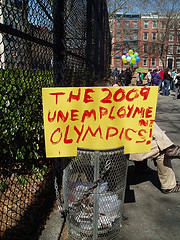 MEDIA ROOTS — Although the corporate media touts an improving economy, U.S. citizens continue to suffer cruel economic punishment and austerity. Millions of citizens still search for employment, and the typical income of a U.S. household is less now than it was in 1997. Why is the economy not improving? Wall Street makes an easy target for the ire of struggling workers, but is there a deeper, more complex reason why the economy creaks, tumbles and rolls like an outdated galleon laboring in rough seas?
 MEDIA ROOTS – Early Monday morning, the controversial website