INTER PRESS SERVICE – Poor defendants on death row, immigrants in unfair deportation
proceedings, torture victims, domestic violence survivors and victims
of racial discrimination – all these groups are consistently being
denied access to justice while those responsible for the abuses are
protected, according to a new report by the American Civil Liberties
Union.
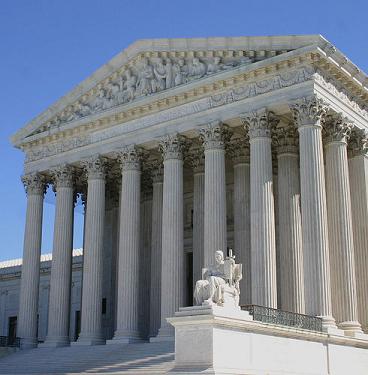
Jamil Dakwar, director of the ACLU Human Rights Programme,
told IPS, “Access to justice is a fundamental human right and bedrock
tenet of American democratic system – it was even codified by the
Universal Declaration of Human Rights, which the U.S. championed 62
years ago.”
“Unfortunately, access to the courts and effective remedy have been
severely curtailed over the last decade, especially for those who need
it most,” he said. “It is time for our government and judiciary to
recommit to respecting and promoting this essential right.”
According to the report, “Slamming the Courthouse Doors”, the
“actions of the executive, federal legislative, and judicial branches
of the United States government have seriously restricted access to
justice for victims of civil liberties and human rights violations, and
have limited the availability of effective (or, in some cases, any)
remedies for these violations.”
For example, the report details
how individuals convicted of capital crimes who seek to present newly
found evidence of their innocence or claims of serious constitutional
violations are being denied recourse in the courts.
Federal
legislation, most prominently the Antiterrorism and Effective Death
Penalty Act of 1996 (AEDPA), and Supreme Court decisions, has greatly
limited access to federal review of state court death penalty
convictions, the report says. It also charges that victims of rape,
assault, religious rights violations and other serious abuses in prison
are having their claims thrown out of court because of a restrictive
federal law.
THE PROGRESSIVE – Dec. 10 is international human rights day, and one thing we can do
in the United States to honor it is to stop incarcerating persons with
disabilities.
I was the young, urban teen ribbed for wearing thick glasses and hearing aids.
I was placed in special education classes.
I fought a lot.
And I ended up in the juvenile justice system, where about 70 percent of us had mental health disorders.
I am now a man with a floating diagnosis of schizophrenia and bi-polarity.
And at age 17, I was sentenced to life in prison and quickly ended up
in solitary confinement, a condition that added to my mental
suspicions, my fears and my frustration at not being able to hear or
see well.
You, as a taxpayer, now pay $30,000 a year for my care.
Early, effective community mental health and diversion programs
could have helped me become a non-threatening, productive member of
society — and could have saved you a lot of money.
I don’t deny that I should be punished for my crime. I do contend it did not need to happen.
We need to provide access to treatment services for all people.
We need to evaluate disabilities early and help families understand the need to get help for their special-needs children.
We need programs to help these families pay for the treatment and
glasses or hearing aids or other adaptations their children need.
We need to step beyond the stigmas of mental illness and disability.
We need better communication among treatment providers, our courts and corrections.
If, as Dostoevsky wrote, “The degree of civilization in a society
can be judged by entering its prisons,” then we have a long way to go.
Let us start by acknowledging that incarceration is not the answer for persons with disabilities.
Treatment is a human right for people with disabilities.
On international human rights day, we can at least affirm that.
MEDIA ROOTS– Every issue around the world can only be truly communicated with
unfettered access to media sources. Without an informed
citizenry on the issues that impact our lives, there can be no true
representation for the people. I believe communication is a human right, which is why I am organizing for a campaign called Communication is Your Right!, an advocacy campaign based on Article 19 of the United Declaration of Human Rights.
Article 19 of the
Universal Declaration of Human Rights reads: “Everyone has the right to
freedom of opinion and expression; this right includes freedom to hold
opinions without interference and to seek, receive and impart
information and ideas through any media and regardless of frontiers.”
On December 10, 1948 the United Nations adopted The Universal
Declaration of Human Rights. Today in 2010, more than 60 years later, entire groups of people still don’t have access to
factual news and information in order to better their lives, community
and country and make a positive impact in this world.
I speak with Larry Cox, the executive director of Amnesty
International USA about Article 19 and why the human right to communicate is so essential in the fight for human rights.
I speak with
Denis Moynihan from Democracy Now! about Article 19 and the current media landscape.
GLOBALVOICES– Communication is Your Right! recently interviewed
Larry Cox, Executive Director of Amnesty International USA, who said
that freedom of expression is central to the fight for human rights.
“People need to understand that communication is a right, and it’s a
right that is not being fulfilled at all,” he said. “That’s what it’s
all about, because if people can’t express themselves, they can’t
protest any issues that are going on.”
Communication is Your Right!
is a platform for media makers, human rights advocates, and citizens
around the globe to speak their truths.
“When people are trying to use power in the wrong way the first
people they go after are journalists,” Cox said. More than 267 cases of
journalists being threatened, arrested, killed, or disappeared are
tracked on Global Voices Project Threatened Voices, which states “Never before have so many bloggers been imprisoned.”
These numbers are unacceptable- not only because being able to
communicate is vital to changing our lives and community- but because it
is a human right.
Article 19 of the Universal Declaration of Human Rights, the human
right to communicate, makes threatening and silencing citizens for
communicating their thoughts a human rights violation. Article 19 reads,
“Everyone has the right to freedom of opinion and expression; this
right includes freedom to hold opinions without interference and to
seek, receive and impart information and ideas through any media and
regardless of frontiers.”
On the front page of our site is a petition
demanding that the United Nations take the Human Right to Communicate
seriously. “With the profound changes happening in the way people
connect and share information, now more than ever it’s important to
protect that right to connect and share,” explains Matthew Schroyer, a
journalist from www.MentalMunition.com and Communications is Your Right! organizer. “If you can’t protect that right, then you can’t protect a democracy.”
The Communication is Your Right!
petition also states that the consolidation of media companies is
damaging to universal communication and without stronger UN support
global communication rights none of their Millennium Goals will be
achieved.
We urge people to exercise their right to communicate with a blog, podcast or video and submit your work to this campaign.
We would like citizens around the world to reflect on why they haven’t
been heard by their larger community. Does corporate media allow you a
platform? How is government control and media policy stifling free
speech in your community? These questions need reflection and we must
act together to create solutions.
We are building a decentralized campaign of media makers, media
reformers and human rights advocates that are working together to
network with organizations, speak with our communities, and create media
about Article 19. “We need a communication revolution in order to have
a human rights revolution,” says Abby Martin, founder of www.MediaRoots.org and Communications is Your Right! organizer.
To join our mission to advocate for people around the world to openly and fully communicate, visit our “Organizing Together” page to learn how to become an organizer and share this campaign’s message.
Democracy Now! has spent this week examining the revelations behind the first installments of State cables released by WikiLeaks on Sunday. Below is a collection of the outlet’s interviews and broadcasts covering torture, renditions, secret U.S. War Ops in Pakistan, U.S. pressure on other countries to thwart justice, and the most startling leaks that have yet to come.
The latest disclosures from the massive trove of diplomatic cables
published by WikiLeaks reveal U.S. officials tried to influence Spanish
prosecutors and government officials to drop court investigations into
torture at Guantánamo Bay and CIA extraordinary rendition flights. We
speak to Scott Horton, an attorney specializing in international law
and human rights and a contributing editor of Harper’s Magazine.
Leaked U.S. embassy cables from Madrid reveal the United States
pressured the Spanish government to close a court case brought by the
family of a Spanish cameraman, José Couso. Couso was killed in Baghdad
when a U.S. Army tank fired on the Palestine Hotel, which was filled
with journalists, on April 8, 2003. Three U.S. soldiers have been
indicted in Spanish court for Couso’s death. “I am outraged,” says
Javier Couso, the brother of José Couso. “I can’t believe my government
conspired with a foreign government… It seems we are citizens, or at
least a small province, of the empire of the United States.”
Despite sustained denials by the Pentagon, the leaked cables from
WikiLeaks confirm that U.S. military special operations forces have
been secretly working with the Pakistani military to conduct offensive
operations and coordinate drone strikes in the areas near the Afghan
border. A U.S. embassy cable from October of 2009 states: “These
deployments are highly politically sensitive because of widely-held
concerns among the public about Pakistani sovereignty and opposition to
allowing foreign military forces to operate in any fashion on Pakistani
soil.” The cables confirm aspects of a story about the covert U.S. war
in Pakistan published in The Nation magazine last year by investigative journalist and Democracy Now! correspondent Jeremy Scahill.
In the coming days, we are going to see some quite startling
disclosures about Russia, the nature of the Russian state, and about
bribery and corruption in other countries, particularly in Central
Asia,” says Investigations Executive Editor David Leigh at the Guardian,
one of the three newspapers given advanced access to the secret U.S.
embassy cables by the whistleblower website, WikiLeaks. “We will see a
wrath of disclosures about pretty terrible things going on around the
world.” Leigh reviews the major WikiLeaks revelations so far, explains
how the 250,000 files were downloaded and given to the newspaper on a
thumb drive, and confirms the Guardian gave the files to the New York Times. Additional cables will be disclosed throughout the week.
One of the leaked U.S. State Department cables released by WikiLeaks
urges diplomats to gather intelligence about “plans and intentions of
member states or U.N. Special Rapporteurs to press for resolutions or
investigations into U.S. counter-terrorism strategies and treatment of
detainees in Iraq, Afghanistan or Guantanamo.” We speak to Juan Méndez,
the new U.N. Special Rapporteur on Torture and Other Cruel, Inhuman and
Degrading Treatment or Punishment. He has called on the United States
to investigate and prosecute torture committed under former President
George W. Bush. He also said he hopes to visit Iraq and Guantánamo Bay
to probe widespread torture allegations. Méndez says, “We seem to be
focusing on whether disclosing [the cables] merits some kinds of action
against Julian Assange… I am very concerned about the documents that
show that thousands of people first imprisoned by U.S. forces [were]
transferred to the control of forces in Iraq and perhaps even in
Afghanistan, where they knew they were going to be tortured.”
RAW STORY– Pilots, flight attendants are leading public opposition to intrusive new measures. TSA employees have reportedly admitted the pat-downs involving touching of genitals are meant to intimidate people into using body scanners.
As public anger grows over the TSA’s body scanners and intrusive new
airport pat-down procedure, a Web site is urging travelers to “opt out”
from the body scanners and instead choose to have a pat-down in public
view, so that everyone can “see for themselves how the government treats
law-abiding citizens.”
OptOutDay.com declares
November 24 to be the day when air travelers should refuse to submit to a
full body scan and choose the enhanced pat-down — an option many
travelers have described as little short of a molestation.
OptOutDay.com declares:
It’s the day ordinary citizens stand up for their rights,
stand up for liberty, and protest the federal government’s desire to
virtually strip us naked or submit to an “enhanced pat down” that
touches people’s breasts and genitals. You should never have to explain
to your children, “Remember that no stranger can touch or see your
private area, unless it’s a government employee, then it’s OK.”
The goal of National Opt Out Day is to send a message to our
lawmakers that we demand change. No naked body scanners, no
government-approved groping. We have a right to privacy and buying a
plane ticket should not mean that we’re guilty until proven innocent.



 Jamil Dakwar, director of the ACLU Human Rights Programme,
told IPS, “Access to justice is a fundamental human right and bedrock
tenet of American democratic system – it was even codified by the
Universal Declaration of Human Rights, which the U.S. championed 62
years ago.”
Jamil Dakwar, director of the ACLU Human Rights Programme,
told IPS, “Access to justice is a fundamental human right and bedrock
tenet of American democratic system – it was even codified by the
Universal Declaration of Human Rights, which the U.S. championed 62
years ago.”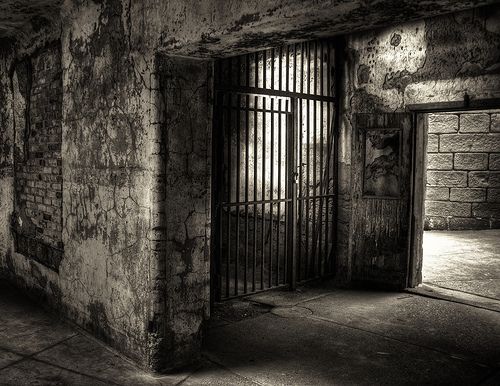 THE PROGRESSIVE
 RAW STORY