 IWATCH– Interpol’s primary purpose
is to help police hunt down murderers and war criminals, child sex offenders
and wildlife poachers. But a five-month investigation by the International Consortium of Investigative
Journalists shows a little-known side to Interpol’s work:
In cases from countries such as Iran, Russia, Venezuela and Tunisia,
Interpol Red Notices are not only being used for legitimate law enforcement
purposes, but to round up political opponents of notorious regimes.
IWATCH– Interpol’s primary purpose
is to help police hunt down murderers and war criminals, child sex offenders
and wildlife poachers. But a five-month investigation by the International Consortium of Investigative
Journalists shows a little-known side to Interpol’s work:
In cases from countries such as Iran, Russia, Venezuela and Tunisia,
Interpol Red Notices are not only being used for legitimate law enforcement
purposes, but to round up political opponents of notorious regimes.
For countries that want to abuse
Interpol, “it’s a way to extend their arm to harass opponents – political
or economic,” said Kyle Parker , policy director of the
U.S. Helsinki Commission, a human rights body of the U.S. Congress.
ICIJ analyzed a snapshot of
Interpol’s Red Notices, published on December 10, 2010. It includes 7,622 Red
Notices issued at the request of 145 countries. About a quarter of those were
from countries with severe restrictions on political rights and civil
liberties. About half were from nations deemed corrupt by international
transparency observers.
The Islamic regime of Iran’s use of
Interpol stands out not just because of the Mazrae episode, but also because of
people like Shahram Homayoun.
He fled Iran in 1992 after the
mullahs took over. After he settled in Los Angeles, Homayoun started a
satellite TV station to beam a message of civil resistance into the homes of
Iranians.
His audience has scribbled his
slogan in Farsi, Ma Hastim – “We
Exist” – on walls and bridges around the country. In 2009, he called on
Iranians to gather at the tomb of the ancient Persian ruler Cyrus the Great.
That’s all. Just show up at his tomb, like a flash mob. That fall, he prompted
Iranians to show up at their local bakery every Thursday and ask for bread.
He’s definitely a troublemaker.
“Apparently, the Interpol
thinks so too,” Homayoun said, laughing at a reporter’s quip.
In December 2009, Iran charged him
with inciting “terrorism against the Islamic regime such as writing slogans [on
walls] and resisting the security forces,” and, at Iran’s request, Interpol
issued a Red Notice and put Homayoun on its global most-wanted list.
Now officially an Interpol fugitive
because of the Red Notice, Homayoun can’t leave the United States. He’ll
probably never again see his parents in Iran. Fortunately for Homayoun, the
U.S. won’t arrest him, let alone send him to Iran.
Read more about Interpol’s Red Notices Used By Some To Pursue Political Dissenters, Opponents
© 2011 Center for Public Integrity
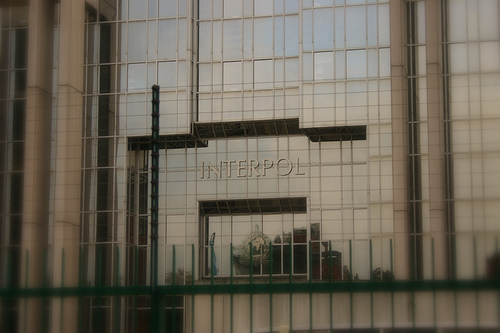
Photo by Flickr user billigwein



 IWATCH
 BBC
BBC THE NATION