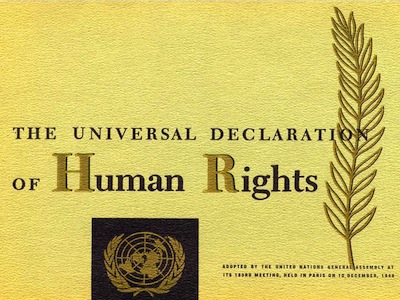
MEDIA ROOTS- The vast majority of the world is unaware of the existence of a Universal Declaration of Human Rights. The Declaration was drafted after the atrocities of WWII and was the first global declaration of rights to which all human beings are inherently endowed. Its 30 articles have since served as the basis for numerous human rights treaties and laws. This is a beautiful video rendition of the Universal Declaration of Human Rights by the Human Rights Action Center.
The Universal Declaration of Human Rights, Created by Seth Brau, Produced by Amy Poncher, Music by Rumspringa courtesy Cantora Records
PREAMBLE
Whereas recognition of the inherent dignity and of the equal and inalienable rights of all members of the human family is the foundation of freedom, justice and peace in the world,
Whereas disregard and contempt for human rights have resulted in barbarous acts which have outraged the conscience of mankind, and the advent of a world in which human beings shall enjoy freedom of speech and belief and freedom from fear and want has been proclaimed as the highest aspiration of the common people,
Whereas it is essential, if man is not to be compelled to have recourse, as a last resort, to rebellion against tyranny and oppression, that human rights should be protected by the rule of law,
Whereas it is essential to promote the development of friendly relations between nations,
Whereas the peoples of the United Nations have in the Charter reaffirmed their faith in fundamental human rights, in the dignity and worth of the human person and in the equal rights of men and women and have determined to promote social progress and better standards of life in larger freedom,
Whereas Member States have pledged themselves to achieve, in co-operation with the United Nations, the promotion of universal respect for and observance of human rights and fundamental freedoms,
Whereas a common understanding of these rights and freedoms is of the greatest importance for the full realization of this pledge,
Now, Therefore THE GENERAL ASSEMBLY proclaims THIS UNIVERSAL DECLARATION OF HUMAN RIGHTS as a common standard of achievement for all peoples and all nations, to the end that every individual and every organ of society, keeping this Declaration constantly in mind, shall strive by teaching and education to promote respect for these rights and freedoms and by progressive measures, national and international, to secure their universal and effective recognition and observance, both among the peoples of Member States themselves and among the peoples of territories under their jurisdiction.
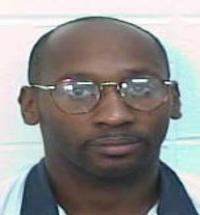
MEDIA ROOTS- In 2007, the Georgia Board of Pardons and Paroles stated that Troy Davis, a man charged with killing a police officer in 1991, would never be put to death unless there was “no doubt” of his guilt. Despite a cloud of uncertainty surrounding the case and a lack of hard evidence linking him to the actual killing, Troy Davis was executed last night by lethal injection at 11:08 EST while the world watched in horror.
No matter what opinion one holds on the death penalty, it is worth noting that over 130 people on death row have been exonerated through DNA evidence that proved their wrongful convictions. Taking that statistic into consideration, it’s likely that people have already been put to death by the state who were not guilty of their crime.
Besides the disturbing fact that innocent people have been placed on death row before, the death penalty judicial process is extremely costly to taxpayers. In CA, taxpayers pay $90,000 more annually per death row prisoner than those regularly incarcerated. Furthermore, the appeals process usually takes decades to complete while death row inmates are held in conditions tantamount to solitary confinement.
Personally, I don’t support the death penalty. There is no ‘humane’ way to kill someone, and I think the process of executing a prisoner by any means is barbaric– especially in front of an audience. More importantly, I would rather have a murderer live out the rest of their life than to risk (literally) sponsoring the murder of one innocent person.
The murder of an alleged killer might be a gratifying moment of closure for the victim’s family members, but it will never fill the void left from losing a loved one. Instead, it will only fuel a vicious cycle of vengeance and hate.
Abby Martin
***
For those who think the execution was justified, read the following reasons why the case wasn’t cut and dry via THE GUARDIAN:
1. Of
the nine witnesses who appeared at Davis’s 1991 trial who said they had
seen Davis beating up a homeless man in a dispute over a bottle of beer
and then shooting to death a police officer, Mark MacPhail, who was
acting as a good samaritan, seven have since recanted their evidence.
2.
One of those who recanted, Antoine Williams, subsequently revealed they
had no idea who shot the officer and that they were illiterate –
meaning they could not read the police statements that they had signed
at the time of the murder in 1989. Others said they had falsely
testified that they had overheard Davis confess to the murder.
3.
Many of those who retracted their evidence said that they had been
cajoled by police into testifying against Davis. Some said they had been
threatened with being put on trial themselves if they did not
co-operate.
4. Of the two of the nine key
witnesses who have not changed their story publicly, one has kept silent
for the past 20 years and refuses to talk, and the other is Sylvester
Coles. Coles was the man who first came forward to police and implicated
Davis as the killer. But over the past 20 years evidence has grown that
Coles himself may be the gunman and that he was fingering Davis to save
his own skin.
5. In total, nine people have come
forward with evidence that implicates Coles. Most recently, on Monday
the George Board of Pardons and Paroles heard from Quiana Glover who
told the panel that in June 2009 she had heard Coles, who had been
drinking heavily, confess to the murder of MacPhail.
6.
Apart from the witness evidence, most of which has since been cast into
doubt, there was no forensic evidence gathered that links Davis to the
killing.
7. In particular, there is no DNA evidence of any sort. The human rights
group the Constitution Project points out that three-quarters of those
prisoners who have been exonerated and declared innocent in the US were
convicted at least in part on the basis of faulty eyewitness testimony.
8.
No gun was ever found connected to the murder. Coles later admitted
that he owned the same type of .38-calibre gun that had delivered the
fatal bullets, but that he had given it away to another man earlier on
the night of the shooting.
9. Higher courts in
the US have repeatedly refused to grant Davis a retrial on the grounds
that he had failed to “prove his innocence”. His supporters counter that
where the ultimate penalty is at stake, it should be for the courts to
be beyond any reasonable doubt of his guilt.
10.
Even if you set aside the issue of Davis’s innocence or guilt, the
manner of his execution tonight is cruel and unnatural. If the execution
goes ahead as expected, it would be the fourth scheduled execution date
for this prisoner. In 2008 he was given a stay just 90 minutes before
he was set to die. Experts in death row say such multiple experiences
with imminent death is tantamount to torture.
DEMOCRACY NOW–Troy Anthony
Davis was killed by lethal injection by the state of Georgia at At
11:08 p.m. EDT despite widespread doubts about his guilt. The execution
occurred shortly after the U.S. Supreme Court declined to stop the
execution. Democracy Now! was the only news outlet to continuously
broadcast live from the prison grounds last night where hundreds of
supporters Troy Davis held an all-day vigil in Jackson, Ga.
Today we
hear the voices of Troy Davis’ sister Martina Correia, hip-hop artist
Big Boi, NAACP President Benjamin Jealous, Ed DuBose of the Georgia
chapter of the NAACP, two members of the Troy Davis legal team, and
more. We also hear from journalist Jon Lewis, a witness to the
execution: “[Davis] said to the family [of slain police officer Mark
MacPhail] that he was sorry for their loss, but also said that he did
not take their son, father, brother. He said to them to dig deeper into
this case, to find out the truth. And then he said to the prison staff —
the ones he said, ‘who are going to take my life,’ — he said to them,
‘may God have mercy on your souls,’ and his last words were to them,
‘may God bless your souls.'”
Democracy Now Special Report on Troy Davis Execution: Did Georgia Kill an Innocent Man? 1/2
Democracy Now Special Report on Troy Davis Execution: Did Georgia Kill an Innocent Man? 2/2
Russia Today covers the outrage surrounding Troy Davis’s death on the day of his execution.
MEDIA ROOTS- John Dau is one of Sudan’s Lost Boys, a group of more than 20,000 boys who escaped the genocide during the Sudanese Civil War, where 2.5 million Southern Sudanese were killed and millions of others were displaced. John gives Media Roots a moving account of his escape, his life growing up in the refugee camps, his experience coming to America for the first time and his work with the John Dau Foundation, where he established the first comprehensive & sustainable community medical clinic in his home village of Duk Payuel.
Interview with John Dau conducted, produced and edited by Abby Martin
Trailer for National Geographic’s award winning documentary called ‘God Grew Tired of Us’, based on John Dau’s story. Check out more about the film at http://www.godgrewtiredofus.com/
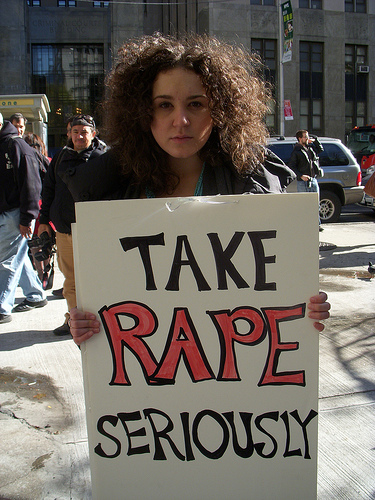
MEDIA ROOTS- Perhaps one of the most abhorrent aspects of US foreign policy in the 21st
century is the privatization of the US military and the government’s
outsourcing of military jobs to corrupt war contractors.
Military contractors are murderous thugs-for-hire who act above the law and hold zero allegiance to any constitutional body. Blackwater’s sordid slew of contemptuous behavior and criminal actions during the Iraq war might have cast a negative light upon them, but it didn’t stop the Obama administration from awarding their criminality with a quarter billion dollar contract to continue working in US war zones.
This unaccountability for criminal acts is not unique to Blackwater. Halliburton subsidiary Kellogg Brown & Root (KBR) is a private security company that employs more US private
contractors and holds larger contracts with the US government than any other firm in Iraq.
In 2007, a KBR employee named Jamie Leigh Jones claimed that she was gang raped by multiple KBR workers at a camp in Iraq’s Green Zone. After she reported the rape, she was reportedly locked in a shipping container and threatened with her job if she took further action. Appallingly, KBR has turned the case around and is now suing Jones for making “frivolous claims”, demanding $2 million in damages.
“They have beaten us and now they are attempting to crush us,” her lawyer, Todd Kelly, told the Wall Street Journal. “This is an attempt by KBR to chill other people from bringing claims against them.”
It’s shameful that these corporations have essentially no oversight from the US government– the Crime Victims Office at the Department of Justice was unable to
investigate the incident because of a lack of jurisdiction over private
contractors in Iraq.
Now it’s Jones’s word against KBR, and it doesn’t look like she has much of a chance to win against the monolithic corporation. Let’s just hope she can walk away without having given them a dime.
AMG– Award winning documentary filmmaker Rory Kennedy explores the human and
political consequences of one of the most bitter scandals of the war in
Iraq in this feature. In the 1960’s, a prison was built in Abu Ghraib,
an Iraqi city west of Baghdad, and during the regime of Saddam Hussein
it became a center of torture and abuse where political dissidents were
subjected to agonizing punishment or death.
Following the United States
invasion of Iraq in 2003, the prison was taken over by American military
authorities, and was used as a holding facility for prisoners of war
and suspected terrorists captured by U.S. forces. The prison’s
reputation as a site of widespread abuse rose again when journalists
discovered photographs of Iraqi prisoners being tortured and humiliated
in an ugly variety of ways by American soldiers, a scandal which had a
major impact on international thinking about the war. Ghosts of Abu
Ghraib offers an in-depth look at the story behind the abuse of Iraqi
prisoners, featuring interviews with observers on both sides of the
national divide.



 Whereas recognition of the inherent dignity and of the equal and inalienable rights of all members of the human family is the foundation of freedom, justice and peace in the world,
 MEDIA ROOTS- In 2007, the Georgia Board of Pardons and Paroles stated that Troy Davis, a man charged with killing a police officer in 1991, would never be put to death unless there was “no doubt” of his guilt. Despite a cloud of uncertainty surrounding the case and a lack of hard evidence linking him to the actual killing, Troy Davis was executed last night by lethal injection at 11:08 EST while the world watched in horror.
  MEDIA ROOTS- Perhaps one of the most abhorrent aspects of US foreign policy in the 21st
century is the privatization of the US military and the government’s
outsourcing of military jobs to corrupt war contractors.
MEDIA ROOTS- Perhaps one of the most abhorrent aspects of US foreign policy in the 21st
century is the privatization of the US military and the government’s
outsourcing of military jobs to corrupt war contractors.
