MR Original – Humans Living Through Machines

MEDIA ROOTS“As machines replace skill, they disconnect themselves from life; they come between us and life. They begin to enact our ignorance of value – of essential sources, dependences, and relationships.

The catch is that we cannot live in machines. We can only live in the world, in life. To live, our contact with the sources of life must remain direct; we must eat, drink, breathe, move, mate, etc. When we let machines and machine skills obscure the values that represent these fundamental dependences, then we inevitably damage the world; we diminish life. We begin to ‘prosper’ at the cost of a fundamental degradation.”

-Wendell Berry in The Unsettling of America: Culture & Agriculture.


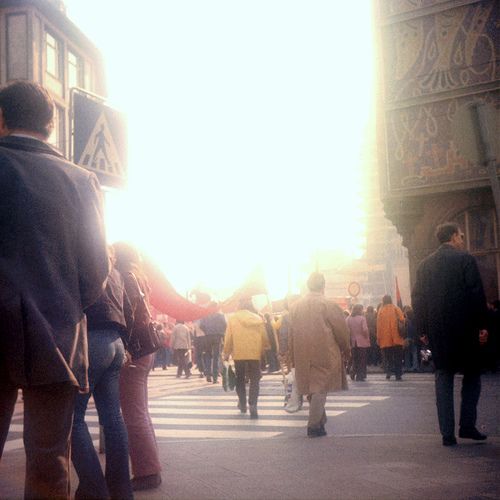
One look at American culture and Berry’s words ring true. We are, beyond a doubt, humans living through machines.

Steel and plastic cages transport our bodies from place to place, while treadmills and ellipticals are used to burn mounting calories. At home, hours are spent fixed to a television or computer screen, as processed foods from the petroleum-based American diet are cooked by microwave. Cell phones in hand, activities previously left to the home or office, are accessed everywhere. Now, as a mobile dictionary, encyclopedia, GPS, internet, television, video game player, camera, audio recorder, telephone and social networking device, the smarter phones become, the stronger the attachment to them and the more constant their use throughout the day.

Suffice it to say, days pass for some people when contact with technology and machines trump their time spent engaging with other humans and the natural world.

In our reliance on technology we forget our own basic skills, functions and needs of movement, human connection, and nourishment of the mind, body and spirit. By neglecting to honor the link that joins our inherent human abilities and our fundamental human needs, we begin to devalue life as our understanding of its ‘essential sources, dependences and relationships,’ weakens.

For example, excessive cell phone and computer use can detract from important face-to-face human interactions, as well as physical movement. These technologies remove us from the present surrounding environment by putting us instantaneously in contact with people in other places and information of every sort. Video and computer games further enable their users to shed themselves of reality through the creation of avatars with their own independent, digital lives, such as in the game Second Life.

While there are tremendous benefits to having immediate access to information and long-distance contact with others, people who spend the vast majority of their daily hours in use of these technologies can develop addictions that leave them uncomfortable and anxious when such immediate response and instant entertainment is not within grasp.

This dependency has potentially crippling consequences. Finding peace in the calm of the present moment can become difficult. With attention divided among people, devices and other input, important details of the present moment go unnoticed, like subtle human interactions and other small things that can bring great joy to life.

The way we communicate, which is fundamental to enriching relationships and thriving communities, is also altered as more interactions take place digitally. In this medium of communication we lose the richness of experience that body language, facial expression, and the sensation of touch and smell, can create.

Hours tethered to a computer, TV or the steering wheel of a car, significantly limit our physical movement to slight motions of the arm at best, diminishing our physical and psychological health while simultaneously degrading our muscular capabilities. Just as dogs need walks, or animals that become restless in cages, we too have an intrinsic need for movement and exercise.

Many of us find ourselves bouncing between digital and natural environments, attempting to achieve balance in a culture that often feels as if it’s herding us towards one singular monotonous way of being. The beauty of this balancing act though, is that we control technology – we have the power to set limits for ourselves, to power off our devices, and to re-engage.

Simple acts can be transformative. For those who live within a 2-mile radius of frequented places, walking or riding a bicycle is an excellent option that, contrary to popular thought, saves time while adding exercise into the day. Restaurants, cafes and other time spent with friends and family provide good opportunity to detach from technology and give into what is around us.

Another limit-setting technique is to avoid the computer right before bed and for the first hour every morning. It is amazing how a simple and fresh approach to the morning can set the day off right.

As with most things, moderation is key, joined with a genuine respect and appreciation for the human element of the world and our need for movement.

Wendell Berry, in The Unsettling of America, insightfully writes of what we must work to avoid:

“We are wasting our bodies exactly as we are wasting our land. Our bodies are fat, weak, joyless, sickly, ugly, the virtual prey of the manufacturers of medicine and cosmetics. Our bodies have become marginal they are growing useless like our ‘marginal’ land because we have less and less use for them. After the games and idle flourishes of modern youth, we use them only as shipping cartons to transport our brains and our few employable muscles back and forth to work.”

As dark and unforgiving as this portrayal is, it is worth remembering that we live in a country with growing obesity rates and chronic illness. Whether it’s the nature of the work we do, or the food system that feeds us, it is easy to find outlets for blame, yet the responsibility for our well-being rests largely on us.  

The concept of health is originally rooted in wholeness, wholeness with our internal and external selves, as well as with our surrounding environment and community. As humans we have the power of our will to act consciously for the enrichment of our lives and the life of the planet, through movement, breath, love and the lightness of body and soul.

It is up to each of us to seek out a lifestyle that integrates these basic needs and abilities. This could be one of the most important day-to-day choices we make because, simply said, our communities will not be healthy until we choose health for ourselves.

If you feel stuck in old patterns and dependencies, realize that you have the ability to shift your body and habits to reach greater strength and peace. You are your own worst enemy. Only you can choose steadfast commitment and determination to truly live, in direct contact with the sources of life.

So, stand with me now, step away from the computer, push your chair back and reach your hands for the sky.

Stretch, breathe deep, smile.

We were made to move. The energy is in you, waiting for release.


Written by alicia roldán ©


Photography by Rick Pickett

IDF May Be Using Most Dangerous Type of Tear Gas

HAARETZ (ISRAEL) – Questions are surfacing about Israel’s use of tear-gas grenades, as security officials investigate the recent death of a protester at the weekly demonstration near the separation fence at the West Bank village of Bil’in. A 36-year-old woman, Jawaher Abu Rahmah, died on Saturday morning.

The medical report filed in the Ramallah hospital where Abu Rahmah was taken shows that her death was caused by respiratory failure resulting from the inhalation of tear gas.

Haaretz obtained the medical report on Sunday from Jawaher’s brother, Ahmed Abu Rahmah.

Jawaher Abu Rahmah was the sister of Bassem Abu Rahmah, who was killed in April 2009 when Israeli soldiers fired a tear-gas grenade at his chest at a demonstration at the fence in Bil’in. Ahmed Abu Rahmah has three surviving brothers; their father died five years ago.

“My entire family is ruined,” he said on Sunday. “The whole house feels a sense of catastrophe.” He said he bears no hatred toward Israelis. “They are people just like myself. We don’t seek vengeance against Israel. We want the return of our lands, and the struggle won’t end until our property is restored.”

The Israel Defense Forces uses crowd-dispersal tear gas known as CS, which was developed half a century ago in Britain and the United States. It is used by armies and police forces around the world. In recent years, a number of studies have cast doubts about this type of gas; there have been reports of several deaths caused by the inhalation CS tear gas.

Click to read full article on IDF use of dangerous tear gas.

© Copyright 2011 Haaretz  

Article written by Avi Issacharoff and Anshel Pfeffer

Photograph by flickr user Mark Z.

Posted in Uncategorized | 1 Reply

10 Most Hopeful Stories of 2010

YES! MAGAZINE – It was a tough year. The economy continued its so-called jobless recovery with Wall Street anticipating another year of record bonuses while most Americans struggle to get work and hold on to their homes. The wars in Iraq and Afghanistan continued, and spilled over into Pakistan and Yemen, and more American soldiers died by suicide than fighting in Afghanistan. And it was a year of big disasters, some of them indicators of the growing climate crisis.

World leaders, under the sway of powerful corporations and banks, have been unable to confront our most pressing challenges, and one crisis follows another.

Nonetheless, events from 2010 also contain the seeds of transformation. None of the following stories is enough on its own to change the momentum. But if we the people build and strengthen social movements, each of of these stories points to a piece of the solution.

photo by by david parker flickr1.    Climate Crisis Response Takes a New Direction. After the failure of Copenhagen, Bolivia hosted a gathering of indigenous people, climate activists, and grassroots leaders from the global South—those left out of the UN-sponsored talks. Their solution to the climate crisis is based on a new recognition of the rights of Mother Earth. Gone are notions of trading the right to pollute (which gives a whole new meaning to the term “toxic assets”). Instead, life has rights, and we can learn ways to live a good life that doesn’t require degrading our home.
The official climate agreement that came out of Cancún was weak and disappointing, although it did represent a continued commitment to work to address the challenge. But the peoples’ mobilizations, and the solutions born in Cochabamba, continue to energize thousands.

Meanwhile, Californians voted to uphold their ambitious climate law, despite millions spent by oil companies to rescind the measure in November’s election. And cities—Seattle, for one—are moving ahead with their own plans to reduce, and even zero-out, their climate emissions.

2.    Wikileaks Lifts the Veil. The release of secret documents by Wikileaks has lifted the veil on U.S. government actions around the world. While the insights themselves don’t change anything, they do offer grist for a national dialogue on our role in the world—especially at a time when our federal budget crisis may require scaling back on our hundreds of foreign military bases, our protracted overseas wars, and our budget-busting weapons programs. Likewise, the traumas inflicted on civilian populations and on our own military are spurring fresh thinking. We now have data points for a bracing, reality-based conversation on the future of war—the kind of conversation that makes democracy a living reality.

3.    Momentum is Building for the Abolition of Nuclear Weapons. The ratification of the START Treaty is an important step in the right direction. And the National Council of Churches, the U.S. Conference of Catholic Bishops, the U.S. Conference of Mayors, and others from across the political spectrum have joined UN Secretary-General Ban Ki-moon in calling for an even more ambitious goal: the end of nuclear weapons.

4.    Resilience is the New Watchword. As familiar sources of security erode, people are rebuilding their communities to be green and resilient. Detroit, a city abandoned by industry and many of its former residents, now has over 1,000 community gardens, a six-block-long public market with some 250 independent vendors, and a growing support network among small businesses. Around the country, faith groups and others are forming Common Security Clubs to help members weather the recession and consider more life-sustaining economic models. Communities are becoming Transition Towns as a means to prepare for breakdowns in society that may result from any combination of the triple crises of climate change, an end to cheap fossil fuels, and an economy on the skids.

5.    Health Care—Still in Play. The passage of the Obama health care package seemed to lock us into a reform package that maintains the expensive and bureaucratic role of private insurance and props up the mega-profits of the pharmaceuticals industry. But the story is not over. The decision by U.S. District Judge Henry Hudson to strike down the individual mandate in the health care reform may begin unraveling the new health care system.

As insurance premiums continue their steep climb, some are advocating expansion of Medicare to cover more people—or everyone. Thom Hartmann points out this could be done with a simple majority vote in Congress—expanding Medicare to everyone was what its founders had in mind in the first place, he says.

Vermont is exploring instituting a statewide single-payer healthcare system. The United States may wind up following Canada’s path to universal coverage, which began when the province of Saskatchewan made the switch to single-payer health care, and the rest of Canada, seeing the many benefits, followed suit.

6.    Corporate Power Challenged. Small businesses are distancing themselves from the Chamber of Commerce, which promotes the interests of mega-corporations over Main Street businesses. And there are more direct confrontations to corporate power. The citizens of Pittsburgh, Penn., passed a law prohibiting natural gas “fracking,” and declaring that the rights of people and nature supersede the rights of corporations. Other towns and cities are adopting similar laws. The biggest challenge will be undoing the damage of the Citizens United decision, which opened the floodgates to wealthy special interests to spend what they like on elections. Groups around the country are gearing up to take on the issue, with a constitutional amendment just one of the potential fixes.

7.    A local economy movement is taking off as it becomes clear that the corporate economy is a net drain on our well-being, the environment, communities, and even jobs.  A “Move Your Money” campaign inspired thousands to close their accounts with predatory big banks, and instead, to open accounts at credit unions and locally owned banks. Schools, hospitals, local retailers, and families are increasingly demanding local food. Farmers markets are spreading. Independent, local stores have huge cachet as people look local for a sense of community. And the experience of one state with a budget surplus and very low unemployment is capturing the imagination of other states—North Dakota’s state bank is creating a buzz.

8.    Cooperatives Make a Comeback. A new model for local, just, and green job creation is gaining national attention. Leaders in Cleveland, Ohio, created worker-owned cooperatives with some of the strongest, local institutions (a hospital and university) promising to be their customers. The result: formerly low-income workers now own shares in their workplace and earn family-supporting wages. They can plan for their families’ futures, knowing that their jobs can be counted on not to flee the country. The model is spreading, and people now talk about how to bring “the Cleveland model” to their cities.

9.    A Turn Away from Homophobia. The revoking of Don’t Ask, Don’t Tell is just the most dramatic sign that the country has turned away from homophobia. A widespread anti-bullying campaign sparked by the suicide of Rutgers freshman Tyler Clementi led to an “It Gets Better” campaign with videos created by celebrities and others.

10.   Social Movements Still Our Best Hope. Thousands gathered in Detroit in June for the second US Social Forum, an event that galvanized grassroots social movements from across the United States. In Toronto, the meeting of the G20 was greeted by thousands of protesters, many of whom were subjected to police beatings and gassing. The Cancún climate talks brought caravans of farmer/activists and global justice activists as well as greens to press for a meaningful response to the climate crisis. Social movements are alive and well, even though they are disparaged or ignored by the corporate media, which choose to instead shower attention on the well-funded Tea Party. And movement leaders are connecting the dots between Wall Street’s plunder, growing poverty, and the climate crisis, and setting priorities instead for people and the planet.

The turbulence of our lives is increasing, spurred by the crises in the economy and the environment, growing inequality and debt, military overreach, deferred peacetime investments, and species extinctions. Turbulent times are also times when rigid belief systems and institutions are shaken, and change is more possible. Not automatic, and definitely not easy, but possible. The question of our time is how we use these openings to work for a better world for all life.

Sarah van Gelder is co-founder and executive editor of YES! Magazine, a national, independent media organization that fuses powerful ideas with practical actions for a just and sustainable world. Sarah is executive editor of YES!

photograph by flicker user daveparker

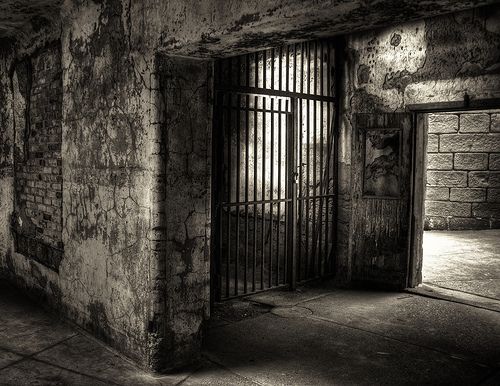
Prison Is No Place for Persons With Mental Illness

Photo by Bob Jagendorf/flickrTHE PROGRESSIVE – Dec. 10 is international human rights day, and one thing we can do in the United States to honor it is to stop incarcerating persons with disabilities.

I was the young, urban teen ribbed for wearing thick glasses and hearing aids.

I was placed in special education classes.

I fought a lot.

And I ended up in the juvenile justice system, where about 70 percent of us had mental health disorders.

I am now a man with a floating diagnosis of schizophrenia and bi-polarity.

And at age 17, I was sentenced to life in prison and quickly ended up in solitary confinement, a condition that added to my mental suspicions, my fears and my frustration at not being able to hear or see well.

You, as a taxpayer, now pay $30,000 a year for my care.

Early, effective community mental health and diversion programs could have helped me become a non-threatening, productive member of society — and could have saved you a lot of money.

I don’t deny that I should be punished for my crime. I do contend it did not need to happen.

We need to provide access to treatment services for all people.

We need to evaluate disabilities early and help families understand the need to get help for their special-needs children.

We need programs to help these families pay for the treatment and glasses or hearing aids or other adaptations their children need.

We need to step beyond the stigmas of mental illness and disability.

We need better communication among treatment providers, our courts and corrections.

If, as Dostoevsky wrote, “The degree of civilization in a society can be judged by entering its prisons,” then we have a long way to go.

Let us start by acknowledging that incarceration is not the answer for persons with disabilities.

Treatment is a human right for people with disabilities.

On international human rights day, we can at least affirm that.

Written by DarRen Morris

© COPYRIGHT THE PROGRESSIVE MAGAZINE, 2010

Photograph by flickr user: Bob Jagendorf

MR Original – Personal Revolution

“The biggest impediment to revolution is a personal one: our own deep-seated feelings of cynicism and impotence. How can anything “I” do possibly make a difference? Most of us have trouble accepting radical change as a viable option. Entrenched in a familiar world, we cannot imagine another. It’s hard to see our current system as simply one stage of a never-ending cycle that sooner or later will fall and be succeeded – but this process of creative destruction is exactly how the world works.”Kalle Lasn, contributing writer for Adbusters

MEDIA ROOTS– Galvanization in the world of social media is increasingly difficult, despite a level of interactive accessibility that was inconceivable two decades ago. People look to Twitter and Facebook for information, advice and input to their own queries, but you can’t ask too much of your connections. They aren’t friends, they aren’t family, but acquaintances with which we share very limited common social threads. As Malcolm Gladwell explains, “Social networks are effective at increasing participation—by lessening the level of motivation that participation requires.”

The result is a culture of noncommittal semi-passion, casual unrest and part-time activism that tokenizes the opposing view to the status quo and eliminates any genuine threat of effectiveness. It allows our conveniences to work against us, by removing all potency in the simplicity of action. How impressive is a thousand “like” clicks on your new group page, when all it takes is an uncommitted finger movement? It’s token activism, “clicktivism,” empty and largely another layer on the white noise of saturated information.

The rinse/repeat culture of sarcastic cool and cynicism rules the day, blotting out the nourishing light of compassion and the open-minded communication that’s crucial to a productively evolving society. One-uppery has replaced interactive, real-life storytelling & inspiration garnered through collectively shared experiences. Part of this can be attributed to our runaway free-market hyper-addiction, and our total complacency in the face of the fact that we are no longer citizens first, but consumers. Friends are now collections. Healthy is expensive, deadly comes in a myriad of value meals.

It’s clear that something is very wrong. Still, there is no rational, collective sense of motivated urgency as a society. No fists pounding the tables and podiums on network TV, demanding that the focus move from saving the banks and the executives to saving the homes, the jobs and the schools, rebuilding what truly makes us functional. There is a massive and deliberate blind eye being turned on the treacherously detrimental use of factory farming and genetically-engineered crops. By design, there are critically few, readily visible and widely viable alternatives to the status quo.

In the complete convenience and 24 hour full-blast entertainment access of today’s consumerist culture, the grounds for a truly meaningful uprising is at both points more fertile and more complicated than ever before. Organizing has reached hyperactive levels of interactivity, yet it’s largely done on the wings of casual, uncommitted interest. All the same, there is valid argument against Gladwell’s logic, given that awareness now takes flight over the digital realm, and his idea of a return to an authoritarian or even hierarchal activism model is precisely the opposite of what is needed for effective social revolution. What we need is to awaken the bits of humanity within all of us, that we’ve consumed our way away from.

The promise of passion’s proximity to youth is shackled by encouraged naivete, enabled in its aimlessness at a time when calculated, impassioned unrest is badly needed. A time when far more than a “like” button on a Facebook page or a retweet is necessary to make a meaningful impact, despite an encouraged and growing belief to the contrary. We need to learn how to find that passion once more, to water the seeds of effective activism and motivated focus in a climate of encouraged delusion and critical overexposure. We need to learn how to build a meaningful momentum in a climate where informed dissent is easily encapsulated and polarized, and how to feed the crucial fires of passion with a raw truth and motivation. We need to learn how to make a unified difference both within and without a digital playing field that’s overwhelmingly complex, and against an adversary that’s become inconceivably multi-faceted. We must be willing to tear down the walls of the box of commercial culture in very literal ways.

We accept the billboard horizon as reality each day, despite the unmistakable signs of full-scale class warfare being waged – and won – against us. We delightfully and collectively consume toxic ammunition, scrambling in our idiot rituals for the latest product updates, commiserating with nuanced passion over the design flaws in the latest minor tech boost. We silence our conscience whispers by bemoaning society’s mucosal sheen of vapid idiocy lathered on by the Lohans and Kardashians, all while perpetuating their undeserved spotlight with our prolonged attention and wholehearted addiction to tabloid culture. We’re a proud car crash flashbulb society, dipping toes into reflective self-loathing only for those token moments of inevitable reflection at what we’ve become. We deal poorly with these minor flashes of clarity, largely viewing them as inconvenient truths best medicated away or left for the hand-wringers and worrywarts, to be swiftly replaced by the next hype magnet.

We’re racing to rot the soul of our entire existence, because we’ve been programmed to know and do only this. To champion idiocy, retard our spirituality and wear our deference to marionette leaders like MVP jerseys at a football game. My team versus your team. The only catch – they’re both the same team, and neither are scoring points for us.

But not all of us are proud. Not all of us are content in our disposable culture, our celebration of cynicism and culturally impotent existence between the seemingly unstoppable glaciers of the Left/Right corporate body. Not all of us see the rising millions of unemployed as lazy freeloaders, or questioning the media narrative, the voracious capitalism machine & untethered funding of the industrial military complex as our nation’s foundation corrodes as anti-American.

Like you, there are those of us who understand the immense, gnawing reality of this frustration we’re feeling. We see the mechanics beneath the formidably valid fog of confusion we’ve found ourselves caught in, huddled in reluctant refuge under the umbrella shelter of the soothsayer’s broad-stroke assessments and promises as the torrents of terrifying, confusing and agonizing truth pound down all around us. Don’t get caught out in the rain – results may be horrifying. 

We are led by our entertainment and quest for immediate comfort. The government and media’s relentless focus on bank bailouts and Wall Street rather than urgently finding immediate solutions for the suffering citizens is a giant, vague, monolithic nightmare to the average American, who knows something is very wrong but feels entirely powerless to stop it. Especially with all these wonderful distractions…

We’re no longer communities of individuals seeking connection, but hyper-connected consumer groups, subjects in the latest advertising onslaught, promotional campaign, marketing blast. The chaos of the 24-hour news cycle- the parade of pundits with their myriad of bullshit nutshell assessments- is enough to bring about a collective migraine and personal inner turmoil unlike anything we’ve ever known. It chips at our resolve and our ability to find and hold truth. It gives us an unease that every fiber of our beings tells us needs remedying.

And so the latest line of designer medications arise, for those less-chipper moods, for nicotine or caffeine or shopping addiction, for the latest adolescent energy-suppressant. The problem doesn’t have to go away – where’s the profit in that? It just has to not seem so scary. We have to know that every cloud has a silver lining, every problem can be compartmentalized and treated with a flurry of life-crushingly expensive name-brand medications. As a result, more than half of all insured Americans are now taking prescription medicines regularly for chronic health problems, due in no small part to the explosion of pharmaceutical advertising.

The feeling of this dark momentum weighs on you like a hundred pounds of fat. Are you alone in your disgust & disassociation from the current political landscape of corporate America? The empty echo chamber dialogue that only truly furthers and enables one side of the argument? Are you alone in your horror at the arrogant, shameless profiteering and cultivated confusion all around us? You’re most certainly not. There are millions who empathize with your discontent. Your sense of isolated disconnect in the white noise of conflicting information and punditry is an understandable and natural reaction to this manufactured mirage of immediacy-overload, aimed at preventing organization, galvanization and true change in the interest of the general welfare.

So where do we make a stand? How do we make a difference? Devoted activism carries the guaranteed weight of polarization these days, the promise of external definition and damnation by a system with everything to lose. Every risk taken becomes high-risk when the opposition provides nearly every aspect of your daily reality. A modern social architecture has risen, one that’s led to a greater disconnect between the true spirit of humanity and our realization of its value than ever before. This is a vital reason why making educated, calculated movements is so crucial, why going to yet another rally or holding yet another sign will not make a lasting difference. It’s not enough. We must participate, of course, but we must also be smarter in doing so – and turn up the subversion. We must organize more efficiently and act out more symbolically, so the impact of our actions resonates far more clearly than simply another cupful of water in the ocean of discontent. FUCK YES

By all means, wear your heart on your sleeve. Be proud and vocal of your beliefs, and think outside the box of what’s now considered “acceptable activism”. Live your word. But most of all, be informed. And when it’s time to make a real move, when an opportunity arises to be heard far and wide, do it from a platform of educated discontent with words and actions of impact, not armchair cynicism. Step outside the current pattern of activism and ask yourself, what’s the next step in the evolution of this process? How do I personally affect change? How can I shock the system without fearmongering? And most importantly, how do I get others to actively participate?

Conversation. It’s the most basic way for an idea to spread and myths to either thrive or be shattered. Communication is key, be it as direct as a conversation with a neighbor or as abstract as the breaking of instilled patterns and routines in the public eye. Don’t rely on a prompt from the outside. Start your own ball rolling. Begin the process of new activity that rejects vulture commercialism but thrives with passion, with revolutionary joy, and you may soon find yourself amidst a groundswell of not just onlookers, but supporters and enthusiastic companions.

What will it take to shake us awake? What will finally bring about the motivated focus so desperately needed to cauterize the festering wound eating a gangrened hole through the fabric of our nation? The solution is a sweeping social revolution, not defined by a funding contributor but by a collective of minds willing to take risks for an egalitarian movement diametrically opposed to the consumerist stockpile culture of haves, have-nots and an extinct middle class.

We forget the power of an uprising. An uprising based on free-thinking independence and impassioned rejection of pop culture pollution. To channel this passion, this explosive unrest, progressively, in a series of strategic maneuvers, can be to create an avalanche of awareness & motivation. A tidal shift in consciousness, a momentary lapse in our consumer catatonia that allows a breath of true life to pass through us. A reminder of what was, for those who remember, and a glimpse of what can be for the generations who are inheriting this infinitely complex, badly rotting system.

Perhaps this can serve as an entry point for those who feel the sense of wrongness within and without, but wonder what kind of impact one person can have. For people who feel a rising, precipitous guilt over our collective casual complicity, while living in the shadow of the shimmering mountain of distraction and discouragement from true involvement, and true living-community evolution. We can join in non-linear activism that will represent more than another grain of sand among the identical billions in the vast deserts of vague discontent. Perhaps, for those desperate for a sign of true change, for those willing to lend a hand but hesitant to be another lost voice in the white noise, this can offer some confidence and reaffirmation.

There are many voices shouting their certainties of what will happen next. The new model for galvanization, the next version of the movement. They’ll want you to sign their petitions, wave their flags, scream your affiliations. Don’t participate in anything you haven’t analyzed enough to put your heart behind. Contemplate your steps. Be willing to make waves, black out the ads, deconstruct the mirage. Be the alternative you’re looking for.

Chris Blaszczyk is actively helping to build new horizons of personal activism and sociopolitical progress in Los Angeles, where he runs Antiquiet.com and is a senior writer/editor at CraveOnline.

Photo by flickr user Andreas Helke