The Climate Change “Debate” and Marketization of Nature: Everyone Loses

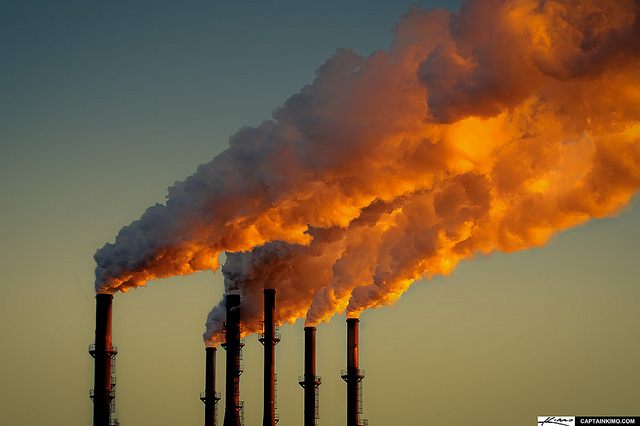
FactoryFlickruserKimSengDespite near-unanimous global scientific and governmental consensus that global warming is accelerating due to human activity, debating this fact is still a favorite political pastime in the United States.

Governments around the world acknowledge the science that connects industrialization, increased greenhouse gas emissions, and their detrimental impact on the climate, and are currently acting upon solutions. Yet the US, one of the largest greenhouse gas producers, has repeatedly refused to participate in global climate reform. To further confound this reality, the November midterm elections placed ardent climate-change deniers in line for senior legislative environmental policy positions.

Meanwhile, the evidence continues to mount. An abundance of reports show that not only does climate change exist, but that it’s human-induced and will cause severe and non-reversible negative consequences for the planet. Most recently, the Intergovernmental Panel on Climate Change (IPCC) released its 2014 Climate Change Report, which states the observed changes in the climate are “unequivocal” and that carbon dioxide, methane and other greenhouse gas emissions have increased exponentially in the past 60 years. The majority of carbon emissions are absorbed into the ocean, causing rapid acidification which has already caused mass die-offs.

Despite having presented overwhelming evidence from over 130 countries that support this conclusion, IPCC reports continue to be attacked by US media outlets. In 2007, minor errors in the Climate Change Report were widely exploited to justify a denial of its findings, forcing scientists in the US to respond in an open letter. Instead of acknowledging climate change science, the US media continues to distort reality by creating a false equivalency between the two sides.

Additionally, when extreme weather phenomenons are reported, climate change is rarely mentioned as a contributing factor. Project Censored found that out of 450 news segments about weather anomalies in 2013, only 16 of them mentioned climate change.

One may be inclined to believe that politicians who deny man-made climate change are innocuously naïve, but many times they are consciously furthering the neoliberal business agenda at the expense of the planet. Accepting the true human impact on the world would mean instilling regulations to curb pollution, which would cut into corporate profits. As Naomi Klein keenly elucidates, the destructive nature of neoliberalism does not lend itself to a sustainable environment, now or ever. Free-market advocates don’t look at earth resources beyond market shares, and their corporate mantra is to continuously maximize profits.

Fossil fuel companies know their time is running out, so they’ve launched a propaganda war to confuse the American public about climate change, raising serious questions about democracy and the right to information. Journalist George Monbiot has extensively researched the ties between oil companies and the reproduction of climate change disinformation. As Abby Martin on Breaking the Set revealed, those who want to protect oil interests fund think-tanks with the sole aim of derailing climate change evidence and environmental advocacy.

One example of intentionally manipulating public opinion is EPA Facts, whose single purpose is to debunk research by the Environmental Protection Agency. Sourcewatch describes it as a “front group operated by the PR firm Berman & Co.” which manages several similar groups that work to further market fundamentalism, including anti-minimum wage campaigns, food safety, and a host of other social policies. Another egregious example of this collusion is the American Enterprise Institute. This Exxon Mobil-funded think tank blatantly offered funding to scientists and academics that could produce research to dismiss human caused climate change.

Other industries that contribute significantly to greenhouse gas emissions, such as the beef industry, also have ties to climate change denial. A report by the 2006 UN Food and Agriculture Organization (FAO) found that livestock production is responsible for up to 18 percent of total emissions, more than all transportation combined. Coincidentally, Koch Industries, which oversees Matador Cattle Company, has consistently funded climate change denial.

These astroturf groups have subverted the dialogue, toxified the political process and halted environmental progress. Sociologist Robert J. Bruelle found just how prevalent they are too, with at least 140 organizations existing solely to poison the well and delay legislative action on climate change. Mega rich donors who also want to chip in are becoming more savvy in their funding techniques, using third-party agencies such as Donors Capital Fund to anonymously funnel money into neoliberal policies. As the Guardian revealed last year, anonymous billionaires donated up to $120 million to anti-climate groups to discredit the scientific consensus using Donors Trust.

As journalist Lee Fang discussed on Democracy Now, Republicans who deny man-made climate change and are largely backed by fossil fuel companies will soon be in key positions to block environmental policies. This includes Senator Jim Inhofe in the Environment Committee, Senator Ron Johnson in the Homeland Security and Government Reform Committee, and possibly Senator Ted Cruz in the Science Subcommittee, which controls federal scientific research. Beyond their proclaimed skepticism or outright denial of climate change, these leaders’ ties with oil giants will dismiss any chance of judicious policy decisions.

Because campaign funding is intimately tied to corporate interests, Americans must recognize the influence that corporations and politicians have on media, advertising, think-tank research, and other avenues of information. It’s also a critical time to recognize neoliberalism (or market-fundamentalism) as a toxic system that places corporate profit over any chance for democracy. Acknowledging climate change as a global reality is the first step to demanding sustainable environment policies and proper investment in renewable energy sources.

Other countries are quickly progressing on this front. Germany’s Energiewende project (energy transition plan) has successfully turned nearly one-third of their electricity production carbon-free over the past ten years, and are projected to be 100% renewable as early as 2050. The country’s renewable plan uses electricity through solar photovoltaic and onshore wind power energy.

The US could do this too. Dr. Mark Jacobson from Stanford University developed a plan for America to shift to 100 renewables by 2050, tailoring the proposals for each state based on regional resources available. California, for instance, would meet its energy needs by switching to 55% solar, 35% wind, 5% geothermal, and 4% hydroelectric power. Details of the intricate plan include land requirements, projected cost and savings, expected job creation, and how the proposed trade-off would significantly reduce pollution and global warming emissions.

Plans like this demonstrate the potential the US has in shifting its energy policies and being a leader in sustainable development. Rather than watching the fictitious ‘climate change’ debate unfold, the American public should be aggressively advocating for the development and implementation of green energy plans. It is now or never, and unfortunately, the planet cannot wait.

Written by Sabrina Nasir

Photo by flickr user Kim Seng
Posted in Uncategorized | 1 Reply

Obama Strikes Out on Global Warming

SALON– In our globalized world, old-fashioned geography is not supposed to count for much: mountain ranges, deep-water ports, railroad grades — those seem so nineteenth century. The earth is flat, or so I remember somebody saying.

But those nostalgic for an earlier day, take heart. The Obama administration is making its biggest decisions yet on our energy future and those decisions are intimately tied to this continent’s geography. Remember those old maps from your high-school textbooks that showed each state and province’s prime economic activities? A sheaf of wheat for farm country? A little steel mill for manufacturing? These days in North America what you want to look for are the pickaxes that mean mining, and the derricks that stand for oil.

There’s a pickaxe in the Powder River Basin of Montana and Wyoming, one of the world’s richest deposits of coal. If we’re going to have any hope of slowing climate change, that coal — and so all that future carbon dioxide — needs to stay in the ground. In precisely the way we hope Brazil guards the Amazon rainforest, that massive sponge for carbon dioxide absorption, we need to stand sentinel over all that coal.

Doing so, however, would cost someone some money. At current prices the value of that coal may be in the trillions, and that kind of money creates immense pressure. Earlier this year, President Obama signed off on the project, opening a huge chunk of federal land to coal mining. It holds an estimated 750 million tons worth of burnable coal. That’s the equivalent of opening 300 new coal-fired power plants. In other words, we’re talking about staggering amounts of new CO2 heading into the atmosphere to further heat the planet.

As Eric de Place of the Sightline Institute put it, “That’s more carbon pollution than all the energy — from planes, factories, cars, power plants, etc. — used in an entire year by all 44 nations in Central America, South America, and the Caribbean combined.”Not what you’d expect from a president who came to office promising that his policies would cause the oceans to slow their rise.

But if Obama has admittedly opened the mine gate, it’s geography to the rescue. You still have to get that coal to market, and “market” in this case means Asia, where the demand for coal is growing fastest. The easiest and cheapest way to do that — maybe the only way at current prices — is to take it west to the Pacific where, at the moment, there’s no port capable of handling the huge increase in traffic it would represent.

And so a mighty struggle is beginning, with regional groups rising to the occasion. Climate Solutions and other environmentalists of the northwest are moving to block port-expansion plans in Longview and Bellingham, Washington, as well as in Vancouver, British Columbia. Since there are only so many possible harbors that could accommodate the giant freighters needed to move the coal, this might prove a winnable battle, though the power of money that moves the White House is now being brought to bear on county commissions and state houses. Count on this: it will be a titanic fight.

Read the full article about Obama Strikes Out on Global Warming.

© 2011 Salon

Photo by Flickr group Abandoned Mines

Seeing REDD on Climate Change

photo by will clayton/flickrAL JAZEERA– As climate change negotiations come to a close in Cancun, Birginia Suarez-Pinlac is seeing red. The environmental lawyer from the Philippines is worried that a plan for Reducing Emissions from Deforestation and Degradation (REDD) constitutes a land grab, transferring natural wealth from the poor to the rich under the auspices of saving the planet.

Last year, she says, an Australian coal company tried to forge an agreement with an indigenous tribe on Mindanao Island in the Philippines, a poverty stricken area known for its high mountains and lush green rainforest. “The company offered poor tribes people money in exchange for their atmospheric space. They don’t want to cut their own emissions domestically. They want to find a way to profit from the carbon they produce.”

Forests help take climate changing carbon dioxide out of the atmosphere, reducing global warming – a human induced process linked to wild weather patterns including this year’s deadly flooding in Pakistan and crop destroying wild fires in Russia.

Green-washing

The world is losing about six million hectares of forests each year – an area roughly the size of Greece – due to human activities like logging. REDD is supposed to be designed to allow companies to buy clean air credits from people who live in forests to encourage them to protect the trees. But some environmentalists say that when companies buy credits abroad through what is now a voluntary scheme, they feel entitled to pollute back at home.

“The biggest buyers of REDD credits are the worst polluters – big oil and big coal,” says Bill Barclay, the research director for the Rainforest Action Network in California. “They are looking for a cheap ‘get out of jail free card’ – it’s basically green-washing.”

In the Philippines, indigenous people “didn’t understand that they were giving away their atmospheric space to Australians” when they were approached by a non-governmental organisation working with the coal miners, Suarez-Pinlac says.
 
But REDD and similar initiatives based on trading credits in carbon dioxide are not just about companies purchasing environmental legitimacy from communities who actually take care of forests; the schemes being discussed in Cancun could increase lucrative business opportunities for hedge fund traders and financers.

“There is a lot of concern REDD will be brought into a carbon offset trading scheme,” Barclay says.

Carbon trading is based on the idea that a price should be placed on emissions. Companies or countries would have a cap set on the amount of pollution they could spew. Those who curtail their emissions below targeted levels could sell atmospheric space to polluters who exceed their limits.

Click to continue reading the full article from Al Jazeera News on the problems with the REDD climate scheme.

article by Chris Arsenault for Al Jazeera News

photograph by flickr user Will Clayton

© COPYRIGHT AL JAZEERA, 2010

World’s Forests Can Adapt to Climate Change

GUARDIAN– It is generally acknowledged that a warming world will harm the world’s forests. Higher temperatures mean water becomes more scarce, spelling death for plants – or perhaps not always.

According to a study of ancient rainforests, trees may be hardier than previously thought. Carlos Jaramillo, a scientist at the Smithsonian Tropical Research Institute (STRI), examined pollen from ancient plants trapped in rocks in Colombia and Venezuela. “There are many climactic models today suggesting that … if the temperature increases in the tropics by a couple of degrees, most of the forest is going to be extinct,” he said. “What we found was the opposite to what we were expecting: we didn’t find any extinction event [in plants] associated with the increase in temperature, we didn’t find that the precipitation decreased.”

In a study published todayin Science, Jaramillo and his team studied pollen grains and other biological indicators of plant life embedded in rocks formed around 56m years ago, during an abrupt period of warming called the Paleocene-Eocene Thermal Maximum. CO2 levels had doubled in 10,000 years and the world was warmer by 3C-5C for 200,000 years.

Contrary to expectations, he found that forests bloomed with diversity. New species of plants, including those from the passionflower and chocolate families, evolved quicker as others became extinct. The study also shows moisture levels did not decrease significantly during the warm period. “It was totally unexpected,” Jaramillo said of the findings.

Read full article HERE.

Photo by McD22

© COPYRIGHT THE GUARDIAN, 2010

From a Rapt Audience, a Call to Cool the Hype

NEW YORK TIMES– Hollywood has a thing for Al Gore and his three-alarm film on global warming, “An Inconvenient Truth,” which won an Academy Award for best documentary. So do many environmentalists, who praise him as a visionary, and many scientists, who laud him for raising public awareness of climate change.

But part of his scientific audience is uneasy. In talks, articles and blog entries that have appeared since his film and accompanying book came out last year, these scientists argue that some of Mr. Gore’s central points are exaggerated and erroneous. They are alarmed, some say, at what they call his alarmism.

“I don’t want to pick on Al Gore,” Don J. Easterbrook, an emeritus professor of geology at Western Washington University, told hundreds of experts at the annual meeting of the Geological Society of America. “But there are a lot of inaccuracies in the statements we are seeing, and we have to temper that with real data.”

Mr. Gore, in an e-mail exchange about the critics, said his work made “the most important and salient points” about climate change, if not “some nuances and distinctions” scientists might want. “The degree of scientific consensus on global warming has never been stronger,” he said, adding, “I am trying to communicate the essence of it in the lay language that I understand.”

Although Mr. Gore is not a scientist, he does rely heavily on the authority of science in “An Inconvenient Truth,” which is why scientists are sensitive to its details and claims.

Criticisms of Mr. Gore have come not only from conservative groups and prominent skeptics of catastrophic warming, but also from rank-and-file scientists like Dr. Easterbook, who told his peers that he had no political ax to grind. A few see natural variation as more central to global warming than heat-trapping gases. Many appear to occupy a middle ground in the climate debate, seeing human activity as a serious threat but challenging what they call the extremism of both skeptics and zealots.

Read full article about From a Rapt Audience, a Call to Cool the Hype.

© 2007 NY TIMES