THE TELEGRAPH/UK – Robert Gates, the US defence secretary, was speaking as he arrived in Beijing
on Sunday for four days of talks aimed at renewing ties between the US and Chinese
armed forces. However his visit has been overshadowed by a series of
announcements by the Chinese about the growing strength of their missile
technology, naval capabilities and other defence initiatives.
The visit is the first by a US defence secretary since 2000, and comes at a
time of heightened tension in the region. It is also almost one year after
China suspended military contacts with Washington following arms sales to
Taiwan.
With relations between North and South Korea at their lowest point in decades,
Beijing has been angered by joint US-South Korean military exercises close
to its shores, while Washington is concerned by China’s increasing
willingness to flex its muscles. Ten days ago, Japan revealed that it had
scrambled its fighter jets 44 times in the last nine months in response to
incursions into Japanese air space by the Chinese air force.
“I’ve been concerned about the development of the anti-ship cruise and
ballistic missiles ever since I took this job,” said Mr Gates. “They
clearly have the potential to put some of our capabilities at risk and we
have to pay attention to them. We have to respond appropriately with our own
programmes.”
Last Thursday, Mr Gates announced a five-year military budget that would
include funding for a new generation of long-range bombers, as well as for
new electronic jammers and radar.
AL JAZEERA– The United Nations Security Council has overwhelmingly agreed to a new package of economic sanctions against Iran.
12 of the council’s 15 members voted on Wednesday to approve the sanctions resolution. Turkey and Brazil both voted against the resolution, while Lebanon abstained.
Barack Obama, the US president, called the resolution “the toughest sanctions ever faced” by the Iranian government.
“We recognize Iran’s rights. But with those rights come responsibilities. And time and again, the Iranian government has failed to meet those responsibilities,” Obama said at the White House.
Susan Rice, the United States ambassador to the UN, praised the vote as a “decisive” move against Iran’s nuclear programme, which she called a “grave threat to international security.”
Mahmoud Ahmadinejad, the Iranian president, was one of several high-ranking Iranian officials to quickly condemn the decision. Ahmadinejad said the sanctions would not have an impact on Iran.
“Sanctions are falling on us from the left and the right. For us they are the same as pesky flies,” Ahmadinejad said. “We have patience and we will endure throughout all of this.”
Alaeddin Boroujerdi, the head of the Iranian parliament’s national security committee, said lawmakers would review the level of Iran’s cooperation with the International Atomic Energy Agency. And Manouchehr Mottaki, the Iranian foreign minister, said the vote “damaged” the UN Security Council.
Several other European countries praised the sanctions resolution; the Chinese government endorsed it as well, while insisting that it still wants a diplomatic solution.
NY TIMES– Ahmed Wali Karzai, the
brother of the Afghan president and a suspected player in the country’s booming
illegal opium trade, gets regular payments from
the Central
Intelligence Agency, and has for much of the past eight years, according to
current and former American officials.
The agency pays Mr. Karzai for a variety of services, including helping to
recruit an Afghan paramilitary force that operates at the C.I.A.’s direction in
and around the southern city of Kandahar,
Mr. Karzai’s home.
The financial ties and close working relationship between the intelligence
agency and Mr. Karzai raise significant questions about America’s
war strategy, which is currently under review at the White House.
The ties to Mr. Karzai have created deep divisions within the Obama
administration. The critics say the ties complicate America’s increasingly
tense relationship with President Hamid Karzai, who has struggled
to build sustained popularity among Afghans and has long been portrayed by the Taliban as an American puppet. The
C.I.A.’s practices also suggest that the United
States is not doing everything in its power
to stamp out the lucrative Afghan drug trade, a major source of revenue for the
Taliban.
WASHINGTON
POST– The National Security Archive at George
Washington University
has published a series of declassified U.S.
documents detailing the U.S. embrace of
Saddam Hussein in the early 1980’s. The collection of documents, published
on the Web, include briefing materials, diplomatic reports of two Rumsfeld
trips to Baghdad, reports on Iraqi
chemical weapons use during the Reagan administration and presidential
directives that ensure U.S.
access to the region’s oil and military expansion.
Join Joyce Battle, Middle East analyst at the
National Security Archive at George Washington
University, online Thursday, Feb.
27 at 11 a.m.
ET to discuss the series of declassified U.S.
documents detailing U.S.
support of Saddam Hussein in the early 1980’s.
The transcript follows.
____________________
washingtonpost.com: washingtonpost.com: Hi Joyce. Welcome. Before we
could begin maybe you could give our readers a little background about Donald
Rumsfeld’s visits to Iraq
in 1983 and 1984. What was he doing and why is this information relevant today?
Joyce Battle: Hello. I’m very pleased to have this opportunity to
discuss some of the historical background to the U.S.’s
present policy toward Iraq.
Donald Rumsfeld was sent to the Middle East as a special
envoy for President Reagan in December 1983 and March 1984. At the time, he was
a private citizen, but had been a high-ranking official with several Republican
administrations. He had a number of items on his agenda, including conflict in Lebanon.
However, one of his main objectives was to establish direct contact between
President Reagan and Iraqi President Saddam Hussein — he carried a letter from
Reagan to Saddam to further this process.
His trip, and other overtures by the U.S.,
were necessary because the Reagan administration had decided to assist Iraq
in its war against Iran
in order to prevent an Iranian victory, which the administration saw as
contrary to U.S.
interests. But until the early 1980s, U.S.-Iraqi relations had been frosty — Iraq
broke off formal diplomatic relations in 1967. So in order to enable the U.S.
to set up the mechanisms needed to provide Iraq with various forms of
assistance, contacts had to be established, Iraq had to be removed from the
State Department’s list of countries supporting terrorism, and diplomatic
relations needed to be re-established (which occurred in November 1984.)
____________________
Derwood, Md.:
Who cares what these documents say? Iraq
is the enemy of the day and needs to be dealt with.
Joyce Battle: I respectfully disagree with your point of view. In a
democracy, citizens are expected to be informed about decisions that affect
their own lives and that of their neighbors. If the U.S.
goes to war with Iraq,
many people will be put in harm’s way, and I think that we all should seek some
understanding of earlier developments and policies that led us to the current
situation.
____________________
Wheaton, Md.:
I hear pro-Saddam activists often claim that Reagan supplied Hussein with
chemical weapons. I’ve seen no evidence to support these claims. Is there any
truth to this?
Joyce Battle: I have not personally seen documents that indicate that
the Reagan administration supplied Iraq
with chemical weapons. However, the documents we recently posted on the
Internet demonstrate that the administration had U.S.
intelligence reports indicating that Iraq
was using chemical weapons, both against Iran
and against Iraqi Kurdish insurgents, in the early 1980s, at the same time that
it decided to support Iraq
in the war. So U.S.
awareness of Iraq’s
chemical warfare did not deter it from initiating the policy of providing
intelligence and military assistance to Iraq.
There were shipments of chemical weapons precursors from several U.S.
companies to Iraq
during the 1980s, but the U.S.
government would deny that it was aware that these exports were intended to be
used in the production of chemical weapons.
____________________
Chicago, Ill.:
Greetings,
This might be slightly off point but I’ll submit it for discussion.
The current administration has made a point of keeping all information that
it can close to the vest. Not just secret information (which is
understandable), but also material this is simply unflattering.
Examples: Energy documents from Cheney’s summits; instructing DoJ to find
reasons to reject even the most legit FOIA requests
Does a pattern of Secretizing Everything result in greater public skepticism
when the administration pulls the “Trust Me” card in its discussions
of the potential war in Iraq?
Joyce Battle: I agree with you. Strangely, one of the earliest
responses of the current Bush administration to the events of September 11 was
to begin efforts to vastly augment the ability of the government to limit the
availability of information about its activities to the public. In particular,
it attempted to impede the release of documents from the Reagan and Bush
administrations, which were to be declassified under existing guidelines for
making historical documents available. I considered this suspicious, since at
that time questions were being raised as to the extent to which U.S.
support for Islamist militants, in Afghanistan
and elsewhere, had helped in creating the infrastructure used by al-Qaeda. I
believe that government efforts to control and/or conceal information
contribute not only to skepticism but to paranoia on the part of those who see
contradictions between government rhetoric and policy.
____________________
Maryland: The
Sun in London recently published a
photo of Chirac shaking hands with Saddam in 1984. Do the archives have any
photos of current US
officials shaking hands with Saddam?
Joyce Battle: Our website displays an image of current Defense
Secretary Donald Rumsfeld shaking hands with Saddam during this 1983 visit. You
can also view a short video (silent) clip of Rumsfeld’s meeting with Saddam. To
locate our website, just use a search engine to find “national security
archive.”
____________________
Arlington, Va.:
Ms. Battle,
Do the declassified documents you’ve seen reveal much detail of the U.S.
policy toward Iran,
and the extent to which Saudi influence and an Arabist-heavy
State Dept. caused us to take sides
in a Sunni-Shiite, Arab-Persian conflict? It seems that our willingness to
accept Saudi influence with regard to two policy areas during the 80s
(supporting Afghan resistance against the Russians, supporting Saddam against Iran)
has caused enormous “blowback” today.
Joyce Battle: Based on the documents I have seen, I don’t believe
that Saudi Arabia
was the tail that wagged the American dog. The U.S.
and Saudi Arabia
have had mutually supportive relations for some 70 years, and particularly
since World War II. For decades, the U.S.
believed that it was in its interest to support Saudi
Arabia and other conservative Gulf
monarchies. Despite their differences with the U.S.
over issues like the Arab-Israeli dispute, these monarchies have on the whole
been very supportive of U.S.
political and economic interests. The U.S.
was as fearful of the possible consequences of the expansion of revolutionary
ideas from Iran
as the Saudis were.
The U.S., for
many years, held the view that promoting Islamist beliefs would effectively
counter the spread of communist ideology in the Middle East,
South Asia, and Africa, and was
not at all opposed to Saudi support for conservative Islamist movements. In
return, the U.S.
presence in various military facilities in Saudi
Arabia is widely viewed as the ultimate
guarantor of the Saudi royal family’s continuing rule. Again, these two
countries’ policies have always been based on mutual self-interest.
____________________
Cumberland, Md.:
Do you believe that the US
should have stayed neutral in the Iran-Iraq war thereby allowing Iran
and the Ayatollahs to win thereby enlarging their influence in the region?
Joyce Battle: It is obviously very difficult to second-guess history,
and I won’t attempt to do so. I believe that when the U.S.
became aware of Iraq’s
chemical weapons use it should have used what influence it had to stop it.
Doing so was actually incumbent upon the U.S.
under international law. I believe the U.S.
should have used its international influence, which is enormous, to do
everything it could to end this war. It was an atrocity, resulting in hundreds
of thousands of casualties. Too many countries had ulterior motives and did not
do enough to cut off arms shipments to the two combattants. I think that U.S.
support for Iraq,
despite its public condemnation of chemical warfare, encouraged Saddam Hussein
to believe that the U.S.
did not really believe, or act on, its public posture.
____________________
Ocean Pines, Md.:
We often hear that Saddam Hussein gassed his own people in 1988. It is
reported by Stephen Pelletiere that most of the civilians killed at that time
were killed by Iranian poison gas. Do you know anything about this?
Joyce Battle: I have seen one analysis that makes this claim. Most of
the government documents I have seen from this time period (1987-1989) indicate
that the U.S.
believed that Iraq
had used chemical weapons against the Kurds. This was part of a series of
measures undertaken by Iraq
to punish Kurdish insurgents for allying with Iran
during the war.
____________________
Alexandria, Va.:
Are you arguing that the policies of the early 80’s were correct? Or that
they were mistaken? Or just that we need to know? Personally, while I would
wish that the policies of the early 80’s had turned out differently, the goal
appears to have been to establish a working relationship with Iraq.
That goal obviously was not reached, and Saddam took the wrong message, that we
were not bothered by his use of chemical weapons.
Times change; it could be argued that the current Bush administration is
being more realistic than were the Reagan and Bush 1 administrations.
Joyce Battle: Mostly, I think that we need to know. We try to
make documents available to the public to help them reach their own
conclusions. Before making the decision as to whether they support or oppose
war with Iraq, people should learn as much as they can about the issues and about the
history of our relations with that country. The Bush administration, in
attempting to persuade the public to support the war, presents an overly
simplistic case. The problems of the Middle
East are enormously complex. The Reagan
administration’s policies toward the Iran-Iraq war show that international
relations are conducted not in black-and-white but in shades of gray
____________________
Joyce Battle: It’s time for me to go — thank you all very much for
your questions and for your interest in this very important topic.



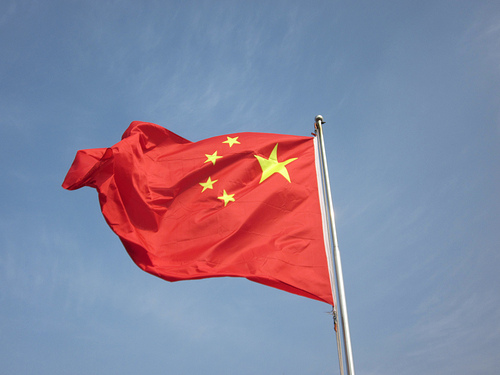 THE TELEGRAPH/UK – Robert Gates, the US defence secretary, was speaking as he arrived in Beijing
on Sunday for four days of talks aimed at renewing ties between the US and Chinese
armed forces. However his visit has been overshadowed by a series of
announcements by the Chinese about the growing strength of their missile
technology, naval capabilities and other defence initiatives.
THE TELEGRAPH/UK – Robert Gates, the US defence secretary, was speaking as he arrived in Beijing
on Sunday for four days of talks aimed at renewing ties between the US and Chinese
armed forces. However his visit has been overshadowed by a series of
announcements by the Chinese about the growing strength of their missile
technology, naval capabilities and other defence initiatives. AL JAZEERA
 NY TIMES