From Persia to Iran: The Iran Neighborhood, Friend or Foe: Part 1 of 3 MEDIA ROOTS —The so called “diplomacy” currently being conducted by international surrogates to control the momentum of Iranian nuclear ambitions is conducted by the very same people who saturated the region with nuclear weapons technology. Iran, in one sovereign form or another, has been operating for 2,500+ years. The Median Empire allied with the Babylonians to capture Nineveh in 612 BC. Cyrus the Great, a descendant of Achaemenes conquered the Median Empire to establish the Achaemenid Empire. The Achaemenid Empire in Persis for more than two centuries stretched from the Indus Valley to Egypt.
Hidden in the halls of history, irony reveals, Persia championed the emancipation of Jewish slaves from Babylonian captivity during the Greco-Persian wars. After the fall of Babylon, Cyrus the Great guided Jewish slaves to Yehud province to rebuild the second temple of Jerusalem. The Babylonian slavery and the subsequent return to Israel was a pivotal biblical event between Yahweh and the people of Israel. Persia played both a pivotal historic and biblical role in preserving the Jewish people and homeland.
Fast forward a millennium, after the Muslim conquest of Persia the Safavid Dynasty of the Sufi Order ascended to power from 1501 – 1722. The Twelver School of Shi’a Islam was established as the official religion of the Empire. Shah Abbas I fought the Ottoman Empire over modern Iraq, courted European monarchs and remained resistant to Spanish and Portuguese overtures to end the relationship with Britain. In 1622, the English East India Company helped Shah Abbas retake Hormuz from the Portuguese. It was the beginning of a long running British interest in Iran.
Today, Iran is in the crosshairs of western foreign policy as Israel and western powers align to confront Iran over harnessing nuclear weapons technology. On the surface it appears Israel and Iran are the primary actors in an impending Middle-East war. Scratch a little deeper and you find Britain and Russia playing an old game, now acting as marionette masters. It must be said that each of these masters has a marionette that occasionally dances to its own rhythm.
Britain via America has waning influence over Israeli movements, while Russia dominates the crippled Syrian marionette by influencing the guarded Iranian led dance. The British mother remains a ghost as America and Israel represent her interests. She opaquely nods her approval to the cheers of the international banking cabal. Russia and China both call for respect of sovereignty and signal a willingness to protect their collective interests. Tensions are high and those aware of world history know the wicked brew well.
Israel and Iran
The divide between Iran and Israel transcends politics and roots itself in religion, ancient culture, millennia of war and ultimately land. Sects of humanity have always quantified protecting culture by defining and defending geographical boundaries. This is my land–that is your land. Nowhere on Earth is this starker than Jerusalem or Al-Quds. The cosmic lottery awards you either an Israeli or Palestinian mother and from here you choose sides.
In 1896, Theodor Herzl published Der Judenstaat –The Jewish State. The publication claimed the only resolution for the “Jewish Question” in Europe was the establishment of a Jewish state. At the 1897 First Congress of the Zionist Organization (ZO), founder Theodor Herzl again called for securing a homeland for the Jewish people under public law –the origin of modern political Zionism. A letter dated November 2, 1917 from Britain’s Foreign Secretary Arthur James Balfour to Baron Walter Rothschild, liaison to British Jewish leaders, reads as follows:
“His Majesty’s government view with favour the establishment in Palestine of a national home for the Jewish people, and will use their best endeavours to facilitate the achievement of this object, it being clearly understood that nothing shall be done which may prejudice the civil and religious rights of existing non-Jewish communities in Palestine, or the rights and political status enjoyed by Jews in any other country.”
Later this agenda evolved into the Sèvres peace treaty with Turkey and the Mandate for Palestine. In 1917, after the British defeat of Ottoman Turkish forces during World War I, Britain occupied and ruled under a military administration across Ottoman Syria. The cloak of international consensus and impetus was deployed in the form of a League of Nations to administer and control the Middle East, “until such time as they are able to stand alone.” The Zionist intended to “piggyback” the British coup d’état and a series of diplomatic and political moves provided or restored or captured –depending on perspective– a homeland for the Jewish people of the world.
The Zionist Commission formed in 1918. In April 1920, the Zionist commission elected representatives for the Palestinian Jewish Community. In July 1920, the eloquently named Occupied Enemy Territory Administration was replaced by a civilian commissioner named Herbert Samuel. Herbert Samuel would also be instrumental in forming the Muslim Supreme Council by appointing his half-brother Mohammad Amin al-Husayni as Grand Mufti of Jerusalem –the Sunni cleric in charge of holy places. The locals insisted al-Husayni was a British puppet and demanded As’ad Shukeiri was the Grand Mufti. It makes sense then if you are now told that As’ad Shukeiri would have a son named Ahmad Shukeiri who would become the first leader of the Palestine Liberation Organization.
The arrogant and ill-conceived British occupation of Palestine unapologetically causes and fosters the modern Palestinian liberation organizations agendas, Fatah and Hamas. Britain created Israel in the face of specific Arab opposition. Britain carved out Palestine and created Israel for persecuted Jewish citizens world-wide to have a home. More can be said about the centuries of failed European crusades, but it is clear Britain achieved some level of permanence with this diplomatic move into the Middle-East. Israel as a British proxy has never been well received by Iran and the history of British regional imperialism is largely to blame.
In 1980, irony would find Yehoshua Saguy, Director of Israeli military intelligence, publicly urging and assisting Iran’s strike on the Iraqi Osirak nuclear reactor. In 1981, three weeks before the Israeli elections, Israel again bombed the French-built Iraqi Osirak reactor. Superficially criticized by the United Nations Security Council, the strike is currently used as an example of preventive strikes in modern international law. An Israeli strike on Iranian nuclear reactors in 2012 will not be setting precedent, only revisiting old method.
Today, Israel backed and armed by Britain and America, is the center of gravity for all Middle-East issues. Iran leads the Muslim world in denouncing Israel and it is only a matter of time before Israel attacks Iranian nuclear facilities. Iran demands the world recognize its inalienable nuclear right to a full nuclear fuel cycle as granted by their membership in the nuclear Non-Proliferation Treaty –a treaty that nuclear Israel refuses to sign. Recent reports suggest Iran has suffered state-sponsored cyber-attacks against nuclear centrifuges and nuclear scientist assassinations. Iran is strapped to the Israeli table enduring overt acts of war, biting economic sanctions, requests to search sovereign military sites and the threat of Israeli military action.
On June 6, 2012 Iran sparred with western diplomats accusing the United Nations IAEA of acting like a “western-manipulated intelligence agency.” Iranian media said Tehran had written twice, with no response, to the permanent five members of the United Nations Security Council seeking a foundation for the talks scheduled in Moscow on June 18, 2012. The dialogue falls on deaf ears on both sides of the table and the diplomats and politicians may soon scurry behind their militaries for cover. The ultimate culmination of political arrogance, diplomatic madness and catastrophic human relation is war.
The Permanent Five: Britain and Iran
Look to Britain for explanations of the current trajectory in the Middle-East. This slice of history begins in 1735 when Persian leader Nader Shah attacked deep into India capturing the Peacock throne, adorned with the largest diamond in the world, the koh-i-noor. The riches of India were on full display and western imperialists took notice. Assassinated in 1747, Nader Shah was succeeded by the Zand and Qajar Persian dynasties. In the dusk of the 18th Century Iran would bow, but not break to British and Russian aggression.
The Iranian Qajar dynasty ceded close to half of its territory to Britain and Russia. Signed in 1813, the Treaty of Gulistan ceded modern-day Azerbaijan to Russia. The treaty text was prepared and mediated before the Persian court by British Ambassador to Persia, Sir Gore Ouseley. Meanwhile, Britain’s increasing occupation of Egypt allowed Russia to make sweeping regional gains. Likewise, the Persian losses and subsequent weakening grasp in India left it ripe for British plucking. This 18th century Russo-Anglo expansionist “tag-team” would turn sour for the next century as the game began.
Britain fearing Russian acquisition of the jewel of British imperialism –India, fought proxy wars with Russia across central Asia from 1813 to 1907. Afghanistan and then China became the primary theatres for what was called “The Great Game.” Reigniting during the Bolshevik Revolution of 1917, the game fizzled after Britain and the Soviet Union once again became allies in World War II.
In 1925, Shah Reza Khan came to power in Iran only to once again be invaded by Britain and Russia because of alleged ties to the German regime. In all historical honesty it was to commandeer the Iranian railroad. Shah Khan was forced to abdicate his position to his son, Shah Mohammed Reza Pahlavi. Iranians after enduring more than two centuries of invasion, territorial concessions and castration of regional influence were again the subject of British and Russian imperialist foreign policy. The seeds of distrust were thus sewn for generations and the worst was yet to come.
In 1951, Shah Pahlavi ratified the Iranian parliamentary appointment of Prime Minister Dr. Mohammad Mosaddegh who quickly nationalized Iran’s petroleum industry. British Prime Minister Winston Churchill countered by embargoing Iranian oil and enlisting American President Dwight Eisenhower to carry out operation Ajax. This was the first time the United States had openly overthrown a democratically elected civilian government. British heavy-handed ethnocentric diplomacy once again reaped the rotten fruits of ill-will, floundering down the historically redundant path of promoting the fallacy of war and occupation. As the grip of western interference strangled Shah Pahlavi, another was rising to relieve the population’s malcontent with foreign interference.
Sayyed Ruhollah Musavi Khomeini (Grand Ayatollah) was of Kashmiri descent, his grandfather left India because of British occupation. Studying at some of Iran’s elite seminaries Khomeini became an expert in Islamic Law and jurisprudence. A philosopher and a poet, privately Khomeini was an expert in Sufi mysticism and controversially knowledgeable of Gnosticism. In 1963, Shah Pahlavi proposed a White Revolution consisting of sweeping governmental changes at odds with the traditions of Islamic law. Khomeini was having none of it. After 16 years in exile, Khomeini returned to Tehran on February 1, 1979. He steamrolled the provisional government and appointed his own interim government.
Iran is still dominated by a clerical style of government, staunchly mistrustful of Britain. In November of 2011, the British embassy in Tehran was stormed on the heels of an IAEA report. Britain was so infuriated it expelled all Iranian diplomats with 48 hours notice. This set off a flurry of ambassador recalls for consultation and condemnation across the European Union. In the same month, Britain announced prohibition on all trade between British financial institutions and the Iranian central bank. The British-Persian relationship is at a new low, it is difficult to imagine Britain standing in the way of Israeli or American aggression, especially since it is the wizard wielding the levers behind the curtain.
Russia and Iran
Much of the Russian engagement of Persia – now Iran, dovetails with the British history already discussed. However it is important to note that Russia currently maintains a friendly posture with Iran and its surrogates Syria, Southern Lebanon and Palestine. Russia has relaxed its complicity interfering in Iranian affairs to a posture of trading partner, military and diplomatic ally and potentially proxy-war boss.
Russia-Persia relations originate in the early 1600s. As mentioned, Persia suffered a succession of annexations at the hands of the Russians during the 1800s, then again a bitter occupation in the 1900s, all ensued by an American-British coup d’état and counter revolution in the last 60 years. Russia still dances on the fence as evidenced in 2010, Russia scuttled a $13 billion arms sale to Iran, which included signing a decree banning the delivery of S-300 missile systems, warplanes, helicopters and ships.
Russia continues to veto United Nations attempts to sanction the Syrian government, the key regional Iranian proxy. Russian United Nations ambassador, Vitaly Churkin, accused the United States and its European allies of deceiving fellow Security Council members by using a civilian protection mandate to implement regime change in Libya. Iranian President Ahmadinejad and Russian President Vladimir Putin are meeting before the June 18, 2012 summit scheduled in Moscow to “feel the heat” surrounding the nuclear ambitions of Iran. The irony of Russia coming full-circle to Persia’s rescue is mind boggling viewed through the glasses of imperialist history, however the modern culture of business cultivated between Russia and Iran is reality.
America and Iran
The United States maintains no formal diplomatic relations with Iran. America maintains an “interests section” at the Swiss embassy in Tehran, while Iran maintains a similar section at the Pakistan embassy in Washington D.C. Since the MI6 and CIA coup d’état against the Iranian Mosaddegh regime in the 1953, the British conceived and Shah Pahlavi endorsed White Revolution of 1963 and the 1979 taking of hostages at the United States embassy in Tehran –it is an understatement to say Iran and America have a significant trust deficit.
Recent tightening of banking sanctions, Persian Gulf naval skirmishes, hostage taking and release, assassinations and alleged assassinations bring the United States to the brink of war with Iran in 2012. The irony is breathtaking when you consider the Iranian Nuclear program began with the direct assistance of the United States Atoms for Peace program in the 1950s. Western nuclear assistance eventually gave way to Russian and French assistance. Iran with Russian help opened the Bushehr Reactor in September of 2011. America stands only behind Britain and Israel in fervent opposition of Iranian nuclear ambitions.
The President of the United States of America and the United States State Department are now fully represented by international bodies and independent civilian foreign policy “think tanks,” abdicating sovereign American foreign policy to central bankers and corporate lobbying interests. On June 8, 2012, talks between Iran and these international surrogates collapsed as pessimism and distant points of compromise were feigned, tabled and trashed. Increasingly it appears only the American election cycle and the timing of war with Iran remains to be determined. War weary Americans are being lined up to support the Israeli proxy engagement of Iran. Britain created Israel and America continues to support and arm Israel for this very “showdown.” America’s international surrogates travel to Moscow on June 18, 2012, for perhaps a final discussion on Iran’s sovereign right to develop nuclear energy.
China and Iran
China and Iran have trade and diplomatic relations spanning back millennia. In modern times the relationship between Iran and China is one of trade reliance. China is fully invested in developing Iran’s capacity to export oil and natural gas, Iran is fiscally dependent on oil sales to China and energy dependent upon Chinese conversion of oil to gasoline. This relationship is expansive and current attempts to place Iranian import and exports under an international microscope, is unnerving to both China and Iran.
In 2011, a group known as the Green Experts of Iran reported large swaths of Iranian land had been given to China for construction of oil and gas fields, sovereignty intact. China has vowed that any attack against these regions would be considered an attack against its own sovereign territory and will be defended. The Green Experts of Iran have speculated that this was the impetus for Chinese Major General Zhang Zhaozhong’s statement that “China will not hesitate to protect Iran even with World War III.”
China is a major supplier of military arms to Iran. Having delicately not taken sides in the Iran-Iraq war, China has steadily maintained military support. Initially using North Korea as a proxy to transit sensitive arms to Iran, China has opted for direct trade to avoid antagonizing the west. China continues to be a major arms provider for Iran, including surface-to-surface anti-ship missiles that threaten to wreak havoc on Persian Gulf shipping through the Straits of Hormuz.
Chinese nuclear cooperation with Iran once flourished as China assisted Iran in developing several nuclear research reactors. Additionally, China has assisted Iran in developing its capacity to domestically enrich hexafluoride uranium in Isfahan, Iran. China currently has no official direct cooperation with Iran concerning nuclear materials, while indirect cooperation remains murky. Chinese nuclear scientists and technicians remain in Iran even as China openly opposes Iranian domestic production of nuclear arms.
China continues to straddle the fence as it encourages Iran to be flexible and pragmatic through negotiations, while the mainstream press is selling the idea that China is arming Iran, Syria and the Lebanese proxy Hezbollah. China does not share the West’s urgency to intervene in Iran and certainly can be expected at a minimum to protect its Iranian energy and infrastructure investments.
France and Iran
The relationship between France and Iran spans back almost five centuries. The French East India Company promoted French interests in Persia as far back as 1664. The Shah of Iran welcomed the French to balance the trade and corresponding influence of the Dutch and British. With favorable rates on customs duties and a French trading post in Bandar Abbas the relationship flourished.
In 1807, Napoleon I formed a Franco-Persian alliance with Fath Ali Shah to challenge Russia and Great Britain. The alliance collapsed as it became apparent it was a French ruse to march across the Middle-East to seize British held India. France would practice further treachery when it then aligned with Russia to focus on European war campaigns. The relationship would continue to be on again–off again between France and Iran, depending predominately on Russian regional posture.
After the 1979 Iranian Revolution, French involvement in the Iranian nuclear program became a heated issue. The French Cogema Company and the Iranian Sofidif Company formed a joint venture to establish the Société Franco–iranienne pour l’enrichissement de l’uranium par diffusion gazeuse. Primarily France, Belgium, Spain and Sweden formed the Eurodif joint stock company of which Iran’s Sofidif Company held about 40% of the company stock. Iran would also lend more than $1.25 billion for construction of the Eurodif factory. In 1982, Francois Mitterrand refused to provide any uranium to Iran and reneged on paying back the $1.25 billion loan.
On November 17, 1986 as Georges Besse, Renault CEO and Eurodif manager stepped from his chauffeured car a motorcycle approached and shot him in the head and chest and he died instantly. The assassination was blamed on a militant group claiming responsibility, while at trial these members vehemently denied any involvement. Nathalie Menigon, Joelle Aubron, Jean-Marc Rouillan and Georges Cipriani are all serving life imprisonment for the assassination.
Along comes French investigative journalist Dominique Lorentz to uncover a series of terrorist acts in France related to proliferating the Iranian nuclear program. Dominique Lorentz’s documentary film, La République Atomique, analyzes the French domestic and foreign policy agenda through economic, diplomatic, technological and military sectors. She exposes how American reluctance to help anyone in the world with nuclear technology after World War II found American officials backing France to do the job. Starting with Israel, France would assist an additional 44 countries with their nuclear programs.
Dominique Lorentz investigated and reported on a series of attacks that were said to be an Iranian campaign to force France to pay back the Eurodif debt. She reported these attacks included the French Hostage affair in Lebanon, bombing of Hotel de Ville, bombing of Pub Renault, the assassination of Georges Besse and the plane crash of Michel Baroin. Dominique Lorentz reports that on the day Besse was shot the French paid $330 million to Tehran and another payment after Baroin’s plane crash in December 1987. In 1988, the last French hostages were released from Lebanon and French Premier Jacques Chirac signed an accord saying Tehran would get its shareholder status back in Eurodif and delivered its enriched Uranium.
During these 10 years of crisis between France and Iran over the nuclear program, Germany, Argentina, China and Pakistan filled the nuclear collaboration void. Iran expanded its nuclear technology holdings, including enriched uranium. In 1995, the Russians lined up to build the Bushehr nuclear power facility and in 1997 the French signed on to provide Russia with enriched uranium. Whether you agree with the hard-hitting investigative journalism Dominique Lorentz has shared, no one can deny who supplied nuclear technology to Iran. America, France, China, Russia, Britain, Germany, Argentina and Pakistan have all provided Iran (and Israel) with nuclear technology, fuel and weapons.
So the political, economic and diplomatic lust that led all these geniuses to proliferate nuclear technology is ready to give birth to the war they all knew was coming. A fleeting flurry of diplomacy occurred in 2005 ending with the Iranian President calling for the destruction of Israel. In 2009, French diplomats in Tehran were accused by Iran for instigating post-election protests. In 2010, the Iranian state-run daily paper called France’s first lady a prostitute and this symbolizes the bottom as French and Iranian diplomacy descends into petty media slurs. In February 2012, Iran ceased oil exports to France. In June 2012, the French continue to isolate Iran through diplomacy and the media.
Iran and Israel are squared off at the peak of useful diplomacy as the mainstream media begins a campaign of conditioning and deterioration. The Permanent Five members of the United Nations are both responsible for creating and destroying the sovereign nuclear ambitions of Iran. Two key members, Russia and China, are being pushed to the brink of their capacity to remain neutral on military engagement of Iran. The old game between Britain and Russia is alive and the marionette masters begin to seriously plan their dance. The British war drums are thundering and Uncle Sam rides shotgun with the Queen as they encourage the heavily armed Israeli proxy to jump down the slippery slope of war.
Part two of this three part feature on the Iranian Neighborhood will delve into the allegiance of critical regional neighbors –Turkey, Syria, Saudi Arabia, Palestine and Lebanon. Part three of the Iranian Neighborhood will take a look at the neighborhood through snapshots of allegiance with contiguous countries such as Jordan, Egypt, Armenia, Azerbaijan, Turkmenistan, Afghanistan, Pakistan, Iraq and Kuwait. Join us again at Media Roots for the exclusive conclusion of this in depth analysis of the Iranian Neighborhood.
MEDIA ROOTS – Kathyrn Bigelow made a huge splash at the 2010 Academy Awards by usurping predicted winner Avatar with her depiction of soldiers fighting in Iraq in her movie TheHurt Locker. The Oscar winning film was revered by conservatives and anti-war liberals alike for its ‘balanced’ and ‘realistic’ tone, but in reality the movie is a clever form of pro-military American propaganda. It depicts an imaginary super hero-like character wearing a bomb protection suit, whose sole job is to diffuse IEDs from military zones.
Bigelow’s follow up film to The Hurt Locker is called Zero Dark Thirty, which will portray a real time account of the unfounded Seal Team 6 raid that supposedly killed Osama Bin Laden. Considering how the film is scheduled to be released immediately following the Presidential election, the Obama campaign will likely be ecstatic with the additional marketing boost they will receive from the Hollywood hype. While a movie about this event was probably inevitable, regardless of government involvement or sanction, one can’t help but wonder how close the relationship between the White House and Hollywood was in this particular case.
It’s been long known that movies glorifying our military receive free props and sets from said military as long as the movie’s message is pro-military. This type of quid pro quo has been commonplace in Hollywood for years, a perfect example being Top Gun, the popular eighties movie aboutU.S. Navy pilots. However, syncing up political propaganda movie releases with major political events is something relatively new. In 2006, the respected, gritty filmmaker Paul Greengrass released United 93, which illustrated via shaky cam the events that supposedly took place on the doomed Flight 93 before its inevitable demise on 9/11. The coincidental timing of United 93’s release coinciding with the trial of supposed twentieth hijacker Moussai cannot be denied. During his trial, they focused heavily on the events of Flight 93, even playing unreleased audio recordings from the plane. United 93’s marketing campaign happened simultaneously with the media hype surrounding the trial.
Even though Democrats will argue that Obama isn’t running his re-election primarily on the supposed targeted killing of Bin Laden, it has been one of the main pillars of the Obama administration. On top of the billion dollars that Obama already has at his disposal, he will now have the full force of a Hollywood movie marketing campaign behind his election which can be argued as the most expensive campaign advertisement ever made. The trailers for Zero Dark Thirty will most likely be running constantly on television leading up to election day.
It was previously unclear if the White House had any direct involvement in the movie, but now there is ample proof that Bigelow and crew were given exclusive access to classified details in order to make the film that no one has ever seen. Despite Obama’s claims that little facts about the raid could be made public because of “national security” purposes, apparently it was fine to share this information with a multi million dollar Hollywood production.
Not only is it highly disturbing that the corporate controlled media regurgitated this manufactured narrative of an event no one actually witnessed, but now it’s combined with an expensive major Hollywood dramatization that will make millions of dollars. This collaboration will cement the government narrative forever in the American psyche, causing historical revisionism to prevail over truth.
Glenn Greenwald and Abby Martin of Media Roots and RT TV explore the significance of the link between the White House and the upcoming Bin Laden movie. Abby discusses the subject with a White House reporter and writer from Politico on RT TV; notice as the guest shuts down Abby’s rational questioning about the raid while providing no proof to the contrary, instead he repeats official government propaganda as if it were religious dogma.
Written by Robbie Martin of Media Roots
Edited by Abby Martin
***
SALON – As part of a court order in the Judicial Watch lawsuit, the Obama administration yesterday disclosed dozens of emails from the DoD and the CIA documenting that, as NBC News put it, “the Obama administration leaked classified information to filmmakers on the raid that killed Osama bin Laden.” Politico‘s Josh Gerstein added: “Just weeks after Pentagon and Central Intelligence Agency officials warned publicly of the dangers posed by leaks about the raid that killed Osama bin Laden, top officials at both agencies and at the White House granted Hollywood filmmakers unusual access to those involved in planning the raid and some of the methods they used to do it.”
The internal administration documents — which pointedly note that the film has a “release date set for 4th Qtr 2012 (Sep-Dec)” — reveal enthusiastic cooperation with the filmmakers by top-level DoD officials, including Undersecretary of Defense Michael Vickers, all done at the direction of the White House. The very first DoD email indicates the request to work with the filmmakers came from the White House. Then-CIA Director Leon Panetta is deemed “very interested in supporting” the film. The documents also reveal a meeting between the filmmakers and Obama’s chief counter-Terrorism adviser John Brennan and National Security Council Chief of Staff Denis McDonough, at which the two White House officials shared information about “command and control.” The DoD officials meeting with the filmmakers were given the White House talking points from the night of the raid, which including hailing the President’s actions as “gutsy” and stressing the heavy involvement of the White House in the raid.
MEDIA ROOTS —Suzanne Maloney is a mainstay within élite U.S. foreign policy circles. A former employee of ExxonMobil and the U.S. State Department, Maloney now works for the Brookings Institution’s Saban Center for Middle East Policy. She recently presented testimony to the United States Congress entitled Progress of the Obama Administration’s Policy toward Iran. The Saban Center later provided an Arabictranslation of her testimony on their website. Maloney’s testimony and its Arabic translation afford valuable insight into the ideology, which directs U.S. foreign policy in the Middle East.
Ideology and the Saban Center
Haim Saban, who holds dual citizenship between the USA and Israel, founded the Saban Center in 2002 with a multi-million dollar donation. By his own admission, Saban boasts, “I’m a one-issue guy, and my issue is Israel.” Saban, who has a personal net worth of roughly $3 billion, was also the second biggest private donor to U.S. Presidential and Congressional candidates. He describes his formula for influencing U.S. politics thusly: “make donations to political parties, establish think tanks, and control media outlets.” According to The New Yorker, “he is most proud of his role as political power broker. His greatest concern,” he says, “is to protect Israel by strengthening the United States-Israel relationship.” In line with Saban’s words, the Saban Center attracts those who adhere to a rigid brand of Zionist ideology.
Ideology is a constellation of ideas, which form the basis of a group’s political theory and actions. Zionism is a political ideology, which supported the establishment of an occupying Jewish state in the historical land of Palestine. Today, Zionism is dedicated to furthering Israel’s nationalist aspirations. The most widespread form of Zionism in the U.S. foreign policy arena is Revisionist Zionism, which romanticizes Jewish nationalism, emphasizes a perceived necessity of military force against any Arab or Persian ‘threat,’ and condones Israel’s territorial expansion and aggression. Adhering to this Zionist ideology, the Saban Center has employed Visiting Fellows whose ranks include numerous former IDF employees, the former head of Shin Bet, and a sprinkling of Arab nationals who turned their backs on the Palestinians and sought the prestige inanely associated with D.C. think tanks. In this context, the Saban Center doesn’t just publish texts periodically, but rather is a constituent to extensive dynamics, which prescribe Revisionist Zionist policy and advance it throughout the U.S. foreign policy lobbying apparatus.
Maloney’s testimony highlights the fact that, although the majority of U.S. think tanks are diffused across the Democrat-Republican two-party system, even the most respected think tank doesn’t deviate from the Revisionist Zionist narrative with respect to U.S. foreign policy towards the Middle East. Maloney testified in the autumn of 2011 during a time when Israeli Prime Minister Benjamin Netanyahu was mobilizing the American Israel Public Affairs Committee (AIPAC) and its propaganda apparatuses in Washington, D.C. to inflate the Iranian ‘threat.’ Netanyahu is no fool. He targets Iran, which is Israel’s lone regional rival, because Iran supports groups, which resist Israeli aggression. Maloney testifies within that context. She critiques President Obama on behalf of the Saban Center, as part of the political ebb and flow, which ensures all Washington actors adhere to the precepts of Revisionist Zionism.
Numerous U.S. think tanks perpetuate Revisionist Zionist ideology with even greater aggression than others. The Washington Institute for Near East Policy, the Center for Security Policy, the Heritage Foundation, and the American Enterprise Institute are the most prominent. However, it is crucial to focus on the Saban Center for Middle East Policy precisely because it is not often considered a Zionist enterprise, unlike these other think tanks. This low visibility allows the Saban Center to propagate a subtler, smoother mode of Revisionist Zionism throughout the U.S. foreign policy lobbying apparatus. With deliberate concealment, the Saban Center professes to provide “Washington policymakers with balanced, objective, in-depth and timely research and policy analysis from experienced and knowledgeable scholars,” while claiming that its “central objective is to advance understanding of developments in the Middle East through policy-relevant scholarship and debate.” This prevarication is even more dangerous when one considers its influential status as the 2011 “Top Think Tank in the World.”
The Saban Center’s subtle use of Revisionist Zionism is exemplified in the salient fact Maloney’s testimony doesn’t reference Israel once. This intentional silence speaks volumes. Omissions of Israel, its regional hegemony, or the USA’s history of interference in Iran’s internal affairs, are all part of a deliberate effort to de-historicize Iran and flush away any useful socioeconomic perspective. Other relevant facts—Israel possesses nuclear weapons and didn’t sign the Nuclear Non-proliferation Treaty (NPT), while Iran has no nuclear weapons and has signed the NPT—are simply not allowed to penetrate the prevailing narrative.
Mark Dubowitz and Dr. Kenneth Pollack accompanied Maloney in testifying to Congress. Mark Dubowitz is Executive Director of the Foundation for the Defense of Democracies. That think tank describes itself as a “non-partisan policy institute” dedicated to “defending free nations against their enemies,” specifically against the “threat facing America, Israel, and the West.” Kenneth Pollack is Director of the Saban Center for Middle East Policy. In 2006, the U.S. Department of Justice alleged Pollack aided two AIPAC employees while they were under investigation on allegations of spying for the state of Israel. After immense political pressure, all charges were eventually dropped. These three, the only panel members to testify before that Congressional Subcommittee, were selected deliberately to provide policymakers with the narrowest possible viewpoints of the Iranian ‘threat‘ through the lens of Revisionist Zionism.
Ideology via Translation
Revisionist Zionism is present within Maloney’s original English language testimony and also underpins the Saban Center’s translation of this document into the Arabic. (The Saban Center does not credit any individual(s) for translating Maloney’s text into Arabic). Aside from examples to be discussed momentarily, the Arabic translation is outstanding and remains completely loyal to Maloney’s English text. This faithful, direct translation is itself a strategy, stemming from the deliberate collocation of an ideology with persuasive, incisive writing (Lefevere: 51).
When reading the Arabic translation in comparison to the English text, it is evident that the Saban Center’s translator spent a great deal of time selecting the appropriate words to convey Maloney’s challenging, academic vocabulary. Therefore, one can reasonably conclude that any deviation from Maloney’s source text is entirely deliberate and may have ideological motives. As the Persian language, Farsi, is the national Iranian language, any changes, which took place during translation from the English into the Arabic, imply a sense U.S. power is omnipotent and unavoidable. These changes can foment dissent among Arab populations who read that text, and provide an Iranian minority, which is literate in the Arabic, with a sense of ascending capability to confront the Iranian theocracy.
Although the Arabic languge translation of Maloney’s testimony is a direct, accurate, and faithful translation, the instances where the translator deviates from said fidelity are fantastic discussion points. These deviations are also valuable precisely because they’re rare and offer tremendous insight into the nature of Revisionist Zionism and the broader aims of Maloney’s text. For example, Maloney’s English testimony stated, “Iran has experienced very little of the upheaval that has beset its neighbors over the course of the past year.” However, the translator opted for a stronger word in Arabic, which means “to storm through, to blow through, or to shake thoroughly.” The Arabic translation reads: “Iran had witnessed very little of the protests that stormed through its neighboring countries over the past year.” Later on, the English language testimony states Iran’s “neighborhood has been engulfed in historic change,” while the translation expresses how “the historic change stormed through/blew through Iran’s neighboring countries.” The Saban Center translated these passages in this manner in order to address the Arab audience, and emphasize Middle Easterners’ agency and ability to affect change in their region. Perhaps the translator is also targeting the slice of Iranian Persians who can read Arabic or the many Arabs who fled to Iran after USA’s 2003 invasion of Iraq. The translator deliberately selects words, which emphasize how populations in the Greater Middle East can positively affect their environments; the audience can engage in protests, which storm through regions, not passive, nameless upheaval, which besets regions.
The Saban Center often interfered with the Arabic language text during translation. In multiple instances, the translator selected two different Arabic words to translate the English language word for “liabilities.” The first context speaks of “the regime’s internal political liabilities,” which I would have translated as “political responsibilities.” The second context broaches how “the regional environment has also created new liabilities for Tehran,” which I would have translated as “obligations.” By telling the Arabic audience responsibilities are actually liabilities and obligations, the Saban Center advises the populace has a right to be upset if any regime reneges on its obligations. This can be extrapolated to other regional, oppressive regimes. This is a deliberate, indirect message to the Middle East, fitting perfectly with an Israeli propaganda apparatus, which prides itself on sewing strife within Arab and Persian lands.
Maloney’s testimony affirms “sanctions and export controls have played a subtle but significant role in slowing Iran’s capability to acquire” nuclear technology. The Saban Center deliberately didn’t translate the word “subtle” into the Arabic, despite the fact that the Arabic language contains multiple words with which to convey subtlety well. The Saban translator instead selects a word, which means “covert” or “hidden.” This Arabic word meshes well with the U.S.-Israeli clandestine subversion of Iran’s sovereignty. A covert program, supported by two hegemonic powers, is unlikely to be stopped; it can’t even be pinpointed. Those who read the Arabic translation of Maloney’s testimony may retain a feeling of inevitability the hegemons will prevent Iran from obtaining nuclear technology and the reader must go along with such a foregone conclusion.
Maloney contends “Iran’s dogmatic theocrats perceive the Arab uprisings in triumphal terms.” The Saban Center translates this into the Arabic as: “Iran’s dogmatic zealots perceive the Arab uprisings in triumphal terms.” There is no mention of a theocracy. In theocracy’s stead, the Saban Center refers to dogmatic “zealots” or “hardliners.” Zealotry, synonymous with fanaticism and intolerance of opposing views, is an amplification of mere theocracy. Theocracy, by definition and Iranian tradition, is a system of government in which clerics lead the nation. In practice, the Saban Center actualizes a cognitive distinction in the reader of its Arabic language text. The Arabic reader, having no knowledge of the tamer wording in Maloney’s original testimony, understands the Iranian rulers as fanatics, not mere theocrats.
The Saban Center’s mutation of theocrat into zealot also confines the Persian Other within Western stereotypes. “By employing certain modes of representing the other… translation reinforces hegemonic versions of the [neo]-colonized” (Niranjana: 3) and emphasizes damaging stereotypes. The readers are fully cognizant of this distortion of identity, but are helpless to alter the source of these representations, located distally in Washington, D.C., where these images serve as a mobilizing force.
Early in her testimony, Maloney asserts the Iranian regime’s durability is “the product of a resourceful campaign” to hamper popular uprisings. Notably, the Arabic translation of Maloney’s testimony indicates the regime’s durability results from a “sly” or “insidious” campaign to suppress dissent. By portraying the Persian with great negativity, the reader of Maloney’s translated testimony is imbibed with a sense of antipathy towards the Other. Perhaps this revulsion will contribute to existing Persian-Arab tensions around the Persian Gulf, or perhaps this revulsion will be internalized within the Arab or Iranian readership. No matter its effect, portraying the Persian with great negativity benefits practitioners of Revisionist Zionism.
Near the end of her English language testimony, Maloney remarks “the impediments to American sanctions represent tactical challenges,” which the Saban Center translated as representing “large” or “considerable” challenges. The Saban Center’s omission was deliberate, since the word “tactical” exists in Arabic and is used frequently. Tactical challenges are related to military manoeuvres in support of immediate martial gain and are designed to contribute to strategic objectives. By omitting any mention of the tactical nature of the challenges posed by U.S. sanctions, the Saban Center avoids military correlations and any concept Iran might possibly achieve military advantage. Furthermore, by translating the utterance “tactical” into the adjective “large,” the Saban Center places an amorphic, conceptual obstacle of indeterminate volume in Iran’s path. Once again, the Saban Center employs slight translation techniques to dramatically affect the Arabic reader’s perception. The message to the Middle East is clear: Revisionist Zionism, and those who support it, whether willingly or otherwise, will win.
In addition to manipulating individual words, the Saban Center adds Arabic words during translation. Maloney’s testimony asserts “disturbing new allegations [surround] Iran’s efforts to acquire nuclear weapons technology and its involvement with terrorism.” The Saban Center’s Arabic translation deliberately adds to Maloney’s initial assertion through contending allegations exist about “Iran’s efforts to acquire nuclear weapons technology and its involvement in acts of terrorism.” The insinuation is profound to the Arabic reader. In diplomatic terms, general involvement with terrorism pales in comparison to direct complicity in acts of terrorism. The Saban Center’s ideological additions frame Iran as an exporter of global terrorism and implicate it in finite acts of the worst kind, a contention Maloney’s counterparts at the Subcommittee hearing were eager to emphasize.
A similar narrative arises in Maloney’s testimony when she remarks “the resistance and persistence of the Islamic Republic presents a greater concern within the region than at any time in the past two decades.” The Saban Center translates this seemingly bland introduction as: “the Islamic Republic’s resistance and persistence is a source of great worry within the region, more so than at any point in the past two decades.” This addition incriminates Iran as the paramount source, insinuating boldly all fear will evaporate once Iran is dealt with. Interference through addition is a clever, measured action, calculated specifically to frame the Iranian regime in a negative light.
As expected, there are many instances where English language utterances do not exist in Arabic. These cases provide the Saban Center translator with free range to convey the precise meaning of the English word by using whatever Arabic words the translator sees fit. When discussing USA’s position relative to Iran, Maloney asserts “the threat of new measures has persuaded Tehran to take a number of steps over the years to mitigate its vulnerability to external economic leverage.” That statement alone, like much of Maloney’s testimony, is loaded with ideological prejudices. Despite all, the Saban Center chose to insert greater ideological force in the Arabic translation. Since a single, complete, apropos utterance for “leverage” doesn’t exist in Arabic, the Saban Center could have conveyed its essence through multiple words or various other translation techniques. Instead, it selects one word, whose meaning conveys influence, effectiveness, and even prestige. None of these descriptions satisfy leverage’s definition, which conveys an exertion of force designed to achieve a particular outcome. By deliberately avoiding explaining this in the Arabic, the Saban Center instead drops any connotation the U.S. achieves its goals through the application of force and implies the U.S. is enigmatically influential. In sum, the Saban Center doesn’t attempt to explain the concept of “leverage” in Arabic, because that doesn’t suit its ideological goals; implications of the inexplicable influence of non-native entities aligns well with the ideology of Revisionist Zionism.
The heart of Zionism explains why the Saban Center would omit words during translation. Zionism, by definition, is based on exclusion, both territorially and conceptually. It emphasizes a state-building process, which rejects Palestinians, prioritizes land allotment for a chosen people, and deliberately propagates ethnic division (Gordon: 821). By its very nature, Zionism demands the expulsion of aspects, which might disrupt its traditionally cohesive character (Ibid: 811). Hence, ideology tends to trump linguistic considerations during the translation process (Lefevere: 39).
Caution is mandatory because some translators might not be conscious of how the Saban Center’s ideology affects their work. Hence, deliberate intent might not be applicable to all instances where the Saban Center distorts Maloney’s text during translation into the Arabic. Concordantly, critics of the Saban Center’s perpetuation of Revisionist Zionism must accept not all ideological acts are premeditated. Nonetheless, dissecting Dr. Suzanne Maloney’s testimony and its Arabic translation illuminates how a subtle U.S. think tank adheres to a strict Zionist narrative when prescribing policy about the Greater Middle East. This analysis is a small step towards understanding how the ideological undercurrents of a refined think tank intersect with the U.S. geopolitical process.
MEDIA ROOTS — It’s been a whole year since Osama bin Laden was allegedly assassinated in a Pakistani Navy Seal raid, but that isn’t stopping water-carrying media outlets and the White House from ratcheting up fears of terrorism, painting the potential for an ‘anniversary attack.’ Not surprisingly, a federal judge recently ruled, because of ‘national security,’ the Obama Administration does not have to release photos or video of the raid. We were told by the White House the Seals had helmet cams running in real-time during the operation. However, they have now back peddled on that claim, stating no video exists, as the feed allegedly, and coincidentally, experienced an apparent ‘black out’ during the actual raid itself.
In a 2011 60 Minutes interview, a week after the raid, Obama said, “We have done DNA sampling and testing… we are absolutely sure it was him.” If they’ve done DNA testing to prove it, why can’t they—at the very least—show us that evidence? It raises many questions, among others, why they would need to do DNA testing at all, unless his body was unidentifiable to the naked eye.
The timing of Hurt Locker director Kathryn Bigelow’s upcoming bin Laden raid movie could prove to be very convenient for the Obama re-election campaign. She was granted exclusive access to classified documents detailing the accounts of the raid, but unlike most White House propaganda ‘leaks,’ this one will be in the form of a Hollywood film. It’s still in production, but one shoud expect the previews and TV spots for Bigelow’s movie to help remind everybody why Obama ‘keeps us safe‘ right before the November 2012 election.
Written by Robbie Martin of Media Roots
***
SALON — Earlier this week, an Obama-appointed federal judge ruled in favor of the government in a national security case (needless to say), when he denied a FOIA request to obtain all photos and videos taken during and after the raid in Pakistan that resulted in Osama bin Laden’s death. The DOJ responded to the lawsuit by arguing (needless to say) that the requested materials “are classified and are being withheld from the public to avoid inciting violence against Americans overseas and compromising secret systems and techniques used by the CIA and the military.” Among other things, disclosure of these materials would have helped resolve the seriously conflicting statements made by White House officials about what happened during the raid and what its actual goals and operating rules were.
But while the Obama administration has insisted to the court that all such materials are classified and cannot be disclosed without compromising crucial National Security secrets, the President’s aides have been continuously leaking information about the raid in order to create politically beneficial pictures of what happened. Last August, The New Yorker published what it purported to be a comprehensive account of the raid, based on mostly anonymous White House claims, that made Barack Obama look like a mix of Superman, Rambo and Clint Eastwood; The Washington Post called it “a fascinating, cinematic-like account of the operation that killed Osama bin Laden.”
MEDIA ROOTS — Glenn Greenwald gave a lecture recently in Canada’s capital, Ottawa, entitled “Canada, America, Together Into The Storm: Secrecy, War and Civil Liberties,” hosted by long-time Greenwald reader Bill Owen with an introduction by Maher Arar. (See transcript and video below.)
Recently, Media Roots noted the UK’s drive toward PATRIOT Act-style policies. Here, Greenwald discusses the common mindset among English-speaking nations allied with the USA, which similarly creates conducive conditions for citizenries acquiescing and even demanding increasing civil liberties erosions, paving the path toward outright police state fascism. Greenwald discusses these similar trends among Anglo nations, as their collective consciousness has been deeply altered through state-corporate propaganda in the post-9/11 era.
Greenwald outlines how 9/11 enabled the world’s dominant Anglo governments, as a bloc, to propagate fearmongering campaigns to inculcate a culture of fear and compliant and uncritical citizenries, which allow the military-industrial complex (MIC), which Eisenhower warned about 50 years ago, to usurp their resources, subjugating their peoples in the process by convincing them fiscal austerity is their only option. (For alternatives to fiscal austerity, see the recent series on MMT.) Additionally, these Anglo governments, dominated by the MIC and banker fascism, go further by convincing people to continually vote for the same corporate-funded political parties aligned with bankers and the MIC against the people, by persuading citizenries to adopt or enable pugnacious worldviews, which identify with militarism and nationalist exceptionalism. Greenwald also offers insightful analysis on advocating a civil liberties agenda effectively and persuasively. (Please see expanded comments below.)
Messina
***
SALON — In the post I wrote earlier today, I mentioned a speech I gave in Ottawa on Thursday on secrecy, militarism, and civil liberties as it affects both the U.S. and Canada. Below is a video of that speech, courtesy of Prism Magazine, which was sponsored by the Carleton School of Journalism and Communications and the National Press Club Foundation. The event was hosted by Bill Owen, the long-time reader and commenter here whose idea it was to invite me to Ottawa and who organized the event. I was introduced by Maher Arar, the heroic Canadian-Syrian citizen abducted in 2002 by the U.S. and rendered to Syria for a year, where he was interrogated and tortured; Arar is now the publisher of Prismand his commentary on the event is here.
Those who have heard me speak on these topics will find some of the speech familiar, but much of it is new. I’m traveling home this evening so posting may be slight to non-existent tomorrow, so this video is offered in lieu of tomorrow’s writing:
***
Bill Owen (Event Host): “Tonight, I’m gonna introduce Maher Arar, who actually needs no introduction. And then he’s gonna introduce Glenn for you. And then we’re gonna have Glenn Greenwald Speaks in Ottawa. So, up next we’ve got Maher Arar. Thank you very much for coming.”
Maher Arar (Publisher, Prism Magazine): “Thank you very much for this warm reception. Good evening everyone and thank you all for coming. First, I would like to thank BillOwen for inviting such an inspirational speaker to town. As far as I know, Ottawa is the only Canadian city that Glenn Greenwald is visiting on his speaking tour. On behalf of Ottawans, I would like to thank Glenn for accepting the invitation. Ottawa is honoured to have him speak on such important topics, as ‘Secrecy, Wars, and Civil Liberties.’ Those who have followed Glenn’s writings know very well that he is no stranger to these kinds of topics.
“Glenn started his career as a constitutional and civil litigation lawyer in the U.S. After practicing at an established law firm, Glenn ventured into launching his own practice, during which he took on high-profile cases, all in the areas of constitutional law and civil rights. After practicing for over eleven years as a lawyer, Glenn decided to embark on a different kind of venture. He became a full-time blogger. On his personal blog, named Unclaimed Territory, that was launched in 2005, Glenn wrote, and I quote here, ‘I was bored with litigating full-time. And I wanted to do other things, which I thought were more engaging and could make more of an impact, including political writing.’
“In 2007, Glenn became a contributing writer for Salon.com, a prominent online American magazine where he still blogs almost on a daily basis. True to his words, Glenn’s writings have been extremely engaging. With regards to impact, one only needs to read what the famous filmmaker and activist, Michael Moore, said about him. And I quote here: ‘The first thing I do when I turn on the computer in the morning is go to Glenn Greenwald’s blog to see what he said. He is truly one of our greatest writers right now.’
“It has also been said that the people at the White House carefully monitor Glenn’s writings and impatiently await to read his blog posts. Glenn also wrote three New York Times best-sellers. His latest book, With Liberty and Justice for Some, is a must read for those who want to know more about the two-tiered justice system in the U.S. and what kind of country the U.S. has become. I, myself, read it from cover to cover. When I say cover to cover, I say that in literal meaning; and it’s very rare for me to focus [Audience Laughter] and finish books. This is one of the very few books that I really finished reading. And I really recommend you read this book. As I understand, I think it’s on sale by Octopus books today.
“Some of his awards and accolades, include the following—I don’t have too much time to list all of them, but I’ll just mention a few: Dan Amira of New York magazine ranked Glenn as one of the top forty most popular political commentators. On January 22, 2009, Forbesmagazine named Glenn one of the 25 most influential liberals in the U.S. media, even though Glenn does not describe himself as a ‘liberal’ per se, but that’s how, at least, the magazine put him. Prominent website, MediaSite.com considers Glenn one of the most influential print and online columnists in the U.S. If anything, these awards attest to his growing influence on the political discourse in the United States.
“Before closing, I would like to share with you this comment that a Canadian from Vancouver wrote in reaction to the interview Glenn gave to Prism magazine: ‘Glenn, I cannot thank you enough for fighting for truth and reason, often against groups of two or three, whom are shoulders to knees with the state. Cover more about Canada. Our politicians are so corrupt. And it’s so easy for them to just get away with it because, sadly, there is no Canadian Greenwald, Chomsky, Scahill, Hedges, or take your pick. You have a lot of readers in Vancouver. And if you find your way to lecture in Vancouver, well, please do so.’
“And I say, Glenn, you have a lot of fans and readers in Ottawa as well. [Applause] We are very honoured to have you among us in Ottawa. Please join me in welcoming, Glenn Greenwald, which you already did. [Applause]”
Glenn Greenwald (c. 5:40): “Thank you very much. [Applause] Thanks so much for that and thank you for coming out this evening. And thank you as well to Prism Magazine, to the Ottawa School of Journalism and Communication and to the National Press Club Foundation for sponsoring the event. And, particularly, thank you to Bill Owen, who is a resident of Ottawa and a long-time reader of mine, whose idea it was to have me come here and who really did a fantastic job on organising the event. I really appreciate that.
“I’m really happy to be in Canada and to be here to speak about these issues. And the reason for that is the following. I actually go to a lot of events and have been speaking at a lot of events over the past several years about issues of civil liberties erosions and endless war and militarism and growing government secrecy and executive authority in the post-9/11 era. And, typically, because I write about the conduct of the United States government, primarily, most of those events that I attend are in the United States. But over the past several years I’ve been asked with increasing frequency to speak about these issues in countries other than the United States. And I also have a very international readership. I think only something like 55% or 60% who read me are located within the United States and the rest are outside of the United States. These facts used to be a little bit baffling to me. I had a hard time, at first, understanding why, given my focus on the policies and conduct of the U.S. government, that was the case.
“And one of the things I’ve realised from going to different countries and speaking about these issues and becoming somewhat immersed in their political controversies and political disputes and speaking with people in those countries who work on these same issues is that there really is an extreme similarity in the dynamic of how these issues express themselves in what I would describe generally as ‘Western’ countries, but more specifically in the United States and its predominantly English-speaking allies, by which I mean Britain, Australia, and Canada.
(c. 7:51) “And the similarity that I would, I think there’s a lot of ways you could talk about these similarities. But the principal way that I would talk about it, and think about it, is that it is defined by this extremely glaring paradox. And that paradox is the following: The West really started to pay attention to the concept of what it considers to be terrorism, which, essentially, means violence committed by Muslims directed at the West. It really started to pay attention, in a significant way, to that issue and to its understanding of that problem with the September 11th attack on the United States.
“And it isn’t very surprising, in fact it’s perfectly natural, that in the immediate aftermath of that event, which was pretty traumatic for people—and not just in the United States, but in the West to perceive that there was this newfound vulnerability—to react or even overreact in ways that they hadn’t previously considered doing. So, it made sense that in the immediate aftermath of 9/11 and the weeks and months and, even say, the first couple of years, that people were willing to invest more power in their government in exchange for promises of safety. And, yet, one would expect, just naturally, that as cultures and societies became increasingly removed from that traumatic event—we’re now over a decade away from the 9/11 attacks; we’re more than six years away from the subway bombings in London; neither Australia nor Canada have ever had a serious terrorist attack perpetrated [by] Islamic radicals—you would think that, as the threat and the perception of a threat subsided, these policies would begin to recede and that the willingness of the populations to invest these extraordinary powers in their government would be reduced as well.
(c. 9:34) “And what has happened instead—and this is what I referred to as the paradox; and it’s happened not only in the United States, but its closest allies—is exactly the opposite. As we’ve gotten further away from the memory of the 9/11 attack, as the perception of the threat from Islamic radicalism and what we consider to be terrorism, as that perception diminishes, the claims that governments are making on increased power in the name of terrorism have actually been increasing. And they’ve been increasing radically and dramatically, especially, as of late. So, you see claims in the United States that the government has the power to do things like, not just imprison people without due process or charges of any kind, but to target their own citizens for assassination. You see proposals pending by the British and Canadian governments to dramatically increase their ability to engage in surveillance on the internet. You see in Australia all kinds of measures to increase detention and surveillance authorities, all being justified in the name of this threat that has actually really diminished significantly over the past decade.
(c. 10:43) “And, so, this is what I mean by the similarity. The trends are very similar between the United States and other countries that express an interest in having these discussions. And it’s not really immediately obvious that that should be the case. I mean different countries, even English-speaking allies of an Anglo tradition, have very different political cultures; they have very different understandings of their relationship with their government. They have different understandings of what threats are and what really threatens their interests. And, yet, you do have this extreme similarity that I think, at first glance, is surprising.
“And I think it’s really worth asking: What it is that accounts for these similarities? Why is it that these countries of seemingly disparate political orientations are, nonetheless, progressing evermore aggressively on this route of empowering the government to detain and to surveil, to a belief in the ‘virtues’ of militarism and endless war and an expanding national security state, to allowing government and political officials to operate behind an increasingly opaque wall of secrecy? What is it that accounts for this trend that, really, can be seen across cultural lines in a variety of countries that have sort of banded together in the wake of 9/11 and in common cause?
(c. 12:03) “And I think there’s a few factors that account for this, that are really worth considering. The first one is that it is all driven by a common mindset, a common mentality. And that mentality can be described along the following lines: It is the mentality that says that if you can be convinced that there’s some threat that’s being posed to your security and your safety, it is worthwhile to empower the government to take whatever steps it can take to minimise the risk that’s being posed to your security and your safety, without regard to assessing whatever cost doing so might entail to things like your liberty or your privacy or your ability to restrain political power. It’s really a mindset that venerates physical security above all other values, all other political values. So, that as long as you can be convinced that there’s some mild benefit to security from a certain government policy or power, then people who have acquiesced to this mindset are willing to accept that proposed power and proposed policy.
(c. 13:18) “And the reason that that explains the paradox that I started out by describing—the paradox that, as we move farther away from 9/11 and the threat of terrorism, we continue to allow greater government power in the name of terrorism and greater government secrecy and assaults on liberty and the like—the reason that mindset explains that is because it is a self-perpetuating mindset. Once you go down that path of thinking, it is impossible to remove yourself from that path. And the reason is because there is never a moment when we reach a state of complete and absolute safety. That’s a purely illusory state of affairs. We’re always going to have some sort of threat that can be identified to our security and our physical wellbeing. And if governments are in a position where they can justify new powers based on simply identifying added or new or still existing threats to physical security, then it will always be the case, by definition, that government can convince their population to allow them greater and greater power in the name of this threat.
(c. 14:22) “And I think when we talk, ten years removed from 9/11, and in this world that we consider the post-9/11 era, I think if we talk about that mindset in the way that I just described it, it doesn’t seem all that odd or weird or extraordinary, the idea that we should consider physical security to be the most important value that outweighs all other considerations. That doesn’t seem like a particularly radical or fringe notion. And, in fact, in the United States there are lots of politicians, including ones who are on the Right wing of the Republican party who pride themselves on exuding what they consider to be this sort of tough guy demeanour, this sort of I’m a rugged individualist who is going to stand firm against my enemies. And they will constantly say, without really much controversy, if you raise the issues of civil liberties or privacy or government surveillance, what they’ll say with a perfectly straight-face, with no recognition that it’s an odd or a radical concept, they say, well, civil liberties really don’t matter much if you’re dead. Which is really a way of saying that: As long as I can do something to increase my own security, I’m willing to do that because staying alive is the most important value. And they say it as though it’s just the most obvious thing in the world, that it’s not controversial.
(c. 15:38) “And what’s really strange about that concept is that it really is an extremely radical concept. And, by radical, I mean it’s really a new concept, a new way of thinking, certainly, in recent Western political traditions. And if you look back, for example, at what American schoolchildren are taught about the American founding and the reasons why we should revere the American founders, the sort of mythical proclamation that is supposed to define the American ethos was when Patrick Henry stood up and was told that revolution against the greatest empire on the Earth at the time—the British Empire—was likely to be a futile cause, that they were going to wipe out the American colonists. And he stood up and said, ‘Give me liberty or give me death,’ which is a renunciation of this idea that the only thing that matters is political or physical security. It’s the opposite embrace. It’s the idea that there are certain things more important than maximising physical safety, including being able to live with basic liberties, being able to live free of despotism and tyranny.
“And this was not supposed to be a radical concept. This was supposed to be the defining ethos of the American political project that all American schoolchildren are taught to embrace. And, yet, I think, not just in the United States, but in its Western allies as well, that value has really been lost.
(c. 17:06) “And I wanted to make it just a little bit less abstract than Patrick Henry’s sort of mythical proclamation. If you look at the U.S. Constitution—and this is true of constitutions in pretty much every single Western country—what you find is that value that I just described embedded very clearly in the document, pervading our understanding of what political liberties are supposed to be about. And the example I always like to focus on is the Fourth Amendment to the United States Constitution, which says that the government shall be barred from searching or seizing people’s homes or property or papers or effects, unless they can first demonstrate to a court that there is probable cause to believe that the people or the homes that they wanna search relate substantially to criminal activity.
“And the reason why that’s a pretty amazing right to embed into the Constitution—and there are similar rights in most Western constitutions—is because it’s actually a pretty risky thing to do to constrain the ability of the police to investigate crimes that way, to say to the police you cannot enter homes and you cannot search whatever you wanna search, unless you first convince a court that there is evidence to reach a level of probable cause, so that the court approves of what it is that you wanna do, because, if you restrain the police that way, what you are basically doing is insuring that lots of really evil and violent criminals are going to remain unapprehended. It would be so much better for security, if we allowed the police to invade whatever homes they wanted, at will, to search whomever they wanted under any circumstances at any moment. In a mindset that said physical security was the most important thing, that capturing people who mean to do us or our families harm is the most important political priority, a mindset like that wouldnever have approved of the Fourth Amendment because why would you possibly wanna restrain the police in their efforts to keep you and your family safe? And, yet, exactly the opposite judgment was made at the time the American Constitution was written and was ratified. It’s the exact opposite political tradition and political judgement, that permeates Western conceptions of freedom, generally, which is the idea that there are other values that compete, at least on an equal basis, and, in fact, are more important than mere physical security. And, yet, the 9/11 attack enabled government to propagate this mindset of fearmongering, so that it has caused large majorities of Western countries, of Western populations, to abandon that central political judgment, that, really, had endured for several centuries. And once you abandon that political judgment it becomes self-perpetuating. It no longer matters how proximate a particular threat is, how close you are to the threat of terrorism. As long as the threat of terrorism is still vaguely out there, or the threat of crime is vaguely out there—and it always will be—then the government can always convince the citizenry that greater and greater powers are warranted. And I think that’s what you’re seeing in all of these Western countries, this idea that has really permeated these countries like a contagion, like a virus. And it’s what really accounts for this paradox that I described taking place in all of these different nations.
(c. 20:28) “So, that’s one reason that I think accounts for that common trend among these different countries. A second reason is that these policies, that all of these countries banded together to pursue in the wake of 9/11 and in the name of terrorism, militarism, war, taking a militarised approach to the problem of terrorism, empowering the government domestically to monitor and surveil various populations and, really, the population as a whole. That gives rise to a very powerful industry, basically a national security state and a surveillance industry, that essentially needs the continuation of these policies, as the fuel that feeds it, even once the justification for those policies no longer exists.
(c. 21:17) “So, you can look back; this is not a controversial conception. You can look back 50 years to the farewell address given by Dwight Eisenhower, who was a Republican two-term American president. He was also a five-star general, who commanded World War II troops and is often credited with winning World War II for the United States. No radical he, Dwight Eisenhower, and, yet, when he left his presidency after two terms, he gave a speech to the United States and he warned the United States of what he called the military-industrial complex, the collaboration between the public war-making factions of the government and the private industry, that produces armaments and produces weapons and produces defence technology. And the way in which these two factions band together, he warned, 50 years ago, would threaten to subvert democracy. That they would, essentially, become more powerful—even in democratically-elected officials—that they would exist beyond the realm of democratic accountability. And their voracious appetite for more profit would, basically, insure that they would continuously create the pretext for war, for more militarism, for more of a national security state mindset, even when there was no justification for it.
(c. 22:35) “And you see this mindset that he warned of 50 years ago—and it’s so much worse now—constantly. I know there’s a debate in Canada, a controversy in Canada, over the government’s acquisition of F-35 fighter jets and this spiralling cost in the procurement process. And one of the really funny and weird things is that, in preparation for my coming here, I actually immersed myself pretty intensively in this controversy. I read a lot of articles and a lot of columnists and a lot of debates about it taking place in Canada. And one of the things that you will never find, even from proponents of the government’s attempt to purchase these weapons—and it’s really a conspicuous absence and, yet, it doesn’t really seem to strike very many people in its absence—is any real explanation for why Canada needs these extremely sophisticated fighter jets. [Audience Laughter] You know? I remember I started reading it; and I spent like a few days reading it; and there was all this technical debate about whether the procurement process was corrupt. And was it a reasonable expectation that the costs have spiralled? And then, all of a sudden, I just took a step back; I put that down and I said to myself: Why does Canada need these weapons? Is there a country threatening Canada? Is there some reason that these extremely sophisticated fighter jets will ward off the threat of terrorism?
(c. 24:02) “And the reason that that explanation is lacking is because this machine of militarism marches on without any need for any real pretext or justification. There’s some vague claims about how national security requires this purchase. But it really is a culture, that drives policy. And it doesn’t really need to give an explanation to the citizenry. And what’s really most amazing about that is—I know, just in the couple of days that I’ve been here and in the couple of weeks that preceded my arrival here and I was following Canadian debates—one of the things that you see in Canadian political discourse is something that you see in almost every Western political culture now, which is constant claims from the government and the political class, that the country is burdened by extreme levels of debt. And that, as a result, all kinds of government services need to be cut.
“Just listening to local television here in Ottawa, I heard all kinds of discussion about huge layoffs on the part of government agencies. There are all kinds of debates about, what social services need to be cut, even though cutting these social services and laying off people will take money out of the economy at exactly the time that the economy is restricting. But there is this constant claim that there is huge economic pressures that compell the government to eliminate all luxury items and anything, including even necessities. And, yet, at the very same time, there’s hundreds of billions of dollars being spent on weapons that the government plainly does not need.
(c. 25:30): “This is true in the United States, even more so in Britain. It’s true in Australia. It’s true throughout the Western world. And the reason is that this industry, this complex about which Eisenhower warned, is really that powerful that it can continue to commandeer the money from the middle-classes of this country, of the taxpayers, at exactly the same time they are being told they have to sacrifice, they have to subject themselves to all kinds of austerity and pain, they can commandeer this money to feed this insatiable beast that is endless militarism, even without even pretending that there is a real justification. It, too, is a self-perpetuating complex.
(c. 26:10) “And then the third factor, that I think explains the common dynamic that I described, this paradox in all of these countries, is the fact that power is extremely addictive, that’s just true as part of human nature. And one of the things that happens when governments can convince their populations that there is some grave external threat or even internal threat, that necessitates a posture of militarism and greater government power to protect the population, is that political leaders become increasingly unconstrained in the power that they exercise. And this, too, goes back; that observation is as old as politics, itself. Cicero, as part of the Roman Empire, observed that, in times of war, the law falls mute, meaning once a government can convince its citizenry to go to war, law and legal constraints, the instruments we use to constrain political leaders simply no longer matter. And James Madison, the American founder, probably most responsible for the framing of the American Constitution said that war is the greatest enemy of liberty, the one most to be dreaded because in times of war the population, not only acquiesces to, but encourages and demands restrictions of political liberty, which is another way of saying increasing government power.
(c. 27:32) “And, so, when you constantly tell a population for over a decade that it faces this grave threat, whatever you want to call it—terrorism, Islamic radicalism, domestic crime—you put the population in a posture of fear. And once they are in a posture of fear, they no longer want to constrain political leaders. And political leaders like that state of affairs. And they become addicted to it. And the more it happens, the more they want it to happen. And you see this with Western leaders as well, who, not because they are consciously malignant in their intentions, but sometimes even because they believe they’re benevolent, they believe that they should not be constrained by bothersome concepts of law or democratic accountability or transparency. And they know that keeping the population in a state of fear is the way to convince them not to so constrain them.
(c. 28:22) “And so these are the factors that I think explain why this trend exists, why it’s so powerful, why it continues, even as we move further and further away from a palpable threat of terrorism. And I think the important thing to note about all of those factors—the ones that I just described—is how potent they are, how much they appeal to base instincts. The desire for power, the pursuit of profit are incredibly central attributes of human nature. Once you are able to put a population in fear of their physical safety, the instinct to safeguard our physical wellbeing, the wellbeing of our families, is incredibly base. And then when you add on top of that the tactic of convincing the population that it’s only a subset of the population, a small subset of the population, that will be targeted by these civil liberties abuses, by this increasing government surveillance or detention, which in Western countries means Muslims, which are minorities in all of these countries, what you add on to that—this pernicious flavouring that all of that has—is the idea that it won’t affect the majority of people in this society, it will only affect these others, who are sort of foreign and exotic, even when they are citizens of your own country. And that, too, is a very base and primal appeal, the idea that there should be others who should be demonised and treated differently is something that appeals to us, as human beings as well. These are incredibly potent forces being brought to bear to insure the continuation of these policies. It’s easy to scoff at them. It’s easy to look at them in an overly rationalised or intellectualised way and be dismissive of them. But they are incredibly powerful, in terms of the appeal that they have to all human beings, by virtue of our human nature.
(c. 30:14) “And, so, I think it’s extremely important, in fact incumbent, upon anybody who wants to work against these trends or to convince our fellow citizens that they should care more about them and to oppose them, to think about ways to compete with these very primal forces, in terms of how they can be counterbalanced and how you can convince people, despite all of these extraordinarily formidable obstacles that have been arrayed in favour of these policies, how you can convince them to oppose these policies.
“And I think one of the things that often happens is, even among people who are sympathetic to the need to confront these policies, to battle against these trends, is a sort of attitude of defeatism sets in:Well, I just don’t believe that the average person is ever really gonna care about these rights. I don’t believe that they’re ever gonna be convinced that they’re more important than their physical safety. I just don’t think this is a possibility.
(c. 31:13) “Or the tactic is just the wrong one. It’s too abstract and overly intellectualised. So, the attempt is made to convince people that they should care about basic liberties or civil protections or government transparency and accountability based on things that are simply too abstract to compete with these primal drives, the idea that, well, these are the things that make us free as a people or these are things embedded in our political tradition. These really don’t even compete with the power of fear or the demonization of others when it comes to persuading people to act.
“And, so, I think it’s very important whenever people gather in a situation like this and wanna talk about basic freedoms and liberties and transparency and accountability to do the hard work of thinking about how to talk about them in a way that will get other people, who don’t already see that they’re important, to start realising their importance.
(c. 32:08) “And, so, I just want to spend a little bit of time examining some of those ways that I think that that can be highlighted because I think that even for people who are intellectually sympathetic to a civil liberties agenda—to the idea that these things done in the name of security should be resisted—I think sometimes even people in this room, who are sympathetic to that agenda also fall prey to the idea that, well, maybe these conceptions aren’t really quite that important. And the reason why it’s easy for people to fall prey to that mindset is because for most people in this room, I’d venture to bet, and for most people who are otherwise sympathetic to a civil liberties agenda or advocacy of these issues, when you wake up in the morning on your list of immediate worries, you do not find things like fear that the government is going to come to your home and ship you to Guantánamo and keep you there for a decade without charges. Or you probably don’t wake up worried that that afternoon the government is going to send unmanned drones over your house and launch a Hellfire missile that will explode your house and kill your family, or thatyou will be persecuted for you political speech by being charged with criminal offences. And, so, it’s easy to keep these at a, sort of, distance and to think, well, even though I’m intellectually sympathetic to them, I don’t really feel like they’re of immediate concern to me. And, so, it’s easy to deprioritise them.
“So, I wanna talk about why all of those assumptions are untrue and ways that I think those assumptions can be dislodged when talking to other people about why they should care more about them or think that these things are disturbing.
(33:47) “So, the first point I wanna talk about is the nature of what we even mean when we talk about these basic liberties. What does it mean that we refer to when we describe civil liberties or the assault on civil liberties or constitutional freedoms or the basic rights that in the Western tradition have come to define freedom? And, really, all that means—it’s a pretty simple concept—all it really means is the limits and the lines that we’ve imposed on the government that they cannot cross under any circumstances because we believe that to allow them to cross those lines is too dangerous and will inevitably lead to some form of tyranny.
(c. 34:30) “So, for example, generally in Western societies, that consider themselves free, we have the idea that governments can’t imprison us unless they first charge us with a crime and present the evidence in a fair and open tribunal and convince either a jury or a judge beyond reasonable doubt or some standard that we’re actually guilty of those crimes. We, certainly, believe that governments can’t simply target us for assassination. We think that powers that the government exercises, that are the most consequential should not be exercised in complete secrecy and in the dark, but instead should have all kinds of oversight and transparency to them.
(c. 35:07) “These are the kinds of things that we’re talking about, the most basic safeguards to political freedom when we talk about civil liberties. And one of the ways that it’s easy to convince the population to either accept and support assaults on those freedoms or to at least passively accept that they’re going to happen, is to convince people that they will not be affected, that only some minority group, that probably deserves it in some way will be. That’s what I was describing earlier by the way in which Western countries have been convinced that since most of these abuses are being applied to Muslims and maybe even to Muslims who are, sort of, more religious, who seem a little bit more inclined to identify as Muslims, rather than as Canadians or Americans or Brits, that, specifically, for those kinds of Muslims, that these are the groups of people, for whom these abuses are being confined. Therefore, I don’t really need to care about them much.
“So, leave aside the question of whether or not that is an incredibly amoral way of thinking, that as long as it’s just them over there who are being tortured and detained and assassinated, I don’t really need to worry about it as much as long as it doesn’t happen to me. If somebody is of that mindset, there’s probably not a lot you can do to persuade them. But leave that aside, that question. And, instead, focus on the following: It simply is an invariable truth that whenever some new power is acquired in the name of some kind of threat, it always—not sometimes, not often, not usually—it always extends beyond its original application, beyond its original justification.
“You know, it’s amazing in the United States in the wake of 9/11, one of the most controversial things that was done by the U.S. government—and this was done in the weeks after 9/11, literally two weeks after 9/11—was the enactment of legislation called the PATRIOT Act, that empowered the U.S. government with all sorts of new powers of surveillance and infiltration. And, at the time, it was incredibly controversial. It was considered this radical step, but the country accepted it on the grounds that, as the World Trade Center was still smouldering, it was necessary to take these extraordinary steps to prevent it from happening again. Well, ten years later, the PATRIOT Act is not even controversial any longer. Every four years it has to get renewed. And the vote in the Congress and the Senate is something like 91 to 9 to renew it. Now, that there’s a Democrat in office, all Democrats and Republicans with very few exceptions the last time, last year, voted to renew the PATRIOT Act with no reforms of any kind. And the reason that is, it’s become completely normalised. And the reason it’s become completely normalised, whereas, even in the wake of 9/11, in the weeks after 9/11, it was considered radical is because people have become convinced that the PATRIOT Act is something that only gets applied to ‘Muslim radicals,’ that’s the only people on whom the government is interested in spying.
“And the reality is completely the opposite. There are countless applications now of how the government uses the powers of the PATRIOT Act to spy on dissident political groups, on peace groups, to infiltrate student organisations, who are opposing policies of the 9/11 attacks. The surveillance policies in the United States have grown dramatically, so that there’s almost no limits now on the way in which they can use these surveillance powers.
“I know—again, in my preparation for coming to Canada—there were some documents that were obtained—this week, I believe—where this federalised, national, centralised agency, that is designed and was created to monitor threats of terrorism on Canadian soil, basically got caught monitoring and infiltrating theOccupy Movement that existed on Canadian soil on the grounds that they’ve now expanded their mandate, so that any threats to Canadian national security, whether from ‘Islamic terrorists’ wanting to blow up shopping centres to college students gathering together and peacefully assembling in a park in order to protest financial policies, is now within the purview of this agency and its powers can be used every bit as much against them, as they can against Muslims. I know there’s some controversy of the Defence Ministry here where the powers of spying and surveillance have been used against political opponents of the Defence Ministry. This is always the way in which power is expanded.
“Before I started writing about political issues, I was a constitutional lawyer. And one of the types of work that I did was free speech advocacy and free speech defence. And, in the course of that work, I would represent people who had some really repellent and pernicious political opinions. I mean really offensive political views, people like White supremacists and neo-Nazis, and people who believed in violence against immigrants, people who were very, very extreme in their views. And, like most people who defend free speech, in the United States, lawyers who defend free speech in the United States, like the ACLU and others, I would always get asked: Look, I totally believe in free speech, they would say. I think it’s super important, but I just don’t understand why you would need to represent people like that. Why you need to represent those people in defence of this principle? And the answer, that I would always give is, really, the only answer that you can give: Whenever the government wants to infringe political liberty, it always targets the people who are most marginalised and hated in the society because that’s the way the government convinces the citizenry that those abuses are justifiable.
“And the problem with it, with the attitude that, well, I’m gonna allow the government infringement of these rights, as applied to those people over there because they kind of deserve it, is that once you allow that to take place, given your dislike for those people or given your belief that they’re sufficiently separated from you that it doesn’t threaten you, those abuses become legitimised. They become institutionalised. And it then becomes impossible to argue against them any longer.
“There’s a huge political controversy the United States—or at least there’s a political controversy in the United States; it’s not huge, it should be—about the asserted power of President Obama to target American citizens for assassination. Literally, to sit in secret, with no transparency and no accountability and order American citizens to be killed, executed, by the CIA without even bothering to charge them with a crime. And President Obama has not only asserted this power, he’s exercised it when he targeted Anwar al-Awlaki, the U.S.-born U.S. citizen Muslim preacher, who was in Yemen for assassination. He was killed last September [2011] by a drone attack. And this is something that you see constantly, the idea that, well, I’m comfortable having this power asserted because it’s being applied to this Muslim preacher who I kind of think probably deserves death. But there’s no sense at all that if you allow the president this power—the power, I think, that is the most tyrannical power our government can exercise—the power to target one’s own citizens for death without due process, that power, eventually, at some point—even if you thinkBarack Obamais this sophisticated and noble and magnanimous progressive constitutional scholar—at some point, as troubling as this is to a lot of people, he’s gonna leave office and there’s gonna be somebody less noble, less magnanimous in office who will who will inherit that power. And for anyone who is comfortable with the assertion of that power now, none of those people will have standing to complain or object when that power is applied to people they think don’t deserve to be executed without due process. That’s always the nature of civil liberties abuses; they always extend beyond their original application, then, in a sense, you’re enabling and aiding and abetting the institution of this policy.
(c. 43:25) “The second important reason why it’s so imperative [] is because the values that they destroy are incredibly significant and once destroyed the destruction is really irreversible. I think there’s this sense, for example, among the younger generation that has grown up accustomed to internet usage, there’s a sort of ethos in Silicon Valley and among the internet generation that privacy is not really that important, that privacy doesn’t really have significant value, and that there’s a generalised sense that the government has inculcated that privacy is not something you should value unless you’re doing something wrong. If you don’t do something wrong, if you’re not engaging in something wrong, why do you care if the government knows what you’re doing and keeps track of what you’re doing, has files on you to record what it is you’re doing. This is something that you would only care about if you’re actually engaged in wrongdoing. And the extent to which we’ve allowed privacy to be destroyed in the name of surveillance is almost impossible to overstate. It really is the case that there’s very little that you can do on the internet, which is where most of our intellectual and mental life occurs now, without serious and permanent detection on the part of the government and private corporations.
“And it’s difficult sometimes to convince people why privacy is critically important, but one of the ways that you can convince people that they should care about it is you can look to the 1984 novel by George Orwell, in which he imagined this dystopia where no privacy exists and there were monitors by Big Brother in every single crevice of one’s home. So, there was literally nothing that you did that was beyond the reach of government monitoring. Most people would be instinctively adverse to that sort of constant surveillance, even if they can’t really explain why. And the reason is because privacy is also an important part of our human nature. We need privacy, even though we’re social creatures, because privacy is the place where creativity flourishes, where we can experiment with different kinds of thought, where we can challenge and defy convention and orthodoxy. It’s the place where you can experiment about who you are and what type of person you want to be and what type of person you want to become and how you express yourself, how you can find your own path and deviate from the norm. Only the private realm enables that because when you’re constantly being watched by judgmental eyes there is a sense that you need to conform, that’s what it’s designed to do. And, so, the loss of privacy, although it’s difficult to convey why is an incredibly destructive trend for us to permit.
(c. 46:16) “And to be a little bit more concrete about it, in terms of the internet, the value of the internet depends almost, the political value of the internet depends almost entirely on the ability of citizens to engage in activism and to communicate with one another, with anonymity, and with privacy. The Western world was almost unanimous in cheering the developments of the Arab Spring last year, the ability of citizens in incredibly oppressed countries to band together and communicate with one another and challenge some of the world’s most entrenched despots. And, yet, one of the reasons why they were able to that is because—there were lots of reasons—but one reason is because the internet finally fulfilled its promise as this democratising technology to allow even populations that had been purposely deprived to band together and communicate with one another in a way that turned them into a very powerful force. And the only way that that was allowed, the only way they were able to do so was without fear of government monitoring and constant government detection.
“That’s the reason why almost every Western society is seeking to engage in full-scale surveillance of the internet because they know that if they can ruin the ability to use the internet with privacy and anonymity, then it will really gut the value of that technology to challenge those in power. That’s an incredibly important attribute of the internet that is under constant attack. And I think it’s not all that difficult if you look at the way in which the internet has been used successfully to understand why it’s important to resist that.
(c. 47:53) “The last point I wanna make—and then we’ll have time for a good, substantial, question and answer session—is what I think is probably the most significant harm from allowing these erosions to take place, even if you think they’re not directly affecting you. And, yet, it’s probably the most difficult to convey. But I spent a lot of time thinking about it, a lot of time writing about this point. And I want to just describe it this way. One of the things that happens when governments are permitted to constantly increase their own authority and their own power at the expense of the privacy and liberty of individual citizens is that it fundamentally changes the relationship between the citizenry and their own government. And, more specifically, it does that by creating a climate of fear that radically alters the behaviour and the sense of possibility that people in a certain society have.
“And I just wanna tell a little personal anecdote about when that really became crystallised for me and moved beyond the realm of the abstract into the very concrete. I have spent a lot of time over the past couple of years writing about WikiLeaks. And I write almost always in defence of that group and the whistleblowing and sort of explosions in the wall of secrecy behind which governments operate that they’ve been able to effectuate. And I remember the first time that I read about WikiLeaks was in January of 2010. And this is before very many people had heard about WikiLeaks. I hadn’t heard about them at all. It was before they really did any of their newsmaking releases. It was before they even posted the video of the helicopters in Baghdad shooting Reuters journalists and civilians. It was before they had done much in the way of big newsmaking at all in the United States.
“And the way that I had learned about WikiLeaks was that there was a top-secret report prepared by the Pentagon in 2008 and this topsecret report decreed WikiLeaks to be an enemy of the state. And it talked about ways that the Pentagon wanted to go about destroying WikiLeaks and undermining their efficacy. It talked about fabricating documents and submitting them, so that once WikiLeaks published false documents, then their credibility would be destroyed. It talked about uncovering the identity of their sources, so that nobody would feel safe leaking any more to WikiLeaks. It was a very elaborate plan prepared by the Pentagon, as to how they would destroy this ‘enemy of the state.’ And, it was marked top-secret. Ironically, this report got leaked to WikiLeaks, [Audience Laugher] which published it on its website.
“The report in full, the top-secret report. And The New York Times had a brief article about it. And it talked about how the Pentagon had declared this group that nobody had really heard of before to be an enemy of the state. And I remember at the time—I didn’t know anything about WikiLeaks, but I remember reading that report and The New York Times account of it and thinking that any organisation that has been declared an enemy of the state by the Pentagon and that the Pentagon is working to destroy it is one that needs a lot more attention and probably a lot of support. And, so, I went and looked at the history of WikiLeaks and I had found that they had done some incredibly impressive work on transparency. They had exposed corporate wrongdoing in West Africa. They had exposed government deceit in parts of Australia and in northern Europe that the model and the template that they had created was a very exciting one because it was allowing government transparency in a way that established newspapers, for all sorts of reasons, were incapable of.
“And because I view pervasive government secrecy as the linchpin of all the abuses that we’ve been talking about and transparency and sunlight as the ultimate weapon against them, I was very enthused by the promise of this organisation. And I wrote a long article highlighting their successes and the promise that I thought they held and I interviewed Julian Assange and I published the interview with this article I wrote. And at the end of the piece that I wrote, I encouraged people who were also supportive of their work to donate money to the organisation because they were facing budgetary constraints that were preventing them from processing a lot of the leaks that they were sitting on, including the ones that ultimately made such news. And I included some links to their PayPal account and some information about how to wire money to their account as well.
“And this is something that I periodically do, I encourage readers to donate money to organisations or causes that I think are constructive. And, in response to my writing that, I had I mean hundreds of people definitely dozens, probably hundreds in all different venues, in the comment section to the article I had written, by email, at events like this come up to me and basically say the same thing, which is something along the following lines. They would say, look, I agree with you about the great promise that WikiLeaks holds. You’ve convinced me that this is an organisation, that merits a lot of support. But I’m actually afraid that if I donate money to them digitally through PayPal or wiring money to their bank acount, that I’m actually gonna end up on some government list somewhere or worse, that I, at some point, if WikiLeaks in the future is declared by the U.S. government to be a ‘terrorist’ organisation, I could actually be prosecuted for materially supporting a terrorist group.
(c. 53:17) “And these are not people prone to paranoia or conspiracy. These were very well-grounded, rational, reasoned people who were expressing to me this fear that I hadn’t previously considered, but given how many people were expressing it—these were American citizens, largely—really amazed me. And it was actually pretty jarring and eye-opening. And the reason is that WikiLeaks is an organisation that had never been—in fact, they have never been, to this day—charged with, let alone convicted of, any crime of any kind, nor could they be since they’re engaged in the art of pure journalism, what media outlets around the world do, which is receive government secrets from people who are in government and then publish those secrets to inform citizens about what governments and corporate factions are doing. And, yet, here were countless people petrified of asserting their most basic First Amendment rights of free speech and free assembly and free petition, which is what donating money into a political organisation, whose cause you support. They were petrified of exercising their own constitutional rights. They didn’t need to be threatened with police invasions of their home or arrest if they did it. They didn’t need a law to abolish free speech, the climate of fear that has been created was sufficient to get them, on their own to voluntarily relinquish the exercise of their own rights and you can offer all the right in the world on a piece of paper or a piece of parchment if you want, but if you put the citizenry into a position of fear about exercising those rights, those rights become worthless.
“And the reason they were afraid of exercising those rights is because they’ve watched their own government over the past decade demonstrate repeatedly that they are willing to cross, not some lines that we’ve imposed on how they can exercise their power, but every line without any consequence and without any recrimination.
(c. 55:19) “And there’s this one other personal anecdote that I wanna share just to bolster that point and to underscore and to highlight what I mean. In addition to WikiLeaks I also spend a lot of time and have spent a lot of time writing about the case of Bradley Manning, the Army private who is accused of being the principal leaker to WikiLeaks of those newsworthy leaks. And in December of 2010 I wrote an article detailing the ways, in which he was being confined in extremely oppressive and inhumane conditions, ones that the U.N. just recently, the top torture investigator at the U.N. last month concluded was both inhumane and cruel, that he was subjected to extreme protracted solitary confinement, was harrassed, and, sort of, in all these sadistic ways, ones that the U.S. government itself has characterised as torture when done by other countries, that studies show result in possibly permanent, psychologically crippling, afflictions.
“And one of the things that was so baffling to me about what was being done—and a lot of people asked me this question as well: Why would the Obama Administration want to subject him to this level of mistreatment? It actually seems counterproductive. Because, for one thing, it makes prosecution more difficult because if you drive a prisoner into insanity through the treatment to which you subject him, you cannot convict him. It also means that any statements that he makes while in custody that are incriminating can be subject to challenge that he only made them because he was being coerced by the conditions. It also of created sympathy for him and turned him into a martyr among people who were otherwise unsympathetic to those leaks. In fact,President Obama’s State Department Spokesman P.J. Crowley denounced the treatment as stupid and counterproductive and then was forced to resign. It really elevated the controversy around Bradley Manning. It created lots of sympathy for him. So, it was hard to figure out why they’d want to do it. It seemed counterproductive, contrary to their own interests.
(c. 57:23) “And, after spending some time being asked this a lot and actually asking myself it a lot. Why would they want to do this? The thing that I realised is that the reason that Bradley Manning was put into those conditions and treated with such cruelty and inhumane barbarism is the same same reason that the U.S. government abducted hundreds of people and shipped them thousands of miles away to a Caribbean Island and dressed then in orange jumpsuits and shackles and showed the world that. It’s the same reason that the U.S. government bombs people at will and blows up huge numbers of families and civilians and innocent people all the time, knowing that it’s going to do that. And, yet, continues to do it. It’s a way of expressing to the world, especially to anybody who might challenge U.S. government power and policy and authority:
“‘If you want to challenge what we’re doing, if you are a would-be whistleblower who discovers things that we’ve done corruptly in secret and want to expose it to the world, think about it twice and look at what we’ve done to Bradley Manning without any limits. Or if you’re somebody who wants to resist U.S. government invasions or occupations, look at what we’ve done to Guantánamo prisoners, people around the world that we’ve abducted and detained and rendered for torture. And we’ve done all of this without consequence because there are no lines that we won’t cross and that we can’t cross at will. It’s a way of conveying to the population that you should be in a posture of fear when it comes to thinking about challenging what we are doing.’
“That’s the motive for it. It’s the effect of it in the ultimate outcome.
“And I think that it’s very difficult, sometimes, to convince people that that really is the case, that a climate of fear has arisen because typically people consider climates of climates of fear to be something that exist in other countries, thosebad tyrannies over there. And the way that populations get convinced to view themselves as free even when they’re not is that people are very willing to delude themselves. It’s not a fun thing to realise that there are certain liberties that you’ve always thought you’ve had that you’ve taken for granted, that you actually can’t exercise without punishment. And, so, people convince themselves: Well, actually those aren’t things that I want to do. I don’t actually want to meaningfully challenge the government. I don’t want to oppose government policy in any meaningful way. I don’t want to go and join the Occupy Movement. I’m not doing it because I’m afraid to; I’m not doing it because I don’t want to.
(c. 59:56) “And, so, there is nothing that I want to do that I am restrained from doing and, therefore, by definition, I’m free.
(c. 60:00) “The socialist activist Rosa Luxemburg put it this way, she said, “He who does not move, does not notice his own chains.’
“If you, basically, are somebody who convinces herself that you don’t really want to engage in politically controversial speech or dissident political activism, you won’t realise the restrictions that have been imposed on those basic liberties. And that’s the way that societies get put into postures of tyranny, while they convince themselves that they are actually still free. That’s why the climate of fear is actually more pernicious. It’s more insidious, as a form of tyranny than overt tyranny, than actually communicating to the population that they no longer have these rights. So, those are the ways that I think it’s possible to convey to people why they ought to care about these kinds of trends in a concrete way.
(c. 60:58) “And the last point I wanna make is, you know, it’s very easy to gather in a place like this and to spend an hour and a half or so talking about these very not very sunshiny developments. When you do that this sort of gloominess can set in like, I just listened to this person talk for an hour about all the horrible things that are taking place by these hugely formidable forces. I think I wanna go jump off a bridge. [Audience Twitter] That’s a reaction that you can induce if you talk about it in this way. And, you know,it is true that if a society remains in this posture of fear and continuously viewing its own liberties as unimportant that the political culture can sufficiently degrade, so that these changes become irreversible.
“I had this sort of jarring experience a couple of months ago; I went and spoke at a college campus and I talked about the differences in the post-9/11 era and how these liberties have been eroded. And there were some high school students, 16 or 15, who had come from far away to hear me speak and they were people worked at their high school newspaper. And afterwards they came up to me and said, ‘You know, you keep talking about this world that existed before 9/11, as though we all are supposed to understand how things have changed. Well, for people my age,’ this 15-year-old girl said, ‘I was actually five years old at the time of 9/11, or four years old. So, people my age, my peers, don’t really even know a world before 9/11.’ I mean this the entirety of our understanding of political culture is that’s how these trends can become irreversible. Is the political culture just so accepts them as normalised that they don’t even know there’s a possibility for anything else.
“The thing I think that I always think is the ultimate antidote to that kind of defeatism is what happened in the Arab Spring where you saw populations that had been kept deliberately deprived in every single way, not just materially, but spiritually and in every conceivable way, purposely kept weakened and deprived, challenged the most entrenched despots that the world knows, ones that had been in power for decades, literally, that are funded and supported and propped up by the United States and its allies. And, yet, they created almost overnight, explosively, this extremely intimidating force, that threatened those seemingly invulnerable, powerful factions. And if those people with those resources are that level of political change then people in the westen world are certainly capable of that level of political change, then people in the Western world with our resources, our opportunities are certainly capable of the same thing. And if we aren’t doing it, if we aren’t succeeding in that effort, it’s not because it’s not possible, it’s simply because we just haven’t figured out the right way to do it. And what I look to do when I get up in the morning and I write and I come to places like this and gather with people and, I presume, what you look to do, by the virtue of the fact you’re here, is to find the right way to communicate to our fellow citizens is that this cause is urgent and to figure out the best way to do it.
“So, with that, I thank you very much for coming.”
Transcript by Felipe Messina for Media Roots and Glenn Greenwald
***
Glenn Greenwald, without question one of the USA’s most important political thinkers, makes the excellent observation about the base and primal drives, which often inform people’s acquiescence or support for regressive policies, and the importance of not being dismissive of people who may be informed by such drives. Often we think, myself included, that if we simply present the truth to people the truth shall set us free. But the fact is, as Greenwald soberly points out, deep-seated psychoemotional drives are, more often than not, at play in shaping our attitudes, mindsets, and worldviews. It’s a crucial point, indeed, to constantly ask ourselves—those of us who are actively sympathetic to a civil liberties agenda or cognisant of US/NATO imperialism or assaults against the working-class, labour, education, a government of, by, and for the people—whether or not we are really reaching out to those who are not yet aware or persuaded to act. Certainly, preaching to the choir, as it were, does not challenge those primal human drives, those political forces, nor those political parties acting so effectively against the interests of the people.
But I would respectfully stress, even striking particular policies in the short term, in the USA, at least, we’d still be left with the same rigged de facto two-party system, which engendered those policies in the long run. And others would go further to argue we’d still have a rotten capitalist system based on exploitation and oppression. And others would argue further, such as anarcho-primitivists, we’d still have regressive domination through agriculture and so forth. But I would simply stress the prime legal-political avenue the citizenry currently has to participate in the legal-political process—as opposed to the also important cultural-political process—to exercise meaningful political clout with legal and, therefore, policy/political consequence is the vote through free and fair elections. Protests and mass demonstrations are crucial, but they do not have the direct legal impact, which is made by voting political parties into, or out of, power. It’s important to remember, truly democratic elections mean one citizen, one vote, rather than our current paradigm, which entails one dollar, one vote.
Indeed, Glenn Greenwald has said as much himself when discussing the fraudulent promise of Obama, “I think the only means of true political change will come from people working outside of that [two-party electoral] system to undermine it, and subvert it, and weaken it, and destroy it; not try to work within it to change it.”



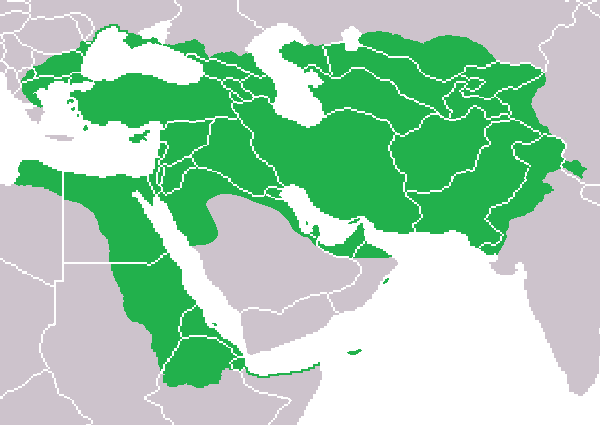 MEDIA ROOTS —The so called “diplomacy” currently being conducted by international surrogates to control the momentum of Iranian nuclear ambitions is conducted by the very same people who saturated the region with nuclear weapons technology. Iran, in one sovereign form or another, has been operating for 2,500+ years. The Median Empire allied with the Babylonians to capture Nineveh in 612 BC. Cyrus the Great, a descendant of Achaemenes conquered the Median Empire to establish the Achaemenid Empire. The Achaemenid Empire in Persis for more than two centuries stretched from the Indus Valley to Egypt.
 MEDIA ROOTS – Kathyrn Bigelow made a huge splash at the 2010 Academy Awards by usurping predicted winner Avatar with her depiction of soldiers fighting in Iraq in her movie The Hurt Locker. The Oscar winning film was revered by conservatives and anti-war liberals alike for its ‘balanced’ and ‘realistic’ tone, but in reality the movie is a clever form of pro-military American propaganda. It depicts an imaginary super hero-like character wearing a bomb protection suit, whose sole job is to diffuse IEDs from military zones.
 MEDIA ROOTS —
 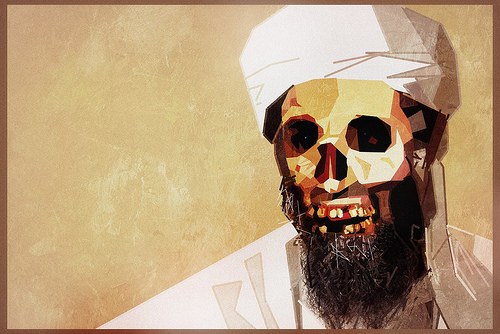 MEDIA ROOTS — It’s been a whole year since Osama bin Laden was allegedly assassinated in a Pakistani Navy Seal raid, but that isn’t stopping water-carrying media outlets and the White House from ratcheting up fears of terrorism, painting the potential for an
 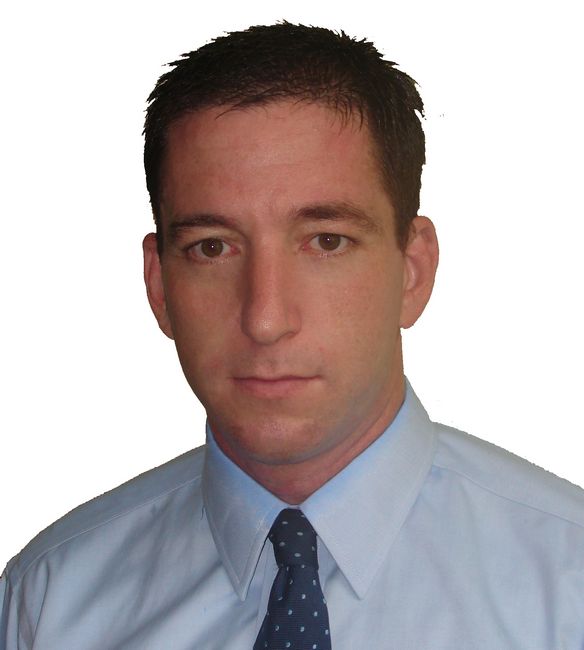 MEDIA ROOTS —
