Uncontacted Tribe Discovered in Amazon

(Video below)

  NATIONAL GEOGRAPHIC– Officials from Brazil’s Indian affairs agency, FUNAI, say they have confirmed the existence of a previously unknown indigenous group in the rugged folds of the western Amazon. The tribe, believed to number as many as 200 people, was initially discovered through the examination of satellite images of rain forest clearings and confirmed by aerial reconnaissance flights earlier this year.

The overflights revealed three separate clearings and four large communal dwellings, known as malocas, clustered in the dense jungles of the Javari Valley Indigenous Reserve in far western Brazil. Specialists in matters pertaining to isolated Indians estimate the population of uncontacted tribes by examining the size and number of dwellings, as well as any gardens the inhabitants might have under cultivation. The recently discovered tribe is reported to have planted tracts of corn, banana, and low-to-the-ground bushes that might be peanuts or cassava.

Into the Jungle

The Javari — a sprawling rain forest reserve half the size of Florida — is home to the largest concentration of uncontacted tribes in the entire world. There are at least eight uncontacted indigenous communities, and perhaps as many as fourteen, inhabiting the upland forests in the headwaters of the rivers that drain the Vale do Javari Indigenous Land. It’s an area with which I have more than a passing familiarity. In 2002, I accompanied a team from FUNAI’s elite unit, the Department of Isolated Indians, on a three-month expedition through the reserve’s primeval forest to track a mysterious indigenous tribe known as the flecheiros — the Arrow People.

Read full article about Uncontacted Tribe Discovered in Brazilian Amazon.

© 2011 National Geographic

New footage of one of the world’s last uncontacted tribes living in the Brazilian rainforest.

Jose Carlos Meirelles works for FUNAI, a government agency that protects Brazil’s indigenous people. Because of the threat posed by illegal logging and mining, he believes that the fight to protect these people depends on proving and publicising their existence. This aerial footage was shot from 1km away using a stabilised zoom lens.

Brazil is thought to be home to around 70 isolated tribes.

© 2011 BBC

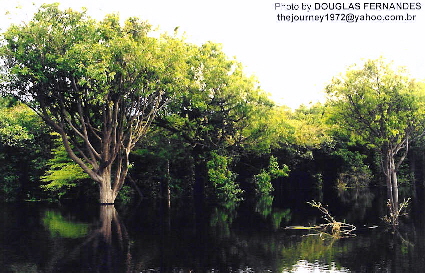
Photo by Flickr user The Journey 1972
Obama Embraces GE Crops on Wildlife Refuges

COMMON DREAMS– The Obama administration has endorsed genetically engineered agriculture on more than 50 National Wildlife Refuges, with more GE-refuge approvals in the works, according to Public Employees for Environmental Responsibility (PEER). The new plan is designed to insulate refuges from environmental court challenges in the wake of a lawsuit recently won by PEER and other groups which halted GE agriculture in all Northeastern refuges.

The national blitz of official filings is intended to remove a perceived barrier to the export of American GE crops – U.S. restrictions on growing GE crops on National Wildlife Refuges. Under a U.S. Fish & Wildlife Service (FWS operates the refuges) policy, GE crops are banned from refuges unless determined to be “essential” to refuge operations. Countries leery of importing U.S. bio-engineered food have cited the policy as one basis for their concern.

Rather than overturn this FWS “Biological Integrity” policy outright, the White House has embarked on a region-by-region approach to file environmental paperwork justifying GE agriculture on – 31 refuge units across 8 Midwestern states; 25 refuges units in 12 Southeastern states; and an unspecified number of refuges in the 8-state Rocky Mountain Region.

The proposal for the Midwestern Refuges would allow more than 20,000 acres to be cultivated with no limits on how many acres could be GE crops. The public comment deadline for that plan is today. In its comments, PEER argues that the GE operations risk harm to wildlife, refuge plants and soil, while contending that there is no refuge purpose for which GE crops are essential, as required by FWS policy.

“These plans are based on the curious notion that wildlife benefit from having the small slivers of habitat set aside for them covered by genetically engineered soybeans,” stated PEER Executive Director Jeff Ruch, noting the Midwest refuges are already surrounded by row crops, most of which are now GE. “To boost U.S. exports, the Obama administration is forcing wildlife refuges into political prostitution.”

In 2010, PEER, the Center for Food Safety and Delaware Audubon brought successful litigation charging that GE agriculture on refuges in the Northeast violated the Refuge Improvement Act as incompatible with refuge purposes and lacked reviews required by the National Environmental Policy Act. That suit was settled when FWS agreed to stop commercial agriculture operations on all refuges within the region. These latest filings are supposed to shield refuges in other regions from similar suits based on failing to meet procedural requirements of environmental statutes. Future challenges would have to show that these new eco-reviews are impermissibly defective – a higher legal hurdle.

“The Obama administration says that it is devoted to scientific integrity but these new reviews are scientific travesties,” added Ruch, pointing to new Interior Department (which includes FWS) rules requiring that scientific information in decision- making “must be robust, of the highest quality, and the result of the most rigorous scientific processes as can be achieved.” “The sole document assessing the environmental impacts of genetically engineered planting in 25 Southeastern refuges is only six pages long.”

Increasingly the only seed available to U.S. farmers, especially for corn and soybeans, is GE. Ironically, it is the ubiquity of GE agriculture that FWS offers as the main reason it must allow these crops on refuges.

***

Read the PEER comments

View the EA for 31 Midwest Refuges

See proposed finding of no impact for GE crops on 25 Southeast Refuges

Examine draft EA for Rocky Mountain refuges

Look at litigation driving GE agriculture out of Northeast Refuges

Review the Interior Department’s new scientific integrity rules

***

Public Employees for Environmental Responsibility (PEER) is a national alliance of local state and federal resource professionals. PEER’s environmental work is solely directed by the needs of its members. As a consequence, we have the distinct honor of serving resource professionals who daily cast profiles in courage in cubicles across the country.

Photo by flickr user Margaret Killjoy 


Posted in Uncategorized | 1 Reply

News Blackout Over Crippled Nebraska Nuclear Plant

THE NATION– A shocking report prepared by Russia’s Federal Atomic Energy Agency (FAAE) on information provided to them by the International Atomic Energy Agency (IAEA) states that the Obama regime has ordered a “total and complete” news blackout relating to any information regarding the near catastrophic meltdown of the Fort Calhoun Nuclear Power Plant located in Nebraska.

According to this report, the Fort Calhoun Nuclear Plant suffered a “catastrophic loss of cooling” to one of its idle spent fuel rod pools on 7 June after this plant was deluged with water caused by the historic flooding of the Missouri River which resulted in a fire causing the Federal Aviation Agency (FAA) to issue a “no-fly ban” over the area.

Located about 20 minutes outside downtown Omaha, the largest city in Nebraska, the Fort Calhoun Nuclear Plant is owned by Omaha Public Power District (OPPD) who on their website denies their plant is at a “Level 4” emergency by stating: “This terminology is not accurate, and is not how emergencies at nuclear power plants are classified.”

Read the full article about US Orders News Blackout Over Crippled Nebraska Nuclear Plant.

© 2011 The Nation

Photo by Flickr user x-ray_delta_one

Tapped – Documentary on Bottled Water

TAPPED– The high cost – to both the environment and our health – of bottled water is the subject of this documentary that enlists activists, environmentalists, community leaders and others to expose the dark side of the bottled water industry.

Tapped trailer

Trapped, full film

Photo by flickr user stevendepolo

Obama Strikes Out on Global Warming

SALON– In our globalized world, old-fashioned geography is not supposed to count for much: mountain ranges, deep-water ports, railroad grades — those seem so nineteenth century. The earth is flat, or so I remember somebody saying.

But those nostalgic for an earlier day, take heart. The Obama administration is making its biggest decisions yet on our energy future and those decisions are intimately tied to this continent’s geography. Remember those old maps from your high-school textbooks that showed each state and province’s prime economic activities? A sheaf of wheat for farm country? A little steel mill for manufacturing? These days in North America what you want to look for are the pickaxes that mean mining, and the derricks that stand for oil.

There’s a pickaxe in the Powder River Basin of Montana and Wyoming, one of the world’s richest deposits of coal. If we’re going to have any hope of slowing climate change, that coal — and so all that future carbon dioxide — needs to stay in the ground. In precisely the way we hope Brazil guards the Amazon rainforest, that massive sponge for carbon dioxide absorption, we need to stand sentinel over all that coal.

Doing so, however, would cost someone some money. At current prices the value of that coal may be in the trillions, and that kind of money creates immense pressure. Earlier this year, President Obama signed off on the project, opening a huge chunk of federal land to coal mining. It holds an estimated 750 million tons worth of burnable coal. That’s the equivalent of opening 300 new coal-fired power plants. In other words, we’re talking about staggering amounts of new CO2 heading into the atmosphere to further heat the planet.

As Eric de Place of the Sightline Institute put it, “That’s more carbon pollution than all the energy — from planes, factories, cars, power plants, etc. — used in an entire year by all 44 nations in Central America, South America, and the Caribbean combined.”Not what you’d expect from a president who came to office promising that his policies would cause the oceans to slow their rise.

But if Obama has admittedly opened the mine gate, it’s geography to the rescue. You still have to get that coal to market, and “market” in this case means Asia, where the demand for coal is growing fastest. The easiest and cheapest way to do that — maybe the only way at current prices — is to take it west to the Pacific where, at the moment, there’s no port capable of handling the huge increase in traffic it would represent.

And so a mighty struggle is beginning, with regional groups rising to the occasion. Climate Solutions and other environmentalists of the northwest are moving to block port-expansion plans in Longview and Bellingham, Washington, as well as in Vancouver, British Columbia. Since there are only so many possible harbors that could accommodate the giant freighters needed to move the coal, this might prove a winnable battle, though the power of money that moves the White House is now being brought to bear on county commissions and state houses. Count on this: it will be a titanic fight.

Read the full article about Obama Strikes Out on Global Warming.

© 2011 Salon

Photo by Flickr group Abandoned Mines