BP Allegedly Stops Oil Leak in Gulf, Temporarily

GUARDIAN– The gush of oil from BP’s spewing well in the Gulf of Mexico was stopped for the first time in three months yesterday, raising hopes that it could be sealed off for good. The Obama administration immediately warned that a cap sealing off the well might only be a temporary fix.

“We’re encouraged by this development, but this isn’t over,” said Thad Allen, the US Coast Guard commander.

But for the first time in 87 days, it appeared last night that BP had control over the well. The company said it would have to monitor the cap holding back the oil in a series of pressure tests every six hours for the next 48 hours, before it could be certain the well would hold.

It also cautioned that the final solution remained a relief well, still some weeks away. “I am very excited that there’s no oil in the Gulf of Mexico,” Kent Wells, a senior vice-president for BP, said in a conference call. “But we just started the test and I don’t want to create a false sense of excitement.”

Read full article about BP Allegedly Having Stopped the Leak.

© COPYRIGHT THE GUARDIAN, 2010

Africa’s National Parks Failing to Conserve Large Mammals

GUARDIAN– Africa’s extensive network of national parks is failing to stem the decline of large mammals, according to a new study that highlights biodiversity loss across the continent.

Populations of large mammals such as zebra, buffalo and lion have declined by an average of 59% since 1970, according to the research, which collated data from parks including popular tourist safari destinations such as the Masai Mara in Kenya and the Serengeti in Tanzania.

The study warns that urgent efforts are needed to better protect the animals and secure the future of the parks, which draw millions of tourists each year and provide much-needed income.

Ian Cragie, a conservation scientist at the University of Cambridge who led the study, said: “Although the results indicate that African national parks have generally failed to maintain their populations of large mammals, the situation outside the parks is undoubtedly worse. Many species like rhino are practically extinct outside national parks.”

The team of scientists, including experts from the Zoological Society of London (ZSL) and the United Nations environment programme World Conservation Monitoring Centre in Cambridge, compiled population records of 69 key species, including lion, wildebeest, giraffe, zebra and buffalo, inside 78 protected areas across Africa from 1970 to 2005. More than half the records came from aerial surveys, the most accurate but also the most expensive way to monitor.

The results show an average decline of 59%, though the results varied significantly from region to region. Eleven parks in west Africa were the hardest hit, with a decline of 85%. Mammal species populations across 43 protected areas in east Africa fell by more than half, while those in 35 reserves in southern Africa showed an increase of 25%. The scientists say they cannot break down the results to show the change in numbers in individual parks because of confidentiality agreements with data providers.

Read full article about Africa Failing to Conserve Large Mammals at Parks.

© COPYRIGHT GUARDIAN, 2010

Photo by Abby Martin

Monsanto GM Seed Ban Overturned by Supreme Court

BBC– The bio-tech company Monsanto can sell genetically modified seeds before safety tests on them are completed, the US Supreme Court has ruled.

A lower court had barred the sale of the modified alfalfa seeds until an environmental impact study could be carried out.

But seven of the nine Supreme Court Justices decided that ruling was unconstitutional.

The seed is modified to be resistant to Monsanto’s brand of weedkiller.

The US is the world’s largest producer of alfalfa, a grass-like plant used as animal feed.

It is the fourth most valuable crop grown in the country.

Environmentalists had argued that there might be a risk of cross-pollination between genetically modified plants and neighbouring crops.

They also argued over-use of the company’s weedkiller Roundup, the chemical treatment the alfalfa is modified to be resistant to, could cause pollution of ground water and lead to resistant “super-weeds”.

But Monsanto says claims its products were dangerous amounted to “bad science fiction with no support on the record”.

© BBC, 2010

Obama Approves 400 Leases for Oil Companies to Drill in Gulf

MOTHER JONES– At his long-awaited press conference on the Gulf oil disaster last month, President Obama announced a moratorium on new oil drilling and exploration for six months. “We can’t do this stuff if we don’t have confidence that we can prevent crises like this from happening again,” he declared.

But while existing rigs may be out of commission for the near future, the administration hasn’t exactly put the brakes on new oil and gas drilling ventures. In recent weeks, the government has quietly approved the sale of more than 400 new leases for vast swaths of the Gulf of Mexico. And these contracts—which mark the first step in the drilling process—were subjected to the same slapdash environmental oversight that failed to prevent the BP catastrophe.

The region was included in a plan created by the Bush administration’s Department of the Interior to lease new areas of the Gulf to the oil and gas industries. But it was Obama’s Interior secretary, Ken Salazar, who gave the go-ahead for the sale of Lease 213—6,800 tracts covering 36 million acres off the coasts of Louisiana, Mississippi, and Alabama in November 2009. The sale—which was held on March 17 this year in the New Orleans Superdome—attracted $1.3 billion in bids. Since then, the Department of the Interior’s Minerals Management Service (MMS) has approved the sale of 448 of those tracts, 198 of them in deepwater, which is defined as more than 656 feet below the sea. BP is the proud new leaser of 13 of those tracts.

The lease sale is the first step in the oil drilling process. Companies must first obtain the right to drill the tracts before they can devise exploration plans, which must be approved by MMS.

And that’s where the problem lies. MMS has been notorious for rubber-stamping the oil industry’s plans. The lease for the well that’s spewing oil into the Gulf, the Macondo, was sold in March 2008. The exploration plan for that well was granted a “categorical exclusion” from the requirements of the National Environmental Policy Act (NEPA) in April 2009, paving the way for drilling to begin.

Read full article about Obama Approving 400 New Leases for Oil Companies to Drill in Gulf.

© MOTHER JONES, 2010

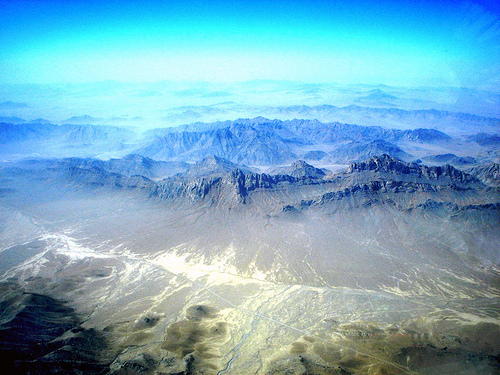
U.S. Identifies Vast Riches of Minerals in Afghanistan

NY TIMES– The United States has discovered nearly $1 trillion in untapped mineral deposits in Afghanistan, far beyond any previously known reserves and enough to fundamentally alter the Afghan economy and perhaps the Afghan war itself, according to senior American government officials.

The previously unknown deposits — including huge veins of iron, copper, cobalt, gold and critical industrial metals like lithium — are so big and include so many minerals that are essential to modern industry that Afghanistan could eventually be transformed into one of the most important mining centers in the world, the United States officials believe.

An internal Pentagon memo, for example, states that Afghanistan could become the “Saudi Arabia of lithium,” a key raw material in the manufacture of batteries for laptops and BlackBerrys.

The vast scale of Afghanistan’s mineral wealth was discovered by a small team of Pentagon officials and American geologists. The Afghan government and President Hamid Karzai were recently briefed, American officials said.

While it could take many years to develop a mining industry, the potential is so great that officials and executives in the industry believe it could attract heavy investment even before mines are profitable, providing the possibility of jobs that could distract from generations of war.

“There is stunning potential here,” Gen. David H. Petraeus, commander of the United States Central Command, said in an interview on Saturday. “There are a lot of ifs, of course, but I think potentially it is hugely significant.”

The value of the newly discovered mineral deposits dwarfs the size of Afghanistan’s existing war-bedraggled economy, which is based largely on opium production and narcotics trafficking as well as aid from the United States and other industrialized countries. Afghanistan’s gross domestic product is only about $12 billion.

“This will become the backbone of the Afghan economy,” said Jalil Jumriany, an adviser to the Afghan minister of mines.

American and Afghan officials agreed to discuss the mineral discoveries at a difficult moment in the war in Afghanistan. The American-led offensive in Marja in southern Afghanistan has achieved only limited gains. Meanwhile, charges of corruption and favoritism continue to plague the Karzai government, and Mr. Karzai seems increasingly embittered toward the White House.

So the Obama administration is hungry for some positive news to come out of Afghanistan. Yet the American officials also recognize that the mineral discoveries will almost certainly have a double-edged impact.

Read full article about the Vast Wealth of Minerals Discovered in Afghanistan.

© COPYRIGHT NY TIMES, 2010

Photo by Flickr user Afghanistan Matters

Posted in Uncategorized | 1 Reply

