Can Mushrooms Rescue the Gulf?

photo by hans s/flickrYES! MAGAZINE– For more than a decade, mycologist and inventor Paul Stamets has known that mushrooms eat oil. There were still a few kinks to work out; bringing the technology to scale and winning the acceptance of government agencies were two of the most challenging. Yet the basic science was solid and had been replicated many times by other scientists.
Then Stamets heard about the Deepwater Horizon oil spill in the Gulf of Mexico. While his first reaction was horror and regret, he also knew that he might be able to offer practical solutions, while at the same time giving his oil-eating mushrooms a chance to show their stuff.

He wasn’t the only one who thought mushrooms might be part of the solution. In the days after the explosion in the Gulf, the EPA contacted him several times to request a proposal. They wanted to understand how mycoremediation—the reduction of toxic compounds into harmless ones by fungi—could work as a component of their cleanup strategy for the spill.

Stamets drafted a three-page proposal and sent it off. Then he ramped up the pace of his research and shifted his focus to finding oil-eating mushrooms that could tolerate the Gulf of Mexico’s salt water and powerful sun.

Continue reading about Can Mushrooms Rescue the Gulf?.

© YES! Magazine, 2010

Photograph by flickr user hans s

Giant Coral Die-Off Found – Gulf Spill “Smoking Gun?”

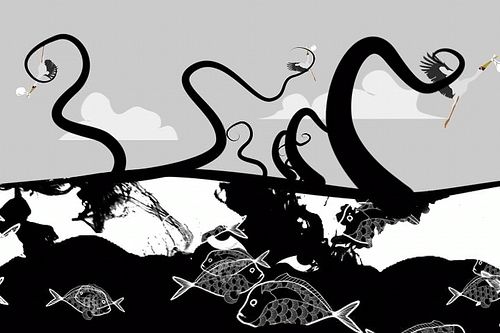
animation by Fuseman/flickrNATIONAL GEOGRAPHICA massive deep say coral die-off was discovered this week about 7 miles (11 kilometeres) southwest of the source of the Gulf of Mexico oil spill, scientists announced Thursday.

Large communities of several types of bottom-dwelling coral were found covered with a dark substance at depths of about 4,600 feet (1,400 meters) near the damaged Deepwater Horizon wellhead, according to a scientific team on the National Oceanic and Atmospheric Administration (NOAA) ship Ronald H. Brown.

“The coral were either dead or dying, and in some cases they were simply exposed skeletons,” said team member Timothy Shank of Woods Hole Oceanographic Institution.

“I’ve never seen that before. And when we tried to take samples of the coral, this black—I don’t know how to describe it—black, fluffylike substance fell off of them.” 

“Smoking Cannon” Evidence for Gulf Oil Spill

About 90 percent of 40 large groups of severely damaged soft coral were discolored and either dead or dying, the researchers say. A colony of hard coral at another site about 1,300 feet (400 meters) away was also partially covered with a similar dark substance that’s likely oil from the BP spill.

(See pictures of ten animals at risk from the Gulf oil spill.)

“Corals do die, but you don’t see them die all at once,” said cruise lead scientist Charles Fisher of Penn State University. “This … indicates a recent catastrophic event,” he told National Geographic News.

The circumstantial evidence is strong enough to be considered a “smoking gun” that the BP spill could have played a role in the coral deaths, Fisher said in a statement.

For one thing, the dead coral was found at 4,600 feet (1,400 meters), about the same depth as the now sealed wellhead, and currents at the time of the April 20 blowout would have carried the oil southwesterly, scientists say.

“The proximity of the site to the disaster, the depth of the site, the clear evidence of recent impact, and the uniqueness of the observations all suggest that the impact we have found is linked to the exposure of this community to either oil, dispersant, extremely depleted oxygen, or some combination of these or other water-borne effects resulting from the spill,” Fisher said in a statement.

Scientists have predicted for months that the oil is not degrading and that the toxic ingredients may be having dire and unseen effects on the Gulf’s marine life.

In August, for example, University of Florida (USF) oceanographer David Hollander discovered that deep-sea creatures showed a “strong toxic response” to Gulf water containing hydrocarbons, an ingredient of oil.

Hollander’s USF colleague John Paul told National Geographic News Friday that the newly discovered coral die-off is more of a “smoking cannon.”

“It doesn’t surprise me,” he said. “It could be the tip of the iceberg of all kinds of weird things we’re going to see in the Gulf of Mexico in the next three to five years” due to the Gulf spill, Paul said.

Even so, both Fisher and Paul strongly caution that sediment and coral samples need to be tested in the lab to confirm a Gulf-spill origin.

Read the full article on the Giant Coral Die-Off.

Written and researched by, Kathleen Jones aboard the Ronald H. Brown for National Geographic News

Animation by Fuseman/flickr

© COPYRIGHT NATIONAL GEOGRAPHIC, 2010

World’s Forests Can Adapt to Climate Change

GUARDIAN– It is generally acknowledged that a warming world will harm the world’s forests. Higher temperatures mean water becomes more scarce, spelling death for plants – or perhaps not always.

According to a study of ancient rainforests, trees may be hardier than previously thought. Carlos Jaramillo, a scientist at the Smithsonian Tropical Research Institute (STRI), examined pollen from ancient plants trapped in rocks in Colombia and Venezuela. “There are many climactic models today suggesting that … if the temperature increases in the tropics by a couple of degrees, most of the forest is going to be extinct,” he said. “What we found was the opposite to what we were expecting: we didn’t find any extinction event [in plants] associated with the increase in temperature, we didn’t find that the precipitation decreased.”

In a study published todayin Science, Jaramillo and his team studied pollen grains and other biological indicators of plant life embedded in rocks formed around 56m years ago, during an abrupt period of warming called the Paleocene-Eocene Thermal Maximum. CO2 levels had doubled in 10,000 years and the world was warmer by 3C-5C for 200,000 years.

Contrary to expectations, he found that forests bloomed with diversity. New species of plants, including those from the passionflower and chocolate families, evolved quicker as others became extinct. The study also shows moisture levels did not decrease significantly during the warm period. “It was totally unexpected,” Jaramillo said of the findings.

Read full article HERE.

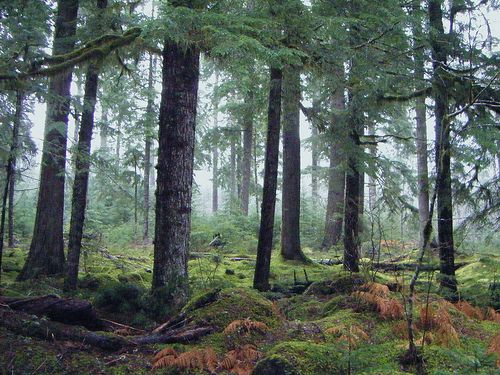
Photo by McD22

© COPYRIGHT THE GUARDIAN, 2010

Dolphins Learn to ‘Walk on Water’ in the Wild

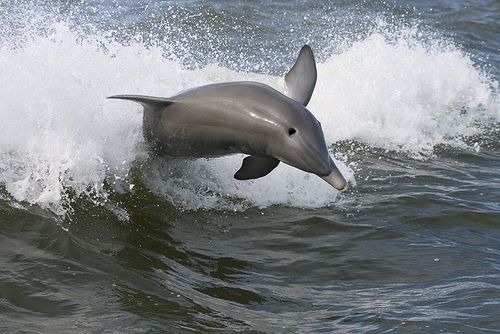
BBC NEWS– Wild dolphins in Australia are naturally learning to “walk” on water. Six dolphins have now been seen mastering the technique – furiously paddling their tail fluke, forcing their body out and across the water.

The dolphins seem to walk on water for fun, as it has no other obvious benefit, say scientists working for the Whale and Dolphin Conservation Society.

That makes the behaviour a rare example of animals “culturally transmitting” a playful rather than foraging behaviour. Only a few species are known to create their own culture – defined as the sharing or transmitting of specific novel behaviours or traditions between a community of animals.

The discovery was made by Whale and Dolphin Conservation Society (WDCS) scientist Dr Mike Bossley, who has spent 24 years studying dolphins living in the Port River in Adelaide, Australia.

In past years, Dr Bossley has witnessed two wild adult female dolphins, named Billie and Wave for research purposes, attempting to walk on water. Now four other dolphins, including young infants, have been recorded trying to learn the trick from the two adults, and have been seen practising, less successfully, in the river.

The behaviour, when a dolphin beats its tail fluke repeatedly, so it lifts its body vertically out of the water and then along the surface, is more commonly seen among captive dolphins trained to perform tricks.

Read full article on Dolphins Learning to Walk in the Wild.

Watch video of the phenomenon HERE.

Photo by Flickr User Pug Father

© COPYRIGHT BBC, 2010

MR Original – Chevron Pranked by the Yes Men

MEDIA ROOTS- For those unfamiliar with the Yes Men, they are a group of brilliant and bold activists that aim to draw public attention to corporate crimes and wrongdoings by impersonating corporate figures before the media. The Yes Men target corporations that have escaped accountability for their crimes committed in the pursuit of profit above all else.

One Yes Men’s most successful hoaxes involved Dow Chemical. An activist posing as a PR representative of Dow to claim responsibility for the Bhopal tragedy, live on BBC World Television. Dow was the Yes Men target as the purchaser of the Union Carbide Corporation, which was responsible for the gas leak in Bhopal that killed approximately 15,000 people in 1984. For this prank, the faux PR rep claimed full responsibility for the tragedy, issued an apology and promised to compensate the victims and clean up the site. (To learn more about this prank– video here– and the history of their organization watch their documentary Yes Men Save The World.)

Now, the Yes Men have done it again! This time the victim of their hoax is Chevron.

In the wee-hours of this morning, when Chevron could not be contacted for verification, the Yes Men fired off a press release announcing their new ad campaign. The press release was flawless, matching exactly the real Chevron website, only making a slight change to the actual URL.

The ad campaign, “We Agree” is described in the release as Chevron’s attempt to make a “clean break from the past by taking direct responsibility for our own actions” through candid ads that feature “real people on the receiving end of Chevron controversies in Ecuador, Nigeria, the U.S. Gulf Coast and elsewhere.”

The hoax campaign has three ads. The first says in large capital letters- “OIL COMPANIES SHOULD CLEAN UP THEIR MESSES,” with a red “WE AGREE” stamp below and the signatures of Rex Northen, Chevron’s Executive Director, and Desmond King, the company’s President. The accompanying photo is of an older Latin American man with a red bandana around his neck and a simple, hand-made structure in the background.

Another ad shows a man standing in a river of oil, surrounded by open barrels, with the words “OIL COMPANIES SHOULD FIX THE PROBLEMS THEY CREATE.” Each ad, like the first, holds the signatures of Northen and King over the red “WE AGREE” stamp.

The last ad has a young Latin American girl standing in front of an oil barrel. The claim this time is that “OIL COMPANIES SHOULD PUT SAFETY FIRST.”

The ads were meant to reference an on-going lawsuit in Ecuador where Chevron is accused of negligence that amounts to $27 billion in oil pollution clean-up costs. Chevron deems this a “meritless case” and, according to the Christian Science Monitor, took out quarter page newspaper ads with headlines such as, “the fraud of the century”.

Hardly.

The real “We Agree” ad campaign makes less controversial claims that are ambiguous to the critical mind familiar with Chevron. These include, “Oil Companies Should Put Their Profits To Good Use,” “Oil Companies Need To Get Real” and “Oil Companies Should Support the Communities They’re A Part of.”

Chevron issued a press release in response to the hoax. In a quote that is telling of the politics that allow multinationals to operate with impunity, Hewitt Pate, the General Council for Chevron, said, “Despite what some will say, we are not obliged to abide by decisions that Ecuadorian judges make or do not make. This is because we have binding agreements with the Ecuadorian Government exempting us from any liabilities whatsoever, granted in exchange for a $40 million cleanup of some wells by Texaco in the 1990s.”

The press release also had similar commentary from Rhonda Zygocki, Chevron’s VP of Policy, Government and Public Affairs, who said, “This hoax is part of an ongoing effort to blame Chevron for 16 billion gallons of crude oil spilled in the Amazon during drilling operations. This blame game continues despite Chevron’s long-standing agreement with the Ecuadorian government which very obviously puts the issue behind us.”

Perhaps the best thing about the Yes Men is how they force the corporations to respond to the accusations before them. The hoax first reveals to the public the unresolved human and environmental suffering caused by the guilty corporation. Unable to deny the spill of 16 billion gallons of crude oil (or the disaster at Bhopal), the corporate executives show the public how they really operate. As we see in the quotes above, there is no denial of what happened in Ecuador as a result of Chevron’s business. Instead, Zygocki and Pate are defending Chevron’s refusal to take accountability for the tragedy they caused, citing the (unfortunate) agreement made with the Ecuadorian government.

What the Chevron executives are saying is that the problem belongs to the innocent people of Ecuador because Chevron, although guilty, is not liable thanks to an agreement made with Ecuador’s government. Here we find the real lesson to be learned– This agreement that exempts Chevron from any wrongdoing is like so many others between giant multinational corporations (MNCs) and governments seeking economic gain. In business between countries and MNCs it is the country most willing to turn a blind eye that wins the business. And more often than one would ever hope, lawfulness and the rights of the country’s people are the first to be sacrificed.

I applaud this kind of activism because it draws people in through the humor of a hoax, while ultimately bringing us face to face with a reality that may otherwise go unacknowledged by those of us who are often unwilling to look at life’s harsher truths.

Written by Alicia for Media Roots