Gut Check: The Meat of the Problem

WASHINGTON POST – The debate over climate change has reached a rarefied level of policy abstraction in recent months. Carbon tax or cap-and-trade? Upstream or downstream? Should we auction permits? Head-scratching is, at this point, permitted. But at base, these policies aim to do a simple thing, in a simple way: persuade us to undertake fewer activities that are bad for the atmosphere by making those activities more expensive. Driving an SUV would become pricier. So would heating a giant house with coal and buying electricity from an inefficient power plant. But there’s one activity that’s not on the list and should be: eating a hamburger.

If it’s any consolation, I didn’t like writing that sentence any more than you liked reading it. But the evidence is strong. It’s not simply that meat is a contributor to global warming; it’s that it is a huge contributor. Larger, by a significant margin, than the global transportation sector.

According to a 2006 United Nations report, livestock accounts for 18 percent of worldwide greenhouse gas emissions. Some of meat’s contribution to climate change is intuitive. It’s more energy efficient to grow grain and feed it to people than it is to grow grain and turn it into feed that we give to calves until they become adults that we then slaughter to feed to people. Some of the contribution is gross. “Manure lagoons,” for instance, is the oddly evocative name for the acres of animal excrement that sit in the sun steaming nitrous oxide into the atmosphere. And some of it would make Bart Simpson chuckle. Cow gas — interestingly, it’s mainly burps, not farts — is a real player.

Click to contine reading about the meat of the problem.

Article by Ezra Klein, he can be reached at [email protected] or through his blog at http://www.washingtonpost.com/ezraklein.

© Copyright Washington Post, 2009

Posted in Uncategorized | 1 Reply

The Future of Food Riots

COMMONDREAMS – If all the food in the world were shared out evenly, there would be enough to go around. That has been true for centuries now: if food was scarce, the problem was that it wasn’t in the right place, but there was no global shortage. However, that will not be true much longer.

The food riots began in Algeria more than a week ago, and they are going to spread. During the last global food shortage, in 2008, there was serious rioting in Mexico, Indonesia, and Egypt. We may expect to see that again this time, only bigger and more widespread.

Most people in these countries live in a cash economy, and a large proportion live in cities. They buy their food, they don’t grow it. That makes them very vulnerable, because they have to eat almost as much as people in rich countries do, but their incomes are much lower.

The poor, urban multitudes in these countries (including China and India) spend up to half of their entire income on food, compared to only about ten percent in the rich countries. When food prices soar, these people quickly find that they simply lack the money to go on feeding themselves and their children properly – and food prices now are at an all-time high.

“We are entering a danger territory,” said Abdolreza Abbassian, chief economist at the Food and Agriculture Organisation, on 5 January. The price of a basket of cereals, oils, dairy, meat and sugar that reflects global consumption patterns has risen steadily for six months, and has just broken through the previous record, set during the last food panic in June, 2008.

“There is still room for prices to go up much higher,” Abbassian added, “if for example the dry conditions in Argentina become a drought, and if we start having problems with winter kill in the northern hemisphere for the wheat crops.” After the loss of at least a third of the Russian and Ukrainina grain crop in last summer’s heat wave and the devastating floods in Australia and Pakistan, there’s no margin for error left .

It was Russia and India banning grain exports in order to keep domestic prices down that set the food prices on the international market soaring. Most countries cannot insulate themselves from this global price rise, because they depend on imports for a lot of domestic consumption. But that means that a lot of their population cannot buy enough food for their families, so they go hungry. Then they get angry, and the riots start.

Is this food emergency a result of global warming? Maybe, but all these droughts, heat waves and floods could also just be a run of really bad luck. What is nearly certain is that the warming will continue, and that in the future there will be many more weather disasters due to climate change. Food production is going to take a big hit.

Global food prices are already spiking whenever there are a few local crop failures, because the supply barely meets demand even now. As the big emerging economies grow, Chinese and Indian and Indonesian citizens eat more meat, which places a great strain on grain supplies. Moreover, world population is now passing through seven billion, on its way to nine billion by 2050. We will need a lot more food than we used to.

Some short-term fixes are possible. If the US government ended the subsidies for growing maize (corn) for “bio-fuels”, it would return about a quarter of US crop land to food production. If people ate a little less meat, if more African land was brought into production, if more food was eaten and less was thrown away, then maybe we could buy ourselves another fifteen or twenty years before demand really outstripped supply.

On the other hand, about a third of all the irrigated land in the world depends on pumping groundwater up from aquifers that are rapidly depleting. When the flow of irrigation water stops, the yield of that highly productive land will drop hugely. Desertification is spreading in many regions, and a large amount of good agricultural land is simply being paved over each year. We have a serious problem here.

Climate change is going to make the situation immeasurably worse. The modest warming that we have experience so far may not be the main cause of the floods, droughts and violent storms that have hurt this year’s crops, but the rise in temperature will continue because we cannot find the political will to stop the greenhouse-gas emissions.

The rule of thumb is that we lose about 10 percent of world food production for every rise of one degree C in average global temperature. So the shortages will grow and the price of food will rise inexorably over the years. The riots will return again and again.

In some places the rioting will turn into revolution. In others, the rioters will become refugees and push up against the borders of countries that don’t want to let them in. Or maybe we can get the warming under control before it does too much damage. Hold your breath, squeeze your eyes tight shut, and wish for a miracle.

Gwynne Dyer’s latest book, “Climate Wars: The Fight for Survival as the World Overheats“, was published recently in the United States by Oneworld.

© COPYRIGHT COMMONDREAMS, 2011

Photograph by Markusram

New Obama Offshore Oil Plan Sacrifices Polar Bear Habitat

CENTER FOR BIOLOGICAL DIVERSITY – Interior Secretary Ken Salazar today issued a revised offshore oil plan that will allow drilling in the heart of polar bear habitat in Alaska. Salazar’s announcement, which came in response to a previous court ruling, finalized a revised 2007-2012 nationwide offshore oil leasing plan. The previous plan, issued under the Bush administration, had been overturned by a federal appeals court for failing to properly analyze impacts of drilling off the Arctic coast of Alaska. Salazar’s new plan reaffirms a 2008 lease sale in polar bear critical habitat in the Chukchi Sea.

“Once again Secretary Salazar has placed political expediency over sound science and the rule of law, and polar bears and other arctic species will suffer for it,” said Brendan Cummings, senior counsel at the Center for Biological Diversity.
Oil development in the Chukchi Sea, home to America’s polar bears, remains a dangerous proposition because no technologies exist to clean up oil spills in icy waters. Today’s plan upholds the sale of leases in the Chukchi.

The Center for Biological Diversity and other organizations filed a court challenge to the 2007-2012 offshore oil leasing plan issued by the Bush administration. The Court of Appeals for the District of Columbia set aside that plan for failing to adequately assess the environmental impacts of opening up areas off Alaska to drilling. Today’s announcement comes in response to that ruling. A court in Alaska also separately ruled this year that the environmental analysis underlying the lease sale in the Chukchi Sea was unlawful.

“Secretary Salazar has apparently learned nothing from either the Gulf spill or the courts. No matter how many times the courts overturn his decisions to open the Arctic to oil, he comes back with the exact same decision,” said Cummings. “This year in the Gulf of Mexico we saw the damage that a massive oil spill can cause. Given the lack of clean-up technology for an oil spill in the Arctic, Salazar’s decision to move forward with the Chukchi leases demonstrates that all the promised reforms following the Gulf spill ultimately mean nothing for the Arctic.”

In a separate but related development, also in response to a court order, Salazar announced on Wednesday he would uphold a Bush-era decision to list polar bears as merely “threatened,” rather than the more protective status of “endangered.” Such a move allows Salazar to exempt greenhouse gas polluters nationwide, as well as oil companies operating in polar bear habitat, from some of the Endangered Species Act’s most protective provisions.

“This week Secretary Salazar has delivered a double-barreled blast to the future of the polar bear,” said Cummings. “At this rate Secretary Salazar will be writing the polar bear’s obituary rather than its recovery plan.”

###  

At the Center for Biological Diversity, we believe that the welfare of human beings is deeply linked to nature – to the existence in our world of a vast diversity of wild animals and plants. Because diversity has intrinsic value, and because its loss impoverishes society, we work to secure a future for all species, great and small, hovering on the brink of extinction. We do so through science, law, and creative media, with a focus on protecting the lands, waters, and climate that species need to survive.

© CENTER OF BIOLOGICAL DIVERSITY, 2010

Photograph by Flickr user mape_s


Another Astonishing Victory: No New Nukes

TRUTHOUT – The atomic energy industry has suffered another astonishing defeat. Thanks to its loss, 2010 again left the “nuclear renaissance” in the Dark Age that defines the technology.

But an Armageddon-style battle looms when Congress returns next year.

The push to build new nuclear plants depends now, as always, on federal subsidies. Fifty-three years after the first commercial reactor opened at Shippingport, Pennsylvania, no private funders will step forward to pay for a “new generation” of nukes.

So the industry remains mired in unsolved waste problems, disturbing vulnerability to terror and error, uninsured liability in case of a major catastrophe and unapproved new design proposals.

Two new reactor construction projects in Europe – one in Finland and the other at Flamanville, France – are sinking in gargantuan cost overruns and multi-year delays. To financiers and energy experts worldwide, it’s a clear indicator that the “rebirth” of this failed technology is a hopeless quagmire.

Meanwhile, the 104 reactors currently licensed in the US are leaking radiation and facing escalating grassroots attack. Vermont’s new governor, Peter Shumlin, is committed to shutting the Yankee plant there, and public demands to close plants, including New York’s Indian Point and New Jersey’s Oyster Creek, among others, have reached a fever pitch.

Most importantly, advances in green technologies are leaving atomic power in the dust. Numerous new studies now show it is significantly cheaper to build new generating capacity with photovoltaics, wind and other renewable solartopian sources than to go nuclear. That gap will only grow in the coming years.

But Barack Obama proposed some $36 billion in new nuke loan guarantees to add to the $18.5 billion set aside by the Bush Administration. Earlier this year, Obama handed $8.33 billion of that money to a Georgia utility that broke ground on two new nukes at the Vogtle site, where two old, trouble-plagued reactors still operate.

The nukes are being built in Georgia – along with two more in South Carolina – because those states’ ratepayers are being forced to foot the bill as construction proceeds. The companies’ returns are guaranteed even if the reactors never operate. Georgia has already suffered crippling rate hikes of $1 billion and more to pay for a construction project likely to wind up as little more than a moribund mausoleum.

Nonetheless, even amidst a major economic crisis, the White House and its pro-nuke allies have been pushing hard to fund still more of these radioactive boondoggles.

Click to continue reading about the fight against Congress’ push for new nukes.

© COPYRIGHT TRUTHOUT, 2010

Article by Harvey Wasserman for Truthout

Posted in Uncategorized | 1 Reply

A Precedent Setting Year in the Fight Against Coal

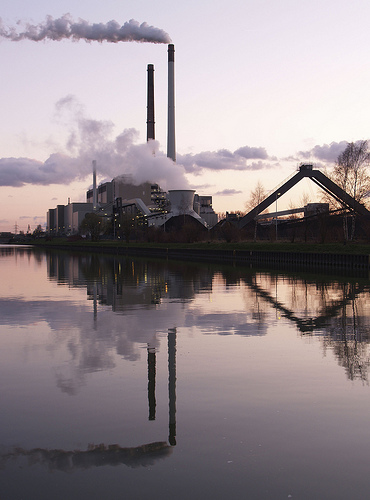
ALTERNET – It was another tough year for the coal industry. In the last 25 months not one coal-fired power plant broke ground for construction in the United States. In 2010 alone a total of 38 proposed plants were erased from the drawing board, the most ever recorded in a single year. Utilities also announced 12,000 MW in coal plant retirements — or enough power to bring electricity to a whopping 12 million American households. And even Massey Energy’s infamous henchman Don Blankenship is set to retire, effective next month.  

Indeed coal executives got what they deserved in their stockings this holiday season — big lumps of black coal. “I predict historians will point at 2010 as the year that coal’s influence peaked and began declining,” says Bruce Nilles, deputy conservation director of the Sierra Club, whose organization released a year-end report on coal in the U.S.  

Nilles is correct; the coal boom out west looks to be over, as companies like Arch and Peabody scramble to figure out what to do with their vast reserves while U.S. markets begin to dwindle. The EPA has also not been as friendly to this portion of the energy sector as in years past, placing most coal permits for mountaintop removal on hold and even recommending a veto of the proposed Spruce Mine in West Virginia, which would be the largest of its kind in the country.

Click to continue reading about the fight against coal.

Article by Joshua Frank / AlterNet

Photograph by flickr user eutrophication&hypoxia