Big Oil is More Than Big Trouble for the Environment

MEDIA ROOTS – The global petroleum industry has long been the antagonist for environmental and animal-rights advocates. But more recently, “Big Oil” has emerged as a literal threat to democracy for its vast political influence and ability to contrive wars for profit. A report released last month by the National Wildlife Federation exposed to what extent the oil industry, along with coal, affect elections in America.

Speaker of the House John Boehner tops the list of congressman receiving financial aid from the energy industry. Many of these donors stand to benefit from the proposed construction of the Keystone XL pipeline, an ecologically-damaging project that would send diluted bitumen – a tar-like substance – to American oil refineries, and the congressman has repeatedly castigated the president for delaying its permit. If that wasn’t bad enough, the congressman actually owns investments in some of these companies. Congress is exempt from various trade-laws and last year 60 Minutes highlighted Boehner’s record of insider-trading.

More recently, Congress passed a bill referred to as the “Stop the War on Coal Act.” Congressman Johnson, also a Republican from Ohio, authored the bill and explained the bill wasn’t about climate change as much as it was about public health and safety. But dissenters of the bill argue it actually endangers millions of Americans and virtually declares war on public health. Furthermore, the bill could possibly pave way for a similar bill that would further secure the stature of the petroleum industry.

Big Oil should be considered a big country

Seven of the top ten highest-grossing corporations in the world, as ranked by Fortune magazine earlier this year, are of the oil industry. Royal Dutch Shell, the list’s top revenue-generator, is on par with the gross domestic product of Iran. But if it was its own country, it would be the twenty-fifth highest-grossing country in the world.

When considering these seven corporations together, they are the sixth highest-grossing entity worldwide – government or corporate. And because these entities are private corporations, and considered persons by the Supreme Court, they are not subject to the same level of public scrutiny or congressional oversight. While it may not be surprising that over three-quarters of all petroleum refined in the United States produces gasoline, diesel, and jet fuels, it may be news to some just who is consuming these fuels the most.

The petrodollar war, not the terror war

Purchasing over one percent of the world’s refined oil – by far more than any other single entity – is the U.S. Department of Defense. Over half of this consumption is used to fuel jet engines with the Air Force being the branch of greatest oil demand. The department consumes nearly double the amount of fuel annually as the Republic of Ireland and, during the height of battle in Iraq just a half-decade ago, American troops were consuming well over one million gallons of fuel daily making them the highest oil-consuming soldiers in world history. This past year, the military handed taxpayers a $20 billion energy bill which roughly equates to the cost of an automobile tank for every man, woman, and child in the country.

Less than a month after 9/11 several news outlets were reminding readers that oil was actually more of an issue than terrorism. L.A. Weekly pushed the envelope of sensitivity by offering “it’s the oil, stupid” just eight days after terrorists allegedly hijacked four airplanes. These claims are based on the fact that Big Oil has been vying for an Afghan pipeline for decades.

During the Bush-Cheney era, both of whom are previous oil executives themselves, Big Oil lobbied the federal government over $393 million, with nearly a million dollars diverted to Senator Obama during his 2008 campaign for the White House. But as the majority of Americans of all political backgrounds continue to favor renewable energy options, this Congress continues to turn a blind eye and instead demonizes governments – such as those of Iran and Venezuela – that refuse to trade crude oil in U.S. Dollars. “Petrodollar warfare” is the true reason why the U.S. invaded Iraq in 1990, and again in 2003, and is why Iran continues to remain in the military’s crosshairs.

Corporate media complicity

Meanwhile, the corporate media establishment has yet to connect the dots of history for the general public or sound the alarm on the true cause of this grim outlook. In fact, many of these outlets outright support the industry as reported in a Media Matters study earlier this year regarding the coverage of the Keystone XL pipeline. The report showed that while only a quarter of Keystone XL coverage featured the massive demonstrations of people speaking out against the project, the media continued to parrot industry job estimates even though these predictions had already been widely discredited.

Starting in 1980, the FCC began deregulating the media industry which resulted in over 90% of media outlets being owned by just six corporate entities. Already this year over $153 million oil industry dollars have been spent in the corporate media establishment – mere pocket change for this influential group of executives. The result is a misguided society concerned more by the threat of terror than the more realistic threat of economic collapse.

Embedded below is an episode of FTM Daily, a radio program hosted by economist Jerry Robinson, which further explores the extent of the petrodollar system, its influence on the value of the U.S. dollar, and reveals who the major players are.

Oskar Mosco is the managing editor for Media Roots.

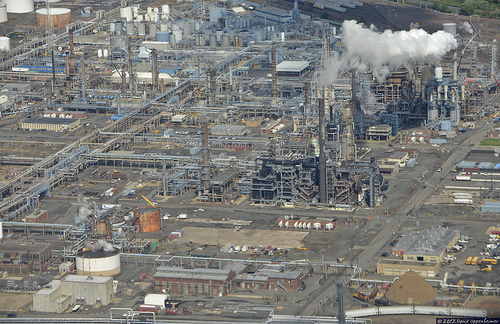
Photograph: © 2013 David Oppenheimer – Performance Impressions

***

Earlier this year on FTM Daily, Jerry Robinson features an examination of the

Petrodollar system that is what the now-volatile U.S. Dollar is based on.
Posted in Uncategorized | 1 Reply

Media Roots TV – Greg Palast & Vultures’ Picnic

MEDIA ROOTS — On November 14, 2011, Abby Martin of Media Roots interviewed award-winning journalist and best-selling author Greg Palast after his talk at the First Congregational Church of Berkeley.

Greg Palast, a freelance journalist for the BBC as well as British newspaper The Observer, discusses his newly published book Vultures’ Picnic, corporate collusion, the bought-and-paid-for-media establishment, the role of citizen journalism around the Occupy Wall Street Movement, and the value of organisations such as Project Censored.

MR

***

Abby Martin of Media Roots Interviews Greg Palast about Vultures’ Picnic


Posted in Uncategorized | 1 Reply

Leaked Contract Reveals BP’s Control of Iraqi Oil

MEDIA ROOTS– To all those who mocked the anti-war community’s “no blood for oil” mantra, turns out BP has zeroed in on controlling a huge piece of Iraq’s oil pie. Instead of being punished for irreversibly polluting the earth’s oceans, BP’s criminality continues to be rewarded with even more government contracts. In addition to the $2 billion in annual US defense contracts, the company was awarded a 20 year contract deal with the Iraqi government to control their oil in 2009. Shockingly, a recently leaked version of that contract reveals that BP has locked in payment from future Iraqi governments, irrespective of whether or not oil is even extracted.

Abby

***

NEW LEFT PROJECT– A leaked contract between BP and the Iraqi government has revealed the extent to which the company has gained control over Iraq’s oil. The 20-year contract for the Rumaila field near Basra published today by oil industry watchdog PLATFORM, commits future Iraqi governments to paying BP whether or not it extracts oil, irrespective of OPEC quotas and of the state of Iraqi pipeline and export infrastructure.

BP was awarded the deal at an auction in June 2009, but suspicions were raised when the company did not sign the contract until four months later. The Iraqi government said nothing had changed in the interim, only “clarifications” – claims that the leaked contract show not to be true.

This leaked version was compared in a briefing published today, ‘From Glass Box to Smoke Filled Room –  How BP secretly renegotiated its Iraqi oil contract and how Iraqis will pay the price’ with the official model contract, dated 23 April 2009, which formed the basis of the first bid round. The report shows that several key changes were made, including:

> BP could opt to be paid for oil not produced as a result of OPEC quotas or Iraqi infrastructure bottlenecks. In the model contract for which companies bid at the auction, the cost of such scenarios would have been shared by both sides.

> The threshold for BP’s project expenditure at which Iraqi approval was required was raised from $50m to $100m and tight time limits applied to Iraqis’ ability to check such expenditures are legitimate and not inflated.

Greg Muttitt, author of the report and the recently published book “Fuel on the Fire – Oil and Politics in Occupied Iraq” said:

“The changes that took place behind closed doors at first look like technical details. But look more closely and you see their real meaning: BP, not the Iraqi government, will effectively control future rates of production. This gives the company a stranglehold on the Iraqi economy”.

Kevin Smith, a campaigner from oil industry watchdog PLATFORM said:

“Fully informed public debate and scrutiny are vital to prevent the worst excesses of exploitation taking place when oil contracts are agreed. Whatever pressure BP has brought to bear in these backroom dealings, the changes are clearly to the detriment of the people of Iraq.”

Also revealed today:

In April 2009, just two months before the auction at which BP won the contract, Iraqi Ministry of Oil officials sought training on commercial and negotiating skills – from BP, the very company with which it would be negotiating.

When parliamentarians called the Oil Minister in for questionning on the contract, Iraqi Prime Minister Nouri al-Maliki wrote privately to the speaker of parliament calling for him to block the it, on grounds that the questionning would hold back Iraq’s progress, in a way that would be “in harmony” with recent terrorist bombings in Baghdad.

© 2011 New Left Project, Press Release by PLATFORM

Photo by Flickr user Daniel Fogg

No More Privacy in the Era of Smart Meters

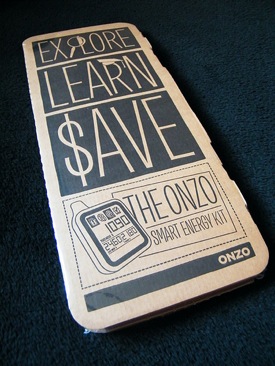
ENDOFTHEAMERICANDREAM– Have you heard about the new “smart meters” that are being installed in homes all across America?  Under the guise of “reducing greenhouse gas emissions” and “reducing energy bills”, utility companies all over the United States are forcing tens of millions of American families to accept sophisticated surveillance devices in their homes.  Currently, approximately 9 percent of all electric meters in the U.S. have been converted over to smart meters. 

It is being projected that by 2012, the number of smart meters in use will rise to 52 million, and the federal government is spending a lot of money to help get these installed everywhere.  Eventually the goal is to have these smart meters in all of our homes and if that ever happened there would essentially be no more privacy.  Once installed, a smart meter monitors your home every single minute of every single day and it transmits very sophisticated data about your personal behavior back to the utility company.

So can’t we just tell the utility companies that we don’t want these stupid things?

Unfortunately, in many areas of the country you can’t.  For example, one outraged resident of California contacted the utility company and was told that if he did not consent to taking a smart meter he would receive no service.

So unless you want to live “off the grid”, what are you going to do?  Can any of us really survive without electricity these days?

The sad truth is that these things are being forced upon us.

It is happening in Europe too.  The European Parliament has set a goal of having smart meters in the homes of 80 percent of all electricity consumers by the year 2020.

Sadly, as these smart meters have gone in there have been reports all over the country of electricity bills increasing dramatically.  There have been mountains of complaints about these things and yet their use keeps spreading.

But of course the biggest issue with smart meters is how they will strip us of our privacy.

The concern is that the incredibly detailed data that these surveillance devices collect will be given or sold to a vast array of third parties.

For example, smart meters are already being used by police to bust marijuana growers.

It is also feared that insurance companies, credit agencies, lawyers, marketing firms and even criminals will be able to get their hands on this data as well.

A recent article posted on the website of the Electronic Frontier Foundation summarized some of the concerns….

“Without strong protections, this information can and will be repurposed by interested parties. It’s not hard to imagine a divorce lawyer subpoenaing this information, an insurance company interpreting the data in a way that allows it to penalize customers, or criminals intercepting the information to plan a burglary. Marketing companies will also desperately want to access this data”

For law enforcement officials, these surveillance devices are a dream come true. According to the Columbus Dispatch, police in central Ohio have been filing at least 60 subpoenas every single month for the energy-use records of those that they suspect are growing pot in their homes.

Well, it turns out that sometimes police are raiding homes that are using a lot of energy and they don’t find any marijuana at all.  Instead, sometimes these raids reveal others kinds of activities….

Sometimes, high electricity use doesn’t lead investigators to drugs. A federal investigation in the Powell area turned into a surprise for detectives.

“We thought it was a major grow operation … but this guy had some kind of business involving computers,” Marotta said. “I don’t know how many computer servers we found in his home.”

So do you want police raiding your home if you start using a little bit too much electricity?

Continue reading about Smart Meters Mean no More Privacy.

© 2011 End of the American Dream

Jerry Day further explains many of these important points in this excellent clip.

Photo by flickr user digitpedia