
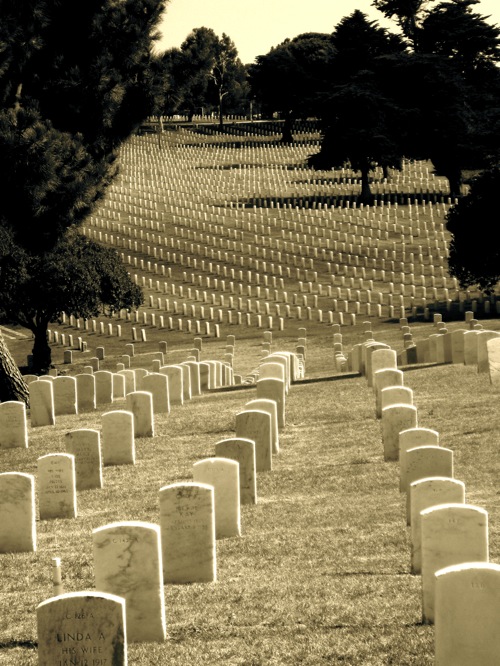
July Marks Deadliest Month for Afghan War

EXAMINER– Three more U.S. troops fighting for their country were killed Friday, raising the death toll to 66 in July – the deadliest month in the 9-year war in Afghanistan.

The previous monthly high was in June when 60 were killed. In June there were a total of 102 U.S. and allied deaths, the first time NATO monthly fatalities reached triple digits. That number went down to 89 in July.

In the latest incidents that occurred Thursday and Friday, a U.S. service member died in an insurgent attack, two others were killed by a roadside bomb in southern Afghanistan, and three U.S. troops were killed in the south in two separate roadside bombings.

On Friday a NATO SUV driven by two U.S. contractors was involved in a traffic accident that killed four Afghans.

This led to Afghans rioting outside the American embassy in Kabul. They threw stones, set two vehicles on fire, and chanted “death to America.”

Police fired their weapons in an effort to disperse the crowd. The crowd burned two foreigners’ vehicles, causing heavy black smoke to rise from the scene.

“It is our right to raise up our voice and protest when innocent Afghans are harmed,” said Azizullah, a 25-year-old student, who like many Afghans uses one name.

He said foreigners were in the vehicle that struck the car, killing the Afghan civilians.

Continue reading about July Marking the Deadliest Month for the Afghan War

© COPYRIGHT EXAMINER, 2010

Photo by Abby Martin
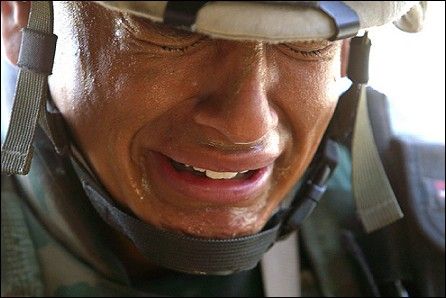
Mental Illness Costing Military Soldiers

USA TODAY– The number of soldiers forced to leave the Army solely because of a mental disorder has increased by 64% from 2005 to 2009 and accounts for one in nine medical discharges, according to Army statistics.

Last year, 1,224 soldiers with a mental illness, such as post-traumatic stress disorder, received a medical discharge. That was an increase from 745 soldiers in 2005 or about 7% of medical discharges that year, according to personnel statistics provided to USA TODAY.

The trend matches other recent indicators that show a growing emotional toll on a military that has been fighting for seven years in Iraq and nine years in Afghanistan, the Army and veterans advocates say.

“These numbers really just validate the mental health communities’ concern about multiple deployments,” says Adrian Atizado, who specializes in health issues as assistant national legislative director for Disabled American Veterans. “Mind and body are both taking a beating.”

Soldiers discharged for having both a mental and a physical disability increased 174% during the past five years from 1,397 in 2005 to 3,831 in 2009, according to the statistics.

Army Lt. Col. Rebecca Porter, an Army behavioral health official, says research shows “a clear relationship between multiple deployments and increased symptoms of anxiety, depression and PTSD.”

Continue reading about Mental Illness Costing Soldiers

© COPYRIGHT USA TODAY, 2010

Army Reports Record Number of Suicides for June

USA TODAY– Soldiers killed themselves at the rate of one per day in June making it the worst month on record for Army suicides, the service said Thursday.

There were 32 confirmed or suspected suicides among soldiers in June, including 21 among active-duty troops and 11 among National Guard or Reserve forces, according to Army statistics.

Seven soldiers killed themselves while in combat in Iraq or Afghanistan in June, according to the statistics. Of the total suicides, 22 soldiers had been in combat, including 10 who had deployed two to four times.

“The hypothesis is the same that many have heard me say before: continued stress on the force, said Army Col. Christopher Philbrick, director of the Army Suicide Prevention Task Force. He pointed out that the Army has been fighting for nine years in Iraq and Afghanistan.

Last year was the Army’s worst for suicides with 244 confirmed or suspected cases.

The increase was a setback for the service, which has been pushing troops to seek counseling. Through May of this year, the Army had seen a decline in suicides among active-duty soldiers this year compared with the same period in 2009.

Continue to read about the Record Number of Suicides.

Photo by US Army flickr

© COPYRIGHT USA TODAY, 2010

The War is Making You Poor Act


HUFFINGTON POST– Next week, there is going to be a “debate” in Congress on yet another war funding bill. The bill is supposed to pass without debate, so no one will notice.

What George Orwell wrote about in 1984 has come true. What Eisenhower warned us about concerning the “military-industrial complex” has come true. War is a permanent feature of our societal landscape, so much so that no one notices it anymore.

But we’re going to change this. Today, we’re introducing a bill called ‘The War Is Making You Poor Act’. The purpose of this bill is to connect the dots, and to show people in a real and concrete way the cost of these endless wars.

Next year’s budget allocates $159,000,000,000 to perpetuate the occupations of Afghanistan and Iraq. That’s enough money to eliminate federal income taxes for the first $35,000 of every American’s income. Beyond that, leaves over $15 billion to cut the deficit.

And that’s what this bill does. It eliminates separate funding for the occupation of Iraq and Afghanistan, and eliminates federal income taxes for everyone’s first $35,000 of income ($70,000 for couples). Plus it pays down the national debt.

The costs of the war have been rendered invisible. There’s no draft. Instead, we take the most vulnerable elements of our population, and give them a choice between unemployment and missile fodder. Government deficits conceal the need to pay in cash for the war.

We put the cost of both guns and butter on our Chinese credit card. In fact, we don’t even put these wars on budget; they are still passed using ’emergency supplemental’. A nine-year ’emergency’.

Let’s show Congress the cost of these wars is too much for us. Tell Congress that you like ‘The War Is Making You Poor Act’. No, tell Congress you love it. Act now.

http://www.TheWarIsMakingYouPoor.com

All we are saying is “give peace a chance.” We will end these wars.

Together.

© COPYRIGHT HUFFINGTON POST, 2010

Posted in Uncategorized | 1 Reply

More Troops Hospitalized for Mental Health than Any Other Reason

RAW STORY– More U.S. troops were hospitalized for mental health disorders than any other reason in 2009. Mental health hospitalizations throughout the military topped injuries, battle wounds and even pregnancy and childbirth for the first time in 15 years of tracking by the Pentagon’s Medical Surveillance Monthly report.

USA Today‘s Gregg Zoroya broke the news Friday.

Mental health care accounted for almost 40% of all days spent in hospitals by servicemembers last year, the report said. Of those hospitalizations, 5% lasted longer than 33 days. For most other conditions, fewer than 5% of hospitalizations exceeded 12 days, the report said.

In 2009, there were 17,538 hospitalizations for mental health issues throughout the military, the study shows. That compares with 17,354 for pregnancy and childbirth reasons, and 11,156 for injuries and battle wounds.

Psychological issues such as post-traumatic stress disorder exact a toll in lost manpower, the study said. Four mental health issues — depression, substance abuse, anxiety and adjustment problems such as PTSD — cost the Pentagon 488 years of lost duty in 2009.

“There’s no shame in my game,” Herschel Walker told a group of soldiers from Winn Army Hospital’s Warriors in Transition Program in Georgia one day earlier.

The former NFL star overcame dissociative identity disorder at Fort Stewart’s Main Chapel and, according to Bryan County News, appealed to those who battle behavioral issues to seek help as he did.

“It’s inspiring for us to have Mr. Walker come,” Winn Army Community Hospital Commander Col. Paul R. Cordts said Thursday. “He’s of course a Heisman Trophy winner, had a huge NFL football career but he came here to speak to our soldiers about his experiences with a behavioral health diagnosis. We recognize that combat affects all soldiers. Some soldiers develop symptoms of post traumatic stress disorder. We wanted Mr. Walker to come and talk about his experience of going through treatment for his disorder as well as dispelling some of the stigma associated with having a behavioral health disorder.”

Obviously PTSD, depression, anxiety and substance abuse are not limited to American soldiers. According to a new U.K. Ministry of Defense study covered Thursday by The Guardian, troops serving in Iraq and Afghanistan have a 22% higher risk of alcohol misuse than their fellow servicemen and women.

Reservists serving in Iraq and Afghanistan were found to be three times as likely to suffer PTSD as other reservists, while regular personnel in combat roles there were found to be twice as likely to report the disorder.

Simon Wessely of the Institute of Psychiatry at King’s College London thinks alcohol abuse is even more of a concern than PTSD. “Our view is that alcohol misuse is actually a greater problem for the armed forces than PTSD,” he said.

Continue reading about Mental Health of Returning Soldiers.

© RAW STORY, 2010
