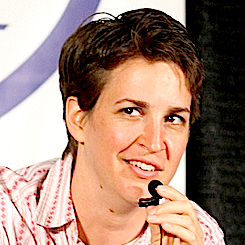
MEDIA ROOTS — Former Air America radio show host Rachel Maddow has, by now, become MSNBC’s de facto ‘liberal watch dog,’ long since the network kicked Keith Olbermann to the curb and told Cenk Uyger that Washington ‘doesn’t like his tone.’
In a world where the Republican propaganda machine has been able to characterize a network part-owned by software giant Microsoft and General Electric, one of the world’s biggest corporate conglomerates, as the ‘liberal media,’ black is white and up is down.
In an interesting twist, Rachel Maddow has now come out with a book, MSNBC’s version of an anti-war history lesson. Even Glenn Greenwald, one of our favorite authors here at Media Roots, seemed comfortable lavishing praise on Maddow’s masterful work of omission, Drift: The Unmooring of American Military Power. Another writer and journalist, David Swanson, has a very different take on the matter. (David Swanson has also appeared as a guest on Media Roots Radio back in 2011.)
Written by Robbie Martin of Media Roots
***
WAR IS A CRIME — Maddow’s book picks out episodes, from the war on Vietnam to the present — episodes in the expansion of the military industrial complex and in the aggrandizement of presidential war powers. Some of the episodes are extremely revealing and well told. Maddow’s is perhaps the best collection I’ve seen of nuclear near-miss and screw-up stories. But much is missing from the book. And some of what is there is misleading.
Missing is the fact that U.S. wars kill people other than U.S. troops. The U.S. Civil War’s battles, in Maddow’s view “remain, to this day, America’s most terrifying and costly battles.” That depends what (or whom) you consider a cost. A listing of U.S. dead on the television show “Nightline,” Maddow writes, “would be a televised memorial to those who had died in a year of war.” Would it really? Everyone who had died? Victims of U.S. wars make an appearance in these pages as the sex slaves of U.S. mercenaries, but not as the victims of murder on a large scale. This absence is in contrast to a large focus on the damage done to U.S. troops, and a much larger focus on financial costs — and not even on the tradeoffs, not even on the things that we could be spending money on, but rather on the “threat” of deficits and debt. Maddow notes the dramatic conversion from weapons factories to automobile, tractor, and refrigerator factories that followed World War II, but she does not propose such a conversion process now.
Missing is resistance and conscientious objection. “War will exist,” wrote President John Kennedy, “until the distant day when the conscientious objector enjoys the same reputation and prestige as the warrior does today.” That day grows more distant with books like Maddow’s. In “Drift,” everything warriors do is called “defense” (except with the Russians whose actions are called “strategic (aka offensive)”; when the troops do things they are “serving”; they are “patriotic”; and in times when the military becomes widely respected that is considered a positive development. Jim Webb is “an extraordinary soldier.” Soldiers in Vietnam “served honorably,” but sadly the military was “diminished” and the troops “demoralized.” Or is it de-moral-ized? Maddow fills out her book with dramatic accounts of Navy SEALs trying to invade Grenada that appear to have been included purely for the adventure drama or the pro-troopiness — although there’s always some SNAFU in such stories as well.
War, in Maddow’s world, is not in need of abolition so much as proper execution, which sometimes means more massive and less hesitant execution. LBJ “tried to fight a war on the cheap,” Maddow quotes a member of Johnson’s administration as recalling. On the other hand, when Colin Powell and Norman Schwarzkopf propose five or six aircraft carriers for the First War on Iraq, Maddow recounts that this “would leave naval power dangerously thin in the rest of the world.” Dangerous for whom?
MEDIA ROOTS — “On the Dark Side in Al Doura: A Soldier in the Shadows” tells the story of U.S. Army Ranger John Needham’s experiences in Iraq witnessing war crimes and other grim atrocities by the U.S. Military. He tried to blow the whistle and, in the process, endured great suffering and is now deceased. Filmmaker Cindy Peister spoke to Project Censored about the new film on KPFA. Michael Needham joins the discussion to help tell his son’s story. (Listen to the interview here and read the transcript below.)
MR
***
On the Dark Side in Al Doura: A Soldier in the Shadows
***
PROJECT CENSORED — “Greetings, everyone, and welcome to The Morning Mix; this is the Project Censored Show on Pacifica Radio. I’m Mickey Huff, in-studio, with Peter Phillips. It’s Friday, December 23rd [2011]. Today’s show: Occupying Free Speech Radio—our One-Year Anniversary show.
“The second segment of the programme, we’ll hear film producer Cindy Peister, who joins us to talk about the new film “On the Dark Side in Al Doura: A Soldier in the Shadows” that addresses soldiers’ war crimes allegations in Iraq atrocity photos. We’ll also speak to the father of U.S. Army Ranger John Needham, Michael Needham, to tell his son’s story.”
Dr. Peter Phillips (c. 37:53): “You’re listening to the Project Censored Show on Morning Mix, KPFA. This is Peter Phillips. And with me, in-studio, is Mickey Huff.
“Circulating on the internet now is a new film “On the Dark Side in Al Doura,” which focuses on U.S. Army Ranger John Needham’s experience in Iraq where he witnessed war crimes and some rather grim atrocities. He tried to blow the whistle on that and he, in the process of being there, was blown up like 14 times, had traumatic brain injury, post-traumatic stress, shrapnel throughout his body, ended up back here in the U.S. under some dire situations, and is now deceased.
“We have on the line the producer from the film “On the Dark Side in Al Doura” Cindy Peister. Cindy, are you with us?”
Cindy Peister (c. 0:00): “Yes, I am.”
Dr. Peter Phillips (c. 0:00): “Great to have you, Cindy.”
Cindy Peister (c. 38:47): “Thank you.” Dr. Peter Phillips (c. 38:48): “And also on the line is Michael Needham. He is John Needham’s father. And both are going to talk about the film and the importance of these very serious accusations against U.S. Military.
“Cindy, tell us about the film and how people can see it.”
Cindy Peister (c. 39:05): “Thank you, Peter. First of all, I just wanna thank you and Mickey for having us on and Project Censored for all the incredible work that you have done to get stories like this out to the public that they wouldn’t, otherwise, know.
“Actually, I did more than produce it. I wrote the script and directed it. So, I’m really familiar with the material.
“We met Michael in March of this year. I did an interview with him in our own independent media, Pulse TV and Maverick Media, out of Ventura. And we were all stunned. The crew and I were all stunned by Michael’s presentation of his son’s story. John’s story is so tragic and Mike, himself, is so genuine and the atrocities are so vicious and so dark, we made a commitment on the spot to Mike that we would do whatever it took to help him get the story out.
“We thought that it would be a lot better if Big Media put it out. They have millions of viewers, but Mike had already had a number of disappointments in that regard. We did sit it out and wait for Time Magazine to release the photos and stories that they had said that they didn’t do it, of course.
“And then we went full speed ahead on getting our film out after CBS produced its show on John’s story November 12th. They did cover aspects of veterans’ concerns that were really important, but they didn’t really focus on atrocities. And Mike and I had really wanted to get this story out to the public. We just felt it was in the public interest and it had to be done.
“So, we just pushed forward at that point. We want accountability for these crimes. And we want John’s story to be out there. We had to turn to the activist community to distribute the film. And it went out through the Occupy Movements, even across Europe. David Swanson got the film and John’s letter to the Military authorities, in which he had tried to inform them of the atrocities. He got that put out on Truth Out and now Project Censored is putting it out. We really appreciate your support.
“We did get hundreds of thousands of hits [on-line] and twenty-something plays just the first five days.”
Dr. Peter Phillips (c. 41:38): “Cindy, how can people see this online at this point?
Cindy Peister (c. 0:00): “Okay, if you go to our Vimeo website. It’s http://vimeo.com//—”
Dr. Peter Phillips (c. 41:56): “V-I-M-E-O, and I think if you google On the Dark Side in Al Doura, A-L-D-O-U-R-A, that you’re gonna find this because it’s at Maverick Media and Pulse TV.”
Cindy Peister (c. 42:06): “Exactly. And it’ll probably come out from the Truth Out site.
Dr. Peter Phillips (c. 42:10): “That’s great. And we’ll probably have links to it as well on our site.” Cindy Peister (c. 42:13): “Thank you.”
Dr. Peter Phillips (c. 42:14): “On the line with us, also, is Michael Needham, John’s father. Michael, are you there?”
Michael Needham (c. 42:21): “Yes, I am. Can you hear me okay?” Dr. Peter Phillips (c. 42:23): “Yes we can. Thank you very much for coming on. I saw the video this week. It’s shocking. It’s a tragedy of what happened to your son. It’s also a tragedy of what was happening to other Iraq people in Baghdad, Iraqis who were killed in front of him. And he tries to blow the whistle and reports that.
“Tell us a little bit about what happened.”
Michael Needham (c. 42:46): “Well, basically, my son grew up in San Clemente, California. He is one of five children; he’s my middle son. And John was always a very active, athletic, you know, he was a very high achiever, a very fearless person. He had a number of different opportunities. He was in the pro surfing circuit in Southern California. In 2005, he had actually won the Open Men’s Competition in a contest in Southern California that went on for four months. So, he was pretty much on the fast track to pro surfing. And he was also very interested in art and music.
“So, within a period of time he started getting involved in watching different shows like Band of Brothers and you know, Saving Private Ryan. We lived in San Clemente, only minutes from a Marine base, Camp Pendleton. And this overwhelming, kind of, nationalistic feeling that the country was going through at that time motivated him to think about going into the Military and going and fighting for quote-unquote ‘our freedom.’
“So, long-story-short, basically, I’m a Vietnam Veteran, ex-Army Officer and I tried to talk him out of it. But he went ahead and made that choice. Well, fast-forward.
“He went through all this training. He got deployed to Iraq in 2006 with a unit out of Fort Carson called the 212, 2nd Infantry Division, 12th Regiment, a [tech] and combat team. And that particular unit became very, very infamous for these types of actions while they were in Iraq. His unit was an Apocalyptic Now, type of unit, where you had a colonel, battalion commander, use these tactics of basically terrorising and murdering and dismembering bodies. If anyone’s familiar with the trophy murders that were in Afghanistan. This makes that look like a small-scale operation.
“So, with the time we have on the phone right now, what I’d like everybody to do is look at the video on Vimeo. And the real important thing here is that, as a parent, as a father or someone’s husband or son or uncle, people need to know the reality of what happened in Iraq. And this is not an isolated case. This is an entire battalion in southern Baghdad that basically targeted, murdered, and racketeered, basically, an entire neighbourhood through the leadership of the 2nd Infantry Division that was commanding at the time.
“The atrocities are real. I got the photographs. I presented them. I went through a number of situations of dealing with the government, dealing with the Army, dealing with the Department of Defense, the White House trying to get people to take a look and take action. But, basically, it was covered up. I had major publications that were on the story and at time of release, I was told that they weren’t gonna do it. In the case of The Washington Post, I was told that they were not going to run the story because they were basically told by the Pentagon that if they run the story that they would not have access like other agencies to breaking news.
“They were basically you know telling them that if you run the story, we’re gonna blackball you.”
Mickey Huff (c. 46:41): “It’s elite sourcing, a form of censorship.
“We’re speaking with Cindy Peister and Michael Needham about a new video On the Dark Side in Al Doura: A Soldier in the Shadows addressing soldiers’ war crimes allegations and Iraq atrocity photos.
“Michael, I’m sorry for interrupting you; I just wanted to point out, you were talking about The Washington Post; CBS also reported on this. CBS did a programme on this. And when they contacted the Army it was such that they claimed that war crimes did not occur, though CBS also stated that the report was redacted and incomplete with 111 pages withheld. And the report claimed that when soldiers were asked about specific photos, one showing an individual with his brains pulled out atop a Military vehicle, they were told, quote, ‘We didn’t have any body bags that day. So, we put him on the hood of the vehicle for transport.’
“I mean this is the kind of thing that you’re talking about and the kind of thing you’re saying The Washington Post doesn’t want to talk about.” Michael Needham (c. 47:38): “Well, yeah. And, basically, when we’re talking about that particular instance, which is one of hundreds and he’s documented with photos and with collaborative soldiers’ stories, is just a juvenile, sophomoric way of blowing this off. Okay? I mean I don’t want to go into too much detail right now because it’s a radio show. We’re limited on time. But being former Army, I understand what they need to do. You would never drive a body around on a hood.
“What really happened at that time was that Iraqi was standing on the street and was shot and killed, point blank in the head. They drug him on the hood. They took his brains out. And then they drove him around the neighbourhood with an interpreter blaring out threats in Arabic that if the citizens of the moulah, or the neighbourhood, in Al Doura did not cooperate with them that that’s what their end would be.
“They were terrorists themselves. They were killing civilians, robbing, stealing, just out of control. It really is like an Apocalypse Now situation.
“The story with my son is even more interesting because basically I documented this thing from the very first minute he went in the Army. And I don’t want, like I said, we have limited amount of time, but every claim we make, everything we say, we have dates, times, photographs, collaboration.”
Dr. Peter Phillips (c. 49:07): “Michael, I think this is a really important story. John, your son, tried to tell this. He was subsequently came back to the U.S. He is now deceased. There are circumstances, all of this, which need to be investigated and brought forward. We wish we had more time today to, really, talk with you more about this. People can see this film online. It’s called On the Dark Side in Al Doura: A Soldier in the Shadows. You can watch it online.
“Cindy, are you still there?”
Cindy Peister (c. 49:40): “Yes, I am.”
Dr. Peter Phillips (c. 49:41): “You’re continuing to work on this film; is that correct?”
Cindy Peister (c. 49:44): “Well, we do have hopes to add some more interviews to make it a little meatier. But we haven’t got that confirmed yet. But we do hope to do that. Yes.”
Michael Needham (c. 49:56): “Well, I think—”
Dr. Peter Phillips (c. 49:57): “Thank you.”
Michael Needham (c. 49:58): “If I could interject for one second. We are not done with this story yet. I am still dealing with the VA in his death. And at this point in time, we are not guaranteed on exactly how he died.”
Dr. Peter Phillips (c. 50:11): “Michael, we’re gonna follow up on this with you and with Cindy. And this is not gonna go away. Thank you very much for being on the air with us today.”
John Needham (c. 50:23): “Alright. See you, Cindy. Bye-bye.”
Mickey Huff (c. 50:24): “We’re also joined in-studio by interim KPFA General Manager Andrew Phillips for our One-Year Show. Andrew.”
Andrew Phillips (c. 50:30): “Awe, this is a pat on the back and thank-you to you guys for doing such stellar work over the year, important work, such as we’re hearing today. It’s really great that you’ve pitched in at KPFA. And we’re proud to have you. And I know that your programme, Mickey and Peter, is going out nationally also, creeping out there, because it is important that people hear this.
“Look, I want to take this opportunity to wish everybody, our Members and all of your listeners a very happy and prosperous holiday. Hang tight; it’s gonna be a great year next year, very exciting. We’ve got some interesting projects coming up. And you guys in the studio and Anthony [Fest], especially, great work, and someone on the board I haven’t met yet, but thank you everybody.” Mickey Huff (c. 51:15): “That’s Jax. Thanks Jax. Thanks for coming in Andrew.”
Andrew Phillips (c. 51:17): “My pleasure.” Mickey Huff (c. 51:19): “We appreciate it.
“We’re gonna round out the programme today. We also did a brief interview with our, sometimes, co-host, Abby Martin; she’s also a Member of the Media Freedom Foundation; co-founder of Media Roots. So, I had an opportunity to sit down and talk with Abby about the work she does, certainly the work she’s done covering the local Occupy Movement. So, here’s a brief interview with Abby Martin of Media Roots.
“For the One-Year Anniversary programme here at The Morning Mix Project Censored Show we wanted to, actually, talk to one of our co-hosts Abby Martin of Media Roots, who’s also a board member at Media Freedom Foundation.
“Abby, let’s just hear some of your reflections on the past year. What have you been doing with Media Roots, some of the highlights that you’ve done here on the show, and some of the work you’re doing with Project Censored?”
Abby Martin (c. 52:05): “Well, Mickey, I started Media Roots about a year and a half ago, starting off as just a news aggregate, just to have a vast collection of underreported news, kind of, what you guys were already doing in my own way and adding kind of a personal, personality, to it.
“And then over time it turned into a citizen journalism project where people continually started pulling information from all over the world and submitting contributions. And it ended up being way bigger than I imagined. And getting involved with Project Censored and now intertwining the two, it’s really exciting.
“Occupy Oakland, when that took off, I was on the ground every day when things were happening. And that’s when the citizen journalism aspect of it really shined because I was able to tell the story of what was happening from the ground up instead of top down. And we saw you know obviously the corporate news got that a lot wrong and said that people, you know, the crowd control methods that they used, those draconian crowd control methods, were warranted. Really, it was up to citizen journalism to really tell the story of what was going on at that time.”
Mickey Huff (c. 53:14): “And we’ve certainly been fortunate to have been working with you over the past year. We certainly look forward to doing more of that. What you’re describing sounds a lot like the name of the website, of the organisation, Media Roots.org. Media Roots—radical, meaning, go to the roots and have a bottom-up kind of construction of a people’s narrative. That’s what you’re getting at.”
Abby Martin (c. 53:35): “Absolutely. We see the top-down corporate consolidation and control of the message, it’s institutionalised; it’s not organic. And Media Roots is, really, it’s from the ground up. It’s true activism. It’s true grass-roots journalism where you’re getting the story from each other like Robert McChesney said in the interview, ‘It’s not paid.’ Yeah, we accept donations, but we’re not influenced by any corporate donor or any sort of dogmatic principles. We are for the truth. We are completely unbiased. We report from outside party lines, just like Project Censored does. And it’s really important to have that.”
Mickey Huff (c. 54:20): “Hitting on the notion of reform, Elizabeth Cady Stanton once wrote, ‘Reformers who are always compromising have not yet grasped the idea that truth is the only safe ground to stand upon.’
“And, of course, we won’t pretend that there’s only one truth. There are many different ways people can interpret things. But one of the biggest problems that we have in our media structure here is that people don’t get all of the relevant facts. And, of course, the bottom-up, the vernacular view, the media root, going straight to the street, so to speak, that’s often the view that’s really missing. And certainly at Media Roots, you’ve been doing that. You have been covering Occupy Oakland.
“And you are also working with some people on a film about Occupy Wall Street. Is that correct? Could you talk to us, at least, briefly about some of that and maybe some of the narrative? What’s the Media Roots connection there? And what do you hope to accomplish?” Abby Martin (c. 55:13): “Yeah. There’s a great film; it’s called The Occupy Wall Street Collaborative Film Project based in New York, run by a woman named Audrey Ewell.
“This whole concept that we’re talking about, citizen journalism, they’re pulling together everyone’s footage across the world that has been participating in covering the Occupy Wall Street Movement and putting it together in a collaborative project.
“I’m gonna be part director. I’m submitting my Occupy Oakland footage, exclusively, to represent this area. And it’s just a real exciting grassroots project with a bunch of journalists who are gonna get together and put together a citizen journalism film highlighting this Movement.”
Mickey Huff (c. 55:50): “We’ve been talking with Abby Martin of Media Roots. Also you are familiar with Abby; she joins us here occasionally Friday mornings on The Morning Mix. So, thanks again, Abby Martin, for all of your work. Thanks for joining us today to help celebrate our One-Year Anniversary Show. And we look forward to working with you in the year ahead.
Abby Martin (c. 56:08): “It’s a great pleasure, Mickey. Thanks so much for Project Censored and everything you do.”
Mickey Huff (c. 56:15): “And that does it for today’s Project Censored Show on Pacifica Radio. Again, I’m Mickey Huff in-studio with my illustrious co-host Dr. Peter Phillips. Peter, it’s been a great year. We look forward to doing more ahead with free speech community radio.” Dr. Peter Phillips (c. 56:29): “Thank you, Mickey. And thank you to everyone at KPFA for having us on this year. And we look forward to continuing.” Mickey Huff (c. 56:36): “That’s right. Thanks again to Anthony Fest. Thanks today for [Jax]. Thanks for [Kiersten]Thomas, who’s often on the board helping us out. Thanks, too, to Andrew Phillips for joining us. Thanks to Carrie Core. Thanks to Arlene Engelhardt. And, most of all, thanks to all of you, the listeners and supporters of community free speech radio; continue to Occupy Media in the new year to come. And we’ll see you next time.”
AMG– Award winning documentary filmmaker Rory Kennedy explores the human and
political consequences of one of the most bitter scandals of the war in
Iraq in this feature. In the 1960’s, a prison was built in Abu Ghraib,
an Iraqi city west of Baghdad, and during the regime of Saddam Hussein
it became a center of torture and abuse where political dissidents were
subjected to agonizing punishment or death.
Following the United States
invasion of Iraq in 2003, the prison was taken over by American military
authorities, and was used as a holding facility for prisoners of war
and suspected terrorists captured by U.S. forces. The prison’s
reputation as a site of widespread abuse rose again when journalists
discovered photographs of Iraqi prisoners being tortured and humiliated
in an ugly variety of ways by American soldiers, a scandal which had a
major impact on international thinking about the war. Ghosts of Abu
Ghraib offers an in-depth look at the story behind the abuse of Iraqi
prisoners, featuring interviews with observers on both sides of the
national divide.
MEDIA ROOTS– In addition to throwing our country’s finances (and morals) away on the bombing of other countries, the Pentagon is also spending millions buying up all US satellite imagery in Afghanistan to make sure the stark reality of war is shielded from the western world. In America, the human cost of US bombing campaigns is never shown on corporate media outlets. When civilian casualties are reported on, they are relayed as cold statistics of the lowest estimates– no names, no faces, no stories of who these people were.
America’s wars are fought from a distance with robots, and people
have never been more disconnected with what their country is sponsoring
abroad. If people saw the dead bodies littering the streets of
Afghanistan, they might feel more empathy and connection to the
individuals who are casualties of US occuptaions. Eradicating the “us”
and “them” mentality would completely undermine the logic of these
endless wars– the last thing the establisment wants.
The images,
which are taken from Ikonos, an advanced civilian satellite launched in
1999, are better than the spy satellite pictures available to the
military during most of the cold war.
The extraordinary detail of
the images already taken by the satellite includes a line of terrorist
trainees marching between training camps at Jalalabad. At the same
resolution, it would be possible to see bodies lying on the ground after
last week’s bombing attacks.
Under American law, the US defence department has legal power to exercise “shutter control” over civilian satellites launched from the US in order to prevent enemies using the images while America is at war. But no order for shutter control was given, even after the bombing raids began 10 days ago.
The decision to shut down access to satellite images was taken last Thursday, after reports of heavy civilian casualties from the overnight bombing of training camps near Darunta, north-west of Jalalabad. Instead of invoking its legal powers, the Pentagon bought exclusive rights to all Ikonos satellite pictures of Afghanistan off Space Imaging, the company which runs the satellite. The agreement was made retrospectively to the start of the bombing raids.
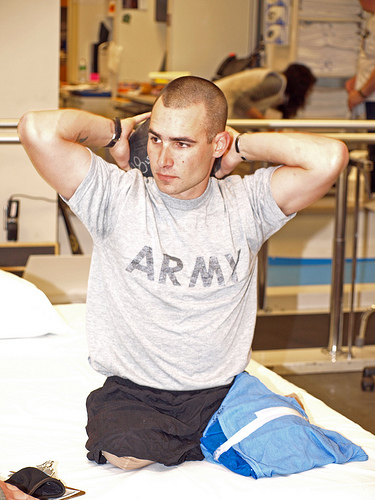
US NEWS– Some U.S. soldiers returning from Iraq and Afghanistan are suffering
unexplained breathing problems that may be related to exposure to
unknown toxins, a new study indicates.
“Respiratory disorders are emerging as a major consequence of
service in southwest Asia,” said study author Dr. Matthew S. King, an
assistant professor of pulmonary and critical care at Meharry Medical College in Nashville, Tenn.
“In
addition to our study, there have been studies showing increases in
asthma, obstructive lung disease, allergic rhinitis and a general
increase in reports of respiratory symptoms,” he added.
The report was published in the July 21 issue of the New England Journal of Medicine.
For
the study, King and colleagues had 80 soldiers with difficulty
breathing from Fort Campbell, Ky., undergo physical exams that included
tests to determine how well they were breathing and CT scans.
In
addition, 49 soldiers had lung biopsies when the exam couldn’t find a
reason for their breathing problems. Some of these soldiers had been
exposed to a sulfur-mine fire in Iraq in 2003, the researchers noted.
All
the biopsies were abnormal, and the researchers diagnosed 38 soldiers
with constrictive bronchiolitis. Constrictive bronchiolitis is a rare
non-reversible lung disease in which the small airways in the lungs are
compressed and narrowed by scar tissue or inflammation.
“This a
very rare condition in otherwise healthy individuals and is generally
untreatable,” King said. “We believe that it is caused by an
inhalational exposure with which they have contact while in southwest
Asia.”
The other soldiers were diagnosed with other conditions that explained their breathing problems.



 MEDIA ROOTS — Former Air America radio show host Rachel Maddow has, by now, become MSNBC’s de facto ‘liberal watch dog,’ long since the network kicked Keith Olbermann to the curb and told Cenk Uyger that Washington ‘doesn’t like his tone.’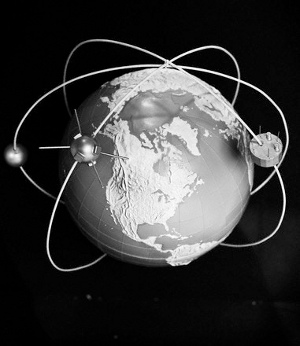
 US NEWS