
Ralph Nader Audience Q & A at Berkeley’s Hillside Club

MEDIA ROOTS – Ralph Nader answers questions from the audience at Berkeley’s Hillside Club on Saturday, October 1, 2011 at the First Annual Peter Miguel Camejo Commemorative Lecture.  [Transcript Below]

Ralph Nader discusses Occupy Wall Street, Gandhi’s ‘Seven Deadly Social Sins’, media reform, his presidential candidacy and what people can do to fight back.

***

Ralph Nader:  “Gandhi’s ‘Seven Deadly Social Sins,’ you’ve probably heard them, that’s his words, ‘Seven Deadly Social Sins.’  Everyone has three words.  Gandhi was really the sound-bite champion.  He’d have been great on TV.

“‘Politics Without Principle.  Wealth Without Work.  Commerce Without Morality.  Pleasure Without Conscience.  Education Without Character.  Science Without Humanity.’

“Science is building drones.  You heard about the coming drone.  You heard about the coming drone?  This is one that’s what’s called Self-Automated.  That is, a software will select the suspects, locate the suspects, execute them.  They don’t even need a button-pusher in Nevada or Langley.  The next drone is gonna be a size of a hummingbird.  With nanotechnology, they’ll put the drone in your hair for surveillance.  You’ll never know it.  It’s a, it’s a coming, 1984 is a masterpiece of understatement. 

“And then, ‘Worship Without Sacrifice.’

“You know, that’s like the so-called organised Christians who organise for war.  You know, they organise for destroying the rights of poor people.  I wonder if Jesus Christ would’ve condemned.

“I added two more.  You gotta bring it up to date.

“Belief Without Thought.’  This is what Peter [Camejo] was against.  ‘Belief Without Thought.’  And ‘Respect Without Self-Respect.’  That’s the most important one of all ‘cos if you respect yourself you don’t say, ‘I don’t have any power.  Why should I do anything?  It doesn’t matter.  It won’t change anything.  It won’t have any effect ‘cos everyone else is not gonna do what I’m doing.’  No.  You do what you do.  And you try to talk to others to convince them.  You never say, you don’t wanna go out of your way to discomfort yourself because a million other people haven’t told you, in one way or another, that they’re doing the same thing. 

“So, the key is how to get people who know what the prob-, there are very few people in this country who are ignorant of the injustices.  I mean they get it handed to ‘em every day.  Right?  You have to, you have to have people who say to themselves that if I know something I have a moral obligation to do something about it, personally.  I don’t care if ten million people don’t do it.  I can’t live with myself, unless I do it.  And once that spreads, you’ll get ten million people.  So, that’s, that’s what we have to look ahead for.”

Question:  What do you think about the Occupy Wall Street protests?

Ralph Nader:  “Well, you know, we don’t know what it is, but it’s refreshing whatever it is.  It’s the young people, uh, probably without jobs, a sense of theatre, uh, make sure there’s no leaders, no organisers, so they’re, become [more] resistant to infiltration.  And they’re modestly violating permits.  Like, uh, the permit to march in the City of New York and, therefore, they’re provoking the police to try to channel them with these orange fences.  And they’re spreading to other areas.  And that’s the kind of spark that gets things underway. 

“I wrote a column years ago, months ago.  I said, ‘How do we know when the spark comes?  I mean, the spark doesn’t usually come from [a] predictable source.  It doesn’t come from the usual suspects, like a bunch of oppressed people in some ghetto, in some city.  It comes like the Tunisian spark, see?  Who would have ever thought a fruit peddler, slapped by a police woman who is rippin’ off his stall…?  And look what happened.  So, this may be a spark. 

“What usually launches things are totally unpredictable episodes that suddenly say to a lot of people, ‘That’s it!  We’ve had enough!’  You know?  So, we’ll see how it turns out.  They’ve got a big band coming to get a bigger crowd.  I always worry about that, if people come just for the music.  Cornel West, Michael Moore, they’ve spoken to ‘em.  Uh, the authorities are very worried about this ‘cos they saw what happened in London.  And they saw what happened in the Middle East, the Arab Spring, and all.  They’re very worried about that.  And so we’ll see.  I think we’re gonna have to wait [many] days and see what goes on.”

Question:  “A number of people have asked, Mr. Nader, given the present crisis and this Presidential year, will you make your announcement here for your candidacy for President of the United States?”  [audience chuckles]

Ralph Nader:  “No. 

“I, [audience laughs] I ran unofficially in the Green Party in 1996.  I ran a none-of-the-above, really unofficial, Candidacy in New Hampshire and Massachusetts in 1992, just none-of-the-above.  I got almost as many votes as Jerry Brown.  And he was a rival in New Hampshire.  Then I ran officially in 2000 and 2004 and 2008.  […]

“Four out five people who declared to the pollsters they were gonna vote for us, Nader-Camejo, Nader-Gonzalez, didn’t when they got in the voting booth.  They chickened out and voted for the Democrats or the Republican, whatever.  Mo-, people think all our votes would’ve gone to the Democrats.  No.  The exit polls in 2000 by a Democratic pollster have, uh, Nader-LaDuke, said that 25% of our votes would have voted for Bush, 39% for Gore, and the rest would have stayed home. 

“So, to make a long answer short, it’s time for other people to do it, uh, because, uh, I’m tired of pushing strings.  I’m tired of having a lot of people agree with our positions and they don’t put their vote behind our positions.  And, uh, unless, that’s what I mean by ‘Respect Without Self-Respect.’  We are supported on many issues by a majority of the American people.  A majority of the people wanted us on the Debates.  These are traditional poll, polling companies.  A majority of the people wanted us on the Presidential Debates.  We didn’t get on.  And a majority of the people, I mean, the people, you meet all over the country, ‘I voted for you!’  And I look at ‘em and I say, ‘Uh, where did you vote for me?  Where?  North Carolina?’  I’ll say, ‘I wasn’t on the ballot in North Carolina.’  [audience chuckles]  You know, I mean, people feel like, you know, they wanted to, but.”

Question:  “I just, feeling, hearing all this, I’m just feeling so much that, you know, we get the government we deserve.  When people voted for the lesser-of-two-evils instead of voting for their heart I felt that we really get the government we deserve.  That’s my statement.  My question to you is:  Is there any way that we can get the, uh, the telecommunications and the communications and the airwaves and all that back to the people.  That was our public domain.  And I think if we control that again, we would be able to control the length of the political season that goes on, which is interminable, because the TV, uh, people wanna make profits and they love to create fights that, that they’re not even, they don’t even care who wins.  They’re just making money.  And I think we can also get the money out of, uh, politics.  If we the people own the airwaves, we give the Candidates the right to be on those airwaves, an equal time kind of situation.  They don’t have to pay the TV, get ‘em, put ‘em on free.”

Ralph Nader:  “Yeah.  Well, that was one of the agendas we ran on.  And probably helped keep us off national TV. 

“We own the public airwaves.  We’re the landlords.  The FCC is the real estate agent.  And the radio and TV stations, the tenants.  And they pay us no rent.  They haven’t paid us any rent for this valuable property since 1934, the Communications Act of 1934.  And they decide who says what and who doesn’t say what on our property, namely the TV and radio, the public airwaves.  So, you know?  That’s an easy one, right?  I mean, who’s gonna be against controlling what we own?  Having our own audience, network, our own radio and TV.  It’s our property.  We can say we want two hours a day, here.  We want three hours a day, here.  And then we’ll rent you the rest of the time.  You’ll have to pay rent.  We’re gonna take the rent and put it into studios and reporters and programmers and producers.  And communicate with one another.  And mobilise one another on anything we want, from serious to humour.  Boy, I mean, can you imagine getting on national TV with that?  You see? 

“So, that was a larger part of the Commons.  We had a policy on the Commonwealth where we control what we own.  We own a third of the, America, the public lands and, you know, who controls it the timber, oil, gas, gold, whatever, the companies.  And we own trillions of dollars of government taxpayer R & D.  Who do you think created the internet?  Who do you think built the biotech industry?  Who do you think built the semiconductor industry?  Who do you think built the aerospace?  It was all government R & D!  You wouldn’t recognise it.  I mean, it was all government R & D, out of the Pentagon, NASA, National Institutes of Health.  Half, three-quarters of the anti-cancer drugs came from tax-payer-supported research from the National Cancer Institute with no controls on the prices that the receiving drug companies could charge us.  They were given all this free.  So, you gotta dialogue like that.  You know, you can’t do it with sound-bite. 

“But we’re shut out of our own property.  That should be the calling card.  Let’s start with our assets!  Our assets are the biggest wealth in America.  $5 trillion dollars of pension funds owned by workers.  That could control the New York Stock Exchange Members.  That could control the companies in the New York Stock Exchange.  I mean, about a third of all stock is held by worker pensions.  But, it’s not controlled by worker pensions.  It’s controlled by the banks and the insurance companies or the intermediate. 

“So, you see, it’s not that hard once you get people, uh, just thinking a little bit, getting excited.  You gotta ask ‘em the basic question, ‘Do you want power?  Or do you want to be powerless?  You want multiple choice tests?  You want power or do you want powerlessness?  So, you need thousands of people talking to millions of people.  Just like the populist tradition.  They call themselves lecturers.  I’d have [texted this, no calling].  And they talk to people.  So, if you have a thousand people who are talking to a thousand people a week with these messages.  They would talk to a million people face to face in rooms like this.  You have 10,000 people.  They talk to a thousand people a week in different venues.  You have ten million people.  That’s the way we gotta think.  The hell with the media for the meantime.  One thing they can’t stop us from doing is talking to one another.  And there are a lot of empty auditoriums and empty spaces around the country that we could use to do that. 

“That’s why we need a few very rich people, like George Soros or Ted Turner or whatever.  You know, there’s always a few tiny ones, a tiny percent.  All you need, a tiny percent to say, ‘Here’s a billion dollars.  We want you to hire 20,000 organisers in the country, all over the country.’  You will see remarkable dramatic changes.  There’s no social movement in the country that was created without organising.  And the lack of organisers delay the maturation of these movements, women’s suffrage, abolition. 

“But remember, and there’s a fella yesterday, he came out, gawd, these guys are like so predictable.  This guy was real hardcore, socialist, idealist.  He said, ‘How dare you write a book called Only the Super Rich Can Save Us.  I said, well, remember, it’s in quotes.  It’s in fiction.  He said, ‘I know!  But I saw you on TV!  You explained it.  And you think that we have to rely on rich people to mobilise the masses.’  So, I said, ‘Well, how are you gonna hire the organisers?’  And he wouldn’t listen.  So, I said, ‘Well, you ever heard of the Abolition Movement?  Slavery?’  He said, ‘Yeah.’  I said, ‘Don’t you know that a lot of proper Bostonian rich people funded William Lloyd Garrison, Frederick Douglass, and others?  How about the Women’s Suffrage Movement?  Some rich women funded those people.  Women who were on the ramparts all over the country.  How about the early Civil Rights Movement?  Did you ever hear?’  He, he went away by then.  [audience laughs]  ‘How about the Stern Family?  How about the Curry Family of the 1950s?  Gave a big lot.  Who’s gonna pay for those buses?  Who’s gonna pay for the expenses, the organisers?  […]

“It’s ridiculous.  But, you know what?  After he left, I said, I had the best response to him.  You always think after it’s over.  Here’s what I would’ve said to him right after that:  ‘Hey, you’re a socialist, right?  He’d have said, ‘Damn right!  I’m proud of it!’  ‘All power to you.  You gotta fight those corporate socialists.’  Okay.  I’d say ‘Hey, you ever hear of Karl Marx?’  He’d say, ‘What?  Are you bein’ funny?’  I’d say, ‘Well, who do you think funded year after year after year Karl Marx?  His name was Friedrich Engels.  And he got co-authorship of the Communist Manifesto.’  But he funded the living expenses of Karl Marx.  And a number of children.  And he didn’t earn it writing Das Kapital

“So, we have to, people feel overwhelmed.  They feel depressed, discouraged.  They can’t do anything.  The country’s gettin’ worse.  The world’s goin’ to hell.  [audience chuckles]  Break it down and let’s each do our thing.  And then build it.  Someone strikes gold with a enlightened billionaire whose in their 80s or 90s and has a sense of posterity and is quite enlightened.  As far as I’m concerned, if you had two multi-billionaires givin’ us 15, 20 billion.  And mind you, some of these people are worth 30, 40 billion.  15, 20 billion’s nothing.  You can turn the country around.  How do I know?  I wrote 700 pages of this book only just to prove it.  Very, very detailed.  Once the money, the resources, top-down, bottom-up, movement.”

***

Photo by flickr user Sound From Way Out
Posted in Uncategorized | 1 Reply

MR Exclusive – Meet the Precariat

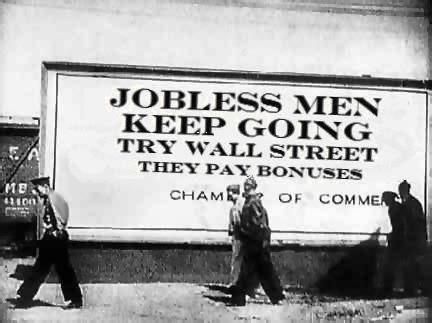
MEDIA ROOTS- Obama’s jobs bill amounts to nothing more than a prop that his apologists will use to promote his re-election. His progressive critics, on the other hand, will bemoan its inadequacy, as they demand an FDR-like program of direct governmental employment. And so the sorry spectacle we have witnessed for the past several years will continue, all leading nowhere. Or rather, leading to further dire consequences for tens of millions.
The problem we face isn’t unemployment. The problem is that people are broke and the solution isn’t jobs, but income. With direct payments to all citizens, the government would at least begin to address the deeper problem of generalized insecurity, of which joblessness is simply one manifestation.

Enlightened government policy of this sort won’t be announced at a White House press conference. But is it delusional to contemplate revolutionary social change? Degenerating social conditions adversely affect a majority of citizens, and what is the response – to chase after neo-liberal illusions? Or to fund social entrepreneurs? Or to work towards change that addresses, without the constrictions of ideology, our real needs?

We are facing a bewildering set of catastrophes: climate change, resource depletion, and worldwide economic meltdown. It is no wonder that we are all uncertain where to start and what to support. However, if we can meet our basic needs won’t we be able to contend with all the other problems? It doesn’t take a Marxist to whisper in our ear that we are in the midst of a class struggle – we are not a country of fools some outside our borders think we are. We all understand the role of the rich who in pursuit of their gain undermine our survival. 

One hundred years ago the average person knew this too, but the difference between our great grandparents and us is that they saw the power of ordinary working people putting down tools and striking, sometimes winning and sometimes smashed by the armed might of the capitalists – the State. During the Great Depression ordinary people began taking control of their circumstances; some created combative unemployed councils that organized local, collaborative economies (California had hundreds of these groups) and others occupied factories threatening the bosses’ control and spurring FDR to legalize unions to prevent revolutionary turmoil.

Obviously, we do not live in such heady times. Who will replace the workers who once toiled in those now abandoned factories scattered across the country? The pivotal role played by the old working class finds no equivalent in our age of permanent unemployment. Is it possible for the solidarity of a previous age, based on hope and resistance, but founded on a shared commonality, to be resuscitated by recognizing our generalized insecurity? Could this become the motivating force for social change hidden in plain sight?

What unites immigrants, students, the unemployed, the semi-employed in temporary and part-time jobs and all of us in jobs who face speed-ups, downsizing and off shoring? In Europe a name exists for those in this situation of precariousness: the precariat. A dissident academic, Guy Standing, has just written a thorough examination of this new class: The Precariat: The New Dangerous Class. The precariat is dangerous because, so far, its fears have only been addressed by the demagogic Right – the neo-fascists in Europe and the Tea Party in the US.

According to Standing, this new class has a tenuous grip on secure employment, with temporary contracts, no labor protections and no benefits. Or if they have a job, there is no guarantee it will last for years. These conditions lead the precarians to continuously job-hunt as a defensive strategy. They can’t expect to gain job experience as an asset for future employment and, as a consequence, a career with a professional identity fades from their lives.

Neoliberalism’s dogma of flexibility and adherence to market demands creates a centrifugal reality for the individual, destabilizing all aspects of life that define the personality, and that previously led to self-esteem. Values dissolve into attenuated opinions, friendships devolve into text messages, and love detours into pornography. Life hollows out in an endless pursuit of escapism (epitomized by consumerism) and insecurity generates fear of an uncertain future.

Ten years ago in Europe members of the precariat were the chain store workers, but today recent graduates find those jobs are unavailable. All across Europe and the US, the financial sector extracts its homage from governments as a policy of austerity that threatens even the most secure employment of all – government jobs. Can anyone doubt the continuing decline of the old working class, the industrial proletariat, and its succession by a growing mass of fringe workers, immigrants, and unemployables – the precariat? Standing estimates that in the West one-quarter of the population falls into this category, but if only those under thirty years old are counted the category swells to over half, or more. For the young the writing is on the wall, as they all know.

Jobs are scarce and will become even more so as technology continues to replace humans not only in manufacturing, but also increasingly in services. World trends for job creation, at least in the developed world, are discernable and really not contested, and to fly against them with solutions from another era merely demonstrates our inability to imagine another paradigm.

We need to take seriously the proposition that income must be separated from jobs. While this seems absurd in the context of US politics, it received a receptive hearing in the Nixon administration. At that time the fear of growing unemployment and major social unrest, like that seen in all major cities in the late 60s, prompted Washington to introduce a negative income tax to supplement income. Instead of paying taxes, the poor would receive federal funds to stay out of poverty; the federal Earned Income Tax Credit is a lame remnant of that policy. The oligarchs didn’t approve, and at about the same time both the explosive growth of poorly paid service jobs and the rise of the industrial prison complex sidetracked a more humane alternative.

While only a few academics are thinking along these lines in the US, in other parts of the world a basic income has been gaining adherence. The largest program based on this premise is in Brazil, where a modest stipend goes to families so that children can afford schooling. This may be a baby step of a program, but there are proposals to extend it. And other countries more generous benefits are contemplated. Here in the US we have a variation of this idea with the Alaska Permanent Fund that annually pays citizens approximately $1,000 apiece as their benefit from the sale of Alaskan oil.

Most advocates of a guaranteed income premise their program on a yearly subsistence paid to all without qualification, thereby with one program saving billions by ending a multiplicity of government assistance programs. Whether the funds raised for general distribution as income come from a small tax on financial transactions, or whether these funds come from the rent paid by corporations using public resources, or some other scheme or mixture of many sources, the point is that the money can be raised. The obstacle is not an economic issue, but a political one.

The assumption is that the guaranteed income would meet basic needs and be supplemented by employment, which could be part-time or full. If implemented, no one need be tied to a job for a whole year. For the young, in school, travelling, or experimenting with life’s choices, this sum might be sufficient to find meaningful engagement with others. We need to understand that this is not a scheme to avoid work, but to search out fulfillment in work. To in fact, redefine work away from forced labor as it’s conceived by most.

The long-range implications of this transformation of life’s current goal – to search for a job – address the environmental crises we face. How in fact will we contend with a world presented as a jungle, as a struggle to attain scarce resources? The reality of a life without an endless expansion of commodities must be met by transforming our values at some basic levels. The sages of all cultures have told us that we define ourselves by freely associating with others to discover our way of contributing to the commonweal. This is wise advice. We need to be free to follow it.

Bernard Marszalek is editor of The Right to be Lazy: Essays by Paul Lafargue (Kerr/AK Press). He can be reached at [email protected]

America’s Rampant Inequality Impossible to Deny

MEDIA ROOTS- This segment from the Daily Show breaks down how class warfare is perpetrated by the rich to phase out the middle class in this country. Stewart explains that the government could raise $700 billion by either taking half of everything earned by the bottom 50% or by raising the marginal tax rate on the top two percent. The video is followed by a great article from In These Times that further details the war being waged on the poor.

Abby

***


IN THESE TIMES– For years, America’s super-rich and their allies in Congress and the media have tried to deny that a tiny elite was growing astronomically wealthy at the expense of the vast majority of Americans.

But the vast gaping canyon between the richest 1 percent and Corporate America, on the one hand, and the rest of us on the other, has become so large and well-documented that denial no longer works. The ideological combat gets especially intense when it turns to the relatively minimal taxes that corporations and the rich pay.

What defense can be offered when billionaire investor Warren Buffet admits that he pays a 15 percent capital-gains rate on most of his income, while everyone else in his office (including the secretary) pays a considerably higher rate?

Significantly, the plight of the broad American middle class has been closelylinked to the fate of the labor movement as it has come under siege in the last 35 years. While many middle-class people have long resented the gains made by blue-collar workers who often lacked higher education, the fact remains that as labor has lost ground in terms of real wages, so has the middle class.

Prof. Bruce Western of Harvard concluded in a study this month:

From 1973 to 2007, wage inequality in the private sector increased by more than 40 percent among men, and by about 50 percent among women. […] deunionization—the decline in the percentage of the labor force that is unionized—and educational stratification each explain about 33 percent of the rise in within-group wage inequality among men. Among women, deunionization explains about 20 percent…

Having invested in union-busting lawyers, private police, and anti-union politicians, America’s rich benefit immensely from such de-unionization. The most affluent Americans and big corporations have enjoyed a spectacular recovery from the deepest recession in 80 years.

While effects of the recession linger for working-class families in America—joblessness and insecure employment, loss of health coverage, exhausted unemployment benefits, falling home values, the threat of home foreclosure, to name a few—the prosperous and Corporate America have almost entirely avoided this pain. In fact, corporations saw their profits soar 243 percent in 2009 and another 61 percent in 2010. The wealthiest 10 percent nowaccount for 60 percent of all consumer spending.

For years, America’s super-rich and their allies in Congress and the media have tried to deny that a tiny elite was growing astronomically wealthy at the expense of the vast majority of Americans.
But the vast gaping canyon between the richest 1 percent and Corporate America, on the one hand, and the rest of us on the other, has become so large and well-documented that denial no longer works. The ideological combat gets especially intense when it turns to the relatively minimal taxes that corporations and the rich pay.
What defense can be offered when billionaire investor Warren Buffet admitsthat he pays a 15 percent capital-gains rate on most of his income, while everyone else in his office (including the secretary) pays a considerably higher rate?
Significantly, the plight of the broad American middle class has been closelylinked to the fate of the labor movement as it has come under siege in the last 35 years. While many middle-class people have long resented the gains made by blue-collar workers who often lacked higher education, the fact remains that as labor has lost ground in terms of real wages, so has the middle class.
Prof. Bruce Western of Harvard concluded in a study this month:
From 1973 to 2007, wage inequality in the private sector increased by more than 40 percent among men, and by about 50 percent among women. […] deunionization—the decline in the percentage of the labor force that is unionized—and educational stratification each explain about 33 percent of the rise in within-group wage inequality among men. Among women, deunionization explains about 20 percent…
Having invested in union-busting lawyers, private police, and anti-union politicians, America’s rich benefit immensely from such de-unionization. The most affluent Americans and big corporations have enjoyed a spectacular recovery from the deepest recession in 80 years.
While effects of the recession linger for working-class families in America—joblessness and insecure employment, loss of health coverage, exhausted unemployment benefits, falling home values, the threat of home foreclosure, to name a few—the prosperous and Corporate America have almost entirely avoided this pain. In fact, corporations saw their profits soar 243 percent in 2009 and another 61 percent in 2010. The wealthiest 10 percent nowaccount for 60 percent of all consumer spending.
With most U.S. consumers having little money to spend, American corporations see little reason to crank up production and hire new workers in America. Corporations are sitting on at least $2 trillion in savings (plus another $1 trillion or more stashed outside the country) but have no reason to invest in the U.S. The consumer demand simply doesn’t exist in America, and corporations can sell to the engorged elites of emerging nations like China, India, Brazil, and Mexico.
Perhaps that explains why major corporate leaders seem perfectly complacent with the obstructive hijinks of Congressional Republicans, in whom they invested so heavily with campaign contributions (out-spending labor in 2008 by a ratio of 15-1) and who are committed to crushing any and all programs that might serve as a badly-needed economic stimulus.

Read more about America’s Rampant Inequality Impossible to Deny

© 2011 In These Times

Photo by Flickr user daliphoto

Film: Fault Lines – The Top 1%

AL JAZEERA– The richest one per cent of Americans earn nearly a quarter of the country’s income and control an astonishing 40 per cent of its wealth.

Inequality in the US is more extreme than it has been in almost a century – and the gap between the super-rich and the poor and middle class people has widened drastically over the last 30 years.

Meanwhile, in Washington, a bitter partisan debate over how to cut deficit spending and reduce the US’ $14.3 trillion debt is underway. As low and middle class wages stagnate and unemployment remains above nine per cent, Republicans and Democrats are tussling over whether to slash funding for the medical and retirement programmes that are the backbone of the US’ social safety net, and whether to raise taxes – or to cut them further.

The budget debate and the economy are the battleground on which the 2012 presidential election race will be fought. And the US has never seemed so divided – both politically and economically.

How did the gap grow so wide, and so quickly? And how are the convictions, campaign contributions and charitable donations of the top one per cent impacting the other 99 per cent of Americans? Fault Lines investigates the gap between the rich and the rest.

Al Jazeera’s Fault Lines

Photo by flickr user J_D_R


Facts About America’s Deindustrialization

MEDIA ROOTS– America’s industrialization is what catapulted the American dream for millions of people. However, as globalization consolidated production and corporations greedily sought out slave labor wages to maximize profits, most industry moved to Asia long ago. What does this limited production of goods mean for America’s economic standing and future prosperity? The Economic Collapse points out 19 harrowing facts about the deindustrialization of America that paints a not so pretty future.

Abby

***

THE ECONOMIC COLLAPSE reports:

The deindustrialization of the United States should be a top concern for every man, woman and child in the country.  But sadly, most Americans do not have any idea what is going on around them. The following are 19 mindblowing facts about the deindustrialization of America:

#1 The United States has lost approximately 42,400 factories since 2001. 

#2 Dell Inc., one of America’s largest manufacturers of computers, has announced plans to dramatically expand its operations in China with an investment of over $100 billion over the next decade.

#3 Dell has announced that it will be closing its last large U.S. manufacturing facility in Winston-Salem, North Carolina in November.  Approximately 900 jobs will be lost.

#4 In 2008, 1.2 billion cellphones were sold worldwide.  So how many of them were manufactured inside the United States? Zero.

#5 According to a new study conducted by the Economic Policy Institute, if the U.S. trade deficit with China continues to increase at its current rate, the U.S. economy will lose over half a million jobs this year alone.

#6 As of the end of July, the U.S. trade deficit with China had risen 18% compared to the same time period a year ago.

#7 The United States has lost a total of about 5.5 million manufacturing jobs since October 2000.

#8 According to Tax Notes, between 1999 and 2008 employment at the foreign affiliates of U.S. parent companies increased an astounding 30 percent to 10.1 million. During that exact same time period, U.S. employment at American multinational corporations declined 8 percent to 21.1 million.

#9 In 1959, manufacturing represented 28% of U.S. economic output.  In 2008, it represented 11.5 percent.

#10 Ford Motor Company recently announced the closure of a factory that produces Ford Ranger in St. Paul, Minnesota. Approximately 750 good paying middle class jobs are going to be lost because making Ford Rangers in Minnesota does not fit in with Ford’s new “global” manufacturing strategy.

#11 As of the end of 2009, less than 12 million Americans worked in manufacturing.  The last time less than 12 million Americans were employed in manufacturing was in 1941.

#12 In the United States today, consumption accounts for 70 percent of GDP. Of this 70 percent, over half is spent in services.

#13 The United States has lost 32% of its manufacturing jobs since the year 2000.

Read the rest of the 19 Facts About The Deindustrialization Of America That Will Blow Your Mind

© 2011 The Economic Collapse

Abby

Photo by Flickr user nyrk03
