U.S. Money for Prisons, Not for Social Services

COMMON DREAMS–  Many of those who have lost their jobs and homes in the United States due to the lingering economic recession are ending up in jail, according to a new study released by an independent think tank Thursday.

There is a strong link between poverty and incarceration in the United states, according to the report, “Money Well Spent: How positive social investments will reduce incarceration rates”, by the Justice Policy Institute (JPI).

The report’s findings on the relationship between poverty and the justice system suggests that more and more people from poor and low-income communities are being arrested and jailed, even though nationwide, crime rates have fallen.

“What we have seen in this research is that there is less focus on safety for the poor and more on policing and arrests,” Tracy Velázquez, executive director of the Washington-based JPI, told IPS.

The report notes that as prison populations have grown, so too have racial disparities in the justice system.

“This is especially evident in arrest and incarceration patterns for drug offences,” said Sarah Lyons, National Emerson Hunger Fellow and primary author of the report, who added that without adequate funding for social services, it is less likely that people will be able to succeed and avoid contact with the justice system.

Despite comparable usage of illicit drugs, in 2008, African Americans, who make up 12.2 percent of the general population, comprised 44 percent of those incarcerated for drug offences, according to the report.

Researchers say that disproportionate enforcement of drug laws in communities of colour destabilises families and communities and decreases the likelihood of positive outcomes for children and other family members left behind.

Due to the prolonged economic meltdown, many states are now making drastic cuts in funding for social services – such as health, education, and public housing – but not on policing and prison improvement and expansion.

There are nearly two million people behind bars in the U.S., most poor whites and people of colour, making the United States the number one country in the world in terms of the imprisonment rate.

The report notes that about 16 percent of incarcerated people also experienced homelessness before being arrested.

“Most of these people are significantly more likely to have both a mental illness and a substance addiction, which frequently go untreated,” said Nastassia Walsh of JPI. She said that states with higher high school graduation rates and college enrollment have lower crime rates than those with lower educational attainment levels.

The JPI study points out that the stress of living in poverty is a “risk factor” for experiencing mental health problems, and that many people who want treatment can’t afford it.

“More than 50 percent people in prisons are suffering from mental illness of some kind,” said Walsh, who holds that increased investment in mental health and substance abuse treatment can improve public safety and reduce criminal justice involvement.

According to the study’s findings, investments in job training and employment have been associated with heightened public safety. Youth who are employed are more likely to avoid justice involvement. In addition, people who are incarcerated are more likely to report having had extended periods of unemployment and lower wages than people in the general population.

“It’s time for our elected officials to realise that creating safe, healthy communities is a better investment in our country’s future than more prison beds,” stated Velázquez. “Low-income communities and people of colour are bearing the brunt of this recession, as well as of our policies that have led to mass incarceration.”

“By shifting our priorities, we can reduce these disproportionate impacts and make a real difference, especially for our country’s children and families,” she said.

More funding for affordable housing, education and employment could help turn around the lives of people struggling with homelessness, including children and youth, who are particularly affected by lack of housing, the report says.

‘It’s a question of where we choose to spend our money,” said Velázquez. “Until we quit funneling tax dollars into prisons and policing practices that sweep large numbers of people into the system – many of whom pose little risk to public safety – we should not be surprised to see incarceration rates continue to climb.”

Last year, the United Nations Committee on the Elimination of Racial Discrimination (CERD) expressed similar concerns about the lack of progress to end racial discrimination in the U.S. criminal justice system and urged Washington to take practical actions to end unjust police actions against the poor and minorities.

The international body documented a number of cases that showed that police officials in many cities were not only engaged in acts that violated the U.S. constitution, but also the International Convention on the Elimination of All Forms of Racial Discrimination.

The report’s authors urged the U.S. government to take actions to comply with that international human rights treaty.

© 2010 IPS-Inter Press Service
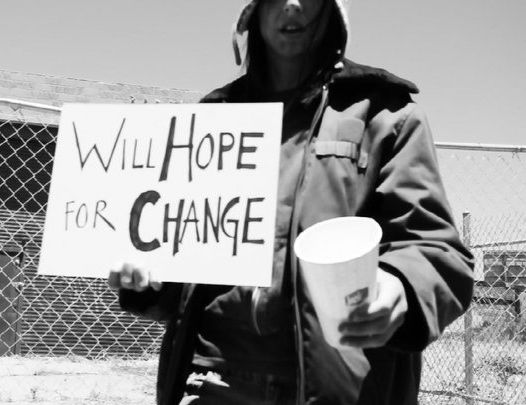
One Million US Public School Students Homeless

WSWS– A report released in July by the advocacy groups National Association for the Education of Homeless Children and Youth (NAEHCY) and First Focus reveals the explosive growth of homelessness among public school students during the economic crisis.

Based on Federal data from the US Department of Education, the number of students identified as homeless by public school districts rose by more than 40 percent between the 2006-2007 school year and 2008-2009, to 956,914. The figure has almost assuredly passed one million in the current school year.

That well over one million public school students are homeless is a damning indictment of the entire social order. The staggering growth in student homelessness took place simultaneously with the transfer of trillions of dollars in public funds to Wall Street, overseen by the administrations of former President George W. Bush and current President Barack Obama.

No part of the country was spared. NAEHCY and First Focus found that 70 percent of school districts reported an increase in homelessness since 2007-2008, and 39 percent reported enrolling more homeless students in the first six months of the 2009-2010 school year than in the entire previous year.

The worst affected states have been Texas and Iowa, with increases of 139 and 136 percent, respectively, between the 2006-2007 and 2008-2009 school year. Other hard-hit states include New Mexico (91 percent), Kansas (88 percent), New Jersey (84 percent), New York and South Dakota (73 percent), and Georgia (72 percent). Of the 50 states plus the District of Columbia, 13 registered increases of child homelessness of 50 percent or more.

In Delaware, one out of every forty students was homeless last year. “These children share bedrooms with extended family, check in to cheap motels, and sleep in cars or shelters,” the Delaware Online reports. “Some are with their parents. Others go it alone.”

School districts in major metropolitan areas like Chicago, Detroit, and New York are especially plagued by high levels of student homelessness. The Chicago Public Schools reported a 28 percent rise in homeless students from November 2007 to November 2008. At the end of the 2007-2008 school year, a record 10,642 CPS students were homeless. (See “Over ten thousand public school students homeless in Chicago”)

The numbers of homeless students are likely higher than the report indicates. “Every year we’re doing a better job at locating [homeless students],” John Elliott of Chesterfield County Public Schools in Virginia said. “[B]ut it’s not something a lot of people want to come forward and talk about, especially if you’ve lost your home in a foreclosure. You don’t really want a lot of people to know about that.”

Chesterfield County public schools saw a 45 percent increase in student homelessness between the last academic year and the current one. “Of the 526 students that the school system identified as homeless last year, most are in families who are ‘doubling up,’ meaning they are living in a temporary situation with friends, relatives or other families and have no permanent address,” according to the Chesterfield Observer. “Ninety-six students spent the school year living in motels. ‘Can you imagine living with parents and three or four children in one motel room…and trying to do homework?’ Elliott asks.”

Other children were living in homeless shelters, and at least one family in each of the county’s schools was living out of cars “or in similarly bleak circumstances.”

The Obama administration temporarily doubled the funding for combating student homelessness through the American Recovery and Reinvestment Act—to the miserly sum of $70 million. Even so, less than one in five of the nation’s school districts received any aid to deal with the growth of homeless students. Limited as it is, this extra funding is all but certain to be removed with the expiration of the federal stimulus.

Concern is growing among educators that none of the underlying causes of student homelessness—access to steady employment, affordable housing, transportation, and healthcare and other vital services—have been addressed. They point to the obvious fact that children who have no homes to return to after school face an enormous obstacle to learning.

“These kids have a lot more stress,” Kathleen Kropf of Macomb County (Michigan) Intermediate School District told The Voice, a local newspaper. “They know what is going on at home, if their parents have lost their jobs or their homes are in foreclosure. How can a child do well in school and on their tests if they have not eaten or are not sleeping or they are sick?” Macomb schools have seen an increase in student homelessness of over 50 percent since 2007.

The rapid growth in student homelessness is no accident. It is the inevitable result of policies consciously pursued by the Obama administration and both big business parties, which have ruled out any measures to address the social crisis, instead adopting policies designed to shift the full burden of the economic crisis onto the working class.

Photo by Neema Sadeghi

© COPYRIGHT WSWS, 2010

Consumers Find Ways to Spend Less and Find Happiness

NY TIMES– She had so much. A two-bedroom apartment. Two cars. Enough wedding china to serve two dozen people.

Yet Tammy Strobel wasn’t happy. Working as a project manager with an investment management firm in Davis, Calif., and making about $40,000 a year, she was, as she put it, caught in the “work-spend treadmill.”

So one day she stepped off.

Inspired by books and blog entries about living simply, Ms. Strobel and her husband, Logan Smith, both 31, began donating some of their belongings to charity. As the months passed, out went stacks of sweaters, shoes, books, pots and pans, even the television after a trial separation during which it was relegated to a closet. Eventually, they got rid of their cars, too. Emboldened by a Web site that challenges consumers to live with just 100 personal items, Ms. Strobel winnowed down her wardrobe and toiletries to precisely that number.

Her mother called her crazy.

Today, three years after Ms. Strobel and Mr. Smith began downsizing, they live in Portland, Ore., in a spare, 400-square-foot studio with a nice-sized kitchen. Mr. Smith is completing a doctorate in physiology; Ms. Strobel happily works from home as a Web designer and freelance writer. She owns four plates, three pairs of shoes and two pots. With Mr. Smith in his final weeks of school, Ms. Strobel’s income of about $24,000 a year covers their bills. They are still car-free but have bikes. One other thing they no longer have: $30,000 of debt.

Ms. Strobel’s mother is impressed. Now the couple have money to travel and to contribute to the education funds of nieces and nephews. And because their debt is paid off, Ms. Strobel works fewer hours, giving her time to be outdoors, and to volunteer, which she does about four hours a week for a nonprofit outreach program called Living Yoga.

“The idea that you need to go bigger to be happy is false,” she says. “I really believe that the acquisition of material goods doesn’t bring about happiness.”

While Ms. Strobel and her husband overhauled their spending habits before the recession, legions of other consumers have since had to reconsider their own lifestyles, bringing a major shift in the nation’s consumption patterns.

“We’re moving from a conspicuous consumption — which is ‘buy without regard’ — to a calculated consumption,” says Marshal Cohen, an analyst at the NPD Group, the retailing research and consulting firm.

Amid weak job and housing markets, consumers are saving more and spending less than they have in decades, and industry professionals expect that trend to continue. Consumers saved 6.4 percent of their after-tax income in June, according to a new government report. Before the recession, the rate was 1 to 2 percent for many years. In June, consumer spending and personal incomes were essentially flat compared with May, suggesting that the American economy, as dependent as it is on shoppers opening their wallets and purses, isn’t likely to rebound anytime soon.

On the bright side, the practices that consumers have adopted in response to the economic crisis ultimately could — as a raft of new research suggests — make them happier. New studies of consumption and happiness show, for instance, that people are happier when they spend money on experiences instead of material objects, when they relish what they plan to buy long before they buy it, and when they stop trying to outdo the Joneses.

If consumers end up sticking with their newfound spending habits, some tactics that retailers and marketers began deploying during the recession could become lasting business strategies. Among those strategies are proffering merchandise that makes being at home more entertaining and trying to make consumers feel special by giving them access to exclusive events and more personal customer service.

While the current round of stinginess may simply be a response to the economic downturn, some analysts say consumers may also be permanently adjusting their spending based on what they’ve discovered about what truly makes them happy or fulfilled.

Read full article about Consumers Finding Ways to Spend Less and Find Happiness.

© COPYRIGHT NY TIMES, 2010

Photo by flickr user epSos.de

50% of Americans Have Less Than $2,000 Banked for Retirement

ALTERNET– The days of quietly retiring with a nest egg built up from years of savings from a long career on the verge of disappearing. For tens of millions of Americans, facing rising costs, shrinking incomes and growing debts they already have disappeared.

“One out of three working Americans does not have retirement savings beyond Social Security, and about 35% of those over 65 rely almost totally on Social Security alone,” Dallas Salisbury, president of the Alliance for Investor Education and the Employee Benefit Research Institute (EBRI), explained to AlterNet.

“Of the remaining two-thirds of working Americans that have some retirement savings,  27 percent report less than $1,000, 16 percent between $1,000 and $9,999, 11 percent between $10,000 and $24,999, 12 percent between $25,000-$49,999, and 36 percent $50,000 or more.” Perhaps the most shocking number is that half of Americans have $2,000 or less saved for retirement. 

Crunch the numbers and you end up with a retirement myth, rather than a money-maker.  We face a colder economic reality: Not only are there no astronomical retirement returns coming down the financial pike, but what nuts and nest-eggs families have set aside for their futures have been mostly sucked dry

“Individuals need to follow the advice of the ages,” said Salisbury. “Spend less than you earn by 25 percent, and save for your future. This keeps your lifestyle from getting ahead of your income.”

While saving 1/4 of our shrinking incomes sounds nigh on impossible in this economic climate, many are watching their savings getting squandered by bad fund managers. One retirement Ponzi scheme starting to worry the Senate Special Committee on Aging, according to an aide who asked not to be named, are target-date funds, a financial instrument . They’re basically mutual funds that try to play equities and stocks in their early years before settling into more conservative investments like cash and fixed-income before maturing, so as not to give their investors heart attacks on the date of their retirement.

Read full article about Americans Having Nothing to Bank on for Retirement.

© COPYRIGHT ALTERNET, 2010

Photo by flickr user Bugsyho

Suffer These Crimes in Oakland? Don’t Call the Cops

NBCOakland‘s police chief is making some dire claims about what his force will and will not respond to if layoffs go as planned.

Chief Anthony Batts listed exactly 44 situations that his officers will no longer respond to and they include grand theft, burglary, car wrecks, identity theft and vandalism. He says if you live and Oakland and one of the above happens to you, you need to let police know on-line.

Some 80 officers were to be let go at midnight last night if a last-minute deal was not reached.  That’s about ten percent of the work force.

“I came here to build an organization, not downsize one,” said Batts, who was given the top job in October.

That deadline has been extended to 5 p.m. Tuesday. 

Here’s a partial list:

burglary

theft

embezzlement

grand theft

identity theft

false information to peace officer

required to register as sex or arson offender

dump waste or offensive matter

discard appliance with lock

loud music

possess forged notes

pass fictitious check

obtain money by false voucher

fraudulent use of access cards

stolen license plate

embezzlement by an employee (over $ 400)

extortion

attempted extortion

false personification of other

injure telephone/ power line

interfere with power line

unauthorized cable tv connection

vandalism

administer/expose poison to another’s

Negotiations are going on at Oakland City Hall in the mayor’s office. 

Batts said the 80 officers slated to be laid off – mostly new  officers – are “pretty sad and pretty depressed,” and those feelings are  shared by the Police Department as a whole.

The Oakland City Council voted June 25 to eliminate the positions to help close the city’s $32.5 million funding gap.  According to the city of Oakland, each of the 776 police officers currently employed at OPD costs around $188,000 per year. Most of the officers who will be affected by the layoffs were on the streets of Oakland when Johannes Mehserle’s involuntary manslaughter conviction caused riots last Thursday.

The sticking point in negotiations appears to be job security. The city council asked OPD officers to pay nine percent of their salary toward their pensions, which would save the city about $7.8 million toward a multi-million dollar deficit. The police union agreed, as long as the city could promise no layoffs for three years. No dice, says city council president Jane Brunner.

“We wish we could offer them a three-year no layoff protection we just can’t financially. It would be irresponsible of us,” Brunner said. The city agreed to a one-year moratorium on layoffs, but it is not enough for the union.

The problem is money.  In the last five years, the police budget — along with the fire department budget — have amount to 75 percent of the general fund. After years of largely sparing those departments the budget ax, now it appears there are few other places to cut.

These are the last hours of negotiation and Brunner is hopeful that the city and police will find some sort middle ground.

“It’s been very good conversation and not a whole lot of grandstanding.” Brunner said. “There’s actually real conversations. Each side understands the problem,” she said.

© COPYRIGHT NBC, 2010