
Every American Pays $5,000 for Defense Per Year


PRESS TV– American citizens are paying large amounts of money each year for U.S. defense spending, which can be used for domestic spending, Steve Breyman, assistant professor at the Rensselaer Polytechnic Institute said.

“Each and every citizen in the United States – man, woman and child – pays some $5,000 or so per year for U.S. defense spending much of which is associated now with the two wars in Iraq and Afghanistan”, he told Press TV’s U.S. Desk.

If the federal government had not spent some $1 trillion on the wars, that money would have been available for “domestic spending including the balance in the budget,” Breyman said. “You can have healthy public finances or you can have war but you can’t have both,” he added.

In Iraq and Afghanistan, some 200,000 people are employed by subcontractors.

By the end of 2008, the U.S. had spent approximately $900 billion in direct costs on Iraq and Afghanistan wars. Some experts estimate indirect costs such as interest on the additional debt will exceed the direct costs. Red Ice Creation

However, prominent economics professor Joseph E. Stiglitz says the true cost of the Iraq war is beyond $3 trillion. Washington Post

According to the Congressional Budget Office, defense spending grew 9% annually on average from fiscal year 2000-2009.

In Iraq, reconstruction efforts have been plagued by poor management, mishandling of reconstruction funds, inadequate coordination with Iraqis and widespread attacks on construction sites and contractors as documented by the Office of the Special Inspector General for Iraq Reconstruction (SIGIR). NYT

A 2005 report stated that nearly $9 billion of reconstruction fund was lost by the Coalition Provisional Authority (CPA). CNN

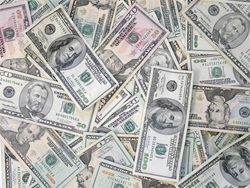
Photo by flickr user purpleslog
Wisconsin Passes Bill Taking Away Union Rights

ASSOCIATED PRESS – Republicans in the Wisconsin Assembly took the first significant action on their plan to strip collective bargaining rights from most public workers, abruptly passing the measure early Friday morning before sleep-deprived Democrats realized what was happening.

The vote ended three straight days of punishing debate in the Assembly that made it the longest continuous session in Assembly history.

But the political standoff over the bill — and the monumental protests at the state Capitol against it — appear far from over.

The Assembly’s vote sent the bill on to the Senate, but minority Democrats in that house have fled to Illinois to prevent a vote. No one knows when they will return from hiding. Republicans who control the chamber sent state troopers out looking for them at their homes on Thursday, but they turned up nothing.

“I applaud the Democrats in the Assembly for earnestly debating this bill and urge their counterparts in the state Senate to return to work and do the same,” Assembly Speaker Jeff Fitzgerald, R-Horicon, said in a statement issued moments after the vote.

The plan from Republican Gov. Scott Walker contains a number of provisions he says are designed to fill the state’s $137 million deficit and lay the groundwork for fixing a projected $3.6 billion shortfall in the upcoming 2011-13 budget.

The flashpoint is language that would require public workers to contribute more to their pensions and health insurance and strip them of their right to collectively bargain benefits and work conditions.

Democrats and unions see the measure as an attack on workers’ rights and an attempt to cripple union support for Democrats. Union leaders say they would make pension and health care concessions if they can keep their bargaining rights, but Walker has refused to compromise.

Tens of thousands of people have jammed the Capitol since last week to protest, pounding on drums and chanting so loudly that police providing security have resorted to ear plugs. Hundreds have taken to sleeping in the building overnight, dragging in air mattresses and blankets.

Click to read full article on Wisconsin Assembly Taking Away Union Rights.

Article by Todd Richmond of the Associated Press

© Copyright Associated Press, 2011

Photograph by flickr user: Lost Albatross

Posted in Uncategorized | 1 Reply

Economic Inequality In US Worse Than Egypt

NEWSVINE– According to the CIA World Fact Book, the U.S. is ranked as the 42nd most unequal country in the world, with a Gini Coefficient of 45.

In contrast:

Tunisia is ranked the 62nd most unequal country, with a Gini Coefficient of 40.


Yemen is ranked 76th most unequal, with a Gini Coefficient of 37.7.
And Egypt is ranked as the 90th most unequal country, with a Gini Coefficient of around 34.4.
And inequality in the U.S. has soared in the last couple of years, since the Gini Coefficient was last calculated, so it is undoubtedly currently much higher.
So why are Egyptians rioting, while the Americans are complacent?

Well, Americans – until recently – have been some of the wealthiest people in the world, with most having plenty of comforts (and/or entertainment) and more than enough to eat.

But another reason is that – as Dan Ariely of Duke University and Michael I. Norton of Harvard Business School demonstrate – Americans consistently underestimate the amount of inequality in our nation.

As William Alden wrote last September:

Americans vastly underestimate the degree of wealth inequality in America, and we believe that the distribution should be far more equitable than it actually is, according to a new study.

Or, as the study’s authors put it: “All demographic groups — even those not usually associated with wealth redistribution such as Republicans and the wealthy — desired a more equal distribution of wealth than the status quo.”

The report … “Building a Better America — One Wealth Quintile At A Time” by Dan Ariely of Duke University and Michael I. Norton of Harvard Business School … shows that across ideological, economic and gender groups, Americans thought the richest 20 percent of our society controlled about 59 percent of the wealth, while the real number is closer to 84 percent.

Written by John Russel

© COPYRIGHT NEWSVINE, 2011

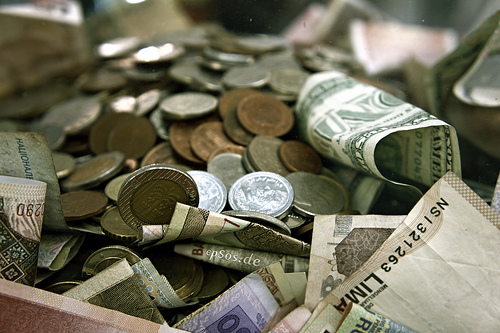
Photo by flickr user SOS.de

Why are the rich getting richer while the poor are getting poorer in the United States?


Film – The American Dream


The AMERICAN DREAM is a 30 minute animated film that shows you how you’ve been scammed by the most basic elements of our government system. All of us Americans strive for the American Dream, and this film shows you why your dream is getting farther and farther away. Do you know how your money is created? Or how banking works? Why did housing prices skyrocket and then plunge? Do you really know what the Federal Reserve System is and how it affects you every single day? THE AMERICAN DREAM takes an entertaining but hard hitting look at how the problems we have today are nothing new, and why leaders throughout our history have warned us and fought against the current type of financial system we have in America today. You will be challenged to investigate some very entrenched and powerful institutions in this nation, and hopefully encouraged to help get our nation back on track.

Learn more at http://theamericandreamfilm.com/ 

Photo by flickr user LateNightTaksForce


Posted in Uncategorized | 1 Reply

The Economics of Happiness

THE ECONOMICS OF HAPPINESS, THE MOVIE – Economic globalization has led to a massive expansion in the scale and power of big business and banking. It has also worsened nearly every problem we face: fundamentalism and ethnic conflict; climate chaos and species extinction; financial instability and unemployment. There are personal costs too. For the majority of people on the planet life is becoming increasingly stressful. We have less time for friends and family and we face mounting pressures at work.

The Economics of Happiness describes a world moving simultaneously in two opposing directions. On the one hand, government and big business continue to promote globalization and the consolidation of corporate power. At the same time, all around the world people are resisting those policies, demanding a re-regulation of trade and finance—and, far from the old institutions of power, they’re starting to forge a very different future. Communities are coming together to re-build more human scale, ecological economies based on a new paradigm — an economics of localization.

We hear from a chorus of voices from six continents including Vandana Shiva, Bill McKibben, David Korten, Michael Shuman, Juliet Schor, Zac Goldsmith and Samdhong Rinpoche – the Prime Minister of Tibet’s government in exile. They tell us that climate change and peak oil give us little choice: we need to localize, to bring the economy home. The good news is that as we move in this direction we will begin not only to heal the earth but also to restore our own sense of well-being. The Economics of Happiness restores our faith in humanity and challenges us to believe that it is possible to build a better world.


© 2011 The Economics of Happiness

Photograph by Xanetia