
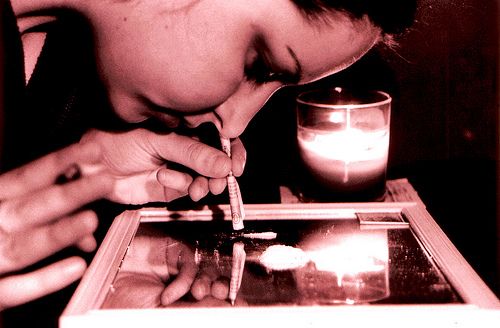
US Drug War Has Met None of its Goals

AP– After 40 years, the United States’ war on drugs has cost $1 trillion and hundreds of thousands of lives, and for what? Drug use is rampant and violence even more brutal and widespread.

Even U.S. drug czar Gil Kerlikowske concedes the strategy hasn’t worked.

“In the grand scheme, it has not been successful,” Kerlikowske told The Associated Press. “Forty years later, the concern about drugs and drug problems is, if anything, magnified, intensified.”

This week President Obama promised to “reduce drug use and the great damage it causes” with a new national policy that he said treats drug use more as a public health issue and focuses on prevention and treatment.

Nevertheless, his administration has increased spending on interdiction and law enforcement to record levels both in dollars and in percentage terms; this year, they account for $10 billion of his $15.5 billion drug-control budget.

Kerlikowske, who coordinates all federal anti-drug policies, says it will take time for the spending to match the rhetoric.

“Nothing happens overnight,” he said. “We’ve never worked the drug problem holistically. We’ll arrest the drug dealer, but we leave the addiction.”

His predecessor, John P. Walters, takes issue with that.

Walters insists society would be far worse today if there had been no War on Drugs. Drug abuse peaked nationally in 1979 and, despite fluctuations, remains below those levels, he says. Judging the drug war is complicated: Records indicate marijuana and prescription drug abuse are climbing, while cocaine use is way down. Seizures are up, but so is availability.

“To say that all the things that have been done in the war on drugs haven’t made any difference is ridiculous,” Walters said. “It destroys everything we’ve done. It’s saying all the people involved in law enforcment, treatment and prevention have been wasting their time. It’s saying all these people’s work is misguided.”

___

In 1970, hippies were smoking pot and dropping acid. Soldiers were coming home from Vietnam hooked on heroin. Embattled President Richard M. Nixon seized on a new war he thought he could win.

“This nation faces a major crisis in terms of the increasing use of drugs, particularly among our young people,” Nixon said as he signed the Comprehensive Drug Abuse Prevention and Control Act. The following year, he said: “Public enemy No. 1 in the United States is drug abuse. In order to fight and defeat this enemy, it is necessary to wage a new, all-out offensive.”

His first drug-fighting budget was $100 million. Now it’s $15.1 billion, 31 times Nixon’s amount even when adjusted for inflation.

Using Freedom of Information Act requests, archival records, federal budgets and dozens of interviews with leaders and analysts, the AP tracked where that money went, and found that the United States repeatedly increased budgets for programs that did little to stop the flow of drugs. In 40 years, taxpayers spent more than:

-$20 billion to fight the drug gangs in their home countries. In Colombia, for example, the United States spent more than $6 billion, while coca cultivation increased and trafficking moved to Mexico — and the violence along with it.

-$33 billion in marketing “Just Say No”-style messages to America’s youth and other prevention programs. High school students report the same rates of illegal drug use as they did in 1970, and the Centers for Disease Control and Prevention says drug overdoses have “risen steadily” since the early 1970s to more than 20,000 last year.

-$49 billion for law enforcement along America’s borders to cut off the flow of illegal drugs. This year, 25 million Americans will snort, swallow, inject and smoke illicit drugs, about 10 million more than in 1970, with the bulk of those drugs imported from Mexico.

-$121 billion to arrest more than 37 million nonviolent drug offenders, about 10 million of them for possession of marijuana. Studies show that jail time tends to increase drug abuse.

-$450 billion to lock those people up in federal prisons alone. Last year, half of all federal prisoners in the U.S. were serving sentences for drug offenses.

At the same time, drug abuse is costing the nation in other ways. The Justice Department estimates the consequences of drug abuse — “an overburdened justice system, a strained health care system, lost productivity, and environmental destruction” — cost the United States $215 billion a year.

Harvard University economist Jeffrey Miron says the only sure thing taxpayers get for more spending on police and soldiers is more homicides.

“Current policy is not having an effect of reducing drug use,” Miron said, “but it’s costing the public a fortune.”

Continue reading about the US Drug War Has Met None of its Goals.

Copyright © 2010 The Associated Press

Photo by flickr user Andronicusmax

Drug War Violence Sweeps Mexican Border

RAW STORY– Mexico’s bloody drug wars saw a new spasm of killings late Saturday into Sunday, with 25 people fatally shot in the northern state of Chihuahua bordering the United States. Seven of the deaths occurred in violence-plagued Ciudad Juarez, Mexico’s murder capital, bringing to 62 the number of people killed in the city over the past week.

The 18 other slayings overnight included four people fatally shot by automatic weapons fire in a bar in the town of Camargo, near the state capital Chihuahua City, and two women whose bodies were found stuffed in the trunk of an abandoned car in the same town, prosecutors said.

So far this year, more than 850 people have been killed in Ciudad Juarez, a city of 1.3 million, while more than 2,660 were killed there in 2009, according to official figures.

Mexican President Felipe Calderon visited Ciudad Juarez in February and apologized to numerous grieving families who lost loved ones in a January massacre that claimed the lives of 15 children and teens. The president admitted that his three-year crackdown on crime with more than 50,000 troops spread across the country “is not enough,” and vowed to redesign a new strategy against crime and violence with community cooperation.

To the east in the northern Mexican city of Monterrey early Sunday, three men and two women were trampled to death when some 10,000 people at an outdoor concert stampeded after three shots were fired, presumably in the air, by somebody at the fairground, local officials said.

Another 30 people were treated for injuries from the jostling, they added. Moments before the gunshots, the crowd appears to have been primed for panic when shouts “hit the ground” and “gunfight” were heard, witnesses told the Mexican newspaper Reforma. Monterrey, in Nuevo Laredo state that also borders the United States, has seen a spike in gang violence pitting the Guf of Mexico and Los Zetas drug cartels, officials said.

Read full article about Drug War Violence Sweeps Mexican Border.

© RAW STORY, 2010

Crashed Jet Carrying Cocaine Linked to CIA

ONLINE JOURNAL– A private jet that crashed last year in eastern Mexico and was found to be carrying more than 3 tons of cocaine was also used by the Central Intelligence Agency for clandestine operations, the Mexican daily El Universal reported September 3.

The newspaper cited documents from the United States and the European Parliament which “show that that plane flew several times to Guantanamo, Cuba, presumably to transfer terrorism suspects.” It said the European Parliament was investigating the jet for its possible use in “extraordinary rendition” flights, whereby prisoners are covertly transferred by the U.S. to a third country.

In June 2006, the British Department for Transport website published flight data on US aircraft into or out of the UK. According to the site, “This data had previously been released by Eurocontrol to the Parliamentary Assembly of the Council of Europe to assist with its enquiry into allegations of ‘extraordinary rendition’ flights operating in Europe.” The jet that crashed in Mexico, with registration number N987SA, is listed in the data report.

According to El Universal, FAA records show that the jet flew to Guantanamo on May 30, 2003. From June 23 to July 14, the jet flew from New York to Iceland, France, Italy, and Ireland. From July 16 to 20, it flew from the U.S. to Canada, the UK, Ireland, the UK, Canada, and back to the U.S. again. From April 7 to 12, 2004, it went from New York to Canada, the UK, Canada, and again to the U.S. The jet then flew to Guantanamo again. On April 21, it flew from the U.S. to Canada, France, the UK, Canada, and back to the U.S. It left the U.S. for Guantanamo once more on January 21, 2005.

The jet crashed on September 24, 2007. According to an Aviation Safety Network description of the accident, the Gulfstream Aerospace G-1159 Gulfstream II jet with registration N987SA crashed near Tixkokob in the northern part of the Yucatan Peninsula. ASN describes it as an “Illegal Flight” and reports that “When being chased by Mexican military helicopters, the crew carried out a crash-landing. No bodies were found in the wreckage, but soldiers found 132 bags containing about 3.6 tons (3.3. metric tons) of cocaine.”

An initial Reuters report on the crash noted, “Drug planes packed with South American cocaine — often with passenger seats ripped out to make space — frequently fly through Mexico and Central America en route for the United States. Some unload their cargo at clandestine airstrips south of the border where traffickers send it on by road or sea.”

El Universal, in its initial report on the crash in 2007, stated that the cocaine was in 132 bags and noted the registration number of the wrecked plane.

McClatchy Newspapers observed a few days after the crash that “news reports have linked the plane to the transport of terrorist suspects to the U.S. detention center at Guantanamo Bay, Cuba, but those reports cite logs that indicate only that the plane flew twice between Washington, D.C., and Guantanamo and once between Oxford, Conn., and Guantanamo.”

In November of last year, reporters from the Tampa Tribune followed up on the international investigation that resulted after the Gulfstream II crash. An expert on the drug trade from the University of Miami told the reporters that cocaine is being moved by air through Florida more frequently, as an alternative to being brought into the U.S. in the southwest.

The Gulfstream II jet was one of two planes being used by the Mexican Sinaloa drug cartel, also known as the Pacific Cartel, to carry cocaine. The other jet, a DC-9, had been seized and was found to be carrying 5.5 tons of cocaine. Both aircraft were purchased by the cartel from St. Petersburg-Clearwater International Airport.

The DC-9 with tail number N00SA, was seized on April 11, 2006, carrying an amount of cocaine valued at an estimated $82.5 million, according to Airport-Dat.com. Reportedly sold in March, the jet was scheduled to depart for Simon Bolivar International airport in Venezuela on April 5. FAA records show that at the time of the seizure, it was still registered to Royal Sons Inc., which operates out of St. Petersburg-Clearwater International Airport. It was deregistered two days after the seizure and listed as exported to Venezuela.

Continue reading about the Crashed Jet Carrying Cocaine Linked to CIA.

Jeremy R. Hammond is an independent researcher and writer whose articles have appeared on numerous alternative news websites. He maintains a website, www.yirmeyahureview.com, dedicated to critical analysis of U.S. foreign policy, particularly with regard to the U.S. “war on terrorism” and the Middle East. He currently resides with his wife in Taiwan. You may contact him at [email protected].

Copyright © 1998-2007 Online Journal
Email Online Journal Editor