American Bisque Part 3: Obama ‘Now You Know the Real Deal’

DISCLAIMER: This film contains unedited, graphic and violent imagery of what your US tax dollars are actually paying for.

‘American Bisque’ is a no narration documentary of raw footage set to a chronological timeline that follows the history of US foreign policy and White House lies, from Vietnam and Nixon to Obama’s war on whistleblowers. Electronic music reflecting every era of the chronology accompanies the video. The film was fully edited and produced by Robbie Martin, co-host of Media Roots Radio.

This is Part Three: Obama ‘Now You Know the Real Deal’, consisting of Obama’s broken promises, and exacerbation of George Bush’s neoconservative agenda of surveillance and endless war.

Parts One & Two will be released by September 2013.

***

COMING SOON Part One: ‘The Deadbeats Lost’ will cover the presidencies of Nixon, Ford, Carter, Reagan, Bush Sr. and Clinton.

COMING SOON Part Two: ‘Cart Blanche’ will cover the presidency of George W. Bush: the events of 9/11 and the complete stonewalling of an investigation, the run-up to the Afghanistan war, the planting of seeds for an indefinite ‘War on Terror’.

‘American Bisque’ includes temporary music score by: AFX, The Tuss, Autechre, LFO, Wendy Carlos, Opiate, Download, Plastikman, Skinny Puppy, Throbbing Gristle, Nancy Sinatra, Bass Clef, 2562, Machinedrum, Gescom, Oneohtrix Point Never, :Zoviet*France:, Scorn/Mick Harris, Dopplereffekt, Nommo Ogo, Mika Vaino, VHS Head and a glitched out jumbo-tron James Taylor broadcast.

‘American Bisque’ contains clips from: Loose Change Final Cut, Dylan Avery, 9/11 Press for Truth, CSPAN, ABC, CNN, FOX, Jon Gold, WeAreChange, Luke Rudowski, Russia Today Official White House broadcasts + others who i will credit in due time. Many other youtube users and clip finders deserve to be credited.

This video is released under a creative commons attribute of fair share distribution. No profit is being made from it and its only purpose is educational. 

If a Tree Falls: A Story of the Earth Liberation Front

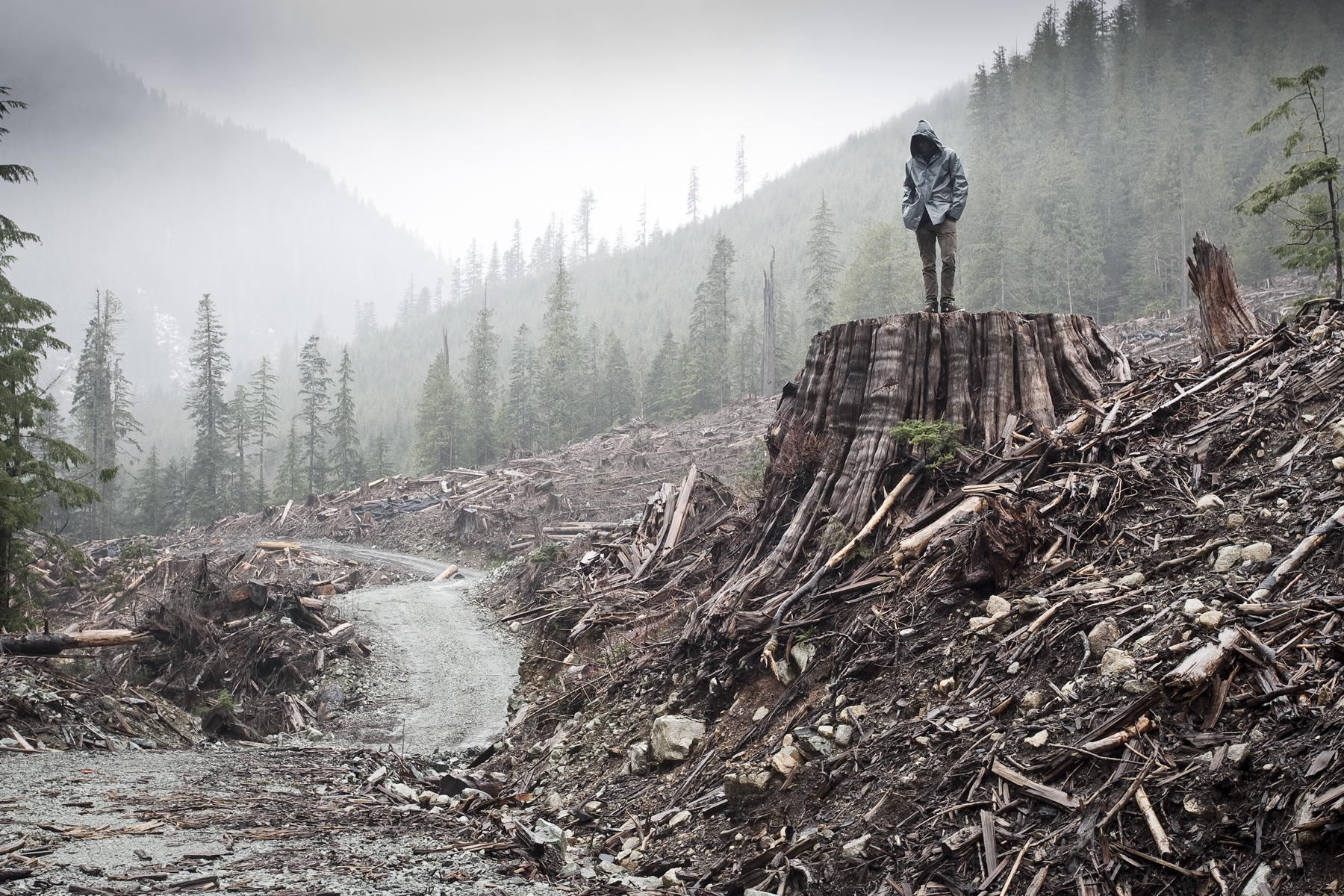
Clearcut_If_A_Tree_Falls_T.J._WattMEDIA ROOTS — Marshall Curry and Sam Cullman are the directors of the limited theatrical release documentary film, If a Tree Falls: A Story of the Earth Liberation Front, which earned a 2011 Sundance Award and a 2012 Academy Award nomination.

The film tells the story of the Earth Liberation Front (ELF) and touches upon the question of whether the ELF were ‘terrorists’ or not. Yet, one person’s ‘terrorist’ is another person’s freedom fighter.  Fight for freedom, yes.  Fight crime, yes.  But fighting terrorism is something few disagree with, like preventing lunatics from attacking and endangering innocents.  But the ELF were not terrorising the general public.  The general public had never even heard about the ELF and their desperate efforts to mitigate or prevent the clear-cutting destruction of the natural world until police got caught pepper spraying and targeting those radical environmentalists.

Andrew O’Hehir reviewed the film for Salon:

“Radicals perform a social function that they themselves often view with contempt, and one that is similarly misunderstood by people in the political mainstream who almost always see radicalism as crazy and counterproductive. People who chain themselves to old-growth redwoods — or, for that matter, to the doors of abortion clinics — hardly ever get what they want in the short or medium term, since what they want is generally unrealistic, and often amounts to a revolutionary change in the social order. But in posing an unrelenting and quixotic challenge to the consciences of their fellow citizens, radical activists often nudge us along toward more modest, incremental changes. Does anyone dispute that facts on the ground with regard to environmental policies and abortion rights have changed, thanks in part to the actions of activists many people view as deranged?”

Read more and find out how to view the film here.

Messina

***

If a Tree Falls: A Story of the Earth Liberation Front

***

Watch Protest in Downtown Eugene on PBS. See more from POV.


Police pepper spraying radical environmentalists in Downtown Eugene

***


Collaborative Film 99% Documents Occupy Protests

MEDIA ROOTS – I’m very excited to announce that an extensive lot of our footage from Occupy Oakland is going to be used to represent the S.F. Bay Area in the upcoming 99% Collaborative Film Project!  The film is unique in its collaborative fashion and is geared to represent an honest portrayal of the ongoing Occupy Movement.  At 2:18, the film trailer gets slightly sinister with our footage of Oakland’s police state crackdown.  Check it out and donate, so this epic film can be made!

Abby

***

WIREDMost documentaries involve months of planning before the first frame of film is shot, but the creators of an in-the-works Occupy Wall Street documentary didn’t have that luxury. The protest movement was happening around them when they decided to make the film.

Now the filmmakers behind 99% — The Occupy Wall Street Collaborative Film are looking to raise funds to complete the project. They have footage from 75 filmmakers who captured imagery at various Occupy events across the country, but to finish the project, producers Audrey Ewell and Aaron Aites are looking to raise $17,500.

“It’s the amount we need to buy the hard-drive storage and editing space that will allow us to begin the massive process of sorting and editing,” the filmmakers say on the 99% Kickstarter page. “This will get us to the point that we can, at the very least, put together a promo reel to bring in additional funding.”

To drum up additional cash, the filmmakers will be holding an online screening. For $3.99, viewers can buy a ticket to watch early footage. The Jan. 7 screening will be hosted by Ewell and Aites, as well as producer Williams Cole, and will be followed by a question-and-answer period with some of the film’s contributors.

“To my knowledge, this is the first film about a current, ongoing event that’s been made in this collaborative fashion,” Ewell said in a press release announcing the screening. “And the process is devastatingly hard, rewarding and exciting.”

The Kickstarter campaign for 99% ends Jan. 13. Check out the trailer for the documentary above and head over to the 99% website to learn more.

© 2011 Wired

MR Original – Some Better This World Through Film

MEDIA ROOTS – The ability to combine audio and visuals to tell a compelling narrative makes documentary films a powerful means of storytelling. They are education through entertainment and, at their best, a persuasive and motivating push to action. It is no surprise that the Bay Area, teeming with political and artistic thought, is a documentary film capitol of the world. As an aspiring documentarian, encouraged by the learning potential from this rich network, I began seeking out insight from local filmmakers.
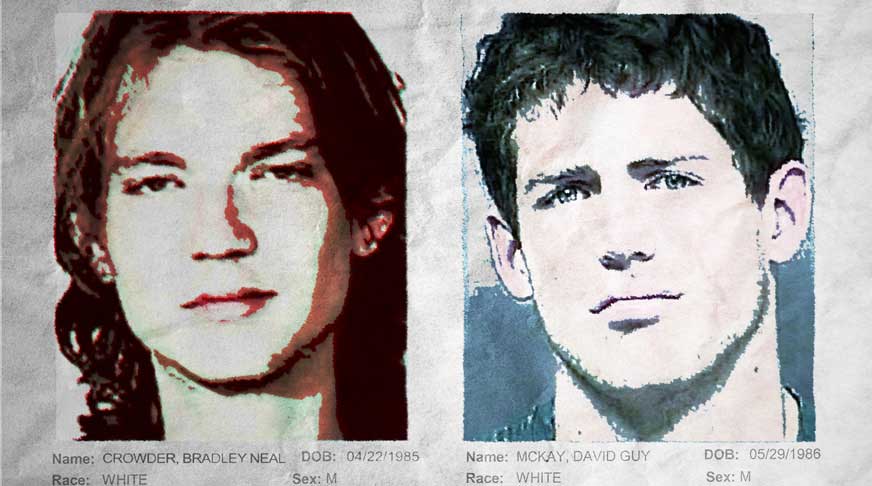
Following a tip from a friend, I came across Better This World – a film in post-production about two young men from Midland, Texas who are facing multiple domestic terrorism charges after manufacturing and bringing Molotov cocktails, or petrol bombs, to the 2008 Republican National Convention. What drew me into the story, and the filmmakers themselves, was the government’s star witness in the case – a controversial and unsuspected FBI informant.

Many of the stories behind the ‘foiled’ terrorist plots of the past few years share in common the trend of an undercover paid FBI informant that often times held a facilitating role in the group– a detail that frequently goes missing from mainstream media reports. (You can find more information on a few of these cases here, here and here.) Knowing this, I became eager to speak with the filmmakers who are taking on such an important and overlooked story.

Loteria Films, the local non-profit production company behind the film, is run by two women, Kelly Duane de la Vega and Katie Galloway. Kelly’s background in still photography and photojournalism, and Katie’s, in radio and print journalism, drew both women to film for what it could accomplish by blending these mediums.

When we met, Kelly recounted the restriction she felt in conveying people’s amazing personal stories as a photographer. “I think there are photographers whose photographs blow my mind, even more than a story. But I wasn’t feeling that about mine. I became so hungry for people to know the story. I knew there was another step.“

For Katie, filmmaking was a natural progression out of her love for working with audio and the depth and intimacy it brought to storytelling. While apprenticing at Frontline under documentarian, Ofra Bickle, criminal justice became her passion.
It was a blurb that Katie found in the Federal Court section of the New York Times that set the two women in pursuit of their first film together. Katie believed the story of two young men facing terrorism charges against the word of an FBI informant was a “really sexy, boiled down way into a story that is my life work so far – examining the criminal justice system and the problems with it.”

The trial was starting a week later, leaving not a moment for second-guessing.

“You say ‘I’m never going to do this on my credit card again. I’m never going to just start spending my own money again.’ But no one is going to give you money in a week’s turn around,” Katie explained with a smile reflecting love for the thrill and risk of chasing a good story. “It’s a gamble, its like going to Vegas.”

Better This World presents tough questions about the balance between liberty and safety in the face of post 9/11 domestic security. “The common thread in many of these [foiled terrorism] cases is some sort of political aspiration and an informant or a government agent who they hook up with and spend a lot of time with, and then at other end, the terrorism case. The question is what happened? Was it entrapment?”

Somewhat tongue-in-cheek Katie went on to ask, “What happens when you have so many resources going into the domestic security apparatus and not necessarily enough terrorists to go around?”

“In the FBI they call it ‘aspirational and not necessarily operational’,” she added.

In a recent interview by Reuters, filmmaker and award winning journalist, John Pilger described a mindset of reporters that says, “only authority can really determine the ‘truth on the news’,” and which leads to a dangerous form of embedding in government and official versions of events.  “Authority has its place, but the skepticism about authority must be ingrained in people,” he said.

And so it seems to be among documentarians.

It is the often skeptical and critical voice of documentary film that has shaped its long and growing legacy of critiquing the status quo while motivating people to educate themselves and take action.

Filmmakers do not face the same time constraints that can lead print and broadcast journalists to regurgitate the press releases handed to them by government, military and business leaders. Instead, they use a richly layered medium to tell the deeper story that hasn’t been told before, or to tell it differently. “Otherwise, what’s the point?” asked Katie.

Kelly pointed to the lack of a concrete power structure, or system, for documentaries to pander to.  “There isn’t a central authority figure in documentary filmmaking. There isn’t a central voice. There isn’t an outlet that is determining what we get to see and don’t get to see – except for PBS and HBO and A&E, but there are ways to get your film out if you are not in those venues.

In some ways it is a much more democratic universe than mainstream journalism. We’re already so far out of the system in some ways.”

One consequence of being outside of the ‘system’ is the struggle of fundraising. As an educational nonprofit, Loteria Films can apply for grants. It has been fortunate for the support it has received so far – the Independent Television Service, the biggest grant maker nationally for documentary films, is funding Loteria’s current project but only funds 1-2% of projects that come in its door.

“When you look at all the labor and heart and soul and money that goes into independent projects and the struggle…” Katie reflected.

“We went a year and a half with very little funding. You know, begging, borrowing and stealing. That’s really the life of an independent unless you’ve made it and have money coming in regularly for projects. We’re not there yet. We’ve been really lucky raising money through grants and so forth.”

But, funding is only part of the equation. Kelly attributes the success of the partnership to their base of trust and respect, calling it the “bedrock” of their collaboration.

“When the other person is talking you know that you respect the way they think as a creative person and as a story teller. So, if they are challenging your idea it is something you have to listen to because it very well might be right. When you and your partner are both able to do that for one another it deepens your respect and base trust.”

Comparing the partnership positively to a marriage Kelly added, “It’s a long intimate journey. Its pretty damn intense – you are really committing so much to each other.”

When I asked what advice the activist filmmakers had for aspiring documentarians, Kelly’s words resonated with my pull to the medium.

“I feel like there are certain people who don’t have a choice in life, who just are going to do something creative whether it makes good sense or not…I think you have to have something inside of you that is somewhat predetermining your fate, that is driving you, that is making you choose something that is difficult. You can’t be materialistic. You have to be the kind of person that gets pride from the good their work does, or the quality and pleasure of their work.”

Just as Katie had, Kelly was sure not to gloss over the financial struggles that, more often than not, accompany the production of an independent film, while highlighting that flexibility is key in overcoming those challenges.

“Sometimes you might have to take a commercial job and that sucks because it might not be at the core of where your values are. But unless you are from a financial situation where you aren’t forced to have that choice I think you have to be okay with that – moving in and out of those worlds to tell a bigger, larger more important story. You have to figure out how to keep yourself viable so you can raise the seed money to do the thing that matters.

You just have to go for it and at the end of the journey you know whether you can do it again. Whether it was great or if it was too hard.”


Better This World
will be premiering at SXSW in March. Stay tuned to Loteria Films for an upcoming trailer of the film.


Article by alicia roldán, editor for Media Roots

Image © Copyright of Loteria Films

MR Original – Some Better This World Through Film

MEDIA ROOTS – The ability to combine audio and visuals to tell a compelling narrative makes documentary films a powerful means of storytelling. They are education through entertainment and, at their best, a persuasive and motivating push to action. It is no surprise that the Bay Area, teeming with political and artistic thought, is a documentary film capitol of the world. As an aspiring documentarian, encouraged by the learning potential from this rich network, I began seeking out insight from local filmmakers.

Following a tip from a friend, I came across Better This World – a film in post-production about two young men from Midland, Texas who face multiple domestic terrorism charges after manufacturing Molotov cocktails, or petrol bombs, at the 2008 Republican National Convention. What drew me into the story, and the filmmakers themselves, was the government’s star witness in the case – a controversial and unsuspected FBI informant.

Many of the stories behind the ‘foiled’ terrorist plots of the past few years share in common the trend of an undercover paid FBI informant that often times held a facilitating role in the group– a detail that frequently goes missing from mainstream media reports. (You can find more information on a few of these cases here, here and here.) Knowing this, I became eager to speak with the filmmakers who are taking on such an important and overlooked story.

Loteria Films, the local non-profit production company behind the film, is run by two women, Kelly Duane de la Vega and Katie Galloway. Kelly’s background in still photography and photojournalism, and Katie’s, in radio and print journalism, drew both women to film for what it could accomplish by blending these mediums.

When we met, Kelly recounted the restriction she felt in conveying people’s amazing personal stories as a photographer. “I think there are photographers whose photographs blow my mind, even more than a story. But I wasn’t feeling that about mine. I became so hungry for people to know the story. I knew there was another step.“

For Katie, filmmaking was a natural progression out of her love for working with audio and the depth and intimacy it brought to storytelling. While working at Frontline with documentarian, Ofra Bikel, Katie wrote and produced stories on criminal justice – a theme she also passionately explored for Pacifica Radio through coverage of the prison system and its excesses.

It was a blurb that Katie found in the Federal Court section of the New York Times that set the two women in pursuit of their first film together. Katie believed the story of two young men facing terrorism charges against the word of an FBI informant was a “really sexy, boiled down way into a story that is my life work so far – examining the criminal justice system and the problems with it.”

The trial was starting a week later, leaving not a moment for second-guessing.

“You say ‘I’m never going to do this on my credit card again. I’m never going to just start spending my own money again.’ But no one is going to give you money in a week’s turn around,” Katie explained with a smile reflecting love for the thrill and risk of chasing a good story. “It’s a gamble, its like going to Vegas.”

Better This World presents tough questions about the balance between liberty and safety in the face of post 9/11 domestic security. “The common thread in many of these [foiled terrorism] cases is some sort of political aspiration and an informant or a government agent who they hook up with and spend a lot of time with, and then at other end, the terrorism case. The question is what happened? Was it entrapment?” Katie went on to ask, “What happens when you have so many resources going into the domestic security apparatus and not necessarily enough terrorists to go around?”

“In the FBI they call it ‘aspirational and not necessarily operational’,” she added.

In a recent interview by Reuters, filmmaker and award winning journalist, John Pilger described a mindset of reporters that says, “only authority can really determine the ‘truth on the news’,” and which leads to a dangerous form of embedding in government and official versions of events.  “Authority has its place, but the skepticism about authority must be ingrained in people,” he said.

And so it seems to be among documentarians.

It is the often skeptical and critical voice of documentary film that has shaped its long and growing legacy of critiquing the status quo while motivating people to educate themselves and take action.

Filmmakers do not face the same time constraints that can lead print and broadcast journalists to regurgitate the press releases handed to them by government, military and business leaders. Instead, they use a richly layered medium to tell the deeper story that hasn’t been told before, or to tell it differently. “Otherwise, what’s the point?” asked Katie.

Kelly pointed to the lack of a concrete power structure, or system, for documentaries to pander to.  “There isn’t a central authority figure in documentary filmmaking. There isn’t a central voice. There isn’t an outlet that is determining what we get to see and don’t get to see – except for PBS and HBO and A&E, but there are ways to get your film out if you are not in those venues.

In some ways it is a much more democratic universe than mainstream journalism. We’re already so far out of the system in some ways.”

One consequence of being outside of the ‘system’ is the struggle of fundraising. As an educational nonprofit, Loteria Films can apply for grants. It has been fortunate for the support it has received so far – the Independent Television Service, the biggest grant maker nationally for documentary films, is funding Loteria’s current project but only funds 1-2% of projects that come in its door.

“When you look at all the labor and heart and soul and money that goes into independent projects and the struggle…” Katie reflected.

“We went a year and a half with very little funding. You know, begging, borrowing and stealing. That’s really the life of an independent unless you’ve made it and have money coming in regularly for projects. We’re not there yet. We’ve been really lucky raising money through grants and so forth.”

But, funding is only part of the equation. Kelly attributes the success of the partnership to their base of trust and respect, calling it the “bedrock” of their collaboration.

“When the other person is talking you know that you respect the way they think as a creative person and as a story teller. So, if they are challenging your idea it is something you have to listen to because it very well might be right. When you and your partner are both able to do that for one another it deepens your respect and base trust.”

Comparing the partnership positively to a marriage Kelly added, “It’s a long intimate journey. Its pretty damn intense – you are really committing so much to each other.”

When I asked what advice the activist filmmakers had for aspiring documentarians, Kelly’s words resonated with my pull to the medium.

“I feel like there are certain people who don’t have a choice in life, who just are going to do something creative whether it makes good sense or not…I think you have to have something inside of you that is somewhat predetermining your fate, that is driving you, that is making you choose something that is difficult. You can’t be materialistic. You have to be the kind of person that gets pride from the good their work does, or the quality and pleasure of their work.”

Just as Katie had, Kelly was sure not to gloss over the financial struggles that, more often than not, accompany the production of an independent film, while highlighting that flexibility is key in overcoming those challenges.

“Sometimes you might have to take a commercial job and that sucks because it might not be at the core of where your values are. But unless you are from a financial situation where you aren’t forced to have that choice I think you have to be okay with that – moving in and out of those worlds to tell a bigger, larger more important story. You have to figure out how to keep yourself viable so you can raise the seed money to do the thing that matters.

You just have to go for it and at the end of the journey you know whether you can do it again. Whether it was great or if it was too hard.”


Better This World
will be premiering at SXSW in March. Stay tuned to Loteria Films for an upcoming trailer of the film.


Article by alicia roldán, editor for Media Roots

Image © Copyright of Loteria Films

Posted in Uncategorized | 1 Reply