America: Incarceration Up, Education Down

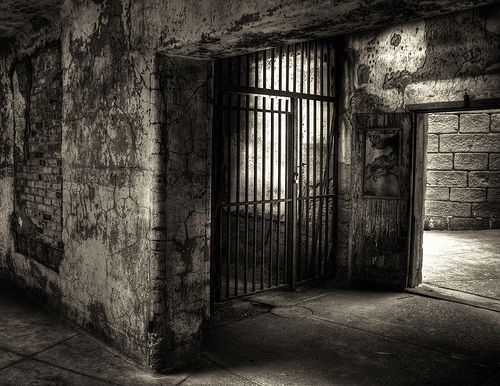
NEWS JUNKIE POST– America incarcerates more of it’s citizens than any other country in the world.  With only 5% of the world population, America has more than 25% of the world’s prisoners.  America is either the country with the most criminals in the world, the country that has become the greatest police state in the world, or the country whom, with profit as the motive for all that is done, has found a way to exploit it’ population through incarceration for monetary gain.

The steep incline in the number of Americans incarcerated began in 1980.  Since that time the number of Americans incarcerated has jumped from under 500,000 people to close to 2,500,000.   The advent of private prisons during that time has created a powerful lobby, on behalf of its Wall Street investors, to lengthen sentences.  Longer sentences means more prisoners.  More prisoners means more prisons.  More prisoners, and more prisons, means more profit.  As a result, Americans now spend almost $70 billion a year on a corrections system (including prison, probation and parole) being run largely for profit.

A similar scheme by lobbyists has resulted in a system that exploits education, and has an equally negative affect on society.  Lobbyists have repeatedly, and successfully, argued for the increase in financial aid to students.  Rather than this assistance being passed on to students, privately run Universities have simply raised tuition.

They are a business — higher ed must be a viewed as a business. Like any other business, what they are all about is making more money..,” states Dr. Marty Nemko, an advisor, career counselor, talk radio host, and prolific blogger, as quoted in the Daily Caller.

In addition to the exploitation of post-secondary school students, elementary and secondary students are hit particularly hard by systemic inequalities which promote self-perpetuating cycles of inadequate education and rising incarceration.  As Steven Hawkins wrote in his article ‘Education vs Incarceration’ last month;

This trade-off between education and incarceration is particularly acute at the community level. In many urban neighborhoods where millions of dollars are spent to lock up residents, the education infrastructure is crippled. As the prison population skyrocketed in the past three decades, researchers began to notice that high concentrations of inmates were coming from a few select neighborhoods — primarily poor communities of color — in major cities. These were dubbed “million — dollar blocks” to reflect that spending on incarceration was the predominant public — sector investment in these neighborhoods. NAACP research shows that matching zip codes to high rates of incarceration also reveals where low-performing schools, as measured by math proficiency, tend to cluster. The lowest-performing schools tend to be in the areas where incarceration rates are the highest. The following [example is] instructive.

Continue reading about Incarceration Rates Going Up as Education Goes Down.

Photo by Flickr user Bob Jagendorf

© COPYRIGHT NEWS JUNKIE POST, 2011
Stopping Rape Used to ‘Cure’ South African Lesbians

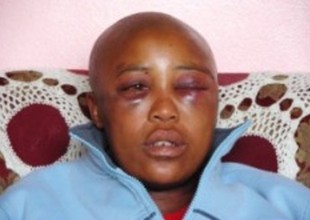
ALTERNET– The photograph is not easy to look at, and it’s not clear at first glance if Millicent Gaika, the woman in the photo, is dead or alive. Huge purple bruises surround both of her swollen eyes, and her neck is crisscrossed by a number of open gashes and scars. By now the bruises have subsided, some of the scars have healed, and in court testimony in November Millicent was able to tell a judge about how the man who raped her said, “I know you are a lesbian. You are not a man, you think you are, but I am going to show you, you are a woman.” That man, Andile Ngoza, is now out on the streets, despite being released and re-arrested after the attack on Millicent. His bail this time, for violating the terms of his parole, was set at 60 Rand, or just under $10 USD.

“To use a very South African term, I was just so hurtful,” Billi du Preez, a volunteer activist with Luleki Sizwe, tells me. Luleki Sizwe, a small, all-volunteer group that campaigns for LGBT people, is based in Capetown’s mostly poor black townships and rural areas. The organization works with and supports women who have been victims of what has fast become a ubiquitous form of  targeted sexual violence in South Africa: “corrective rape” against gay women or women suspected of being gay, as a form of “curing” them. The most disturbing thing about the attack on Millicent is not how rare it is in South Africa—but how common. The organization itself is named after two women who were killed from “corrective rape”-related health complications. One of those women was the fiancé of the organization’s founder, Ndumie Funda.

“These crimes have been going on for years already, and we haven’t been getting anywhere,” says Billi. “Millicent’s case has been put off and put off. When the perpetrator, who’s running free, started threatening Millicent again, I decided enough is enough.”

After years of rallying, marching, and local organizing by members of Luleki Sizwe, what Billi did next was take a shot in the dark. She drafted text to accompany the photo of Millicent’s battered face, and a few weeks ago sent it in as a petition to Change.org, a popular social action platform, demanding that the South African Ministry of Justice declare “corrective rape” a hate crime. What happened next took her, and many others, by surprise. Within a matter of weeks, the petition has garnered over 130,000 signatures from almost every country in the world and is growing quickly, making it the site’s most popular petition to date.

Continue reading about the Campaign to Stop Rape Used to ‘Cure’ South African Women of Homosexuality.

Photo by Luleki Sizwe

© COPYRIGHT ALTERNET, 2011

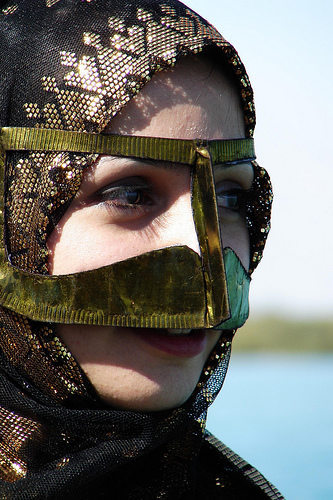
France Bans Islamic Head Scarves in Schools

BBC NEWS– As expected, the French parliament has voted in favour of a new law to ban the wearing of Islamic headscarves in schools. And despite mass protests by French Muslims in recent weeks, the ban won by a landslide.

It will not just affect Muslim girls- large Christian crosses and Jewish skullcaps are also banned, as almost certainly are Sikh turbans.

After months of public debate, the vote in parliament was a brief affair. Just five minutes for each party to sum up their position on this controversial new law.

Then, the vote itself- passed by 494 votes in favour, with just 36 against. This means that as long as it is approved by the upper house next month, the new law will come into effect in September, banning all obvious religious symbols from schools.

President Jacques Chirac’s ruling centre-right UMP party has been the driving force behind the law, which is backed by some 70% of French people.

UMP deputy Jerome Riviere says France’s secular nature was being challenged by a small minority of hardline Islamists, and he insists the law is not about suppressing religious freedom.

“We have to give a political answer to what is a political problem,” he said.

“We don’t have a problem with religion in France. We have a problem with the political use by a minority of religion.”

Yet others warn that far from uniting the country, this new measure will divide it more than ever.

At a small demonstration outside the National Assembly, just under 200 protesters gathered to oppose the new law. Most were young Muslim women, all wearing headscarves.

Risk

As the children of immigrants, they say, they have a dual identity – both French and Muslim – and they blame France for failing to accept its newer citizens.

“It is unjust and I am very angry, angry yes, it’s not just, it’s a law, a segregation,” one woman told me.

Another protester said: “We are very upset especially with this law, we think this is very unfair against the Muslims. But this is not only a threat for Muslims but for whole French community.”

Others here say that that feeling of rejection or alienation could even drive some young Muslims into the arms of Islamic fundamentalists.

Green party leader Noel Mamer opposed the new law.

“I think it’s a very bad law, a law which takes the risk to make worse the rift between two parts of the French population,” he said.

Yet teachers in France are relieved that it will no longer be up to them to arbitrate on disputes over whether Muslim pupils can wear the Islamic headscarf in class.

Continue reading about the Banning of Islamic Headscarfs in Schools.

© COPYRIGHT BBC NEWS, 2004

Photo by Flickr user HamedSaber