MEDIA ROOTS- There are some things that are justifiably kept secret within the state bureaucracy, like personal data and information about residents. However, the expansion of secrecy in every avenue of California’s government has made it increasingly difficult to gauge its efficiency and affect change at the legislative level.
Surprisingly, lawmakers’ schedules are withheld from public record, widening the divide between the people and the government by limiting a constituency’ ability to shape policy or voice their opinions to representatives. The OC Register recently compiled a report detailing the era of secrecy
that reveals how much is actually being kept secret, and why.
Abby
***
 OC REGISTER– Secrecy has seeped into every corner of state government, making it difficult to gauge Sacramento’s effectiveness and discretion. An Orange County Register review of the Government Code found at least 500 provisions that exempt specific records or information from public disclosure while another 16 code sections prohibit the release of broad categories of documents, including every complaint filed with a licensing body or investigatory agency, all communications with members of the Legislature and any document whose release does not serve the public interest.
Official secrets are held in every office and department in state government, from food and agriculture, public health and the DMV to corrections, social services and the Legislature, where the Assembly recently made headlines (and drew a lawsuit) over its refusal to release documents related to members’ current budgets.
California’s deference to secrecy is often couched as a public service, and indeed much of the information held in confidence actually protects residents. Nobody wants the government giving out Social Security numbers or publicly releasing the results of AIDS tests. But the Government Code is also littered with exemptions that freedom of information advocate Terry Francke criticizes as “hard to justify.” Why are the names of asparagus producers, red light camera photos and the urine tests of race horses confidential?
CAPITOL’S BLACK BOX
Nothing is more valuable in Sacramento than access. If you can get a meeting with a lawmaker, you can influence votes and shape public policy. Among Capitol insiders, the personal meeting is thought to be among the most important parts of the legislative process.
How do you get a meeting with a lawmaker? Many legislators pride themselves on taking meetings with any constituent who asks, but it’s widely believed that most lawmakers reserve their time for campaign contributors. In fact, some insiders say lawmakers make no effort to hear both sides of an issue, that they only take meetings with the side that gave them money.
It’s difficult to see if that’s true, however, because both houses of the Legislature say that lawmakers’ schedules are secret – even if legislators want to release them. The Rules Committees of the Senate and the Assembly prevented lawmakers from disclosing their schedules when reporters asked for them earlier this year, saying that the committees, not the lawmakers themselves, actually have possession of the documents.
Secrecy has seeped into every corner of state government, making it difficult to gauge Sacramento’s effectiveness and discretion. An Orange County Register review of the Government Code found at least 500 provisions that exempt specific records or information from public disclosure while another 16 code sections prohibit the release of broad categories of documents, including every complaint filed with a licensing body or investigatory agency, all communications with members of the Legislature and any document whose release does not serve the public interest. Official secrets are held in every office and department in state government, from food and agriculture, public health and the DMV to corrections, social services and the Legislature, where the Assembly recently made headlines (and drew a lawsuit) over its refusal to release documents related to members’ current budgets.
California’s deference to secrecy is often couched as a public service, and indeed much of the information held in confidence actually protects residents. Nobody wants the government giving out Social Security numbers or publicly releasing the results of AIDS tests. But the Government Code is also littered with exemptions that freedom of information advocate Terry Francke criticizes as “hard to justify.” Why are the names of asparagus producers, red light camera photos and the urine tests of race horses confidential?
CAPITOL’S BLACK BOX
Nothing is more valuable in Sacramento than access. If you can get a meeting with a lawmaker, you can influence votes and shape public policy. Among Capitol insiders, the personal meeting is thought to be among the most important parts of the legislative process.
How do you get a meeting with a lawmaker? Many legislators pride themselves on taking meetings with any constituent who asks, but it’s widely believed that most lawmakers reserve their time for campaign contributors. In fact, some insiders say lawmakers make no effort to hear both sides of an issue, that they only take meetings with the side that gave them money.
It’s difficult to see if that’s true, however, because both houses of the Legislature say that lawmakers’ schedules are secret – even if legislators want to release them. The Rules Committees of the Senate and the Assembly prevented lawmakers from disclosing their schedules when reporters asked for them earlier this year, saying that the committees, not the lawmakers themselves, actually have possession of the documents.
Read more about In California, Much Is Officially Secret.
© 2011 The Orange Country Register
Photo by Flickr user Mark Luethi



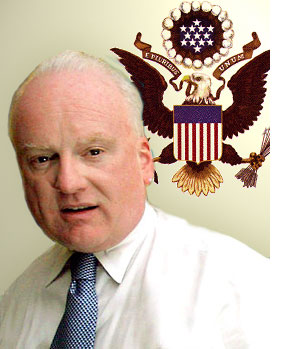 Shockingly, Clarke also theorizes that the CIA tried to recruit a member of Al
Qaeda who later turned out to be one of the 19 hijackers, proving that the CIA was well aware of Al Qaeda ‘cells’ prior to the attacks. His allegations add credibility to the theory that some of the hijackers could have possibly been on the US government payroll.
Shockingly, Clarke also theorizes that the CIA tried to recruit a member of Al
Qaeda who later turned out to be one of the 19 hijackers, proving that the CIA was well aware of Al Qaeda ‘cells’ prior to the attacks. His allegations add credibility to the theory that some of the hijackers could have possibly been on the US government payroll.  OC REGISTER