WASHINGTON POST– On the west side of Anniston,
the poor side of Anniston, the
people ate dirt. They called it “Alabama
clay” and cooked it for extra flavor. They also grew berries in their
gardens, raised hogs in their back yards, caught bass in the murky streams
where their children swam and played and were baptized. They didn’t know their
dirt and yards and bass and kids — along with the acrid air they breathed —
were all contaminated with chemicals. They didn’t know they lived in one of the
most polluted patches of America.
Now they know. They also know that for nearly 40 years, while
producing the now-banned industrial coolants known as PCBs at a local factory,
Monsanto Co. routinely discharged toxic waste into a west Anniston
creek and dumped millions of pounds of PCBs into oozing open-pit landfills. And
thousands of pages of Monsanto documents — many emblazoned with warnings such
as “CONFIDENTIAL: Read and Destroy” — show that for decades, the
corporate giant concealed what it did and what it knew.
In 1966, Monsanto managers discovered that fish submerged in that creek
turned belly-up within 10 seconds, spurting blood and shedding skin as if
dunked into boiling water. They told no one. In 1969, they found fish in
another creek with 7,500 times the legal PCB levels. They decided “there
is little object in going to expensive extremes in limiting discharges.”
In 1975, a
company study found that PCBs caused tumors in rats. They ordered its
conclusion changed from “slightly tumorigenic” to “does not
appear to be carcinogenic.”
Monsanto enjoyed a lucrative four-decade monopoly on PCB production in the United
States, and battled to protect that monopoly
long after PCBs were confirmed as a global pollutant. “We can’t afford to
lose one dollar of business,” one internal memo concluded.
Lastmonth, the Environmental Protection Agency ordered General Electric Co.
to spend $460 million to dredge PCBs it had dumped into the Hudson
River in the past, perhaps the Bush administration’s boldest
environmental action to date. The decision was bitterly opposed by the company,
but hailed by national conservation groups and many prominent and prosperous
residents of the picturesque Hudson River
Valley.
In Anniston, far from the
national spotlight, the sins of the past are being addressed in a very
different way. Here, Monsanto and its corporate successors have avoided a
regulatory crackdown, spending just $40 million on cleanup efforts so far. But
they have spent $80 million more on legal settlements, and another lawsuit by
3,600 plaintiffs — one of every nine city residents — is scheduled for trial
next Monday. David Carpenter, an environmental health professor at the State
University of New York at Albany,
has been a leading advocate of the EPA’s plan to dredge the Hudson,
but he says the PCB problems in Anniston
are much worse.
“I’m looking out my window at the Hudson
right now, but the reality is that the people who live around the Monsanto
plant have higher PCB levels than any residential population I’ve ever
seen,” said Carpenter, an expert witness for the plaintiffs in Anniston.
“They’re 10 times higher than the people around the Hudson.”
The Anniston lawsuits have
uncovered a voluminous paper trail, revealing an unusually detailed story of
secret corporate machinations in the era before strict environmental
regulations and right-to-know laws. The documents — obtained by The Washington
Post from plaintiffs’ attorneys and the Environmental Working Group, a chemical
industry watchdog — date as far back as the 1930s, but they expose actions
with consequences that are still unfolding today.
Officials at Solutia Inc., the name given to Monsanto’s chemical operations
after they were spun off into a separate company in 1997, acknowledge that
Monsanto made mistakes. But they also said that for years, PCBs were hailed for
preventing fires and explosions in electrical equipment. Monsanto did stop
making PCBs in 1977, two years before a nationwide ban took effect. And the
current scientific consensus that PCBs are harmful, especially to the
environment, masks serious disputes over just how harmful they are to people.
Today, the old plant off Monsanto Road
here makes a chemical used in Tylenol. It has not reported a toxic release in
four years. Robert Kaley, the environmental affairs director for Solutia who
also serves as the PCB expert for the American Chemistry Council, said it is
unfair to judge the company’s behavior from the 1930s through 1970s by modern
standards.
“Did we do some things we wouldn’t do today? Of course. But that’s a
little piece of a big story,” he said. “If you put it all in context,
I think we’ve got nothing to be ashamed of.”
But Monsanto’s uncertain legacy is as embedded in west Anniston’s
psyche as it is in the town’s dirt. The EPA and the World Health Organization
classify PCBs as “probable carcinogens,” and while no one has
determined whether the people in Anniston
are sicker than average, Solutia has opposed proposals for comprehensive health
studies as unnecessary. And it has not apologized for any of its contamination
or deception.
In the absence of data, local residents seem to believe the worst. The
stories linger: The cancer cluster up the hill. The guy who burned the soles
off his boots while walking on Monsanto’s landfill. The dog that died after a
sip from Snow Creek, the long-abused drainage ditch that runs from the Monsanto
plant through the heart of west Anniston’s cinder-block cottages and shotgun
houses. Sylvester Harris, 63, an undertaker who lived across the street from
the plant, said he always thought he was burying too many young children.
“I knew something was wrong around here,” he said.
Opal Scruggs, 65, has spent her entire life in west Anniston,
the last few decades in a cottage in back of a Waffle House behind the plant.
But in recent years, Monsanto has bought and demolished about 100 PCB-tainted
homes and mom-and-pop businesses nearby, turning her neighborhood into a
virtual ghost town. Now she has elevated PCB levels in her blood — along with
Harris and many of their neighbors — and she believes she’s a “walking
time bomb.”
“Monsanto did a job on this city,” she said. “They thought we
were stupid and illiterate people, so nobody would notice what happens to
us.”
DEMOCRACY NOW– AMY GOODMAN: The US military has confirmed the authenticity of newly released video showing US forces indiscriminately firing on Iraqi civilians. On Monday, the website WikiLeaks.org posted footage taken from a US military helicopter in July 2007 as it killed twelve people and wounded two children. The voices on the tape appear to believe their targets are carrying weapons, but the footage unmistakably shows some of the victims holding camera equipment. The dead included two employees of the Reuters news agency, photographer Namir Noor-Eldeen and driver Saeed Chmagh. The Pentagon has never publicly released the footage and has previously cleared those involved of wrongdoing. WikiLeaks says it managed to de-encrypt the tape after receiving it from a confidential source inside the military who wanted the story to be known. In a moment, we’re going to hear from WikiLeaks co-founder Julian Assange, who oversaw the video’s release. But first we turn to the footage itself. For our television audiences, some may find these images disturbing. This clip captures the moments leading up to when US forces first opened fire. US SOLDIER 1: See all those people standing down there? US SOLDIER 2: Stay firm. And open the courtyard. US SOLDIER 1: Yeah, roger. I just estimate there’s probably about twenty of them. There’s one, yeah. US SOLDIER 2: Oh, yeah. US SOLDIER 1: I don’t know if that’s— US SOLDIER 3: Hey Bushmaster element, Copperhead one-six. US SOLDIER 2: That’s a weapon. US SOLDIER 1: Yeah. Hotel two-six, Crazy Horse one-eight . US SOLDIER 4: Copperhead one-six, Bushmaster six-Romeo. Roger. US SOLDIER 1: Have individuals with weapons. Yep, he’s got a weapon, too. Hotel two-six, Crazy Horse one-eight. Have five to six individuals with AK-47s. Request permission to engage . US SOLDIER 5: Roger that. We have no personnel east of our position. So you are free to engage. Over. US SOLDIER 2: All right, we’ll be engaging. US SOLDIER 1: Roger, go ahead. I’m gonna—I cant get ‘em now, because they’re behind that building. US SOLDIER 3: Hey Bushmaster element, Copperhead one-six. US SOLDIER 1: He’s got an RPG! US SOLDIER 2: Alright, we got a guy with an RPG. US SOLDIER 1: I’m gonna fire. OK. US SOLDIER 2: No, hold on. Let’s come around. US SOLDIER 1: Behind building right now from our point of view. US SOLDIER 2: OK, we’re going to come around. US SOLDIER 1: Hotel two-six, I have eyes on individual with RPG, getting ready to fire. We won’t—yeah, we got a guy shooting, and now he’s behind the building. God damn it! US SOLDIER 5: Uh, negative. He was right in front of the Brad, about there, one o’clock. Haven’t seen anything since then. US SOLDIER 2: Just [expletive]. Once you get on, just open up. US SOLDIER 1: I am. US SOLDIER 4: I see your element, got about four Humvees, out along this— US SOLDIER 2: You’re clear. US SOLDIER 1: Alright, firing. US SOLDIER 4: Let me know when you’ve got them. US SOLDIER 2: Let’s shoot. Light ‘em all up. US SOLDIER 1: Come on, fire! US SOLDIER 2: Keep shootin’. Keep shootin’. Keep shootin’. Keep shootin’. US SOLDIER 6: Hotel, Bushmaster two-six, Bushmaster two-six, we need to move, time now! US SOLDIER 2: Alright, we just engaged all eight individuals. AMY GOODMAN: The video now shows around eight Iraqis lying on the ground, dead or badly wounded. The soldiers again claim the victims have weapons and now laugh about the shooting. US SOLDIER 1: We saw two birds. We’re still firing. US SOLDIER 2: Roger. US SOLDIER 1: I got ‘em. US SOLDIER 3: Two-six, this is two-six, we’re mobile. US SOLDIER 2: Oops, I’m sorry. What was going on? US SOLDIER 1: God damn it, Kyle. US SOLDIER 2: Sorry, hahaha, I hit ‘em—Roger. Currently engaging approximately eight individuals, KIA, RPGs and AK-47s. Hotel two-six, Crazy Horse one-eight. US SOLDIER 1: Oh, yeah, look at those dead bastards. US SOLDIER 2: Nice. Good shootin’. US SOLDIER 1: Thank you. AMY GOODMAN: Reuters driver Saeed Chmagh survived the initial attack. Here he’s seen trying to crawl away as the helicopter flies overhead. A voice from the cockpit hopes that Saeed brandishes a weapon to justify more shooting. US SOLDIER 2: One individual appears to be wounded, trying to crawl away. US SOLDIER 3: Roger, we’re going to move down there. US SOLDIER 2: Roger, we’ll cease fire. US SOLDIER 1: Yeah, we won’t shoot anymore. He’s getting up. US SOLDIER 2: If he has a weapon, though, in his hand? US SOLDIER 1: No, I haven’t seen one yet. I see you guys got that guy crawling right now on the curb. Yeah, I got him. I put two rounds near him, and you guys were shooting over there, too, so we’ll see. US SOLDIER 3: Yeah, roger that. US SOLDIER 4: Bushmaster three-six Element, this is Hotel two-seven. Over. US SOLDIER 3: Hotel Two-Seven, Bushmaster Seven. Go ahead. US SOLDIER 4: Roger. I’m just trying to make sure that you guys have my turf. Over. US SOLDIER 3: Roger, we got your turf. US SOLDIER 2: Come on, buddy. All you gotta do is pick up a weapon. AMY GOODMAN: The US forces notice a van pulling up to evacuate the wounded. They again open fire, killing several more people and wounding two children inside the van. US SOLDIER 1: Where’s that van at? US SOLDIER 2: Right down there by the bodies. US SOLDIER 1: OK, yeah. US SOLDIER 2: Bushmaster, Crazy Horse. We have individuals going to the scene, looks like possibly picking up bodies and weapons. US SOLDIER 1: Let me engage. Can I shoot? US SOLDIER 2: Roger. Break. Crazy Horse one-eight, request permission to engage. US SOLDIER 3: Picking up the wounded? US SOLDIER 1: Yeah, we’re trying to get permission to engage. Come on, let us shoot! US SOLDIER 2: Bushmaster, Crazy Horse one-eight. US SOLDIER 1: They’re taking him. US SOLDIER 2: Bushmaster, Crazy Horse one-eight. US SOLDIER 4: This is Bushmaster seven, go ahead. US SOLDIER 2: Roger. We have a black SUV—or Bongo truck picking up the bodies. Request permission to engage. US SOLDIER 4: Bushmaster seven, roger. This is Bushmaster seven, roger. Engage. US SOLDIER 2: One-eight, engage. Clear. US SOLDIER 1: Come on! US SOLDIER 2: Clear. Clear. US SOLDIER 1: We’re engaging. US SOLDIER 2: Coming around. Clear. US SOLDIER 1: Roger. Trying to— US SOLDIER 2: Clear. US SOLDIER 1: I hear ‘em—I lost ’em in the dust. US SOLDIER 3: I got ’em. US SOLDIER 2: Should have a van in the middle of the road with about twelve to fifteen bodies. US SOLDIER 1: Oh yeah, look at that. Right through the windshield! Ha ha! AMY GOODMAN: Video footage from a July 2007 attack on Iraqi civilians by US troops, released Monday by the website WikiLeaks.org. Well, we’re joined now by two guests. Julian Assange is the co-founder of WikiLeaks.org, oversaw the release of this top-secret US military footage. He’s joining us from Washington, DC. And by video stream from Brazil, we’re joined by Glenn Greenwald, the constitutional law attorney and blogger for Salon.com. We called the Pentagon and the US Army, but they didn’t respond to our request for them to be on the broadcast. Julian Assange, tell us how you got this footage. JULIAN ASSANGE: We got this footage sometime last year. We don’t disclose precise times for reasons of source protection. When we first got it, we were told that it was important and that it showed the killing of journalists, but we didn’t have any other context, and we spent quite some months after breaking the decryption looking closely into this. And the more we looked, the more disturbing it became. This is a sequence which has a lot of detail and, I think, in some ways covers most of the bad aspects of the aerial war in Iraq and what we must be able to infer is going on in Afghanistan. So we see not only this initial opening shot on a crowd, which is clearly mostly unarmed. There may be some confusion as to whether two people are armed or whether there’s a camera or arm, but it’s clear that the majority of the people are in fact unarmed. And as it later turns out, two of those people are simply holding cameras. But we go on from there into seeing the shooting of people rescuing a wounded man, and none of those people are armed. What’s important to remember is that every step that the Apache takes in opening fire is authorized. It does pause before shooting. It explains the situation, sometimes exaggerating a little to its commanders, and gets authorized permission. These are not bad apples. This is standard practice. You can hear it from the tones of the voices of the pilots that this is in fact another day at the office. These pilots have evidently and gunners have evidently become so corrupted, morally corrupted, by the war that they are looking for excuses to kill. That is why you hear this segment, “Come on, buddy! Just pick up a weapon,” when Saeed, one of the Reuters employees, is crawling on the curb. They don’t want him for intelligence value to understand the situation. The man is clearly of no threat whatsoever. He’s prostate on the ground. Everyone else has been killed. They just want an excuse to kill. And it’s some kind of—appears to me to be some kind of video game mentality where they just want to get a high score, get their kill count up. And later on you’ll hear them proudly proclaiming how they killed twelve to fifteen people. AMY GOODMAN: Julian, how has the Pentagon responded to this footage? JULIAN ASSANGE: It’s very interesting. So yesterday, the Pentagon stated that the original investigation that it did into whether the acts broke the rules of engagement, the rules that soldiers must obey before shooting, they came to the conclusion then that there was no violation of those rules, that all the pilots, in fact, acted properly, and gunners. They reiterated that last night, that in fact it was their view that that original investigation came to the right conclusion and that they would not be reopening the investigation. However, we hear that that may be about to change. That hasn’t been confirmed yet, but our sources in CENTCOM say that there may be a change. Also, late last night, the Pentagon suddenly decided it liked the Freedom of Information Act, after all. Reuters put in the Freedom of Information request for this video in August 2007 and did not receive any response whatsoever for over a year and never has received, to our knowledge, the video. But yesterday, the Pentagon released on the CENTCOM website six files relating to this event. There is one that is the most important, which is the investigative report into whether this action broke the rules of engagement, really quite a telling report. So the tone and language is all about trying to find an excuse for the activity. I mean, this as if your own lawyer wrote a report for you to submit to the court. It’s very clear that that is the approach, to try and find any mechanism to excuse the behavior, and that is what ended up happening. Something that has been missed in some of the press reportage about this is that there is a third attack, just twenty minutes later, by the same crew, involving three Hellfire missiles fired onto an apartment complex where the roof was still under construction. We have fresh evidence from Baghdad that there were three families living in that apartment complex, many of whom were killed, including women. And we sent a team down there to collect that evidence. So that is in the full video we released, not in the shortened one, because we didn’t yet have that additional evidence. Innocent bystanders walking down the street are also killed in that attack. AMY GOODMAN: Do you know who these Apache helicopter teams—what this unit is? JULIAN ASSANGE: We don’t have the names of the teams. However, we have details about the unit, and there was a chapter, or half-chapter, in a book called The Good Soldiers by a Washington Post reporter released late last year that does cover the ground unit that moved in to collect the bodies and was the unit who also called in the Apaches to that area. Important thing that we know from classified documentation is that there were reports of small arms fire in the general vicinity. This was not an ongoing battle. The Pentagon released statements implying that this was a firefight and the Apaches were called in, into the middle of a firefight, and the journalists walked into this firefight. That is simply a lie. At 9:50 a.m. Baghdad time, Pentagon—sorry, US military documentation states that there was small arms fire in the general vicinity, in the suburb somewhere of New Baghdad, and that there was no PID, there was no positive identification of who the shooter was. So, in other words, some bullets were received in a general area, no US troops were killed, or they were heard, could have even been cars backfiring. There was no positive identification of where those shots were coming from. And the Apaches were sent up to scout out the general region, and they saw this group of men milling around in a square, showing the Reuters photographer something interesting to photograph. So the claim that this was a battle and the Reuters guys were sort of caught in the crossfire, or it was some kind of active attack that it needed an immediate response by the Apaches, is simply a lie. AMY GOODMAN: We’re going to come back to this discussion and, well, what’s happening to WikiLeaks.org, not only as a result of releasing this, but other sensitive documents. Julian Assange is our guest, co-founder of WikiLeaks. Also Glenn Greenwald will join us, who has been writing about this. This is Democracy Now!, democracynow.org. Back in a minute. [break] AMY GOODMAN: Our guest Julian Assange, co-founder of WikiLeaks, has just posted on WikiLeaks.org this 2007 footage from the helicopter gunships that opened fire on Iraqi civilians in Baghdad. I want to play another clip, this the voices of the cockpit laughing as a Bradley tank drives over the dead body of one of the Iraqi victims. US SOLDIER 1: I think they just drove over a body. US SOLDIER 2: Did he? US SOLDIER 1: Yeah! AMY GOODMAN: And here the cockpit learns from soldiers on the ground that the victims include children. One voice says, “Well, it’s their fault for bringing their kids to battle.” US SOLDIER 3: I’ve got eleven Iraqi KIAs . One small child wounded. Over. US SOLDIER 1: Roger. Ah, damn. Oh, well. US SOLDIER 3: Roger, we need—we need a—to evac this child. She’s got a wound to the belly. I can’t do anything here. She needs to get evaced. Over. US SOLDIER 1: Well, it’s their fault for bringing their kids into a battle. US SOLDIER 2: That’s right. AMY GOODMAN: After discovering the wounded children, a soldier on the ground says they should be taken to a nearby US military hospital, but an order comes in to instead first hand the children over to Iraqi police, possibly delaying their treatment. US SOLDIER 3: Negative on evac of the two civilian kids to Rusty. They’re going to have the IPs link up with us over here. Break. IPs will take them up to a local hospital. Over. AMY GOODMAN: Julian Assange, co-founder of WikiLeaks, explain what happened to the children, the children that you show in the video footage by circling their heads, that they are in the van. JULIAN ASSANGE: Yeah, something important to remember is that the video we obtained and released is of substantially lower quality than what the pilots saw. This is because it was converted through many stages to digital. But even so, we can just see that there are in fact two children sitting in the front seat of that van. And subsequent witness reports also confirm that. So those children were extremely lucky to survive. The Apache helicopter was firing thirty-millimeter shells. That’s shells this wide, normally used for armor piercing, and they shoot straight through buildings. Those children—the medic on the scene wanted to evacuate those children to the US military base at Rustamiyah, approximately eight kilometers away from the scene. The base has excellent medical facilities. Higher command denied that. We don’t know the reason. Perhaps there was a legitimate reason, but it seems like the medic would be the person best placed to know what to do. Instead, he is told to meet up and hand the children over to local police. We don’t know what happens then. But our team that was in Baghdad, we partnered with the Icelandic state broadcasting service, RÚV, found the children over the weekend, this weekend, and interviewed them and took their hospital records, and we have photographs of the scars of the stomach wounds and the chest wounds and arm wounds for those children. The boy, in particular, was extremely lucky to survive. He had a wound that came from the top of his body down his stomach, so very, very, very lucky. The mother says that she has been offered no compensation for the death of her husband, who was the driver of that van, and no assistance with the medical expenses of her children. And she says that there are ongoing medical expenses related to the daughter. AMY GOODMAN: Julian Assange, what is happening now to WikiLeaks.org? What kind of response have you gotten? Can you talk about surveillance or possibly attempting to shut you down? JULIAN ASSANGE: Well, a few weeks ago, we released a 2008 counterintelligence report from the United States Army, thirty-two pages, that assessed quite a few articles that I had written and some of the other material we had released—so that includes the main manuals for Guantánamo Bay, which revealed falsification of records there and deliberate hiding of people from the Red Cross, a breach of the Geneva Conventions, and psychological torture, many other things, and a report we released on the battle of Fallujah, once again a classified US military report into what happened there—and clearly concerned that we were causing embarrassment to the US military by exposing human rights abuses and some concern—doesn’t seem to be legitimate, but some concerns that the fine details of some material that we were releasing could, in theory, when combined with other detail, pose a threat to soldiers if insurgents got hold of that information. So that report sort of looks at different ways to destroy WikiLeaks.org or fatally marginalize it. And because our primary asset is the trust, that sources have enough—we have a reputation for having never had a source publicly exposed, and as far as I know, that reputation is true—it looks to see whether they can publicly expose some of our sources, prosecute US military whistleblowers—and, in fact, it uses the phrase “whistleblowers,” not people who are leaking indiscriminately—but prosecute US military whistleblowers in order to destabilize us and destroy what it calls our “center of gravity,” the trust that the public and sources have in us. It also looks at some other methods—again, it’s careful to fine-tune the language, but says that perhaps we could be hacked into and destabilized that way, or perhaps we could be fed information that was fraudulent, and therefore our reputation for integrity could be destroyed. The report is careful on these last two to suggest that maybe other governments could do this. It seems like it’s some kind of license for their claims. They speak about how Iran has blocked us on the internet and China has blocked us on the internet and other governments of a similar type have condemned us, and it lists Israel. And it also lists the case that we had against a Swiss bank in San Francisco in February 2008, a case which we conclusively won. But in the production of this video in Iceland, where most of the team was over the last month, we did get a number of very unusual surveillance events. So we—I personally had people filming me covertly in cafes, who, when confronted, run off so scared that they even drop their cash, and not Icelanders, outsiders, although there also was some surveillance from Iceland. Our feeling is now that that surveillance may not have been related to this video. It may more likely have been related to leaks from the US embassy in Iceland that we released. We’re not sure of that. But there was—appears to have been a following of me on an Icelandic air flight out of Iceland to an investigative journalism conference in Norway. We’re not sure that—there are records of two State Department employees on that plane with no luggage. Our suspicion is these are probably the Diplomatic Security Service investigating a leak at the embassy. We did have a volunteer arrested for some other reason and asked questions in Iceland about WikiLeaks, but there are now two sides to this story. So our volunteer says that they asked questions about WikiLeaks, and the police say that they asked questions about WikiLeaks, but the police say this was because of a sticker on a laptop. Volunteer says that this wasn’t true. And at the moment, we’re unable to confirm whether the police had inside information about the video or whether the volunteer is not telling the truth. AMY GOODMAN: We’re also joined, Julian Assange, by Glenn Greenwald, blogger for Salon.com. He’s a constitutional lawyer. Glenn, the significance of what this videotape is showing, from the helicopter gunship, of the helicopter gunship opening fire on Iraqi civilians? GLENN GREENWALD: I think, in one sense, that WikiLeaks has done an extraordinarily valuable service, because it has exposed what it is that war actually is, what we’re actually doing in Afghanistan and Iraq on a day-to-day basis. My concern with the discussions that have been triggered, though, is that there seems to be the suggestion, in many circles—not, of course, by Julian—that this is some sort of extreme event, or this is some sort of aberration, and that’s the reason why we’re all talking about it and are horrified about it. In fact, it’s anything but rare. The only thing that’s rare about this is that we happen to know about it and are seeing it take place on video. This is something that takes place on a virtually daily basis in Iraq and Afghanistan and other places where we invade and bomb and occupy. And the reason why there are hundreds of thousands of dead in Iraq and thousands of dead in Afghanistan is because this is what happens constantly when we are engaged in warfare in those countries. And you see that, as Julian said, in the fact that every step of the way they got formal approval for what they wanted to do. And if you read the Defense Department investigations, which cleared the individuals involved, in every sense, and said that they acted complete [no audio]— AMY GOODMAN: We may have just lost— GLENN GREENWALD: —operating procedure. AMY GOODMAN: There it is. Go ahead. GLENN GREENWALD: And you see that this is standard operating procedure. The military was not at all concerned about what took place. They didn’t even think there were remedial steps needed to prevent a future reoccurrence. They concluded definitively that the members of the military involved did exactly the right thing. This is what war is. This is what the United States does in these countries. And that, I think, is the crucial point to note, along with the fact that the military fought tooth and nail to prevent this video from surfacing, precisely because they knew that it would shed light on what their actual behavior is during war, and instead of the propaganda to which we’re typically subjected. AMY GOODMAN: And then the attacks on WikiLeaks, the surveillance of WikiLeaks, Glenn? GLENN GREENWALD: Well, the problem, of course, is that there are very few entities left that actually provide any meaningful checks or oversight on what the military and intelligence communities do. The media has fallen down almost completely. There’s occasional investigative reports and journalism that expose what they do, but media outlets, for a variety of reasons, including resource constraints, are hardly ever able to perform these kind of functions, even when they’re willing. Congress, of course, which has principal oversight responsibility to ensure things like this don’t happen, and that they see the light of day when they do, is almost completely impotent, by virtue of their own choices and desires and as well as by a whole variety of constraints, institutional and otherwise. And so, there are very few mechanisms left for figuring out and understanding as citizens what it is that our government and our military and our intelligence community do. And unauthorized leaks and whistleblowing is one of the very few outlets left, and WikiLeaks is providing a safe haven for people who want to expose serious corruption and wrongdoing. And so, of course the Pentagon and the CIA sees them as an enemy and something to be targeted and shut down, because it’s one of the few avenues that we have left for meaningful accountability and disclosure. AMY GOODMAN: Julian Assange, you have video of Afghanistan that you have yet to release? JULIAN ASSANGE: Yes, that’s correct. We have a video of a May 2009 attack which killed ninety-seven in Afghanistan. We are still analyzing and assessing that information. We— AMY GOODMAN: Last comments, Julian? Go ahead. JULIAN ASSANGE: Yes. I must agree with Glenn, and I’d also like to speak a little bit about the media focus on this. We have seen some straw manning in relation to this event. So quite a few people have simply focused on the initial attack on Namir, the Reuters photographer, and Saeed, the other one, this initial crowd scene, and gone, “Well, you know, camera, RPG, it can look a bit similar. And there do appear to be two other—two people in that crowd having weapons. A heat-of-the-moment situation. Even if the descriptions were false previously, maybe there’s some excuse for this. I mean, it’s bad, but maybe there’s some excuse.” This is clearly a straw man. We can see, over these three events—the initial attack on the crowd; the attack on the people rescuing a completely unarmed man, themselves completely unarmed; to the Hellfire missile attack on an apartment complex, which killed families—all in the course of one hour, that something is wrong. And the tone of the pilots is another day at the office. This is not, as Glenn said, an extraordinary event. This outlines that this is an everyday event. It’s another day at the office. They get clearance for everything that they do from higher command before they do it. There was an investigative report in response to Reuters, so it’s not a minor incident. There was pressure from Reuters to produce an investigative report. There was an investigative report. It cleared everyone of wrongdoing. You can read that report that was released. It is clearly designed to come to a particular conclusion, the suppression of the FOI material, non-response to Reuters. And now we hear yesterday from the Pentagon an attempt to keep the same line, that everything was done correctly. I don’t think that can hold, but I think it gives important lessons as to what you can believe. Even the number—everyone was described initially as insurgents, except for the two wounded children. A blanket description. It was only from pressure from the press that changed that number to there being civilians amongst the crowd. But we also see that the total death count is wrong. There were people killed in the buildings next to this event who were just there living in their houses. There were additional bystanders killed in the Hellfire missile attack, and those people weren’t even counted, let alone counted as insurgents. So you cannot believe these statements from the military about number of people who were killed, whether people are insurgents, whether an investigation into rules of engagement was correct. They simply cannot be believed and cannot be trusted. AMY GOODMAN: Well, after the footage was released, Nabil Noor-Eldeen, the brother of the slain Reuters cameraman Namir Noor-Eldeen, spoke out in an interview with Al Jazeera. NABIL NOOR-ELDEEN: Is this the democracy and freedom that they claim have brought to Iraq? What Namir was doing was a patriotic work. He was trying to cover the violations of the Americans against the Iraqi people. He was only twenty-one years old. Other innocent colleagues and other innocent people, who were just standing out of curiosity when they see a journalist in a scene, and they were all killed. This is another crime that should be added to the record of American crimes in Iraq and the world. Is the pilot that stupid, he cannot distinguish between an RPG and a camera? They claim he was carrying an RPG. When was the RPG this small, small as a camera? He was carrying a small camera. An RPG is more than one meter long. Yes, it was an RPG because it shows the acts against Iraq and its people that still suffer from their crimes. We demand the international organizations to help us sue those people responsible for the killings of our sons and our people. AMY GOODMAN: Nabil Noor-Eldeen is the brother of the photographer Namir Noor-Eldeen—and his driver Saeed Chmagh, they both worked for Reuters news agency. The overwhelmingly sad tributes to them online are very important. I want to thank Julian Assange, co-founder ofWikiLeaks.org. Glenn Greenwald, stay with us, because we want to go quickly to that story on Afghanistan, which we will also talk about tomorrow. This is Democracy Now!, democracynow.org, the War and Peace Report. And we’ll talk about the worst mining disaster in twenty-five years, in West Virginia. Stay with us.
TRUTHOUT– On Monday, April 5, Wikileaks.org posted video
footage from Iraq, taken from a US military Apache helicopter in July
2007 as soldiers aboard it killed 12 people and wounded
two children. The dead included two employees of the Reuters news
agency: photographer Namir Noor-Eldeen and driver Saeed Chmagh.
The US military confirmed the authenticity of the
video. The footage clearly shows an unprovoked slaughter,
and is shocking to watch whilst listening to the casual conversation of
the soldiers in the background.
As disturbing as the video is, this type of behavior
by US soldiers in Iraq is not uncommon. Truthout has spoken with several soldiers who shared
equally horrific stories of the slaughtering of innocent Iraqis by US
occupation forces.
“I remember one woman walking by,” said Jason
Washburn, a corporal in the US Marines who served three tours in Iraq.
He told the audience at the Winter Soldier hearings that took place
March 13-16, 2008, in Silver Spring, Maryland, “She was carrying a huge
bag, and she looked like she was heading toward us, so we lit her up
with the Mark 19, which is an automatic grenade launcher, and when the
dust settled, we realized that the bag was full of groceries. She had
been trying to bring us food and we blew her to pieces.”
The hearings provided a platform for veterans from
Iraq and Afghanistan to share the reality of their occupation
experiences with the media in the US. Washburn testified on a panel that discussed the
rules of engagement (ROE) in Iraq, and how lax they were, to the point
of being virtually nonexistent.
“During the course of my three tours, the rules of
engagement changed a lot,” Washburn’s testimony continued, “The higher
the threat the more viciously we were permitted and expected to respond.
Something else we were encouraged to do, almost with a wink and nudge,
was to carry ‘drop weapons’, or by my third tour, ‘drop shovels’. We
would carry these weapons or shovels with us because if we accidentally
shot a civilian, we could just toss the weapon on the body, and make
them look like an insurgent.”
Hart Viges, a member of the 82nd Airborne Division of
the Army who served one year in Iraq, told of taking orders over the
radio.
“One time they said to ?re on all taxicabs because
the enemy was using them for transportation…. One of the snipers
replied back, ‘Excuse me? Did I hear that right? Fire on all taxicabs?’
The lieutenant colonel responded, ‘You heard me, trooper, ?re on all
taxicabs.’ After that, the town lit up, with all the units ?ring on
cars. This was my ?rst experience with war, and that kind of set the
tone for the rest of the deployment.”
Vincent Emanuele, a Marine rifleman who spent a year
in the al-Qaim area of Iraq near the Syrian border, told of emptying
magazines of bullets into the city without identifying targets, running
over corpses with Humvees and stopping to take “trophy” photos of
bodies.
“An act that took place quite often in Iraq was
taking pot shots at cars that drove by,” he said, “This was not an
isolated incident, and it took place for most of our eight-month
deployment.”
Kelly Dougherty – then executive director of Iraq
Veterans Against the War – blamed the behavior of soldiers in Iraq on
policies of the US government.
“The abuses committed in the occupations, far from
being the result of a ‘few bad apples’ misbehaving, are the result of
our government’s Middle East policy, which is crafted in the highest
spheres of US power,” she said.
Michael Leduc, a corporal in the Marines who was part
of the US attack on Fallujah in November 2004, said orders he received
from his battalion JAG officer before entering the city were as follows:
“You see an individual with a white ?ag and he does anything but
approach you slowly and obey commands, assume it’s a trick and kill
him.”
Bryan Casler, a corporal in the Marines, spoke of
witnessing the prevalent dehumanizing outlook soldiers took toward
Iraqis during the invasion of Iraq.
“… on these convoys, I saw Marines defecate into
MRE bags or urinate in bottles and throw them at children on the side of
the road,” he stated.
Scott Ewing, who served in Iraq from 2005-2006,
admitted on one panel that units intentionally gave candy to Iraqi
children for reasons other than “winning hearts and minds.
“There was also another motive,” Ewing said. “If the
kids were around our vehicles, the bad guys wouldn’t attack. We used the
kids as human shields.”
In response to the WikiLeaks video, the Pentagon,
while not officially commenting on the video, announced that two
Pentagon investigations cleared the air crew of any wrongdoing.
A statement from the two probes said the air crew had
acted appropriately and followed the ROE.
Adam Kokesh served in Fallujah beginning in February
2004 for roughly one year.
Speaking on a panel at the aforementioned hearings
about the ROE, he held up the ROE card soldiers are issued in Iraq and
said, “This card says, ‘Nothing on this card prevents you from using
deadly force to defend yourself’.”
Kokesh pointed out that “reasonable certainty” was
the condition for using deadly force under the ROE, and this led to
rampant civilian deaths. He discussed taking part in the April 2004
siege of Fallujah. During that attack, doctors at Fallujah General
Hospital told Truthout there were 736 deaths, over 60 percent of which
were civilians.
“We changed the ROE more often than we changed our
underwear,” Kokesh said, “At one point, we imposed a curfew on the city,
and were told to fire at anything that moved in the dark.”
Kokesh also testified that during two cease-fires in
the midst of the siege, the military decided to let out as many women
and children from the embattled city as possible, but this did not
include most men.
“For males, they had to be under 14 years of age,” he
said, “So I had to go over there and turn men back, who had just been
separated from their women and children. We thought we were being
gracious.”
Steve Casey served in Iraq for over a year starting
in mid-2003.
“We were scheduled to go home in April 2004, but due
to rising violence we stayed in with Operation Blackjack,” Casey said,
“I watched soldiers firing into the radiators and windows of oncoming
vehicles. Those who didn’t turn around were unfortunately neutralized
one way or another – well over 20 times I personally witnessed this.
There was a lot of collateral damage.”
Jason Hurd served in central Baghdad from November
2004 until November 2005. He told of how, after his unit took “stray
rounds” from a nearby firefight, a machine gunner responded by firing
over 200 rounds into a nearby building.
“We fired indiscriminately at this building,” he
said. “Things like that happened every day in Iraq. We reacted out of
fear for our lives, and we reacted with total destruction.”
Hurd said the situation deteriorated rapidly while he
was in Iraq. “Over time, as the absurdity of war set in, individuals
from my unit indiscriminately opened fire at vehicles driving down the
wrong side of the road. People in my unit would later brag about it. I
remember thinking how appalled I was that we were laughing at this, but
that was the reality.”
Other soldiers Truthout has interviewed have often
laughed when asked about their ROE in Iraq. Garret Reppenhagen served in Iraq from February
2004-2005 in the city of Baquba, 40 kilometers (about 25 miles)
northeast of Baghdad. He said his first experience in Iraq was being on a
patrol that killed two Iraqi farmers as they worked in their field at
night.
“I was told they were out in the fields farming
because their pumps only operated with electricity, which meant they had
to go out in the dark when there was electricity,” he explained, “I
asked the sergeant, if he knew this, why did he fire on the men. He told
me because the men were out after curfew. I was never given another ROE
during my time in Iraq.”
Emmanuel added: “We took fire while trying to blow up
a bridge. Many of the attackers were part of the general population.
This led to our squad shooting at everything and anything in order to
push through the town. I remember myself emptying magazines into the
town, never identifying a target.”
Emmanuel spoke of abusing prisoners he knew were
innocent, adding, “We took it upon ourselves to harass them, and took
them to the desert to throw them out of our Humvees, while kicking and
punching them when we threw them out.”
Jason Wayne Lemue is a Marine who served three tours
in Iraq.
“My commander told me, ‘Kill those who need to be
killed, and save those who need to be saved'; that was our mission on
our first tour,” he said of his first deployment during the invasion.
“After that the ROE changed, and carrying a shovel,
or standing on a rooftop talking on a cell phone, or being out after
curfew [meant those people] were to be killed. I can’t tell you how many
people died because of this. By my third tour, we were told to just
shoot people, and the officers would take care of us.”
When this Truthout reporter was in Baghdad in
November 2004, my Iraqi interpreter was in the Abu Hanifa mosque that
was raided by US and Iraqi soldiers during Friday prayers.
“Everyone was there for Friday prayers, when five
Humvees and several trucks carrying [US soldiers and] Iraqi National
Guards entered,” Abu Talat told Truthout on the phone from within the
mosque while the raid was in progress. “Everyone starting yelling
‘Allahu Akbar’ (God is the greatest) because they were frightened. Then
the soldiers started shooting the people praying!”
“They have just shot and killed at least four of the
people praying,” he said in a panicked voice, “At least 10 other people
are wounded now. We are on our bellies and in a very bad situation.”
Iraqi Red Crescent later confirmed to Truthout that
at least four people were killed, and nine wounded. Truthout later
witnessed pieces of brain splattered on one of the walls inside the
mosque while large blood stains covered carpets at several places.
This type of indiscriminate killing has been typical
from the initial invasion of Iraq. Truthout spoke with Iraq war veteran and former
National Guard and Army Reserve member Jason Moon, who was there for the
invasion.
“While on our initial convoy into Iraq in early June
2003, we were given a direct order that if any children or civilians got
in front of the vehicles in our convoy, we were not to stop, we were
not to slow down, we were to keep driving. In the event an insurgent
attacked us from behind human shields, we were supposed to count. If
there were thirty or less civilians we were allowed to fire into the
area. If there were over thirty, we were supposed to take fire and send
it up the chain of command. These were the rules of engagement. I don’t
know about you, but if you are getting shot at from a crowd of people,
how fast are you going to count, and how accurately?”
Moon brought back a video that shows his sergeant
declaring, “The difference between an insurgent and an Iraqi civilian is
whether they are dead or alive.”
Moon explains the thinking: “If you kill a civilian
he becomes an insurgent because you retroactively make that person a
threat.”
According to the Pentagon probes of the killings
shown in the WikiLeaks video, the air crew had “reason to believe” the
people seen in the video were fighters before opening fire.
Article 48 of the Geneva Conventions speaks to the
“basic rule” regarding the protection of civilians:
“In order to ensure respect for and protection of the
civilian population and civilian objects, the Parties to the conflict
shall at all times distinguish between the civilian population and
combatants and between civilian objects and military objectives and
accordingly shall direct their operations only against military
objectives.”
What is happening in Iraq seems to reflect what
psychiatrist Robert Jay Lifton calls “atrocity-producing situations.” He
used this term first in his book “The Nazi Doctors.” In 2004, he wrote
an article for The Nation, applying his insights to the Iraq War and
occupation.
“Atrocity-producing situations,” Lifton wrote, occur
when a power structure sets up an environment where “ordinary people,
men or women no better or worse than you or I, can regularly commit
atrocities…. This kind of atrocity-producing situation … surely
occurs to some degrees in all wars, including World War II, our last
‘good war.’ But a counterinsurgency war in a hostile setting, especially
when driven by profound ideological distortions, is particularly prone
to sustained atrocity – all the more so when it becomes an occupation.”
Cliff Hicks served in Iraq from October 2003 to
August 2004.
“There was a tall apartment complex, the only spot
from where people could see over our perimeter,” Hicks told Truthout,
“There would be laundry hanging off the balconies, and people hanging
out on the roof for fresh air. The place was full of kids and families.
On rare occasions, a fighter would get atop the building and shoot at
our passing vehicles. They never really hit anybody. We just knew to be
careful when we were over by that part of the wall, and nobody did shit
about it until one day a lieutenant colonel was driving down and they
shot at his vehicle and he got scared. So he jumped through a bunch of
hoops and cut through some red tape and got a C-130 to come out the next
night and all but leveled the place. Earlier that evening when I was
returning from a patrol the apartment had been packed full of people.”
HUFFINGTON POST– Calling it a case of “collateral murder,” the WikiLeaks Web site today
released harrowing video of a U.S. Army Apache helicopter in Baghdad in
2007 repeatedly opening fire on a group of men that included a Reuters
photographer and his driver – and then on a van that stopped to rescue
one of the wounded men.
None of the members of the group were taking hostile action, contrary
to the Pentagon’s initial cover story; they were milling about on a
street corner. One man was evidently carrying a gun, though that was and
is hardly an uncommon occurrence in Baghdad.
Reporters working for WikiLeaks determined that the driver of the van
was a good Samaritan on his way to take his small children to a
tutoring session. He was killed and his two children were badly injured.
In the video, which Reuters has been
asking to see since 2007, crew members can be heard celebrating
their kills.
“Oh yeah, look at those dead bastards,” says one crewman after
multiple rounds of 30mm cannon fire left nearly a dozen bodies littering
the street.
A crewman begs for permission to open fire on the van and its
occupants, even though it has done nothing but stop to help the wounded:
“Come on, let us shoot!”
Two crewmen share a laugh when a Bradley fighting vehicle runs over
one of the corpses.
And after soldiers on the ground find two small children shot and bleeding in the van, one crewman can be
heard saying: “Well, it’s their fault bringing their kids to a battle.”
The helicopter crew, which was patrolling an area that had been the
scene of fierce fighting that morning, said they spotted weapons on
members of the first group — although the video shows one gun, at most.
The crew also mistook a telephoto lens for a rocket-propelled grenade.
The shooting, which killed Reuters photographer Namir Noor-Eldeen,
22, and driver Saeed Chmagh, 40, took place on July 12, 2007, in a
southeastern neighborhood of Baghdad.
WASHINGTON POST– The first Army investigator who looked into the death of former NFL player
Pat Tillman in Afghanistan
last year found within days that he was killed by his fellow Rangers in an act
of “gross negligence,” but Army officials decided not to inform
Tillman’s family or the public until weeks after a nationally televised
memorial service.
A new Army report on the death shows that top Army officials, including the
theater commander, Gen. John P. Abizaid, were told that Tillman’s death was
fratricide days before the service.
Soldiers on the scene said they were immediately sure Tillman was killed by
a barrage of American bullets as he took shelter behind a large boulder during
a twilight firefight along a narrow canyon road near the Pakistani border,
according to nearly 2,000 pages of interview transcripts and investigative
reports obtained by The Washington Post.
The documents also show that officers made erroneous initial reports that
Tillman was killed by enemy fire, destroyed critical evidence and initially concealed
the truth from Tillman’s brother, also an Army Ranger, who was near the attack
on April 22, 2004, but did
not witness it.
Brig. Gen. Gary M. Jones prepared the report in response to questions from
Tillman’s family and from Sen. John McCain (R-Ariz). Jones concluded that there
was no official reluctance to report the truth but that “nothing has
contributed more to an atmosphere of suspicion by the family than the failure
to tell the family that Cpl. Pat Tillman’s death was the result of suspected
friendly fire, as soon as that information became known within military
channels.”



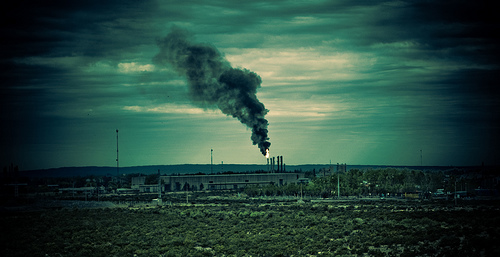 WASHINGTON POST– On the west side of Anniston,
the poor side of Anniston, the
people ate dirt. They called it “Alabama
clay” and cooked it for extra flavor. They also grew berries in their
gardens, raised hogs in their back yards, caught bass in the murky streams
where their children swam and played and were baptized. They didn’t know their
dirt and yards and bass and kids — along with the acrid air they breathed —
were all contaminated with chemicals. They didn’t know they lived in one of the
most polluted patches of America.
WASHINGTON POST– On the west side of Anniston,
the poor side of Anniston, the
people ate dirt. They called it “Alabama
clay” and cooked it for extra flavor. They also grew berries in their
gardens, raised hogs in their back yards, caught bass in the murky streams
where their children swam and played and were baptized. They didn’t know their
dirt and yards and bass and kids — along with the acrid air they breathed —
were all contaminated with chemicals. They didn’t know they lived in one of the
most polluted patches of America.

 WASHINGTON POST