MR Original – Change Starts With the Heart

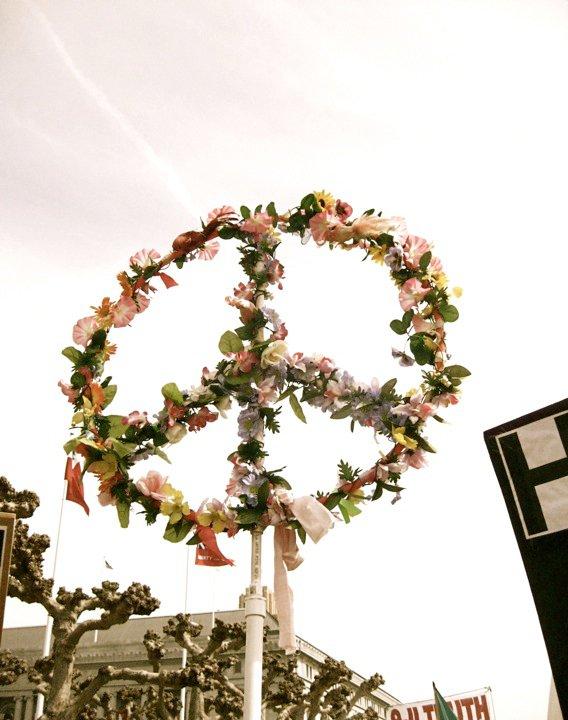
MEDIA ROOTS- Recently, a man walking by my car inquired about my anti-war bumper sticker. After a short conversation, I learned that this 81 year-old peace activist, Chuck, spends every Friday evening on a high school street intersection protesting the wars. With a solid handshake and fist bump, he was on his way.

Weeks later, I spotted Chuck at an anti-war rally down the street. When I approached him, a big warm smile greeted me, followed by another solid fist bump. Having developed a curiosity about his background and anti-war stance, I asked him for an interview to which he happily agreed.

As Chuck sat on my couch over a cup of coffee, it became clear that he is a slightly shy man, not seeking recognition. “I just care about people”, he exclaimed. This is how our conversation went down.

***

MR: Tell me a little about your background so people get an idea who you are and where you come from.

C: I was born in 1930 at my home in Diamond, Washington, which is the eastern part of the state. There were seven of us kids, and my parents owned a 206 acre farm. I worked really hard as a kid, and by my early teenage years I was already running heavy equipment and had quite a bit of responsibility.

MR: Have you always been politically aware or socially active?

C: I’d always been interested in politics, but something happened during the Great Depression that opened my eyes to the ideas of fairness and greed. My father’s mortgage on the farm was $1,735. A neighbor, Mr. Rock, owned the mortgage. When it became impossible to pay, he told my father “If you can just pay one dollar, I won’t foreclose on you.” His compassion and kindness enabled us to keep the farm, but a few months later when Mr. Rock passed away, his son took over the property, foreclosed immediately and started plowing our land. Thankfully, the Federal Land Bank under Roosevelt took over the mortgage and essentially saved our farm.

MR: Was your family always politically minded?

C: We didn’t have television back then, but we listened to the radio. My parents paid attention to what was happening in the world, and liked to help others. There was a train that would come through once a week and drop off food, coal and ice. We would save some of the coal for these four homeless people who migrated during the winter. They stayed in our shed, and the bits of coal we had saved over the course of the year supplied them with enough heat to get through the cold winter months. Without a refrigerator, we’d hang our meat on the windmill outside in the winter and the hobos would come slice pieces off to cook. They never bothered anybody or asked for much, we just liked to help them out. I was always impressed with how my parents recognized that some people need help– not everyone is as fortunate as the rest of us.

I was definitely inspired by my parents, but I’ve always been socially active. In school I always stuck up for the kids who were bullied, even though I was smaller. For example, this one kid in my high school had MS or was somehow disabled. I did whatever I could to stick up for him when he was picked on, which was often. His family had an orchard down on the Snake River, and would can hundreds of quarts of peaches and apricots to sell every summer. They would always tell my family “You guys don’t pay”.

[Chuck tears up as he tells me this]

MR: That’s how the world should work– we need to help each other out. When did you become an activist? Was there a specific time or event that inspired you to start protesting?

C: I was in the Army during the Korean War, but luckily I never had to go overseas. Instead I was sent all around the country on various assignments and even ended up working at the Pentagon in Washington DC. I was one of only a handful of guys from my squad who didn’t end up dead. Being in the military never really settled with me. I didn’t understand what I was doing and why, and it felt very unorganized. After serving I became aware of our military actions, and became an outspoken critic. I suppose that evolved into physically protesting.

MR: How long have you guys been protesting on the corner?


C: We have been protesting for about four and a half years, rain or shine. I’ve only missed about three meetings. It’s not part of a larger established organization– it’s just a few of us, but we are a committed group of concerned citizens. It’s all volunteer, but it’s not a political thing. Well, it’s somewhat political, but it’s really about doing what’s right.

MR: Do you align yourself with a paticular political party?

C: Yes– I’m a Democrat.

MR: Historically, Democrats are known for being a bit more compassionate, but what do you think about the idea that maybe the lines are blurring between the two, and that both parties are just spokespersons for Big Business and private interests?

C: I still feel that Democrats are much more “tuned in” to people. It is unfortunate though, what these corporations are getting away with. It’s a damn crime. At one point I had a small construction company. I thought I was smart and had a couple hundred dollars and grew that into a labor-union based company about 200 strong. Supporting union labor gave people a voice and enabled them to make enough money to feed their families. Sometimes I would get out of bounds, and they would kick me back into shape, but it was a good relationship.

MR: I’m sure you still ended up paying a vastly larger chunk of taxes than these corporations are doing nowadays. You say that your anti-war stance is not a political thing, but you have to admit that war and politics are intertwined– they’re almost inseparable. What do you see as the main problem with America’s current political system?

C: Simple: too much greed. It’s all about the dollars. Unless you have money or political clout, you don’t have a voice. But you must still protest, because maybe you’ll be heard.

MR: Or at least make somebody think critically on their way home from work. What do you see as the main reasons why we are in Iraq and Afghanistan?

C: Oil and greed, no doubt about it. We need to get out of their countries. War creates hate and animosity. You don’t make people love you by killing them.

MR: Do you see the US trend of aggressive war over resources slowing down anytime soon? We’ve basically achieved what we went over there for: the regions are in turmoil, and US-backed governments are being implemented. Do you think that the regions will eventually be restructured?


C: I don’t think it will be effectively restructured. We just have to get the military industrial complex out of the way. The biggest thing we have in America is guns: half of our budget goes to the military.

MR: Which makes it hard to slow down. Do you think it’ll take a long sequence of events, like getting the right people in office and slowly chipping away at it, or do you think it’ll take an overnight revolution?


C: I think it’ll take the chipping away approach. We have to protest. We can’t continue to have a military presence in 130 countries. We have to slowly get those troops out of there.

We also need to write our Senators and Congressmen. Don’t send an email– write a letter or send a fax. They read those things, and it could make a difference. But you have to recruit others to do the same thing. Talk about things, spread news and hand-write lots of letters.

The key is to get the next wave of young policy makers in office. The young people are so much more progressive and open-minded. We need young leaders and we need more of what’s happening  in Wisconsin. I think that peaceful protesting is really working.

MR: Once these people get into office, how realistic is it to expect them to do the things they set out to do?

C: I think it’s very difficult. They have to be concerned with re-election, and to do so you have to know where your boundaries are.

MR: When I talk to friends who support Obama, they think I have some sort of personal agenda against him. But for me it’s not personal I’m sure he’s a compassionate person who genuinely wanted change. But after getting into office, he really has limited control over what happens.

C: I saw something similar happen with Roosevelt. In the election of ’38, he was politically stymied. It’s exactly the same thing that’s happening now: I think Obama really wants to do the right things, in his mind and his heart. But he needs to be much more vocal.

MR: What were some of the similarities between Obama and Roosevelt?

C: He got Social Security to go through the Supreme Court and pushed for labor rights and public works projects. It was all about groups, like the Works Progress Administration. He also helped establish the idea of a minimum wage, and Washington state was the first to adopt one. These things gave people dignity. Also, back then we had these supposed enemies, the “Commies” and “Fascists” and the worker’s parties that corporations demonized. We see the same sort of fear-mongering now, but it’s “terrorists” and “Muslim extremists”. Our leaders need to make a stronger effort to push for green jobs, which could be a critical path for us.

MR: As far as Obama needing to be more vocal– He seemed to genuinely want to go in there and instigate change. So what happened? He has an opportunity every single day to get up in front of the podium in the Rose Garden and say “This needs to stop”. But he doesn’t. Is is because he’s powerless or is he trying to play it safe to ensure his re-election?

C: I think he has great intentions, and has the potential to become very powerful if he can get into another term. But for now he has to go along with the pundits because there’s so much chaos and thing going on.

It’s a difficult job, and his hands are pretty much tied. As an individual, he is respected. But it’s really difficult to get things done in Washington, all they do is talk. But I definitely agree that he could be doing a much better job.

MR: What is the key to getting this country back on track?

C: I don’t think it’ll be one specific thing. What’s happening in Wisconsin is the beginning of the revolution. We need more of that and we need to keep the pressure on ‘em. We can’t let up. And we have to offer solutions, we can’t just bitch and moan.

MR: How would you respond to people who say that protesting won’t make a difference?

C: I would say “You’re noticing, arent’ you?” We’re pressuring all the time– you have to be consistent. All those little grains of sand, the seemingly small voices, all those bodies really does make a difference.  I’m seeing more activists now than ever, and it’s encouraging. I care about people, David. I built an orphanage in Honduras, and did work with Habitat for Humanity in the Philippines. We have to throw the balance in favor of the people. Change– it needs to start with the heart.

***

Interview conducted, article written by David Solmes

Photo by Abby Martin

US Tries to Assassinate US Citizen Anwar al-Awlaki

SALON– That Barack Obama has continued the essence of the Bush/Cheney Terrorism architecture was once a provocative proposition but is now so self-evident that few dispute it (watch here as arch-neoconservative David Frum — Richard Perle’s co-author for the supreme 2004 neocon treatise — waxes admiringly about Obama’s Terrorism and foreign policies in the Muslim world and specifically its “continuity” with Bush/Cheney). But one policy where Obama has gone further than Bush/Cheney in terms of unfettered executive authority and radical war powers is the attempt to target American citizens for assassination without a whiff of due process. As The New York Times put it last April:

It is extremely rare, if not unprecedented, for an American to be approved for targeted killing, officials said. A former senior legal official in the administration of George W. Bush said he did not know of any American who was approved for targeted killing under the former president. . . .

That Obama was compiling a hit list of American citizens was first revealed in January of last year when The Washington Post’s Dana Priest mentioned in passing at the end of a long article that at least four American citizens had been approved for assassinations; several months later, the Obama administration anonymously confirmed to both the NYT and the Post that American-born, U.S. citizen Anwar al-Awlaki was one of the Americans on the hit list.

Yesterday, riding a wave of adulation and military-reverence, the Obama administration tried to end the life of this American citizen — never charged with, let alone convicted of, any crime — with a drone strike in Yemen, but missed and killed two other people instead:

A missile strike from an American military drone in a remote region of Yemen on Thursday was aimed at killing Anwar al-Awlaki, the radical American-born cleric believed to be hiding in the country, American officials said Friday.

The attack does not appear to have killed Mr. Awlaki, the officials said, but may have killed operatives of Al Qaeda’s affiliate in Yemen.

The other people killed “may have” been Al Qaeda operatives. Or they “may not have” been. Who cares? They’re mere collateral damage on the glorious road to ending the life of this American citizen without due process (and pointing out that the Fifth Amendment to the U.S. Constitution expressly guarantees that “no person shall be deprived of life without due process of law” — and provides no exception for war — is the sort of tedious legalism that shouldn’t interfere with the excitement of drone strikes).

There are certain civil liberties debates where, even though I hold strong opinions, I can at least understand the reasoning and impulses of those who disagree; the killing of bin Laden was one such instance. But the notion that the President has the power to order American citizens assassinated without an iota of due process — far from any battlefield, not during combat — is an idea so utterly foreign to me, so far beyond the bounds of what is reasonable, that it’s hard to convey in words or treat with civility.

Read more about U.S. Tries to Assassinate U.S. Citizen Anwar al-Awlaki

© 2011 Salon

Photo by Flickr user varintsai

Media Regurgitates False OBL Government Claims

SALON– Virtually every major newspaper account of the killing of Osama bin Laden consists of faithful copying of White House claims. That’s not surprising: it’s the White House which is in exclusive possession of the facts, but what’s also not surprising is that many of the claims that were disseminated yesterday turned out to be utterly false. And no matter how many times this happens — from Jessica Lynch’s heroic firefight against Iraqi captors to Pat Tillman’s death at the hands of Evil Al Qaeda fighters — it never changes: the narrative is set forever by first-day government falsehoods uncritically amplified by establishment media outlets, which endure no matter how definitively they are disproven in subsequent days.

Yesterday, it was widely reported that bin Laden “resisted” his capture and “engaged in a firefight” with U.S. forces (leaving most people, including me, to say that his killing was legally justified because he was using force). It was also repeatedly claimed that bin Laden used a women — his wife — as a human shield to protect himself, and that she was killed as a result. That image — of a cowardly through violent-to-the-end bin Laden — framed virtually every media narrative of the event all over the globe. And it came from many government officials, principally Obama’s top counter-terrorism adviser, John Brennan.

Those claims have turned out to be utterly false. From TPM today:

It was a fitting end for the America’s most wanted man. As President Barack Obama’s Deputy National Security Adviser John Brennan told it, a cowardly Osama bin Laden used his own wife as a human shield in his final moments. Except that apparently wasn’t what happened at all.

Hours later, other administration officials were clarifying Brennan’s account. Turns out the woman that was killed on the compound wasn’t bin Laden’s wife. Bin Laden may have not even been using a human shield. And he might not have even been holding a gun.

Read more about In bin Laden Killing, Media Regurgitates False Government Claims

© 2011 Salon

Photo by Flickr user ssoosay

Tough To Secure Kandahar Prison, Afghan Loyalty

THE CHRONICLE HERALD– Last Monday’s massive prison break in Kandahar essentially put the boots to any last hopes of a successful NATO mission in Afghanistan.

As straight-faced Afghan prison officials scratched their heads and pointed to the empty tunnel entrance, which apparently allowed at least 471 Taliban prisoners to escape, we are expected to believe their claim that this was not an inside job.

To back up that story, the Afghan guards stated that there was no need for the Taliban detainees to obtain the keys to their cells that night because it was common practice to leave all the cells open at night.

We are then to believe that some 471 prisoners — essentially an entire battalion of fighters — carrying their belongings and equipped with flashlights silently filed out through a 360-metre tunnel.

This was to have occurred sometime between 2 and 4 a.m., and during that two-hour time frame, not a single guard twigged to the fact that the crowded mass of snoring, farting, wheezing humanity had gone silent and that the cellblocks had emptied.

The tunnel itself is another amazing feat of surreptitious construction. Using a building about 400 metres from the bustling Sarpoza prison, the Taliban mining crew somehow managed to conceal their months-long digging, despite the fact that, in the estimate of one Afghan official, they would have extracted one thousand truckloads of dirt.

In all that time, not one guard or policeman found it untoward that truckloads of earth were emanating from the same dwelling?

As for the night of the escape, the official theory is that, as the 471 prisoners emerged from the tunnel, they were given a fresh set of civilian clothing and then whisked away in a convoy of waiting cars. Even if we are to accept the possibility that six prisoners crammed into each vehicle alongside the drivers, that would still amount to no fewer than 80 cars involved in the prison break.

Given that this central part of Kandahar City is subjected to a strictly enforced night curfew, heavily patrolled by the Afghan National Army and Afghan National Police, not to mention being in close proximity to NATO rapid reaction forces, how could such a monumental, nocturnal movement of people have gone unnoticed and unchecked?

If we are to accept that this was simply a lucky lightning strike by the Taliban, then we would have to accept that this is the second time that lightning has struck the same prison.

Read more about Tough To Secure Kandahar Prison, Afghan Loyalty

© 2011 The Chronicle Herald

Photo by Flickr user

Posted in Uncategorized | 1 Reply

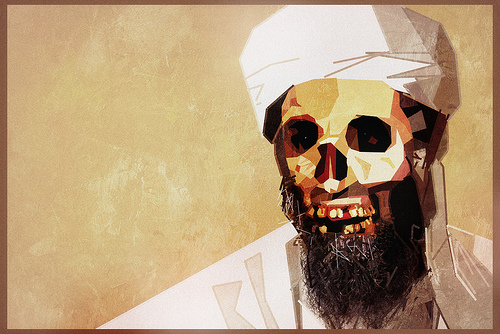
Chris Hedges On Osama Bin Laden’s Death

TRUTHDIGChris Hedges made these remarks about Osama bin Laden’s death at a Truthdig fundraising event in Los Angeles on Sunday evening.

I know that because of this announcement, that reportedly Osama bin Laden was killed, Bob wanted me to say a few words about it … about al-Qaida. I spent a year of my life covering al-Qaida for The New York Times. It was the work in which I, and other investigative reporters, won the Pulitzer Prize. And I spent seven years of my life in the Middle East. I was the Middle East bureau chief for The New York Times. I’m an Arabic speaker. And when someone came over and told Jean and me the news, my stomach sank. I’m not in any way naïve about what al-Qaida is. It’s an organization that terrifies me. I know it intimately.

But I’m also intimately familiar with the collective humiliation that we have imposed on the Muslim world. The expansion of military occupation that took place throughout, in particular the Arab world, following 9/11—and that this presence of American imperial bases, dotted, not just in Iraq and Afghanistan, but in Kuwait, Saudi Arabia, Doha—is one that has done more to engender hatred and acts of terror than anything ever orchestrated by Osama bin Laden.

And the killing of bin Laden, who has absolutely no operational role in al-Qaida—that’s clear—he’s kind of a spiritual mentor, a kind of guide … he functions in many of the ways that Hitler functioned for the Nazi Party. We were just talking with Warren about Kershaw’s great biography of Hitler, which I read a few months ago, where you hold up a particular ideological ideal and strive for it. That was bin Laden’s role. But all actual acts of terror, which he may have signed off on, he no way planned.

I think that one of the most interesting aspects of the whole rise of al-Qaida is that when Saddam Hussein … I covered the first Gulf War, went into Kuwait with the 1st Battalion, 1st Marines, was in Basra during the Shiite uprising until I was captured and taken prisoner by the Iraqi Republican Guard. I like to say I was embedded with the Iraqi Republican Guard. Within that initial assault and occupation of Kuwait, bin Laden appealed to the Saudi government to come back and help organize the defense of his country. And he was turned down. And American troops came in and implanted themselves on Muslim soil.

When I was in New York, as some of you were, on 9/11, I was in Times Square when the second plane hit. I walked into The New York Times, I stuffed notebooks in my pocket and walked down the West Side Highway and was at Ground Zero four hours later. I was there when Building 7 collapsed. And I watched as a nation drank deep from that very dark elixir of American nationalism … the flip side of nationalism is always racism, it’s about self-exaltation and the denigration of the other.

And it’s about forgetting that terrorism is a tactic. You can’t make war on terror. Terrorism has been with us since Sallust wrote about it in the Jugurthine wars. And the only way to successfully fight terrorist groups is to isolate [them], isolate those groups, within their own societies. And I was in the immediate days after 9/11 assigned to go out to Jersey City and the places where the hijackers had lived and begin to piece together their lives. I was then very soon transferred to Paris, where I covered all of al-Qaida’s operations in the Middle East and Europe.

So I was in the Middle East in the days after 9/11. And we had garnered the empathy of not only most of the world, but the Muslim world who were appalled at what had been done in the name of their religion. And we had major religious figures like Sheikh Tantawi, the head of al-Azhar—who died recently—who after the attacks of 9/11 not only denounced them as a crime against humanity, which they were, but denounced Osama bin Laden as a fraud … someone who had no right to issue fatwas or religious edicts, no religious legitimacy, no religious training. And the tragedy was that if we had the courage to be vulnerable, if we had built on that empathy, we would be far safer and more secure today than we are.

We responded exactly as these terrorist organizations wanted us to respond. They wanted us to speak the language of violence. What were the explosions that hit the World Trade Center, huge explosions and death above a city skyline? It was straight out of Hollywood. When Robert McNamara in 1965 began the massive bombing campaign of North Vietnam, he did it because he said he wanted to “send a message” to the North Vietnamese—a message that left hundreds of thousands of civilians dead.

These groups learned to speak the language we taught them. And our response was to speak in kind. The language of violence, the language of occupation—the occupation of the Middle East, the wars in Iraq and Afghanistan—has been the best recruiting tool al-Qaida has been handed. If it is correct that Osama bin Laden is dead, then it will spiral upwards with acts of suicidal vengeance. And I expect most probably on American soil. The tragedy of the Middle East is one where we proved incapable of communicating in any other language than the brute and brutal force of empire.

And empire finally, as Thucydides understood, is a disease. As Thucydides wrote, the tyranny that the Athenian empire imposed on others it finally imposed on itself. The disease of empire, according to Thucydides, would finally kill Athenian democracy. And the disease of empire, the disease of nationalism … these of course are mirrored in the anarchic violence of these groups, but one that locks us in a kind of frightening death spiral. So while I certainly fear al-Qaida, I know its intentions. I know how it works. I spent months of my life reconstructing every step Mohamed Atta took. While I don’t in any way minimize their danger, I despair. I despair that we as a country, as Nietzsche understood, have become the monster that we are attempting to fight.

Thank you.

© 2011 TRUTHDIG