MEDIA ROOTS – Big Brother surveillance cameras that bark orders at you are already in full effect in London and could be coming soon to the US. Luke Rudkowski, Abby Martin and Mark Dice made an entertaining video highlighting the issue so San Diego residents can be aware of the scary and very likely possibility of Big Brother barking the “laws” at you in your neighborhood.
MEDIA ROOTS —The shameless political minions of insidious U.S. plutocrats and oligarchs continue to push civil rights down the memory hole. The latest power grab by Washington elites is H.R. 347, also known as the “Federal Restricted Buildings and Grounds Improvement Act of 2011.” Furtively tucked away in this ordinary legislation lies a new tool for the ruling-class to further neutralize popular protest and political dissent.
The bill effectively outlaws the ability of U.S. citizens to protest near any politician or people who are under Secret Service protection. This means, for example, the President and Vice President of the United States are now effectively immune to public protest. The list of people provided with Secret Service protection is long and can arbitrarily grow under their discretion. H.R. 347 was signed by President Obama on March 8, 2012 and enacted soon thereafter.
This law continues the dismantling of First Amendment rights and largely gives police the prerogative to subjectively arrest any person that “impedes or disrupts the orderly conduct of Government business or official functions.” Furthermore, this political will to snuff out free speech also enables cops to detain any person who “engages in disorderly or disruptive conduct in, or within such proximity to, any restricted building or grounds….” In light of upcoming, headline-grabbing events like the NATO Summit in Chicago and the Republican National Convention in Tampa come August, it seems that this legislation has been premeditated and enacted in a very timely manner.
Adam Miezio
***
INFORMATION LIBERATION — Don’t you just love Congress, where almost no bills actually are what they say on the tin? There’s some buzz building online about the “Federal Restricted Buildings and Grounds Improvement Act of 2011″ (or HR 347), which has been positioned as a simple updating of trespassing laws concerning federal grounds. However, as some are pointing out, hidden in there is quite the Easter egg that effectively outlaws protests near people who are “authorized” to be protected by the Secret Service (mainly the President and Vice President, but it could include a lot more as well). Only three Representatives voted against it, including Rep. Justin Amash who explained his concerns via Facebook:
“Some government officials may need extraordinary protection to ensure their safety. But criminalizing legitimate First Amendment activity — even if that activity is annoying to those government officials — violates our rights. I voted “no.” It passed 388-3.”
You know all those stories we’ve had about people being arrested for filming police? Quite often those people are charged with disorderly conduct — which often seems to boil down to “that person did something law enforcement doesn’t like.” To then take that and say that anything that constitutes disorderly conduct on the grounds of a building where someone who is protected by the Secret Service is a crime, it appears to be wide open to abuse, and a pretty clear restriction on the free speech rights of anyone wishing to engage in normal and healthy protest of our political process.
On top of that, the punishment can be pretty severe. You can get up to a year in jail for being found guilty of these things, and that jumps up to 10 years if you are carrying a “deadly or dangerous weapon.”
As Amash notes, there are legitimate safety concerns to be aware of, and there are issues with doing something that significantly impedes government regulations. But it’s really not difficult to see how this bill could very, very easily be stretched to be used against those doing standard protesting against significant political figures.
FRONT PORCH POLITICS — Just when you think the government can’t possibly violate the First Amendment anymore than they already have, they up and surprise you.
Last week the House of Representatives approved a bill that outlaws protests where some government officials are nearby. Oh, and by the way this applies whether you know the officials are there or not!
They voted 388-3 in favor of HR347. The bill is being referred to as the Federal Restricted Buildings and Grounds Improvement Act or as we’ll refer to it as it should be called, “The Treasonous Trampling of the First Amendment Rights of American Citizens Under the Constitution Act” (TTFARACCA).
Now hold onto your hats here folks because this bill does not just apply to protests where you are in Washington, DC on a tourist escapade or some such vacation where you wish to engage in peaceful protest as your […] inalienable right. No, no my friends, this bill is written in such a way that [it] gives power to the government to bring charges against any American engaged in political protest anywhere in the country.
Currently, trespassers of the White House can be arrested and prosecuted under a local ordinance and obviously just as with any property such laws can and should be in place. However, to restrict peaceful protests simply because a government official might be within earshot of it is ridiculous. What is the point of protesting if the people you are protesting against don’t hear it?
MEDIA ROOTS — Pacifica Radio’s Flashpoints broadcast
sharp analyses of the Occupy Education ‘Fund Our Future’ rally in Sacramento on Monday, March 5, 2012. Although the
events included another impressive showing of nearly ten thousand protesters
demanding socioeconomic justice in fine U.S. tradition, the messaging
from the leaders on stage amounted to PR for the Wall Street Democrat Party (DP).
It seems the cooptation of the Occupy Movement (OM), previously resisted by OM General Assemblies, has found its way into the organising of this event’s stage line-up, which largely stuck to messages of supplication before an unresponsive State Legislature, padded with appearances from slick Democrats, such as Van Jones and Gavin Newsom.
Basically, these leaders want progressives to vote Democrat and enable the status quo. They will never admit the rigged two-party system, to which they subscribe, is what put us in this worsening sociopolitical disaster. The more revealing political struggles succeeded the daytime kabuki when the more determined protesters staying past the hyperbole were arrested for civil disobedience inside the Capitol building and others outside were driven off the grounds by hundreds of repressive cops in riot gear, and on horseback, violating their First Amendment, and human rights. Imagine if all those thousands could have shown the same determination to honour the real Occupy/Decolonize Movement and refused to comply with the state by witnessing the sunset instead of just cheering and jeering Wall Street Democrats in the sun.
Messina
***
FLASHPOINTS — “My name is
Gavilan Molina. And you’re listening to
Flashpoints. We’re broadcasting live
from Sacramento, California, where the march for higher education happened today
and it’s still going on with a massive gathering of, not only teachers and
students, but also the unbelievable police military-style presence we’ve
encountered today. And now, I’m gonna
turn the microphones over to Steve Zeltzer who is here with the crew of
Flashpoints, along with Falcón and Sabrina Jacobs, to bring you the latest with
what’s happening here in Sacramento.
Welcome, Steve.”
Steve Zeltzer (c. 0:45):
“Thank you, Miguel. Well, today
has been a very active day when thousands of students, five to ten thousand
students and teachers, came to Sacramento to demand more funding for education,
to demand the right to education. And what
they found was, I would say, an unresponsive [California
State] Assembly.
“We have some guests
in the studio who are gonna talk about, not only the unwelcome that they got
from the [California
State] Legislature, but also the massive presence of police where 500
police now are surrounding the Capitol [building]
and surrounding a group of about 200 students and other people. And they used horses against some of these
people. And we’ll be talking about that.
“To frame this event,
there was a rally today and thousands of students came from around the state in
caravans and buses. There were marchers
that marched all the way from San Francisco.
And they rallied. And people
continued to be here, about a couple hundred Occupiers. And, all of a
sudden, the police came and said, ‘It’s time that you have to take down your
signs.’ Now, these are not a [formal]
protest, it’s not a [formal] rally. It’s
people with signs, walking around.
“We have with us
Kathleen Carroll, who is a fired [whistle-blower] State Attorney for the
California Commission on Teacher Credentialing.
And, basically, I asked, as did others—and the ACLU was there—why is it
illegal for a person to have a sign on the state capitol grounds. Kathy, can you give us some insight on that
whole question?”
Kathleen Carroll (c. 2:11):
“It’s absolutely outrageous what I saw today. This is very orchestrated. They, basically, were telling people that
they couldn’t have signs. I was here at
the State Capitol last year when there was a massive gathering of individuals
in solidarity for the Wisconsin workers and their collective bargaining rights. People had signs all over the place, way into
the evening, no CHP officers, no police presence.
“This is very political,
the privatisation of public education.
And they were in force, in riot gear.
They had their billy clubs out.
And they were ready to, basically, silence people. And it’s a complete violation of First
Amendment rights. And it’s also treating
protesters differently. Last year’s
protest signs went into the evening.
Today, they discriminated against people who were, basically,
protesting, not just for education and higher ed, but also K through 12
and the access for all. And people had
signs on their t-shirts; I didn’t see anyone pulling, ripping off
t-shirts. But, apparently, they were
deciding in very horrible fashion, scaring people, basically.”
Steve Zeltzer (c. 3:24):
“We talked to [Democrat] Assemblyman Mark Leno, who was also
there. You were at that discussion,
Kathleen.”
Kathleen Carroll:
“Yeah.”
Steve Zeltzer:
“I asked him; does he agree that it’s illegal to carry a sign on the
Capitol grounds? And what was his
response, Kathleen?”
Kathleen Carroll:
“It was a little shocking. I’m
not clear on whether he’s an attorney or not.
I hope he is not because it’s embarrassing if he is. He basically said, ‘Well, whatever the law
is. Whatever the law is.’
“He didn’t appear to
understand what the law is or what the U.S. Constitution stands for. And I said to him, ‘Well, I’m an attorney and
this is violating people’s free speech rights.’
And he said, ‘Well, I’m all for First Amendment rights.’ And I thought to myself, well, gosh, I hope
so. Otherwise, he should maybe go to another
country.”
Steve Zeltzer (c. 4:11):
“So, we have an example here where [Leno] is a powerful leader in the
State Assembly. And, apparently, the
legislature’s more worried about a couple of hundred protesters than they are
about the right to defend free speech.
And that was what was going on this afternoon.
“And we will get some
reports from inside the capitol there now.
Hundreds of people who are doing a General
Assembly on demand, on policies, and at six o’clock, apparently, they’re
going to be ordered to leave and probably arrested. But I am concerned.
“We have with us some
guests here. We have Nora Ramos, her
daughter, Alondra, and Adolfo. And she
has a story because she was here with her daughter and her son. What happened, Nora?”
Nora Ramos (c. 4:54): “What happened was that my daughter and my
son were watching the protests. Everyone
was carrying their signs. My daughter
wasn’t doing anything. She had her sign
on. And she was asking me, ‘Mommy,
what’s going on?’ And I was explaining
to her what was going on.
“Then a horse came at
my daughter, almost stomped on her, and made her slip from the step.”
Alondra Ramos (c. 5:25):
“First, they deported my dad.
Then the governor wants to take my teachers away from their job. And then the police on the horse almost
stomped me.”
Steve Zeltzer:
“Nora, why don’t you talk about what happened to your husband or partner
and one of the reasons why you came here to protest at the Capitol.”
Nora Ramos (c. 6:00): “My fiancé was working at a restaurant, a
buffet, and he went to ask for his raise because he was only getting paid $7
dollars an hour instead of $8 dollars an hour.
So, he went and tried to get his $8 dollars an hour, like everybody
else. And, I guess, once they found out
he was an undocumented citizen, what they did was call the patrol. And he thought it was the patron.
And they came and picked him up and arrested him. And they went through S-Comm—and
it’s called Secure Communities. So, he
got arrested and taken to jail.”
Steve Zeltzer:
“So, he was supporting you and your daughter and your son. And as a result of, basically, asking for a
raise [was deported].
“We have a situation
also in Pacific Steel in Berkeley where the workers refused to take concessions
and lo and behold the INS is used to raid and arrest them. One brother is still trying to get a kidney
transplant.
“So, here you have the
police, not only attacking your husband and your family, but then the police on
horseback are charging your daughter ‘cos she has a little sign. And how old is your daughter?”
Nora Ramos (c. 7:13): “She’s eight years old. On March 11th she’s gonna be nine
years old. And I’m so proud of her. And I’ve always told her I am proud of my
kids. All they want is their education. They don’t want their teachers to be, you
know, gone.”
Steve Zeltzer:
“What is happening in the school for your kids?”
Nora Ramos: “Well, they’re gonna get more pink slips, the
teachers. So, it’s hard. My daughter can tell you.”
Steve Zeltzer:
“What’s going on at school, Alondra?”
Alondra Ramos:
“At school there’s nothing going on, but some kids are playing tag. And you know how the girls always say tag,
you’re it? The boys pushed the teachers. I always tell the boys not to play tag or
else they’re gonna take ‘em out of school because they pushed the other boys
and then they get hurt. And then I’m
scared that my teachers are not there anymore.”
Steve Zeltzer (c. 8:15):
“Yeah. Okay, well, thank you for
coming, Nora, and your daughter, Alondra.
We didn’t get to talk to Adolfo.
But it was a frightening thing.
And we have more footage and interviews of that incident.
“But what you have now
in the Capitol, for the audience, is an Orwellian situation, really, where you
have like four or five hundred heavily armed police. They’ve got gas, grenade guns. They’re bringing in equipment from throughout
the state. I guess you don’t have to
worry about the highways anymore because half the Highway Patrol are probably
here in Sacramento.
“I mean it seems like there’s
millions of dollars for this militarisation, for the police, for the raids,
when people—students and teachers and families—come for education.
“Kathleen, what is the
lesson of this? I mean Governor Brown and the
Legislature are supposed to be defending justice in California, and free
speech?”
Kathleen Carroll (c. 9:06):
“They’re completely aligned with corporate interests. This is all about pushing Brown’s very
regressive tax initiative. He wants to,
basically, give his cronies more money, more of our tax dollars. And Wall Street is fleecing us, literally,
fleecing us. They are purposely defunding
K-12, community college, CSU, and UC. And it’s very, very blatant. And they should all be completely ashamed of
themselves.”
Steve Zeltzer:
“Okay. I wanna thank you,
Kathleen.
“That was Kathleen
Carroll. She’s now, apparently, the KPFA
lawyer-in-residence. [laughs]
“And we were actually
told the reason we are not doing this broadcast on the grounds of the State Capitol is that we were told that we were
stealing the electricity. We had plugged into a plug on the grounds and
three policemen came to us and said to us; did we have a permit to get this
electricity because if we didn’t it was stealing from the electricity. We explained to them we were doing a
broadcast for KPFA, that this was free speech radio. That we thought it was important that we be
able to use the electricity to do this broadcast. They said, ‘No, no, no, you don’t have a
permit. You’re not able to do this.’
“So, I raised the
question about whether or not our electricity for the State of California is
going to be used for the media, or at least people’s media.
“Also joining us, is
Professor Mueller, who is a professor of music
at San Francisco City College. And
Professor Mueller has written a document
connecting the dots about the privatisation of the community colleges and ALEC
Exposed.
“One of the many protesters
here said that they couldn’t afford to go to college anymore because of the
increased fees at the community colleges in California. Maybe you can address that Professor
Mueller.”
Professor Mueller (c. 10:54):
“Yes. The ALEC group that I started—actually, because of the Wisconsin situation, a friend of mine said there was a Google
thing online called ALEC Exposed. So, I
started googling around and they’ve been planning this stuff for 30 years. There’s a real privatisation movement for
higher ed now. K-12, they went after
them; now, they’re after the community colleges.
“And our students are
being—with what’s called the Student Success Task Force
Recommendations, which
was jammed through on a task force situation that was underwritten by both the Gates and the Lumina Foundations, who give major donations to
ALEC. And, as a little sidebar, CFT,
nationally, now has said we should not accept money from these forces because
they’re in union-busting as
well.
“One of the things
that really concern me as well, about our task force recommendations, is that it makes what I call the Stepford student.
There’s this prototypical student that’s going to come into the community
colleges at about age 18, go full time, decide their life’s goal in about a
year or semester—and not deviate—and then go to the four-year schools, do the
same thing for two years—and not
deviate. And then go out and get a good job, which there aren’t any. But, meanwhile, they’re being told they are
to do this by taking out student loans.
“The College Conspiracy” addresses the student loan trap
“Now, the student loan trap is what I’ve become very interested in because
having our students who are, many of them, working part-time and working their
way through school, so as not to
incur $50 to $150 thousand dollars worth of debt, now they’re being told, no, you won’t be allowed in the community
colleges unless you’re full-time and you take out student loans.
“Now, the interesting
part is, both, Lumina and Bill Gates group
are very connected into the student loan industry, which is now running into the trillions of dollars.”
Steve Zeltzer (c. 13:09):
“And this is a debt bubble, another
debt bubble.”
Professor Mueller:
“A huge debt bubble.”
Steve Zeltzer:
“You have the over $1 trillion dollars of debt owed by students in the
United States.”
Professor Mueller:
“Yep.”
Steve Zeltzer:
“And many of the students were there today. I interviewed many who said that they could
not afford to give any more money and they owe a lot of money.
“We have, joining us
as well, David Pond. He’s a fourth-year student at UC Berkeley,
who also came to today. Welcome, to the
show David.”
David Pond:
“Thank you.”
Steve Zeltzer:
“Why don’t you talk about why you came here today, David? And what issues do you think are critical for
the students of UC?”
David Pond:
“I came to today to really see
democracy in action; and I was really disappointed with what I saw today.
“I was speaking out of
the people’s microphone on the steps of the Capitol, which I found to
be a hugely empowering experience. And I told everyone that democracy shouldn’t be
confined to one day in November, that democracy should really happen
everyday, everywhere, in America. And that was not what was going on.
“It was disappointing
to say the least and terrifying at other times to confront a wall of men clad
in black suits who don’t see you as a person and won’t look you in the eye.”
Steve Zeltzer (c. 14:22):
“Was this your first time with that kind of experience, David?”
David Pond:
“No. Last November, I took part
in the activities on the UC Berkeley campus with Occupy Cal. And I spent a night just awake—kind of doing
the same thing—on the steps of Sproul Hall, staring into the eyes of police
officers who just didn’t really want me to be there saying things that they
didn’t want to hear.”
Steve Zeltzer:
“Kathleen, this whole militarisation of the police that’s been taking
place, you have observed that today. And
it seems like in the schools there’s no funding. They’re shutting down schools in
Sacramento. They’re shutting down
schools in San Jose. They’re shutting
down schools in throughout the state.
Yet, it seems to be there’s a large amount of funding for the police,
the highway patrol, more military forces.
Do you see a contradiction in this, Kathleen?”
Kathleen Carroll (c. 15:19):
“Not for their plan of privatisation.
It’s exactly what they’re doing.
They’re purposely defunding education.
The money is there, but instead of equitably funding public education,
both K-12 and our CSU, community college, and UC system, they are giving it to
companies like K12 Inc.
“They’re pushing hard
for charter schools, for other online education companies. They’re, basically, aligned, again, with the
corporate interests who are funding their campaign coffers. They are not caring about the public at
large.”
Steve Zeltzer (c. 15:54):
“Now, for our audience who don’t know, [Democrat] John Peréz—this is the Speaker of the Assembly. He’s the leader of the Assembly. He took money and supported Race to the Top legislation in California. And
[Democrat] Darrell Steinberg supported Gloria [Romero]
who [was] running for Superintendent
of Education in California. She was
in favour of more charter schools.
“It seems like you
have two leaders of the State Legislature, representing the people of California,
who are basically on the payroll or getting support from privatisers. So, how are you
gonna get a real alternative, a real choice, if the very people that they are
appealing to are taking money from these charter agencies, from the Gates Foundation,
from the Broad
Foundation, and these other privateers,
basically?”
Kathleen Carroll (c. 16:47):
“You’re absolutely not. It’s a
very good point. [Democrat] Gloria Romero
is the Chair for the Democrats for Education Reform [DFER]. And they are the large backers of privatisation
of public education. You basically
cannot be a Democrat anymore, unless you are independently wealthy or backed by
DFER—Democrats for Education Reform—and she is the Chair of that.
“And EdVoice, here in California, is
a very large political action committee that literally puts their money with
the candidates who will be loyal to their agenda.”
Steve Zeltzer (c. 17:08):
“We are here in Sacramento. This
is Steve Zeltzer with Miguel Molina and our crew here.
“One of the things
that’s going on in Sacramento—and most people outside of Sacramento are unaware
of it—is that there’s a [Democrat] mayor
here called Kevin Johnson,
who, himself, is the owner of a charter school and has been charged in the
past with sexual harassment of employees.
And his wife, Michelle Rhee, was
the Superintendent of Instruction in Washington—”
Kathleen Carroll:
“She was the D.C. Chancellor.”
Steve Zeltzer:
“D.C. Chancellor. She
fired hundreds of teachers illegally. And
she’s been getting, apparently, millions of dollars to organise to get
pro-privatisation charter people on school boards throughout the [United]
States.
“So, what is going on
here in Sacramento?”
Kathleen Carroll (c. 18:07):
[laughs] “Again, I’m just
gonna—I feel like I’m repeating myself—but it’s very blatant. She has a non-profit called StudentsFirst. I should say that some of these
non-profits—Broad, Gates Foundation, StudentsFirst—all these non-profits are
dubious tax-exempt organisations. They
are getting tax credits for doing this.
So, on top of getting and tapping into public funds and tax dollars,
they’re also not paying the same amount of taxes that you and I pay.
“This is really, again, purposeful defunding to privatise education just
like our healthcare is. I mean we are
one of the last developed countries in the entire world where healthcare is for
profit. That’s disgusting. And, so, is the attempt now to privatise our
public education system.”
Steve Zeltzer (c. 19:03):
“The school chain that [Democrat Mayor Kevin Johnson] runs, the Hope
Academy—what exactly is the Hope Academy?”
Kathleen Carroll:
“It’s the St. HOPE
Academy. And, essentially, that
itself is not a school. He has a couple
charter schools involved in that. But
they have commercial real estate development.
“And the Maloof Brothers and
Sacramento Bee, which is our newspaper here, are funding partners for St. HOPE
Academy. And, right now, there’s a very
contested issue that’s going on here in the city with the arena
plan—”
Steve Zeltzer:
“We need more arenas. That was
obviously the solution for education in California.”
Kathleen Carroll:
“They’re basically attempting to put the city on the hook for a close to
$300 million dollar entertainment complex in the old railroad area. And there’s gonna be a City Council meeting
on that next Tuesday, which is likely to pass because he, essentially, wants
mayoral control just like Bloomberg did, so he
could control—he doesn’t have any resistance from Council members. So, he can control the schools. He can control what happens with the money.”
Flashpoints
speaks with demonstrators at the Sacramento Capitol.
Steve Zeltzer (c. 49:43): “Okay, and that was some commentary from the
participants, very knowledgeable participants, out there today. These students are becoming educated. And they are getting angrier and angrier
about the disparity of wealth in California.
“One of the
issues that came up was the issue of the tax initiatives. There
are two tax initiatives supported by student, faculty, and unions are the Millionaires
Tax and also the Oil Extraction Taxto tax the
depletion of oil and put that money into education. It will raise about $3.5 million
dollars. And there’s an effort to get
signatures. They still have not
qualified either of those initiatives.
“Kathleen,
when we were discussing this afternoon with [Democrat] Assemblyman Mark Leno, he said that he is against the Millionaires Tax. Why don’t you relay what [he said]? I was kind of surprised about his comments
about that.”
Kathleen Carroll (c. 50:33): “I don’t know if I remember, specifically,
what he said about the tax initiative.
But, again, as we just heard on the ground by a very articulate young
person, there’re billionaires out there who are literally fleecing the
taxpayers. The money is there; it’s just being siphoned off to make the rich
richer and have the gap between the haves and have-nots wider.
“The systemic problem is the government officials we have in office have aligned themselves, not
with the public at large, but with the
few people who are very wealthy who line their campaign coffers. And that is something that we have to
work at stopping. And I guess we only do
that through a recall election, unfortunately.
They’re not gonna voluntarily step down because they get to have
mansions as well and fancy cars and fun parties to go to at the taxpayers’
expense, and trips and what not. They’re
certainly not going to voluntarily resign.
“We
absolutely cannot give them another dime of our tax money. They have shown time and time again what they
do with it. And they don’t help us.”
Steve Zeltzer (c. 51:47): “Now, one of the issues that also has come up
is the unequal provision of education for people, particularly Blacks and Latinos
are not getting equal treatment as
far as education in the privatisation of education. How does that take place?”
Kathleen Carroll (c. 52:03): “Well, what is happening—and I’m first gonna
start with the K-12 education arena—is, essentially, charter schools are
competing [for] the same funds. So, if
you picture a pot of money that is our education budget and you have 95% of the
6 million student population taking money out of the pot and another 5% taking
money out of the pot, and it keeps growing.
And that 5% becomes 6%. And then
it becomes 7%. And then it becomes
8%. And soon it’ll become 10%. Well, there’s less and less money in that pot
for the rest of the population and it becomes incredibly inequitable.
“There’s a
California Supreme Court case on this.
It’s actually a trilogy of cases.
It’s Serrano vs. Priest; and it says that California
education is a fundamental right and that there shall be equitable, equal
access, to a quality education. And that is definitely not happening. And it’s becoming worse. It’s becoming more inequitable.”
Steve Zeltzer (c. 53:06): “In
[Democrat Governor] Brown’s proposal, as well as his tax initiative, but in
his budget proposal he proposes an
additional 15% increase in charter schools in California. And he sets aside a large amount of money for
his tax initiative to charter schools, specifically, in his tax
initiative.
“Why would the California
Teachers Association give money and support [Democrat] Governor Brown’s
initiative, which is actually gonna increase the number of charters and put
public school teachers out of work?
It seems strange that they would put their own members out of work
supporting a budget proposal that actually increases charter schools in
California.”
Kathleen Carroll: “Well, from reading Dr. Diane Ravitch’s book
[The Death and Life of the Great American
School System: How Testing and Choice Are Undermining Education], one of
her associates, Dr. Kenneth Libby,
who is now a doctorate, basically, went
through the Gates Foundation’s 1099 tax filings
and found that the NEA and
the AFT,
both unions were paid off to stay ‘neutral’
on the issue of charters, on the issue of merit pay, and the issue of tenure. And when you say CTA, it’s
not just all CTA; we’re not talking about members. We’re talking about the high-level officials
that have been on the take, that are getting money to basically further this
agenda. And they are probably getting
very high salaries and getting paid bonuses and what not. We don’t know what’s going on behind the
scenes.
“But,
clearly, they probably foresee a charter school union/teacher association. I mean, all they care about is making money. They don’t care about anything else.”
Steve Zeltzer (c. 54:37): “That was Kathleen Carroll. She’s an attorney. She was fired by the California
Commission on Teacher Credentialing because she was a whistleblower and she
exposed the corruption and nepotism in the commission. Unfortunately, action has not been taken
against that commission for its practices.
And, again, it continues its business as usual. And it’s under personal control of [Democrat]
Governor Brown.
“Miguel, we
just reached her that the horses have been withdrawn. Apparently, they decided to withdraw the
horses. So, there’re no longer these
horses surrounding the protesters there.”
Miguel ‘Gavilan’ Molina (c. 55:08): “The protesters, you’re
right, Steve. But the columns of the
different law enforcement agencies are out there.
“And people
don’t know this, but in Sacramento—at least the Capitol area—doesn’t have a
police force. So, they bring in the California Highway Patrol. And there were hundreds.
“My
question is: California Highway Patrol has no training at all in crowd control,
being in urban centres with masses of people, and here they are. And maybe not on their motorcycles, but they
were on their horses. And they were out of control. But that’s the state that we find ourselves
in.
“California
has always been the, kind of, ‘stage’ for the rest of the country. And what’s happening here in California, the
rest of the country better take a hard look.
We are losing our state to
corporate, military, and police. It’s
a shame, you know? Freedom? We were driven out of
the Capitol grounds. You know? Where we pay taxes! I pay taxes, state taxes, federal taxes. We were driven off of those grounds. And you, yourself, I mean, the horses, it was
unbelievable. And here we are in the ‘land of
the free,’ ‘freedom of speech,’ ‘freedom of the press.’ Today, freedom died in Sacramento.”
Steve Zeltzer (c. 56:23): “Okay.
I want to thank you, Miguel.
“And it was
frightening, especially, for this little girl [Alondra] that we had in today.”
Miguel ‘Gavilan’ Molina: “She was traumatised. I mean when I saw her out there she was
shaking; she was in tears. I mean a
small child. And these horses weren’t
your regular thoroughbreds or riding horses.
These were work horses that have a particular name;
that are used. You know? We see them all pulling the Budweiser alcohol
wagon. Those are huge. To have those animals around people and,
especially, children, families, that, in itself, is a violation.”
Steve Zeltzer: “And this was a peaceful action. People were coming to say we want more money
for education. We want equitable rights
for education. We want our children to
have the right to have education. And
this is the reaction of the politicians, the [Democrat] Governor, to peaceful
participation of students, of other people?”
Kathleen Carroll (c. 57:14): “We
shouldn’t have to ask. This is—what you
said—a right. We shouldn’t be asking
in the first place. But because our governmental officials have decided to
break the law with impunity, here we are today. And it is a sad day; I agree.”
Miguel ‘Gavilan’ Molina: “Well, thank you, Steve
and everyone here today for this incredible action we took part in. And I’m gonna wrap it up. Any last words, Steve?”
Steve Zeltzer: “Well, I think that this has to continue, as
one of the students said, this is just the beginning. They cannot just go away because it’s a
constant struggle. They have to continue
to organise. OccupyEd.org is gonna
continue to organise. One rally, one
occupation, as we saw in Wisconsin doesn’t change it. Even if there are hundreds of thousands of
people involved. It’s a system problem.
“So, I want
to thank our audience, thank our guests here today. The struggle continues. And we will fight to get the story out—the
real story of what’s going on in Sacramento and the future of young people, the
future of public education, and teachers in California. So, thank you for joining us.”
Miguel ‘Gavilan’ Molina (c. 58:12): “Thank you so much. This is Miguel ‘Gavilan’ Molina. This wraps it up for Flashpoints. Now, we send it back to Frank Sterling in the
studios.”
Frank T. Sterling, Jr.: “And that wraps it up for
another edition of Flashpoints. Thanks
to everyone for tuning in. Thanks to
Sabrina Jacobs for production assistance, Falcón Molina, Miguel Molina, Steve
Zeltzer, and everyone else that helped with this broadcast. Sara Lafleur, thank you, too. And we’ll see you next time.”
MEDIA ROOTS — Recently, Flashpoints
interviewed the filmmakers of the new film, “Who Bombed Judi Bari?” which premiered
at the SF Green Film Festival last Friday.
Mary Liz Thomson (Director) and Darryl Cherney (Producer) join Karen Pickett,
a long-time friend of Judi Bari, to discuss with Flashpoints’ Dennis Bernstein, their shared experiences as friends and activists over the years of environmental organising and resistance to socioeconomic injustice and state repression through telling the story of their friend Judi Bari and the continued struggle for justice to find who bombed Judi Bari and Darryl Cherney.
Messina
***
FLASHPOINTS — “Today, on Flashpoints, we’ll speak
to Darryl Cherney and Mary Liz Thomson, the Producer and Director of the brand
new film, “Who Bombed Judi Bari?” the film about the life and times of Judi
Bari, who was car-bombed in Oakland in 1990.
“[Audio of Darryl
Cherney] ‘I heard a crack and then my whole head started to ring like a sitar
in my head. And the car came to a
screeching halt. The first thought in my
mind was, ‘Oh, no, not again.’ Because last August, we had been rear-ended
by a log truck without ever seeing it coming and here we are again, me and Judi
in a car. And then I heard somebody
scream out, ‘It’s a bomb! There was a bomb!’ And then it all made sense, that
someone had tried to kill us.’”
“Darryl Cherney,
you’ll hear more from him. He’ll be
joining us. We’ll also be joined by
Earth First! activist and long-time friend, Karen Pickett. And we’ll explore the ongoing investigation,
as Judi Bari’s bomber(s) still roam(s) freely.”
Dennis Bernstein (c. 1:56):
“You’re listening to Flashpoints on Pacifica Radio. Legendary Earth First! organiser and car-bomb
victim Judi Bari may have passed away in 1997.
But on the 15th anniversary of her death a 93-minute
documentary, ‘Who Bombed Judi Bari?’ produced by her eco-cohort, Darryl Cherney
will premiere at the SF Green Film Festival this Friday, March 2nd. The film was directed by Mary Liz Thomson and
it is based entirely on archival footage, including Judi Bari’s inspirational
speeches, colourful and daring Redwood protests, etcetera. ‘Who Bombed Judi Bari? is actually narrated
by Judi Bari herself using footage taken at her deathbed testimony in her
successful civil rights lawsuit against the FBI and the Oakland Police. By the way, they blamed her and Darryl
Cherney for bombing themselves.
“We’re delighted to be
joined now by Darryl Cherney and Mary Liz Thomson. Darryl and Mary Liz, welcome to
Flashpoints. And we’re all celebrating
the release of this film and the ongoing battle,
shall we say, to track down and figure out who are the real murderers—and I say that word murderer because they gave her a slow
motion death, of Judi Bari. Darryl
thanks for being with us. Mary Liz
thanks for being with us.”
Darryl Cherney (c. 3:27):
“Always a pleasure, Dennis.”
Mary Liz Thomson:
“Yeah.”
Dennis Bernstein:
“Alright. Well, where to
start? Maybe we should start with a
very, sort of, pragmatic, upfront, question.
Why do you think, Darryl, it’s important 22 years after the bombing of
Judi Bari to tell the story? Why does it
remain relevant?”
Darryl Cherney (c. 3:53):
“Well, the movie has four
essential purposes.
“The first is to educate on tactics and strategy. And we think nobody in the movement was
superior in these arenas than Judi Bari, just a razor-sharp mind and wit. And she could really come up with solutions
quickly. And this movie is filled with
victories, major victories of saving forests, of taking on the FBI, of getting
people to quit their jobs. In other
words, in a movement where, sometimes, defeat is the norm, I think it’s
refreshing to have a movie that shows victory.
Judi was a radical. I think she
will appeal to young people as well as our elders.
“And the second purpose of our movie is to inspire action. And Judi Bari’s speeches always inspired action
and, to this extent, we are bringing her back to life. Her speeches are as relevant today, and as
inspirational today, as they always have been.
“The third reason for the movie is
to educate people as to who the historical figure Judi Bari is. And I don’t think it’s ever too late to learn
about who are heroes can be, especially women heroes, who I prefer to call sheroes.
And Judi Bari needs to have her place in history.
“And the fourth reason is that this case is an unsolved bombing case. And we want to know who bombed Judi
Bari. And we think that this movie can
help inspire a new generation to demand justice in this case.”
Dennis Bernstein (c. 5:26):
“What were the multiple struggles.
And I say multiple struggles
in making this film?”
Darryl Cherney:
“Mary Liz, you wanna start with that?”
Mary Liz Thomson:
“Well, part of one of the struggles was that there was most of the
footage, which we use is archival footage.
And it was spread out all over the place in the hands of a variety of
videographers who had been following Darryl and Judi for years. We had to find it and go around and collect
it and make it into a digital format from all the old formats.
“I mean we knew where
a lot of it was, but it was a great discovery process to find more. There was just an amazing amount of footage
to work with. And, some of it’s mine and
Ken Pearson as well, who shot at the time. And it was pretty amazing.
“We also went to the Willits
museum, where the bombed car is still there.
So, the research was pretty intense.
Darryl Cherney:
“And then, of course, the sound quality was a real bear to handle. And it was actually Skywalker Sound, as in George Lucas’ ‘Star Wars’; it was
Skywalker Sound who donated the studios to us to try to get some kind of
equilibrium on the sound. So, it was
listenable. And it was all listenable,
but there was tape hiss. There were
mechanical noises. So, these things were
just some of the struggles. There was
over 250 contracts that we had to sign just to get musical releases and video
releases.
“But, believe it or
not, probably the least struggle we had was actually telling the story because,
guess what, Judi Bari is a magnificent storyteller. And, so, we simply allowed her to guide the
movie along.”
Dennis Bernstein (c. 7:13):
“Well, Liz, first of all, just to get a little more from you, when you
say archival footage, when we’re talking about archival footage, you mentioned
that it was footage taken at the time.
You were there on the ground. And
the stuff you were filming had a lot to do with all the actions of Earth First!
correct?”
Mary Liz Thomson:
“That’s correct, yes. Myself and
Ken Pearson were in San Francisco the day of the bombing. And we took some Betacam cameras
out and just started filming right then.
And we were able to interview Judi in the hospital later. And we went up to Redwood Summer. And we
did a short [film] that was nationally broadcast on PBS at the time and used
for Redwood Summer.
“So, a lot of the
footage, when I say archival, we didn’t shoot a lot of new stuff of people
talking about the past. We take you
there. So, all of Darryl’s reasons are
great, but it’s also just an amazing story.
And, so, you learn from it all these things, but it’s also the kind of
story that you can get deep in, that you can really get to know a character who
is an amazing person and who stands up
for something. You know, Judy and
Darryl.”
Dennis Bernstein (c. 8:23):
“Alright, Darryl, let me ask you to talk a little bit about Judi Bari
and let’s go back. Because I’m sure that
there are many people who don’t know much about this story and who maybe were
born after the bombing.
“How did you meet Judi
Bari? And tell us why you found this
woman captivating and inspirational.”
Darryl Cherney:
“Well, I was running for Congress in the Democrat Primary in the 1st district, up in Mendocino/Humboldt Counties. And in 1988, I was trying to design my
brochure. And I’m terrible with graphic
design. And Betty Ball, the founder of
the Mendocino Environmental Center said, hey,
I have a great graphic artist; her name is Judi Bari and, oh, here she comes
now. And in blew Judi like a gust of
wind into the doors of the Mendocino Environmental Center. And she immediately agreed to help me with my
graphic design and, as she laid out my brochure for Congress perfectly, she was
ridiculing my run for Congress, just ripping me to shreds, telling me I
belonged in a tree, not on Capitol Hill, and that working for the system does
absolutely no good. And I just fell in
love with her that minute.”
Dennis Bernstein (c. 9:41):
“And she, of course, was many things, including an organiser for the Wobblies.
Darryl Cherney:
“Yes, Judi Bari was a magnificent organiser. She could bring thousands of people
together. She could raise a whole lot of
money. She could write and sing songs
and play the fiddle. She was a labour organiser who had led two
strikes in the East Coast, at the bulk mail center at the United States Post
Office in Washington, D.C. and the Retail Clerks Union in Maryland.”
Mary Liz Thomson (c. 10:10):
“[Those show up] in our movie, too.
So, you get a sense of where she came from and how that worked applying
that in the redwoods. She could talk to
loggers like nobody else. She was so
good.”
Dennis Bernstein:
“And that, of course, was why she was so dangerous because she was so
good. And she could get down with
loggers and get their attention.”
Mary Liz Thomson:
“That’s right.”
Darryl Cherney:
“She was a world-class bridge-builder.
And during the opening arguments of our eventual lawsuit with the
FBI—and the cameras were not allowed in the courtroom—but one of the things
Dennis Cunningham, the lead attorney said was, do not underestimate the significance and power of this woman inasmuch
as it would warrant her being subject to an assassination attempt; don’t
underestimate it.
“She was astoundingly
powerful. And that kind of a powerful
person only comes along once in a blue moon.
And that’s why we made a movie about her.”
Dennis Bernstein (c. 11:06):
“Liz, how did you first hear about Judi Bari? How did you first meet her?”
Mary Liz Thomson:
“I was doing a lot of video activism in the [S.F.] Bay Area and working
with different groups, Rainforest Action, Network. And someone else was involved with the
Wobblies. And they brought Darryl and
Judi to a house I lived in, a big collective house in San Francisco. And they did a performance and were down
there letting people know what was happening with the redwoods. So, I knew them before the bombing went
off. So, when it did happen, it was just chilling. You know?
We just knew these people were
taken down for speaking out. And,
I’ll never forget that day in San Francisco.”
Darryl Cherney:
“Which is, ironically or justifiably, where we’re premiering our movie
on March 2nd at the San Francisco Green Film Festival. So, it’s all coming back.”
Dennis Bernstein:
“That’s the voice of Darryl Cherney.
Also, on the line along with Darryl Cherney, is filmmaker Mary Liz
Thomson together. They have a brand new
film out. It’s going to be shown,
premiered this Friday in San Francisco—‘Who Bombed Judi Bari?’—produced by Darryl
and Liz, as I said.
“We’ve got a little
bit of sound from the film. So, let’s
give a listen before we continue our discussion on this marvellous film. I saw it in the works. I was at many different, sort of, corners as
the film moved along. It was an honour
to see it comin’ along. And, boy, I am
delighted to see that it is available now.
But let’s listen to some of the sound.”
Audio from “Who Bombed Judi Bari?” (c. 12:44):
News Anchor: “The unofficial word is: the two
environmentalists injured when a bomb went off in their car just before noon are
suspects and not just victims. The unconfirmed
report said Judi Bari and Darryl Cherney will be charged with possession and
transportation of explosives.”
Bullhorn Speaker: “I think we need to save yield, so that our
children can have wood to build out of; we’re not saying no loggin’!”
Interviewer: “What is the basic event of which the case
arose?
Judi Bari:“I was bombed and nearly killed in a car bomb assassination attempt. It was a very huge explosive and I felt it
rip through me.”
News Anchor: “Police
say evidence is compelling. But they
would not say what it is.”
Judi Bari: “Of course, the nails didn’t
match either. They went into my house
and pulled nails out of the window trim.
This is not your normal
investigation where they’re trying to find out who did something. They were trying to frame me.”
Male Commentator: “Terrorists is all they are. They go blowin’ up stuff. And they caught ‘em down in Frisco with a
bomb.”
Judi Bari:
“And our struggle to save these forests has been a trail of tears
of broken treaties.We’ve
put, quote-unquote, the best forestry laws in the country on the books. We’ve done everything we can to enforce them
and they still take every tree in the forest!”
Interviewer: “What was it you hoped to achieve by pursuing
this lawsuit?”
Judi Bari:“Justice. Justice and
vindication.”
News Anchor B: “It was an emotional day in the courtroom
today, in the case of Earth First! activists Judi Bari and Darryl Cherney versus
the FBI and Oakland Police.”
Male Commentator B: “People can see when activists are attacked
for their activism by the government, by the police.”
Female
Commentator: “What the FBI has been
doing, instead of fighting terrorism, is looking at activists and tampering
with activists’ protected activities. I
mean that’s gotta stop.”
Darryl Cherney: “The
question, again, asked a lot is: Do you
think the FBI was involved in the bombing somehow? And I would say they were involved in the
bombing, right up to the present moment, by hiding the identity of the
bomber. They’re running cover for the
bomber. And they’re doing it right to
this moment.”
Dennis Bernstein (c. 15:00):
“You’re listening to Flashpoints on Pacifica radio.
We’re speaking with Darryl Cherney and also the co-filmmaker, Director,
Mary Liz Thomson. Together, they have
put together the film, ‘Who Bombed Judi Bari?’
It’s going to be showing Friday at the Green Film Festival in San
Francisco. And we’ll give you more about
that and more in terms of finding out how to learn more about the film and
participate in other showings and helping to get the word out.
“On the line is Darryl
Cherney. I have to say, Darryl, I’m not
usually tongue-tied. But when I think
about this—and I think about the whole curve of this story—I’m almost, she was
mesmerising, what happened to her was extraordinary, most extraordinary was, as
you say, the narration,essentially, the connecting tissue,really, was Judi Bari on her deathbed, refusing pain-killing medication in order
to remain clear and give the
deposition that led to the landmark
case, in which the FBI andthe Oakland Police Department were found liable for millions of dollars for, essentially, blaming the victim, blaming Darryl and Judy
for bombing themselves.
“Let’s talk a little bit
about that deposition and how that became the narration, if you will, or the
connecting tissue. Remind people what
happened.”
Darryl Cherney (c. 16:53):
“Well, I’ve always been not a fan of narrators in documentaries. And, in fact, not only is this film all
archival, there is nobody in the present looking back on the past. And I think that gives the film a sense of
being in the now, being there on the
scene.
“So, with Judi Bari’s
deposition, there she is with 30 days left to live under questioning from
Dennis Cunningham—Dennis Cunningham is the co-star of the movie, off-screen,
but his voice was there asking the right questions—there’s Judi giving nothing
less than a heroic performance under incredible stress. And what’s particularly heroic about this is
that she knows that she’s not gonna live to see the victory or the results of
her labour.
“Now, somebody once
said to me that if you’re really an activist in this world you know that
whatever you’re working for, you’re not really gonna be able to live to see the
results, ultimately, into the future.
And Judi epitomised that selflessness and that heroism. And it is very clearly, you know, the power
when she speaks, even when she cries. She
talks about her children and having their house searched a second time and the
fear of being in prison while her children were growing up and not being able
to watch them grow, bringing her to tears in the deposition, all just has this
powerful thing. She doesn’t know she’s
gonna be in a movie. This is just real,
raw, Judi Bari, real, raw, activism at its core and at its finest.”
Dennis Bernstein (c. 18:34):
“Alright. I wanna bring Karen
Pickett into the discussion. Karen
Pickett was a long-time friend of Judi Bari, a member of Earth First! and was
one of the first people after you and Judi were bombed, Darryl. Karen was trying to figure out what the heck
was going on.
“Karen, welcome to
Flashpoints. Welcome back.”
Karen Pickett:
“Thanks, Dennis.
Dennis Bernstein (c. 18:59):
“What I’d like you to do is maybe talk a little bit about Judi, how you
met her, and what happened with you, and to you, after the bombing.”
Karen Pickett (c. 19:11):
“Well, I first met Judi in 1988 when she was first getting involved with
Earth First!. Actually, Darryl brought
her as his date to my wedding, but that’s a whole other story. But that’s when we met and we became fast
friends. We clearly had a lot to talk
about even though she was up in Mendocino County and I was up in the Bay
Area. We were both working on the same
issues. And, particularly, as we were
approaching the organising for Redwood Summer, we talked on the phone all the time.
“And I was at the
Redwood Summer organising meeting the night before the bombing. And I was also the first person at the
hospital. Somebody called my house. Somebody called the Mendocino Environmental
Center with the news of the bombing. And
that person called my house; and the person at my house called me at my work at
the ecology centre. And I just dashed
out the door.
“So, when I got to the
hospital, even though hundreds of people came very shortly, it was before the
crowds were there and the FBI and the
Oakland Police approached me, as I was trying to find out how badly Judi was
hurt. She was in emergency
surgery. And they took me downstairs for
questioning. And, initially, for a very
short time I thought, well, okay, this is
what authorities are supposed to do, right? When a bomb explodes they’re
supposed to ask questions. They’re supposed to find out what happened.But
very quickly, after just a few minutes, I just had this terrible feeling that
something was very wrong. Something
was very fishy in the way they were
conducting themselves. Something
horrible had just happened, but there was something very wrong in the way that
things were unfolding in the aftermath.
“And, so, I didn’t answer their questions. And they took me down to the Oakland Police
Station and detained me for several hours.
And a funny story in all that was
that they made the mistake of locking me in a room at the Oakland Police
Station that had a phone. And even
though we knew next to nothing, we knew that the police were not doing their
job. So, I picked up the phone and called KPFA News. And they put me on live. And I, kind of, told the world what had happened. And that we needed to rally. You know?
We needed to come together. And
people just converged. Of course, this
was before cell phones and Tweets and all of that kind of thing.
“So, to come around
now and have this little piece of history be told the way that it’s told. It’s, you know, this is a story that’s been
told so many times. We’ve had all these
panels about COINTELPRO
and we’ve talked about it a lot over the last 22 years. But to bring it together graphically in this
way, the way that the movie is presented, is beautiful because I think that one
of the things that happen with time is that people look back and they think, oh, well, this must be hyperbole; it couldn’t
have been that bad. But when you
hear Judi talking about waking up after extensive surgery, coming out of the anaesthesia,
and seeing cops at the foot of her bed, and telling her that she is under
arrest, and when you see Judi at the press conference with the police photos
showing a hole in the floor under the driver’s seat and then you cut to the
police reports—with the text highlighted that says they base the arrest warrant
on the ‘fact’ that the bomb exploded in the back seat, they must
have seen it, they must have known it was there, therefore, it was their bomb—then,
clearly, it’s not hyperbole.
“And people need to know this story because it’s still going on today.”
Dennis Bernstein (c. 23:44):
“Alright. Let me recap here. That’s the voice of Karen Pickett, Earth
Firster, and friend of the late Judi Bari.
A brand new film by Darryl Cherney and director, Mary Liz Thomson, is
going to be premiering Friday in San Francisco at the Green Film Festival, for
those of you in the [S.F.] Bay Area, that’s 1746 Post Street at 5 pm. And we’re delighted to have Darryl, to have
Liz on the line, and Karen in the studio.
“Darryl, let me take
you back to that moment right after the bombing. Talk a little bit about, I mean: you’re in
the car; Judi was badly shaken, I guess, semi-conscious. Talk a little bit about the explosion and
what happened right after.”
Darryl Cherney (c. 24:44):
“I certainly will. And I just
wanna remind listeners that our website, WhoBombedJudiBari.com can give a lot
of information…a great place to get our schedule and how to buy tickets.
“So, what happened
right after, first of all, I didn’t even know it was a bomb because I had no
frame of reference of knowing. And the
car came to skidding halt. And two kids
came out of Oakland High School; it was right at Park and MacArthur, right
smack-dab in front of Oakland
High School. And they came screaming
out: It’s
a bomb! It’s a bomb! And that’s how
I figured it out.
“But I was treated
very rudely by the paramedics. I told
them to take Judi first. And they told
me to shut up. And to just listen to what they said. It was very rude, as if somebody had,
ultimately, poisoned their ears and their mind with something about me. I had no idea what was going on except that I
was being treated very gruffly. But before
I was even pulled out of the car, I just turned to Judi—and this is depicted in
the movie—‘cos she said, ‘Did Darryl say anything to you?’ And she says, ‘He told me that he loved me
and he told me I was going to live.’ And
I repeated that to her over and over again to keep her conscious and to do the
only thing I could do in my power was to try to keep her spirit up and to keep
her talking and alive.
“And, so, then they
took us to the hospital, to the emergency room where they pulled glass out of
my eye and stitched up a little bit of my upper eye. And then they said the FBI came in and they
said, what’s your name? And for the millionth time I said, Darryl Cherney. And I said, ‘who are you?‘And they didn’t tell me who they were. They flipped down their little billfolds like
they do on TV. And I had a patch on this
eye; the other eye was pretty closed. And
I knew that anybody who was stupid enough to show their badges to a blind man
had to be the FBI.
“So, they said, who did this? I gave them a laundry list of death threats
we had received and they just waved their hands and said, look, we can tell that this is your bomb, so why don’t you just
confess, get it over with, and make it easy on all of us?
“And then, of course,
like Judi, I asked to see my lawyer. And
shortly after that I was taken out to the Oakland Police Station, we were
coming out of a bombed car. I was put in
a cold room with linoleum floors and hard-backed chairs and left there for four
hours or longer before anybody would come to talk to me. I had to beg to go to the bathroom, beg, I
was screamin’ my bloody butt off, man. I
was not, I was, get me the hell out of
here;I needed to go see Judi is
what I needed to see.
“And then they
questioned me for four hours. And a lot
of people say, well, you shouldn’t talk
to the cops. And I agree. But I am the exception, perhaps, that proves
the rule because I’m pretty good with law, as we found out later. And I talked to them for four hours, which,
at the end of the day, was a good thing ‘cos the jury could see that we weren’t
hiding anything. We were willing to
talk. And there was one point—I believe
it was Lieutenant Sims, scratched his head as he was talking to me—and he said,
‘gee, you sure don’t fit the profile of a
bomber.’ Which I responded, ‘well, no—you know what—Sherlock.‘
“And that was kind of
the opening hours. And then in the
morning after getting out of a holding cell, they put me into another holding
cell. And, like Karen Pickett, it had a
telephone. And I called KMUD radio, my
own public radio station and I gave a talk to the people out there. And KPFA was also very instrumental in this
case. And, in fact, KPFA has two
different appearances in our movie, one by Mark Mericle and another more
recently, by one of your reporters. So,
all the public radio stations were very helpful in getting the word out and
letting us have a voice while we were being oppressed.”
Dennis Bernstein (c. 28:37):
“Alright. Well, here’s what we’re
gonna do. We’re gonna take just a little
short break. And we’re gonna listen to
Darryl and Judi singing, Judi’s song, ‘The FBI Stole My Fiddle.’ They did take her instrument, right? It was evidence.”
Darryl Cherney:
“Yes, they definitely took her instrument.”
Mary Liz Thomson:
“It was in the car, yeah.”
Darryl Cherney (c. 29:00):
“They took it. They never gave it
back. And they said it was state
evidence. It was her childhood
fiddle. She never lived to see it again.”
Dennis Bernstein:
“Alright, well, let’s listen to you and Judi singing ‘The FBI Stole My
Fiddle.’”
Audio of Judi singing “The FBI Stole My Fiddle”
by Judi Bari and Darryl Cherney:
“(D) Well, I was drivin’ out of Oakland
On a tour for Redwood Summer
When a bomb went off inside my car
It was a major bummer (G) (F)
(D) They blamed me for the bomb (G) (F)
(D) That almost took my life (G) (F)
(D) But there’s one last thing that they did
One last twist of the knife
chorus:
The FBI (G) stole my fiddle
The FBI (D) stole my fiddle
The FBI (A) stole my fiddle (G)
The FBI stole my fiddle [1st chorus]
(2nd
chorus: William Sessions stole my fiddle!)
(3rd chorus: J Edgar Hoover stole my fiddle!)
(4th chorus: Richard Held
stole my fiddle!)
And I want my fiddle (D) back! (G)(Gm)(D)(A)
The next day in the papers
Although it made no sense
Was a picture of my fiddle
And they called it evidence
They took away my Birkenstocks
They took away my car
But when they took my fiddle
Well, you know they went too far
(2nd chorus)
They said my strings was fuses
My bow it was the light
And down inside my fiddle hole
I stashed my dynamite
So when I stroke my fuse strings
With my fiddle bow
You’d better run for cover
‘Cos this fiddle might just blow!
(3rd chorus)
Well, Special Agent Richard Held
Is the man behind the show
He helped frame Leonard Peltier
And jailed Geronimo
He falsified the evidence
Life sentences, no bail
It’s time to get them free
Then let’s put Richard Held in jail!
(4th chorus)
Now, Louis Fries got my fiddle
And I want my fiddle back!
The FBI stole my fiddle
And I want my fiddle back!”
Dennis Bernstein (c. 31:58):
“Yeah, Judi Bari with Darryl Cherney, ‘The FBI Stole My Fiddle’—irrepressible.
“The film ‘Who Bombed
Judi Bari?’ is premiering. And we’re
delighted that after a long struggle to make it happen, it did, in fact,
happen. Darryl Cherney and his cohort,
the co-filmmaker, Mary Liz Thomson put this together. And I want to tell you, for people in the
[S.F.] Bay Area, Friday [March 2nd], 5pm, in San Francisco, 1746
Post Street. You can check it out. And there is more information at the website WhoBombedJudiBari.com. Is that correct?”
Darryl
Cherney (c. 32:49): “That’s correct. And, by the way, that 1746 Post Street is the
San Francisco Film Society. They’re
allowing the San Francisco Green Film Festival to have their event at their
venue.”
Dennis Bernstein (c. 33:01):
“The FBI and the Oakland Police Department were clearly culpable. A jury found them liable to the tune of $5 or
$6 million bucks?”
Darryl Cherney:
“It was $4.4 [million].”
Dennis Bernstein:
“$4.4 [million]. Let me not
exaggerate. But when you’re suing the
FBI and the Oakland Police Department you don’t usually win. So, apparently, you had a great case and with
Dennis Cunningham and others, such as Bill Simpich and the other lawyers. You had a great team. And, of course, as you say, you had Judi on
your side.
“Darryl, this wasn’t
the first attempt to kill Judi Bari was it?”
Darryl Cherney:
“No, eight months earlier Judi Bari and I were driving on Highway 128
toward the coast of Mendocino with Pam Davis from Santa Rosa Earth First! and
four children. I’d say very young
children between the ages of three and eight.
And a log truck driver rear-ended us while we were on our way. And we actually stopped for a soda, got back
to the car, and we didn’t realise a log truck was behind us. But then as we came into Philo, California,
this truck rear-ended us, sent us flying into the air. And we came down on a parked pickup truck,
took out the porch and the deck of a café.
And when the truck driver came out he exclaimed twice—and I heard this
with my own two ears—“I didn’t see the children!
I didn’t see the children!,” meaning if he’d seen the children, he might
not have tried to rear-end our [car].
But there was four children in the car, as well as three adults.”
Dennis Bernstein (c. 34:43):
“So, the truck driver was indicted?”
Darryl Cherney:
“No. The CHP tried to
blame Judi for getting rear-ended by telling her that her taillights were a
little dim when, in fact, her taillights had been blown to smithereens by the
logging truck. And I actually looked at
the police and said, ‘I was following Judy last night; her taillights worked
fine.’ And they said, ‘Well, they were a
little dim.’
“So, in other words,
they tried to blame Judy for getting rear-ended by a logging truck. No, no indictment occurred.”
Dennis Bernstein (c. 35:13):
“And this wasn’t the only sign that people were unhappy with Judi Bari
and what you were doing, all working on Earth First! because there were other
little notes that would arrive, huh?”
Darryl Cherney:
“Many, many death threats occurred just before Redwood Summer, about a
few dozen, three dozen, in a period of about a month and a half, just before
Redwood Summer.
“There was also other
violence being engaged upon Earth Firsters up north. Greg King was punched out. A grandmother named Mem Hill also had her nose
broken by a logger. The tension was—”
Mary Liz Thomson:
“There were all those fake press releases trying to stir up violence,
saying that Earth First! was going to provoke violence. So, some of those tactics, one thing that I
think was so interesting is—just for Occupy today—all the climate change skeptics
and all that onslaught of the fakeness, the attempt to be divisive and stir things
up. There’s just, kind of, a lot for
people to learn that applies to today, too—same kind of tactics.”
Dennis Bernstein (c. 36:16):
“I guess I’m pointing that out—and it becomes very clear in the film—that
there was every reason for the FBI and the Oakland Police Department to take
this as an attempted homicide instead of arresting the bomb victims. And I think that becomes clear in the film,
yes?”
Mary Liz Thomson:
“Yeah. Definitely, there were so
many death threats in all these instances where clearly there were plenty of
people who could have wanted to do this to bomb them. And they never followed up on any of them—nothing.”
Darryl Cherney:
“Well, one of the things that we had to prove in the trial, Dennis, was
that the FBI lied and knew they were lying.
And, so, that’s very difficult to prove, to be able to get into somebody’s
mind to show that they knew they were lying.
But the paper trail and even their own courtroom testimony made it so
obvious that they knew they were lying that we won that lawsuit. But the lying was just blatant.”
Dennis Bernstein (c. 37:23):
“Could you describe, Darryl, the impact Judi’s testimony, her posthumous
deposition had on the jury.”
Darryl Cherney:
“Well, the jury was left in tears by Judi Bari’s deathbed deposition,
her deathbed testimony. But there was
another component. And it happened at the
very beginning of the trial when the jury was selected. And the jury, ultimately, wound up—it wound up
being a jury of ten—and there was eight women and two men. And I knew, as soon as I saw that they jury
was 80% women. I said I knew we were
gonna win because Judi had a certain resonance with women. She was a radical feminist, but she was a
working-class mom. She worked as a
professional carpenter as well as a sign painter and graphic designer and other
odd jobs. She resonated with women; and
it was metaphysical, just about, the way she could communicate with women. And, so, when the jury was 80% women, I knew
we were destined to win this case.”
Dennis Bernstein (c. 38:27):
“You’re listening to Flashpoints on Pacifica radio. That is the voice of Darryl Cherney. He’s joined by Mary Liz Thomson. Together, they made the film ‘Who Bombed Judi
Bari?’ And, again, it premieres in San
Francisco [March 2nd] at 1746 Post Street at the San Francisco Film
Society.
“And I have to say
thank you, Darryl. I’m really glad you
made this film. And I think Karen Pickett wants to jump in here.”
Karen Pickett (c. 39:06):
“Well, I’m so glad that this film was made, first of all, thank you Mary
Liz and Darryl. I know it’s been a
tremendous amount of work on the part of a lot of people. But the fact that it’s passing into the
public realm now on a national basis, that’s significant in itself. But the timing couldn’t be better because the
Occupy Movement has me very excited
these days. And I think that there’s a
lot of parallels that we can see.
“You know, the cross-movement
organising people are trying to do in the Occupy Movement that is really making
it feel like something that hasn’t happened before. That was the same kind of cross-movement
organising that Judi was doing. And I
think that the organising that Judi did—and we all did—up to present has laid
the foundation for a lot of the stuff that’s going on in the Occupy Movement
and, also, the boldness, people just going out into the streets and then counting heads, instead of counting
heads first and saying, do we have enough
people to do this? Should we do this?
You just do it. And that’s kind
of what Redwood Summer was all about. You
know? Let’s just put the call out.
“And Redwood Summer
was, essentially, Judi’s brainchild and we hadn’t done it before. And it was a matter of looking at this crisis
situation and saying, let’s just take
this bold step. Let’s get as many
people as we can and just do it. And
it made a difference.”
Dennis Bernstein (c. 40:58):
“Darryl, say a little bit more about Redwood Summer and the significance
of this plan to bring large numbers of people in to stand with these extraordinary
trees, these ancient survivors that meant so much to so many people and to the
whole ecosystem up north. I mean Judi—along
with the rest of you—put this story on the map.
And before that nobody would really be thinking about trees. Who could give a damn about cutting a few
trees? I mean this was a revolutionary
movement.”
Darryl Cherney (c. 41:50):
“Yes. And, before I totally dive
into that, let me first say that Redwood Summer was based on Freedom Summer in
Mississippi and the Deep
South in the early 1960s, in which things were so bad for African-American
people, even to get to the voting booth—especially to get to the voting booth—that
they put a call out for northerners, particularly White northerners and college
kids to come to the South and draw attention to what was going on down there
because as long as it remained behind the curtain it could continue. But as soon as you shone the light on it, of
the public and the media, then change could happen.
“And to that end we
had a fundraiser in Los Angeles not too long ago, a few weeks ago. And Tom Hayden, who co-hosted the event,
brought with him a surprise guest, Charles McDew, that founded Freedom Summer
in Mississippi. And Charles McDew just gave
this lavishly lauding speech of our movie, which we recorded on video and
posted on our Facebook
page, Who Bombed Judi Bari?. So, if you
want to see the connection between Freedom Summer in Mississippi and Redwood
Summer and the call to bring people in, Charles McDew speaks about that on
video. And one of the things he said—”
Mary Liz Thomson (c. 43:12):
“I also [inaudible] too, which is great.
What he mentioned was how he could see how what they did was see that
Redwood Summer followed up on [Freedom Summer], continuing into the future.”
Darryl Cherney:
“Yeah. What he said, which is
basically what Mary Liz said, but a little more in depth, is that they said, ‘if we all die two years from now and this
movement is dead, at least we planted that seed and others will pick up on it.‘And
then he said, ‘you were the see that we
planted.‘
“With Redwood Summer,
Judi and I, without realising what Charles McDew had said back in Freedom
Summer, we were saying the same thing.
In Judi’s speech, at the end of our movie, toward the end, she says, ‘You
gotta take this message home. And work on whatever issue it is you work on
because it’s all one issue. The same
issue that rewards Charles Hurwitz while
it takes away welfare checks away from needy mothers.’
“And, so, the point is
that Redwood Summer was just as much about educating and inspiring people, as
much as it was about the redwoods. And,
of course, the redwoods were, and are still,
very few and far between when it comes to the 2,000-year old majestic giants
that Judi and I, Karen Pickett and Mary Liz and thousands of others felt so
passionately about back then, as we do today.
“So, the idea was that
just as racism exists, there’s also speciesism,
that there is a discrimination against non-human life forms on this planet,
which is a very strong Earth First! tenet, that we need to draw attention to
the rights of all species as well as to the rights of human beings.”
Dennis Bernstein (c. 44:44):
“And one of the things true to Judi Bari was that she was a
humanitarian, that she did not want to hurt any living being. And she led the fight to come out against tree spiking. You want to remind people what that is and
what stand she took that didn’t win her the allegiance of all the environmentalists.”
Mary Liz Thomson (c. 45:15):
“Well, it’s just interesting the Redwood Summer and that movement had to
go through some issues that other movements go through, too. And once it got to a bigger level Judy was a
strong force in pushing for more of a mass, non-violent, movement. You have to use civil disobedience in a
non-violent way.
“And people were so
frustrated. I mean they were taking
redwoods out so fast. It was an
incredible time when you saw the surge in clearcutting and the huge
rapid pace. You know? You can relate to, and understand, the frustration
in people wanting to use monkey-wrenching,
or sabotage, or whatever, just to put a stop to it. And she saw that they had [end] the tactic
because one logger was hurt—not by anything Earth First! did. But it happened from a tree spike. And that was something that she realised that
it wasn’t worth the chance of anyone getting hurt. It wasn’t gonna save enough trees.
“And maybe it did save
some. I mean there were areas where tree
spiking was really widely applied all over and it probably did save some
trees. But she was a huge force in
moving the movement towards renouncing it.”
Darryl Cherney (c. 46:27):
“Well, Judi said that you can’t have a movement that espouses sabotage
and violence that also prints the names of its contacts in the back page of the
newspaper.
“And just as I hear Occupy Oakland has issues with violence
versus non-violence I say—by the way this is on my website, DarrylCherney.com,
in Darryl’s 20 Rules of
Activism, if I may make a plug—that violence is a dominant gene, that as
soon as somebody brings violence into the movement, that it applies to
everybody. And that’s not fair to the
people who are non-violent.
“And, so, Judi
understood the need for a public movement to have a non-violent position. And, also, the effectiveness of non-violence
from Dr. King in the Civil Rights Movement to Gandhi and onward that
non-violence has a proven track record of success. And that’s what really counts.”
Dennis Bernstein (c. 47:15):
“You’re listening to Flashpoints on Pacifica Radio. I don’t wanna belabour the point, but if
you’re in the [S.F.] Bay Area. You will
want to be in San Francisco Friday [March 2nd] at 5pm on 1746 Post
Street to see the [world] premiere of ‘Who Bombed Judi Bari?’ It is premiering in San Francisco and
Washington on the 2nd and the 4th, but Friday—for all of
you who know Judi Bari, who have heard about Judi Bari, and for all of you who
never heard the name Judi Bari, even more so—you wanna go there. If you want to meet, on the screen, a
visionary, powerful woman who made a big difference in the lives of many
people, many women, that would be Judi Bari.
“Now, Darryl, Judi
never could participate during Redwood Summer, but it went ahead.”
Darryl Cherney (c. 48:16):
“She actually made it to one demonstration at the San Francisco Federal
Building in front of the FBI offices. It
was an all women’s rally for Judi. But,
ultimately, you are correct the very grand pinnacle of all her organising at
the time—Redwood Summer—she was not able to attend. How sad is that? But you are correct. She, essentially, did not participate in
Redwood Summer, unless you count the fact that her hospital room was in a sense
its own organising office, just filled with people constantly. The hospital threw their hands up in the air
over the two-visitors-per-room position.
And it was just always a mob, not just of people in her room, but people
sitting outside in the hallways waiting to get in.”
Dennis Bernstein (c. 49:04):
“Is there a song on the CD from that rally in front of the FBI?”
Darryl Cherney:
“Actually, ‘Who Bombed Judi Bari?’ was written for that rally. And that is
on the CD.”
Dennis Bernstein:
“Alright, let’s cue that up.
Let’s play a little bit of ‘Who Bombed Judi Bari?’ from that rally.”
Audio excerpt from
the song “Who Bombed Judi Bari?” by Darryl Cherney (c. 49:27):
G. Marshall Hahn’s calling GP’s shots from Atlanta Don Nelson sold him the union long ago
Now, they weren’t gonna have no Wobblies
Running their logging show
So, they spewed out their hatred And they laid out their scams Jerry Philbrick called for violence
It was no secret what they planned
So, I ask you now, who bombed Judi Bari? I know you’re out there still
Have you seen her broken body?
Or the spirit you can’t kill?”
Dennis Bernstein (c. 50:57):
“Darryl, we don’t know who bombed Judi Bari, do we, because the FBI
arrested the bomb victims instead of going after the bomber?”
Darryl Cherney:
“Well, they never even conducted as much as a fingerprint
comparison. And there were fingerprints to compare. They didn’t even compare our fingerprints. There was no investigation of any kind
whatsoever.
“However, 22 years
later we do have a motion in court that we are winning so far to get key
evidence returned to us that has potential DNA
and fingerprints on a partially exploded, essentially, an unexploded bomb that
was made by the same bomber who bombed Judi Bari’s car. Two weeks earlier a bomb had gone off at a
sawmill in Cloverdale. And then a letter writer came and took
credit, not just for the bomb in Judi’s car, but for a bomb that was put at the
Cloverdale mill and which he said he was trying to frame Judi Bari.
“The point is that
bomb, very much intact, because it was a dud has never been tested for
fingerprints or DNA. The court ordered
back in January of last year, of 2011, for the FBI to turn it over to an
independent forensic laboratory, as directed by us, our side. And the judge, it’s been appealed, the judge
was listening to the appeal, has waited over a year, has said nothing. And we are filing—here, Dennis, you’re
getting the news story first—we are filing a motion tomorrow to wake this case
back up and ask the judge to order this evidence turned over to an independent
lab, so we can at least get a fingerprint and/or DNA identity of the person who
bombed them.”
Dennis Bernstein (c. 52:46):
“And for some reason the FBI and the Feds wanted to get rid of all the
evidence.”
Darryl Cherney:
“They want to incinerate it. And,
by the way, we do have DNA off of the letter that took credit, off of the
postage stamp on the licked envelope.
And that DNA happens to be of an unidentified female, very interesting, makes you wonder if the bomber didn’t
have a secretary.
“So, if the DNA on the
bomb turns out to be male, even if it’s an unknown male, then we have a
conspiracy—a woman and a man involved in the bombing, not just one person. But we don’t know yet.”
Karen Pickett (c. 53:20):
“And you also have to wonder why the FBI wants to get rid of the rest of
the evidence, why they don’t want to turn it over. Why do they care? Why are they putting up a fight in this
challenge?
“And, you know, on the
anniversaries of the bombings we go to the bombing site here in the [S.F.] Bay
Area. I do, and a handful of other
people, every year to mark the moment.
And we take a banner that is a depiction of Judi with her fist raised in
front of the FBI building and it says: Don’t Ever Give Up. And that’s part of the message here. Don’t
ever forget. And don’t ever give up. Because I think part of the function of this
movie, of this film, is to be part of the investigation. Because the more people are talking about it,
this is how crimes are solved; this is how investigation is being done when it’s
not being done by police agencies, but it’s being done by the people.
“And like we had back
then, the Wobbly Bureau of Investigation, and I think that one lesson from the
trial, from the last 22 years, from Judi’s strategy is that you can always
stand up to that power no matter how powerful it seems. And she said, in the movie, too, that it’s
not enough to be right. And it’s not enough
to be innocent. And that she had a fear
of spending the rest of her life in jail, even though she was innocent,
particularly, when it was revealed very early on that Richard Held
from the FBI was heading up the investigation and behind all of this because he
was the same COINTELPRO
operative at the FBI that had waged campaigns against the American Indian
Movement and the Black
Panthers and the Puerto
Rican Independistas.
“And, you know, it
reminds me of the Homeland Security issuing
orders to the Oakland Police Department about how to carry out their
business. It’s overwhelming, but we can
always fight back. We can always stand
up to that power strategically.”
Dennis Bernstein (c. 55:43):
“Okay, we only have about two minutes left and I wanna [get] first, you,
Mary Liz Thomson, and then you, Darryl—again, why this film was important for
you to make. Let me start with Mary Liz.”
Mary Liz Thomson:
“Well, I think a lot of people have a really vague idea that somehow the
redwoods were saved. And they don’t
really have any sense of what that took and who did it. And I think it’s an amazing American story,
an amazing global story of these people who, like Karen said, stood up to
power. And I think it’s just a powerful
thing to see that in action. I think
people will love seeing the story.”
Dennis Bernstein (c. 56:25):
“Darryl.”
Darryl Cherney:
“The original reason we started working on a film was actually to make a
dramatic feature with a screenplay. And when
two screenplays later we hadn’t quite succeeded, we converted to making a
documentary. But Hollywood had been
actually deluging us with offers to make this movie; and they all seemed kind
of sleazy, if I may say so.
“So, part of making
this movie was about making the movie ourselves. And after we weren’t able to do it with a
script, we moved to the documentary format.
But to repeat what Mary Liz essentially said, this is a movie about
victory. And I think we need more of
that in this world.”
Dennis Bernstein (c. 57:00):
“Alright, well, Darryl, Mary Liz Thomson, and all the people who worked
on this film, I congratulate you. I urge
people to check it out, if they want to be inspired again and meet somebody on
the screen who can change your life. She
certainly changed mine. I know I’m not
alone.
“The film, again, is ‘Who
Bombed Judi Bari?’ Friday—let me
belabour the point—Friday [March 2nd], 5pm, in San Francisco, 1746
Post Street. You want to check it out
for the [world] premiere at the San Francisco Green [Film] Festival.
“Darryl, Mary Liz,
Karen Pickett—”
Karen Pickett:
“And people should get advance tickets, too.”
Darryl Cherney:
“Yes. On the SF Green, it’s SFGreenFilmFestival.org. But go to San Francisco Green Film
Festival. Buy your tickets. There’s only 143 seats in the
auditorium. It’s gonna sell out.”
Dennis Bernstein (c. 58:01):
“Alright. Well, thank all of you—more
to come. I’m Dennis Bernstein for the
Flashpoints team. And we’re outta here.”
MEDIA ROOTS — The U.S.
blindly took another giant step further into tyranny last week—no, really.
In most corporate and, even, many independent news outlets, the
public was kept up-to-date with the deaths of singer Davy
Jones and conservative blogger Andrew Breitbart. However, relatively
little attention was given to the annihilation of Constitutionally-protected
civil liberties executed by the National Defense Authorization Act, which went
into effect Wednesday, March 1. On the very same day two celebrities coincidentally
died from unexpected heart-attacks in the U.S., a bipartisan Congress carefully dealt orchestrated attacks
against the First Amendment.
The
President signed the NDAA into law on New Year’s Eve, but hardly did a media
firestorm result from the fact that the military is now legally
able to indefinitely detain U.S. citizens solely based on suspicion. That’s right. Despite Presidential
Policy Directive 14, future protesters at the White House could be locked
up indefinitely, without due process of the law. Of course, Attorney General Eric Holder has begun engaging in Orwellian semantical double-speak regarding due process in cases of arbitrary targeted killings when he spoke before law school students today at Chicago’s Northwestern University:
“Due process and judicial process are not one and the same, particularly
when it comes to national security. The Constitution guarantees due
process, not judicial process.”
It’s a terrible precedent Holder is working to set with regard to due process, which may easily spread to the First Amendment and other rights once the Fifth Amendment is undermined. Although, no one may be “deprived of life” without due process of law under the Fifth Amendment, Holder claims that due process “doesn’t necessarily come from a court.”
Author Naomi Wolf reminded
the worldthe day before NDAA
Day 1 that U.S. citizens are “sleepwalking into becoming a police state.” She explained further:
“Overstated? Let’s be clear: the NDAA grants the president
the power to kidnap any American anywhere in the United States and hold him or
her in prison forever without trial. The president’s own signing statement,
incredibly, confirmed that he had that power. As I have been warning since
2006: there is not a country on the planet that you can name that has ever set
in place a system of torture, and of detention
without trial, for an “other”, supposedly external threat that did
not end up using it pretty quickly on its own citizens.”
The American
Civil Liberties Union is now calling on all U.S. citizens to pressure the Senate to
clean up the NDAA. People must specifically demand that no president ever be
given the power to use the military far from armed conflict to imprison civilians indefinitely,
especially within U.S. borders. Additionally, no President should be
required to put civilians into military custody without charge. Chris Anders
from the ACLU explains:
“The United States itself should be
off-limits for the military to impose indefinite detention without charge or trial. It would be
unconstitutional for the president to apply the NDAA provisions here at home, but the Senate rejected explicit protections
to reinforce the Constitution’s
and the Posse Comitatus Act’s protections.”
But without much leverage other than the power of the vote, which most voters perpetually award to the same politicians they protest, U.S. civilian demands are easily dismissed, as the Democrat and Republican parties know they have monopolized the political process. Perhaps, it’s time to boycott both corporate political parties responsible for so much oppression.
Pulitzer
Prize-winning journalist Chris Hedges is suing the President for signing the NDAA. He,
along with several other plaintiffs, such as Noam
Chomsky and Daniel Ellsberg, blame both political parties for the passing of
this totalitarian law. They suspect that the corporate state ensured its passage
because of potentially imminent uprisings in the United States. In Hedges’ own words:
“This
demented ‘war on terror’ is as undefined and vague as such a conflict is in any
totalitarian state. The NDAA
expands our permanent war to every spot on the globe. It erases fundamental constitutional liberties. It means we can no
longer use the word ‘democracy’ to describe our political
system.”
Chris Hedges on Alex Jones’ Infowars discusses the lawsuit.
***
Oskar Mosquito is a
regular contributor to Media Roots.
Photo provided by
Flickr user DVIDSHUB.
***UPDATE
Obama recently came out to issue new guidelines for the NDAA provision, but the move is simply a PR stunt. It does not strip his absolute power of indefinitely detaining U.S. citizens.



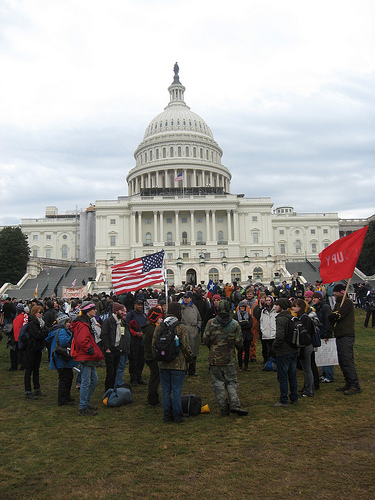 MEDIA ROOTS — The shameless political minions of insidious U.S. plutocrats and oligarchs continue to push civil rights down the
 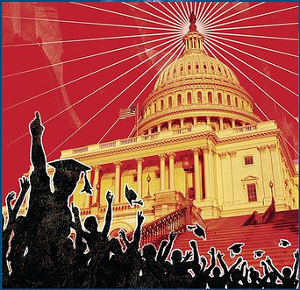 MEDIA ROOTS — Pacifica Radio’s
 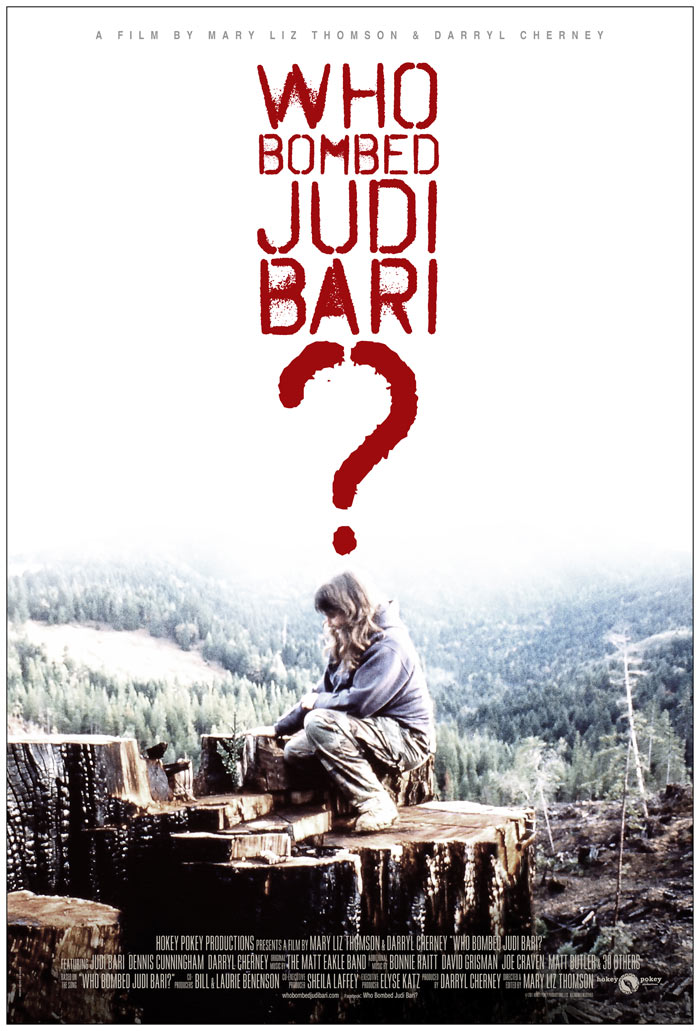 MEDIA ROOTS — Recently,
  MEDIA ROOTS — The U.S.
blindly took another giant step further into tyranny last week—no, really.
MEDIA ROOTS — The U.S.
blindly took another giant step further into tyranny last week—no, really.