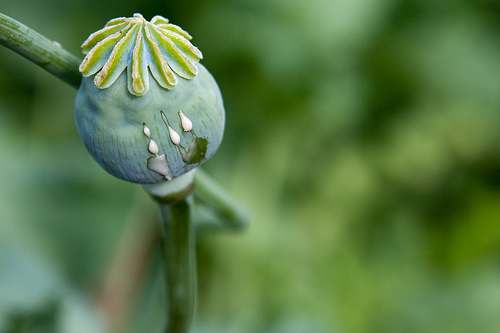
 Even though present-day Afghanistan flies under the news radar, it remains to be the longest military quagmire in US history. Aside from troops still occupying the country, thousands of private contractors are on the ground that the Pentagon can’t even account for. Considering how Obama’s foreign policy strategy has been to replace ground troops with drone strikes, the administration’s logic behind continuing the occupation remains unclear.
War has always been about resources and control. Alongside the supposed surprise discovery of Afghanistan’s $1 trillion wealth of untapped minerals, the Taliban had successfully eradicated the opium crop in the Golden Crescent before the US invasion. Now, more than 90% of the world’s heroin comes from the war torn country.
As reported by Global Research:
“Immediately following the October 2001 invasion, opium markets were restored…By early 2002, the opium price (in dollars/kg) was almost 10 times higher than in 2000. In 2001, under the Taliban opiate production stood at 185 tons, increasing to 3400 tons in 2002 under the US sponsored puppet regime of President Hamid Karzai.”
After more than twelve years of military occupation, Afghanistan’s opium trade isn’t just sustaining, it’s thriving more than ever before. According to a recent report from the UN Office on Drugs and Crime, 2013 saw opium production surge to record highs:
“The harvest this May resulted in 5,500 metric tons of opium, 49 percent higher than last year and more than the combined output of the rest of the world.”
Wow, that’s a lot of opium – and a lot of money being made. So, who is reaping the spoils?
***
How Opium Greed is Keeping US Troops in Afghanistan
Many people outright dismiss the notion of the CIA overseeing the trade of illegal drugs as crazy talk. However, history shows that it’s crazy not to entertain such a notion, especially during times of war profiteering.
In 2012, a Mexican government official from Juarez told Al Jazeera that the CIA and other international security forces “don’t fight drug traffickers” and that instead, the agency tries to “manage the drug trade.”
Back in the fifties, the CIA turned a blind eye to drug trafficking through the Golden Triangle while training Taiwanese troops against Communist China. As William Blum reports in Rogue State:
“The CIA flew the drugs all over Southeast Asia, to sites where the opium was processed into heroin, and to trans-shipment points on the route to Western customers.”
These are far from isolated incidents. During the eighties, the CIA financially and logistically backed anti-communist contras in Nicaragua who also happened to be international drug traffickers.
Former Representative Ron Paul elaborated on the CIA’s notorious corruption when speaking to a group of students about Iran-Contra:
“[Drug trafficking] is a gold mine for people who want to raise money in the underground government in order to finance projects that they can’t get legitimately. It is very clear that the CIA has been very much involved with drug dealings. We saw [Iran-Contra] on television. They were hauling down weapons and drugs back.”
Surprisingly, mainstream publications still regard the Iran-Contra CIA drug trafficking scandal as a ‘conspiracy theory.’ I explain why it’s not on Breaking the Set:
***
Iran-Contra and the CIA’s Cocaine Trafficking
Circumstantial evidence aside, there is no conclusive proof that the CIA is physically running opium out of Afghanistan. However, it’s hard to believe that a region under full US military occupation – with guard posts and surveillance drones monitoring the mountains of Tora Bora – aren’t able to track supply routes of opium exported from the country’s various poppy farms (you know, the ones the US military are guarding).
In today’s globalized world of rule-for-profit, one can’t discount the role that multinational corporations play in US foreign policy decisions either. Not only have oil companies and private military contractors made a killing off the occupation, big pharmaceutical companies, which collectively lobby over 250 million dollars annually to Congress, need opium latex to manufacture drugs for this pill happy nation. As far as the political elite funneling the tainted funds, the recent HSBC bank scandal exposed how trillions of dollars in black market sales are brazenly being laundered offshore.
Multinational corporations are in it for the long haul, despite how low public support is for the war. A little mentioned strategic pact has already been signed that will allow a US troop presence to remain in Afghanistan until 2024.
The US’ goal of sustained warfare to oversee the world’s opium trade has been alleged by many, including foreign military officials. In 2009, a former commander in the Russian invasion of Afghanistan, General Mahmut Gareev, said to RT:
“Americans themselves admit that drugs are often transported out of Afghanistan on American planes. Drug trafficking in Afghanistan brings them about 50 billion dollars a year – which fully covers the expenses tied to keeping their troops there…[the US military doesn’t] have any planned military action to eliminate the [Taliban].”
The unwinnable nature of the war becomes more apparent when learning that the US government was paying Taliban insurgents to protect supply routes and “switch sides” in an attempt to neutralize the insurgency. The logic of funding both sides of the war to “win” is too incomprehensible a concept to grasp. Clearly, this war is meant to be sustained.
Baseless rhetoric aside, here’s the hard, hypocritical truth: this government is fighting a multi-billion dollar ‘War on Drugs’ worldwide, resulting in thousands of deaths every year and millions of nonviolent drug users rotting away in prison. Yet, the US is at the very least protecting the largest source of the deadliest and most addictive drug on the planet. If not for the obvious, then why?
Written by Abby Martin for Media Roots
Follow me @AbbyMartin
Photo by Flickr user Beggs, thanks to Sherwood Ross for the quotes



 In light of the recently released torture report summary, we’re reminded that no government official ever went to jail for the years of systematic abuse – except for John Kiriakou, the CIA whistleblower who exposed the use of waterboarding.
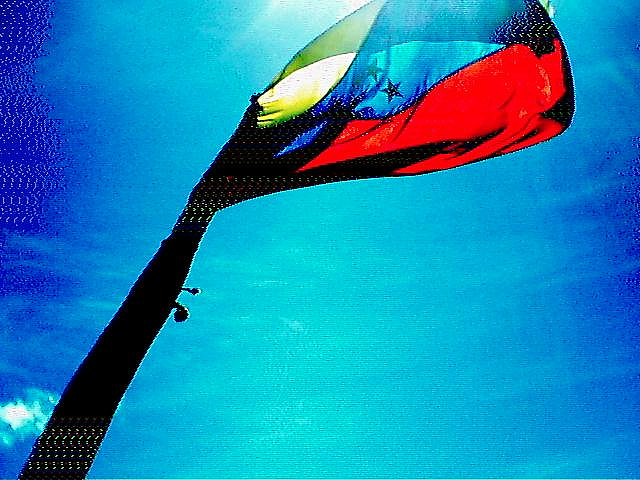 Two weeks ago, Obama made a bizarre announcement that Venezuela is an “extraordinary threat” to US national security and that he is “deeply concerned” about its human rights abuses – a declaration necessary to justify a new round of harsh sanctions.
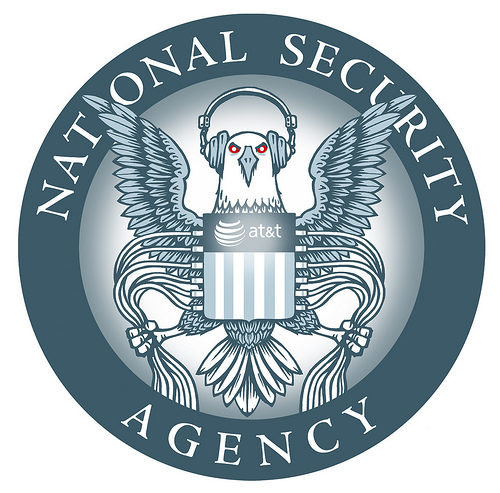 In the few public interviews given by NSA whistleblower Edward Snowden, he’s hinted at having access to documents that include CIA outpost locations and secret agents’ names. Yet Snowden has also outlined the agreement he made with journalists to vet the documents carefully, and consult with the government before every release to ensure no harm to national security.
 Even though present-day Afghanistan flies under the news radar, it remains to be the longest military quagmire in US history. Aside from troops still occupying the country, thousands of private contractors are on the ground that the Pentagon