White House Pressures Crowley to Resign

CNN– P.J. Crowley abruptly resigned Sunday as State Department spokesman over controversial comments he made about the Bradley Manning case.
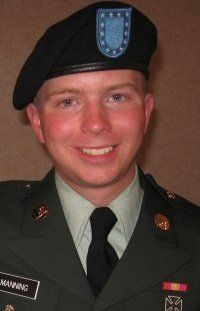
Sources close to the matter said the resignation, first reported by CNN, came under pressure from the White House, where officials were furious about his suggestion that the Obama administration is mistreating Manning, the Army private who is being held in solitary confinement in Quantico, Virginia, under suspicion that he leaked highly classified State Department cables to the website WikiLeaks.

Speaking to a small group at MIT last week, Crowley was asked about allegations that Manning is being tortured and kicked up a firestorm by answering that what is being done to Manning by Defense Department officials “is ridiculous and counterproductive and stupid.”

Crowley did add that “nonetheless, Bradley Manning is in the right place” because of his alleged crimes, according to a blog post by BBC reporter Philippa Thomas, who was present at Crowley’s talk.

“The unauthorized disclosure of classified information is a serious crime under U.S. law,” Crowley said in a statement Sunday. “My recent comments regarding the conditions of the pre-trial detention of Private First Class Bradley Manning were intended to highlight the broader, even strategic impact of discreet actions undertaken by national security agencies every day and their impact on our global standing and leadership.

Read full article about Crowley Resigns as State Department Spokesman.

© CNN 2011

Photo by flickr user Anna Tesar


Bradley Manning’s Forced Nudity to Occur Daily

SALON– To follow-up on yesterday’s observations about the prolonged forced nudity to which Bradley Manning has been subjected the last two days:  brig officials now confirm to The New York Times that Manning will be forced to be nude every night from now on for the indefinite future — not only when he sleeps, but also when he stands outside his cell for morning inspection along with the other brig detainees.  They claim that it is being done “as a ‘precautionary measure’ to prevent him from injuring himself.”  

Has anyone before successfully committed suicide using a pair of briefs — especially when under constant video and in-person monitoring?  There’s no underwear that can be issued that is useless for killing oneself?  And if this is truly such a threat, why isn’t he on “suicide watch” (the NYT article confirms he’s not)?  And why is this restriction confined to the night; can’t he also off himself using his briefs during the day? 

Let’s review Manning’s detention over the last nine straight months:  23-hour/day solitary confinement; barred even from exercising in his cell; one hour total outside his cell per day where he’s allowed to walk around in circles in a room alone while shackled, and is returned to his cell the minute he stops walking; forced to respond to guards’ inquiries literally every 5 minutes, all day, everyday; and awakened at night each time he is curled up in the corner of his bed or otherwise outside the guards’ full view.  Is there anyone who doubts that these measures — and especially this prolonged forced nudity — are punitive and designed to further erode his mental health, physical health and will?  As The Guardian reported last year, forced nudity is almost certainly a breach of the Geneva Conventions; the Conventions do not technically apply to Manning, as he is not a prisoner of war, but they certainly establish the minimal protections to which all detainees — let alone citizens convicted of nothing — are entitled.

Read full article about Bradley Manning’s Forced Nudity.

Written by Glenn Greenwald

© SALON 2011

Photo by EPA

U.S. Can’t Link Accused Army Private to Assange

MSNBC– U.S. military officials tell NBC News that investigators have been unable to make any direct connection between a jailed army private suspected with leaking secret documents and Julian Assange, founder of the whistleblowing website WikiLeaks.

The officials say that while investigators have determined that Manning had allegedly unlawfully downloaded tens of thousands of documents onto his own computer and passed them to an unauthorized person, there is apparently no evidence he passed the files directly to Assange, or had any direct contact with the controversial WikiLeaks figure.

Assange, an Australian national, is under house arrest at a British mansion near London, facing a Swedish warrant seeking his extradition for questioning on charges of rape. Assange has denied the allegations.

WikiLeaks’ release of secret diplomatic cables last year caused a diplomatic stir and laid bare some of the most sensitive U.S. dealings with governments around the world. It also prompted an American effort to stifle WikiLeaks by pressuring financial institutions to cut off the flow of money to the organization.

Continue reading about U.S. Can’t Link Accused Army Private to Assange.

© COPYRIGHT MSNBC, 2011

VBS Guide to North Korea


MR: VBS’s guide to North Korea is a disturbing look at inside one of the most closed off, totalitarian societies that exists on earth today. From the second that VBS creator Shane Smith steps foot into Kim Jong Il’s sheltered country, he realizes that everything he is about to encounter is a carefully constructed facade…

VBS– Getting into North Korea was one of the hardest and weirdest processes VBS has ever dealt with. After we went back and forth with their representatives for months, they finally said they were going to allow 16 journalists into the country to cover the Arirang Mass Games in Pyongyang. Then, ten days before we were supposed to go, they said, “No, nobody can come.” Then they said, “OK, OK, you can come. But only as tourists.” We had no idea what that was supposed to mean. They already knew we were journalists, and over there if you get caught being a journalist when you’re supposed to be a tourist you go to jail. We don’t like jail. And we’re willing to bet we’d hate jail in North Korea. But we went for it.

The first leg of the trip was a flight into northern China. At the airport, the North Korean consulate took our passports and all of our money, then brought us to a restaurant. We were sitting there with our tour group, and suddenly all the other diners left and these women came out and started singing North Korean nationalist songs. We were thinking, “Look, we were just on a plane for 20 hours. We’re jet-lagged. Can we just go to bed?” but this guy with our group who was from the LA Times told us, “Everyone in here besides us is secret police. If you don’t act excited then you’re not going to get your visa. So we got drunk and jumped up onstage and sang songs with the girls. The next day we got our visas. A lot of people we had gone with didn’t get theirs. That was our first hint at just what a freaky, freaky trip we were embarking on.

-Shane Smith, Vice Founder

Photo by flickr user yeowatzup

Torture, Secret Wars, U.S. Disdain for Justice & More

photo by jan kromerDemocracy Now! has spent this week examining the revelations behind the first installments of State cables released by WikiLeaks on Sunday. Below is a collection of the outlet’s interviews and broadcasts covering torture, renditions, secret U.S. War Ops in Pakistan, U.S. pressure on other countries to thwart justice, and the most startling leaks that have yet to come.


WikiLeaks Reveals U.S. Tried to Thwart Spanish Probes of Gitmo Torture and CIA Renditions

The latest disclosures from the massive trove of diplomatic cables published by WikiLeaks reveal U.S. officials tried to influence Spanish prosecutors and government officials to drop court investigations into torture at Guantánamo Bay and CIA extraordinary rendition flights. We speak to Scott Horton, an attorney specializing in international law and human rights and a contributing editor of Harper’s Magazine.


Leaked Cables Reveal U.S. Pressured Spain to Drop Case of Cameraman Killed in 2003 Attack on Journalists in Baghdad

Leaked U.S. embassy cables from Madrid reveal the United States pressured the Spanish government to close a court case brought by the family of a Spanish cameraman, José Couso. Couso was killed in Baghdad when a U.S. Army tank fired on the Palestine Hotel, which was filled with journalists, on April 8, 2003. Three U.S. soldiers have been indicted in Spanish court for Couso’s death. “I am outraged,” says Javier Couso, the brother of José Couso. “I can’t believe my government conspired with a foreign government… It seems we are citizens, or at least a small province, of the empire of the United States.”


Jeremy Scahill: WikiLeaks Cables Confirm Secret U.S. War Ops in Pakistan

Despite sustained denials by the Pentagon, the leaked cables from WikiLeaks confirm that U.S. military special operations forces have been secretly working with the Pakistani military to conduct offensive operations and coordinate drone strikes in the areas near the Afghan border. A U.S. embassy cable from October of 2009 states: “These deployments are highly politically sensitive because of widely-held concerns among the public about Pakistani sovereignty and opposition to allowing foreign military forces to operate in any fashion on Pakistani soil.” The cables confirm aspects of a story about the covert U.S. war in Pakistan published in The Nation magazine last year by investigative journalist and Democracy Now! correspondent Jeremy Scahill.


“We Have Not Seen Anything Yet”: Guardian Editor Says Most Startling WikiLeaks Cables Still to be Released

In the coming days, we are going to see some quite startling disclosures about Russia, the nature of the Russian state, and about bribery and corruption in other countries, particularly in Central Asia,” says Investigations Executive Editor David Leigh at the Guardian, one of the three newspapers given advanced access to the secret U.S. embassy cables by the whistleblower website, WikiLeaks. “We will see a wrath of disclosures about pretty terrible things going on around the world.” Leigh reviews the major WikiLeaks revelations so far, explains how the 250,000 files were downloaded and given to the newspaper on a thumb drive, and confirms the Guardian gave the files to the New York Times. Additional cables will be disclosed throughout the week.


U.N. Special Rapporteur Juan Méndez: Instead of Focusing on Assange, U.S. Should Address WikiLeaks Disclosure of Torture

One of the leaked U.S. State Department cables released by WikiLeaks urges diplomats to gather intelligence about “plans and intentions of member states or U.N. Special Rapporteurs to press for resolutions or investigations into U.S. counter-terrorism strategies and treatment of detainees in Iraq, Afghanistan or Guantanamo.” We speak to Juan Méndez, the new U.N. Special Rapporteur on Torture and Other Cruel, Inhuman and Degrading Treatment or Punishment. He has called on the United States to investigate and prosecute torture committed under former President George W. Bush. He also said he hopes to visit Iraq and Guantánamo Bay to probe widespread torture allegations. Méndez says, “We seem to be focusing on whether disclosing [the cables] merits some kinds of action against Julian Assange… I am very concerned about the documents that show that thousands of people first imprisoned by U.S. forces [were] transferred to the control of forces in Iraq and perhaps even in Afghanistan, where they knew they were going to be tortured.”


photograph by Jan Krömer