In light of the recently released torture report summary, we’re reminded that no government official ever went to jail for the years of systematic abuse – except for John Kiriakou, the CIA whistleblower who exposed the use of waterboarding.
During his 23 months behind bars, Kiriakou was constantly threatened with diesel therapy (disorienting prisoners by frequently moving them to different locations) for writing letters describing prison’s deplorable conditions.
Kiriakou was recently released, yet remains on house arrest where he is routinely harassed by law enforcement. The witch-hunt cost Kiriakou his pension, his dream home, and nearly two years of his life. Yet he says he would do it all over again if it meant going down on the right side of history.
I went to Kiriakou’s home for an interview about the torture report and accountability for the architects, in which he gives a grave warning to American citizens.
CIA Torture Whistleblower John Kiriakou: Wake Up, You’re Next
**
Right before Kiriakou went to prison, he came on Breaking the Set to talk about Obama’s war on whistleblowers and “look forward, not backward” policy regarding the Bush administration’s egregious war crimes.
CIA Whistleblower John Kiriakou: ‘If I Tortured, I’d Be Free’
It is beyond surreal that the only government official ever prosecuted in relation to the torture program is the man who exposed waterboarding to the media. Kiriakou may be free from his cell, but until every person involved in the top down implementation of these horrific crimes is sitting in theirs, there won’t be anything remotely resembling justice.
Glenn Greenwald was asked all-too-familiar stock questions on mainstream programs like Meet the Press and Charlie Rose during his book tour for No Place to Hide. Although he was put on the defense in almost every segment, Greenwald held firm and consistent when combating the adversarial tone of US establishment journalists.
Over the course of his high profile interviews, many may have missed his lengthier and more candid talks in Hamburg, Amsterdam and at Harvard. Here’s some of our favorite quotes from those lectures that you probably won’t hear on the corporate media.
Obama’s NSA Lies
“I think [Obama is] due a lot of credit because it really is impressive that he’s able to say those things with a straight face and not bursting out in laughter, I find that skill really really extraordinary, and he’s very good at it and I think we ought to acknowledge it in fairness.”
CIA Assesses Senator Obama
“The greatest hope for saving America’s war fighting ability and to stem the tide of anti-war sentiment in Europe was for then-Senator Barack Obama to become president, because what that would do is transform these wars from George Bush’s face, which the world had grown increasingly tired of and had been viewed as this kind of swagger and unilateral cowboy that was particularly hated in Europe, into this kind, sophisticated, progressive face of Barack Obama.”
“And by making Obama the face of these wars it would transform all this anti-war sentiment into people who were willing to acquiesce to the war if not outright support it. [The CIA] knew that he would continue all of these policies, but his branding was so pleasant and especially in Western Europe, so beloved that it would be an immense asset for the National Security State.”
Obama’s European Branding Power
“There’s so much rhetoric about the US government, [and Obama is] an effective salesmen around the world for this myth of American greatness. I think one of the principal things that this debate over the last year has done is open people’s eyes about the reality of president Obama vs. the image.”
Global Obama Tarnishing
“I live in Brazil where he had been beloved and across every Brazilian newspaper is very menacing pictures of him connecting him with spying.”
The Democrats
“We have been criticized very predictably and very inconsequentially from what I will call for just lack of a better term: ‘the Right’, which is, you know, primarily Democrats who voice this critique that our disclosures are going to help the terrorists and result in the deaths of innocent people and all of that. I was on CSPAN two days ago, and every time the host said ‘And now we’re going to go to the Democrat line’ I knew I was about to be called a traitor. It was completely reliable.”
Snowden = Russian False Flag
“Those very same people who had been saying just two weeks earlier that [Snowden] was clearly a Chinese spy suddenly switched on a dime saying obviously this is an operation by Vladimir Putin.”
“It’s really remarkable how seriously all of that has been taken despite the fact that there’s zero evidence to support any of it and mountains of evidence to negate it.”
Russia is Scary
“There is this amazing dynamic in American political discourse which is that certain words drive Americans instantly into hysteria and irrationality. One of them is terrorism, the minute you say that everybody screams and jumps under the bed, not quite as much as they did before but still.”
“The much scarier word for people is Russia, this is a word that if you really want to scare an American and make them go away just whisper Russia in their ear and they’ll start running down the street.”
“On television every interviewer would say to me ‘well what about Edward Snowden he must be completely miserable, i mean he’s in Russia‘ I guess they assume that all 160 million people who live in Russia are instantly and automatically miserable from the time of their birth until they die like it’s just one big gulag.”
The Role of Journalism
“The Washington Post, New York Times and other media outlets have been more aggressive because they would have been shamed if they hadn’t been.”
Passion in Journalism
“I think it’s much more powerful as a journalist to be honest about the way you see the world and the assumptions that you’re making than it is to try and deceive your readers into pretending that you float above opinion. I think that passion and vibrancy and soul are necessary for good journalism, the attempt to drain all that out of it has made journalism not just weak but boring and sort of neutered.”
Coordinated Scripts
“I’ve been pretty scornful of the notion that there is this active plotting among journalists and media outlets to coordinate their storyline.”
“Within 24 to 48 hours literally after we first introduced Snowden to the world, there was this immediate consensus among all these media elites that they were completely capable of taking this person that they had never heard of before and didn’t know the first thing about and were diagnosing him, like clinically diagnosing him, psychologically assessing all of his pathologies. They all settled on this coordinated script that he was a ‘fame seeking narcissist’ If you Google it you will find this phrase over and over again.”
“Where did that come from, that ‘fame seeking narcissist’ thing, I really want to know.”
Pretend Respect
“There’s all these unwritten rules that govern the ways journalists are supposed to behave.”
“You’re not supposed to be too aggressive in condemning the government, you’re supposed to pretend to have respect for their fearmongering claims about why you shouldn’t be publishing.”
Exploiting Sexual Vulnerabilities
“I never used to be able to understand why in response to the leaking of the Pentagon papers the response of the Nixon administration was to break into the office of his [Daniel Ellsberg’s] psychiatrist in the hope of obtaining his psycho-sexual secrets. It never made any sense to me. It seemed like the ultimate non sequitur, ‘Oh look we have documents showing that the US government has been systematically lying to us for years about the Vietnam war’ and the response would be ‘well Daniel Ellsberg is a swinger’.”
“It’s an incredibly effective means of excluding somebody from decent company, and making everything they say instantly dismissed for that reason.”
Privacy/Encryption
“There are chat programs such as Pidgin and OTR that provide relatively good protection, there’s the TOR browser that lets you use the internet anonymously, the Tails operating system.”
“The problem is all these names are pretty daunting to people who haven’t heard them before…I think the tech community needs to develop these tools to make them much more friendly…Once that happens and that will happen, encryption will become the default means of how people communicate on the internet.”
Email Privacy
“I do use PGP email, and in part I use it because I happen to have read a lot of NSA documents talking about how frustrated they are at their inability to invade it.”
“If you use PGP email, the NSA actually looks for the people who are using encryption, because in their twisted minds, your desire to shield our communications from their prying eyes is evidence that you are suspicious.”
Laura Poitras’ Snowden Film
“Amazingly [Laura Poitras] filmed virtually everything that took place in Hong Kong, our interaction with Snowden, all of the conversations we had, which is going to be in a documentary she releases in the Fall.”
**
Check out Greenwald’s lengthiest and best public appearances so far in May 2014:
Glenn Greenwald and Noam Chomsky on Edward Snowden & The Surveillance State
**
Glenn Greenwald at CATO Institute: No Place to Hide
**
The John Adams Institue Presents Glenn Greenwald: No Place to Hide
**
Richard Bacon Interviews Glenn Greenwald on BBC
**
Glenn Greenwald on The Kojo Nnamdi Show: State Surveillance & The Snowden Story
**
TV Brazil’s Alberto Dines Interviews Glenn Greenwald on NSA
Art is not just about catharsis, self-expression, and relaying powerful messages through symbolism – it also entails our imagination to mold art in its most natural form. By actively engaging with each other and harmonizing with the earth, we can cultivate a better path for future generations.
The Zeitgeist Media Festival is an annual event that bridges art and activism together in order to inspire and unify alternative communities. Being both an artist and activist myself, it was an honor to relay my political beliefs and artistic philosophy to such an open, energetic crowd.
Media Roots presents American Anthrax, a documentary comprised of news footage that establishes how everything you’ve been told about the Anthrax Attacks is a lie. Conceptualized, edited and produced by Robbie Martin, co-host of Media Roots Radio.
***
American Anthrax, by Robbie Martin
***
September 11, 2001, shook the United States to the core, a country that had been nearly untouchable since its democratic inception. However, immediately following this horrific tragedy, another equally as impactful ‘terrorist attack’ occurred when weaponized anthrax was sent to multiple Congressman and journalists through the U.S. Postal Service.
The attacks on the World Trade Center and the Pentagon were both one-time events that happened in two prominent cities. Unlike 9/11, the Anthrax Attacks localized terrorism and spread fear to every corner of American life, where the simple act of getting your mail could prove fatal. Five people died as a result of breathing in the deadly anthrax spores, including postal workers and one NY Post reporter. Countless others were infected.
The Bush administration initially tried to link this ‘second wave of terrorism’ to al-Qaeda. Once that talking point out-lived its usefulness, the official narrative began leaning towards Saddam Hussein and his mythological biological weapons program. Establishment propagandists like John Mccaine and ABC news reporters intentionally spread disinformation to plant the seed in the public mind that the anthrax came from Iraq, which eventually lead to Colin Powell’s infamous 2003 WMD speech at the UN.
All the while, the U.S. government was fully aware that the anthrax did not come from an external source, because the strain showed tell-tale signs of being a specific anthrax strain that was weaponized and manufactured by the U.S. military. Eventually, two different men were accused of being the perpetrators behind the attacks, yet no charges were ever brought to either of them. The first accused individual, Steven Hatfill, ended up being rewarded a multimillion dollar settlement from the government for being wrongly accused before any evidence was presented. The subsequent accused individual, Bruce Ivins, allegedly committed suicide while the FBI was trying to break him into confessing.
Ultimately, the FBI asked the National Academy of Sciences (NAS) to verify its evidence pointing to Ivins as the main suspect. Instead, the NAS concluded that the DNA in the anthrax sent in the mail was in fact not a match to the anthrax Ivins worked with. Before the National Academy of Sciences finished their independent investigation, the FBI rushed its pre-established conclusions about Ivins’ guilt to the press, and the case was closed. To this day, the FBI has never commented on the many glaring contradictions in the official narrative of the attacks, and Obama has threatened to veto any future investigation into them.
BREAKING THE SET— US Congressman, Dennis Kucinich, and Breaking the Set’s Abby Martin discuss accountability on the 10th anniversary of the Iraq war, Obama turning the US ‘Orwellian’, civil liberties, GMOs and other issues that have set him aside from the average establishment politician.
***
Congressman Dennis Kucinich on BTS
***
Abby Martin: “I’m really excited right now to introduce one of the few politicians I actually admire. I’m talking about Congressmand Dennis Kucinich, one of the most honest, credible politicians who ever served, a man who spent his 18-year tenure fighting for the issues, that Americans care the most about. From thewar in Iraq to the food we eat, Kucinich has always stood on the right side, the side of truth, which is why I’m honoured to have the chance to speak to Congressman Kucinich, himself. I first asked him about oil being a motivating factor in the Iraq War, particularly, in light of Bush’s former speechwriter coming out to validate that claim. And here’s what he had to say.”
Dennis Kucinich (c. 0:42): “Well, right from the beginning, it was very clear that there was no legitimate reason to go into Iraq. The only compelling reason would be to try to help corner the market on oil. It didn’t work out that way for those who thought that it would. But the fact of the matter is oil was so well-known to be the motivating factor, that when I ran for President in 2004, going across the country, I’d ask audiences, ‘Tell me what this is about, what this war is about, in three letters.’ And thousands of people would respond, simultaneously, OIL! It was never a secret.”
Abby Martin (c. 1:19): “Right. In 2007, Congressman, you actually introduced articles of impeachmentagainst George Bush and Dick Cheney. When you look at things like Nixon being ousted for wiretapping, Clinton being [impeached] for an affair, how is it that these two men could not be held accountable for initiating an illegal war based on known lies?”
Dennis Kucinich (c. 1:40): “Well, I think we have to place the responsibility for that on the shoulders of Democratic leadership because we could have moved forward with an impeachment, but the Democratic leadership wouldn’t do it. Now, there has to be accountability in a democracy. It is widely understood today that the war was based on lies. So, then, should not the thousands of Americans being killed, tens of thousands being injured, maybe a million innocent Iraqis died, perhaps, damage, in the hundreds of billions of dollars to Iraq—shouldn’t there be some accountability?
“So, what I’ve called for is a process of truth and reconciliation, like South Africa had many years ago, where leaders are required to come forward and state their role in the decision-making process. And, if they lie, then they’re subject to perjury charges. We need to clear the air in America. We need the truth. And it is time, since everyone knows it was based on a lie, then what’s wrong with calling those, who lied to us, forward to, not only, require an explanation, but also to clear the air?”
Abby Martin (c. 2:45): “Absolutely, I remember Pelosi, at the time, saying impeachment was off the table.”
Dennis Kucinich: “Right.”
Abby Martin: “I mean, could it be the Democrat leadership was scared they would open up their can of worms and somehow be complicit in the lies?”
Dennis Kucinich: “Well, you know, two-thirds of the Democrats voted against going to war. But the third, that did vote for it, were involved—as were their counterparts in the Senate—in establishment-type politics, that favoured war. Some of the leading senators, who have become exalted public figures, took a stand for that war. And they’ve never been held accountable, even politically. And, interestingly enough, it would seem as though to be qualified to speak on foreign policy—even still today—that you have to have been for the war, even though it was based on lies. That’s the kind of upside-down thinking, that continues to guide foreign policy decisions in Washington, D.C.”
Abby Martin (c. 3:37): “Well, speaking of upside-down policy, Obama’s reason for not prosecuting—or even investigating—the Bush officials was because he wanted to look forward, not backward. However, I can’t help, but wonder, why he continues to look backward to prosecute those who exposed war crimes, as whistleblowers, instead of the war criminals.”
Dennis Kucinich: “No good deed remains unpunished. And those who were the whistleblowers are being punished. Those who took us into a war based on lies are being celebrated. This inversion of reality isOrwellian. It needs to be, um, reckoned with. And that’s why I call for this period of truth and reconciliation. And, you know what? Isn’t all law enforcement about looking backwards?”
Abby Martin: “Right. Exactly.”
Dennis Kucinich: “Hello.”
Abby Martin: “Exactly. I couldn’t agree more. Let’s talk about the Afghanistan war, in terms of looking backwards. It was sold to us as a war of necessity in a post-9/11 world. Of course, Bush, at the time, had a 95% approval rating [after 9/11]. I don’t blame people for voting for it, thinking that we needed some form of retaliation [for 9/11]. But don’t you find the logic flawed now, looking back? Do you regret your vote to invade and occupy a country to find one man?”
Dennis Kucinich (c. 4:43): “No, we did not, Congress did not vote to invade and occupy. They voted to give the President the ability to respond to the attack on 9/11. And, frankly, I think it was appropriate thatthe United States struck at the training camps and made the point that you are not going to attack the United States with impunity—stop there, end of story—not to invade and occupyand, basically,try to break a country, that hasn’t been successfully conquered in modern times.
“So, this, too, points to the serious flaws in our foreign policy. We have an obligation to defend this country. And I don’t take a backseat to anyone in saying that if Americans are attacked, we have a right to defend ourselves. But it was absolutely—it was criminal to go and think we’re gonna knock off Afghanistan, occupy it, control it, remake a country where a lot of it is just a box of rocks.
“And what do we think—who do we think we are? This was a major flaw. It’s hubris, arrogance. And we need some explanation to the American people.”
Abby Martin (c. 5:55): “Absolutely. Let’s talk about your Presidential run in 2008. Both, you and Ron Paul were pretty much the leading anti-war figures, of course, on both sides of the spectrum, of both parties. I remember leftists and Libertarians, at the time, calling for you guys to be running mates because you were so united against the wars and for the restoration of our civil liberties.
“Now, these factions are so divided. They’re more divided than ever before. And it just seems like, without any representation, to have us—these dividing factions—fighting each other, instead of the forces we should be fighting against is really counter-intuitive. How do you think it got this way? And how can we unite these factions to really focus on cohesive, unified opposition again?”
Dennis Kucinich (c. 6:34): “Well, I think what Ron Paul and I proved is that there is plenty of space in American politics for a new movement, which goes across partisan lines, which embraces the concerns of Democrats and Republicans, liberals and conservatives, that’s based on the truth, on protecting the Constitution, taking care of our practical aspirations here, at home, and in sharply curtailing this aggression, that America has practised around the world.
“So, I think Ron Paul and I have been able to demonstrate this capacity of creating new possibilities. And, frankly, since the two parties continue to fail to address America’s economic problems, I think the American people, increasingly, will be looking, to alternatives, as we move toward the future.”
Abby Martin (c. 7:24): “I call it the two-party dictatorship, Congressman. Let’s talk about civil liberties, which is something that you had been very vocal about in your entire term. Rand Paul, his epic filibuster, not really supported by a single Democrat, I mean, how is that drones and due process are partisan issues now?”
Dennis Kucinich: “Well, they shouldn’t be. What happens in Washington is this: Whatever party holds the White House, their supporters in Congress try to protect the president of a party. But the president isn’t just the president of a party. He’s a president of the United States. And members of Congress aren’t just partisan participants in a process, they are United States Congresspersons. And what we have to remember is that, both, myself and Ron Paul—Rand’s father—raised this issue of the drones in the Congress relentlessly, brought a resolution in front of the Congress, forced a committee to have to consider to it.
“And, you know, finally people are starting to understand there are Constitutional issues here. And good for Senator Rand Paul for raising the issue on the floor of the Senate, but we haven’t resolved it. Other countries are gonna start to use drones. Imagine for a moment that if China thought—or any other nation—thought they could invade US airspace with a drone, as we invade other people’s airspace. We wouldn’t stand for it. How can we expect other countries to continue to standby, while we violate their sovereignty and their territorial integrity? And, then, on the domestic level, we gotta worry about the domestic use of drones. It won’t be long—mark my words—that law enforcement, domestically, will start using these drones to go after suspects using armed force.”
Abby Martin (c. 9:00): “Yeah, and they are counter-intuitive abroad. I mean, it doesn’t take a genius to see that killing people with drones is not a good way to fight, quote, ‘terrorism.’
“You served an epic 18-year run in Congress. You were one of the most vocal leaders against the establishment line time and time again. When you were redistricted, did you feel you were deliberately gerrymandered out of office because of your politics?”
Dennis Kucinich: “By the Democrats, not by the Republicans.”
Abby Martin: “Wow.”
Dennis Kucinich: “It was Democrats in the Ohio legislature who went out of their way to totally distort the map in Ohio and to cut my district up into four pieces, making it impossible for me to win.
“Now, I can tell you, I don’t have any—that’s just a fact. I’m not bitter about it. You know? I still have a home in Washington and a home in Cleveland. I can occasionally see the light of the Capitol on. I just wanna know who’s home.”
Abby Martin: “Unbelievable when your own party turns against the ideals, that this country was founded on.
“When you did leave, Congressman, the media portrayed you as fringe. I mean they even called you the Congressman with the most wacky ideas. Yet, the majority of Americans support what you stood up for. How is it that this depiction is even allowed to exist? And what damage does it do when people feel they are marginalised for sharing views, that you had?”
Dennis Kucinich: “Well, one, it doesn’t hurt my feelings. Two, it never changed my position. When you stand up for the truth, it’s very easy to understand that you take on certain interest groups, who are gonna try to marginalise you.
“It is interesting, as you point out, that someone would try to characterise, as fringe, having opposed the war in Iraq based on facts, having challenged those who made the decisions, that cost our troops, and our Nation, and the Iraqi people so dearly, having challenged other wars, and have proven to be right again and again and again. But you know what that means. If the truth is at the fringe, then what position is being celebrated?”
Abby Martin: “Exactly. And speaking from an inside perspective—you’ve been inside the system for so long—when you look at things like Monsanto, like Vermont not even being able to pass a labelling law because of the fear of a lawsuit from Monsanto—I mean, you were also one of the only people to try to get GMOs labelled.”
Dennis Kucinich: “1999.”
Abby Martin: “What does this say? Do corporations, essentially, have more power than voter resolutions and—”
Dennis Kucinich: “Yes.”
Abby Martin: “—how do—”
Dennis Kucinich: “Yes, after Buckley v. Valeo and Citizens United [v. Federal Election Commission], corporations took enormous power over our government. Monsanto, look, they were able to get the Bush Administration, in its waning days, to be able to claim—the first Bush Administration—to be able to claim in 1993 that genetically modified organisms were the functional equivalent of conventional food. No science based on that at all. But the dollar bill has a science all of its own.
“And, so, now, you have hundreds of millions of acres of crops, that have been planted with genetically modified organisms used to do that. We can’t—our markets are closing in Europe, as a result. People don’t want these crops to come in. And, even more than that, we have no idea, as to the effects with respect toallergenicity, toxicity, functional characteristics, antibiotic resistance. We’re part of a grand experiment now in our food. You know, this is another one of the reasons why I eat organic and I’m a vegan.”
Abby Martin: “Indeed. Thank you for bringing those fringe ideas to the mainstream and standing up to the truth, that so many of us don’t have a voice to share in the system. Thank you so much, Congressman Kucinich.”
Dennis Kucinich: “Thank you.”
Abby Martin: “I’m a huge fan.”
Dennis Kucinich: “Thank you.”
Transcript by Felipe Messina for Media Roots and Breaking the Set.



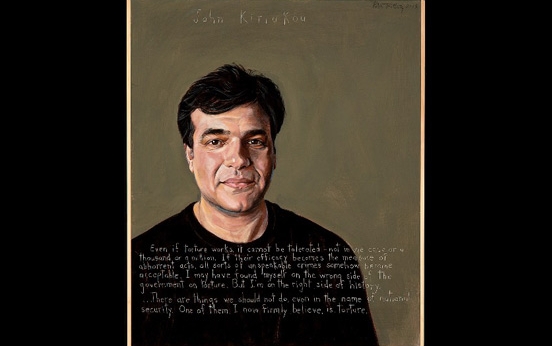 In light of the recently released torture report summary, we’re reminded that no government official ever went to jail for the years of systematic abuse – except for John Kiriakou, the CIA whistleblower who exposed the use of waterboarding.
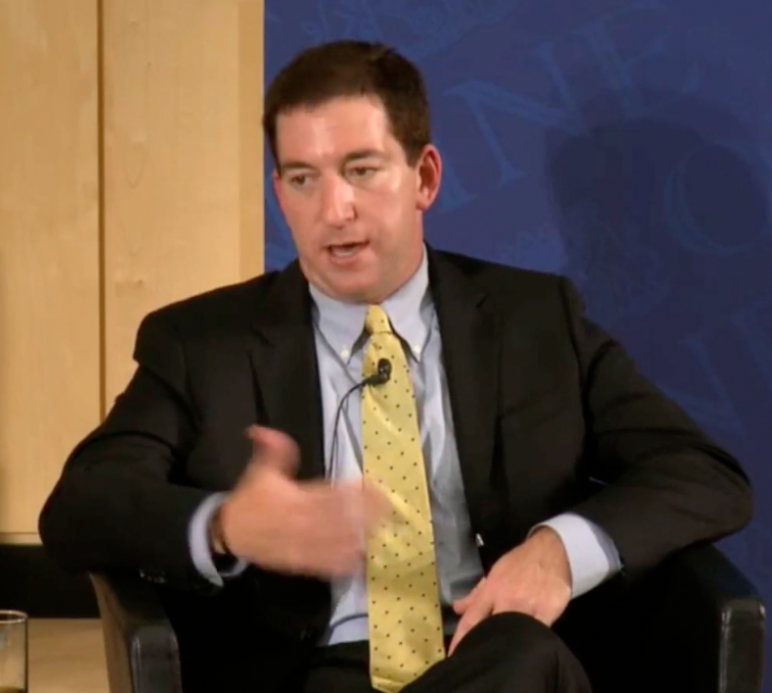 Glenn Greenwald was asked all-too-familiar stock questions on mainstream programs like Meet the Press and Charlie Rose during his book tour for No Place to Hide. Although he was put on the defense in almost every segment, Greenwald held firm and consistent when combating the adversarial tone of US establishment journalists.
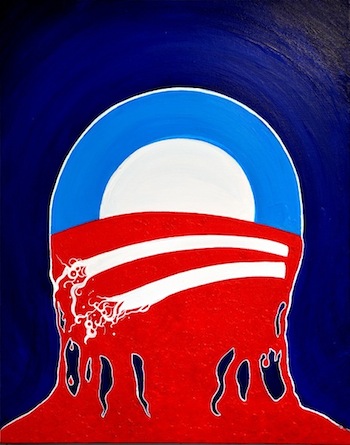 Art is not just about catharsis, self-expression, and relaying powerful messages through symbolism – it also entails our imagination to mold art in its most natural form. By actively engaging with each other and harmonizing with the earth, we can cultivate a better path for future generations.
 The attacks on the World Trade Center and the Pentagon were both one-time events that happened in two prominent cities. Unlike 9/11, the Anthrax Attacks localized terrorism and spread fear to every corner of American life, where the simple act of getting your mail could prove fatal. Five people died as a result of breathing in the deadly anthrax spores, including postal workers and one NY Post reporter. Countless others were infected.