How Goldman Sachs Created the Food Crisis

FOREIGN POLICY– Demand and supply certainly matter. But there’s another reason why food across the world has become so expensive: Wall Street greed.

It took the brilliant minds of Goldman Sachs to realize the simple truth that nothing is more valuable than our daily bread. And where there’s value, there’s money to be made. In 1991, Goldman bankers, led by their prescient president Gary Cohn, came up with a new kind of investment product, a derivative that tracked 24 raw materials, from precious metals and energy to coffee, cocoa, cattle, corn, hogs, soy, and wheat.

They weighted the investment value of each element, blended and commingled the parts into sums, then reduced what had been a complicated collection of real things into a mathematical formula that could be expressed as a single manifestation, to be known henceforth as the Goldman Sachs Commodity Index (GSCI).

For just under a decade, the GSCI remained a relatively static investment vehicle, as bankers remained more interested in risk and collateralized debt than in anything that could be literally sowed or reaped.

Then, in 1999, the Commodities Futures Trading Commission deregulated futures markets. All of a sudden, bankers could take as large a position in grains as they liked, an opportunity that had, since the Great Depression, only been available to those who actually had something to do with the production of our food.

Change was coming to the great grain exchanges of Chicago, Minneapolis, and Kansas City — which for 150 years had helped to moderate the peaks and valleys of global food prices. Farming may seem bucolic, but it is an inherently volatile industry, subject to the vicissitudes of weather, disease, and disaster.

The grain futures trading system pioneered after the American Civil War by the founders of Archer Daniels Midland, General Mills, and Pillsbury helped to establish America as a financial juggernaut to rival and eventually surpass Europe. The grain markets also insulated American farmers and millers from the inherent risks of their profession. The basic idea was the “forward contract,” an agreement between sellers and buyers of wheat for a reasonable bushel price — even before that bushel had been grown.

Not only did a grain “future” help to keep the price of a loaf of bread at the bakery — or later, the supermarket — stable, but the market allowed farmers to hedge against lean times, and to invest in their farms and businesses. The result: Over the course of the 20th century, the real price of wheat decreased (despite a hiccup or two, particularly during the 1970s inflationary spiral), spurring the development of American agribusiness. After World War II, the United States was routinely producing a grain surplus, which became an essential element of its Cold War political, economic, and humanitarian strategies — not to mention the fact that American grain fed millions of hungry people across the world.

Read more about How Goldman Sachs Created the Food Crisis

© 2011 Foreign Policy

Photo by Flickr user Tamaki
 

Posted in Uncategorized | 1 Reply

Major Corporations Evade Federal Income Taxes

THINK PROGRESS– Today, hundreds of thousands of people comprising a Main Street Movement — a coalition of students, the retired, union workers, public employees, and other middle class Americans — are in the streets, demonstrating against brutal cuts to public services and crackdowns on organized labor being pushed by conservative politicians. These lawmakers that are attacking collective bargaining and cutting necessary services like college tuition aid and health benefits for public workers claim that they have no choice but than to take these actions because both state and federal governments are in debt.

But it wasn’t teachers, fire fighters, policemen, and college students that caused the economic recession that has devastated government budgets — it was Wall Street. And as middle class workers are being asked to sacrifice, the rich continue to rig the system, dodging taxes and avoiding paying their fair share.

In an interview with In These Times, Carl Gibson, the founder of US Uncut, which is organizing some of today’s UK-inspired massive demonstrations against tax dodgers, explains that while ordinary Americans are being asked to sacrifice, major corporations continue to use the rigged tax code to avoid paying any federal taxes at all. As he says, if you have “one dollar” in your wallet, you’re paying more than the “combined income tax liability of GE, ExxonMobil, Citibank, and the Bank of America“:

[Gibson] explains, “I have one dollar in my wallet. That’s more than the combined income tax liability of GE, ExxonMobil, Citibank, and the Bank of America. That means somebody is gaming the system.”

Indeed, as politicians are asking ordinary Americans to sacrifice their education, their health, their labor rights, and their wellbeing to tackle budget deficits, some of the world’s richest multinational corporations are getting away with shirking their responsibility and paying nothing. ThinkProgress has assembled a short but far from comprehensive list of these tax dodgers — corporations which have rigged the tax system to their advantage so they can reap huge profits and avoid paying taxes:

BANK OF AMERICA: In 2009, Bank of America didn’t pay a single penny in federal income taxes, exploiting the tax code so as to avoid paying its fair share. “Oh, yeah, this happens all the time,” said Robert Willens, a tax accounting expert interviewed by McClatchy. “If you go out and try to make money and you don’t do it, why should the government pay you for your losses?” asked Bob McIntyre of Citizens for Tax Justice. The same year, the mega-bank’s top executives received pay “ranging from $6 million to nearly $30 million.”

BOEING: Despite receiving billions of dollars from the federal government every single year in taxpayer subsidies from the U.S. government, Boeing didn’t “pay a dime of U.S. federal corporate income taxes” between 2008 and 2010.

CITIGROUP: Citigroup’s deferred income taxes for the third quarter of 2010 amounted to a grand total of $0.00. At the same time, Citigroup has continued to pay its staff lavishly. “John Havens, the head of Citigroup’s investment bank, is expected to be the bank’s highest paid executive for the second year in a row, with a compensation package worth $9.5 million.”

EXXON-MOBIL: The oil giant uses offshore subsidiaries in the Caribbean to avoid paying taxes in the United States. Although Exxon-Mobil paid $15 billion in taxes in 2009, not a penny of those taxes went to the American Treasury. This was the same year that the company overtook Wal-Mart in the Fortune 500. Meanwhile the total compensation of Exxon-Mobil’s CEO the same year was over $29,000,000.

GENERAL ELECTRIC: In 2009, General Electric — the world’s largest corporation — filed more than 7,000 tax returns and still paid nothing to U.S. government. They managed to do this by a tax code that essentially subsidizes companies for losing profits and allows them to set up tax havens overseas. That same year GE CEO Jeffery Immelt — who recently scored a spot on a White House economic advisory board — “earned total compensation of $9.89 million.” In 2002, Immelt displayed his lack of economic patriotism, saying, “When I am talking to GE managers, I talk China, China, China, China, China….I am a nut on China. Outsourcing from China is going to grow to 5 billion.”

WELLS FARGO: Despite being the fourth largest bank in the country, Wells Fargo was able to escape paying federal taxes by writing all of its losses off after its acquisition of Wachovia. Yet in 2009 the chief executive of Wells Fargo also saw his compensation “more than double” as he earned “a salary of $5.6 million paid in cash and stock and stock awards of more than $13 million.”

In the coming months, politicians across the country are going to tell Americans that the only way to stave off huge deficit and balance the budgets is by gutting programs for the poor, eviscerating support for the middle class, eliminating labor rights, and decimating the government’s ability to serve the public interest. This is a lie. The United States is the richest country in the history of the world, and income inequality is higher now than it has been at any time since the 1920′s, with the top “top 1 percentile of households [taking] home 23.5 percent of income in 2007.”

It is simply unfair for Main Street Americans who’ve already been battered by one of the worst economic crises in our history to have to continue to sacrifice while the rich and well-connected continue to rip off taxpayers and avoid paying their fair share. That’s why a Main Street Movement consisting of Americans who are fed up with the status quo is rocking the nation, and one of its first targets should be tax dodgers like Bank of America and Boeing.

Written by Zaid Jilani

© 2011 Center for American Progress Action Fund

Photo by flickr user J_D_R

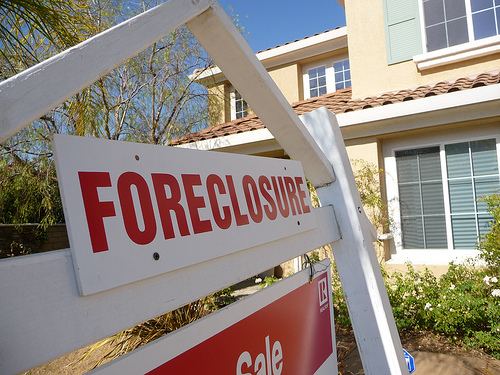
Mortgage Giants Leave Legal Bills to the Taxpayers

NY TIMES– Since the government took over Fannie Mae and Freddie Mac, taxpayers have spent more than $160 million defending the mortgage finance companies and their former top executives in civil lawsuits accusing them of fraud. The cost was a closely guarded secret until last week, when the companies and their regulator produced an accounting at the request of Congress.

The bulk of those expenditures — $132 million — went to defend Fannie Mae and its officials in various securities suits and government investigations into accounting irregularities that occurred years before the subprime lending crisis erupted. The legal payments show no sign of abating.

Documents reviewed by The New York Times indicate that taxpayers have paid $24.2 million to law firms defending three of Fannie’s former top executives: Franklin D. Raines, its former chief executive; Timothy Howard, its former chief financial officer; and Leanne Spencer, the former controller.

Late last year, Randy Neugebauer, Republican of Texas and now chairman of the oversight subcommittee of the House Financial Services Committee, requested the figures from the Federal Housing Finance Agency. It is the regulator charged with overseeing the mortgage finance companies and acts as their conservator, trying to preserve the company’s assets on behalf of taxpayers.

“One of the things I feel very strongly about is we need to be doing everything we can to minimize any further exposure to the taxpayers associated with these companies,” Mr. Neugebauer said in an interview last week.

It is typical for corporations to cover such fees unless an executive is found to be at fault. In this case, if the former executives are found liable, the government can try to recoup the costs, but that could prove challenging.

Read more about the Mortgage Giants Leaving Legal Bills to Taxpayers

Photo by flickr user respres


© COPYRIGHT NY TIMES, 2011

Godman Sachs Messages Show it Thrived as Economy Fell

NY TIMES– In late 2007, as the mortgage crisis gained momentum and many banks were suffering losses, Goldman Sachs executives traded e-mail messages saying that they would make “some serious money” betting against the housing markets.

The messages, released Saturday by the Senate Permanent Subcommittee on Investigations, appear to contradict statements by Goldman that left the impression that the firm lost money on mortgage-related investments.

In the messages, Lloyd C. Blankfein, the bank’s chief executive, acknowledged in November 2007 that the firm had lost money initially. But it later recovered by making negative bets, known as short positions, to profit as housing prices plummeted. “Of course we didn’t dodge the mortgage mess,” he wrote. “We lost money, then made more than we lost because of shorts.”

He added, “It’s not over, so who knows how it will turn out ultimately.”

In another message, dated July 25, 2007, David A. Viniar, Goldman’s chief financial officer, reacted to figures that said the company had made a $51 million profit from bets that housing securities would drop in value. “Tells you what might be happening to people who don’t have the big short,” he wrote to Gary D. Cohn, now Goldman’s president.

Actions taken by Wall Street firms during the housing collapse have become a major factor in the contentious debate over financial reform. In his weekly radio address on Saturday,President Obama said Wall Street had “hurt just about every sector of our economy” and again pressed the case for tighter regulation. On Monday, Senate Democrats will try to prevent a Republican filibuster in the first major test of the administration’s effort to push through legislation.

Goldman on Saturday denied it made a significant profit on mortgage-related products in 2007 and 2008. It said the subcommittee had “cherry-picked” e-mail messages from the nearly 20 million pages of documents it provided. This sets up a showdown between the Senate subcommittee and Goldman, which has aggressively defended itself since theSecurities and Exchange Commission filed a security fraud complaint against it nine days ago. On Tuesday, seven current and former Goldman employees, including Mr. Blankfein, are expected to testify at a Congressional hearing.

Continue reading about Goldman Sachs E-mail Messages.

© COPYRIGHT NY TIMES, 2010

Top 10 Ways to Spend a Goldman Sachs Bonus

CHRISTIAN SCIENCE MONITOR– Besides chest-thumping fourth-quarter earnings, Goldman Sachs also announced its bonus pool on Thursday. At $16.2 billion, the total is 20 percent lower than the firm’s 2007 level but still amounts to an average of just under $500,000 per employee.

If you’re picky, it’s only $498,000. Since it’s an average, a few people will rake in a lot, lot more and most Goldman employees will make less than half a million. Federal taxes will whittle that down to about $324,000. So what does that get you these days?

Here are our Top 10 things to buy with an average Goldman’s bonus:

10. 3,240 homes in Detroit

Homes are being auctioned off by the local section of Housing and Urban Development for as low as $50, but call it an even $100 per house. You’d buy some goodwill as well as a few real fixer-uppers through this purchase. Coupled with a potential tax incentive for refurbishing homes with green appliances and other energy-saving improvements, you could make a tidy profit – and be well on your way to your own private housing bubble.

9. Four years at Harvard Business School

You already know how business really works. Now spend a few years learning how it’s supposed to work. Harvard currently pegs the total cost of attendance at $76,600 per year, you and a friend could each take a trip through with $18,000 left over for an awesome spring break adventure. [Editor’s note: This section was adjusted to reflect the length of the MBA curriculum.]

8. Five trips around the world

An around-the-world plane ticket to 29 destinations would cost a high-end estimate of $10,000, according to AirTreks.com. Setting aside $50,000 or so to make sure you’re not having to crash in youth hostels, you could outdo Magellan.

7. 40 cars

Forget Bentleys, Beamers and Benzs. It’s the Tata Nano that’s hot. The Indian company says it will introduce the car in the US and the European Union in the near future at around $8,000. Your bonus could have you driving a different one every day of the month, with a few spares in case you prefer driving to dinner in a brand-new car.

6. 16,200 stars

At only $20 a pop from StarNamer, you could name your own chunk of space. If all of Goldman’s nearly 20,000 employees, pitched in, they could control 0.3 percent of the Milky Way. And that’s before negotiating a group discount.

5. Visit to space

Virgin Galactic charges $200,000 for a trip to space. With a lifetime of VIP treatment from Sir Richard Branson to boot, this might be the easiest sell on the list.

Continue reading about the Top Ten Things to Buy with a Goldman Sachs Bonus.

© COPYRIGHT CHRISTIAN SCIENCE MONITOR, 2010

Photo by Sos.de flickr user