
Censorship on the Frontline of the Economic Collapse


February 2010

PEACE REVOLUTIONA Wall Street Whistleblower Proves That Money Never Sleeps.

Vancouver documentary filmmaker Paul Verge brings us a revealing interview which exposes the (Who, What, When, Where, Why and How) of the recent economic decline, how it was legislated into existence, defended by corporate media and political “watch-dogs”; and allowed to drain America of nearly $200 Trillion Dollars… through a series of Ponzi-Schemes which could have been exposed years earlier… but weren’t.

Officially titled; 20/20 Hindsight: CENSORSHIP on the Frontline, this interview also includes solutions, documents and references, and asks only that you consider the information- think for yourself- and communicate with others in order to achieve a higher-level of awareness.

This presentation is offered commercial-free as a public service thanks to an international joint-venture between Divergent Films Canada, http://www.TragedyandHope.com and http://www.PeaceRevolution.org

A unique DVD / DVD-ROM offers the main feature (20/20 Hindsight: CENSORSHIP on the Frontline) with bonus features of: 1) Project Constellation (2006), 2) The Peace Revolution Podcast: The Million Dollar Education (2010), and 3) a DVD-ROM feature containing some of the most useful media files you’ll ever discover.

If you would like a dvd, you can donate $10 at http://www.PeaceRevolution.com ); or simply donate $10 to any of the independent media sites listed below; who have (since 2006) supported our work and are authorized to distribute our productions as our THANKS- to support their ongoing productions (and they keep the donation so their projects can grow as well!)

http://www.Meria.net

http://www.GnosticMedia.com

http://www.DeadlineLive.info

http://www.MediaMonarchy.com

http://www.CorbettReport.com

You are the nervous system of this planet… spread this everywhere.

Photo by J_D_R/Flickr
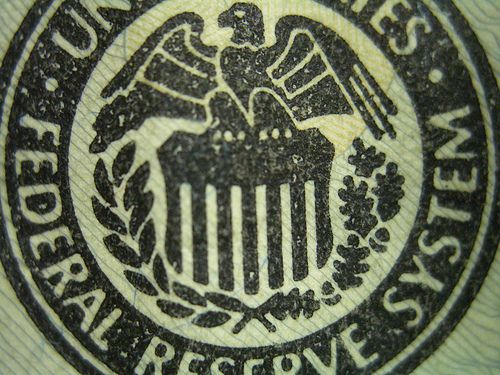
Full Fed Audit Amendment Voted Down in Senate

FORBES– Today, the U.S. Senate voted 62 to 37 against an amendment to allow greater transparency at the Federal Reserve.

This amendment was introduced to counter a weaker amendment that would have required only a one-time audit just of Fed emergency programs. The new amendment was similar to the original H.R. 1207 audit bill introduced by Congressman Ron Paul and added to the House financial reform package.

“The Sanders Amendment is no substitute for a complete and thorough audit of the Fed,” said John Tate, President of Campaign for Liberty. “With this vote, we now have a record of those who really want transparency and those who only pay lip service to it while upholding the status quo.”

If the entire financial regulation bill makes it out of the Senate, it heads to the House, where House Financial Services Committee Chairman Barney Frank will choose which version to move forward on.

“The Dodd bill itself is just another bad piece of legislation, which will benefit no one except the Fed and its friends at big banks,” said Tate. “It institutionalizes bailouts for banks and subsidizes risky financial decisions.”

“Despite what happens with the financial regulation bill, we will continue pushing Congress for an up or down vote on H.R. 1207, which is the only full audit to allow true transparency in our financial system.”

© FORBES, 2010

Photo by LateNightTaksForce

Obama Urges Senate Action on Finance Reforms

RAW STORY– US President Barack Obama on Saturday urged senators to grant the Federal Reserve a dramatic expansion of its regulatory powers and to establish a new consumer protection committee to help safeguard Americans from Wall Street’s excesses.

“These reforms are essential,” Obama said in his weekly radio address.

“As I’ve urged over the past year, we need common-sense rules that will allow our markets to function fairly and freely while reining in the worst practices of the financial industry.”

On Monday, the Senate banking committee will debate a proposal by Democratic Senator Christopher Dodd that is designed to halt what he sees as abuse and excess by financial firms.

Dodd’s bill would empower the Federal Reserve to conduct oversight across the financial sector, putting insurance companies and even smaller lenders under their sway.

Federal Reserve Chairman Ben Bernanke has disclosed in public that with the bank’s expanded framework, it assumes the coming elimination of “minimum reserve requirements” for banking institutions.

Unhinging banks from even basic deposit standards would essentially create a class above the daily requirements of capitalism, resting atop a pool of funds with infinite depth, removing the need for what’s currently known as “fractional reserve banking.”

Read full article about Obama Urges Senate Action on Finance Reforms.

© 2010 RAW STORY

This video was published to the Internet by the White House on March 20, 2010.

U.S. Financial Rescue May Reach $23.7 Trillion

BLOOMBERG– U.S. taxpayers may be on the hook for as much as $23.7 trillion to bolster the economy and bail out financial companies, said Neil Barofsky, special inspector general for the Treasury’s Troubled Asset Relief Program.

The Treasury’s $700 billion bank-investment program represents a fraction of all federal support to resuscitate the U.S. financial system, including $6.8 trillion in aid offered by the Federal Reserve, Barofsky said in a report released today.

“TARP has evolved into a program of unprecedented scope, scale and complexity,” Barofsky said in testimony prepared for a hearing tomorrow before the House Committee on Oversight and Government Reform.

Treasury spokesman Andrew Williams said the U.S. has spent less than $2 trillion so far and that Barofsky’s estimates are flawed because they don’t take into account assets that back those programs or fees charged to recoup some costs shouldered by taxpayers.

Read more about U.S. Financial Rescue May Reach $23.7 Trillion.

© 2009 Bloomberg

Congress Promises Bankers $4 Trillion for Next Bailout

BLOOMBERG– To close out 2009, I decided to do something I bet no member of Congress has done – actually read from cover to cover one of the pieces of sweeping legislation bouncing around Capitol Hill. Hunkering down by the fire, I snuggled up with H.R. 4173, the financial-reform legislation passed earlier this month by the House of Representatives. The Senate has yet to pass its own reform plan. The baby of Financial Services Committee Chairman Barney Frank, the House bill is meant to address everything from too-big-to-fail banks to asleep-at-the-switch credit-ratings companies to the protection of consumers from greedy lenders.

I quickly discovered why members of Congress rarely read legislation like this. At 1,279 pages, the “Wall Street Reform and Consumer Protection Act” is a real slog. And yes, I plowed through all those pages. The reading was especially painful since this reform sausage is stuffed with more gristle than meat. At least, that is, if you are a taxpayer hoping the bailout train is coming to a halt. If you’re a banker, the bill is tastier. While banks opposed the legislation, they should cheer for its passage by the full Congress in the New Year: There are huge giveaways insuring the government will again rescue banks and Wall Street if the need arises.

Here are some of the nuggets I gleaned from days spent reading Frank’s handiwork:

– For all its heft, the bill doesn’t once mention the words “too-big-to-fail,” the main issue confronting the financial system. Admitting you have a problem, as any 12- stepper knows, is the crucial first step toward recovery.
– Instead, it supports the biggest banks. It authorizes Federal Reserve banks to provide as much as $4 trillion in emergency funding the next time Wall Street crashes. So much for “no-more-bailouts” talk. That is more than twice what the Fed pumped into markets this time around. The size of the fund makes the bribes in the Senate’s health-care bill look minuscule.
– Oh, hold on, the Federal Reserve and Treasury Secretary can’t authorize these funds unless “there is at least a 99 percent likelihood that all funds and interest will be paid back.” Too bad the same models used to foresee the housing meltdown probably will be used to predict this likelihood as well.

Read full article about Congress Promising Trillions.

David Reilly is a Bloomberg News columnist.

© BLOOMBERG 2009
