Oakland Police Search Without Warrants

EAST BAY EXPRESS– On a gloomy recent morning in West Oakland, tenants at the David Gray Building — or, Off-Ramp Studios, as everyone who lives there calls it — stood in the hallways outside their lofts. They gathered around their doors in nervous clusters and spoke in hushed tones, wondering aloud whether they should head to work or stay and observe while two Oakland police officers, two building services code enforcers, a fire inspector, and three property management representatives entered all of their units one by one.

Traditionally the entire procedure would have required a search warrant. But on this day, the group of cops and city officials were operating under a little-known Oakland city program, called “SMART” — Specialized Multi-Agency Response Team — that some legal experts say may be unconstitutional. That’s because they enter people’s homes without consent or a warrant.

At the Off-Ramp Studios, they also entered one loft when no one was home. It was Unit 103. They knocked on the locked door and got no response. After about a minute of waiting, the building manager, who was carrying a tray of keys, opened the door, and everyone entered.

Inside were the remnants of a large, multi-level grow operation, including what appeared to be psilocybin mushroom caps and potted marijuana plants that had been sawed off. There also was evidence of methamphetamine production, according to fire inspector Vincent Crudele, who called the unit a potential felony crime scene. The officers hauled away large Ziplock bags filled with evidence seized from the inspection, and Crudele ordered the unit to be completely cleaned out by property management within 48 hours.

A week prior to the search, Crudele showed up at the Off-Ramp for a preliminary check in response to complaints from one tenant about an open party being planned by another tenant, said Frank Flores, director of development for Madison Park, the building’s leasing agent. Crudele said he noticed the smell of marijuana emanating from one particular unit — 103 — and decided then to schedule the SMART inspection for one week later.

For Crudele, having police officers accompany city inspectors during a SMART inspection ensures security in potentially volatile situations. “It’s a safety issue for us,” he said. “We have limited policing capabilities. If part of the populace is doing something illegal — that creates a problem for me. They may not want to cooperate.”

However, Northern California ACLU staff attorney Michael Risher questioned the legality of searching people’s homes without a warrant or consent. He also argued that it’s not all that burdensome to go down to the courthouse, swear-out an affidavit, and get a legitimate search warrant to look for illegal drugs or real safety hazards.

Read full article HERE.

© EAST BAY EXPRESS, 2010
Charges Announced for Soldier Accused of Leaking Video

Jul6 6, 2010

NY TIMES– An Army soldier in Iraq who was arrested for leaking a video of a deadly American helicopter attack here in 2007 has also been charged with downloading more than 150,000 highly classified diplomatic cables that could, if made public, reveal the inner workings of American embassies around the world, the military here announced on Tuesday.

The full contents of the cables remain unclear but according to formal charges filed on Monday, it appeared that a disgruntled soldier working at a remote base east of Baghdad gathered some of the most guarded, if not always scandalous secrets of American diplomacy. He disclosed at least 50 of the cables “to a person not entitled to receive them.”

With the charges, a case that stemmed from the furor over a graphic and fiercely contested video of an American helicopter killing 12 people, including a reporter and a driver for Reuters, mushroomed into a far more extensive and potentially embarrassing leak. The charges cited only one cable by name, “Reykyavik 13,” which appeared to be one made public by Wikileaks.org, a Web site devoted to disclosing the secrets of governments and corporations. The website decoded and in April made public an edited version of the helicopter attack in a film it called “Collateral Murder.”

In the cable, dated January 13, the American deputy chief of mission, Sam Watson, detailed private discussions he held with Iceland’s leaders over a referendum on whether to repay losses from a bank failure, including a frank assessment that Iceland could default in 2011. (The referendum failed, but negotiations continue.)

Wikileaks, which reportedly operated in the country for a time, disclosed a second cable from Iceland in March profiling the country’s leaders, including Prime Minister Johanna Sigurdardottir.

Although hardly sensational in tone, the cable does reveal a complaint over the “alleged use of Icelandic airspace by CIA-operated planes” by the Icelandic ambassador to the United States, Albert Jonsson, who is described as “prickly but pragmatic.” r Such are the sorts of assessments diplomats go to great lengths to keep private.

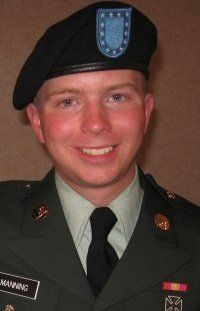
Wikileaks has not acknowledged receiving the cables or video from the analyst, Private First Class Bradley E. Manning, 22, whose case has been the subject of vigorous debate between defenders and critics. Private Manning, who served with the Second Brigade of the 10th Mountain Division, based at Contingency Operating Station Hammer, was arrested in May and transferred to a military detention center in Kuwait after allegedly revealing his activities in online chats with a former computer hacker, who turned him in to the authorities.

Read full article HERE.

© COPYRIGHT NY TIMES, 2010

Robert Gates Tightens Rules for Military and the Media

HUFFINGTON POST– Defense Secretary Robert Gates ordered military officials Friday to get Pentagon clearance for interviews and other media contacts after President Barack Obama fired the top general in Afghanistan for embarrassing comments in a magazine article.

Gates’ order, which is effective immediately, tells officials to make sure they are not going out of bounds or unintentionally releasing information that the Pentagon wants to hold back.

The order was issued in a brief memo sent to military and civilian personnel worldwide. It does not spell out exactly how the new directive will work but appears to require hundreds or thousands of officers to funnel interview requests through a small central office at the Pentagon.

“I am concerned that the department has grown lax in how we engage with the media,” Gates wrote.

“We have far too many people talking to the media outside of channels, sometimes providing information which is simply incorrect, out of proper context, unauthorized, or uninformed by the perspective of those who are most knowledgeable,” about how the information may fit into larger government operations or goals.

The order, first reported by The New York Times on its website Friday night, has been in the works since long before Gen. Stanley McChrystal stunned his bosses with criticism and complaints in a Rolling Stone article that his superiors did not know was coming.

“We were not happy with the content, and we were not happy that we didn’t know about it,” Assistant Defense Secretary Douglas Wilson said this week.

Read more HERE.

© COPYRIGHT HUFFINGTON POST, 2010

High Court Upholds Anti-Terror Law Prized by Obama

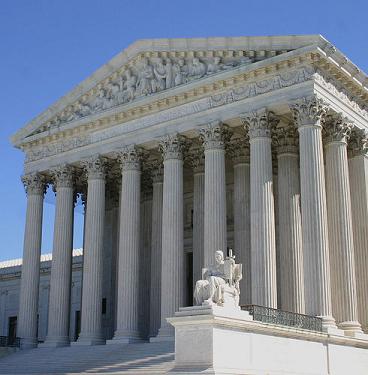
AP– The Supreme Court upheld the government’s authority Monday to ban aid to designated terrorist groups, even when that support is intended to steer the groups toward peaceful and legal activities.

The court left intact a federal law that the Obama administration considers an important tool against terrorism. But human rights organizations say the law’s ban on providing training and advice to nearly four dozen organizations on a State Department list squanders a chance to persuade people to renounce extremism.

The justices voted 6-3 to reject a free-speech challenge from humanitarian aid groups to the law that bars “material support” — everything from money to technical know-how to legal advice — to foreign terrorist organizations.

The aid groups were only challenging provisions that put them at risk of being prosecuted for talking to terrorist organizations about nonviolent activities.

But Chief Justice John Roberts said in his opinion for the court that material support intended even for benign purposes can help a terrorist group in other ways.

“Such support frees up other resources within the organization that may be put to violent ends,” Roberts said in an opinion joined by four other conservative justices, but also the liberal Justice John Paul Stevens.

The court often looks skeptically on laws that criminalize speech and holds them to a high level of scrutiny. But Roberts said there is good reason in this case to defer to Congress and the president, “uniquely positioned to make principled distinctions between activities that will further terrorist conduct and undermine United States foreign policy, and those that will not.”

Continue reading about the High Court Upholds Anti-Terror Law Prized by Obama.

AP Writer Matthew Lee contributed to this report.

Photo by flickr user dbking

© AP, 2010

Senators Propose President Emergency Internet Power

CNET– A new U.S. Senate bill would grant the president far-reaching emergency powers to seize control of or even shut down portions of the Internet.

The legislation announced Thursday says that companies such as broadband providers, search engines, or software firms that the government selects “shall immediately comply with any emergency measure or action developed” by the Department of Homeland Security. Anyone failing to comply would be fined.

That emergency authority would allow the federal government to “preserve those networks and assets and our country and protect our people,” Joe Lieberman, the primary sponsor of the measure and the chairman of the Homeland Security committee, told reporters on Thursday. Lieberman is an independent senator from Connecticut who caucuses with the Democrats.

Because there are few limits on the president’s emergency power, which can be renewed indefinitely, the densely worded 197-page bill (PDF) is likely to encounter stiff opposition.

TechAmerica, probably the largest U.S. technology lobby group, said it was concerned about “unintended consequences that would result from the legislation’s regulatory approach” and “the potential for absolute power.” And the Center for Democracy and Technology publicly worried that the Lieberman bill’s emergency powers “include authority to shut down or limit Internet traffic on private systems.”

The idea of an Internet “kill switch” that the president could flip is not new. A draft Senate proposal that CNET obtained in August allowed the White House to “declare a cybersecurity emergency,” and another from Sens. Jay Rockefeller (D-W.V.) and Olympia Snowe (R-Maine) would have explicitly given the government the power to “order the disconnection” of certain networks or Web sites.

Read full article HERE.

© CNET, 2010

Page 63 of 82<<...6162636465...>>