
The Inhumane Conditions of Bradley Manning’s Detention

GLENN GREENWALD/SALON – Bradley Manning, the 22-year-old U.S. Army Private accused of leaking classified documents to WikiLeaks, has never been convicted of that crime, nor of any other crime.  Despite that, he has been detained at the U.S. Marine brig in Quantico, Virginia for five months — and for two months before that in a military jail in Kuwait — under conditions that constitute cruel and inhumane treatment and, by the standards of many nations, even torture.  Interviews with several people directly familiar with the conditions of Manning’s detention, ultimately including a Quantico brig official (Lt. Brian Villiard) who confirmed much of what they conveyed, establishes that the accused leaker is subjected to detention conditions likely to create long-term psychological injuries.

Since his arrest in May, Manning has been a model detainee, without any episodes of violence or disciplinary problems.  He nonetheless was declared from the start to be a “Maximum Custody Detainee,” the highest and most repressive level of military detention, which then became the basis for the series of inhumane measures imposed on him.

From the beginning of his detention, Manning has been held in intensive solitary confinement.  For 23 out of 24 hours every day — for seven straight months and counting — he sits completely alone in his cell.  Even inside his cell, his activities are heavily restricted; he’s barred even from exercising and is under constant surveillance to enforce those restrictions.  For reasons that appear completely punitive, he’s being denied many of the most basic attributes of civilized imprisonment, including even a pillow or sheets for his bed (he is not and never has been on suicide watch).  For the one hour per day when he is freed from this isolation, he is barred from accessing any news or current events programs.  Lt. Villiard protested that the conditions are not “like jail movies where someone gets thrown into the hole,” but confirmed that he is in solitary confinement, entirely alone in his cell except for the one hour per day he is taken out.

In sum, Manning has been subjected for many months without pause to inhumane, personality-erasing, soul-destroying, insanity-inducing conditions of isolation similar to those perfected at America’s Supermax prison in Florence, Colorado:  all without so much as having been convicted of anything.  And as is true of many prisoners subjected to warped treatment of this sort, the brig’s medical personnel now administer regular doses of anti-depressants to Manning to prevent his brain from snapping from the effects of this isolation.

Just by itself, the type of prolonged solitary confinement to which Manning has been subjected for many months is widely viewed around the world as highly injurious, inhumane, punitive, and arguably even a form of torture.  In his widely praised March, 2009 New Yorker article — entitled “Is Long-Term Solitary Confinement Torture?” — the surgeon and journalist Atul Gawande assembled expert opinion and personal anecdotes to demonstrate that, as he put it, “all human beings experience isolation as torture.”  By itself, prolonged solitary confinement routinely destroys a person’s mind and drives them into insanity.  A March, 2010 article in The Journal of the American Academy of Psychiatry and the Law explains that “solitary confinement is recognized as difficult to withstand; indeed, psychological stressors such as isolation can be as clinically distressing as physical torture.”

Click to continue reading about the inhuman conditions of Bradley Manning’s detention.

Article by Glenn Greenwald, for his blog on Salon.com
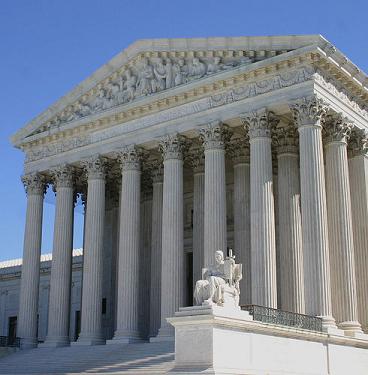
 

US… and Justice For Few

INTER PRESS SERVICE – Poor defendants on death row, immigrants in unfair deportation proceedings, torture victims, domestic violence survivors and victims of racial discrimination – all these groups are consistently being denied access to justice while those responsible for the abuses are protected, according to a new report by the American Civil Liberties Union.

photo by flickr user Chang'rJamil Dakwar, director of the ACLU Human Rights Programme, told IPS, “Access to justice is a fundamental human right and bedrock tenet of American democratic system – it was even codified by the Universal Declaration of Human Rights, which the U.S. championed 62 years ago.”
“Unfortunately, access to the courts and effective remedy have been severely curtailed over the last decade, especially for those who need it most,” he said. “It is time for our government and judiciary to recommit to respecting and promoting this essential right.”

According to the report, “Slamming the Courthouse Doors”, the “actions of the executive, federal legislative, and judicial branches of the United States government have seriously restricted access to justice for victims of civil liberties and human rights violations, and have limited the availability of effective (or, in some cases, any) remedies for these violations.”

For example, the report details how individuals convicted of capital crimes who seek to present newly found evidence of their innocence or claims of serious constitutional violations are being denied recourse in the courts.

Federal legislation, most prominently the Antiterrorism and Effective Death Penalty Act of 1996 (AEDPA), and Supreme Court decisions, has greatly limited access to federal review of state court death penalty convictions, the report says. It also charges that victims of rape, assault, religious rights violations and other serious abuses in prison are having their claims thrown out of court because of a restrictive federal law.

Continue reading about US… and Justice for a Few.

Article by: William Fisher

Photograph by flickr user: Chang’r

© 2010 IPS North America

FCC Chair Abandoning Net Neutrality

DEMOCRACY NOW! – The Federal Communications Commission is being accused of abandoning “net neutrality” rules that would ensure a free and open internet. On Wednesday, FCC Chairman Julius Genachowski unveiled proposals that would allow internet service providers to charge higher fees for faster access to online content. We speak to Josh Silver, co-founder of the media reform group Free Press.


photograph on source page by flickr user Sarah G


A Real Jaw Dropper at the Federal Reserve

HUFFINGTON POST– At a Senate Budget Committee hearing in 2009, I asked Fed Chairman Ben Bernanke to tell the American people the names of the financial institutions that received an unprecedented backdoor bailout from the Federal Reserve, how much they received, and the exact terms of this assistance. He refused. A year and a half later, as a result of an amendment that I was able to include in the Wall Street reform bill, we have begun to lift the veil of secrecy at the Fed, and the American people now have this information.

photo by late night task force/flickrIt is unfortunate that it took this long, and it is a shame that the biggest banks in America and Mr. Bernanke fought to keep this secret from the American public every step of the way. But, the details on this bailout are now on the Federal Reserve’s website, and this is a major victory for the American taxpayer and for transparency in government.

Importantly, my amendment also required the Government Accountability Office to conduct a top-to-bottom audit of all of the emergency lending the Fed provided during the financial crisis to be completed on July 21, 2011, which will take a hard look at all of the potential conflicts of interest that took place with respect to this bailout. So, in many respects, details that the Fed was forced to divulge on Wednesday about the $3.3 trillion in emergency loans that until now were totally kept from public scrutiny, marked the beginning, not the end, of lifting the veil of secrecy at the Fed.

After years of stonewalling by the Fed, the American people are finally learning the incredible and jaw-dropping details of the Fed’s multi-trillion-dollar bailout of Wall Street and corporate America. As a result of this disclosure, other members of Congress and I will be taking a very extensive look at all aspects of how the Federal Reserve functions and how we can make our financial institutions more responsive to the needs of ordinary Americans and small businesses.

What have we learned so far from the disclosure of more than 21,000 transactions? We have learned that the $700 billion Wall Street bailout signed into law by President George W. Bush turned out to be pocket change compared to the trillions and trillions of dollars in near-zero interest loans and other financial arrangements the Federal Reserve doled out to every major financial institution in this country. Among those are Goldman Sachs, which received nearly $600 billion; Morgan Stanley, which received nearly $2 trillion; Citigroup, which received $1.8 trillion; Bear Stearns, which received nearly $1 trillion, and Merrill Lynch, which received some $1.5 trillion in short term loans from the Fed.

We also learned that the Fed’s multi-trillion bailout was not limited to Wall Street and big banks, but that some of the largest corporations in this country also received a very substantial bailout. Among those are General Electric, McDonald’s, Caterpillar, Harley Davidson, Toyota and Verizon.

Continue reading about the Jaw Dropper at the Federal Reserve.

Copyright © 2010 HuffingtonPost.com, Inc.

photograph by LateNightTaskForce/flickr


Fed Wants to Strip a Key Protection for Homeowners

McCLATCHY NEWSPAPERS– As Americans continue to lose their homes in record numbers, the Federal Reserve is considering making it much harder for homeowners to stop foreclosures and escape predatory home loans with onerous terms.

The Fed’s proposal to amend a 42-year-old provision of the federal Truth in Lending Act has angered labor, civil rights and consumer advocacy groups along with a slew of foreclosure defense attorneys.

They’re not only asking the Fed to withdraw the proposal, they also want any future changes to the law to be handled by the new Consumer Financial Protection Bureau, which begins its work next year.

In a letter to the Fed’s Board of Governors, dozens of groups that oppose the measure, including the National Consumer Law Center, the NAACP and the Service Employees International Union, say the proposal is bad medicine at the wrong time.

“At the depths of the worst foreclosure crisis since the Great Depression, we are surprised that the Fed has proposed rules that would eviscerate the primary protection homeowners currently have to escape abusive loans and avoid foreclosure: the extended right of rescission.”

Because the public comment period on the Fed’s proposal is still open until Dec. 23, a spokesman declined comment on the matter.

But in a September passage in the Federal Register, the Fed said the proposal was designed to “ensure a clearer and more equitable process for resolving rescission claims raised in court proceedings” and reflects what most courts already require.

Since 1968, the Truth in Lending Act has given homeowners the right to cancel, or rescind illegal loans for up to three years after the transaction was completed if the buyer wasn’t provided with proper disclosures at the time of closing.

Attorneys at AARP have used the rescission clause for decades to protect older homeowners stuck in predatory loans with costly terms. The provision is also helping struggling homeowners to fight a wave of foreclosure cases in which faulty and sometimes-fraudulent disclosures were used.

The violations must be of a material nature to invalidate a loan under the extended-rescission clause. To do so, homeowners — usually those facing financial problems or foreclosure — hire an attorney to scour their mortgage documents for possible violations regarding the actual cost of the loan or payment terms.

If problems are found, a notice of rescission is sent to the creditor, which can either admit to the alleged violation or contest it in court.

Creditors that end up rescinding a loan are then required to cancel their “security interest,” or lien, on the property.

Once that occurs, the homeowner must then pay the outstanding loan balance back to the lender — minus the finance charges, fees and payments already made.

Dropping the lien provides homeowners with a defense against foreclosure and allows them to refinance to pay the outstanding loan amount.

Critics say the proposed change by the Fed would render the rescission clause useless. The Fed proposal would require homeowners who seek a loan rescission through the courts, to pay off the entire loan balance before the lender cancels the lien.

Continue reading about the Fed Wanting to Strip Key Protection for Homeowners.

Letter to Federal Reserve opposing the rescission proposal

Federal Register notice explaining its proposed changes on rescission (begins on pg. 58541)

To submit a comment to the Federal Reserve


Article by Tom Pugh of McClatchy Newspapers

Painting by Mike Licht/flickr


© 2010 McClatchy Newspapers


Page 57 of 82<<...5556575859...>>
