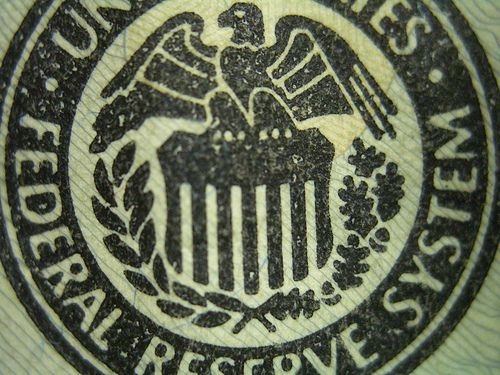
MEDIA ROOTS – Harry Truman once famously proclaimed that he wished to meet a “one-armed economist,” because every economist he hired for advice on the nation’s economy would give him a “one hand, and the other hand” scenario.
A generation later, economic historian and lecturer, Andrew Gause provides a seemingly simple “one-armed” solution to fix the United States’ economy. Gause instructs to immediately discontinue the distribution of Federal Reserve Notes while reissuing U.S. Notes. Such bills of legal tender would be an “interest-free unit” and, as a result, the nation would have no debt.
In the following interview, Andrew Gause breaks down exactly how to end the Federal Reserve banking system:
1. Print an equivalent money supply of 1’s, 5’s, 10’s, 20’s, 50’s, 100’s in U.S. Notes.
2. Issue an edict asserting that all citizens must turn in all Federal Reserve Notes.
3. Return the Federal Reserve Notes to the Federal Reserve Bank and demand the return of government bonds.
4. Destroy the bonds and create a public national bank that replaces “the Fed.”
Andrew Gause is one of the most respected monetary historians and contemporary experts on American and international banking systems. Not only does Gause understand the intricacies of the Federal Reserve fiat money system, he has also studied every other fiat money system in history and understands that all of these systems ultimately fail. Gause has attracted a wide following with over one thousand television and radio appearances, and has written two books on the subject, The Secret World of Money and Uncle Sam Cooks the Books.
Why is such a simple solution met with resistance?
In the following interview, Andrew Gause compares ending the Federal Reserve Bank to Andrew Jackson’s experience ending the Second Bank of the United States. Both Kennedy and Lincoln issued United States Notes but were ultimately unsuccessful. They were both assassinated before they were able to carry out their plans.
Tom Ball is a guest contributor for Media Roots.
***
Andrew Gause explains how to end the Federal Reserve Bank System on the Timpone radio show.
Andrew Gause discusses the Financial Reform Act of 2009 and the continued consolidation of financial power to the Federal Reserve Bank.
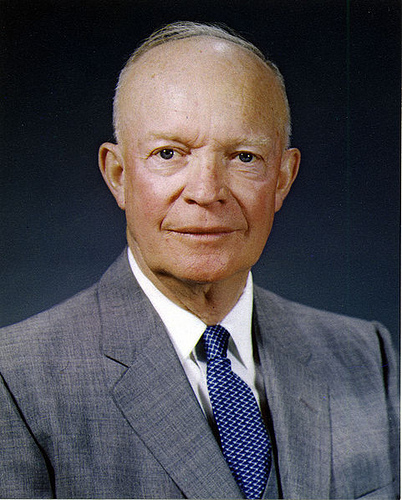
MEDIA ROOTS – The term “military-industrial complex” was originally coined by President Eisenhower in his final address as Commander-In-Chief and has since become a foreshadowing declaration to a country that may have lost its moral compass in pursuit of profits. “God help this country,” the President warned just a few weeks prior to this speech, “when someone sits in this chair who doesn’t know the military as well as I do.” Now it seems, with an annual defense budget of well over one trillion dollars, it has become a civic duty for all Americans to inform their peers of this misplaced power.
As the Supreme Commander of the Allied Forces in Europe, the coalition that defeated the Nazi regime, “Ike” was directly responsible for planning and commandeering the invasion of North Africa and France. Having honorably served in the United States Army for nearly four decades, Ike foresaw a not-so-distant future with the United States held prisoner to a tyrannous warfare industry.
“In the councils of government, we must guard against the acquisition of unwarranted influence, whether sought or unsought, by the military-industrial complex. The potential for the disastrous rise of misplaced power exists and will persist.”
Eisenhower was warning of the emergence of a developing element in society that must continuously be checked. The repercussions of failing to do so could ultimately alter the very foundations of human society. But was the career military officer just being dramatic during his last days in office?
“This conjunction of an immense military establishment and a large arms industry is new in the American experience. The total influence – economic, political, even spiritual – is felt in every city, every Statehouse, every office of the Federal government. We recognize the imperative need for this development. Yet we must not fail to comprehend its grave implications. Our toil, resources and livelihood are all involved; so is the very structure of our society.”
The future of American livelihoods were viewed to be at stake. What Ike was worried about was an America where citizens would continue to make their living from war. He was afraid that if future Americans continue to receive their paychecks directly from the military-industrial complex, then war would be here to stay.
“Disarmament, with mutual honor and confidence, is a continuing imperative. Together we must learn how to compose differences, not with arms, but with intellect and decent purpose. Because this need is so sharp and apparent I confess that I lay down my official responsibilities in this field with a definite sense of disappointment. As one who has witnessed the horror and the lingering sadness of war – as one who knows that another war could utterly destroy this civilization which has been so slowly and painfully built over thousands of years – I wish I could say tonight that a lasting peace is in sight.”
Disappointed, Ike was afraid Americans would continue to support making war a way of life – affecting the citizenry spiritually – and result in a fascist society similar to that which Hitler had created. He worried that a militaristic fascist state would evolve with an abnormally-increased militaristic culture. He feared an ongoing global war – one that could ultimately destroy humanity – would continue as defense contractors profit from weaponry creation and distribution.
Now, more than fifty years later, have Eisenhower’s worst fears been actualized?
Tom Ball is a guest contributor for Media Roots.
***
When President Eisenhower addressed the nation with three days left in his presidency,
he warned of the dangerous complex that exists between military might and corporate profits.
Two months ago, Luke Rudkowski of WeAreChange and I confronted Senator Rand Paul at the Capitol building as he was leaving a public press conference. We asked him why he endorsed war mongerer Mitt Romney for President if he stands for so many things that Rand Paul is against.
A week after the video went viral, my workplace received multiple threatening phone calls from a staffer representing the Media Relations Committee at the Capitol. The representative said I could be arrested and charged with trespassing and harassment for my actions. He also threatened to strip me of my press credentials. It was confirmed to me that Senator Rand Paul had directly filed the complaint.
I proceeded to meet with the Media Committee of Bureau Chief heads of all the major mainstream outlets in the Capitol building to explain my side of the story. They told me that they had worked extremely hard to “get access” to Congress and that they can’t have people like me set it back.
After a month of silence on their end about what the final charges would be against me, I decided to come out with the story for the sake of providing the public the truth.
I was interviewed about the incident via WeAreChange:
I explain the full Rand Paul incident to WeAreChange (transcript below)
**
UPDATE: 10 AUGUST 2012 13:32 PDT
WE ARE CHANGE — “This is Luke Rudkowski here, reporting on another incident of the suppression of the free press. This time it’s of a US Senator trying to get a journalist fired for asking him tough questions. I’m joined by the one and only Abby Martin of MediaRoots.org and RT.
“Now, if you remember, myself and Abby Martin collaborated together on questioning U.S. Senator Rand Paul on his endorsement of Goldman Sachs/Bilderberg puppet Mitt Romney for the 2012 Elections.”
Luke Rudkowski(on the street): “Hey, Senator [Rand] Paul. My name is Luke of We Are Change. We had an interesting conversation before about the Bilderberg group. And, knowing what you know, how can you support Romney when The Guardian reported he was at the Bilderberg meeting?”
Abby Martin (walking into the building): “Hey, Rand. Abby Martin from Media Roots. I just wanted to ask you one quick question. You know, your endorsement for Mitt Romney. People had a lot of questions about it.”
Luke Rudkowski: “Now, the video was a really big hit online. But the most interesting part of the story happened after the video was already up. Abby, can you tell us exactly what happened to you after that video went online?”
Abby Martin: “After that week passed, the next week I went into the studios, I went into RT America. My boss said, ‘Come in to our office. We need to talk to you.’ And they just said, you know, ‘What did you do last week? And why are we getting threatening phone calls from the Capitol police and also the Senate Media Relations Committee at the Capitol Building?’
“And I just told them exactly what happened. I showed them the video. I said that it was totally unaffiliated with RT America. And they said this guy was calling them, threatening them, saying they were gonna send the Capitol police down to arrest me, threatening to strip, not only, me of my press credentials, but everyone at the station of their press credentials.”
Luke Rudkowski: “This is just for asking a question, asking U.S. Senator Rand Paul.
“And can you tell us who these phone calls came from and where they originated?”
Abby Martin: “They were originated from the Senate Media Relations Committee. I’m not gonna say the guy’s name because I don’t, it’s Mike something; I forget his last name. But he oversees that entire committee. And, so, he was calling to threaten me on behalf of him coming from, directly from, the Senator. So, this was confirmed to me later. And I’ll tell you what happened after that.
“I, actually, had to go meet with them in the Capitol Building. And it was really intense and an intimidating experience. But, yeah, they called RT America, were threatening to arrest me, threatening to strip me of my press credentials and of the entire office.
“So, once I explained to my boss and producers what exactly happened, they were just like: It doesn’t sound like you did anything wrong. If I were you I would definitely get a lawyer or just meet with him. Because he kept following up saying that he wanted to meet me, so he can hear my side of the story. And I didn’t know how to respond; like, should I get a lawyer involved?
“And, so, finally I just wrote him back. And I said, ‘Alright. I’ll meet with you. So, I had to go to the Capitol Building and meet with this guy, and in a small room, like an interrogation room. And it wasn’t just him. It was the Bureau Chief of Al Jazeera, the Bureau Chief of CNN, Fox News, MSNBC. All these Bureau Chief heads sat at a table and just, basically, confronted me about what had happened and wanted to get my side of the story. They said, you know, ‘Did you sneak Luke [Rudkowski] in?’ Like, ‘How do you get in there?’ And I was just like, ‘No. We were registered independent press. All we did was just go into the metal detector and go into the Capitol Building. I mean no one even checked our, no one even checked. It was like so lax. I mean you remember what happened. We walked in there. We even told the woman at the front desk, we’re here for this press event down the way. And she was like, ‘Just go ahead.’
Luke Rudkowski: “They weren’t that lax when they found my cookies and water and all the snacks I had in my book bag and made me throw everything out, made me a little bit mad.
“But people also need to know we were registered press inside the Senate Building. We hold different press credentials because, Abby, you have a Senate press pass. I have a different press pass, that I won’t mention or name. But I do have that magic piece of laminated piece of paper, that grants me some access and leeway to get into different places.
“But we were registered for an event inside the Senate Building. Nobody sneaked in. We walked in through security. We were walking towards the event. We saw Rand Paul and we asked him a question. There’s no other way to go around it. We have to ask these guys serious questions. The mainstream media doesn’t do it. And these people came at you with full litigious might, verbal and email jujitsu trying to attack you and scare you and intimidate you for simply asking a question.
“I mean it must’ve been a very scary feeling because I remember you telling me they were very vague in the beginning about what they were gonna do. They threw out all these options, possible jail, possible losing your credentials, possibly hurting the entire RT office. And just because they didn’t pick on me shows you that they were looking for any reason to respond, any reason to try to intimidate and harass and they found a reason. It was because you were working for RT. And that’s the only reason they did this. It wasn’t a threat. It wasn’t nothing. They did it just to intimidate and scare you.”
Abby Martin: “There was a very scary, it was very, very scary. And I was in contact with you the whole time saying, ‘What should I do? Should I come out with this story? This story is huge. I mean Rand Paul is trying to get me stripped of my press credentials for what happened. I mean that is insane.”
Luke Rudkowski: “Or fired, or arrested for simply asking him a question.”
Abby Martin: “Yeah. And I remember telling my boss, ‘Just have them come arrest me. This is outrageous. This is completely unfounded.’ And, as you know, now there was no charge that they could really do. It was totally baseless. It was completely empty threats. It was very underhanded intimidation tactics against journalism. You know, D.C. is just really scary like that.
“I just had no idea that that would happen for what we did. I mean if we went up to Rand Paul and we were just like, ‘Hey, man. We really like you. Thank you for what you do.’ I mean just the fact that we asked him something he didn’t like he ran away like a coward with his head down, didn’t want to answer the questions.
“He was having a public press event in that room and we were there registered. I was there registered. I was registered under Media Roots to ask him questions. I mean that’s why we were there. That’s why he was having a public press event there, which is why they were having a press conference there. And that’s why we went there.
“So, yeah, it was just really intense, really scary, intimidating. And, you know, at this point, I’m just gonna come out with this story ‘cos I think people need to know, who still think that Rand Paul is somehow, you know, has to make deals for him to play the long game, so he can do good things later. No. I mean he’s sold out. Like, he’s a sell-out to the Republican establishment. And he’s underhandedly trying to intimidate journalists who confront him about his selling out.”
Luke Rudkowski: “This is a U.S. Representative of the people trying to arrest and fire a journalist for asking questions. I mean the story is huge. It’s unprecedented. I never; I mean I’ve worked the Senate beat many times. And I go out to the Senate Building. And I ask all these hard questions to all the senators. And I never experienced or I never went through something that you went through. And it’s pretty insane to have Rand Paul, Mr. Libertarian, himself, use the full might of any rules and regulations, that he could throw at you, throw at you to try to intimidate you.
“But, luckily, knowing you for a while now, I definitely know you will not be intimidated. I know this will only embolden you. And I know you also have new plans and you also have a new show, that you’re gonna be working on. Can you update us on what’s next for you?”
Abby Martin: “Yeah. It certainly won’t intimidate me. In fact, I would love to see him again. In D.C., there’s politicians running around. It’s absurd.
“I won’t be going into the Capitol Building anymore to do it. But I think they’re everywhere. So, you can find out where these people are and talk to them. But, yeah, I mean I want to also clarify one point. He also, the guy who called RT, said that I can be charged with harassment as well. That was another charge that they were throwing out there, kind of blanketly, without any foundation whatsoever.
“But coming up on RT, actually, I haven’t been anchoring for the last two weeks and I won’t be all of August because I’m preparing to take over the Alyona Show. But I’m not gonna take over her show. I’m gonna make a whole new show undercutting the left/right paradigm, corporate/top-down media establishment where I’m talking about Big Brother Watch, surveillance issues, government expansion. I’m talking about things, that are censored in the mainstream media, that get a back-page story. And also talking about heroes in journalism, like Luke, highlighting grassroots activists, people who are out there doing awesome things, that need to be highlighted and are not given enough exposure, and also highlighting the villains, the corporate CEOs and the politicians, that are doing really messed up stuff, so, kind of putting them on the spotlight. And that’s the idea, for the show right now. So, stay tuned for that.”
Luke Rudkowski: “Well, if you need me to question Rand Paul, I can definitely do it. As a matter of fact, I will do it. But I wanna congratulate you on your new show. I hope people tune in. Check out Abby on Twitter @AbbyMartin.
“You’re an amazing human being. Keep up the great work. And I’m very happy to see you not afraid, not intimidated, emboldened and only strengthened by this attack. It will not stop us. The more you try to stop us, the more we grow, the more unstoppable we become.”
Luke Rudkowski: “Anything else we didn’t get into that you wanted to get into, Abby?”
Abby Martin: “Yeah. I mean when the corporate media doesn’t ask these questions, then who else can? And when people say this is ambush journalism, that’s unfounded as well because—people who are like, ‘Oh, how come you couldn’t get in a meeting with him? He said he had a meeting with you.’—they don’t have meetings with people who are not already totally funded by the top-down establishment. I mean that just doesn’t happen. So, sometimes they need to be confronted and about legitimate things. I mean that’s just the way it has to happen.
“And, yeah, just once again, you know, the people who say, ‘Get an appointment! This is ridiculous! Why would he answer you?’ Well, he was happy to talk to Luke before about Bilderberg before he was in the establishment.”
Luke Rudkowski (street footage with Rand Paul): “For people who don’t know what’s going on, can you tell people who are the Bilderberg group? If you feel comfortable doing so.”
Luke Rudkowski: “Yeah. He talked about how bad the Bilderberg group is, how they want a world government, how we need an audit of Goldman Sachs. But then when I was talking to him it was just complete silence, which made the video very awkward.”
Luke Rudkowski (street footage with Rand Paul): “I’m just trying to get answers. And that’s why I’m here talking with you. And that’s why I’m persistent the way I am. I know you can hear me.”
Abby Martin: [Laughs]
Luke Rudkowski: “He didn’t say a single word at all.”
Luke Rudkowski (street footage with Rand Paul): “I know you’re trying to ignore me. But the video will play for itself. It will be on YouTube.”
Luke Rudkowski: “Nothing.”
Luke Rudkowski (street footage with Rand Paul): “We could have explained everything to our audience. They are only gonna have more questions about you, Mr. Rand. And you’re only hurting yourself by not answering the question.”
Luke Rudkowski: “At all.”
Luke Rudkowski (street footage with Rand Paul): “Before you became Senator, you talked about the Bilderberg group and auditing Goldman Sachs. But right now you’re supporting Romney. A lot of your supporters are let down. And I’m let down by your reaction, which I think pretty much made the video as popular as it is because of that, because of that awkward kind of silence, that we went through there.
“And I did try many times when I first started covering the Senate and Congress, I’ve tried to get little sit-down interviews and I call them ahead of time. And after 30 failed attempts and 30 failed responses, this is the only way to really get answers. And we’re also gonna be releasing another video this week showing me being very polite to a politician, asking him for an interview, and him just walking away and going in his car and not talking to anyone. So, the only way to really get answers is not from the corporate mainstream media. It’s to go out there and to ask the damn questions. That’s the only way. Don’t ask for permission. Ask for the truth and ask for accountability. That’s the only way you could really do it. And that’s the only way to be independent fully.”
Abby Martin (c. 12:17): “And these people work for us. These people, we pay their salary. I mean they are public servants to the people. So, if we want answers on why they do shady stuff and are endorsing warmongerers who want to invade Iran and start World War III, I mean, we have the right to do that.”
Luke Rudkowski: “Yeah. We have at least the right to question them on their abuse of authority and their horrible actions. And the free press, pretty much, is the most important thing in this country. And we don’t have one. And that’s why we’re living in the world we’re living in now.
“And I applaud people like yourself, Abby. And other brave, independent journalists out there who were willing to take the risk, who were willing to face arrest, persecution for just asking the right questions. And I appreciate your guts. And I know you’re gonna continue on an amazing journey. You’ve got a great career ahead of you. And full-speed ahead. Thank you for everything you do.”
Transcript by Felipe Messina for Media Roots and We Are Change
MEDIA ROOTS – When visiting the Republican National Committee’s home page, one will find it stated that the RNC is “not authorized by any candidate or candidate’s committee.” However, on the party’s Facebook page, a photo of volunteers phone-banking for Mitt Romney was uploaded last week. There is absolutely no reference to the Ron Paul campaign when the party’s national convention is to be held next month in Tampa to determine the party’s official endorsement.
Last Friday, MSNBC’s Rachel Maddow discussed the myth that Mitt Romney is already the official nominee for the Republican National Committee. Maddow quoted RNC rule 40(b) which explains that “each candidate for nomination … shall demonstrate the support of a plurality of the delegates from each of five (5) or more states ….” Dr. Paul has already received the overwhelming support from Republican delegates in Iowa, Maine, Minnesota, and Louisiana going into next Saturday’s Nebraska State Convention where 23 at-large delegates will be selected to go to Tampa.
Additionally, according to RNC rule 30, the national committee does not recognize a state’s binding of delegates such as the case in Nevada and Massachusetts. Last February, the Paul campaign was able to secure 22 out of the 28 delegates in Nevada that are currently bound by the state’s committee rules to vote for Mitt Romney. In an unprecedented move in Mitt Romney’s home state of Massachusetts, the RNC state committee stripped seventeen delegates of their credentials because they refused to sign an affidavit promising they would back Mitt Romney at the RNC. The former governor has 38 bound delegates during the first round of voting in Tampa but has zero bound delegates should there be a second round of voting.
Litigation is already under way when a group unaffiliated with the Paul campaign–referred to as Lawyers for Ron Paul–filed suit against the Republican National Committee last month in California’s 9th Circuit Court after reports of electoral fraud and intimidation continue to surface around the country.
Oskar Mosco
***
Austin Petersen of Freedom Works and RT’s Abby Martin discuss the intimidation against Ron Paul delegates.
***
Lawyers for Ron Paul describe the civil rights lawsuit filed in federal court on behalf of American voters.
MEDIA ROOTS – While privacy is certainly the dominant concern surrounding the controversial use of drones in this country, the lack of technological barriers to entry is the grease on the slippery slope. However, despite privacy concerns, the defense industry will continue its voracious lobbying effort to make sure drone technology becomes increasingly accessible to corporate commercialization. Abby Martin of Media Roots and RT reports on the use of domestic drones in the US:
Abby Martin – Domestic Drones 101 for RT
4th Amendment to the United States Constitution
The right of the people to be secure in their persons, houses, papers, and effects, against unreasonable searches and seizures, shall not be violated, and no Warrants shall issue, but upon probable cause, supported by Oath or affirmation, and particularly describing the place to be searched, and the persons or things to be seized.
It is reasonable to assert that in the course of your friendly local police department launching a drone over the neighborhood every chimney, window and blade of grass in the neighborhood becomes “the place to be searched.” Many court cases have discussed and ruled that privacy is not protected for incriminating activity that exists from a public vantage point. For the most part, these decisions were always considered with respect to the naked human eye. However, drones are electronic eyes that extend the reach of the human eye making the right to be secure in your person, house, papers and effects substantially more difficult by the day.
Kyllo v. United States
Federal agents from a public vantage point used a thermal-imaging device to search Danny Kyllo’s residence for heat emissions not visible to the naked eye. In 2001, the Supreme Court explained, “[to] explore the details of the home that would previously have been unknowable without physical intrusion, the surveillance is a search and is presumptively unreasonable without a warrant.” The decision asserted Americans have an expected privacy that cannot be violated even by technology that does not enter the home. This decision contrasted with the lower courts assertion that the device could not “penetrate walls or windows to reveal conversations or human activities.” This oxy-moronic contrast acknowledges that walls and windows are off limits.
Justice Antonin Scalia wrote the majority decision and his words are prophetic. Justice Scalia specifically tailored a “firm but bright” line drawn by the Fourth Amendment as the entrance to the house. Justice Scalia described this interpretation as “the long view” of the Fourth Amendment to specifically protect against more sophisticated future technology. Dissenting Justice John Paul Stevens argued the line would be crossed as soon as this surveillance technology becomes available to the public. While Kyllo v. United States is not drone specific it lifts the veil on the inherent capacity of drones to violate privacy with their electronic eyes and the potential rapid assimilation of drone technology into the commercial and private market.
Drone Commercialization
Though chaperoning Susie on her first date and having a drone dive bomb a pizza onto your front porch are gallows humor, the feasibility and potential use of drones for commercial use is real and ongoing. The Association for Unmanned Vehicle Systems International (AUVSI) was instrumental in crafting legislative language directing the Federal Aviation Administration (FAA) to expedite approval of police departments and universities to deploy drones under five pounds this year. Further, this language sets forth the plans for larger drones to fly the American skies in 2015.
Companies previously shy of entering the drone market due to FAA ambiguity on drones in American airspace are now all clamoring to get a piece of the evil seeping from Pandora’s box. Drone technology was born from war and the companies migrating from weapons of war to “softer” domestic applications still maintain an emphasis on spy and weapons capabilities. Once American police departments and universities are saturated with drones and their long term service contracts the technology will creep into more “innocuous” commercial applications. It is not hard to imagine this evolution ending with Billy, living in the year 2050, building a spy drone from a kit in the garage to spy on his neighbors.
Technological Barriers
This evolution of technology and the increasing accessibility to the average person takes on several dimensions of concern. It is easy to extrapolate Billy’s neighborhood spy drone wreaking havoc on nude sun bathers enjoying the privacy of their back yard or snapping a few photos through Mr. and Mrs. Jones window as they fail to close the blinds in their lust to embrace. A look into the future of drone technology we find hundreds of sovereign states across the world developing advanced war capable drones to launch against America or other states with which they disagree. It is important to understand that weapons proliferation is a collective response to technological monopoly.
A look at nuclear technology reveals technological barriers to entry serve as a counter-balance to proliferation. Because nuclear technology is high science and the materials necessary are only accessible to advanced societies, humans are only able to delay nuclear proliferation. As nuclear technology and materials are shared amongst “friends,” the barriers to entry are demolished. The result of this proliferation today is the placement of social barriers to assign who is worthy of nuclear technology and who is not. These social barriers will only delay the inevitable. Drones being significantly less advanced technologically than nukes will rapidly proliferate beyond Western domination and the Earth may plummet into global drone warfare.
Chris Martin for Media Roots
***
SALON – In November 2010, a police lieutenant from Parma, Ohio, asked Vanguard Defense Industries if the Texas-based drone manufacturer could mount a “grenade launcher and/or 12-gauge shotgun” on its ShadowHawk drone for U.S. law enforcement agencies. The answer was yes.
Last month, police officers from 10 public safety departments around the Washington, D.C., metropolitan area gathered at an airfield in southern Maryland to view a demonstration of a camera-equipped aerial drone — first developed for military use — that flies at speeds up to 20 knots or hovers for as long as an hour.
In short, the business of marketing drones to law enforcement is booming. Now that Congress has ordered the Federal Aviation Administration to open up U.S. airspace to unmanned vehicles, the aerial surveillance technology first developed in the battle space of Iraq, Afghanistan and Pakistan is fueling a burgeoning market in North America. And even though they’re moving from war zones to American markets, the language of combat and conflict remains an important part of their sales pitch — a fact that ought to concern citizens worried about the privacy implications of domestic drones.



 MEDIA ROOTS – Harry Truman once famously proclaimed that he wished to meet a “one-armed economist,” because every economist he hired for advice on the nation’s economy would give him a “one hand, and the other hand” scenario.
 MEDIA ROOTS – The term “military-industrial complex” was originally coined by President Eisenhower in his final address as Commander-In-Chief and has since become a foreshadowing declaration to a country that may have lost its moral compass in pursuit of profits. “God help this country,” the President warned just a few weeks prior to this speech, “when someone sits in this chair who doesn’t know the military as well as I do.” Now it seems, with an annual defense budget of
  MEDIA ROOTS – When visiting the Republican National Committee’s
  MEDIA ROOTS – While privacy is certainly the dominant concern surrounding the controversial use of drones in this country, the lack of technological barriers to entry is the grease on the slippery slope. However, despite privacy concerns, the defense industry will continue its voracious lobbying effort to make sure drone technology becomes increasingly accessible to corporate commercialization.