What If Edward Snowden Leaked All the Documents?

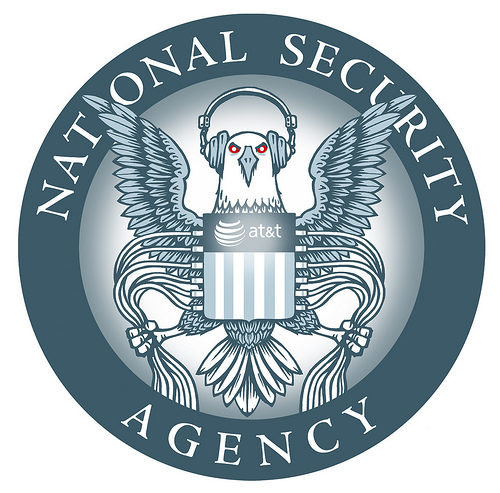
NSAbyEFFIn the few public interviews given by NSA whistleblower Edward Snowden, he’s hinted at having access to documents that include CIA outpost locations and secret agents’ names. Yet Snowden has also outlined the agreement he made with journalists to vet the documents carefully, and consult with the government before every release to ensure no harm to national security.

Russ Tice, the first post-9/11 NSA whistleblower said that he would have ‘shot Snowden’ himself if he had leaked juicier documents Tice refers to as ‘the jewels’, presumably in reaction to the potential dangers posed by what’s considered legitimate spying, black-ops programs and/or by exposing the people who secretly work within the intelligence sector.

Interested in how other NSA whistleblowers feel about this potential scenario, Media Roots posed the question to former AT&T technician turned NSA whistleblower Mark Klein in an exclusive radio interview.

Media Roots: What would be your opinion of Snowden if he leaked everything that he had without any regard for protecting intelligence assets names?

Mark Klein: I would say well, he did a heroic thing and it’s better the world knows the crimes that the government’s committing. Frankly a lot of the people who might get exposed, whose lives might be in danger, probably are bad people anyways. I’m from the 70s, my hero in the 70s was Philip Agee who exposed a whole list of names of CIA agents all over the world, because he figured rightly that the CIA was a dangerous, evil organization whose main task was to assassinate people, and he was right. I don’t give a shit what happens to the CIA, I hope this organization is dismantled and destroyed, it’s dedicated to assassination, that’s what it’s always done.

Klein’s blistering critique against the US intelligence apparatus differs greatly from statements made by any other NSA whistleblower. As a private sector employee, he never held any allegiance to the US government, nor signed any secrecy oath in contrast to other former NSA employees like Bill Binney, Thomas Drake, Kirk Wiebe, and Russ Tice.  

The typical template framing how Snowden’s leaks could have or did put American service members lives at risk is always met with adamant denial from those involved, especially Glenn Greenwald (with Shepard Smith and Bill Maher) and even Snowden himself. Understandably, when facing potential espionage charges, the exaggerated construct of harm devised by National Security state apologists has to be countered with a measured response by people in positions like Greenwald.

Though hypothetically speaking, if Snowden had leaked information like this, do secret CIA agents even deserve protection? Does an unabashed assassination and torture agency sponsoring an illegal arms trade and funded by our tax dollars really deserve a cloak of secrecy any longer?

Instead of shying away from the potentially false premise that lives might be in danger from the ongoing leaks, why are journalists not confronting it with a similar line to what war-criminal-walking-free Dick Cheney said about the public outrage regarding the Iraq war?

“So?”

Written by Robbie Martin of Media Roots, @fluorescentgrey on twitter

Photo from the EFF

Oakland’s Anti-Spy Center Campaign Sets Template For US Cities

SpybyFlickrLeoReynoldsMINT PRESS NEWS – Less than a year ago, the city of Oakland, California, took what privacy activists considered to be a major step toward a surveillance state.

In July 2013, the Oakland City Council unanimously approved the implementation of the Domain Awareness Center (DAC), a surveillance hub that would combine public and private cameras and sensors from all over California’s eighth-largest city into one $11 million mass surveillance system.

The components of the program would include integration of closed-circuit feeds from 700 cameras at Oakland public schools and 135 cameras at the Oakland Coliseum complex, which is home to the NFL’s Raiders and Major League Baseball’s Athletics. The video and data flowing into the system would be analyzed with license plate recognition software, thermal imaging and body movement recognition software, possibly even with facial recognition software.

Supporters of the Domain Awareness Center claimed it would improve response times for emergency crews and reduce crime. While the American Civil Liberties Union and others voiced concerns about privacy, a relatively small number of people signed up to speak on the Domain Awareness Center item before the council’s July 30 vote.

But if the eight council members and Mayor Jean Quan thought it would be smooth sailing from there, they were very much mistaken.

Amid unprecedented public outcry, the council in March backed away from a full-fledged “fusion center,” approving an amended resolution limiting the center so it will only monitor feeds from the Port of Oakland and Oakland International Airport.

The original program “would have allowed warrantless mass surveillance of Oakland residents … who are engaged in no wrongdoing whatsoever,” Linda Lye, an attorney for the ACLU, told MintPress News in an interview. “The City Council took the courageous step of dialing it back significantly.”

Among those who mobilized against the center were such diverse groups as North Oakland’s Lighthouse Mosque, the Oakland Privacy Group and former Occupy Oakland activists. At the March 4 council meeting, 149 people signed up to speak, including a nine-year-old who suggested that DAC stands for “Destroy All Coolness.”

One argument that particularly resonated in Oakland was that law enforcement would use the DAC to target minorities. The death of Bobby Hutton, a 17-year-old Black Panther party member, in a shootout with Oakland officers in 1968 helped spark an antagonism toward the police in the black community that has lasted to the present day.

“The importance of the broad coalition of left, right and center groups coming together in less than two months cannot be understated,” Oakland Privacy spokesman Brian Hofer told MintPress. “It was amazing to watch groups previously slow to come to the table in January and February suddenly jump on board in March.”

With other communities around the country considering fusion centers, Hofer and others believe that what has happened in Oakland could serve as a template of how to protect privacy rights from “Big Brother” intrusions.

“Community input really does matter,” Lye said.

The Domain Awareness Center in Oakland was initially authorized in 2009 as part of a nationwide initiative to beef up port security by integrating sensors and cameras in and around port facilities into networks. The Port of Oakland is one of seven U.S. maritime facilities that the Department of Homeland Security considers to be at the highest risk of a terrorist attack.

The first phase of the project was completed in June 2013 at a cost of about $3.4 million in federal grants. By that time, the project had swollen well beyond its original port security parameters, extending to feeds from the Oakland school cameras, city traffic cameras and automated license plate readers, along with data from gunshot detectors and police records.

Renee Domingo, the city’s director of emergency services, told the Center for Investigative Reporting last year that Oakland’s public safety and logistical challenges — the Port of Oakland also operates Oakland International Airport — prompted officials to design an “all-hazards system” capable of aiding responses to crime, terrorism, earthquakes and other disasters.

But Lye, the ACLU attorney, says there was “enormous mission creep. It grew into something much larger … a very expansive project that would have allowed warrantless mass surveillance even though the justification was port security.”

The “aggregation” of data at one location had privacy activists particularly concerned. “A mosaic reveals more information than an individual tile,” Lye noted.

On July 16, 2013, a resolution to approve an additional $2 million in federal grants to fund Phase II of the project — the build-out of the surveillance center at Oakland’s Emergency Operations Center — went before the Oakland City Council. The item was on the council’s consent calendar, meaning the city’s Public Safety Committee regarded it as non-controversial and not requiring much, if any, public input.

According to Lye, the city, like many other local governments, had succumbed to the temptation of accepting federal grant money for technology without going through a rigorous and transparent decision-making process.

The federal government’s largesse, she said, “encourages people to spend money on a device rather than ask the question, ‘Do we need this device?’”

At the July 16 meeting, however, concerned residents did kick up enough of a fuss about privacy and policing to persuade the council to put off a vote. One speaker, Joshua Daniels, complained that the Oakland Police Department “doesn’t respect the rights” of residents.

“This city has a huge trust issue, and it’s not going to be solved by spying on your citizens,” he told the council.

Two weeks later, the council approved the resolution but said it wouldn’t “activate” the system completely until privacy guidelines and data-retention policies were developed and voted on by the council no later than March 2014. City staffers had stated that they planned to get the money first, then design privacy protocols and decide whether or not to store data and for how long.

A speaker at the July 30 meeting voiced his displeasure by singing, “Everybody must get droned.”

By the time the Oakland City Council met on March 4, the political landscape had changed dramatically. “It was a monumental momentum shift,” Hofer said, involving the mobilization of dozens of community groups and an extensive education effort, not only of the public, but elected officials.

“The council was not well-educated about the DAC when the voting process began in 2013,” Hofer explained. “It was clear when attending [council] hearings and in meeting with them privately that the administration had not fully informed the council of the true technical capabilities [of the system].”

Pressure groups, he said, “kept up a continuous education campaign … As each day went by and more citizens became informed, the opposition to this project grew.”

At a protest in February, activists held signs saying, “Welcome to the Domain Awareness Center. We Are Always Watching,” while a costumed “DAC official” put bags over their heads and ziptied their hands behind their backs.

Councilwoman Desley Brooks had introduced the amended resolution limiting the Domain Awareness Center to a “port-only” operation and requiring that any further expansion of the center come before the council. Ahead of the March 4 meeting, Hofer said, more than 40 groups submitted joint letters opposing city-wide mass surveillance.

When the amended resolution came up for debate, representatives of the Muslim community spoke of the detrimental impact of post-9/11 intelligence-gathering and surveillance. The proposed center would be used to “discriminate against minorities and perpetuate racial, religious and political profiling,” warned Maya Schweiky, who described herself as a Muslim.

“All I see is failure after failure after failure to ensure that the civil liberties of Oakland residents are protected,” said Nadia Kayyali of the Electronic Frontier Foundation.

At one point, the booing of city staff got so loud that Councilwoman Lynette Gibson McElhaney plugged her ears. Finally, in the early hours of March 5, the council voted 5-4 in favor of the resolution, with Mayor Quan casting the deciding vote.

“I wish I had paid attention to it a little earlier,” Quan said after the vote. “I really thought it was a no-brainer. I think it is just the time, because people are mad about the [National Security Agency] … It didn’t occur to us that a system that would help the existing cameras coordinate in an emergency would become so controversial.”

The mayor indicated she would push for the project’s scope to be expanded beyond the port in the near future. But activists said they would be vigilant about preventing any further “mission creep.”

“We are aware of [the mayor’s] intent,” Hofer told MintPress. “We will keep watching and keep educating.” Hofer is a member of an ad hoc committee now drafting a privacy and data retention policy, and he is “excited about the model we are creating. Hopefully, we can … use it as a model for other municipalities.”

Last month, Hofer and other activists from Oakland took part in a National Day of Action against fusion centers with residents of 10 other cities, including Boston; Charlotte, N.C.; Dallas; Los Angeles; San Francisco; and Washington.

“Folks are excited about the momentum Oakland has in defending civil liberties,” he said.

By Matthew Heller for Mint Press News, photo by flickr user Leo Reynolds

NSA Veterans Expose Shocking History of US Illegal Surveillance Program

Bill_Binney_Wikimedia CommonsIt’s been over a year since the groundbreaking documents were released by NSA whistleblower Edward Snowden, detailing a massive surveillance apparatus collecting the electronic communications of entire populations. The proof positive spying story sparked a global discussion reevaluating state power and a groundswell of privacy advocates.

However, years before Snowden’s damning disclosures, two former NSA insiders had also blown the whistle on the dragnet spying regime. Bill Binney was NSA Technical Director from 1965 to 2001 and Kirk Wiebe was Senior Analyst within the NSA from 1975 to 2001. They both resigned after 9/11, outraged by the unconstitutional assertions of power within the agency.

As a pioneer of the now-defunct ‘Thin Thread’ program, which upheld the privacy of US citizens, Binney broke away from the NSA after witnessing the erosion of privacy rights under the banner of national security. Wiebe, equally disgusted by the NSA’s blatant disregard for the rule of law, left his post in protest against the indiscriminate violations unfolding outside the view of the American public.

More than a decade into the “War on Terror”, it’s startlingly clear that civil liberties are under attack. And in the digital age where telecommunications continue to play a more central role in our everyday lives, the NSA’s expanding net of surveillance poses a grave threat to free and open societies worldwide.

“It’s like the Wizard of Oz. Pay no attention to the man behind the curtain. That’s what game they’re playing.” –Bill Binney

MR

**

Two Top NSA Veterans Expose Shocking History of Illegal Spying

**

AM: Bill, you were one of the creators of the pre-9/11 data collection surveillance program called ‘Thin Thread’ which actually did have privacy protections instated for American citizens. Why was this program abandoned and what kind of system replaced it?

BB: Well it actually wasn’t abandoned. The back part of the analysis part, the part that allowed them to deal with massive amounts of data and index it was taken in to manage, that was the way that they were able to build surveillance on the entire world. That particular program was that powerful and that’s why we put in those protections. So that it would be impossible for them to abuse it. That was the first thing they removed when they took it into the new program Stellar Wind.

AM: And Kirk, after you had found out what they did to ‘Thin Thread’ how did you, Bill and other intelligence insiders address these concerns within the government and how were these concerns met from officials.

KW: Well, in reality we had been trying to address what had been going on within the NSA in terms of modernization for years and it’s kind of like 9/11, the events of 9/11, were the culmination in our minds of our failure to get those at the agency to see the potential of what we were developing, what Bill had invented in the ‘Thin Thread’ project. And it was within six weeks of 9/11 that we end up–Ed Loomis, myself, Bill Binney–retiring from NSA in absolute disgust because we had failed. We had been trying to tell them that they were going to fail and we lost the battle.

AM: And Bill, in 2007 the FBI raided both of your homes along with other officials who had spoken out on the false premise that you guys had leaked classified documents or information to the press. What was that experience like for your and were you surprised by the aggressiveness of the response?

BB: Well yes, you see I had been cooperating with the FBI in their investigation into the New York Times leak for months, several months, about four months before the raid and when they came at me it was rather–it’s hard to understand why they would do that and why they were here pointing guns at me too and my family. So it’s a question of what was this all about and finally it didn’t take me too long to figure out what they were really doing was trying to intimidate us because this was like the morning after the second day after Gonzales’ testimony to the Senate Judiciary Committee about the terror surveillance program that the president had talked about which was–he only talked about the warrantless wiretaps at the time–but there were many other programs that involved CIA and also NSA that included spying on everyone in the country and building knowledge and understanding of their lives of everybody as they were living them. So it was a matter of pulling–actually it was a computer program reassembling dossiers on everybody in the country and the world eventually. So it was clear to me at that point that that’s why they were there. To keep us quiet.

So I started getting mad at these people while they were still there. So that when I reported to the FBI the real crime why they were sent there which was Bush, Cheney, Hayden and Tenet, which was the core of individuals who decided to subvert the constitution and violate all the laws, basic laws that we had in statutes at the time and I told them what it was–Stellar Wind Program–what data they were using, how they were organizing, what it was doing and I was telling that to all the FBI agents on my back porch.

So the only one who was cleared for it was the one fellow who was the special agent in charge Paul Mauric [sic]. He was the only one who was cleared for that program. The only thing he could do when I was doing that was look at the floor because what I was doing was causing him a problem, cause it was telling all these other agents (FBI agents) what crime is being committed and that they weren’t cleared for it. They were not cleared for this program. So now we had to have a meeting outside before they left my house of all the agents round the cars. They couldn’t leave until he instructed them on what they could not say.

AM: Wow and Kirk, in the case of Thomas Drake, of course, it went a little bit farther to say the least. Talk about exactly what the FBI did to him.

KW: Well, let me frame it a little bit for you. In November of 2009 Bill Binney and I received a communication from our lawyer. After we were raided in 2007, we went halfsies on a lawyer rather than pay two. The lawyer was a former US prosecutor so we thought he’d know how to deal with the government. He told us to lay low. In November 2009 he sends us an email that says “guys I just got an email from the Department of Justice. They’re coming after you.”

So Bill and I made an appointment with him an we went in to Baltimore and sat down at his desk and he was completely surprised by this move. He thought it would go away. Well it wasn’t. That was the end of that for the holidays. It was November when we got this message. Come January, we get another email. There’s a new prosecutor for the government. The other one had left government. And we are being offered letters of immunity if we are willing to sit down with the FBI and the prosecutor for the Department of Justice and answer questions about Thomas Drake. And so Bill and I agree we’ll do that. We knew Tom had done nothing wrong. Easy, let’s go. We go down to the FBI facility just outside DC in Maryland and separately we address questions. The questions were mostly questions like “Did you meet with Tom Drake? On what occasion?” And of course we had lunch with Tom, said hello but nothing very interesting. “Did he talk about mulching papers, destroying evidence?” No, no, sorry. Tom’s an honest guy.

So long story short we get letters of immunity in February saying we are under no further threat in this entire matter (Bill Binney and I). They then threw their attention on top and we think it’s because he’s the one who went to the press. NSA was very much trying to–and the government for that matter–send the message “If you work in the intelligence community and you talk to the press you’re going to get hammered.” And so they wanted to make an example. Whether they won the case or not was not important to the government. They wanted to send a message and that’s why they went after him.

AM: And they actually said they reclassified this document that he had specifically taken was unclassified. Extremely shady.

KW: Absolutely right. Absolutely right.

BB: It was also material that they had independently released publicly and Jim Bamford provided that to the judge Bennett and the court.

AM: Kirk, I wanted to–actually Bill, let’s talk about Edward Snowden. Tomorrow of course is the anniversary of the leaks. I wanted to play a quick clip from his NBC interview. Let’s check that out.

ES: They found that we had all of the information that we needed, as an intelligence community, as a classified sector, as the national defense of the United States to detect this plot. We actually had records of the phone calls from the United States and out. The CIA knew who these guys were. The problem was not that we weren’t collecting information. It wasn’t that we didn’t have enough dots. It wasn’t that we didn’t have a haystack. It was that we did not understand the haystack that we have.

AM: And of course this is why you guys left in outrage. You agree with his assessment here?

BB: Yeah, I know the specifics of it. Like six or seven phone calls from San Diego back to the Yemen facility. And by the way, both ends were known. Both numbers were there. That’s how caller ID works. And you’re talking about switches. And the switches have to know exactly how to pass or where it’s coming from, how to pass the other line back. They have to have the information to make the connection otherwise it doesn’t happen.

AM: Why expand the haystack if the haystack was already there, available and could’ve prevented the terrorism?

BB: Well the very simple reason they did that was for money. It was to build up an empire of an industrial complex around NSA and other agencies and that’s exactly what they’ve done. They spend on the order of $70 billion a year on contracts.

AM: Well let’s go along with the NSA apologists–Hayden, Clapper–who say that there’s no tangible evidence that the NSA is actually using this data against us so why should we worry. What’s your response Kirk?

KW: It’s a silly statement. NSA operates behind a wall of secrecy. You need a clearance just to enter the building. And so what goes on being those fences and facilities is unbeknownst to anyone except NSA. So NSA has a license to say what it wants to and no ability to challenge it, virtually none.

BB: I would also add that it’s not so much NSA using the data as it is law enforcement, FBI and DEA. They’re using this data directly. They have ways and means of interrogating directly. Director Mueller testified to this to the Senate Judiciary Committee. He said he had access to a technology database which he put together with DOD where he could go in and get emails with one query, get all past emails and all future ones as they come in on a person. What he’s doing is he’s going into the NSA database because NSA and DOD is responsible for communications, that’s email. And so they got all these Narus devices around the network collecting all these emails. So they’re going into the base they’re creating, interrogating all this material to get criminal activity.

AM: Yeah, as Edward Snowden has said repeatedly this is about potential for retroactive prosecution. Kind of building this whole framework around people.

BB: That’s exactly what they’re doing.

KW: Exactly right.

AM: We’re going to take a break now and we’ll be back with the two NSA whistleblowers. You guys stick around.

[BREAK]

AM: And we’re back with NSA whistleblowers Bill Binney and Kirk Wiebe. Kirk I want to with you. When Obama took office he was briefed on these programs. He decided to go forward with them. Why do you think he did this given that he ran his presidency on a platform of transparency and strict constitutional adherence?

KW: I think its the result of what I call “technospeak.” When the NSA talks about what it does it tends to put them in difficult abstract terms. It also uses words to deceive. So for example the NSA will say “we aren’t doing such and such under this program.” But what program are they doing it under? So these are correct statements in front of Congress but they’re meant to mislead, to be deceptive. So I’m not sure that Obama ever understood or fathomed really what was going on. You’re never sure that anybody does. Congress swears they get briefing all the time but still don’t understand—

AM: Well it certainly didn’t look like Bush knew but I find it hard to believe that Obama, constitutional lawyer, wouldn’t at least want to know. “Hey, what is this mass spying grid that we have?”

KW: Exactly.

AM: Bill even before Snowden made his revelations you had said that the US had turned into a police state. I was wondering if you could expand on why you made that comment and what Snowden’s revelations have kind of exposed that have helped further cement that notion.

BB: Well I said it because I knew the capacity of collecting information on everybody, mostly their focus was on the United States initially but it spread around the world so it’s really collecting the data of everybody on the planet and I knew the capacity of the systems involved. There was no limit on what you could do with them that I saw anyway when I left there. The point was how were they using it and that came out with Director Mueller in the FBI when he testified to the Senate Judiciary Committee on the 30th of March of 2011. It’s on the web. Where he said he got together with the DOD and created this database.

Well that told me that he was interrogating all the email collection that they were making. He also had access to the phone network. He said he talked about phone data too–not at that interview but at another one. So they were using this data for police operations. And so it was–and Reuters published an article on it in August of last year talking about the DEA and the SOD (the Special Operations Division) which was specifically to look at the data that NSA collected to find criminal activity and then they would use that to go arrest people. And after the arrest they’d say “wait here in this parking lot. Wait for a truck to pull in. Go arrest the guy. Bring the drug dog in and go sniff out the drugs.”

The policy was you could not use any of this information documented in any court records and you couldn’t tell the judge or the prosecutor or defending attorneys about it. You had to do a parallel construction. That meant they knew where the data was, so you do your normal policing that you would do to find evidence and then you substitute that for the NSA data as the basis for arresting them. Well I call that basically a planned program perjury policy run by the Department of Justice of the United States. Now it’s not only the United States now because they share the–with foreign counterparts. So that goes all the way around the world. So they’re subverting the entire judicial process. Here and around the world. So they’re really undermining democracy everywhere.

AM: Right, that’s important to point out. This is the Five Eyes. This is not just the US.

KW: It’s not just five eyes.

AM: It’s a lot more.

KW: Yes

AM: Kirk, there’s been alot of criticism of journalist Glenn Greenwald for the way he’s distributing the leaks. I want to see if you are happy with the process of how the leaks have been distributed.

KW: You know it’s almost a moot discussion for me because we have a government subverting the constitution. That’s what we should be focused on. Not the picayune details of Greenwald’s leaks etc. I think for an unindoctrinated, non-intel person he’s probably done a pretty good job. People ask me when you look at what has been leaked by the Greenwald Snowden team. I tell people “well what does it mean to you when you see PRISM?” They say “nothing, it means there’s a word. I don’t know what it means.” Well that’s right. You don’t. And so most of what’s on these slides are a bunch of names shown in relationship to each other but it’s difficult to interpret what’s going on because the words are few and if you’re not part of this system it’s difficult to know. You have to infer. Now Bill and I have an advantage. We’ve dealt with this kind of speak before so we can infer things from it. But I think they’ve done a pretty good job.

AM: And you know, Snowden’s clearly not an anarchist. He doesn’t want to abolish the government. He doesn’t want to abolish the NSA. He’s made a deal with these journalists to actually vet every document, to consult with the government as we found out. He’s very careful in the way that he wants this distributed. Bill, any comments on that?

BB: Basically when I look at that I see what he’s released and what he’s published and I don’t see any damage to the United States at all. Because, after all, when they claim this is irreparable damage they’re doing that just to hype up the attack on the person. What the slides are really showing is that we do all this stuff everybody knew we were doing anyway. So the other point is very simple. What alternative do people in the world have? If you don’t want to use the phone that’s a choice you can make but you can’t use any phone. So you have no choice. Just because we’re monitoring phones–if you have to communicate you have to use a phone or email or something–so you have no choice. That’s like all the Verizon people know there information is being transferred to the government but they haven’t changed companies. Why? Well it’s their choice.

AM: Another good point made in the United States of Secrets was that this is not just about government surveillance. This is about corporate surveillance but people don’t seem to care as much because it’s used for advertising collection instead of intelligence gathering but it’s very scary you have an apparatus working in conjunction with each other.

KW: That’s exactly the point.

BB: You see the industry can’t come and arrest you and put you in jail. The government can. But when they cooperate they can add extra dimensions to what the government has knowledge–in terms of knowledge–what the government has against you.

AM: Bill, you brought up a really good point about a minute ago when you said there’s people that knew about this for ten years. You guys had been saying this. You’ve been yelling from the rooftops as well as other people like Thomas Drake. What is your response to people who say “Snowden hasn’t brought us anything new. We already knew about this. The documents don’t tell us anything”?

BB: The response is pretty simple. This is irrefutable evidence. Up until then they could’ve denied it and said “no, that’s not what really true,” but now with the evidence–that’s why he took all that data out–because that was the only way to convince people. Now he has the evidence which is the government’s data. So the government–there’s no way they can deny it.

AM: Exactly. We have the documents. Finally. You brought up a good point as well when you said that people were focusing on character assassinations and the way that all of this is being done. Why? Why are people focusing so much on Snowden and Greenwald and not the leaks.

KW: That’s a good question. You know, over Europe right now there’s a greater debate about this entire matter. They seem to appreciate the threat more than the typical American does. We’re spoiled. We’ve now enjoyed this country for two to three hundred years but we’ve never lived under a dictatorship. We’ve never lived under the Nazis. We’ve never lived under the Stasi, the secret police. The Germans and many of the Europeans have and they remember those harsh conditions and they don’t want that to return. So I think that’s why they understand it and get it a little bit better. But I think most of the polling I’ve seen, pretty much the majority side with Snowden on this one which is encouraging because it is all about the constitution. It really is.

AM: Yeah, no matter how much they try to frame it “hero-traitor,” it really is about the content of the documents.

BB: It’s like the Wizard of Oz. Pay no attention to the man behind the curtain. That’s what game they’re playing.

AM: Bill, I wanted to play another clip from the Snowden interview where he talks about what it means to be a patriot.

ES: Being a patriot doesn’t mean prioritizing service to government above all else. Being a patriot means knowing when to protect your country, knowing when to protect your constitution, knowing when to protect, your countrymen, from the violations of and encroachments of adversaries. And those adversaries don’t have to be foreign countries.

AM: That clip really resonated with me. Do you agree that you sometimes have to break the law to stand up for what’s right Bill?

BB:Well let’s put it this way. There’s several things that are involved here. The oath of office that everyone takes in government, including the Congress and the President and everybody else, is to protect and defend the constitution, not the government, not defend an agency, not defend a president. So that’s the first thing. Secondly, the point that he was making in terms of standing up is really what their responsibility of citizens is. You have to stand up to defend the constitution. You cannot sit by and be quiet. If you acquiesce to it, you know, if nobody speaks up you get a state like the Nazis developed. That’s fundamentally what it is and we’re on that path now with section 1021 of the NDAA where it talked about giving the president the power to declare someone a terrorist threat, to take them off the street with the US military, to incarcerate them indefinitely, give them no due process. That’s–that’s not the Nazi order at 48 issued in 1933. That’s exactly what they did. If you go on the web you can read it. It says basically the same thing.

AM: Right, at what point are they going to stop following orders and stand up for what’s right. Kirk, what’s your opinion on the USA Freedom Act. Of course it’s been transformed quite a bit. Passed in the House now, waiting passage in the Senate.

KW: Disappointment. Much disappointment. While it narrows metadata collection using counts of tops from a known or suspected “bad person,” when you do the math the numbers are still huge numbers of innocent people who get swept up into this vacuum cleaner. All along Bill and I and others have tried to build a system (the Thin Thread that we talked about earlier) that was focused on–very closely on known bad people and there relationships with others yet to be determined but collecting all the metadata but encrypting it to protect of all those innocent people out there. That gave you the best chance to find things you didn’t know about and also focus analysis on the things you do know about and do your job and make sure you cover that well. With that kind of technique we don’t think we would’ve had a Boston Marathon, for example, explosion and so forth. So NSA is not operating at optimal, what we would call optimal levels of analysis. So when I look at the Freedom Act narrowing metadata it sounds good in the protection of privacy but it really doesn’t afford that much and I hear nothing about it encrypting the innocent, the identities of innocent people. So NSA can still look at those people illegally as far as I’m concerned.

AM: We have about a minute left but for people like me and the audience who’s watching this show I feel like we really want to get our hands on encryption and try to figure out how we can protect our data online and I feel it’s not as user friendly as I guess it should be. What’s your advice to people who want to protect their data?

BB: I think if they are after you there’s no way virtually that you can do that. Unfortunately, that true. Because I look at it this way. There’s so much capability even if you have encryption once you decrypt it’s in your system–

AM: That’s a reason for them to look at you.

BB: Yeah, and then once you put it in your system in a decrypted form they can come through and break into your computer and take it off that way so it doesn’t make any difference what you do. My point all along is that’s why I called it a police state is that Ronald Reagan said that we are a country with a government. Well now we’re a government with a country. That’s what we’re turning in to.

AM: 10 seconds.

KW: Well I would just simply say if you encrypt all the metadata they can’t get to your content because they don’t know to who it belongs.

AM: Amazing to have both of you on. Bill Binney. Kirk Wiebe. Really appreciate it you guys. Thank you so much for what you’ve done. And that’s our show you guys. Join me again tomorrow when I break the set all over again. Thank you so much.

**

Transcript by Xavier Best, Photo by Wikimedia Commons

LIKE Breaking the Set @ http://fb.me/JournalistAbbyMartin
FOLLOW Abby Martin @ http://twitter.com/AbbyMartin

American Drug War Creator on Addiction, Prohibition & the “Green Rush”

MarijuanaPhotobyKayVee.INC_.jpgAs costly as it is ineffective, America’s prohibition on illegal drugs is a contentious subject the corporate media keeps at arm’s length.

Documentarian Kevin Booth is the director of several films that scrutinise America’s dubious relationship with drugs and suggest that illegal trafficking is embedded in the US economy.

As arrests are hastily made for the possession of marijuana – which is proven to have countless medical benefits, people are bombarded with advertisements for alcohol and cigarettes. Booth’s films bring attention to the profit holding priority over public health with big pharma and private prisons reaping substantial benefits to the detriment of patients whose lives could be vastly improved by medical marijuana.


American Drug War: The Last White Hope

**

Booth has lost close friends and family members to legal drug addiction amongst whom include Bill Hicks, legendary comic whose outrage with the establishment’s hypocrisy on drugs paralleled Booth’s. Their shared worldview fueled them to create Sacred Cow Productions which has since produced a host of eye-opening documentaries including American Drug War 2: Cannabis Destiny and How Weed Won the West.

With Colorado recently legalising cannabis and Washington close to follow, it’s due time for the US to review its classification of marijuana. Filmmakers like Kevin Booth deserve worldwide recognition, and we were lucky to sit down with him for an interview with Media Roots.

**

MR: I recently saw a video where you and Bill Hicks are on site covering the Waco massacre in 1993. Is that where your filmmaking career kicked off?

KB: That was in 92. I started shooting in 84. I sold cocaine in order to buy my first video camera all the way back in 1984. In Austin, Texas, they a public access channel which would allow first time filmmakers or people that made videos to able to put videos out that they made up on Austin access which was channel ten on the regular cable vision. If you had basic cable in Austin you would actually get Austin access channel ten. I became a producer for that and that was all the way back in the mid-eighties. Around the same time my band got a record contract with Chrysalis records was actually out of England, they did Jethro Tull who was one of the first bands out of Chrysalis records. I helped do a music video that was on MTV and that’s what really kind got me pushed through into this more seriously. Up until then I thought I was going to be a musician and I just did video as a hobby, and then once I did this help on the music video for MTV I got the bug. I started getting more interested in cameras than I was into guitars. Bill and I did a karate movie called, Ninja Bachelor Party – we started that all the way back in 85. I did a lot of videos before the Waco thing.

My background was first in music then in comedy and then going into documentaries wasn’t until after Bill died. Alex Jones as a conspiracy guy was just getting started up at the Austin access channel up at the time and like you said I did that video with Bill up at Waco. Alex was just this young guy starting off and he was doing some stuff with Waco, in fact he was trying to raise money to help the Branch Davidians rebuild the church and so I started to travel to Waco with him and started filming him up at Waco. That kind of led me into working on my first real documentary with working together with Alex Jones. I worked on several documentaries with Alex for a while until we kind of had a clash of personalities. I wanted to kind of be able to do my own which what led me to do American Drug War besides other personal reasons.

MR: Talk about your reasons for setting out to make films.

KB: At the time I had lost Bill to legal drugs. There’s no proof but Bill was such a heavy, horrible smoker and abused his body horribly with alcohol and cigarettes then my brother died in 97 from having a seizure from pharmaceutical drugs. He was a schizophrenic and was actually court ordered to take anti schizophrenic medication which gave him a seizure. My mom and dad were both alcoholics, my dad he died of throat cancer from cigarettes that he had smoked when he was way younger and my mom died of liver complications so I kind of looked at it like I had lost all my friends and family to legal drugs of alcohol, tobacco and pharmaceutical. A close friend of mine by the name of Mambo Johnny he went to a prison camp for two years for just growing marijuana and then when he got out of this prison camp he died from complications or some disease he got while he was in this prison. Around the same time George Bush was on TV saying, ‘If you buy drugs then you support terrorism.’  All that together made me think decide to put everything I have together to make a documentary about the drug war.

MR: How has the reaction been to your work?

KB: It’s been really great. When the first one came out on Showtime in 2008 I got probably one hundred emails a week from people sharing their stories of drug addiction or their stories of being arrested and how much they appreciate me shedding light on the topic – pretty much all positive reactions. The very few people that have anything negative to say to me will usually just do it on comments, they don’t ever do it face to face. They’ll hide behind their computer if they have anything mean to say to me.

MR: There’s psychoactive properties of some drugs that would make them dangerous, if not life threatening for some people. Personally, I can understand why drugs like LSD are illegal.

KB: Yeah, Bill had a joke about that, how Art Linklater’s daughter took acid and jumped off a building. His joke was would be like, ‘Well, you don’t see ducks lined up to take elevators. If you thought you could fly take off from the ground first! Don’t blame acid on this fucking dumb ass!’  If you take drugs and run into a wall…No, I get it.

Some people watch these films and they don’t really totally get it. Their knee jerk reaction is to think that I’m just out there promoting drug use and it couldn’t be further from the truth. I’m actually kind of conservative!  When I go to some of these pro-legalisation rallies and I have to interact with a lot of these people, I run into a lot of them that say everything should be legal – crystal meth, PCP should be legal ,legal, legal..I have to be honest and say I have a hard time with that. There really does need to be a line.

The problem always comes in to what should be against the law and I think it should be your actions need to be against the law, not ingesting a chemical. If you’re selling drugs to children then that should be against the law. I wish there was a way for people who wanted to do cocaine responsibly in their home to be able to get legally controlled substances.  It’s like when you hear the thing about Phillip Seymour Hoffman dying, right? Most likely what killed him was that he probably got hold of something that was a lot stronger than what he was used to. I think that most of the deaths that are related to illegal drugs have to do with a lack of control. There are more deaths in this country right now from Tylenol than there are from heroin and meth and all these other illegal drugs combined. Of course there’s no deaths from marijuana but when you look at the deaths that happen from illegal drugs it does have to do with the lack of control.

I don’t believe that everybody should be able get everything but I think that if you’re a responsible adult and you want to work through certain channels say you want to be able to take a hit of ecstasy with your wife in the privacy of your own home, have a shared experience maybe you could go to a certain doctor or psychiatrist. They found that it’s really good as a marriage counseling drug. We worked with these people that were doing ecstasy when someone was going to die, like a wife was about to lose a partner they would take ecstasy together and have these amazing experiences before they die. There’s a lot of therapeutic benefits to it all but if someone wants to do it they have to go get it from some scummy person off the streets and that’s what really screws it up. I wish that I could try cocoa leaves for example. I think it would be amazing if I could try chewing on some cocoa leaves like god intended, I mean wouldn’t that be awesome? I’ll never get to do that, all I get to do is do this thing called cocaine that is a powerful chemical derivative that’s very dangerous because you have no idea what people are mixing it with in the jungle to get it across the border. It’s a very cloudy issue.

MR: Has your view on drugs changed since putting out the first film?

KB: My reaction from putting out these movies and the reaction I got is that I’ve probably actually gotten a little conservative with what I think is reasonable. Now that marijuana is legal in Colorado, case in point, I’ve been going to Denver since Colorado has been legalised and I have to be honest it’s a little over board. It’s fun, don’t get me wrong. It’s probably how Chicago was when prohibition ended and people were dancing and drinking in the streets. Now everybody’s ‘Dabbing’ – I don’t know if you know what dabbing is?  Everybody’s smoking these big pipes using blow torches and smoking this really powerful form of marijuana extract. Everywhere you go everybody’s is smoking this and when I see that in Denver I go, ‘Oh my god, when the rest of the country sees this it’s really going to hurt the legalisation!’

People always have to take things too far, you know what I mean? It’s kind of human nature, it’s the blow back from all the years of it being illegal too that people are always going to take things to the far extremes. I’m all for responsible use, I’m all for people being sober when they drive. Then again I believe that alcohol probably is one of the most horrific drugs out there when it comes to making people act like idiots and do really stupid things, acting violent, driving bad, doing dumb things. I think that alcohol is at the very top of the list as one of the most dangerous drugs out there. It’s just amazing to me that I can go to the grocery store and there are bottles of Jack Daniels and tequila right there! If I drunk that I would lose my mind! There’s just so much hypocrisy.

MR: What do you think would be the immediate effects of nationwide cannabis legalisation?

KB: You can look at what’s going on in Colorado right now. Colorado is having a real boom. I’m getting ready to go to a conference of billionaire investors who are all flocking around Colorado to see how they can get involved in the emerging legal cannabis business. Looking at what’s going on in Colorado around the cannabis industry right now is a little indicator of what could happen across the rest of the country. Now of course I’m not talking about legalising cocaine or any of those things, though wouldn’t it be cool if you could grow poppy plants in your back garden? Of course I’m not advocating that you have some big lab or something like that. Anytime you’ve got people mixing dangerous chemicals, that should be illegal. It should probably be illegal to set up a laboratory of flammable explosive things, you know? I don’t think it should be illegal to grow and consume anything. I guess where I draw the line is at nature.  If it grows out of the ground then you should be able to plant it and consume it. If it takes chemistry to do it then yeah, maybe the law should step in.

MR: One fascinating aspect of your films is how deeply embedded the drug market is in American economics, for example the CIA drug running.

KB: You can look at what’s going on right now. We could flash to Afghanistan and the reason why the military is still there. A lot of people believe we are still there basically protecting the opium and the heroin. Right now there’s huge resurgence. There’s stories on the news that are like, ‘Wow, heroin is really having a big resurgence in America!’ and they never connect the dots like, ‘Oh, yeah! That Afghanistan thing!’ They never connect those dots! Another fascinating thing that no one ever talks about is the banks and the money laundering taking place. Anyone can see for themselves if they go to Google maps – go to the Texas border and type in ‘banks’ and zoom in and look at the Mexican border – it’s fascinating to see all the banks. There are so many banks along the border in these border towns. Not only that, there are so many of these weird foreign banks with these names that you’ve never heard of and it’s all just money laundering. Then again other big mainstream banks get caught doing it being knowingly involved in money laundering for cartels and, you know, no one ever goes to jail. Nothing ever happens to the big guys it’s just all the little people that get sent to jail.

MR: What’s next for you?

KB: After doing Cancer in Kids I need to take a break from the seriousness. I’m moving off and getting back into my comedy roots a little bit. One of the documentary projects I’m working on is kind of showing some of the corruption in the marijuana industry – some of the more high end corruption. There are a lot of big companies that are now coming out of the industry and I don’t know if you realise this but a lot of them are actually being publicly traded. Although a lot of them are really great, some of them in my opinion are fraudulent. People when they think about marijuana they think of hippies, peace and love but some of the people in the marijuana industry are some of the most cutthroat people I’ve ever been around. It’s a whole another level. We’re not talking about just drug dealers any more, we’re talking about an industry that is not quite regulated by the government yet but it has been legitimised by the fact that they’ve legalised it in two states!

So you’ve got two out of fifty states that have legalised it, so in a way the government has said, ‘Okay, yeah so it’s illegal’, although people are being arrested in these forty eight states. Meanwhile you have not only the good people like rich investors from all over the world. Tokyo, Germany, Switzerland rushing to Colorado to figure out how they can invest in this thing to get in on it early, you also have a lot of scummy, fly by night, get-rich-quick schemer type people. They call it ‘the green rush’ and in my opinion it really is like a modern day gold rush, because so many people have this idea of easy money and dollar signs in their eyes. I’m working on a documentary that’s going to look at that and a lot of its humorous so it’s going to be more of a comical documentary, because in my mind, once you enter into the world of trying to get rich overnight then it’s all fair. I can’t feel sorry for you if get screwed when you’re trying to get rich overnight. It kind of all becomes comedy to me at a certain point with people scamming each other. I’m also working on a scripted show that’s going to based on the same thing. None of them are drop dead serious. It’s more in the vein of comedy.

Written and transcribed by Aaron Williams, photo by Kayvee Inc.

And to The Oligarchy, for Which it Stands

adbusters_corporate_flagAsk a group of people what form of government the United States has and you’ll be met with varied replies. Some insist it’s a democracy, others maintain it’s a republic, democratic republic, or constitutional republic.

Technically, the US Government was founded as a constitutional republic where representatives are democratically elected. However, this definition only typifies the government at its inception. As history has shown in abundance, governments are dynamic—they rise, fall and transform with time. When this occurs gradually, it’s not always clear that a fundamental and often dangerous transition has taken place.

In recent years, the idea that the US government is now an oligarchy, or corporatocracy, has gained traction. An oligarchy is a government “in which all power is vested in a few persons or in a dominant class or clique.” A corporatocracy, therefore, defines that dominant class as consisting of corporate interests.

It’s not hard to see why this term is increasingly being applied to the US, where corporate lobbying is used to buy political leverage, and Congress acts as the fulcrum to carry out this advantage with legislation. The incomes of the super wealthy have grown exponentially in relation to that of the average citizen, and their ability to displace the average voice has grown in tandem.

Even elite institutions are putting out research to back this claim. A recent study conducted by Princeton and Northwestern University called “Testing Theories of American Politics: Elites, Interest Groups, and Average Citizens” measured influence on policy by examining 1,779 policy issues occurring between 1981-2002. Four groups were considered in the analysis: average citizens, economic elites, mass-based interest groups, and corporate interest groups, concluding (emphasis added):

“Multivariate analysis indicates that economic elites and organized groups representing business interests have substantial independent impacts on U.S. government policy, while average citizens and mass-based interest groups have little or no independent influence.”

The study alone doesn’t definitively prove corporate rule, and its authors admit their analytical test should be interpreted in a “tentative and preliminary” fashion. However, absence of “smoking-gun” proof does not suggest absence of oligarchic rule. The empirical data clearly shows that the US government has ceased to represent the people in favor of economic elites.

Examples of corporate hegemony abound:

*The Affordable Care Act was written and implemented by Elizabeth Fowler, former Vice President of Public Policy and External Affairs at WellPoint, the nation’s largest health insurance provider. No surprise, the legislation mandated that everyone purchase private health insurance, inking into law a huge advantage for the industry. One more trip through the revolving door returned her to the pharmaceutical industry to reap the rewards.

*State initiatives for mandatory labeling of GMO foods have been repeatedly stamped out by the propaganda boot of the Grocery Manufacturers of America (GMA) lobbying group, headed by Monsanto and DuPont, despite 91% of public support for GMO labeling (see Initiative 522 in Washington, Prop 37 in California). In May, Vermont passed a GMO labeling bill, only to be immediately sued by the GMA in an attempt to block the law from being implemented. If this wasn’t enough, these giants, plus Koch Industries, are now attempting to preempt the chaos of people knowing what they’re eating with federal legislation to supersede state labeling laws.

*The government bailout of “too big to fail” banks after the housing collapse transferred massive wealth from the taxpayers to the banks, with no disclosure of where the money was going and no arrests for anyone involved in the lead-up to the crisis. In fact, the US Treasury approved executive bonuses for bailed-out bank CEOs, while millions of Americans foreclosed on their homes.

*Bills overtly written by corporate lobbyists constitute a staggering proportion of legislation passed, as exemplified by an analysis of California’s 2007-2008 legislative period. Furthermore, lobbyists are de-registering from the system, limiting the ability to keep track of the extent of corporate influence.

Recently, Senator Bernie Sanders confronted Federal Reserve chairwoman Janet Yellen with statistics suggesting the US had shifted from a capitalist democracy (another misnomer) to an oligarchic form of government. Yellen replied that the statistics shared by the Senator greatly concern her. However, in a deluge of irony, her solution was that these concerns should be brought to the policymakers; the same policymakers seated at the crux of this problem. Because if Congress won’t listen, try asking Congress.

Face it—we live in a corporatocracy.

Consistently low approvals of Congress and the popularity of the Occupy Wall Street movement suggest the average person grasps the nature of the problem, but the magnitude of the corruption hasn’t yet seeped into the public consciousness. Only six corporations control 90% of what Americans see, hear and read, which adds to the disconnect between what the government is doing and what people perceive it as doing on their behalf. Many prefer to see each act of corruption as an isolated incident, rather than a series of interrelated and escalating incidents reflecting a severe systemic deficiency. This cognitive dissonance must be addressed head-on if we ever want to pry ourselves from the government’s corporate clutches.

Written by Marc Frey for Media Roots, Photo by Adbusters

Page 24 of 82<<...2223242526...>>