YAHOO NEWS– In late 2006, George W. Bush met with the Joint Chiefs of Staff at
the Pentagon and asked if military action against Iran’s nuclear program was feasible. The unanimous
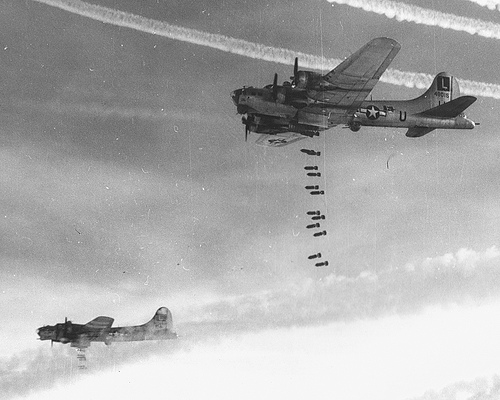
answer was no. Air strikes could take out some of Iran’s nuclear
facilities, but there was no way to eliminate all of them.
Some of the
nuclear labs were located in heavily populated areas; others were deep
underground. And Iran’s ability to strike back by
unconventional means, especially through its Hizballah terrorist
network, was formidable. The military option was never officially taken
off the table. At least, that’s what U.S. officials always said.
But the
emphasis was on the implausibility of a military strike. “Another war in the middle East is the last thing we need,”
Secretary of Defense Robert Gates wrote in 2008. It would be “disastrous
on a number of levels.”
Gates is sounding more belligerent these days. “I
don’t think we’re prepared to even talk about containing a nuclear
Iran,” he told Fox News on June 20. “We do not accept the idea of Iran
having nuclear weapons.” In fact, Gates was reflecting a new reality in
the military and intelligence communities. Diplomacy and economic
pressure remain the preferred means to force Iran to negotiate a nuclear
deal, but there isn’t much hope that’s going to happen. “Will
[sanctions] deter them from their ambitions with regards to nuclear
capability?” CIA Director Leon Panetta told ABC News on June 27.
“Probably not.” So the military option is very much back on the table.
RAW STORY– How can a company allegedly responsible for killing 17 unarmed civilians in Baghdad
in 2007 continue to get State Department and CIA contracts? CIA Director Leon
Panetta says there is “not much choice” because few companies have
the capabilities of Blackwater.
“Since I have become director, I have asked our agency to review every
contract we have had with Blackwater and whatever their new name is now — Xe
— to ensure first and foremost that we have no contract in which they are
engaged in any CIA operations. We’re doing our own operations. That’s important
that we not contract that out to anybody,” Panetta told ABC’s Jake Tapper
Sunday.
“But at the same time I have to tell you that in the war zone, we
continue to have needs for security. You’ve got a lot of forward bases. You’ve
got a lot of attacks on some of those bases. We’ve got to have security.
Unfortunately, there are few companies that provide that kind of
security,” Panetta continued.
“State Department relies on them. We rely on them to a certain extent.
So, we’ve bid out some of those contracts. They provided a bid that underbid
everyone else by about $26 million and a panel that we had said that they can
do the job, that they’ve shaped up their act,” he said.
“There was really not much choice but to accept that contract,”
said Panetta.
“But having said that, I will tell you that I continue to be very
cautious about any of those contracts and we’re reviewing all of the bids that
we have with that company,” he concluded.
The CIA recently
signed a new $100-million contract with Blackwater to guard its facilities
in Afghanistan.
50 TO 100 AL
QAEDA IN AFGHANISTAN
Panetta also told ABC’s Jake Tapper that he estimates there are somewhere in
the vicinity of 50 to 100 Al Qaeda operatives inside Afghanistan.
“There’s no question that the main location of Al Qaeda is in the
tribal areas of Pakistan,”
he
said.
Faiz
Shakir at ThinkProgress notes that, with approximately 100,000 US
troops in Afghanistan,
that works out to 1,000 troops per Al Qaeda agent.
FEDS WON’T CHARGE BLACKWATER IN ATTEMPT TO BREAK SANCTIONS
The US won’t
charge Blackwater over its attempts to secure security contracts in restive
southern Sudan,
even though the company’s attempts evidently violated sanctions placed on Sudan
by the US, McClatchy
news service reports.
The effort to drum up new business in East Africa by
Blackwater owner Erik Prince, a former Navy SEAL who had close ties with top
officials in the George W. Bush White House and the CIA, became a major element
in a continuing four-year federal investigation into allegations of sanctions
violations, illegal exports and bribery.
The Obama administration, however, has decided for now not to bring criminal
charges against Blackwater, according to a U.S.
official close to the case.
Had the company been indicted, it could have been suspended from doing
business with the U.S.
government, and a conviction could have brought debarment from all government
contracts, including providing guard services for the CIA and State Department
in war zones.
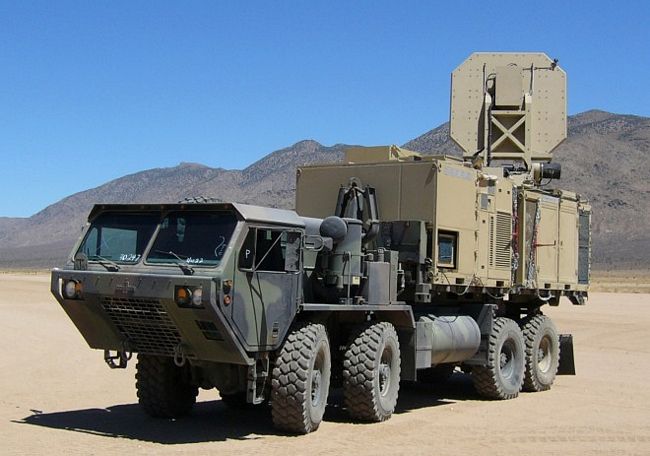
WIRED– The U.S. mission in Afghanistan centers around swaying locals to its
side. And there’s no better persuasion tool than an invisible pain ray
that makes people feel like they’re on fire.
OK, OK. Maybe that isn’t precisely the logic being employed
by those segments of the American military who would like to deploy the Active
Denial System to Afghanistan. I’m sure they’re telling themselves
that the generally non-lethal microwave weapon is a better, safer crowd
control alternative than an M-16. But those ray-gun advocates better
think long and hard about the Taliban’s propaganda bonanza when news
leaks of the Americans zapping Afghans until
they feel roasted alive.
An Air Force military officer and a civilian employee at the Air
Force Research Laboratory are just two of the people telling Danger Room
co-founder and AOL News ace Sharon Weinberger
that the vehicle-mounted “block 2″ version of the pain ray is in the
warzone, but hasn’t been used in combat.
[Update: “We are currently not testing the Active
Denial System in Afghanistan,” Kelley Hughes, spokesperson for the Joint Non-Lethal Weapons Directorate,
tells Danger Room.
So I ask her: Has it been tested previously? She hems and haws. “I’m
not gonna get into operational,” Hughes answers.
Hughes also disputes the assertion that Active Denial creates a
burning feeling. “It’s an intolerable heating sensation,” she says.
“Like opening up an oven door.”]
I pinged Gen. Stanley McChrystal’s staff about the use of Active
Denial in Afghanistan. I’ll let you know if I hear anything back. But a
few months ago, a source told me that a representative from the Joint
Non-Lethal Weapons Directorate was in Afghanistan. Did that mean Active
Denial was about to be put into action? Nope, the source said. “She’s
just out getting some atmospherics on the use of non-lethals.”
Update 2: “The active denial system is in the country,” e-mails
Lt. Col. John Dorrian, a spokesman for Gen. McChrystal. “However, it
has not been used operationally and no decision has been made at this
time to deploy it.”
WSWS– Iraq war veteran Ethan McCord, who is seen running with an Iraqi child in
his arms in the video posted by WikiLeaks of a July 2007 massacre of civilians
in Baghdad, talked to the World Socialist Web Site about the impact of
this and similar experiences in Iraq.
The video, which records the shocking deaths of at least 12 individuals,
including two Iraqi journalists employed by Reuters, has been viewed more than
6 million times on the Internet.
McCord, together with another former member of the company, Josh Stieber,
have addressed an open “Letter
of Reconciliation” to the Iraqi people taking responsibility for their role
in this incident and other acts of violence. Both soldiers deployed to Iraq
in 2007 and left the Army last year.
In the letter, McCord and Stieber said, “…we acknowledge our part in the
deaths and injuries of your loved ones.” They insisted that “the acts depicted
in this video are everyday occurrences of this war: this is the nature of how
US-led wars are carried out in this region.”
The night before speaking to the WSWS, Ethan McCord had learned that the
widow of one of the dozen men killed—the father of the two children he tried to
rescue—had forgiven him and Stieber for their role in the incident.
Ahlam Abdelhussein Tuman, 33, told the Times of London:
“I can accept their apology, because they saved my children and if it were not
for them, maybe my two little children would be dead.”
Her husband, Saleh Mutashar Tuman, had arrived on the scene of the carnage
caused by a US Apache helicopter firing into a crowd and attempted to aid the
wounded. The helicopter opened fire again, killing him and at least one wounded
man and wounding his two children, who were sitting in his van.
The widow urged the two former soldiers to continue to speak out. “I would
like the American people and the whole world to understand what happened here
in Iraq. We
lost our country and our lives were destroyed.”
Can you explain why you and Josh Stieber wrote the “Letter of
Reconciliation” to the Iraqi people?
We originally wanted it to go to the family members of those involved that
day in the WikiLeaks video. Then in turn we wanted it to be more along the
lines of to all Iraqi people as well. We wanted the Iraqi people to know that
not everybody sees them as being dehumanized and that there are plenty of
Americans and other people who care for them as human beings and wish for them
to live long and happy lives and don’t agree with the war and the policies
behind it.
I just found out last night that the letter was shown to the family, the
children and the mother as well. She has forgiven myself and Josh and is very
happy to see the work that Josh and I are doing. There was a London
Times reporter who went there to see what they felt about the letter.
And there is one comment from the mother that she could forgive me because if
it wasn’t for me her children might be dead.
That must make you feel pretty good.
Definitely, but it doesn’t stop there for me or for Josh. We are definitely
going to continue speaking out on this and do everything we can to have our
voices heard about the policies, the rules of engagement and the war. As well,
we are hoping to set up a trust fund for the children, as we know that they’ve
had a pretty rough life afterward due to the injuries and whatnot. Hopefully,
it will get them some medical care.
Could you describe the events of that day and what your platoon was
doing?
It was much like many of the days in Iraq.
The neighborhood we were in was pretty volatile; at least it was on the rise,
with IED emplacements and with our platoons being shot at with RPGs and sniper
fire. We didn’t know who was attacking us. It was never actually really clear,
at least in my eyes, who the supposed “enemy” was.
We were conducting what were called knock-and-searches, where we would knock
on the doors of the homes and search for documents pertaining to militias or
any weapons they weren’t supposed to have or any bomb-making materials. We
didn’t really find anything at all.
We were getting ready to wrap up at about one
o’clock in the afternoon. We started to funnel into an alleyway and
started to take small arms fire from rooftops from AK-47s. We didn’t know what
was happening with the Apache helicopters. They were attached to us from
another unit to watch over us for this mission, which was called “Ranger
Dominance.”
We could hear them open fire, but those of us who were on the ground,
outside of the vehicles, had no idea what was taking place. We couldn’t hear
the radio chatter and we were pretty caught up in our own situation.
When that situation was neutralized, we were told to walk up onto the scene.
I was one of about six soldiers who were dismounted to first arrive on the
scene.
What did you see when you got there?
It was pretty much absolute carnage. I had never seen anybody shot by a
30-millimeter round before, and frankly don’t ever want to see that again. It
almost seemed unreal, like something out of a bad B-horror movie. When these
rounds hit you they kind of explode—people with their heads half-off, their
insides hanging out of their bodies, limbs missing. I did see two RPGs on the
scene as well as a few AK-47s.
But then I heard the cries of a child. They weren’t necessarily cries of
agony, but more like the cries of a small child who was scared out of her mind.
So I ran up to the van where the cries were coming from. You can actually see
in the scenes from the video where another soldier and I come up to the driver
and the passenger sides of the van.
The soldier I was with, as soon as he saw the children, turned around,
started vomiting and ran. He didn’t want any part of that scene with the
children anymore.
What I saw when I looked inside the van was a small girl, about three or
four years old. She had a belly wound and glass in her hair and eyes. Next to
her was a boy about seven or eight years old who had a wound to the right side
of the head. He was laying half on the floorboard and half on the bench. I
presumed he was dead; he wasn’t moving.
Next to him was who I presumed was the father. He was hunched over sideways,
almost in a protective way, trying to protect his children. And you could tell
that he had taken a 30-millimeter round to the chest. I pretty much knew that
he was deceased.
I grabbed the little girl and yelled for a medic. Me and the medic ran into
the houses behind where the van crashed to check whether there were any other
wounds. I was trying to take as much glass out of her eyes as I could. We
dressed the wound and then the medic ran the girl to the Bradley. You can hear
in the video where he says, “there’s nothing else I can do here; we need to
evacuate the child.”
I then went back outside and went to the van. I don’t know why. I thought
both of them were dead, but something told me to go back. That’s when I saw the
boy move with what appeared to be a labored breath. So I stated screaming, “The
boy’s alive.” I grabbed him and cradled him in my arms and kept telling him,
“Don’t die, don’t die.” He opened his eyes, looked up at me. I told him, “It’s
OK, I have you.” His eyes rolled back into his head, and I kept telling him,
“It’s OK, I’ve got you.” I ran up to the Bradley and placed him inside.
My platoon leader was standing there at the time, and he yelled at me for
doing what I did. He told me to “stop worrying about these motherfucking kids
and start worrying about pulling security.” So after that I went up and pulled
security on a rooftop.
Did you face further repercussions for what you did that day?
After coming back to the FOB [forward operating base], nobody really talked
about what had happened that day. Everybody went to their rooms; they were
tired. Some of them went to make phone calls. And I was in my room because I
had to clean the blood off of my IBA [body armor] and my uniform—the blood from
these children. And I was having a flood of emotions and having a real hard
time dealing with having seen children this way, as I’m sure most caring human
beings would.
So I went to see a staff sergeant who was in my chain of command and told
him I needed to see mental health about what was going on in my head. He told
me to “quit being a pussy” and to “suck it up and be a soldier.” He told me
that if I wanted to go to mental health, there would be repercussions, one of
them being labeled a “malingerer,” which is actually a crime in the US Army.
For fear of that happening to me, I in turn went back to my room and tried
to bottle up as much emotion as I could and pretty much just suck it up and
drive on.
You had another nine months or more still to go in your tour then?
That’s right. It was a pretty long time with having to deal with the
emotions, not only of that, but of many other days. What happened then was not
an isolated incident. Stuff like that happens on a daily basis in Iraq.
Are there other incidents that took place in the following months of
your tour that bear this out?
Yes. Our rules of engagement were changing on an almost daily basis. But we
had a pretty gung-ho commander, who decided that because we were getting hit by
IEDs a lot, there would be a new battalion SOP [standard operating procedure].
He goes, “If someone in your line gets hit with an IED, 360 rotational fire.
You kill every motherfucker on the street.” Myself and Josh and a lot of other
soldiers were just sitting there looking at each other like, “Are you kidding
me? You want us to kill women and children on the street?”
And you couldn’t just disobey orders to shoot, because they could just make
your life hell in Iraq.
So like with myself, I would shoot up into the roof of a building instead of
down on the ground toward civilians. But I’ve seen it many times, where people
are just walking down the street and an IED goes off and the troops open fire
and kill them.
During this period were you conscious that you were suffering from
post-traumatic stress?
Yes I knew, because I would be angry at everyone and everything and at
myself even more. I would watch movies and listen to music as much as possible
just to escape reality. I didn’t really talk to many people.
The other problem I had is that before the incident shown in the WikiLeaks
video, I was the gung-ho soldier. I thought I was going over there to do the
greater good. I thought my job over there was to protect the Iraqi people and
that this was a job with honor and courage and duty.
I was hit by an IED within two weeks of my being in Iraq.
And I didn’t understand why people were throwing rocks at us, why I was being
shot at and why we’re being blown up, when I have it in my head that I was here
to help these people.
But the first real serious doubt, where I could no longer justify to myself
being in Iraq
or serving in the Army, was on that day in July 2007.
How did you come to join the military?
I had always wanted to be in the military, even as a child. My grandfather
and my uncles were military. Then September 11 happened, and I decided it was
my duty as an American to join the military, so that’s what I did in 2002. I
joined the Navy. In 2005, when the Army had what they called “Operation Blue to
Green,” pulling sailors and airmen into the Army with bigger bonuses, I made a
lateral transfer.
I had pretty much had it in my head that I was going to make a career out of
the military. But going to Iraq
and dealing with the Army completely changed my outlook.
What was your reaction when you saw the WikiLeaks video?
Shock. I had dropped my children off at school one morning, came home and
turned on MSNBC, and there I am running across the screen carrying a child.
I knew immediately it was me. I know the scene. It is burned into my head. I
relive it almost every day. It was just a shock that it was up there, and it
angered me. I was angry because it was in my face again.
I had actually started to get a little bit better before the tape was
released. I wasn’t thinking about it as often; it was getting a little bit
easier to go to sleep. But then everything that I had buried and pushed away
came bubbling back to the surface. And the nightmares began again, the anger,
the feeling of being used. It all came back. It wasn’t a good feeling; it was
like a huge slap in the face.
Do you think that the way you were told to forget about the kids and
suck it up is indicative of the general culture in the military?
Yes, there is such a stigma placed on soldiers seeking mental health. It’s
like you’re showing a huge sign of weakness for needing to speak about things
or for seeking help even for getting to sleep. There’s fear of being chastised
or being made fun of. So you end up self-medicating on alcohol. And as you
probably know, alcohol is a depressant and just makes it worse.
I was self-medicating when I came home, and I was hospitalized in a mental
institute by the Army because of my problems with PTSD and self-medication.
There were many times when I felt that I could no longer take what was going
on in my head and the best thing for me to do would be to put a bullet in my
head. But each time I thought about that, I would look at the pictures of my
children and think back on that day and how the father of those children was taken
away and how horrible it must be for them. And if I were to do that, I would be
putting my children in the same position.
Do you think that the pressure to bury these problems is driven by a
fear that if you are allowed to question your own experiences, it can call into
question the nature of the war itself?
I was not able to talk about it, not able to get answers to like how I was
feeling about this, why were we doing this, what are we doing here? It was just
straight up, “You’re going to do this, and you’re going to shut up about it.”
Soldiers aren’t mindless drones. They have feelings. They have emotions. You
can’t just make them go out and do something without telling them, this is why
we’re doing it. And the pressure just builds up.
You hear in the video the Apache helicopter crew saying some things that are
pretty heart-wrenching and cold. I’m guilty of it too. We all are. It’s kind of
a coping mechanism. You feel bad at the time for what you did and you take
those emotions and push them down. That’s what the Army teaches you to do, just
push them down. And in a sense it works. It helps you get through the hard
times. But unfortunately, there’s no outlet for that anymore, once you get out
of the Army. When you get back home, there’s no one to joke around with, nobody
you can talk to about these instances.
What happens to that soldier? He’s going to blow up. And when he blows up,
more than likely it’s going to be on his family, his close friends or on
himself. So I think that’s why soldiers end up killing themselves.
So a terrible price is being paid for this war in the US itself?
Yes, I feel that just as the Iraqis, the soldiers are victims of this war as
well. Like we say in our letter to the Iraqis, the government is ignoring them
and it is also ignoring us. Instead of people being upset at a few soldiers in
a video who were doing what they were trained to do, I think people need to be
more upset at the system that trained these soldiers. They are doing exactly
what the Army wants them to do. Getting angry and calling these soldiers names
and saying how callous and cold-hearted they are isn’t going to change the
system.
What do you think drives this system? Why are they sent to do this?
As far as the hidden agenda behind the war, I couldn’t even begin to guess
what that is. I do know that the system is being driven by some people with
pretty low morals and values, and they attempt to instill those values in the
soldiers.
But the people who are driving the system don’t have to deal with the
repercussions. It’s the American people who have to deal with them. They’re the
ones who have to deal with all of these soldiers who come back from war, have
no outlets and blow up.
I still live with this every day. When I close my eyes I see what happened
that day and many other days like a slide show in my head. The smells come back
to me. The cries of the children come back to me. The people driving this big
war machine, they don’t have to deal with this. They live in their $36 million
mansions and sleep well at night.
Were you hopeful that with the 2008 election these kinds of things would
be brought to a halt. Were you disappointed that they have continued and
escalated?
I am not part of any party. Was I hopeful? Yes. Was I surprised that we are
still there? No. I’m not surprised at all. There’s something else lying
underneath there. It’s not Republican or Democrat; it’s money. There’s
something else lying underneath it where Republicans and Democrats together
want to keep us in Iraq
and Afghanistan.
I am hopeful that the video and our speaking out will help. There’s the old
adage that war is hell, but I don’t think people really understand just what a
hell war is. Until you see it first-hand, you don’t really know what’s going
on. Like I said, this video shows you an every-day occurrence in Iraq,
and I can only assume, in Afghanistan.
So I hope people wake up and see the actual hells of war.
RAW STORY– US Defense Secretary Robert Gates rejected suggestions Sunday that US forces
will move out of Afghanistan
in large numbers in July of next year under a deadline set by President Barack
Obama.
“That absolutely has not been decided,” Gates said in an interview
with Fox News Sunday.
His comment was the latest indication that the magnitude of the drawdown, if
not the deadline itself, is the subject of an intensifying internal debate at a
time when a NATO-led campaign against the Taliban is going slower than
expected.
Vice President Joe Biden, an early skeptic of the US
military buildup in Afghanistan,
was quoted as telling author Jonathan Alter recently: “In July of 2011,
you’re going to see a whole lot of people moving out. Bet on it.”
White House Chief of Staff Rahm Emanuel did not deny the Biden quote when
asked about it, but, like Gates, said that the size of the drawdown would
depend on conditions on the ground.
“Everybody knows there’s a firm date. And that firm date is a date
(that) deals with the troops that are part of the surge, the additional
30,000,” he said in an interview with ABC “This Week.”
“What will be determined at that date or going into that date will be
the scale and scope of that reduction,” he said.
General David Petraeus, the commander of US forces in the Middle
East, said last week that in setting the deadline for the surge
last year, Obama’s message was “one of urgency — not that July 2011 is
when we race for the exits, reach for the light switch and flip it off.”
Petraeus told lawmakers he would be duty-bound to recommend delaying the
redeployment of forces if he thought it necessary.
In the same hearing, the Pentagon’s policy chief, Michelle Flournoy, said a
responsible, conditions-based drawdown would depend on there being provinces
ready to be transferred to Afghan control, and that there be Afghan combat
forces capable of taking the lead.
Officials have said that training of Afghan security forces has gone slower
than expected, in part because there are not enough trainers.



 YAHOO NEWS– In late 2006, George W. Bush met with the Joint Chiefs of Staff at
the Pentagon and asked if military action against Iran’s nuclear program was feasible. The unanimous
answer was no. Air strikes could take out some of Iran’s nuclear
facilities, but there was no way to eliminate all of them.
YAHOO NEWS– In late 2006, George W. Bush met with the Joint Chiefs of Staff at
the Pentagon and asked if military action against Iran’s nuclear program was feasible. The unanimous
answer was no. Air strikes could take out some of Iran’s nuclear
facilities, but there was no way to eliminate all of them.  RAW STORY
 WIRED
WIRED WSWS
WSWS RAW STORY