Film: The Ghosts of Abu Ghraib

AMG– Award winning documentary filmmaker Rory Kennedy explores the human and political consequences of one of the most bitter scandals of the war in Iraq in this feature. In the 1960’s, a prison was built in Abu Ghraib, an Iraqi city west of Baghdad, and during the regime of Saddam Hussein it became a center of torture and abuse where political dissidents were subjected to agonizing punishment or death.

Following the United States invasion of Iraq in 2003, the prison was taken over by American military authorities, and was used as a holding facility for prisoners of war and suspected terrorists captured by U.S. forces. The prison’s reputation as a site of widespread abuse rose again when journalists discovered photographs of Iraqi prisoners being tortured and humiliated in an ugly variety of ways by American soldiers, a scandal which had a major impact on international thinking about the war. Ghosts of Abu Ghraib offers an in-depth look at the story behind the abuse of Iraqi prisoners, featuring interviews with observers on both sides of the national divide.


HBO Film, Ghosts of Abu Ghraib


© 2007 HBO

Posted in Uncategorized | 1 Reply

Pakistanis Belief on Drones: Perceptive or Paranoid?

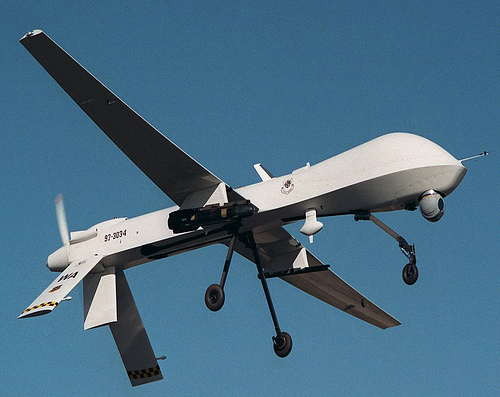
MEDIA ROOTS- Fighting wars with robots is becoming an increasingly popular way for the US government to engage in combat. With the lack of US troop presence in the country, people might hardly consider America to be at war with Pakistan. However, US drone strikes in the region have dramatically escalated under the Obama administration, destroying thousands of families and further devastating the land that is still recovering from last year’s devastating floods.

Despite the government and corporate media’s propagandistic talking point about only alleged “militants” being the targets and victims of US drone strikes, the evidence compiled by independent researchers paints a more realistic picture: 90% of casualties from drone strikes are innocent civilians. Glenn Greenwald further analyzes the discrepancy between the government’s official line and the perception of Pakistanis.

Abby

***

SALON– Two weeks ago, President Obama’s former Director of National Intelligence, Adm. Dennis Blair, excoriated the White House for its reliance on drones in multiple Muslim nations, pointing out, as Politico put it, that those attacks “are fueling anti-American sentiment and undercutting reform efforts in those countries.” Blair said: “we’re alienating the countries concerned, because we’re treating countries just as places where we go attack groups that threaten us.” Blair has an Op-Ed … in The New York Times making a similar argument with a focus on Pakistan, though he uses a conspicuously strange point to make his case:

Qaeda officials who are killed by drones will be replaced. The group’s structure will survive and it will still be able to inspire, finance and train individuals and teams to kill Americans. Drone strikes hinder Qaeda fighters while they move and hide, but they can endure the attacks and continue to function.

Moreover, as the drone campaign wears on, hatred of America is increasing in Pakistan. American officials may praise the precision of the drone attacks. But in Pakistan, news media accounts of heavy civilian casualties are widely believed. Our reliance on high-tech strikes that pose no risk to our soldiers is bitterly resented in a country that cannot duplicate such feats of warfare without cost to its own troops.

Though he obviously knows the answer, Blair does not say whether this widespread Pakistani perception about civilian casualties is based in fact; if anything, he insinuates that this “belief” is grounded in the much-discussed affection which Pakistanis allegedly harbor for fabricated anti-American conspiracy theories. While the Pakistani perception is significant unto itself regardless of whether it’s accurate — the belief about drones is what fuels anti-American hatred — it’s nonetheless bizarre to mount an anti-drone argument while relegating the impact of civilian deaths to mere “belief,” all while avoiding informing readers what the actual reality is. Discussions of the innocent victims of American military violence is one of the great taboos in establishment circles; that Blair goes so far out of his way to avoid discussing it highlights how potent that taboo is.

Read the full commentary about Pakistani Belief About Drones: Perceptive or Paranoid?

Written by Glen Greenwald

© 2011 Salon

Photo by Flickr user JimNTexas

US Buys Up All Satellite War Images

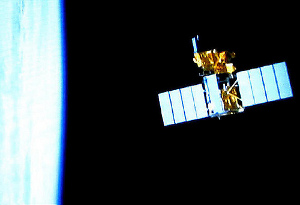
MEDIA ROOTS– In addition to throwing our country’s finances (and morals) away on the bombing of other countries, the Pentagon is also spending millions buying up all US satellite imagery in Afghanistan to make sure the stark reality of war is shielded from the western world. In America, the human cost of US bombing campaigns is never shown on corporate media outlets. When civilian casualties are reported on, they are relayed as cold statistics of the lowest estimates– no names, no faces, no stories of who these people were.

America’s wars are fought from a distance with robots, and people have never been more disconnected with what their country is sponsoring abroad. If people saw the dead bodies littering the streets of Afghanistan, they might feel more empathy and connection to the individuals who are casualties of US occuptaions. Eradicating the “us” and “them” mentality would completely undermine the logic of these endless wars– the last thing the establisment wants.

Abby

***

The GUARDIAN reports from 2001:

The images, which are taken from Ikonos, an advanced civilian satellite launched in 1999, are better than the spy satellite pictures available to the military during most of the cold war.

The extraordinary detail of the images already taken by the satellite includes a line of terrorist trainees marching between training camps at Jalalabad. At the same resolution, it would be possible to see bodies lying on the ground after last week’s bombing attacks.

Under American law, the US defence department has legal power to exercise “shutter control” over civilian satellites launched from the US in order to prevent enemies using the images while America is at war. But no order for shutter control was given, even after the bombing raids began 10 days ago.

The decision to shut down access to satellite images was taken last Thursday, after reports of heavy civilian casualties from the overnight bombing of training camps near Darunta, north-west of Jalalabad. Instead of invoking its legal powers, the Pentagon bought exclusive rights to all Ikonos satellite pictures of Afghanistan off Space Imaging, the company which runs the satellite. The agreement was made retrospectively to the start of the bombing raids.

Continue reading more of US Buys Up All Satellite War Images.

Abby

Photo by flickr user Ms Blue Sky

Our Commando War in 120 Countries

MEDIA ROOTS- It’s hard to take the government’s talk of “shared sacrifice” amidst our debt crisis and economic hardships seriously, when there isn’t more than a peep about sacrificing dough from the most overfunded department of all: defense. The US government spends half of all taxpayer revenue on war. Yet, instead of acknowledging how the department’s increasingly bloated budget (which has doubled since 2001) might have something to do with the fact that our country is broke, the debt deal is set to mostly make cuts to severely depleted social programs.

Cutting a significant fraction of military spending isn’t even on the table, because of the western world’s blind acceptance to needing a global “war on terrorism.” Therefore, the cost of imperialism trumps the needs of the middle and working class once again.

However, maintaining American hegemony does not just mean strategically occupying resourceful Middle Eastern countries– it also means the funding and training of extensive special operations armies that are currently engaged in over 120 countries in the world, carrying out covert missions such as “assassinations, counterterrorist raids, long-range reconnaissance, intelligence analysis, foreign troop training, and weapons of mass destruction counter-proliferation operations.” Alternet takes a look at an under reported element of US imperialism that isn’t on too many Americans’ radars: the secret forces that are currently interfering with 120 other countries’ political processes and democratic evolutions– all at the expense of the US taxpayers.

Abby

***
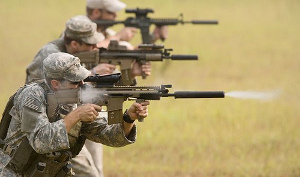
ALTERNET– Somewhere on this planet an American commando is carrying out a mission.  Now, say that 70 times and you’re done… for the day.  Without the knowledge of the American public, a secret force within the U.S. military is undertaking operations in a majority of the world’s countries.  This new Pentagon power elite is waging a global war whose size and scope has never been revealed, until now.

After a U.S. Navy SEAL put a bullet in Osama bin Laden’s chest and another in his head, one of the most secretive black-ops units in the American military suddenly found its mission in the public spotlight.  It was atypical.  While it’s well known that U.S. Special Operations forces are deployed in the war zones of Afghanistan and Iraq, and it’s increasingly apparent that such units operate in murkier conflict zones like Yemen and Somalia, the full extent of their worldwide war has remained deeply in the shadows.

Last year, Karen DeYoung and Greg Jaffe of the Washington Post reported that U.S. Special Operations forces were deployed in 75 countries, up from 60 at the end of the Bush presidency.  By the end of this year, U.S. Special Operations Command spokesman Colonel Tim Nye told me, that number will likely reach 120.  “We do a lot of traveling — a lot more than Afghanistan or Iraq,” he said recently.  This global presence — in about 60% of the world’s nations and far larger than previously acknowledged — provides striking new evidence of a rising clandestine Pentagon power elite waging a secret war in all corners of the world.

The Rise of the Military’s Secret Military

Born of a failed 1980 raid to rescue American hostages in Iran, in which eight U.S. service members died, U.S. Special Operations Command (SOCOM) was established in 1987.  Having spent the post-Vietnam years distrusted and starved for money by the regular military, special operations forces suddenly had a single home, a stable budget, and a four-star commander as their advocate.  Since then, SOCOM has grown into a combined force of startling proportions.  Made up of units from all the service branches, including the Army’s “Green Berets” and Rangers, Navy SEALs, Air Force Air Commandos, and Marine Corps Special Operations teams, in addition to specialized helicopter crews, boat teams, civil affairs personnel, para-rescuemen, and even battlefield air-traffic controllers and special operations weathermen, SOCOM carries out the United States’ most specialized and secret missions.  These include assassinations, counterterrorist raids, long-range reconnaissance, intelligence analysis, foreign troop training, and weapons of mass destruction counter-proliferation operations.

Read more about Our Commando War in 120 Countries: Uncovering the Military’s Secret Operations In the Obama Era.

© 2011 AlterNet

Photo by Flickr user world_armies

Exclusive: Inside Darpa’s Secret Afghan Spy Machine

WIRED– The Pentagon’s top researchers have rushed a classified and controversial intelligence program into Afghanistan. Known as “Nexus 7,” and previously undisclosed as a war-zone surveillance effort, it ties together everything from spy radars to fruit prices in order to glean clues about Afghan instability.

The program has been pushed hard by the leadership of the Defense Advanced Research Projects Agency. They see Nexus 7 as both a breakthrough data-analysis tool and an opportunity to move beyond its traditional, long-range research role and into a more active wartime mission.

But those efforts are drawing fire from some frontline intel operators who see Nexus 7 as little more than a glorified grad-school project, wasting tens of millions on duplicative technology that has nothing to do with stopping the Taliban.

“There are no models and there are no algorithms,” says one person familiar with the program, echoing numerous others who spoke on condition of anonymity because they are not authorized to discuss the program publicly. Just “200 lines of buggy Python code to do what imagery analysts do every day.”

During a decade of war, American forces have gathered exabytes of information on its enemies in Afghanistan. Nexus 7 aims to tap that data to find out more about the U.S.’ alleged friends: the people of Afghanistan, and how they interact with their government and with one another.

Read more about Exclusive: Inside Darpa’s Secret Afghan Spy Machine

© 2011 Wired

Photo by Flickr user RayVanEng

Page 48 of 79<<...4647484950...>>