Israel Curious, Part 3 of 3: State & Local Support

Read part one of this series about Israeli espionage and part two about UN colonialism.
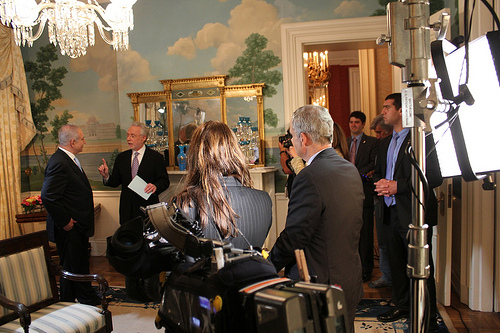
MEDIA ROOTS – When making decisions about Middle East policy, the U.S. Congress and the Executive Branch frequently bow to the whims of a foreign nation in order to remain in AIPAC’s good graces. Billions of U.S. taxpayer dollars are up for grabs if AIPAC can properly manipulate U.S. foreign policy, at which it excels with unparalleled fluency through intimidation and legalized bribes.

As the Salon explains, “the sight of [Israeli Prime Minister Benjamin] Netanyahu who, having defied and insulted the American president, addressing a joint session of Congress with congressmen and senators of both parties jumping to their feet like jack-in-the-boxes to show their support, was all anyone needed to understand Israel’s power in the American Congress.”

U.S. Senators and Representatives prioritize Israel

Almost all U.S. Senators and Representatives prioritize Israel’s interests over the United States’ when bowing to AIPAC’s persistent circulation of many harmful resolutions throughout the U.S. Congress. It is incumbent upon Republicans and Democrats, as self-proclaimed patriots, to shun the lobby of any foreign nation in favor of true U.S. interest. Yet the status quo, under which the Israeli Prime Minister receives 29 bi-partisan standing ovations compared to the U.S. President’s 25 partisan standing ovations, remains woefully askew. Former Senator Charles Mathias (R – MD) cautions us to draw distinction “between ethnicity, which enshrines American life and culture, and organized ethnic interest groups, which sometimes causes that derogate from the national interest” (Blitzer: 134).


Wolf Blitzer also counsels, “those American Jewish political activists who are the most successful in supporting AIPAC are those who are Zionists first, Democrats or Republicans second” (Blitzer: 132). This describes Eric Cantor (R – VA) perfectly. When President Obama offered Tel Aviv lucrative incentives in order for them to temporarily halt colonization of the West Bank, Cantor pledged to support the Israeli Prime Minister over the U.S. President. Cantor effectively vowed to protect Israeli interests against U.S. interests. One can think of no other historical example of a Congressional representative pledging loyalty to a foreign leader on an issue of such international significance, in direct opposition to his own President. Even Ronald Reagan, the mythical idol of all Republicans, had told Israeli proxies to mind their own business and stop interfering with the United States’ own self-interest (Blitzer: 135-136).

American gifts to Israel remains top priority, despite own financial crisis

Lately, Cantor has attempted to hide the United States’ annual $3 billion gift to Israel within the Department of Defense budget, in an effort to safeguard it from fiscal oversight. Wolf Blitzer explains that this move is unlikely to happen because the State Department counts on the gift to Israel in order to finagle the State Department’s foreign aid bill through U.S. Congress each year; foreign aid is not a strong issue in many lawmakers’ eyes, but giving money to Israel is (Blitzer: 7). Throughout such twisted maneuvering, no elected U.S. official possesses the temerity to even question the illogic of aiding Israel at all.

Another AIPAC Congressman has assured Israel that the United States’ worst financial crisis since the Great Depression will have no impact on aid to Israel. The United States is rife with unemployment, attempting to recover from a mortgage crisis, struggling with decrepit infrastructure, and waging global war, yet subsidizing the Israeli military remains a top priority with the U.S. Congress. The historical record has taken note.

The U.S. Senate operates in lockstep with the Israeli political right. In June 2011, a resolution promising to halt aid to the Palestinian Authority if it seeks statehood in the UN General Assembly passed unanimously in the U.S. Senate. Senator Ben Cardin (D – MD) summarized the Senate’s position: “The Senate has delivered a clear message to the international community that the United Nations recognition of a Palestinian state at this time does not further the peace process… A permanent and peaceful settlement of the Israeli-Palestinian conflict can only be achieved through direct Israeli-Palestinian negotiations.” AIPAC issued a statement “applauding the resolution.” On the bright side, Israel finally allowed a shipment of cars into Gaza for the first time since 2007. As Wolf Blitzer reminds, Israeli residents “of course, have a well-earned reputation for being charitable” (Blitzer: 125).

What happens to Palestine?

Prior to the U.S. Senate’s ugly display, half of U.S. Democratic Senators urged President Obama to suspend assistance to the Palestinian Authority if Fatah continued to participate in a unity government with Hamas. One week later, the House Republican Majority Leader and Democratic Minority Whip circulated a resolution calling for sanctions against the Palestinian Authority if it pursued statehood recognition in concert with the unity government. AIPAC’s efforts paid off. In July 2011, the House of Representatives passed Resolution 268, urging President Obama to suspend financial assistance to the Palestinian Authority if it proceeded with efforts to achieve statehood at the United Nations. Professor Zunes, of the University of San Francisco, puts Congress’ actions in perspective:

“Congress went on record reiterating their ‘strong opposition to any attempt to establish or seek recognition of a Palestinian state outside of an agreement negotiated between Israel and the Palestinians.’ It called on Palestinian leaders to ‘cease all efforts at circumventing the negotiation process, including through a unilateral declaration of statehood or by seeking recognition of a Palestinian state from other nations or the United Nations.’ It called upon President Obama to ‘announce that the United States will veto any resolution on Palestinian statehood that comes before the United Nations Security Council which is not a result of agreements reached between the Government of Israel and the Palestinians’ and to ‘lead a diplomatic effort to oppose a unilateral declaration of a Palestinian state and to oppose recognition of a Palestinian state by other nations, within the United Nations and in other international forums prior to achievement of a final agreement between the Government of Israel and the Palestinians.’

“Reread the above paragraph and replace ‘Palestinians’ with ‘Namibians’ or ‘East Timorese’ or ‘Kenyans’ or ‘Algerians,’ or any other people under foreign occupation in recent decades, and replace ‘Israel’ with the respective occupying power, and the implication of this resolution becomes clear: Both the Republican Party and the Democratic Party are still trapped in an early 20th century colonialist mindset which believes that colonized people should only be allowed independence under the terms and conditions granted them by their occupiers. Not a single member of the U.S. Senate and only a handful in the House were willing to consider the idea that, as a territory under foreign belligerent occupation, the Palestinians of the West Bank (including East Jerusalem) and the Gaza Strip have a legal right to self-determination under international law, and that not Israel, the United States or any other government can legally deny that to them. Yet, both major parties are still blinded by a pre-Wilsonian belief in the right of conquest, whereby political freedom can only be allowed to the extent of what may be voluntarily granted by the conqueror (which both Republicans and Democrats have repeatedly referred to as potential ‘painful concessions’ by Israel).”

Even a majority of Israelis think the Israeli government should accept a UN resolution recognizing an independent Palestinian state. Despite this reality, AIPAC’s hard-right stance forces the corrupt U.S. Congress and the Executive branch to facilitate colonialism. Even a former Israeli Defense Minister, Binyamin Ben-Eliezer, acknowledges it is in Israel’s best interest to recognize a Palestinian state. In sum, AIPAC has pulled U.S. policymakers farther right than most Israelis.

Consider HR 4133, which demands: the U.S. veto any UN resolutions that are remotely critical of Israel; give Israel all “necessary” military support; throw even more money at Israel’s military occupation; give the Israeli government greater access to U.S. intelligence, including classified satellite imagery; allow Israel to participate more in NATO activities; tie Israel and the U.S. so closely together that the Pentagon is forced to back Israel regardless of U.S. strategic interests; allow the Israeli Air Force to train with greater frequency on United States soil; and supply Israel with more sensitive weaponry [read: bunker-busting bombs and cluster munitions]. Israel already possesses nuclear weapons, some of the world’s finest special operations forces, the most ruthless intelligence service, disciplined infantry units, and a top-notch Air Force. So why pepper them with more gifts?

AIPAC flies U.S. Congress to Tel Aviv for their summer vacations


Vociferous advocacy for hard-right Israeli policies extends to state and local legislatures

The Colorado Senate and House of Representatives recently passed Senate Joint Resolution 27, recognizing Israel as a homeland for the Jewish people, inaccurately commending Israel as the lone democracy in the Middle East, and affirming a “close affinity” between Colorado residents and the Israeli people.  

Florida’s House Federal Affairs Subcommittee passed HR 1447 unanimously, which commends Israel on the “cordial and mutually beneficial relationship with the United States and with the state of Florida and supports Israel in its legal, historical, moral, and God-given right of self-governance and self-defense upon the entirety of its own lands, recognizing that Israel is neither an attacking force nor an occupier of the lands of others, and that peace can be afforded the region only through a whole and united Israel governed under one law for all people.”

The state of Florida recognizes Israel’s inherent right to Judea, Samaria and Jerusalem and unanimously commends Israel as “the greatest friend and ally of the United States in the Middle East.” Embracing ignorance, Florida legislature affirms “haters of Israel also hate, and seek to destroy, the United States of America.”

According to the Executive Director of Florida’s Zionist Organization of America (ZOA) branch, “the strong and honest language used in the [Florida] resolution recognizes the rights of the Jewish people to the Land of Israel, and that Jerusalem and the so-called West Bank must remain united under Israeli sovereignty for the sake of peace and security.” Hundreds of Christian Zionists joined ZOA in lobbying for Resolution 1447. The ZOA national president stated:

“It is imperative to note the particularly important role played by Israel’s Christian friends who joined with the Jewish community to urge the passage of this resolution… The Land of Israel is the rightful homeland of the Jewish People, and the enemies who seek Israel’s destruction are also self-avowed enemies of America.”

The South Carolina General Assembly recently passed Resolution 4339, which commended “the nation of Israel for its relations with the United States of America and with the state of South Carolina.” Resolution 4399 clings tightly to religious fervor:

“The roots of Israel and the roots of the United States are so intertwined that it is difficult to separate one from the other under the word and protection of almighty God; Those same haters of Israel also hate, and seek to destroy, the United States of America; Recognizing that Israel is neither an attacking force nor an occupier of the lands of others, and that peace can be afforded the region only through a united Israel governed under one law for all people.”

The Utah legislature unanimously affirmed “cultural, economic, military and security bonds to Israel” and encouraged the Governor to visit Israel on a trade mission.

The flagrant falsehoods, which are perpetuated by the Centennial State, the Sunshine State, the Palmetto State, and the Beehive State in pseudo-solidarity with Israel, are contrary to humanity’s common decency. However, they’re quite rational expressions when one considers how AIPAC “has sought out younger Jewish political activists in local city councils, state legislatures, and the better law firms.” “Whenever they cooperate with AIPAC,” “both the Jewish Lobby on Capitol Hill and the local Jewish organizations benefit.” As a result, Jewish communities around the country “are constantly approaching their representatives and senators. They stay on top of the issues. By doing so, they become politically persuasive” (Blitzer: 133).

On the municipal level, the Philadelphia City Council, which should be tackling issues of poverty, education, and budgetary woes, voted to oppose Palestinian efforts of independence at the United Nations. The City Council, which has passed three other resolutions relating to Israel since 2000, neglected to see the irony in their symbolic suppression of Palestinian self-determination: Philadelphia was the birthplace of the United States’ unilateral independence.

Colorado, Florida, South Carolina, Utah, and Philadelphia are just a few examples of an invasive phenomenon. AIPAC is increasingly targeting state and local legislatures, with the explicit intent of spreading disinformation and dragging U.S. communities into the bellicose side of a distant fight.

The U.S. Legislative and Executive branches treat Israel like the fifty-first state.


***

Christian Sorensen for Media Roots

Photo by Flickr user IsraelinUSA.
Israel Curious, Part 2 of 3: UN and Colonialism

Read part one of this series about Israeli espionage against the U.S.

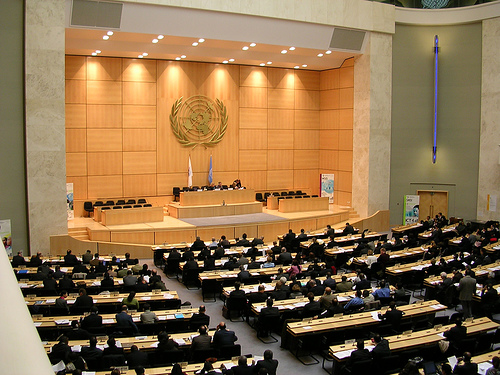
MEDIA ROOTS – The United States boasts a storied history of protecting Israel on the United Nation Security Council (UNSC) and was the lone dissenter against the most recent UN resolution that condemned Israeli settlements in the West Bank. The fourteen other Security Council members backed the resolution. One could almost hear the global community’s collective wheeze when U.S. Ambassador Susan Rice voiced the United States’ incongruence on 18 February 2011.
While claiming the United States strongly opposes Israeli settlement activity, Rice still refused to vote in line with the decency of the international community. Instead, she opted to pepper the world with diplomatic platitudes, as if that lessened the blow. By claiming her actions are somehow helpful to the peace process – although one cannot be sure how voting to perpetuate colonization in violation of international law is helpful – Susan Rice vetoed the resolution and continued the U.S. tradition of irresponsibility. Employing the utmost diplomatic circumlocution, Secretary of State Clinton deemed the colonies “illegitimate,” not illegal.

Reaction to the February 2011 veto was enlightening:

“The Anti-Defamation League, the American Jewish Committee, the Jewish Council for Public Affairs, B’nai B’rith International and the American Israel Public Affairs Committee all issued statements expressing appreciation for the veto. “Exercising the veto is a painful decision, particularly for an administration with a deep and sincere commitment to multilateralism,” said David Harris, the executive director of the American Jewish Committee. “That is why we salute President Obama and his team for their courage in vetoing this mischievous resolution, which would have caused irreparable damage to the future prospects of direct talks between Israel and the Palestinian Authority.”

Contrary to David Harris’ assertion, the only mischievous behavior is the United States’ tradition to abuse its power. From 1972 – 2006, the U.S. vetoed over forty UN Security Council resolutions that criticized or condemned Israel’s actions.

Russia and China have vetoed a series of UN Security Council resolutions, which condemn Syria over its harsh crackdown on anti-government protestors. Susan Rice condemned the Russian/Chinese October 2011 veto, saying it was a “cheap ruse by those who would rather sell arms to the Syrian regime than stand with the Syrian people.” She then concluded “the United States is outraged that this council has utterly failed to address an urgent moral challenge and a growing threat to regional peace and stability.” Surely she sees the irony in her words. Firstly, USA’s use of the veto to protect Israel from criticism is also a “cheap ruse,” whereby the United States government prefers to bow to AIPAC pressure and give Israel weaponry (paid for by the U.S. taxpayer) rather than stand with the Palestinian people and the Israeli citizens who want justice. Secondly, the council’s failure “to address an urgent moral challenge and a growing threat to regional peace and stability” is precisely what the United States does each time it vetoes resolutions critical of Israel’s destructive policies. Israeli foreign policy can easily be categorized as a “growing threat to regional peace and stability, yet the U.S. government continually blocks any progress confronting this particular “urgent moral challenge.” Syria’s brutal internal crackdown and Israel’s ethnic cleansing of historical Palestine are worthy of international condemnation. To condemn the former while protecting the latter exposes the United States’ double-standards and failed policies.

German Chancellor Angela Merkel’s words are an accurate reflection of the international community’s frustration in dealing with Israel’s obstinacy and the United States’ complicity. She reportedly communicated to Prime Minister Netanyahu, after Germany voted in favor of condemning Israel’s settlement activity: “How dare you? You haven’t made a single step to advance peace.” The Chairman of the Bundestag’s Foreign Affairs Committee clarified Chancellor Merkel is “trying to explain to the Israeli government that with the extraordinary changes taking place across the Middle East, time is not on its side when it comes to resolving the conflict with the stateless Palestinians.” British politician Lord Dykes acknowledged the United States’ tradition of harm by stating: “a seemingly unanimous decision in a moderately worded resolution asking Israel to obey its international law duties in occupied Palestine was deliberately – I am sad to use the verb – wrecked by the U.S.” Notably, Netanyahu’s former colleagues, such as Ehud Olmert and Ariel Sharon, have referred to him as a liar (Sharon). The former French President Nicolas Sarkozy also referred to Netanyahu in one word: “liar.” The list goes on, as even the former chief of Shin Bet has no confidence in Netanyahu as a leader.

A leading Zionist pundit unintentionally describes Netanyahu’s view with alarming candor: “Israel, of course, says it’s all the Palestinians’ fault. It says their UN gambit is just the latest move in their campaign to isolate and delegitimize Israel, proving again that they won’t accept Israel’s existence. Israel has no choice but to resist their assault using the tools at its disposal, including the American veto.”

This pundit’s view is enlightening in many ways. Firstly, Netanyahu and many in the Israeli government view the U.S. veto as a “tool at its disposal.” Israel uses the United States’ position on the UN Security Council as an instrument to be manipulated, similar to the manner in which AIPAC views the U.S. Congress. During a 2006 interview with Bill Maher, Netanyahu insinuated as much when he noted: “the secret is that we have America.” In his capacity as Prime Minister of Israel, Ariel Sharon had conveyed a similar, disturbing view during a 3 October 2001 interview with Kol Yisrael radio. Secondly, instead of viewing the Palestinian bid for statehood as an attempt at self-determination, the Israeli propaganda machine spins it as a refusal to accept Israel’s existence. Israel and the United States both declared independence unilaterally but the populaces seem quick to forget. Haaretz columnist Gideon Levy underscored this severety from the Holy Land: “Five million Israelis are deeply convinced today that they are right and seven billion people of the world are wrong.”

Continued Colonialism

The Israeli government persistently colonizes the West Bank, facilitated by the U.S. government’s unconditional, unapologetic support. In referencing the war of 1967, former Israeli Attorney General Michael Ben Yair concedes the war “continues to this day and is the product of our choice. We enthusiastically chose to become a colonialist society, ignoring international treaties, expropriating lands, transferring settlers from Israel to the occupied territories, engaged in theft and finding justification for all this” (Stern: 103). Yair frames the situation well.

This sad political reality, implemented by a relentless ideology, has moved roughly half a million Israelis into more than 100 colonies across the West Bank and East Jerusalem since 1967, amounting to a de facto annexation of land for Israeli use. Over 20,000 Israeli colonists now live in the Golan Heights alone, which was Syrian territory prior to 1967. Meanwhile, Israel’s separation barrier in the West Bank, which many refer to as an apartheid wall, carves chunks out of the future de facto Palestinian state and places favorable amounts of water resources on Israel’s side of the wall. Israeli colonies, which Democratic National Committee Chairwoman Debbie Wasserman Schultz (D – Florida) prefers to call “suburbs,” elsewhere receive a disproportionate share of the water supply.

USA and Israel walk hand in hand. For example, Shimon Peres’ April 2011 visit to Washington, D.C., coincided with a Jerusalem planning committee’s approval of 942 housing units in the Gilo neighborhood, south of Jerusalem, which the international community considers illegal. On 4 August 2011, the Israeli Interior Ministry approved of 900 new homes to be built in the Har Homa area, amounting to a de facto slice between Palestinian neighborhoods in East Jerusalem and Bethlehem. Less than two weeks later, Israeli officials approved 277 new homes in the West Bank colony of Ariel. One month later, Israel’s government approved 1,100 additional housing units to be built in the Gilo area of occupied east Jerusalem. Another 2,600 housing units were given the green light two weeks later. After Palestine received membership in UNESCO, Israel expedited construction of roughly 2,000 homes in East Jerusalem and the West Bank, all of which would “remain in Israeli control under any future peace agreement,” according to Prime Minister Netanyahu. One month later, the Israeli government approved more colonial construction in the dead center of a Palestinian neighborhood in Jerusalem. In April 2012, the Israeli government threw its full weight behind this misery and authorized the West Bank colonies of Bruchin, Rechelim, and Sansana. Israel’s ethnic cleansing of Palestinians in the West Bank in 2011 rose eighty percent when compared to 2010 rates, while the Israeli government increased its spending on West Bank colonies by 38 percent over the same period. 600 Palestinians lost their homes in the first five months of 2012. Israeli officials cite lack of “proper permits” as one pretext for bulldozing Palestinian homes, restaurants, schools, and even demolishing residential solar panels. On 6 June 2012, Netanyahu ordered the construction of 300 new homes in the West Bank colony of Beit El.  Zionism marches on, enabled by the U.S. government.

Israeli officials point to symbolic, menial efforts as proof they care to comply with international consensus. As of 1 March 2011, the Israeli government began dismantling all “illegal settlement outposts built on privately-owned Palestinian land.” Such a concession sounds tremendous, but it only applied to three outposts. Moreover, Israeli authorities simultaneously began to “legalize” illegal colonies built on state land, and even going so far as confiscating an olive grove for “agricultural cultivation” and granting the plot of land to a colonist “with no known farming skills.” Overall, the Israeli government stripped almost 250,000 Palestinians of their residency rights from 1967-1994, a figured which doesn’t include the hundreds of thousands of Palestinians who were driven from their homes around 1948. As a result, Israel gains far more than it loses.

Israel’s colonial obstinacy manifests itself in many forms. As President Obama delivered a major speech on events in the Middle East on 19 May 2011, the Israeli government approved plans to build more than 1,500 new homes on two settlements around East Jerusalem. Arieh Eldad, a member of the Israeli Knesset and head of the Hatikva faction, stated “I hope that [this] sends a clear message to the American administration. I hope that the new building of new settlements next week will send a similar message.” Contrary to Mr. Eldad’s assertions, the United States’ active role in perpetuating Israeli colonization of the West Bank has aligned criminally with Israeli deviance:

“The endorsement of ‘land swaps’ by President Obama, which is a euphemism for the annexation by Israel of major Jewish settlement blocs in the West Bank, is one demonstration of the unquestioning acceptance by the United States of the Israeli narrative of the conflict. By accepting the ‘land swap’ argument, President Obama has in effect declared that it is legitimate for the occupying power to settle and colonize occupied lands. This suits the settler-colonial mentality of the Israeli establishment for, despite arguments to the contrary, Israel itself is a product of settler colonialism with the British mandate over Palestine acting as its midwife. It was British rule that facilitated Jewish migration from Europe to Palestine and laid the basis of the demographic transformation of the mandated territory with the Jewish population in Palestine rising from approximately 10 percent at the beginning of the mandate to roughly 30 percent at its end. An American position endorsing Israel’s annexation of settler colonies is bound to put it at odds with the majority opinion in the international system.”

The modicum of pressure, which President Obama placed on Israel to freeze settlement expansion, was neither laudable nor realistic without proper confrontation of AIPAC. Backing down only days later, President Obama looked like a clown in front of the international community, further undermining the United States’ arrogation of global leadership. Wolf Blitzer foretold of such an occurrence in the event a U.S. administration got tough with Israel on any number of issues:

“If the U.S. administration did pressure Israel and was subsequently forced to back down in the face of reactions from Congress, the Jewish community, and others in the United States as well as Israel and around the world, there would be another price to pay. The limits of U.S. policy would be advertised for all to see. No president wants to show off American impotence” (Blitzer: 14).

According to Blitzer, such pressure would stem from a comprehensive Israeli mobilization against the U.S. presidential administration, an anti-administration enterprise directed by the Jewish community and allegations of anti-Semitism (ibid: 13-14). The Oracle at Blitzer’s predictions came true.

The U.S.-Israel relationship is one of paradox. Israel spies ferociously against the United States, while the U.S. Congress and Executive Branch work overtime to support Israel “unconditionally.” (President Obama even awarded Israeli President Shimon Peres the U.S. Presidential Medal of Freedom). Meanwhile, U.S. public is sound asleep. Until we wake up, the Israeli government will continue to capitalize upon this lopsided relationship.

Christian Sorensen for Media Roots

***

Photo by Flickr user lilivanili.

Israel Curious, Part 1 of 3: Espionage

MEDIA ROOTS – The AP recently reported that Israel is still considered the premier counterintelligence threat to the CIA’s Near East Division. Other media have reported similar findings over the years. The Associated Press has reported the fundamental paradox underlying the U.S.-Israel relationship: Israel spies ferociously against the United States, while the U.S. Congress and Executive Branchwork overtime to support Israel “unconditionally.”

Best friends

During a March 2011 trip to Israel, U.S. Defense Secretary Robert Gates commented how he couldn’t recall an era in his decades of public service when any two countries shared a closer military relationship than the United States and Israel. He remarked that the U.S. and Israel are cooperating closely in many areas including missile defense technology. One must wonder what Robert Gates, a veteran of the Cold War, thought about the September 2010 arms deal signed between Israel and Russia, Mossad’s decision to withhold vital intelligence from the USA regarding an imminent truck bomb, which killed over 240 U.S. Marines on 23 October 1983 (Ostrovsky: 320-322), Israel’s sale of U.S. military technology to China, or the June 2012 revelation that Israel and Russia are cooperating together to develop an advanced unmanned aerial vehicle. Gates eventually summoned a modicum of courage behind closed doors and referred to Israeli Prime Minister Benjamin Netanyahu as an “ungrateful ally.” 

In his capacity as U.S. Secretary of Defense, Gates was undoubtedly aware that Israel spies ferociously on the United States, obtains U.S. weaponry through licit and illicit means, and bootlegs U.S. military technology with a precision that puts Beijing to shame. Despite this threat, the CIA doesn’t spy on Israel; Even though Israel is theoretically an intelligence target, most of the U.S. Intelligence Community refrains from spying on Israel due to “the complexities of U.S./Israel politics” (Jones: 50). Espionage against Israel is mostly limited to counter-intelligence work, which is conducted stateside by the FBI.

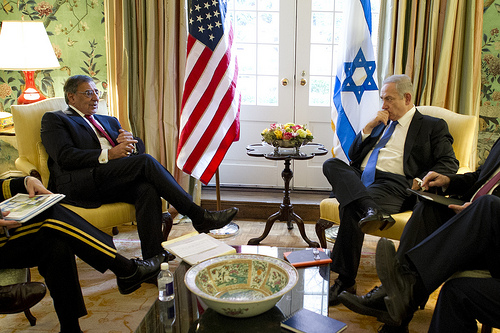
Leon Panetta, who succeeded Robert Gates as U.S. Defense Secretary, traveled to Israel in October 2011. Panetta’s trip mirrored Gates’ in many ways. Following the United States’ great tradition of sycophancy towards Israel, Panetta expressed his pleasure that “the United States and Israel have a closer defense relationship today than ever in history,” in traditional areas as well as in missile defense technology, counterterrorism and joint military exercises. Sound familiar? According to Panetta, this relationship “is yielding tangible benefits” and “helping to save lives.” Like Gates, Panetta reaffirmed “the unshakeable commitment of the United States to the security of Israel,” citing specifically the battery of Iron Dome rockets given to Israel, courtesy of the U.S. taxpayers. At the beginning of August, Secretary Panetta returned to Tel Aviv and pledged fiscal and military fidelity to the Israeli government.

The trips undertaken by Gates and Panetta “reaffirm” Israel’s “security,” while making no mention of the Palestinians’security.” Both trips witness U.S. and Israeli defense officials discussing Iran’s nuclear program, while making no mention of Israel’s substantial nuclear arsenal. Both trips cite “security challenges” such as “violent extremism,” “terrorism,” and “adversarial states.” Although giving arms to Israel benefits the U.S. military-industrial complex tremendously, supporting Israel unconditionally muddles the United States’ ability to act as an impartial mediator. In other words, annually feeding the Israeli government billions of dollars exposes the United States as the world’s worst arbiter. Perhaps unintentionally, the trips undertaken by U.S. defense officials showcase how the U.S. taxpayer subsidizes the Israeli Defense (sic.) Force.  

Deeply comprimised

Israel consistently ranks among the top perpetrators of espionage against the United States, rivaling China and Russia in certain metrics, particularly economic espionage. Israeli intelligence permeates the U.S. Intelligence Community to an alarming extent through elaborate front companies, wiretapping firms, and individual Mossad assets. Simply put, Israel’s operations within the United States are extensive:

“In 2004, the authoritative Jane’s Intelligence Group noted that Israel’s intelligence organizations ‘have been spying on the U.S. and running clandestine operations since Israel was established.’ The former deputy director of counterintelligence at FBI, Harry B. Brandon, last year told Congressional Quarterly magazine that ‘the Israelis are interested in commercial as much as military secrets. They have a muscular technology sector themselves.’ According to CQ, ‘one effective espionage tool is forming joint partnerships with U.S. companies to supply software and other technology products to U.S. government agencies.’”

Stewart Nozette, a noted scientist with a high-level security clearance, was one of the most recent arrests in the FBI’s uphill struggle against Israeli espionage. In true diplomatic cowardice, “the indictment does not allege that the government of Israel or anyone acting on its behalf committed any offense under U.S. laws in this case.” Stewart is expected to serve only 13 years for treason. Numerous individuals have been investigated on allegations of spying for Israel, with many investigations closed prematurely. Individuals include Jonathan Pollard, Richard Perle, Douglas Feith, Ben-Ami Kadish, David A. Tenenbaum, and Larry Franklin. The Mossad operatives who run spies are never pursued.

Yona Meztger, Ashkenazi Chief Rabbi of Israel, has recently called for Jonathan Pollard’s release. Prime Minister Netanyahu even granted Pollard Israeli citizenship while Pollard served his jail sentence in the United States. In spring 2011, two-thirds of Israeli parliamentarians even had the gall to petition the U.S. Embassy for Pollard’s release from U.S. prison. In spring 2012, both the Israeli Prime Minister and President appealed directly to the U.S. President for Pollard’s release.

In a rare display of backbone, Defense Secretary Panetta actually defended the United States’ decision to keep Pollard incarcerated for the duration of his term. “There is a great deal of opposition to the release of Pollard that goes back to the fact that obviously he was convicted as a spy,” Panetta mustered. “And I think for that reason the President and others have indicated that the position of the United States is not to release him.”

Mossad operatives have no problem obtaining secrets, given the following figures: roughly 854,000 U.S. citizens possess top-secret security clearances; an estimated 2,000 distinct companies perform classified work for the U.S. government; and numerous U.S. citizens within the Intelligence Community look upon Israel through religious lenses, which is a helpful lever often pulled by Mossad.

Even Fox News, which is typically taciturn on all issues that put Israel under the microscope, couldn’t ignore Israel’s espionage against the United States. In November of 2001, Fox News journalist Carl Cameron reported nearly 200 Israeli operatives were rounded up by U.S. counterterrorism officials in years leading up to 11 September 2001. This is by no means an implication of the Israeli government in the 9/11 attacks, but it is a clear sign that Israel strives daily to obtain the industrial, Executive, intelligence and military secrets of the United States.

Modern efforts to spy on the United States are part of a storied Israeli history, which shows little regard for the welfare of its target. In 1954, Israeli operatives (read: terrorists) bombed U.S. diplomatic buildings throughout Egypt in Operation Susannah. This false-flag attack was designed to trick the United States into war with Egypt, serving Israel’s regional interests. In 2005, much to the disgust of the international community, Israeli President Moshe Katsav presented nine of the surviving operatives with certificates of appreciation for their work. Other instances of Zionism’s history of manipulation and terrorism include bombing the King David Hotel in 1946; attacking the USS Liberty in 1967; murdering Rachel Corrie and Furkan Dogan, both of whom were U.S. citizens; and posing as CIA personnel when recruiting Iranian operatives. Such cheek knows no equal on the international stage.

Criticism of Israel is necessary from a U.S. standpoint. Current levels of U.S. generosity towards Israel are foolish, wasteful, and unsustainable, considering other places where taxpayer money could be allocated. Fortunately, all such policies are amendable: the billions of dollars given to Israel each year, the United States’ perpetuation of regional conflict by feeding the IDF weaponry, and protecting Israel from justifiable international criticism through using United Nations Security Council veto power. Criticism of U.S. unconditional support for Israel can only commence in earnest through access to these facts. In this respect, the United States needs to join the world community. All other nations, unaffected by AIPAC’s ferocity, although rife with their own Zionist lobbies, have greater abilities to see clearly.

Christian Sorensen for Media Roots.

The next installments in this series will further examine the protection of Israeli colonialism by United States federal, state, and local governments.

***

Photo by Flickr user Secretary of Defense.

Posted in Uncategorized | 1 Reply

White Phosphorus: Dramatic Increase in Iraq Birth Defects

MEDIA ROOTS –  When Saddam Hussein used white phosphorous against his own people in March 1988, the United States labeled it a chemical weapon and considered it to be a weapon of mass destruction. This helped justify the American-lead invasion of Iraq in 2003. However, when coalition forces used the weapon in Fallujah the following year, it was classified as a permissible incendiary device. Like napalm, white phosphorous has well-known and predictable collateral effects such as fallout linked to birth defects. And according to international law, the thermal weapon is prohibited from use on civilians or in civilian areas. American defiance of this statute in 2004 not only warrants a war crimes investigation of the former Commander-in-Chief, the prolonged high-rate of birth defects in Fallujah makes plausible an investigation for crimes against humanity.

Since the invasion, birth defects in Fallujah have jumped dramatically from once every few months to several daily, according to many whom work at Fallujah General Hospital. The United States officially denies contributing to this increase and pundits continue to marginalize the effects of incendiary devices. But no matter how the story is spun, Fallujah now has a legacy of defects that is five-times the international norm, according to the news agency Al Jazeera in an investigative piece aired last week.

White phosphorous (WP) has been in the American arsenal since World War I. The use of “Willie Pete,” as it was referred to by American soldiers in Vietnam, was initially denied to have been used in Fallujah. However, the following year, United States General Peter Pace confirmed and defended its use for its ability to illuminate the battlefield and hide troop movements. The federal government today sells WP to allies such as Israel where it has been used numerous times against combatants in civilian areas.

Outcry for this injustice continues. The web page Birth defects in FGH was created in 2009 by a doctor at Fallujah General Hospital to help publicize the continued torture of the city’s newborns. Additionally the nonprofit The Justice for Fallujah Project has an advisory board that includes Doctors Noam Chomsky and Dahlia Wasfi and continues to fight for increased public awareness of this endemic.

Oskar Mosco

***

Al Jazeera English highlighted the increased birth defects occurring now in Fallujah

in half-hour segment that aired last week.


Fallujah – The Hidden Massacre

***

Photo provided by Flickr user Dapper Snapper.  

MR Translation – Wars: Press Coverage in Arab Media Pt 2


MEDIA ROOTS – The U.S. corporate media avoids contextual analysis of complex issues solely to attract more viewers and obtain greater advertising revenue.  By promoting caricature and sensation, the establishment media avoids critical analysis of the political incentives which motivate modern conflict.  Translation helps overcome U.S. media’s deficiencies by allowing narratives to cross linguistic boundaries.  Dr. Nasr Ad-Din al-‘Aiadi’s chapter in the book Wars: Press Coverage in Arab Media analyzes the relationship between media and war.

Christian Sorensen for Media Roots


TRANSLATION

“War is like an aging actress: more and more dangerous and less and less photogenic.” – Robert Capa, American photographic journalist

What is the distance between certainty and delusion?

The literature and discussion, which circulated during the War on Iraq, confirms a lack of information about Iraq’s internal circumstances prior to 9 March 2003.  The bulk of battlefield operations remained far from the “parasitism” of journalists and covered up what the military produced: victims, prisoners of war, destruction, and ruin.  This confirmation implicitly reveals a prevailing silent faith in professional and academic circles, and assumes media present objective, complete information about war.  Why this faith?  Because there is a preconception that media have presented complete information about wars and previous conflicts.  To disperse this delusion, we can ask: What did we witness about the Falkland Island War (the Maldives War), which broke out between the British and Argentinians in 1982?  And what did we witness about the Iran-Iraq War, nicknamed “The Bus War,” which lasted eight years?  It earned this name because the Iraqi Army was organizing bus trips for journalists to see Iranian prisoners of war.  In turn, the Iranian military was transporting journalists in busses to view Iraqi prisoners of war.  Everyone knows that journalists were not permitted to move to the battlefield, which would have conveyed the destructive war’s reality and would have shown war’s multi-dimensional tragedies.

What did we see of the following wars: the Second Gulf War and the War on Afghanistan, the events of which are still alive in individual and collective memory, in front of insistence by the American Armed Forces and Taliban to prohibit media field work?  The Americans and the Taliban pushed the media to capture stereotypical images or clichés in order to signify the presence of war: images of planes taking off from battleships; planes hovering in the sky amid clouds of smoke; anti-aircraft missiles piercing the darkness; a man in Afghan garb smiling and shaving in front of the camera crews; and the corpse of a civilian slipping by the camera’s lens, lying on the sidewalk, without us knowing who was behind his death.

Indeed these images, to which one can add the “concentrations” of Afghan refugees along the Afghanistan-Pakistan and Iranian-Afghanistan borders, do not convey the war led by the five wealthiest countries of the world against the poorest countries of the world.  Rather, such visuals reproduced stereotypical imagery far from the furnace of war, which convert the scenes into a simplified visual record, and leave one to dig into prejudices without raising any questions.  In short, war coverage in Afghanistan was like trying to describe a black cat in a dark room, as the Vice President of Fox News Channel put it.

As a matter of accuracy, one can say there are indeed very few examples of media succeeding in highlighting war’s ugly face.  Among them: the early days of the launch of the War against Afghanistan and the latter years of the War against Vietnam.

Maybe some believe that confirmation of a lack of information about the War on Iraq translates practically into the following judgment.  Much has changed recently in the media world.  There has been a rise in the number of media outlets, an increase in furious competition among them, and development in their technological arsenals, especially the speed with which they transmit linked, digital information directly to studios and newsrooms.  There has been a rise in the pace of this flow, along with the potential to monitor events in a more professional manner.  Despite all, humanity still suffers from a scarcity of information and news regarding the war.  Indeed, technology cannot eliminate the distance between certainty and delusion.  War contributed to overthrowing this illusory visualization, which links advanced technology, the right to complete information, and freedom of expression and the press.  Perhaps this fact propelled some researchers to confirm “the demise” of the fourth power.  

A French cameraman, Jean Claude Cousteau once said:

War had been perceived through a set of familiar images: artillery shelling and air bombardment; anti-aircraft armed response; the movement of military units; ambulances racing onto the battlefield, transporting the wounded and injured; explosions; body parts strewn amid the rubble of a car bomb.  We can convey war in more depth and greater detail in the photographic image.  For example, consider highlighting a woman who is skinnier than her shadow, wrapped in sorrow, in a residential, grey neighborhood in the former Yugoslavia.  She lays out her laundry, limited to military uniforms.  This image might enrich the view of war.  We might likewise tell about the war in Bosnia through the image of a Bosnian grandfather displaced from his town.  He left aboard an old Fiat, carrying his humble belongings.  An old picture of his father wearing a Tarbush stands out among the man’s belongings.

However, in light of a view of war and armed conflicts still under “formation,” we believe the media condense some images, which turned into religious icons through their frequent repetition.  These images became evidence to comprehend the conflict on the one hand and to justify it on the other hand.  For example, many camera crews were physically standing amid the Israelis to capture images of the sons of the First Palestinian Intifada, but they were largely exempting the Israeli soldiers from their images!  Within this shortcut, we find that the Palestinian martyr is translated, in visual media in a solemn procession of large crowds, which raise his coffin wrapped in the Palestinian flag, to his final resting place, amid wails and gunfire, and slogans of various Palestinian organizations.  In contrast, a dead Israeli is symbolized by the remainder of a bus, by ambulances and tanks circling Palestinian villages and towns, by Apache helicopters pouring its wrath upon populated district in which “one who is wanted” by Israeli soldiers lives.  Indeed, the first images produce grief, sorrow, and perhaps compassion and empathy.  The second images don’t include the violent military response only, but justify it.

Can one develop a way of dealing with media without varying its content?

The U.S. Armed Forces created a new relationship with the press and various media known as “embedding,” whereby the Americans recruit “press representatives and attach them to military units” on the battlefield.  For the first time in media’s history, roughly 600 press representatives joined the allies’ forces.  Some professional organizations have indeed criticized this practice, expressing their fears that it is a serious violation of the journalist occupation, since the “recruited” press representative commits in writing to respecting 50 articles of a document that defines their “new” life.  This whole process revolves around a lack of penetrating “military secrets,” like that of any soldier!  Articles 41, 42, and 43 of the same document stipulate the prevention of airing images of military units without approval of the American military authorities!  Perhaps the concerned authorities realize verbal communication possesses the flexibility, word play, and metaphors, which allow one to communicate better than imagery alone.

Some reporters who lived through this experience have tried to dispel these fears by affirming that what they’ve gone through is considered a positive step in news coverage on the conditions of war.  In previous wars, reporters were far from the battlefield and were only permitted to transmit what commanders clarified in press conferences, which were held regularly and which nearly turned the media into a loudspeaker for the military.  This war is different, as one of the French press “recruits” confirms: “I descended into the battlefield and witnessed what happened on the level of individual military units with whom I travelled.  I was content to write what I saw,” wrote one embedded French journalist.  Mr. Claude Bruillot, a broadcast journalist from France 24, affirms his side of the story: “While what I reported about war, originating from the American military unit to which I was attached, was partial and incomplete, it was still factual and real.”

If some war correspondents were considering their experiences with Coalition military units as embodying a development in their profession during wartime, then for the following reasons they had a hard time convincing the media masses of this “qualitative step,” which the media made in covering the aforementioned war: Armies don’t usually agree to publish images, except for those which highlight their victories.  History is always written by the victors.  If they do not, then they need to, maybe even forcefully, go against all who try to write it without their consent.

The formula for dealing with reporters has changed its shape.  But has its meaning changed in light of the absence of multiple sources and the absence of possibly using non-military news sources?  Certain circumstances justify asking that question.  Among them, the difficulty reporters face in moving around alone on the battlefield, the lack of space within which to work, and the fact that they’re unable to investigate what is presented to them as “official” information.

In war correspondents’ media discipline, freedom to act independently always remains in newsroom officials’ hands, far from battlefield realities.  Freedom to act independently takes on new meaning in the dictionary when dealing with the media: abolishing publishing and broadcasting; delaying or cutting off one’s broadcast to lose the real-time feed, and consequently its importance; rewording or summarizing the events, et cetera.

What do media do to war? Or what does war do to media?

We believe that the sharp debate over the relationship between media and war is still a prisoner of the ancient dilemma and represented in the question: What do media do to war?

This consuming dilemma loaded the debate, drawing attention to media’s coverage of war.  It revealed the dimension of propaganda and misinformation in war reporting, through covering up war’s tragic reality and through recording the allegedly neutral linguistic vocabulary of modern war.  For example, “clean war,” “surgical war,” “smart rockets,” “neutralizing the enemy force,” and other such vocabulary switch, in the long run, from explaining the misinformation to justifying it on one hand.  And on the other hand this vocabulary overlooks details known to the media establishment, like recent developments, the forms of their interaction, and comportment with the reality of wars and armed conflicts.  Many justifications are used to confer legitimacy upon media’s “deficiencies” in armed conflicts.  We recall two justifications, which begin from different starting points, but integrate well as the arguments progress:

The First Justification: Some believe that the media blackout in wars and armed conflicts is almost necessary and incontrovertible, because “armies are intent on secret planning and military operations, and are intent on not restraining the soldiers’ determination.”  One can infer from this statement that armies do not possess a deliberate intention to deny the public of their media rights, but rather are just striving to adhere to their legal right to protect military secrets!  Those who believe in the validity of this view argue that armies are changing their methods of dealing with journalists during armed conflicts.  So the armies no longer prevent journalists from reporting on war events, and no longer deal with the media by cutting their communications and content haphazardly, but rather become a frame within which media must work.  In this regard, Director of Press Service for Media Delegation and American Military Communication, Colonel Tangy, says:

“We came to establish press centers regularly on the battlefield.  The goal of setting up these centers is to put information and news at journalists’ disposal in all neutrality.  We began from a principle, which insists that whoever speaks in the name of the army should always tell the truth, but this doesn’t mean that he should speak the whole truth.”  

The Second Justification: The French researcher Armand Mattelard (1992) believes media’s forceful persuasion and its capability to “create” and erase events emerged at a very early time in the history of mass communication, and that war has only reinforced media’s persuasion.  These events resulted in giving legitimacy to media censorship.  This is the same legitimacy which competent authorities use to justify the measures they adopt in order to limit media activity in any armed conflict.  This all started from previous events in which public opinion impacted the course of military operations.

Consequently, one understands from the previous two components that war granted armies legitimacy to “control” the media.  Armies used this legitimacy to highlight an event, to conceal it, or to draw attention away from it.  Consider the U.S. invasion of Panama during a time when events in Romania led to the death of Ceausescu, the Romanian head of state.  Despite the fact that the number of casualties from the invasion of Panama was double the number of casualties from events in Romania, nobody talked about the heinous massacres that the U.S. military perpetrated in Panama.  The reason is clear.  The United States of America had imposed an airtight media blackout of this invasion.  In comparison, media exaggerated what happened in Romania in an immoral and unprofessional manner.  Media exaggerated events in Romania for the sake of hiding the massacres that the U.S. military committed in Panama.

The extent of this control in the media doesn’t stop at “filtering news and information,” but extends to the control media have over war’s image in the audience’s imagination, whether by altering the grounds which the concept of war covers, or by concealing its real goals and presenting them as if they are necessary to attain some humanitarian ideal.

This is the framework within which wars and armed conflicts were diagnosed.  In other words, wars and armed conflicts were linked to certain people, like political leaders and heads of state.  Indeed, this diagnosis explains wars and armed conflicts through factors far from the economy, society, or politics, where war is linked to certain individuals’ behavior and to subjective and personal inclinations.  In this context, it approaches chapters of war and armed conflicts as if they were Westerns, in which a good cowboy fights an evil cowboy.  Or media give a simple, naive explanation for wars, like saying that World War II broke out due to Adolf Hitler’s coarse disposition and mood swings!

Military experts, who comment on events and entice studio correspondents, also enter involuntarily within the aforementioned endeavor.  Television channels now have an honorable and defiant desire to use all possible means to transmit the facts of war and explain the military strategy used.

Due to repeated scenes and an absence of images and information about war’s on-goings, this presence slid into what resembles an athletic sports match: players are on the field, while coaches and specialists comment on the contest from the studio.  And so, on a symbolic plane, war transformed into a spectacle absorbing humane and permanent elements in order to open the field to dramatic content and commentary of the conflict.  The aforementioned concepts and methods used were incapable of changing the image of war, armed conflicts, and its goals pertaining to collective consciousness.  

We believe that now is the time to approach the relationship between war and the media from other angles.  Among them: What do wars do to media?  This dilemma, if filled with scrutiny and precision, can withdraw the aforementioned debate from a domain of justification and place it on the platform of critical review in order to analyze what media does during wars and armed conflicts.  This will occur in order to upgrade the media profession, despite difficult circumstances which might ultimately take the journalists’ very lives.  This will also occur for a new debate to explode around media’s relationship to reality, around media’s moral and literary responsibility, and about standards to evaluate media’s credibility.

Who said media is satisfied with simply transmitting news during war?

The lack of information about the War on Iraq is reflected in a belief, which is considered genuine to some and naive to others.  This belief indicates that media’s job remains the same regardless of the context within which it is active.  In other words, the functions that direct media’s activities stay the same whether in circumstances of war or in a peaceful context.  Indeed, trying to escape from the burden of this belief should not be understood as a blessing to what media does, but should be understood as describing earlier experiences.  Has it not been said in the past that propaganda is the legitimate daughter of wars?  Historians confirm World War I created propaganda, and specified propaganda’s initial definition as follows: the overall activities and work that a government undertakes to influence the citizenry and public opinion.  This concept had developed in World War II to become synonymous with psychological warfare, which includes disinformation, rumors, spreading false reports, and misinformation.  Wars have changed media’s roles, since wars pushed media to incline towards propaganda more than information.  Can it be said that media, which belong to states involved in war or are a party to these states, had strove to stand up against this inclination and succeeded?

The examples that proved this success were regrettably very few.  The famous satirical French newspaper Le Canard Enchaine came into being for rejecting war propaganda and government censorship of the press.  Wars had supplied the public with a fundamental lesson: many media outlets toe the line between information and propaganda, a line which could be destroyed if the horrors of war intensified.

Then, one should ponder the most useful and most feasible ways to take a stand against media’s transformation into an obedient instrument of psychological warfare during armed conflicts, as evidenced by its submissiveness to the justifications, which we touched upon in asking “what do media do to war?”  We believe diversifying news sources and preferring neutral ones is the first way to take a stand.  And if neutral sources cannot be reached, then the source from which news is derived must be confirmed.  This assurance addresses the audience clearly and implicitly, and directs their attention to the necessity of dealing with this news cautiously or to put its content in parenthesis.

Offering parameters within which news and images should function is the second way to take a stand against media’s transformation.  Many armed conflicts have demonstrated that numerous television images, which pour forth abundantly, do not specify the time, place, or context within which the images were produced.  Television screens overflow with these images, manipulating the viewers’ emotions without teaching them anything.  Images fit for consumption without an expiration date; these scenes paint war as the military wants it to be and not as it occurs in reality.  So images, contrary to what some believe, are not credible documentation of events as they occur, but are rather less accurate in transmitting or expressing reality.  This is because images are tied to a framework, which introduces some elements into the visual field and excludes other elements.  It is sufficient that we alter the framework, which includes the image itself, until we change the meaning and exchange it with the “truth.”

Note:  For all original citations and formatting, please consult the original text.

Translation by Christian Sorensen for Media Roots

***

Photo by Flickr User Truthout.org


Page 42 of 79<<...4041424344...>>