
Mark Ames on Post-Soviet Russia, Made in the U.S.A.

Anti-Russian hysteria has hit a new peak, with the political establishment and corporate media jointly accusing Russia of interfering in the recent US election.

While some politicians have gone so far as to treat the alleged hack as an act of war, this fear-mongering doesn’t engage with the actual history of US-Russia relations. Beyond just influencing elections in Russia, the US––along with Western capitalist institutions––set the stage for the entire system they now condemn.

To learn more about US interference in Russia’s political and economic affairs, I spoke with American journalist Mark Ames, who reported for nearly a decade in Boris Yeltsin’s Moscow.

Ames co-founded The Exile in 1998, an english-language newspaper critical of the Russian state. Putin’s government shut it down in 2008. Ames remains a prominent author, journalist, and eminent voice on Russian politics.


Post-Soviet Russia, Made in the U.S.A.

**

ABBY MARTIN: So you said that you don’t necessarily rule out Russia’s role in the hack of Podesta and the DNC, but every time the establishment presents evidence, it feels like we’re just being conned.

MARK AMES: It’s certainly plausible. Russia has motive, which is everything we’ve done to that country since the late 1980. Meddling in their democracy is putting it very mildly. We basically restructured their entire political economy, and then left it in a complete shambles. And then we’ve meddled in other ways since then, funding opposition groups and so on and so forth, so they certainly have the motive. Putin and the Kremlin are not Quakers. There’s no reason why they wouldn’t. They have the means. The reasons they wouldn’t do it would be for practical reasons, right? Practically, it would create these kinds of problems if they got caught, and so on and so forth. What has really been strange to me has been the awful reporting, and the atrocious intelligence reports. You can’t really describe them as anything but a sort of disinformation campaign on us, on the domestic public. And the other thing is that Obama, and the Democrats, and the centrist Republicans who are pushing this story also have motive, which is to indemnify themselves from the fact that they have been completely rejected by the public. They lost the elections, and they have the means, which is friends in the CIA and all these intelligence agencies, to create these reports, as we’re seeing. It’s a really dark joke—the whole thing so far.

AM: But of course the most absurd point of this whole thing is how much the US has interfered in every country’s election and government in the last century, as you mentioned, and I want you to go more into this: interference in what you call the 1996 stolen election where Yeltsin took power. Talk about what the US did in that election.

MA: Yeah, so I actually interviewed… I did the reporting on this. I interviewed, with Alex Zaitchik, the head of the OSCE mission, which is the election observer mission, which is basically a Western European-led body. He was a British MP, and he straight up said the election was stolen. It was fraudulent and “the OSCE did everything to wash my report,” and so it was officially known as free and fair. There was fraud in every single Russian election. I mean it was fairly significant fraud by our standards, not hugely significant, let’s say, by some hardcore dictatorial standards, but certainly three, four, five percent was often stolen and the template was really set in the 1996 elections that got Boris Yeltsin from about a 3% [approval] rating.

Boris Yeltsin in his five years in office dragged Russia into a war in which about 100,000 people were killed, and they lost. The average life expectancy of a Russian male plummeted from 68 years to 56 years. It had a death to birth ratio perhaps never seen in the 20th century, even during war times. People were just dying like flies everywhere. There was no state support, just pure banditry starting with Yeltsin at the top, all the way down. So he had actually… unlike Putin—say what you will about him—but I think even his enemies agree he is very popular. They might blame it on the propaganda, but he is popular. His ratings are still in the 80th percentile range, and he’s always been popular. With Yeltsin you had to perform a miracle. This guy was absolutely hated and is still one of the probably two or three most hated Russians in modern history for what he did to the country. And so it was a tough job, and Clinton was also running for re-election that year [1996], and Clinton did not want to be known as the president who “lost Russia” if Yeltsin’s communist opponent won.

Among other things there were American advisers, of course, advising them, but the Treasury Department—we found out about this when we were reporting on this— the Treasury Department was actually drafting decrees on the creation of capital markets, on the legal structure of the economy. 1996 also was the year that we introduced the new 100-dollar bill for the first time and Yeltsin’s two top campaign managers were caught by police during the campaign, about a month or two before the election, carrying giant boxes, Xerox boxes full of new hundred-dollar bill notes when we were flying them in, and the Russian media was reporting it at the time. And the top journalists, liberal journalists, were reporting that. We knew that stacks and stacks of hundred-dollar bills would be flown in, brought to the US Embassy, and then presumably from there to the central bank, but this was during the election. Anyway, the Russians believe, and that’s what matters the most, even the liberal Russians believe that we financed covertly in that way. We financed very overtly by approving more World Bank and IMF loans for Russia than any country in history at that time. We bankrolled the whole thing and then in the end they still had to steal the election. In Chechnya where—again between 50 and a 100 thousand people were killed there—villages which had been wiped out voted 90, voted actually probably 150% for Yeltsin. This was in Chechnya and no one wanted to hear it. No one reported it. There was some election theft in 1999-2000 when Putin won, but Putin again was Yeltsin’s appointed successor. The people who he was running against were more overtly nationalist, more virulently anti-Western, and then when Putin started… Basically, the first big sin that Putin committed was he didn’t support the invasion of Iraq, and suddenly that’s when we started to notice election fraud is a problem there.

AM: Before 1996 there was 1993 when you mentioned that The New York Times, as well as Bill Clinton, actually helped subvert the first democratically elected parliament.

MA: There were basically two rival bodies that were both elected democratically in Soviet times. This is Yeltsin in the executive branch and the Supreme Soviet which was the Parliament which was very powerful up until October 1993. Yeltsin had his idea of how they wanted to do privatization which was like shock therapy, mass privatization. Yeltsin’s people were directly funded by, trained by and advised by USAID [United States Agency for International Development] and by Harvard. Harvard basically ran Russia’s privatization program, and then it turned out that the top Harvard people under Andrei Shleifer and Jonathan Hay who ran the whole [project] setting up their capital markets, setting up their privatization programs, both of them wound up eventually being prosecuted by the Department of Justice for insider dealing. They would set up rules for the mutual fund market and then they would give no-bid tenders to their wives to start up a fund that would get all this Russian state money, and they did all kinds of insider dealing. Again, all this stuff we’ve forgotten because it didn’t hurt us, but none of these people have forgotten—people that are in power in Russia now—what we did.

So Yeltsin and the young reformers, as they were called, that were backed by Americans, had their ideas and the Supreme Soviet had its ideas, which were probably more egalitarian. They all kind of agreed that they needed to bring in some market forces and some privatization, and break up the state monopolies, but they weren’t sure how. Yeltsin then decided that he didn’t want to fight it out with the Parliament anymore, so he just unilaterally and illegally abolished the Parliament, and eventually sent in tanks and helicopters, and about 500 to 1,000 people were killed. We completely backed it up —the New York Times editorials and Clinton openly backed him up, immediately sent him 10 billion dollars more of IMF aid when they did this. That was right when I moved to Russia. I moved a couple weeks before into the same district. Bullets were flying everywhere, and it was pretty crazy. I watched tanks fire into the Parliament building and saw a huge explosion go out and Americans cheered it on, and in fact, a couple Americans were killed watching that. They were shooting everybody, and after Yeltsin succeeded in that, his forces succeeded in subduing the Parliament. Again, we backed them up, and then he had an election a couple months later. They created a new constitution, and—this is also really important—created a new constitution which vested really all power in the presidency, which is what allowed for Putin to become as powerful as he is today. Again, we backed that up, and USAID paid PR agencies like Burson-Marsteller to help promote these referendums on that, and on the privatization vouchers. We were behind everything. It was essentially a colony. There is no other way to put it. It was like a colony, a defeated power, and we screwed it up hugely.

AM: Let’s talk more about the economic structure. You lived under Yeltsin for years, since right after the fall of the Soviet Union. You describe these years as a neo-liberal fire sale when Russia was essentially colonized by foreign capital. Talk specifically about what that means.

MA: In one specific way you had all these very valuable assets as we now know, state oil companies, some of the largest in the world. Russia has the number one or two largest oil reserves in the world, a third of the world’s natural gas, 70% of the world’s palladium, I think. 1/3 of the world’s nickel—all this stuff. And all of these industries were auctioned off in rigged auctions which were advised by and backed by the US Treasury Department, so this is one way all of these state enterprises, which employed a lot of people, were sold to a handful of oligarchs. Sometimes they didn’t really even pay for them. The way they paid for them was these oligarchs owned banks which became Finance Ministry or treasury vehicles, so if you needed to pay teachers and doctors, the treasury didn’t have a way of disseminating it, so they disseminated it through an oligarch’s bank network. The oligarchs would take the money and hold up paying teachers. There were teachers and workers who weren’t paid for 2 or 3 years at a time while the oligarchs took the money, and spun it around, and our advice always while this was happening was Russia needs to tighten its belt more. It can’t pay its teachers because it needs tighten its belt more. Well, in fact we were creating a class of international capitalists in the belief that if we could restructure the economy along the kind of oligarchical lines we would bring them into our system. They would be subordinate to us and their natural resources would become basically an appendage of the Western economy. That was the hope, and it did kind of go that way for a while, but it was devastating. It was absolutely devastating, and we may want to roll our eyes at the 90s because, again, we didn’t suffer, but Russians suffered enormously then, and honestly I’m surprised they’re not more angry with us about that.

I didn’t see the anger really explode until we bombed Kosovo in 1999. Then suddenly all these Russians turned against us, and it all kind of started make sense to them, but before then you had the most equal society where the privileged people had a somewhat nicer dacha or the really privileged ones maybe had a car, or the super, super privileged had a car and a driver, but no one was a billionaire, and there certainly weren’t millions and millions of people starving in the streets or half starving in the streets. So you went from the world’s most equal society to the world’s most unequal society in a very short period of time. It was incredibly traumatic, and so Putin was brought in. When he first appeared there was this great relief, I think, for a lot of Russians because he was a guy who a) didn’t drink, and b) seemed serious, and he seemed like somebody who was more seriously interested in not doing any more experiments on the country. The Russians kept saying, “We don’t want to be experimented on anymore,” and the American attitude was: “OK we experimented on you, and you died on the operating table. Clearly it’s your fault. We need a better patient than you.” Certainly by the end of the 1990s democracy was a bad word in Russia. It was just equated with stealing from everybody.

AM: Paint the picture for us at the end of the 90s. What did life look like then?

MA: Yeah, so at the end of the 90s, look, you had the Americans and the international credit institutions like the World Bank and IMF running everything. All the newspapers, all the Western media constantly cheering on Russia: It’s doing great. It’s doing great. It’s going do better. It’s going to overcome all of its problems, and it was clearly not. The Russian press kind of knew it wasn’t, and then at the end of 1998 the entire house of cards collapsed. It was at the time the greatest financial collapse, financial markets collapse in history. The stock market fell 95%-98%—something like that. The ruble completely collapsed. Nobody could even get money anymore. There was talk about food shortages. I think there was a time in 98-99 when something like one third of the country lived on subsistence farming. Now this is a northern country where there’s not much farmland. What it means is in their dachas they grew food and they needed it to supplement whatever diets they had to live. This was the end result of 10 years of us influencing, guiding, advising, and manipulating the Russian political economy. So they were looking for something else, and then, as I said, in 1999 we unilaterally went ahead to bomb Kosovo in Yugoslavia. I guess you could say the emerging pro-Western middle-class types even sort of said, “Wow. Maybe those cranky old communist and nationalists were actually right about you guys all along. We’re next, aren’t we?” They got very freaked out by that. It was coming out that IMF money was going directly into secret bank accounts and then being kicked back to even Michel Camdessus who was the head of the IMF. He was implicated in getting kickbacks of money he approved to Yeltsin. It was the craziest time. Everything was stolen.

AM: I wanted to briefly talk about why Yeltsin chose Putin. What did he do to protect the oligarchy?

MA: Yeltsin was desperate. He was sick. He’d been pretty sick since probably 1995-96. He was surrounded by what they called the Yeltsin family clan, which were a lot of oligarchs, and even his own family members, actually. And they were all worried that should Yeltsin die, somebody that they couldn’t rely on may come and take power, and prosecute them, so this was the atmosphere that Yeltsin was in in 1999. There was also going to be an election in 1999, and they were starting to worry that if they were to lose the election, or they didn’t have a strong successor to Yeltsin, or even prime minister, that they were all going to go down, and it was a legitimate worry. The mayor of Moscow was turned against them. Parts of the of the deep state we’re turning against Yeltsin, and Yeltsin had named Vladimir Putin as his head of the FSB, the Intelligence Agency, in late 1998. I think it was in mid-1998, and he was proving very trustworthy and loyal. As head of the FSB he was starting to do what he could to protect Yeltsin, and when the general prosecutor started opening up cases against Yeltsin family clan members for theft of state property, Putin arranged filming of the general prosecutor—he would be like our attorney general—having sex with two prostitutes. He put it on television. Yeltsin saw that and said, “This is my man, and he’s going to protect me.”

AM: During the Yeltsin era there were countless assassinations of journalists, of political dissidents. This was going on in conjunction with this horrific time of inequality and joblessness, and everything like that. Why didn’t the US care about press freedoms in Russia then, like it does now?

MA: Again, because it was a vassal state. It wasn’t a threat. It was a vassal state and what we really cared about was keeping Russia as weak as possible and getting access to the resources, and enormous resources, not just in Russia but in the Caspian Sea countries: Azerbaijan, Kazakhstan and Turkmenistan. We wanted those resources, so we could give him a free pass as long as we could get ahold of the loot there.

It’s a good point. Look, when I got there, shortly after I got there, one of the most popular young Russian journalists, Dmitry Kholodov—this was 1994—and he was investigating Yeltsin’s really powerful defense minister for one of the big Russian dailies, Moscow Komsomolets, and he was publishing some pretty sensational stuff about really appalling corruption that was going on that the defense minister was responsible for. Yeltsin knew about it, and so they set him up. They said there’s a briefcase full of sensational documents and with this you’re going to be an even bigger star. They had a very, very vibrant, open, wild press at this time, way freer than ours in terms of the range and the aggressiveness of the media towards power. Kholodov got the briefcase, opened it up, and it killed him, blew him up. Everybody in the media called out Yeltsin: “How could you not fire your defense minister?” Everybody knew what happened, but again this is a question of heating rods. We kept saying, “Well, if we weaken Yeltsin in any way, the Communists could come to power, so we’ve got to keep our criticism quiet.” And we did this over and over and over—journalist after journalist, opposition figure after opposition figure—people being killed left and right. We just said, “No, to talk about it is to destabilize Yeltsin. To destabilize Yeltsin means bringing back the Communists. And so we have to keep our mouths shut.”

By the time I started The Exile in 1997 with Matt Taibbi, the Russian media had been through its first consolidation. Basically, it was all pretty free before, and very wild and unruly. During the election that was stolen by Yeltsin 1996, the American advisers advised Yeltsin to consolidate all the television media under his own wing so that it became one state media, including what people thought was the independent media, and to hand out favors to these people and advise them to lie. So they created this reality during the 1996 campaign creating fear of a Communists win. It was propaganda nonstop on television showing people hanging from lamp posts and people in gulags. And then after Yeltsin won, the complete oligarch-ization of Russia meant that the entire media after that was one of the favors handed out. So this oligarch had this newspaper, this television network and this whatever, and then all journalists at that point suddenly worked for oligarchs, and again, remember Russia at this time was the focus of the empire. It was our number one colony, and it was the project of the century for the American empire.

AM: Right, it’s like the Red Scare, except there are no Reds. Russia is capitalist. It’s an oligarchy. We collaborated on that front. What is the threat today that Russia poses to the US Empire that is causing this insane hysteria and aggression?

MA: We got very used, after the end of the Cold War, to being able to do whatever we wanted wherever we wanted, and the only thing holding us back was our own amazing sense of justice or whatever, but there was no countervailing power. We’ve seen in Syria where Russia went in and succeeded with actually a much more strategically coherent objective, which was to back the government and their forces. And just that alone is very deeply threatening to people who are used to having their own way. It’s a threat to full spectrum dominance, so I guess it’s a threat on that level.

AM: Mark, you have many contacts still on the ground in Russia. What is their reaction to this?

MA: Yeah, I’m noticing not only my contacts, but regular people, and Russian opposition to Putin are all very weirded out by this. At first I think they were sort of amused, and as it has gone on and on, they’re realizing we’re trying to expel [diplomats]. We’re not releasing any intelligence, and there’s clearly so much BS around this whole Russia scare. They’re going more silent now. They’re genuinely weirded out. There was schadenfreude there for a while, but I think the schadenfreude is kind of turning into a dread of what this really means. How crazy are we, and how far are we going to go? Trump’s coming to power. I think people have a far too rosy, hopeful view of how much things might change under him. I would imagine relations are not going to be as hostile for at least six months, but God knows after that.

AM: Let’s talk about Trump because everyone paints Trump as best friends with Putin, right? But given Trump’s fragile ego and the people he’s surrounding himself with that all want war with Iran, how quickly could this change?

MA: It could change easily, and I would like to add too that I think if you look at it, Trump is Trump. I’m sure he probably does like some things about Putin. He’s a mensch, whatever, a tough guy. But let’s not assume he’s a complete loony idiot. Let’s assume that he actually is fairly smart and won the presidency, and he knew what he was doing by baiting the Hillary Democrats, and baiting journalists by playing around with how much of a friend he might have been with Putin because what did that do during the election? It got everybody chasing Kremlin phantoms into a cul-de-sac when you know this guy has more skeletons in his closet than anybody in history. I mean he’s a mobster… the bigotry… With everything that Trump has on his record, everybody decided “let’s run against Putin.”

So I think, again, the danger is really on our side, and I can easily imagine a lot of dangers—for example, not just if Putin does something that crosses Trump, and crosses Trump’s ego, but more like since Trump has kind of populist instincts, and his instincts also go towards what’s going to make him more powerful, and what’s going to make him popular, and if he realizes, working in that [Washington] DC bubble, that actually being the guy who used to be… So imagine the credibility in the PR world: “I was the guy who was most friendly with him [Putin], and he still turned against me.” Imagine what a mouthpiece he could be for a new Cold War. It’s very easy to imagine things getting hostile again between the Trump administration and the Kremlin, and heating up in crazy ways that we probably don’t want to think about.

**

FOLLOW // @EmpireFiles & @AbbyMartin
Stephen Cohen: US-Russia Relations in “Most Dangerous Moment”

While many in power recklessly escalate tensions with Russia, there’s very little discussion of the geopolitical significance of this aggression and the dangerous consequences people could suffer as a result.

The establishment’s anti-Russian sentiment goes beyond allegations of election hacking, with leading US intelligence officials labeling Russia as the number-one existential threat to the United States. One of the foremost experts on US-Russia relations is sounding the alarm, that the potential for nuclear confrontation is greater than ever before, fueled with virtually no debate by the mass media.

Dr. Stephen Cohen is one of the leading scholars on Russia. He is professor emeritus of Russian studies at Princeton and New York University, and is the author of many books on the subject, including Soviet Fates and Lost Alternatives: from Stalinism to the New Cold War, and the forthcoming book Why Cold War Again? How America Lost Post-Soviet Russia.


Dr. Stephen Cohen: US-Russia Relations in Most Dangerous Moment

**

ABBY MARTIN: The Department of Defense has just declared Russia is the number-one existential threat facing this country. Professor, it seems so interesting that we just came from a war on terror to now a war on Russia, despite the rise of Isis.

STEPHEN COHEN: Right, well they didn’t just do this. I mean this business that Russia is the number-one existential threat has been unfolding—this drama, this false drama—at the expense of our national security maybe for a decade, but it certainly intensified under the Obama administration because you had the American commander of NATO, the joint chiefs of staff here all saying “number-one existential threat.” Meanwhile Russia was, of course, in the person of Putin, repeatedly almost begging the United States to join it in an alliance against terrorism, not only in Syria but in a kind of global… I don’t know if a global war against terrorism is possible. That’s a separate issue. Russia wanted to partner with the United States. Obama was inclined very briefly in September 2016, but that was killed by our Department of Defense when they attacked those Syrian troops, and so Russia has been made the number-one existential threat. …Certainly, it’s not even on the list of the top five or ten, in my judgment, of what really threatens us, [and it] has become linked inextricably with his wild demonization of Putin personally because it’s the demonization of Putin as a man who assassinates his enemies, who invades countries… [and now] only in 2017 we’re being told that his alleged hacking of the American election was only part of his plan to destroy democracies around the world. And now he’s going for Europe. I mean it has really become right up there with the former Soviet threat, but now it’s personified in Putin. It’s this loathing for, or demonizing, or vilifying of Putin as a leader, as a person which shades occasionally into russophobia, transferring this, but not that often, into vilification of Russia. I think that’s really behind this notion that this is our number-one threat. And by the way it’s not only to the United States. They’re now talking about the 2017 elections in Europe, and Putin will probably hack those too [allegedly]. I mean it’s just… there’s no facts or logic to any of this. It has taken on a life of its own, so we’ve got senate hearings and Obama’s threatened some covert action against Russia, which is very dangerous because the Kremlin regards this is a declaration of war. We don’t know whether he is he going to attack banks or nuclear command and control. You just don’t do things like this when both sides have got bad nerves and nuclear weapons.

AM: But the military intelligence community certainly understands. Why this deflection, why this misdirection in this potentially dangerous tinderbox?

SC:  I’ve been around long enough to observe, and I’ve had enough former students go to work for intelligence communities, and I can remember what happened involving the intelligence communities regarding the Bay of Pigs when Kennedy was so angry at the bad information they gave him. He said he’d like to break them up. I can remember the bogus information they gave Johnson about the so-called Tonkin resolution which dragged us deeper into Vietnam. I can remember the Iran-gate scandal which the CIA was behind under Reagan. We all mentioned the bad information intelligence gave about Saddam’s weapons of mass destruction. There’s a long history of wrong intelligence, so let’s deconstruct that. It’s politicized intelligence, so there is no, so far as I know, no “the” intelligence community. There’s not even “the” CIA. There are groups with different political impulses, different vested interests in these organizations, and often they’ve been at war among themselves within, say, the CIA. We know this. It’s a fact. I think we’re seeing that now with the hacking allegations, and in all likelihood, later we will discover this was a war within the CIA itself. I mean the FBI tried not to get involved. It said “we don’t know” but it got dragged in. So now your question. What do they really know? I know, as close as I can say for a fact–and since we don’t seem to do facts in America anymore when it comes to Russia, we should be careful–that there are very different views about Washington’s policy toward Russia inside the intelligence community. I don’t want to be hyperbolic, but to me this may be the single most dangerous moment in American-Russian relations. The Cuban Missile Crisis is always said to have been the turning point in our awareness of how dangerous the Cold War was, and that after we avoided nuclear Armageddon over Khrushchev having put missiles, or at least the silos, in Cuba, and then backed down in light of Kennedy’s leadership, that both sides became wise and the Cold War continued, but there was a code of conduct. Everybody understood where the danger lines were, and that never again did we advertently, at least, [create a crisis]. There were some near misses, accidentally, when radars indicated a nuclear attack when there was none. It was a large seagull or something. We were all are at the mercy of this technology. That was true, though, until Gorbachev and Reagan thought they had ended—thought they had ended–the Cold War. There was a code of conduct between the Soviet Union and the United States. That doesn’t exist today.

AM: There’s barely any communication…

SC:  It’s even worse than that. After the Cuban Missile Crisis in 1962, the two sides began to develop interactive cooperation, student exchanges, scientific exchanges, hotlines, constant talks about nuclear weapons, nuclear reductions, trade agreements, cultural… All this has come to an end, along with communication, and yet against this backdrop I’ve been saying we are in a new Cold War, moving there with Russia for more than 10 years. We are certainly there today, but here’s what’s also different. There are now three fronts in the new Cold War that are fraught with the possibility of actual war. There’s the Baltic region and Poland where NATO is unwisely building up its military presence. There is, of course, Ukraine which could exploded at any moment, and, of course, there is Syria where you’ve got Russian and American aircraft and others all flying, so you’ve got a multi-front potential Cuban Missile Crisis, and meanwhile here in the United States this hysterical reaction to alleged–because there’s no proof that’s been produced–that somehow Putin put Trump in the White House. This combination of demented public discourse and grave danger abroad puts us in a danger that’s at least comparable to the Cuban Missile Crisis, and yet nobody protests. Nobody notices, and people march on.

AM: You’ve compared it to the Cuban Missile Crisis saying then we at least knew what was happening. Here this is all based on classified intelligence. We’ll never have an investigation. We will never see the evidence, and 52% of Democratic voters don’t just believe that Russia hacked the DNC and Podesta’s emails. They think that Russia actually altered the vote, and that’s a whole other level.

SC: Times have changed. When I entered public life, such as it was, as a kind of commentator on public affairs as a young professor at Princeton, there was a debate in the late 70s and even in the 80s after Gorbachev came to power. Should we pursue more Cold War with Russia, or should we have what’s called detente? Nobody imagined you could actually end the Cold War at that time, but detente meant introducing more elements of cooperation in the relationship so we’d be safer. There was a lot of space, political space, media space, for both sides in the 70s and 80s, and it was a fair fight. Now it’s not. It’s one hand clapping. The Cold Warriors dominate the media. Now how did that happen? The journalism schools, who are supposed to say something about media malpractice, seem silent. They’re too busy deploring RT [Russia Today].

AM: That’s why it’s so scary because you look… People can mock RT and state media, but when you have a corporate media apparatus that essentially mimics what state media would do, where The New York Times and The Washington Post just paint the narrative for war time and again, whether it’s Libya, Syria or Russia, it seems like this acquiescence and unquestioning stenography… You’ve said these false narratives that dominate the discourse today are more dangerous, of course, than the so-called fake news hysteria. One is that Putin is responsible for the build-up of the new Cold War. One senior military official recently admitted that there are US special operations forces in every single country surrounding Russia. The build-up of NATO forces, of course, at Russia’s border is a huge source of tension. Professor, tell us about the agreement between Gorbachev and Reagan, what NATO was initially supposed to be, and how that promise has been broken today.

SC: The history is well-known. The issue in 1990 was whether or not Germany would be reunited, but the issue became then [this]: once Germany is reunited, where does it sit geopolitically, strategically? And it was proposed to Gorbachev that Germany be put in NATO. England and France, which feared Germany, thought this wasn’t a bad idea because they could keep control and stop Germany’s military aspirations from arising, but for Gorbachev it was really a hard sell at home. After all, 27.5 million, as best we know, Soviet citizens died in the war. For Gorbachev this was a hard sell at home. Then the issue became NATO itself, which already was in West Germany. Where would it go? And Baker was later quoted as having promised–he was secretary of state–that NATO would not move one-inch east. George Kennan, whom I knew well when I was at Princeton, and once was thought to be the wisest American about Russia (I’m not sure he was), but he was thought to be an iconic figure. He warned repeatedly when Clinton was considering NATO expansion that this would be the most grievous mistake, and it would lead to a new Cold War, but it didn’t take a profound mind to understand this.

NATO was a military alliance that had been created in the late 40s to deter or fight Soviet Russia. Russia was no longer Soviet but was still Russia. When you begin to move it slowly, creep like pac-man gobbling all the way to Russia’s border where it sits now, worse trouble is going to ensue, and the way it ramified of course is it was the driving force behind the Georgian war of 2008. We created a proxy army in Georgia. People say it [NATO] had nothing to do with the Ukrainian crisis, but it had everything to do with it. People say, well, the European Union offered Ukraine a very benign economic relationship. That wasn’t a benign agreement. It was about a thousand pages long, and I reported this in one of my first articles on the crisis, and everybody got very angry at me. There’s a section called “military security issues” and it’s very clear that any country that signs the so-called Eastern Partnership Agreement with the EU is obliged to adhere to NATO security policies. By signing that you become a de facto member of NATO, and this was just more of the attempt by Washington to get Ukraine in NATO, if not openly, through the back door, and they’re still at it. So what can we say? That the decision to expand NATO all the way, including Ukraine and Georgia, has created a situation in which none of us is safe, and they call that national security?

AM: Professor, I wanted to talk briefly about Syria because, of course, the US has been screaming about Russia’s intervention in Syria, not really speaking much about their long-standing intervention as well with the funding and arming of Islamic extremists on the ground. Objectively, what has Russia’s interference been like? Why did they intervene? What was their purpose, and what has the outcome been?

SC: Let’s start with the outcome: the fall of Aleppo. There are two narratives, probably a third, but there are two competing around the world–that the Russian-Syrian-Iranian taking of Aleppo was an act of great liberation. The city was liberated from terrorists and there’s plenty of footage (though footage can be faked) of people rejoicing when the Syrian army entered on the ground and the Russians sent in the humanitarian trucks. The other is it was a war crime committed by Russia and Syria against people called rebels and their kids. I believe (though I know why we call war hell–that the innocent suffer above all) that the truth is closer to the liberation scenario than to the war crime scenario. Isis retook Palmyra, the city that the Russians had liberated–had held concerts in months before–clearly abetted by the United States which is allowing, as the United States seeks to “liberate Mosul.” The US allows the jihadists to go from Iraq unfettered into Syria, probably to help retain Palmyra.

AM: They held that back door open.

SC: Right, I mean they see them. They could bomb if they wanted to, but they’re “moderate jihadists,” I guess, but why did Russia go in? I think that really is the best question, in some ways, we could discuss today because left out of all the scenarios demonizing Russia, you get the opinion, because it’s left with you, that Russia has no legitimate national interests abroad. Russia should be OK with NATO military bases in several places, from Ukraine up to the Baltics, right on its border. You know, “we’re good guys, why would you care?” You can do the usual analogy. What if it was a Chinese or Russian base in Canada or Mexico? This is just preposterous. We don’t ask. Syria seems remote, but it isn’t. Russia has a very serious problem with domestic terrorism at home in the Caucasus. It has had it for a long time. Somebody did the numbers. I can’t vouchsafe for them, but the number of people lost to terrorism on 9-11 here and in other terrorist acts involving Americans, and those lost to terrorism inside Russia are about the same—somewhere approaching 4,000, but Russia’s number continues to grow because it has this terrorism. Putin was very clear from the beginning, but the number-one reason for sending the Russian air force to fight in Syria Putin put like this: “It’s either Assad in Damascus or the Islamic State in Damascus, and if the Islamic State is in Damascus, our national security is gravely threatened.” For Putin, and not just Putin, but the Russian security elite, the fall of Damascus to the Islamic State would have been a national security disaster as they saw it. They counted on the American promise for two years that they were going to destroy the Islamic State and they said, “Good. Let Americans do it. We don’t need this.” What happened during those two years?

AM: The Islamic State grew…

SC: …took more and more territory in Syria, leave aside Iraq, until we had something new we had never had before: we had a terrorist organization that actually had become a state. They were running it in their own way, while they weren’t chopping off heads. They had municipal government, they were collecting taxes, issuing currency, running schools, and the rest. We had never had this kind of phenomenon before, and the Russians were deeply worried, and the Americans said, “Don’t worry. We’ll take care of it,” but they didn’t. They were too busy trying to get rid of Assad, so when people say Putin’s a liar–we see this almost every day in The New York Times–they have to add that he didn’t go to Syria to fight terrorism. He went “to bolster Assad.” You have to connect the dots. In Putin’s mind, bolstering Assad, which meant what was left of the Syrian state, and the Syrian army, was essential to stopping Isis or the Islamic State. You couldn’t separate the two. Not only was Putin candid about this but he came to the UN a couple years ago and in his speech said this is what we’re confronting. Join us. Russia’s never said, “Assad forever in Damascus.” That’s the so-called political process, but the Obama White House sent our Secretary of State Kerry forth to negotiate this with Lavrov, and he seems to have constantly, repeatedly, or at least once, reached an agreement for this alliance [but it] was sabotaged in Washington. It was more important for the forces in Washington to be rid of Assad or to prevent Putin from any kind of “victory” than it was to fight this terrorism in Syria, but you could go on. I mean is there any major issue that we say we care about? Climate change, energy reserves, trafficking in women, trafficking in drugs–anything where Russia is not either complicit enough to help out or central enough to help out? There is nothing that can be solved of this magnitude without Russia, so the gravest danger today is not ending this American-fostered new Cold War and turning Russia even more into an opponent of our mutual interest. That’s the gravest danger. The other grave danger, of course, is that no sensible person should trust the so-called nuclear safeguards. We’re on the razor’s edge of accidental nuclear war launch. Weapons on both sides are still on high alert. High alert means that the leader of the other country has somewhere between 13 and 25 minutes to know whether that’s a large seagull coming in or a nuclear weapon, and to retaliate because the whole system is based on “you won’t attack me because I’ll attack you [if you do].” Russia could be an immense threat to us by our continuing to treat it the way we are, but you could turn this around in important ways very, very quickly, and of course the mainstream will resist. It will fight, but politics is about fighting, so the handful of us, or maybe there are more, who think we have to do this for our own security, will have to fight.

**

Inside the Hotbeds of Israeli Settler Terror

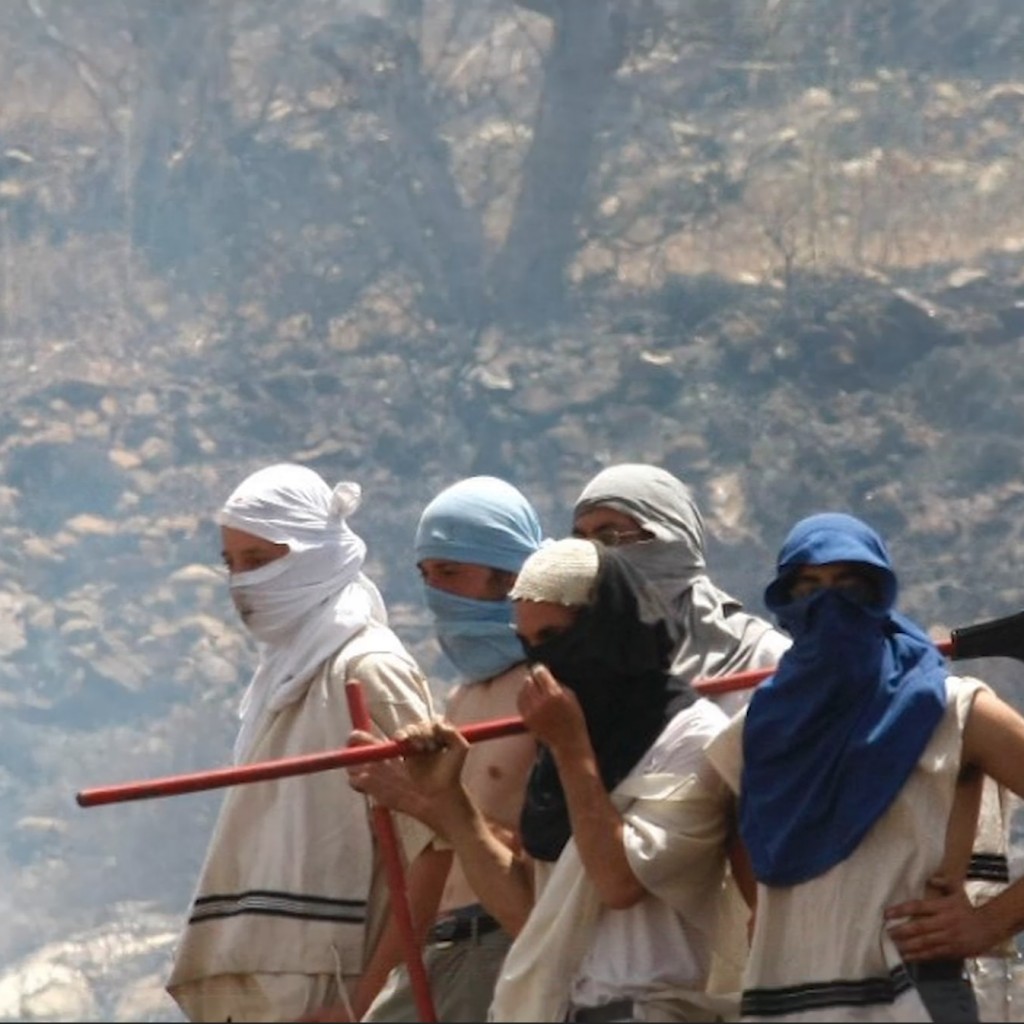
SettlerTerrorThumbnailAbby Martin goes on-the-ground to the epicenters of state-backed settler terrorism in Palestine’s West Bank, in Part II of her report on illegal Israeli settlements.

Israel’s massive expansion of illegal settlements, built on stolen land and demolished Palestinian homes, is advanced by extreme violence from both the state forces and the settlers.

But the attacks on innocent Palestinians by Israeli settlers goes far beyond fists and rocks.

This installment visits both the rural countryside of Duma—interviewing the surviving members of the Dawabsheh family, victims of a horrific arson attack that left three dead—and the urban center of Hebron, a glaring example of Israeli apartheid under intense military occupation.

Inside the Hotbeds of Israeli Settler Terror

**

WATCH PART I // Illegal Israeli Settlements & Palestinian Home Demolitions Surging

FOLLOW // @EmpireFiles & @AbbyMartin

Palestinian Home Demolitions for Illegal Settlements Surging

WEST BANK MAP 3In the past 10 years, the Israeli government has seized and demolished over 1,100 Palestinian homes in the West Bank, leaving over 5,000 people homeless––half of them children.

Enjoying total impunity with the protection of the US Empire, home demolitions by Israel in the West Bank has hit a ten-year high.

Over 200 homes have been demolished in 2016 alone, leaving 800 people homeless––400 of them children. Many hundreds more have orders to evacuate their homes and businesses for demolition.

While this activity led by the fanatical settler movement is illegal under international law, it is completely aided and abetted by the Israeli government.

With hundreds on notice to be evicted and their homes destroyed, Abby Martin goes on-the-ground throughout the West Bank investigating this dire human rights situation. She speaks to residents living under regular settler attacks from encroaching settlements and outposts illegal even under Israeli law, and sees first-hand how this crisis is worsening.


Home Demolitions for Illegal Settlements Surging

**

WATCH PART II // Inside the Hotbeds of Israeli Settler Terror

FOLLOW // @EmpireFiles & @AbbyMartin

Paul Jay and Abby Martin on Trump’s Cabinet, Election Fraud & Fake News Hysteria

Paul Jay and Abby Martin discuss Trump’s cabinet appointments, the Green Party effort to recount the vote, and who’s really producing the fake news.

Abby Martin & Paul Jay on Trump’s Appointees & “Fake News”

**

PAUL JAY: Welcome to The Real News Network. I’m Paul Jay. Well, Thanksgiving is over, and for those of you who may have thought that after Thanksgiving it all would have been over and it would’ve turned out the world had moved into an episode of The Twilight Zone that actually had come to an end, in fact, no. Donald Trump is the President-Elect, and now to discuss all of that and the consequences with me are Abby Martin. Abby joins me from New York. Abby’s the creator and host of The Empire Files on teleSUR English, and a show that I was Executive Producer of. Thanks for joining us, Abby.

ABBY MARTIN: Hey, Paul. Nice to be on.

PAUL JAY: So, I guess it’s a little bizarre. I’ve said to some people that it almost feels like a 9/11 moment to me, and not not quite the disaster of 9/11, but the day after 9/11, if you didn’t live in the shadows of what were the Twin Towers, you kind of went back to kind of normal life, but knowing that everything had changed to a large extent. And I feel somewhat the same with the Trump presidency. This is not to in any way idealize the Obama presidency. Anybody that watches The Real News knows that we were mostly scathingly critical of the Obama Administration. On the other hand, as you and I have talked about before, this is… it looks like with Pence, the return of Cheneyesque politics. What do you make of it?

ABBY MARTIN: Oh, yeah. I mean, Mike Pence himself said that his… the person that he idealizes the most is Dick Cheney. He says that he wants his vice-presidency to be, quote, “very active”. We’re talking about a person who received the most funds from Erik Prince, the founder of Blackwater, and we’re looking at the administration now. It’s shaping up quite nicely for these billionaire Christian evangelicals, Betsy DeVos, Erik Prince’s sister, pioneer of charter schools, undermining of public education, and now she’s running the Education Department in the US.

So, Mike Pence is a very scary figure. Not only did he support the Iraq War, vote for it, he also was one of the main pioneers of the conspiracy theory that Saddam was involved in the anthrax attacks, and going out there selling that, not to mention his vehement anti-gay policies, public push for conversion therapy in Indiana. He is a pretty scary figure, Paul, especially when you consider that Trump asked him to run, quote, “foreign and domestic policy”, as we know from John Kasich, who was told and asked if he wanted to be VP, and he was told, “You’re going to run foreign and domestic policy.” That’s how insane the situation is.

So people who are telling me, “Oh, Trump is this mastermind. He’s just pulling together all these people. He’s really going to change things.” He is a puppet. He knows nothing. He has no insight on global affairs or policy plans at all. He didn’t even know the difference between Hezbollah and Hamas. He said, “I’ll worry about that when I’m in.” So, he is just getting sidelined. I mean, it is a fire sale right now in the White House of people who are the craziest outliers of the GOP that hitched their wagons on him — that were smart enough to do that, right? — that have been completely castigated and ostracized from mainstream establishment. They’ve hitched their wagons to Trump, and they are getting lavishly rewarded as we speak.

PAUL JAY: We’ve talked about before on The Real News, but I think one should keep repeating, the power that helped elect Donald Trump, in the final analysis, was the billionaire Robert Mercer. Working for Mercer was Steve Bannon, who Breitbart News Mercer’s the primary owner of, Kellyanne Conway ran Mercer’s super PAC for Ted Cruz. So, two of the critical people, one who now is going to be Chief Strategist in the White House, Steve Bannon, described by Jared Kushner, the son-in-law, as being a very good Zionist, and I think that’s part of what’s not being touched on enough by people commenting on all this, the extent to which all of the people in foreign policy are very, very strong — not supporters of Israel — supporters of Likud, supporters of the most right-wing politics in Israel.

ABBY MARTIN: Yeah. I think the mainstream media is missing the point when they’re focusing on anti-Semitism when it comes to Breitbart. Breitbart is a hardcore Zionist. Everyone on that platform supports Zionism, like you said, the Likud Party, extreme, extreme ideological, right-wing party in Israel. You know, just like Theodor Herzl said, the founder of Zionism, “Anti-Semitism is our greatest friend.” I mean, they know that that works hand-in-hand to legitimize the State of Israel.

Look, I wanted to talk about Mike Pence again really quickly, because he said something insane, Paul. He said that right now we’ll have a President that will no longer tell the American people what he won’t do in regards to torture. Someone asked him if torture was off the table. And that was his bizarre, opaque response to that. As we know, Trump has already said that he would waterboard not only terrorists but their innocent family members. You know, Mike Pompeo. You look at all of these people, and I think there’s one common theme is that they’re all hardcore Islamophobes, which is very scary at a time when we are essentially bombing seven countries. Obama just increased the role of the drone campaign to al-Shabaab, I think, in Somalia, and he’s handing this over to a reality star game show host that knows absolutely nothing — he’s handing over the most vast, unprecedented executive power apparatus to Donald Trump.

And, so, yes, we have every right to be scared of what Trump is doing and everyone he’s appointing, and we should be on alert. But, like you said, no one should be apologizing for the Obama Administration and all the things that he failed to do that now Trump will be overseeing. Guantanamo Bay. I mean, are you kidding me? Bannon — you talked about Bannon — here, we’re talking about fake news all over the media, here’s the real pioneer of fake news. This is going to be de facto state media. Breitbart is now going to be the chair… you know, in the ear of the Commander-in-Chief, Breitbart. You know when you’re looking at Donald Trump tweeting and everyone thinks oh, he’s this… he’s this genius, right? He’s trying to, oh, he’s challenging safe spaces by saying that Hamilton should be a safe space. No, he is a moron. What you see on Twitter IS the real Donald Trump. Okay? These people are throwing him for a loop. I mean, they are getting in there and really running the show.

PAUL JAY: And Breitbart News was apparently created while Breitbart, the founder, was in Israel, and his idea, his vision was a Huffington Post that was an unmitigatedly pro-Israel. The slogan they had as the guiding line was “pro-Israel, pro-freedom”. The whole origins of Breitbart are in this ultra-ultra-right wing Zionism, and Steve Bannon, after Breitbart dies, Mercer comes in and becomes the main financier, brings in Bannon, and carry on that mission, and that’s one of the common threads that runs through all the people around Trump is bringing to Cabinet. Then there’s one other common thread: they all want to target Iran.

ABBY MARTIN: Look, there is one good thing: we’ve staved off war with Russia, potentially, for a couple of months. What no one is talking about is the insane fear-mongering and war-mongering against Iran. Donald Trump brought this up multiple times during his candidacy, which was all the Obama Administration was too soft on Iran. The deal was bad. He wanted to eradicate the deal. What is that going to do? And then you have people like John Bolton who’s obsessed with bombing Iran. I mean, all of these people are. So, yeah. This wasn’t a loss for the neo-cons, okay? This wasn’t a loss for the war hawks or defense contractors. Iran is as scary to me as the build-up in Syria. So, this is not a joke. These people are serious, and they are obsessed with Iran. So, yes, on one hand, we’ve staved off an escalation of the Cold War; on the other hand, Iran is right around the corner, Paul, and no one’s really talking about that.

PAUL JAY: Other than The Real News. But, yeah, you’re right. There’s very little talk about it. In fact, I see on some of the sites that are alternative, progressive, left, a kind of idea that maybe in Trump there might be some hope that there wasn’t in Clinton, that he’ll be more accommodating with Russia and such. And while there might be some short-term accommodation with Russia — and I think it will be in order to advance the targeting of Iran — the people that are around Trump that are really going to run the foreign policy are every bit as aggressive in their rhetoric about Russia as Clinton, and then some. In fact, when Pence was running with Trump — and he would speak, not Trump, but Pence — he was attacking Clinton for not being aggressive enough towards Russia. That was one of his main critiques of her at the State Department.

ABBY MARTIN: Yeah, and Pence also said that he wanted a no-fly zone in Syria, and when Trump was asked, he said, “Oh, I didn’t know that Mike Pence said that. I disagree with him.” Well, too bad. Mike Pence is going to be running foreign and domestic policy, so if he wants a no-fly zone, well, I guess that’s not off the table, either. And then you look at Jeff Sessions, it’s a complete disaster. I mean, here you have the NAACP coming out and saying, “This is the man who has, literally his entire career, lobbied against civil liberties and equality.” That’s not a good mark on your record, Sessions, to be denied as a federal judge because you were too racist, and now you’re Attorney General? Wow. And he’s horrible on criminal reform and drugs. He thinks that Obama’s biggest problem was being too lackadaisical on marijuana reform. I mean… It just gets better and better, Paul.

PAUL JAY: Yeah. I think one of the things — and a tell of where the Trump Administration is going — is that there’s virtually not a single appointment that’s a sop, a giveaway, to half of America, or more than half, that voted, that didn’t vote for him. There’s not even something symbolic, okay, the odd meeting here, like with Tulsi Gabbard. But no attempt at, quote-unquote, “compromise”. If this had been the Democrats in the Obama Administration, they would’ve made sure they threw in some hard-right Republican here and there just to appease that camp, because they were always about appeasing that camp. But no. This is unmitigated hard right from beginning to end.

ABBY MARTIN: And a lot of people I’ve heard will apologize for Trump saying, “Look, he said whatever he…” because they acknowledge that he’s a con artist, right? And they’re, like, “Look, he just said whatever he needed to to get elected.” Well, that may be true, but I think the one constant factor about Trump is his unpredictability, because he can blow wherever the wind blows. And that’s actually scary, because we have no reason to believe that he doesn’t mean the things that he said. We have no reason to believe, especially when you’re looking at the first hundred days of his agenda, and the people that he’s appointing, we have every reason to believe that he is meaning to go through with the most extreme, hawkish, anti-immigrant policies, anti-Muslim policies. I don’t see why people are continuing to apologize for him and saying, “Let’s wait and see.” I don’t think that we need to wait and see. We’re seeing right now with his agenda online and also his appointees. It’s very crystal clear. So I don’t see this whole, you know, “Trump is really a liberal. He’s a secret Democrat.” No, he…

PAUL JAY: Yeah. Give him a chance. Let’s see what… give him a chance. Let’s see what he does. Some people have called this normalizing the Trump presidency, and I agree with that, that you can’t normalize this presidency. Yes. All the presidents from World War II on are essentially… I don’t think there’s an exception that couldn’t be charged with war crimes, but this is a step in the Cheneyesque direction. This is an aggressive US foreign policy on steroids, and a policy that is already aggressive. But let’s move on a little bit. What do you make of this attempt by the Green Party to have a recount in some of the close swing states?

ABBY MARTIN: Well, I know that a couple of people, Green Party representatives, Chris Hedges, came out yesterday to publicly disagree with Jill Stein’s approach. Look, I thought it was bizarre. I didn’t really know what to make of it. I had no idea why Jill Stein was doing this on behalf of the Democratic Party, especially when you’re looking at 2000, completely stolen election, 2004, there were also discrepancies with the exit polls. That was never recounted. And we just got Bush again. So, I find it odd now to do this. However, I do support it, and I’ll tell you why. A, we don’t live in a democracy. We all know that. We live in an oligarchy. There’s a two-party dictatorship. We have the worst electoral system in the developed world — literally. Like, the Electoral College is so frickin’ archaic, it’s insane that we haven’t repealed that yet.

So, you know, that all aside, I take Greg Palast’s approach, where he’s saying, look, forget about the Russian hacking — that’s what I disagree with him, the statement kind of alludes like, gives legitimacy to that, that theory that Russia had something to do with hacking the election. I agree with Greg Palast where he’s saying there were millions of people not that voted illegally, like Donald Trump says based on Infowars as fake news, but he’s saying, yes, millions of people weren’t counted. Millions of provisional ballots, millions of absentee ballots, millions of people who were purged from the GOP scam Crosscheck. That is a fact. That happened.

So, at the very least, maybe we can start a conversation about how screwed up our electoral system is. And maybe at the very least we could talk about how there is massive election fraud on behalf of the establishment to squelch out minority voices in this country. And I, for one, would like to see the discrepancy with the paper ballots and hand-counting with the voting machines. Because I voted with a provisional ballot and I would like to see, hey, was that counted, or not? Like, this is a huge problem here. The Crosscheck is an insane thing. Everyone should watch Greg Palast’s documentary on that.

But, yeah, I mean, in that respect, I do agree with it. And let’s see what happens. But it is odd that, on one hand, you could see it as giving legitimacy to the Democratic Party, and we know that the millions of dollars to fund this is really coming from the Democrats, and I think it really speaks to their spinelessness that they refuse to lead the charge on any of the elections when there was clear, either election fraud or whatever, and now you have Jill Stein taking it upon herself. It’s an odd situation, but, at the end of the day, I do think our elections are horrible, and I agree with paying attention to them.

PAUL JAY: I don’t see how that helps the Green Party, to have this kind of critique. I mean, it is, it’s done, and she’s doing it, and I don’t know what the internal decision-making processes are. I mean, frankly, it’s… if you’re asking me, I don’t think there’s any much chance that this recount will change things.

ABBY MARTIN: It’s a pipe dream.

PAUL JAY: On the other hand, if there’s a wildest odds that it might, I mean, I’ve said all along, as aggressive and militarist as Clinton is, I think this is going to be worse in the same way Cheney-Bush was worse. So, we’ll see. But it’s not a good thing to wage this kind of fight publicly like this. I’m not sure it’s good for the future fortunes of the Green Party. But that’s not up to me. Let’s go on to fake news. A lot of big hubbub about fake news and some website came out with a whole list of websites that are supposedly echoing Russian propaganda, including some sites like Truthdig and Truthout, and some others that in my opinion are journalistic sites, and do not do that. The Real News is not on that list. I guess — I don’t know — if someone watches our coverage, they’ll see that, in fact, we have no… we’re not shy about critiquing the Russian oligarchy or Putin, although we always make sure we talk about American war crimes first, which make Russian crimes pale in scale, but at any rate, what do you make of this whole fake news thing?

ABBY MARTIN: I agree that fake news is a problem. Right? We have Breitbart de facto state media, we have Infowars basically in the ear of the President and he’s tweeting out insane, preposterous, outlandish, false, blatantly… things. Right? But on the other hand, you have Establishment media like The Washington Post and you have this anonymous propaganda finder account called Prop or Not, which is publishing this hit list — it’s essentially McCarthyism, right? — in the new era. It’s including very credible sites like Truthdig, Counterpunch, Black Agenda Report, Naked Capitalism, conflating it with fake news sites that you can say are legitimately fake or skewed or biased extremely, right? Like Infowars or Breitbart. And, of course, Breitbart, I don’t think is on there, which speaks to a lot.

So, I think it says a lot when we’re focusing and trying to conflate actual investigative journalism and journalism that goes against the grain with Russian provocateurs and the whole main thing that this account is trying to do: the premise of their argument is that these, quote-unquote, “fake news” sites actually shaped the election in favor of Trump. That they purposefully muddy the waters, poison the well, to make people believe all this fake stuff, and basically that’s how Trump won. I don’t think that’s the case at all. I think that they’re completely missing the point here. The point is — back to this Infowars thing — Trump tapped into this kind of conspiracy culture like no one else has ever, and I think that not enough people are talking about… everyone’s so shocked at all these white working class voters who came out to vote for him. No one’s really talking about the Alex Jones audience that came out in droves, that probably were never politically active before. And it stems back from the fake news thing.

Trump tweeted out that the protesters were paid. That they were professional. There is a serious problem on the Internet right now where people are either not fact-checking anything and they believe everything they read, and they conflate every alternative news site with these crazy blogs that are totally unfounded and have no credibility. And I think that that just comes back to media literacy. Don’t read a list on Washington Post, and take it with a grain of salt: fact-find for yourself. It’s not that hard. I mean, it took me five seconds even not knowing how to have any journalistic skills whatsoever, someone who is involved in canvass organizing in college, I knew immediately that that paid protester thing on Craigslist was just a canvassing job position. I mean, the bus picture where people said the protesters were bused in. Once again, it was debunked by the original tweeter. He took down the tweet.

So, these things, I think it comes back to media literacy, understanding what the truth is, and not just taking any website with a grain of salt, and understanding the agenda that places like Infowars has. Look, they hitched their wagon to Pamela Geller gravy train, long ago, when they knew that Islamophobia made money, and it’s basically a Fear Inc. operation. So, you look at credible sites like Truthdig and Real News, which has no corporate state funding at all, those are the sites that I think people should be looking at, and not sites like Infowars that sells penis pills in between their insane fear-mongering broadcasts. And, unfortunately, that’s who’s in the ear of Trump.

PAUL JAY: And if you want to talk about why Trump won, and then you want to connect that to fake news, you need look no further than all — almost all — of the corporate-owned news, which is the biggest fake news that helped elect Trump. And I’ll give you on three points: first and most important, why aren’t there screaming headlines every single day, both on corporate TV news and newspapers about climate change? If they had been dealing with the climate change crisis with the urgency it requires and what all scientists say, including recent reports that say we could pass the 2 degree threshold by 2050 — that’s 34 years away. And that model was before Trump was elected — who knows what that does to that model now, in terms of when we hit 2 degrees, given it just exploded most climate change policy around the globe, Trump’s election.

So, if people had been really educated and given the urgency that objective facts call out for, how the hell would so many people vote for a climate denier? Number two. Even now the coverage of the Cabinet, and the people, there’s almost no conversation about what we were talking about, that they’re all focusing and targeting on Iran, and they all have a strategy of regime change, weakening Iran — in other words, they’re talking about another war in the region. No talk about that. Yes, they talk about how crazy some of these people are and so on, but that issue, and certainly leading up to the election, that’s no surprise that that’s where this Trump Administration was going.

You look at Rudy Giuliani’s speech at the Republican Convention, he was crediting Iran with supporting terrorist attacks on the United States. Which is clearly there’s no evidence of, and if he’s going to talk about anybody doing that, it’d be the Saudis, but, no, Giuliani targets Iran, as did others that spoke at the Republican convention. And then, of course, the whole way corporate media has dealt with the economic crisis. And not dealing with the issue of who really is responsible for that crisis, and how the whole bailout of ’07-’08 made massive more money for the billionaire class, and so on. They treated Sanders as some kind of marginal outlier. So, yeah, of course, they can point to some small sites that supposedly are manipulated by the Russians, most of whom that accusation’s ridiculous. But it’s corporate news elected Donald Trump.

ABBY MARTIN: You just hit it right on the head. Here’s why people even believe this fake news, because mainstream media is completely distrusted. There’s an all-time distrust in corporate media. And we’ve known that for a long, long time, right? And I think that’s, to your point, that’s why Trump became president, is because the entire media Establishment lined up behind Hillary, and that was as clear as day, even during the debates, other than the Fox News debate, it was just every single question was for Trump, hammering Trump. And people saw that, and people absorbed that, and people already think the media is lying to them, and so when they think Trump is an ally to them, and that the media is lying to them, that sows a dangerous, dangerous sentiment where you have them kind of believing, and then you have it validated by the Commander-in-Chief, saying that there are millions of people voting illegally, the protesters are paid.

So, I understand why people are completely shutting out all of the establishment press and going to these sites. The problem is these establishment press is blaming the only solution, which is the credible, independent, grassroots journalism that is telling the truth, that isn’t fake news. So it’s a really, really dangerous conflation on behalf of the establishment media, instead, of course, look in the mirror, having some introspection. Why did we lose? Why don’t people trust us? Instead, they have to punch down to the people who are doing the real work.

PAUL JAY: All right. Thanks very much, Abby.

ABBY MARTIN: Thanks so much, Paul. Great to talk to you.

PAUL JAY: Thanks for joining us on The Real News Network.

Page 29 of 79<<...2728293031...>>