WASHINGTON POST – The debate over climate change has reached a rarefied level of policy
abstraction in recent months. Carbon tax or cap-and-trade? Upstream or
downstream? Should we auction permits? Head-scratching is, at this
point, permitted. But at base, these policies aim to do a simple thing,
in a simple way: persuade us to undertake fewer activities that are bad
for the atmosphere by making those activities more expensive. Driving
an SUV would become pricier. So would heating a giant house with coal
and buying electricity from an inefficient power plant. But there’s one
activity that’s not on the list and should be: eating a hamburger.
If it’s any consolation, I didn’t like writing that sentence any
more than you liked reading it. But the evidence is strong. It’s not
simply that meat is a contributor to global warming; it’s that it is a
huge contributor. Larger, by a significant margin, than the global
transportation sector.
According to a 2006 United Nations report,
livestock accounts for 18 percent of worldwide greenhouse gas
emissions. Some of meat’s contribution to climate change is intuitive.
It’s more energy efficient to grow grain and feed it to people than it
is to grow grain and turn it into feed that we give to calves until
they become adults that we then slaughter to feed to people. Some of
the contribution is gross. “Manure lagoons,” for instance, is the oddly
evocative name for the acres of animal excrement that sit in the sun
steaming nitrous oxide into the atmosphere. And some of it would make
Bart Simpson chuckle. Cow gas — interestingly, it’s mainly burps, not
farts — is a real player.
YAHOO NEWS– The Environmental Working Group released a report
Monday indicating that millions of Americans are regularly drinking
hexavalent chromium, made famous in the film “Erin Brockovich” as a
carcinogen, through their tap water.
The group — whose study was first reported in a story Sunday by the Washington Post’s Lyndsey Layton
— tested water from 35 U.S. cities and found that samples from 31
cities contained hexavalent chromium. The highest concentrations were
found in Norman, Okla.; Honolulu; and Riverside, Calif. The substance
had been a widely used industrial chemical for decades and has evidently
leached into the groundwater in many areas.
The EWG report states:
“Despite
mounting evidence of the contaminant’s toxic effects, the U.S.
Environmental Protection Agency (EPA) has not set a legal limit for
chromium-6 in tap water and does not require water utilities to test for it. Hexavalent chromium is commonly discharged from steel
and pulp mills as well as metal-plating and leather-tanning facilities.
It can also pollute water through erosion of natural deposits.
“The
authoritative National Toxicology Program (NTP) of the U.S. Department
of Health and Human Services has said that chromium-6 in drinking water
shows ‘clear evidence of carcinogenic activity’ in laboratory animals,
increasing the risk of gastrointestinal tumors. Just last October, a
draft review by the EPA similarly found that ingesting the chemical in
tap water is ‘likely to be carcinogenic to humans.’ Other health risks
associated with exposure include liver and kidney damage, anemia and
ulcers.”
COMMON DREAMS– Food & Water Watch today unveiled the newest version of its pioneering Factory Farm Map (www.factoryfarmmap.org)
that charts the concentration of factory farms across the country and
the impacts these massive operations have on human health, communities,
and the environment. The interactive map illustrates the geographic
shift in where and how food is raised in the U.S. and allows anyone to
quickly search for the highest concentration of animals by region,
state and county.
Food & Water Watch analyzed U.S. Department
of Agriculture Census data from 1997, 2002 and the most current census,
2007, for beef and dairy cattle, hogs, broiler meat chickens and
egg-laying operations, and found the total number of livestock on the
largest factory farms rose by more than 20 percent between 2002 and
2007-while the number of dairy cows and broiler chickens nearly doubled
during the same time, making them the fastest-growing population of
factory farmed animals.
Despite the fact that the number of livestock farms across the
country has decreased, the Food & Water Watch Factory Farm Map
illustrates that big farms are getting bigger, with specific regions
and states bearing the brunt of intensive animal production.
“While
more and more light is being shed on the ways our food system is broken
and consumers are increasingly interested in knowing where their food
comes from, there is still a lot of information that’s hidden from
public view,” said Wenonah Hauter, Food & Water Watch’s executive
director. “The purpose of the Factory Farm Map is to provide an
easy-to-use tool that anyone can access to learn more about where our
food is really coming from.”
Key findings in Food & Water Watch’s analysis and map show:
* In five years, total animals on factory farms grew by 5 million, or more than 20 percent.
o Cows on factory dairy farms nearly doubled from 2.5 million cows in
1997 to 4.9 million in 2007. Factory dairy farms growth in western
states like Idaho, California, New Mexico and Texas shifted the dairy
industry away from traditional states like Wisconsin, New York and
Michigan. o Beef cattle on industrial feedlots rose 17 percent from
2002 to 2007 – adding about 1,100 beef cattle to feedlots every day for
five years. o Nationally, about 5,000 hogs were added to factory farms every day for the past decade. o The growth of industrial broiler chicken production added 5,800 chickens every hour over the past decade. o Egg laying hens on factory farms increased by one-quarter over the decade.
* The average size of factory farms increased by 9 percent in five years, cramming more animals into each operation.
o In 2007, the average factory-farmed dairy held nearly 1,500 cows and
the average beef feedlot held 3,800 beef cattle. o The average size of hog factory farms increased by 42 percent over a decade. o Five states with the largest broiler chicken operations average more than 200,000 birds per factory farm. o Over a decade, average-sized layer chicken operations have grown by 53.7 percent to 614,000 in 2007.
Food
& Water Watch released a companion report, Factory Farm Nation,
which explains the forces driving factory farms, as well as the
environmental, public health, and economic consequences of this type of
animal production. The report also examines the causes for
industrial-scale livestock and the demise of small and medium farms.
“This
map shows the extent to which factory farms have taken over farming and
our communities,” said Robby Kenner, director of the Academy
Award-nominated film Food, Inc. “Through the Factory Farm Map, Food
& Water Watch is shining a spotlight on the mega-corporations that
need to be held accountable for the damage they’re doing to our health,
environment and rural economies.”
In addition to the map itself,
the website ranks the top concentrations of factory farmed livestock
nationwide as well as by state and county. It features a newsfeed for
monitoring local and national factory farm news and social media tools
that allow users to share the map and its data via Facebook, Twitter,
email and RSS feed. The Factory Farm Map website includes a widget that
bloggers and other websites can embed on their sites and a variety of
other online tools for activists to spread the word and encourage
local, regional or national action.
“Whether you live near a
factory farm and are subject to the groundwater contamination or air
pollution it causes, or live thousands of miles away and eat the meat
or eggs from potentially unsafe facilities, very few people are spared
the risk that these operations bring,” said Hauter. “The Factory Farm
Map arms consumers with critical information about how our food is
being produced and what we need to do to chart a course to a more
sustainable food system.”
The Factory Farm Map and the companion report can be found at www.factoryfarmmap.org.
THE MEDIA CONSORTIUM– It won’t be long before the world has to confront its diminishing supply of clean water.
“We’ve had the same amount of water on our planet since the beginning of time, ” Susan Leal, co-author of Running Out of Water, told GritTV’s Laura Flanders. “We are on a collision course of a very finite supply and 7.6 billion people.”
What’s worse, private industries—and energy companies in
particular—are using waterways as dumping grounds for hazardous
substances. With the coal industry, it’s an old story; with the natural
gas industry, it’s a practice that can be nipped in the bud.
In many cases, dumping pollutants into water is a
government-sanctioned activity, although there are limits to how much
contamination can be approved. But companies often overshoot their
pollution allowances, and for some businesses, like a nuclear energy
plant, even a little bit of contamination can be a problem.
Business as usual
Here’s one troubling scenario. At Grist, Sue Sturgis reports
that “a river downstream of a privately-owned nuclear fuel processing
plant in East Tennessee is contaminated with enriched uranium.” The
concentrations are low, and the water affected is still potable. The
issue, however, is that the plant was not supposed to be discharging
any of this sort of uranium at all. One researcher explained that the
study had “only scratched the surface of what’s out there and found
widely dispersed enriched uranium in the environment.” In other words,
the contamination could be more widespread than is now known.
Nuclear energy facilities must take particular care to keep the
waste products of their work separate from the environment around them.
But in some industries, like coal, polluting water supplies is routine
practice.
The dirtiest energy
In West Virginia, more than 700 people are suing infamous coal company Massey Energy for defiling their tap water, Charles Corra reports at Change.org.
In Mingo County, tap water comes out as “a smooth flow of black and
orange liquid.” Country residents are arguing that the contamination is
a result of water from coal slurries, a byproduct of mining that
contains arsenic and other contaminants, leaking into the water table.
Residents believe the slurries also cause health problems like learning
disabilities and hormone imbalances, as Corra reports.
Newfangled notions
Even so-called “clean coal,” which would inject less carbon into the
atmosphere, is worrisome when it comes to water. The carbon siphoned
from clean coal doesn’t disappear; it’s sequestered under ground. For a
new clean coal project in Linden, NJ, Change.org’s Austin Billings reports, that chamber would be 70 miles out to sea. As Billings writes:
The plant would be the first of its kind in the world,
so it should come as no surprise that the proposal is a major cause for
concern among New Jersey environmentalists, fishermen, and lawmakers.
According to Dr. Heather Saffert
of Clean Ocean America, “We don’t really have a good understanding of
how the CO2 is going to react with other minerals… The PurGen project
is based on one company’s models. What if they’re wrong?”
In this case, it wouldn’t only be human communities at risk (“Polluted Jersey Shore,” anyone?), but the ocean’s ecosystem.
Frack no!
Coal communities in West Virginia have been dealing with water
pollution for decades. But a another source of energy
extraction—hydrofracking for natural gas—has only just begun to
threaten water supplies. Care2’s Jennifer Mueller points to a recent “60 Minutes” segment that explores the attendant issues: it’s a must-watch for anyone unfamiliar with what’s at stake.
Fortunately, some of the communities at risk have been working to
head off the damage before it hits. In Pittsburgh this week, leaders
banned hydrofracking within the city, according to Mari Margil and Ben Price in Yes! Magazine. They write:
As Councilman [Doug] Shields stated after the vote,
“This ordinance recognizes and secures expanded civil rights for the
people of Pittsburgh, and it prohibits activities which would violate
those rights. It protects the authority of the people of Pittsburgh to
pass this ordinance by undoing corporate privileges that place the
rights of the people of Pittsburgh at the mercy of gas corporations.”
Environmentalists in other municipalities, in state government, and in Congress would do well to follow Pittsburgh’s lead.
This simply isn’t true. As McGuire explains, “The estrogen found in
birth control pills, patches, and rings (known as EE2) is only one of thousands of
synthetic estrogens that may be found in our water, and the
contribution of EE2 to the total presence of estrogen in water is
relatively small.” Where does the rest of the estrogen come from?
Factory farms, industrial chemicals like BPA, and synthetic estrogen
used in crop fertilizer. So, yes, the water is contaminated, but, no,
your birth control is not to blame.
Greening the US
Stories like these, of environmental pollution by corporations, seem
to come up again and again. They’re barely news anymore and so easy to
ignore. But it’s more important than ever for environmentalists to
fight back against these challenges and push for a green economy that
minimizes pollution. The American Prospect’s Monica Potts recently sat down with The Media Consortium
to explain the roadblocks to a green economy. If green-minded people
want to stop hearing tales like the ones above, these are the obstacles
they’ll need to overcome. Watch the video:
This postwas written by Sarah Laskow, Media Consortium Blogger, and features links to the best independent, progressive reporting about the environment by members of The Media Consortium.
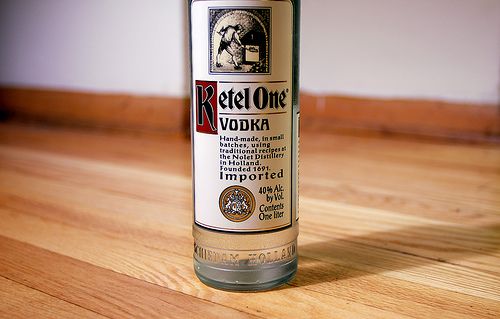
CNN– Alcohol ranks “most harmful” among a list of 20 drugs — beating out
crack and heroin — according to study results released by a British
medical journal.
A panel of experts weighed the physical,
psychological and social problems caused by the drugs and determined
that alcohol was the most harmful overall, according to an article on
the study released by The Lancet Sunday. Using a new scale to
evaluate harms to individual users and others, alcohol received a score
of 72 on a scale of 1 to 100, the study says.
That makes it almost three times as harmful as cocaine or tobacco, according to the article, which is slated to be published on The Lancet’s website Monday and in an upcoming print edition of the journal. Heroin,
crack cocaine and methamphetamine were the most harmful drugs to
individuals, the study says, while alcohol, heroin and crack cocaine
were the most harmful to others.
In the article, the panelists said their findings show that Britain’s
three-tiered drug classification system, which places drugs into
different categories that determine criminal penalties for possession
and dealing, has “little relation to the evidence of harm.”



 YAHOO NEWS
 THE MEDIA CONSORTIUM
 CNN
CNN