GM Crops Ruin Fields for 15 Years

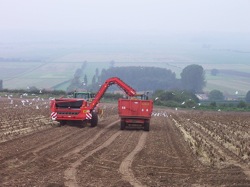
cropsINDEPENDENT– GM crops contaminate the countryside for up to 15 years after they have been harvested, startling new government research shows.

The findings cast a cloud over the prospects of growing the modified crops in Britain, suggesting that farmers who try them out for one season will find fields blighted for a decade and a half.

Financed by GM companies and Margaret Beckett’s Department of the Environment, Food and Rural Affairs, the report effectively torpedoes the Government’s strategy for introducing GM oilseed rape to this country.

Ministers have stipulated that the crops should not be grown until rules are worked out to enable them to “co-exist” with conventional ones. But the research shows that this is effectively impossible.

Continue reading about GM Crops Ruin Fields for 15 Years

© The Independent, 2005

Photo by flickr user D.H. Wright

Consequences of GM Crop Contamination are ‘Set to Worsen’

GUARDIAN– The consequences of contamination between GM crops and non-GM varieties will be much more serious with the next generation of GM crops, an influential group of US scientists has warned.

Mixing between GM and non-GM varieties has already caused serious economic losses for producers in lost sales and exports. But the consequences of mixing will be much more serious with new crops that are altered to produce pharmaceuticals and industrial chemicals, the scientists argue. The crops could harm human health and be toxic to wild animals.

“What would be the impact societally, economically if for example, cornflakes were contaminated by some sort of drug or chemical? I think it would be a vast impact economically,” said Karen Perry Stillerman, senior food and environment programme analyst with the Union of Concerned Scientists.

“I think it’s really hard to say [what impact contamination would have] because there is a variety of different drugs and chemicals that might be manufactured in plants this way,” she added. “Our perception is that some of them might be toxic, but all of them would certainly cause tremendous economic upheaval.”

The group presented its findings at the American Association for the Advancement of Science conference in Boston.

Continue reading about Consequences of GM Crop Contamination are ‘Set to Worsen’.

© The Guardian, 2009 

Japan Started Mandatory GMO Labeling in ’99

July 19, 1999

japanALL BUSINESS– Japan’s Ministry of Agriculture, Forestry and Fishery (MAFF) wants food manufacturers to clearly label their packaging for any ingredients that have been genetically modified (GMOs). The measure will be applied to tofu, snacks and tempura flour, among other products designated by the ministry and will include imported foodstuffs. However, the new rules will allow exemptions of products in which modified ingredients are used but have been dissolved or removed during the manufacturing process. These products include cooking oil and soy sauce.

The ministry says compulsory labeling is a prudent measure considering growing consumer concerns about genetically altered food products. However, actual implementation of the new labeling rules is expected to be limited as food makers already are voicing opposition to the ministry’s plan, claiming that it will be technically difficult to maintain the trustworthiness of such labeling. Some consumer groups worry that products made from rapeseed, cotton and potatoes may be left out of the compulsory labeling because tracing GMOs in those ingredients can involve a complex testing process. The groups say labeling should cover farm products before they are processed, thereby ensuring that all food containing modified ingredients can be identified.

Continue reading about Japan Started Mandatory GMO Labeling in ’99.

© Food & Drink Weekly, 1999

Photo by flickr user futureatlas.com

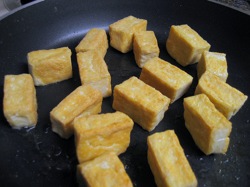
Tofu May Raise Risk of Dementia

tofu

BBC– Eating high levels of some soy products – including tofu – may raise the risk of memory loss, research suggests.

The study focused on 719 elderly Indonesians living in urban and rural regions of Java. The researchers found high tofu consumption – at least once a day – was associated with worse memory, particularly among the over-68s. The Loughborough University-led study features in the journal Dementias and Geriatric Cognitive Disorders.

Soy products are a major alternative protein source to meat for many people in the developing world. But soy consumption is also on the increase in the west, where it is often promoted as a “superfood”. Soy products are rich in micronutrients called phytoestrogens, which mimic the impact of the female sex hormone oestrogen.

There is some evidence that they may protect the brains of younger and middle-aged people from damage – but their effect on the ageing brain is less clear. The latest study suggests phytoestrogens – in high quantity – may actually heighten the risk of dementia.

Continue reading about Tofu May Raise Risk of Dementia

© BBC, 2008

Photo by flickr user little blue hen

GM Crops Created Superweed

weedsGUARDIAN– Modified genes from crops in a GM crop trial have transferred into local wild plants, creating a form of herbicide-resistant “superweed”.

The cross-fertilisation between GM oilseed rape, a brassica, and a distantly related plant, charlock, had been discounted as virtually impossible by scientists with the environment department. It was found during a follow up to the government’s three-year trials of GM crops which ended two years ago.

The new form of charlock was growing among many others in a field which had been used to grow GM rape. When scientists treated it with lethal herbicide it showed no ill-effects. Unlike the results of the original trials, which were the subject of large-scale press briefings from scientists, the discovery of hybrid plants that could cause a serious problem to farmers has not been announced.

The scientists also collected seeds from other weeds in the oilseed rape field and grew them in the laboratory. They found that two – both wild turnips – were herbicide resistant. The five scientists from the Centre for Ecology and Hydrology, the government research station at Winfrith in Dorset, placed their findings on the department’s website last week.

Continue reading about GM Crops Created Superweed

© The Guardian, 2005

Photo by flickr user dvs

Page 16 of 18<<...1415161718