Heirloom Tomatoes Are Being Hybridized

tomato WALL STREET JOURNAL– In the kingdom of vegetables, the heirloom tomato is high nobility. Genetically unchanged from one generation to another, it offers an intense flavor prized by gardeners and gourmets.

But it has a reputation for being persnickety in the garden. While modern hybrids are tweaked and improved to resist common diseases, the old stalwarts seem to easily succumb to pathogens that can cause plants to suddenly wilt just as they seem ready to produce.

Tasty Tomatoes

Now, as gardeners prepare to plant this summer’s crop, a number of plant breeders are offering hybrids they claim have the distinct flavors and funky looks of heirlooms but are more disease-resistant and abundantly productive.

To tomato purists, the hybrids amount to heirloom heresy. “I cringe when I hear the term ‘heirloom hybrid,’ ” says Amy Goldman, board chairwoman of the Decorah, Iowa-based nonprofit Seed Savers Exchange. The group champions the tradition of passing along heirloom seed from one generation to the next.

Some of the new varieties are bred to better withstand diseases and microscopic critters that can harm plants. Little worms are why Roger Chetelat can’t grow heirlooms. “The soil where I live is infested with nematodes,” says the director of the C.M. Rick Tomato Genetics Resource Center at the University of California, Davis.

Continue reading about Heirloom Tomatoes Are Being Hybridized.

© Wall Street Journal, 2010

Photo by flickr user Jackie Alpers

No Relationship Between Fluoridation and Tooth Decay Rate

ICNR– Data collected by the National Institute of Dental Research (NIDR) of the United States Public Health Service (USPHS) produced the largest and most extensive database ever used to determine whether there is a relationship between fluoridation and tooth decay. Released on June 21, 1988, the $3,670,000 nationwide survey examined 39,207 U.S. school children aged 5-17 from 84 different geographical areas.

Of the 84 areas, 28 had been fluoridated for 17 years or more, 29 had never been fluoridated, and 27 had been only partially fluoridated or fluoridated for less than 17 years. Age-adjusted tooth decay rates for the permanent teeth of children were determined for each of the 84 areas which were then listed in the order of increasing tooth decay rates. The listing showed clearly that there was no relation between tooth decay rates and fluoridation. Ironically, the lowest tooth decay rate reported in the survey occurred in a nonfluoridated area.

tooth decayThe average number of decayed, missing, and filled permanent teeth (DMFT) per child was 2.0 in the fluoridated areas, 2.0 in the nonfluoridated areas, and 2.2 in the partially fluoridated areas. The percentage of decay-free children in the fluoridated, non fluoridated, and partially fluoridated areas was 34%, 35%, and 31%, respectively.

The foregoing results compiled from an analysis of the data gathered by NIDR were neither sought – nor reported in the NIDR release. At the Safe Water Foundation, we extracted these results from the data of the NIDR survey and submitted them to the journal, Comm. Dent. Oral Epidemiol., for publication. After reviewing the manuscript we submitted, Dr. Irwin Bross, the former Head of the Research, Design, and Analysis unit of the Sloan-Kettering Institute, former Director of Biostatistics of the Roswell Park Memorial Institute, and the current President of Biomedical Metatechnology, commented: “The material is clear and well presented. It provides a good demonstration of its main points: There is not much difference in tooth decay rates or in the percentages of decay-free children in the three fluoridation categories.”

Continue reading about Comprehensive Study Shows No Relationship Between Fluoridation and Tooth Decay Rate.

© ICNR

Photo by flickr user D.C.Atty 

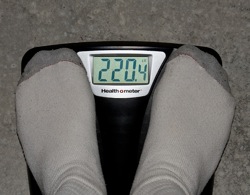
Do Diet Sodas Make You Gain Weight?

weightABC NEWS– The growing problem of obesity in this country has led some experts to take a closer look at diet soft drinks. It turns out they may not be as helpful to weight loss as some people might think.

Ever since Tab hit the market in the swingin’ 60s, diet soda has become an American mainstay. In the era when thin-became-in thanks to mini-skirts – and the rail-thin model Twiggy – diet soda’s appeal was instant…

Save hundreds of calories a day, and stay skinny – right? The paradox is that American waistlines have been growing steadily.

Researcher Sharon Fowler, at the University of Texas Health Science Center, has been tracking soda drinkers for more than a decade. “People who were drinking diet soft drinks – two or more per day – had a 57 per cent chance of becoming overweight.”

Fowler says it may be that diet soda gives a false sense of security. “I can get the candy bar to go with the diet soft drink, and it’s just a little candy bar, I’m OK.”

However, Fowler and other experts suspect something else… That diet sodas can actually make you want to eat MORE!

Continue reading about Do Diet Sodas Make You Gain Weight?

© ABC News, 2007

Photo by flickr user keith011764 

New Cancer Worries for Diet Soda Drinkers

CONSUMERIST– A new study on the effects of low daily doses of the artificial sweetener aspartame shows a statistically significant increase in leukemia, lymphoma and breast cancer in rats. Consumer advocates are calling for the FDA to take another look at the safety of aspartame in light of the study, but the FDA seems uninterested.

“Because aspartame is so widely consumed, it is urgent that the FDA evaluate whether aspartame still poses a ‘reasonable certainty of no harm,’ the standard used for gauging the safety of food additives,” said CSPI executive director Michael F. Jacobson. “But consumers, particularly parents, shouldn’t wait for the FDA to act. People shouldn’t panic, but they should stop buying beverages and foods containing aspartame.”

The study, which can be read here, followed a group of 4,000 rats who were given low daily doses of aspartame (comparable to what a dedicated human diet soda drinker might consume, were he/she a rat) beginning during “prenatal” life. The rats were dissected after natural death and the effects of the aspartame calculated. From the study:

The results of this carcinogenicity bioassay not only confirm, but also reinforce the first experimental demonstration of APM’s multipotential carcinogenicity at a dose level close to the acceptable daily intake (ADI) for humans. Furthermore, the study demonstrates that when lifespan exposure to [aspartame] begins during fetal life, its carcinogenic effects are increased.

Continue reading about New Cancer Worries for Diet Soda Drinkers.

© Consumerist, 2007

Photo by flickr user stinky_harriet

Rebranding Aspartame to ‘AminoSweet’

aspartameNATURAL NEWS– In response to growing awareness about the dangers of artificial sweeteners, what does the manufacturer of one of the world’s most notable artificial sweeteners do? Why, rename it and begin marketing it as natural, of course. This is precisely the strategy of Ajinomoto, maker of aspartame, which hopes to pull the wool over the eyes of the public with its rebranded version of aspartame, called AminoSweet.

Over 25 years ago, aspartame was first introduced into the European food supply. Today, it is an everyday component of most diet beverages, sugar-free desserts, and chewing gums in countries worldwide. But the tides have been turning as the general public is waking up to the truth about artificial sweeteners like aspartame and the harm they cause to health. The latest aspartame marketing scheme is a desperate effort to indoctrinate the public into accepting the chemical sweetener as natural and safe, despite evidence to the contrary.

Aspartame was an accidental discovery by James Schlatter, a chemist who had been trying to produce an anti-ulcer pharmaceutical drug for G.D. Searle & Company back in 1965. Upon mixing aspartic acid and phenylalanine, two naturally-occurring amino acids, he discovered that the new compound had a sweet taste. The company merely changed its FDA approval application from drug to food additive and, voila, aspartame was born.

Continue reading about Rebranding Aspartame to ‘AminoSweet’.

© Natural News, 2010

Photo by flickr user Steve Snodgrass

Page 13 of 18<<...1112131415...>>