


 MEDIA ROOTS — KPFA’s
Dennis Bernstein and Davey D broadcast their
analysis of the Occupy Oakland aftermath following the brutal police-state assaults
on Tuesday, October 25, 2011.
MEDIA ROOTS — KPFA’s
Dennis Bernstein and Davey D broadcast their
analysis of the Occupy Oakland aftermath following the brutal police-state assaults
on Tuesday, October 25, 2011.
In this edition of KPFA’s “The Morning Mix,” we hear radical commentary of the ongoing Occupy Oakland sit-in and encampment begun on 10/10/11 in solidarity with the Occupy Wall Street movement, which blossomed in response to the economic terrorism and general class-warfare facing the U.S. people.
The burgeoning OWS movement has been focusing international attention upon the increasingly totalitarian, corporatocratic, nature of our current state-repressed capacity for popular dissent in the U.S. Through direct action and popular horizontal general assemblies, people in Oakland, as in San Francisco, New York City, and elsewhere have been taking a cue from Egypt’s Tahrir Square and inspiring the U.S. people to take their destiny into their own hands toward socioeconomic justice. And, this week, this seems to have made the ruling-class nervous, as they’ve launched brutal crackdowns across the U.S. in an apparent coordinated national security operation in line with the notorious P.A.T.R.I.O.T. Act.
On Tuesday night (10/25/11), rioting police shot Iraq War veteran and Occupy Oakland-supporter Scott Olsen in the head with a tear gas projectile at point blank range during this anti-democratic, unconstitutional drama of police terrorism. Olsen was hospitalised and initially reported to be in serious condition with a fractured skull. At presstime, it’s being reported his condition is improving, with Olsen regaining the ability to breathe on his own. This is the response of the state against the democratic exercise and expression of First Amendment rights.
While the corporate media, and even much of the public media, are reporting the Occupy Oakland crackdowns by police as reasonable police responses to violent protesters throwing bottles and rocks, we must look to independent and citizen journalist sources to get the real story. Check out this excellent coverage of Occupy Oakland, the OWS movement, the independent and citizen journalist perspectives, the corporate-media distortions, and the police-state terrorism trying to crush popular dissent and the spirit of the people uniting to take back the public square.
-Messina
***
The Morning Mix Fund Drive Special with Davey D and Dennis Bernstein – October 26, 2011 at 8:00am
[KPFA, 94.1 fm, Berkeley, CA, Free Speech Radio, Pacifica]
INTRODUCTION
Dennis Bernstein (circa 1:38): “And you are listening to KPFA, KPFB in Berkeley, KFCF in Fresno. I’m Dennis Bernstein here with Davey D and a crew of folks who are monitoring the situation on the ground in Oakland. We’re gonna be joined with, by Davey. He’s got some interviews fresh from the street. We’re gonna be joined by a lawyer who was there for the busts the night before, there last night and has been a part of Occupy Oakland from the beginning, very interesting perspective there. And the most interesting perspective is gonna come from you ‘cos we’re gonna open up the phone calls. We wanna know what you’re thinking about all this, as Oakland goes on the national map with a police riot. Again, I’m Dennis Bernstein with Davey D. Stay tuned for the KPFA News Headlines and then we’ll be back.”
News Headlines read by Aileen Alfandary.
AUDIO FROM THE AFTERMATH OF BRUTAL POLICE-STATE ASSAULTS ON OCCUPY OAKLAND
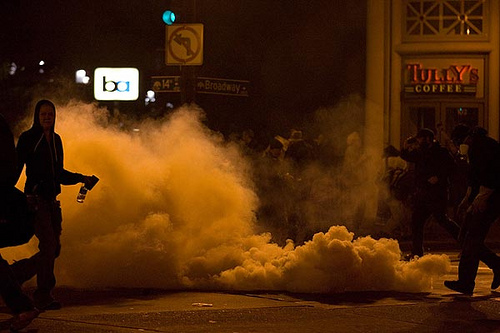 Davey D (8:00): “Davey
D, hangin’ out wit’ you. We are down
here. It’s probably about 7:15 in the
morning. Um, people are still out
here. The only difference is now, if you
look at, uh, what was Occupy Oakland, you see that the tents are all gone. And they’re steam-cleaning it. Last night, um, a lot of tear gas was lobbed
out here. You don’t smell it as
much. But we wanted to talk with people
that are still out here this morning.
How you doin’?”
Davey D (8:00): “Davey
D, hangin’ out wit’ you. We are down
here. It’s probably about 7:15 in the
morning. Um, people are still out
here. The only difference is now, if you
look at, uh, what was Occupy Oakland, you see that the tents are all gone. And they’re steam-cleaning it. Last night, um, a lot of tear gas was lobbed
out here. You don’t smell it as
much. But we wanted to talk with people
that are still out here this morning.
How you doin’?”
Occupy Oakland Observer (male): “Not too bad.”
Davey D: “What do you think about, uh, what do you think about what took place last night? And what do you anticipate today?”
Occupy Oakland Observer (male): “Um, it was great, like, I, you know, I was in jail yesterday when they were protesting in front of it. And I could hear it from my jail cell. It was real inspirational. And then when I got out. I came straight down here and, um, it was great. But every time it got gassed, um, less, you know, more and more people stopped regrouping and just started goin’ home. Um, I think it would have been a lot better, we would have had a lot better turn out and lot more people would come out if these rogue guys, um, would stop, you know, just throwing bottles at the cops. Because, you know, I understand your frustration with the police. But, you know, what’s throwing a bottle gonna solve? Nothin.’ The only thing that it does is, as soon as it’s thrown, they gas everybody. And, you know what, if we could go one afternoon without gassing, we could fill up this three block radius here.”
Davey D: “Let me ask you this. You know, look around this block. What do you notice?”
Occupy Oakland Observer (male): “News, media everywhere.” [Chuckles]
Davey D: “Well, none of the windows are broken.”
Occupy Oakland Observer (male): “Yeah. There’s one over there, but that was from a rubber bullet.”
Davey D: “Right. And I bring this up only to say that in the past the excuse used was that there were quote-unquote anarchist people against the system and they were looting and destroying Oakland. But I noticed that, and I’ve been driving around this morning, that that has not been the case. And from talking with Occupiers, there was an attempt, and a very good one, to, uh, break bread with the businesses. In fact, many of you all were supported by that. Can you speak to that?”
Occupy Oakland Observer (male): “Um, yeah, I’ve been camping, I camped out for about seven, eight days before it got raided. And, you know, we, we were definitely frowning upon people who were vandal-, you know, tagging, um, people who were doing da-, you know, vandalising, in general because, you know, that’s not what we’re about. You know? You’re vandalising against the 99%, the same people we are fighting for.”
Davey D: “Right. And that’s a good thing. So, I just wanted to bring that up because, as you said, if there were rogue folks, we know that yesterday there was a known police informant that was out here, um, who was around during the Oscar Grant thing that was trying to move people and lead them into, uh, a place where the police were in wait. And so we understand that those things are happening. How are you all protecting yourselves against that so that you don’t get, uh, you don’t get unfairly blamed for something that you all, obviously, don’t have an intent on doing?”
Occupy Oakland Observer (male): “Well, as of this morning, like, uh, I was talking to all the people that were here all night. And as people start showin’ up. We’re just gonna start informin’ everybody, you know, just spread it, if you see people showin’ up, keep an eye out for these guys that are out there to just start a riot. And when you see it confront them and confront them with other people. Do it peacefully. But make sure they know that is not welcome. Just get that across.”
Davey D: “Do you think the police are getting a message of any sort? Or do you think that they are knee-deep in the kool-aid in supporting the state, the government, and seeing themselves against the 99%?”
Occupy Oakland Observer (male): “Uh, they—“
Davey D: “I mean these are the people that have been losing their jobs.”
Occupy Oakland Observer (male): “Yeah.”
Davey D: “What, how do you, wha-, what’s your take on them being what they’re doing?”
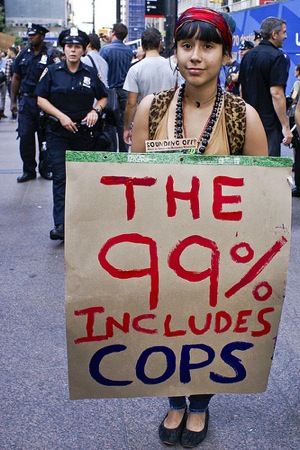
Occupy Oakland Observer (male): “Again, nothing against them, individually, for the most part. [Chuckles] But, um, yeah, like, you said, you know, they’re just doing their jobs. Uh, they are part of the 99%. And, eventually, they are gonna see it that way. Like in New York, I’m sure you heard, there was a group of cops that refused to move on a crowd, despite orders from their superior officer.”
Davey D: “Well, many of them haven’t. But then they have those white-shirts that have been out there. I wonder if Oakland will get that.”
Occupy Oakland Observer (male): “We’ll just sift through ‘em.”
Davey D: “And, you know, lastly, you know, um, what lessons did you pick up from your eight days of staying in Occupy Oakland. And what, and what sort of lessons that you learned would you wanna impart on people that are listening that may have not been talked about?”
Occupy Oakland Observer (male) (circa 12:33): “Be the change that you wanna see.”
Davey D: “That’s real talk. And what change do you wanna see?”
Occupy Oakland Observer (male): “I wanna see equal taxation among everybody. I mean, there’s no reason that some people who are making the most money, who can have the biggest effect on the, on, I mean, the biggest impact on this deficit that we’re in, uh, you know, they’re not paying anything. I’m sick of favouritism in the social, I mean, in the justice system. And, you know, I don’t know if you heard about Iceland? Iceland is a success. They’re officially rewriting their Constitution. And people who were formerly above the law are being brought to justice.”
Davey D: “And that’s what needs to happen here. We appreciate it, man. Thank you so much. Good luck to you.”
Occupy Oakland Observer (male): “Thank you.”
Davey D: “[Turning to another observer.] What’s, what’s your name, man?”
“Anson,” Occupy Oakland Observer (male 2): “Anson.”
Davey D (circa 13:20): “Anson. Were you out here last night?
“Anson,” Occupy Oakland Observer (male 2): “Um, no I was not.”
Davey D: “What’s your thoughts on what’s goin’ on?”
“Anson,” Occupy Oakland Observer (male 2): “Um, I think that people wanted to have a dialogue. This, this country, there’s too much of a, um, big business running this country. And there’s, all the government, there’s not enough transparency. For example, our mayor conveniently not be here. And it’s part of not being transparency of our government at a local level. And, uh, I think of that, accumulates many people’s resentment of this injustice system that’s shielded by not enough transparency. When there’s no transparency there’s no democracy.”
Davey D: “I think that’s real talk. What do you think has led to us not being transparent?”
“Anson,” Occupy Oakland Observer (male 2): “Oh, because the big money wanted to, just benefit few. Inherently, it has this non-transparency built into it. And they have to in order for them to scoop their huge amount of appetite for the profit. And, therefore, they need a government that shield them. And, uh, government needed them to shield themself, so they can continue ‘round the system that benefits a few.”
Davey D: “What do you think is the next step from here?”
“Anson,” Occupy Oakland Observer (male 2): “Um, I’m from China. That reminds me of the Cultural Revolution. The time that everyone just write their opinion in a big, what they call the [Chinese phrase: ???], which means big poster. They just post it up all the public place. Anyone, everyone have a right, have a Constitutional right, to express their opinion. If that can happen here in this very square, allow anyone, everyone to put their opinion. That will start a conversation or a dialogue that maybe can do something about this non-transparency.”
Davey D: “You know, oftentimes people look at China and in this country and they point to China as, uh, being a violator of human rights and free speech. But it seems like, wit’ each passing day, we’ve moved in that direction even more. What’s your thoughts when you compare the two countries?”
“Anson,” Occupy Oakland Observer (male 2): “Oh, you know, when I hear the airline to say they are, the world becomes smaller, I sure agree the world becomes smaller. So, therefore, the people have money certainly exchange their idea, meaning the Chinese government are more and more look like the American government. And my, the American government, vice versa, learning lots, experience from the Chinese government. But until we break down this transparency, there’s no amount of government where the, I don’t care how good intentioned they are, they will have power. And, therefore, they will corrupt.”
Davey D (circa 16:34): “Well, that is, good words to live by. And remember, thank you so much. We appreciate it.”
“Anson,” Occupy Oakland Observer (male 2): “Thank you.”
Davey D: “Thank you. Peace.”
BACK TO THE KPFA STUDIOS, LIVE ON-AIR
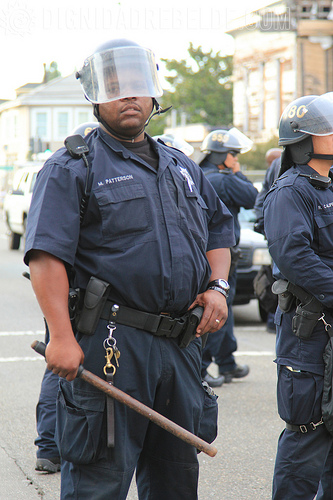 Dennis Bernstein (circa 16:42): “And thank you, Davey D. You are, no doubt, listening to KPFA, the people’s
radio station, here in the [S.F.] Bay Area, Pacifica Radio. I’m Dennis Bernstein with Davey D [in the
studio]. [KPFA General Manager] Andrew
Phillips is in the studio. He’s been
rippin’ off Facebook and watchin’ the wires all night. Uh, Davey, amazing series of interviews. Let me just say, one of the things that I
think we’re seeing now in the way Oakland is being used. It’s a national story. And it’s a, it’s a national experiment
because what we saw with these 17 police departments is right out of the
P.A.T.R.I.O.T. Act—“
Dennis Bernstein (circa 16:42): “And thank you, Davey D. You are, no doubt, listening to KPFA, the people’s
radio station, here in the [S.F.] Bay Area, Pacifica Radio. I’m Dennis Bernstein with Davey D [in the
studio]. [KPFA General Manager] Andrew
Phillips is in the studio. He’s been
rippin’ off Facebook and watchin’ the wires all night. Uh, Davey, amazing series of interviews. Let me just say, one of the things that I
think we’re seeing now in the way Oakland is being used. It’s a national story. And it’s a, it’s a national experiment
because what we saw with these 17 police departments is right out of the
P.A.T.R.I.O.T. Act—“
Davey D: “Yeah.”
Dennis Bernstein: “—in which, local police departments agreed to collaborate with the Feds. And, for that, they have unify meetings, where they all come together and they get special equipment if they agree to the programme. We saw that programme being tested on a major city.”
Davey D (circa 17:39): “Right. And for people who are just tuning in and don’t know, it’s The Morning Mix. This is Davey D and Dennis Bernstein and Andrew Phillips in the building. Um, Dennis is referring to the fact that yesterday Chief [Howard] Jordan from the Oakland Police Department counted off 17 different police agencies that were used to remove less than 200 people at Occupy Oakland. Not 17 people for the thousands that were out last night, but 17 different police agencies from as far away as San Jose and Vacaville (which is a good, what, 15 minutes from here?), uh were used to remove folks. And I think it’s important to understand what’s goin’ on because a narrative is being painted. When you sit up there and say, ‘We needed 17 police [agencies] and three helicopters and tear gas,’ and he admitted that they shot tear gas without being provoked, um, in the press conference, then it creates the situation where people start to believe that folks that are down there are unruly. I thought it was real important. Last night I drove around. I was there. You know? And I talked to a lot of people. None of the buildings were boarded up. And none of the buildings, none of the buildings, the businesses down there, were broken. And that’s very key because in the past that was always the excuse for having multiple police departments there. ‘They are rioting in Oakland.’ No, folks. There was no rioting in Oakland. What you saw were police tossing tear gas at people over and over again. The last batch of tear gas that I experienced came as people were actually dancing in front of the police line saying, ‘Our streets, our streets.’ So, you know, all of a sudden you get these tear gas that keeps coming so people disperse, they come back, they disperse, they come back. They weren’t dispersing and shooting. They weren’t dispersing and fighting. They weren’t dispersing and breaking businesses. They were dispersing and coming back and saying, ‘We’re gonna take back the Occupy Oakland site.’ And the big story was not the sensationalism around what was goin’ on in terms of all this negative stuff. It was the community that was being built. It was the merging of the homeless population and the activists. It was the folks that didn’t have any sort of resource because of budget cuts that were now getting fed, that were now getting clothes, that were now getting put in tents. And then, the last point, because people don’t really understand. There was a children’s village there. And what really got folks in Oakland upset was they shot that tear gas into the Occupy Oakland [encampment] in the early morning hours at 4:30 in the morning. And it, it shot it towards the kids! Now folks are goin’, ‘Well, why would you bring kids out there?’ [The] people who say that don’t understand that kids are already down on 17th and 14th and in Downtown Oakland because they’re homeless! There are homeless families out there.”
Dennis Bernstein: “Yeah. That’s it.”
Davey D: “So, once again, folks who keep saying, ‘Why did they bring kids?’ kids are down there in your cities. They’ve been down there. They’ve been down there because they’re homeless. In our population, both the government and many of us who ask that question fail to realise that when you drive around the City folks are living in cars! Why are they living in cars? Because many of the banks have foreclosed on people’s homes and they have no place to go! So, when, so the Occupy Oakland site was a welcomed change. It means you got food! You have a tent! I can put my kids in some sort of structured activity. That’s why kids were down there. And those kids are still down there. I talked to a lo-, other people and it’s like, folks is like, I, I’m still talkin’ to people, they’re like, ‘I’m still here.’ Like, we, one guy I talked to, he’s crying! He doesn’t know what he’s gonna do, because he had for two weeks a place to stay. And, so, I think folks really need to understand that story. And then I’ll just conclude by saying many of the corporate media ignored that was the story.”
Dennis Bernstein: “They cheerleaded.”
Davey D: “They, they cheerleaded the police and they ignored the fact that there was a sizeable number of people out in Oakland that didn’t have a place just like in San Francisco and other parts of the Bay Area where there are homeless folks living in cars. Not everybody’s a drugged-out schizophrenic, you know, uh, um, doesn’t know, out-of-their-mind type of person. You have families that lost everything and there’s no safety net. There’s no safety net for people anymore, folks. And, so, Occupy Oakland became a de facto safety net because people cared enough to not just make a political point, but to actually try to merge the various populations of people in Downtown Oakland. And that’s why they had the support of the businesses. That’s why people were cheering them on. That’s why so many people came out. And that’s why you don’t have no broken windows! And if they’re broken, it’s because of police informants who were out there last night and, or it’s because of the police. It’s not because of those people. And that’s an important story that needs to be underscored.”
Dennis Bernstein (circa 22:26): “And, again, back to the national security aspect of this. Becau-, just what you’re outlining, Davey. This connection between the protesters, who may soon be homeless and not be, uh, sleeping as a matter of choice, are uniting with the people who have already been cast out and that is when the Federal Government gets nervous. And that’s when they kick in with these national security directives that are all in place and have, uh, been practiced by all these police forces, who love to get together. This is overtime. I guess we have to close 15 more schools to pay for these kinds of—“
Davey D: “Five schools today, right in Oakland.”
Dennis Bernstein: “—activities. Five schools today.”
Davey D: “And some people estimate $2 million dollars was spent, not for last night, $2 million dollars was spent on the operation to remove Occupy Oakland. That’s how many teachers’ salaries? That’s how many schools that could have been used, that could use supplies? So, five schools are closing today, elementary schools in Oakland, which people are protesting. That’s a story that hasn’t been covered as much. Um, and it’s, it’s being done at the expense of 17 police departments from all around the [S.F.] Bay Area coming in—“
Dennis Bernstein: “Practicing their—“
Davey D: “—practicing, yes.”
Dennis Bernstein: “—P.A.T.R.I.O.T. Act and employing the weaponry. See they, this is the new police employing their weaponry that was guaranteed them if they participate in these national security exercises. So, Oakland becomes a major city test case. And let me tell ya, Davey, it is, Oakland is on, you know this now, it’s on the national map.”
Davey D: “Right.”
Dennis Bernstein: “Last night on CNN, they got Michael Moore on there and while they’re, uh, dialoguing with a live audience. They’re running footage of what’s going on in the streets of Oakland last night.”
Davey D: “Right. And it’s important that people get the framing. That people are running from the tear gas.”
Dennis Bernstein: “Exactly.”
Davey D: “It’s not a riot, in terms of people tearing up stuff.”
Dennis Bernstein: “Right.”
Davey D: “People kept going back over and over again. I don’t know how people were able to stand in the tear gas that long, but they were determined to go back and reoccupy the place that they were kicked out. And people, again, who don’t know better realise that there’s a population of folks that are down there, that are still down there, um, some of them because they wanna reoccupy, but many because they’re just homeless. And they haven’t had a place. And that was home. That was h-, downtown was there home. You know? Maybe they didn’t have a tent. Now, they’ll be back in door alleys. Maybe they’ll be back in bus-stops. But that was their home, those streets. And we gotta start to really come to grips with that and stop being very comfortable and making judgments based upon media systems that are wholl-, that are owned by the very banks that we are protesting, who are parroting a, a corporate line that suggests that, if you can’t make it, it’s your own fault. There’s a lot of homeless veterans coming back.”
Dennis Bernstein: “That’s right.”
Davey D: “There’s a lot of young families that are out there. And then, lastly, as Rachel Jackson pointed out on ‘Democracy Now!,’ keep in mind that, while this was going on, it was goin’ on in Atlanta. You know? They were removing people in Atlanta. That they are doing these coordinated efforts nationwide.”
Dennis Bernstein: “National security, again.”
Davey D: “But they don’t cover it that way.”
Dennis Bernstein: “Exactly—“
Davey D: “So, they make it seem like Oakland’s by itself.”
Dennis Bernstein: “—disparate, like, little problems that different cities are having.”
Davey D: “Right.”
Dennis Bernstein (circa 25:50): “It is a national security operation. It’s structured under the P.A.T.R.I.O.T. Act. These police forces get empowered and get new weaponry, as they participate in these coordinated meetings. This is a rehearsal for bigger things to come.”
Davey D: “Right. Absolutely.”
THE MORNING MIX GUEST, JESSE PALMER (ATTORNEY & OCCUPY OAKLAND SUPPORTER)
Dennis Bernstein (circa 26:08): “Alright this is a special on The Morning Mix. That is Davey D. He’s been out there really doing an incredible job reporting on this with lots of people, we all care a great deal about what’s going on in our City. We actually have on the line, Davey, a lawyer, Jesse Palmer, who was, has been a regular participant in Occupy Oakland, has been sleeping there on and off, was there the night before, as the raid began, was there in the streets last night. Jesse Palmer, are you there?”
Jesse Palmer: “I am.”
Dennis Bernstein: “Alright, why don’t you just talk a little bit about, uh, as an attorney, your impression of what happened in the initial routing of the camp.”
Davey D: “Well, first of all, I’m, I mean, that’s my day job, but I’m not there in any way as an attorney.”
Dennis Bernstein: “Alright, but—”
Jesse Palmer: “I’m there—“
Dennis Bernstein: “—you have some skills that we don’t have.”
Jesse Palmer: “—right. I’m there as an inhabitant of planet Earth. I’m, I mean, I think we need to redirect, you know, what specifically happened with the camp, with the police, and talk a little bit more, I mean, you’ve already touched on it, about how valuable the camp was while it was happening because there was a General Assembly every night. And what was really distinctive about these General Assemblies was that there were hundreds of participants from all walks of life. It was extremely diverse in terms of age, in terms of racial composition. And the level of discourse that was happening at those General Assemblies was something that I’ve never seen before and was incredibly impressive. And I think what’s happening with the Occupy Movement (and, you’re right, that it’s not just in Oakland, it’s not just at Wall Street, but this is happening in small towns and big cities all over the whole country and all over the world) is there is a discussion of class and there is a discussion of income equality. And there is actually a discussion of capitalism, which is the discussion that has not been able to happen in this country for decades. And now this is, this is a discussion that’s happening everywhere. And, and this is the discussion that was happening at Occupy Oakland every single hour and every single day, every night at the General Assembly. But even more than the General Assembly, the way that the Occupation worked was that anybody could speak to anybody else. So, in normal society, you, you know, most people don’t talk to other people. But at Occupy Oakland you could talk to people who were very different from you. And you did, every day. And it was just this blossoming of discussion and dialogue about really important issues that have not been discussed and that, you know, people have been diverted with single-issue politics. But the Occupy Movement is not going for single-issue politics. It’s, in fact, tackling the big issue, which explains all of the single-issue politics, the environmental destruction, the attack on wages, the attack on unions. This, there is a big explanation for all of this.
“So, the police came and cracked down and destroyed the encampment, as you know yesterday. And they came with overwhelming force. And as you said, you know, we were on the streets, you know, early in the morning and people were picking out all of the odd police forces, the Pleasanton police force and the Union City police force. And I saw the East Bay Regional Parks, um, police force there. And, um, they came in with overwhelming force. And they, you know, there was, um, there was no real, it, I mean, there was no way to resist that. But at that time the Camp was destroyed. But I think what you’re pointing out is, is correct that we came back in a very strong, very focused way. Um, and we’re in the streets last night. And what I saw at the march was the police were using the tear gas and the concussion grenades, and the, some kind of, rubber bullets or bean-bag rounds were flying around. But people were not scared. And we, and we weren’t dispersed. What normally happens in that kind of situation is people scatter and it’s disorganised. But we fell back, maybe a half a block and then people would gather back up. And this was a determined crowd. And, you know, this was not mostly homeless people, by the way. I mean, the, this is a very diverse crowd that involves mostly people who were going to work. The reason that, you know, I slept there some nights, but everyday I was going to work, after the, you know, so, during the day, and most of the people involved in the Occupation, in fact, were going to work during the day and would be there in the evening or when they weren’t working. And that was the same character of that crowd last night. The crowd included every kind of member of society, including the homeless, but also mostly including working people who are seeing the share of the resources in the country, you know, diverted, not ending up, you know, to the people who are working for it. Um, and, you know, just this morning in the New York Times there’s this article about the income inequality, you know, doubling since 1975, that the Congressional Budget Office released. So, those are the real big-picture issues. And the, the scuffles with the police that, you know, what’s happening is there’s a new kind of dialogue out there and people are not gonna be deterred by the police. And we’re not gonna allow the police to change the focus. The focus is on a discussion of class, a discussion of capitalism, a discussion of priorities, and where, where is this society gonna go forward. And the way we’re gonna figure that out is with these discussions.”
Davey D: “I think, uh, what you’re saying there is quite crucial. And it’s hard work that many who have grown comfortable in a society where we have 30-second headlines. And we have things put in nice little packages. Um, it’s hard for them to understand. You know, the media, for example, is always asking, ‘What’s the agenda? What’s the agenda?’ Well, you can’t really have an agenda when you’re doing these discussions. It doesn’t wrap up in a nice little headline and a sound-bite.”
Jesse Palmer: “Yeah, I completely agree.”
Davey D: “And I think that’s the bigger story. That this is work. That it’s the journey that counts more than the actual goal, that if people start to know and appreciate one another and become familiar, we start to grow in ways that we just never even anticipated. And I think that was the bigger story. And that’s why I got so upset when I was at the press conference la-, yesterday and I saw many of these mainstream media folks laughing at the fact that people were, were flash-bombed and tear-gassed. These are the folks that are reporting the news to the rest of the world. And to me it’s just like, ‘You are a journalist; you know what you’re supposed to do.’ And, you know, they’re giving excuses, ‘Well, they, uh, had these perimeters. They had these parameters on what journalists could do.’ So did the Tea Party.”
Jesse Palmer: “Right.”
Davey D (circa 33:17): “So, did the police, like, yesterday. The police were doing the same thing, like, uh, ‘Look, if you want to go the camp,” um, they took us on a tour after the press conference. ‘You can’t, you can only walk here. You can’t take pictures here. You only talk to these people here.’ Even if, you know, I can’t just talk to any old officer. I had to talk to the spokesperson. It’s public servants. But they have a spokesperson. And the point that I’m making is that everybody has a protocol. And I think the protocol that was established in Occupy Oakland was not only good, but it was democratically derived. And it was nothing wrong with that, only if you wanted to make an issue of it, which some of these lazy, hundred-thousand-dollar-a-year reporters from these corporate media types made a big to-do about it because they wanted to make the story about them and not the thousands of people that are supporting this movement and the hundreds that were down at the Occupy Oakland [encampment]. So, I’m glad that you were able to really explain this to folks because there’s a lot of misconception out there, as folks desperately look for dumbed-down 30-second sound-bite narrative versus something that is a little bit more complex, but much more enriching.”
Dennis Bernstein: “Alright, that’s Davey D. We have a guest on the line. [Attorney] Jesse Palmer’s been participating in Occupation Oakland, as a, uh, participant of the planet. And we are watching this unfold around this country and around this world. And more and more response to this equal distribution of wealth opportunity, possibility. And, uh, people are desperate. I do wanna emphasise and underline that the thing that makes the powers that be very nervous is when those already pushed and forced into the streets begin to unite with those who, either are facing that or, are very concerned and care a great deal about what’s going on and the world that we’re living in.”
Jesse Palmer: “And, and, can—“
Dennis Bernstein: “Yes.”
Jesse Palmer: “I saw a lot of young people who do not feel like they have the kind of future that they wanna see. I mean what, what’s happening is people, you know, people are trying to work hard. But they realise that the system’s rigged in a way that I don’t think people realised that maybe 10 or 20 years ago. And the, you know, the, it, there’s an income distribution, but there, there’s also just the, there are, the priorities of this system are so seriously wrong that, you know, I mean the environmental situation, I actually think, is also part of this. It hasn’t really been spoken about very much, but what people are seeing is that the society is taking us off the cliff, environmentally, destroying the environment. And, yet, what it’s giving the people out of that is not the things that they need. So, and, so, it’s just this foolishness.”
Dennis Bernstein (circa 36:09): “Alright, Jesse Palmer, I wanna thank you for being with us on this special Morning Mix dealing with, uh, the police riots led by, actually, 17 police departments to come into this encampment in Oakland and destroy it and criminalise this 99%, yeah, of the people, movement, very extraordinary. Thank you, Jesse Palmer. Uh, we’re gonna open the phones now, Davey D is here. I’m Dennis Bernstein. This is your people’s radio station. And we wanted to come in and bring you something very special about something very terrible that was done to a bunch of beautiful people. We’re gonna open up the lines, uh, and let me see if I can get my numbers straight. It’s 510.848, uh—”
Davey D: “4425 is the open line.”
KPFA FREE SPEECH RADIO PHONE LINES OPEN
 Dennis Bernstein: “4425. 510.848-4425, uh, give us a call, especially,
interested for people who are in Oakland, who have been participating in this,
who have been eyewitnesses. Uh, please
give us a call. Andrew, you ripped
something, uh, Andrew Phillips is here in the studio. You ripped something off of Facebook.”
Dennis Bernstein: “4425. 510.848-4425, uh, give us a call, especially,
interested for people who are in Oakland, who have been participating in this,
who have been eyewitnesses. Uh, please
give us a call. Andrew, you ripped
something, uh, Andrew Phillips is here in the studio. You ripped something off of Facebook.”
Andrew Phillips (KPFA General Manager) (circa 37:19): “I did, Dennis. I just, before I read that I want to make sure I get this information out because one of these questions brought up is schools. And JR Valrey who is usually here Wednesdays [on The Morning Mix], asked me to remind people that today people are meeting in Mosswood Park around about four o’clock to march to the Oakland Tech High School to prevent school closings in Oakland. That’s today at Mosswood Park, marching to Oakland Tech High School at four o’clock from Mosswood Park.
“Yeah, I got this off Facebook: ‘When the police blocked us and we pushed forward, they began full force poking their batons into our bellies. I didn’t take a hard hit then, but during that scene all of a sudden this woman cop just gets off the deep end. She goes off the deep end. She switches her grip and starts wailing on this kid baseball-style, young adult, she was. Then somebody else goes down. We’re surrounded. Five or seven cops, along with one poor, very supportive woman strapped in her car within this mayhem she was protected witness. We kept chanting, loudly, ‘Let them go! Let them go!’ while the struggle went on. Two punching bags continued to get pummelled. An opportunity presented itself for me to acquire a nightstick out of a cop’s hands. So, I took it right out of his hands. He flipped. I tossed it low behind me. People scooted it out of his reach. And he basically went through me to get it. He knocked me to the ground.’ If you want to see that, that’s called ‘Thugs Surround.’ That’s on YouTube.
“Another one here, great: ‘Dan, can you please transmit to them that from Japan and France and Vancouver we are with them and we’re sorry that they are going through this war, this brutality. Thank you, Dan. Occupy France is sending messages of solidarity. A friend in Japan and many others. Thanks.’
“And I just wanna quickly apologise. ‘Cos I heard there were tanks on the street yesterday. There weren’t. They were just armed vehicles. So, I’m sorry to say there were tanks. They were just armed vehicles.”
Dennis Bernstein: “They look a bit like tanks.”
Davey D: “That, that’s how people described them.”
Andrew Phillips (KPFA General Manager) (circa 39:11): “Yes.”
Davey D: “You know, um, and it’s important to understand that they’re designed that way, so people go ‘tank.’ Even though, is it technically a tank? No. But is it, it’s not you’re normal police vehicle. And it’s not the normal vehicle that you see on the street. And so people’re like ‘tank!.’ You know, because you have a phalanx of police in there. You have this armoured thing that is specifically designed to send a message out to the folks and it’s, in that show of, it’s part of that show of military strength.”
Dennis Bernstein: “This is the equipment they got from the Feds.”
Davey D: “Right. This is, you know, they have the helicopters flying over all night. You know you have all these things goin’ on. For what reason? What was the point? What were you trying to, uh, do? Test them out? Were you trying to intimidate people? Because all you did was make the crowds grow larger. You know? Were you trying to suppress this, so it disappears? Or are you trying to bring this to the national stage and make an example out of this city?”
Dennis Bernstein: “Alright, we’ve got a couple of people on the phone. Kirsten, who do we have there? Bonnie, uh, welcome to this special on what’s going on in Oakland. Were you there?”
Bonnie (listener-caller): “Um, I’ve been in Occupy San Rafael, Dennis.”
Dennis Bernstein: “Okay.”
Bonnie (listener-caller): “And I wanna thank you and Davey D for your passionate coverage. There are homeless people here in Marin, too. But I have a question. Where is the Mayor of Oakland? Where is the City Council? Where is [Oakland Councilmember] Jane Brunner? Um, where is Barbara Lee, who I dearly love. Is this part of what you’re talking about? The Homeland Security, have they shut those people up? Where are they? Please, please give me your, uh, you and Davey, your opinions on this.”
Davey D: “That was a big question everybody asked last night and nobody has an answer. Um—“
Dennis Bernstein: “’I was out of town when the incident occurred.’”
Davey D: “You know, nobody has an answer and in many ways it’s shockingly similar to the, uh, lack of response we saw during the Oscar Grant situation seven days after he was shot. Nobody was to be seen. And until people started to, uh, blow up. Then everybody wanted to come in and, you know, and start having these conversations. But it was only then. And I think when you have 17 police jurisdictions, uh, to show up to remove something that is well-known and supported, every-, all the key people better be on hand to have a conversation with folks and answer the hard questions. And they just weren’t. And, so, that’s a shame.”
Dennis Bernstein: “Mary Anne in Tiburon, you’re on.”
Mary Anne (listener-caller): “Hi there! You’re doing a fabulous job. I wanna know, um, wel-, how, wha-, how are you guys outfitted to take as much video as possible of this? Because I’m from the ‘60s Generation. And I walked out in my living room one time and I saw dogs and police beating on Black people. And I was livin’ up in New Jersey and I thought to myself, ‘What is goin’ on?! And when people see that they can’t deny what’s goin’ on with the bull that they put over as news. It’s going to come out. But get the, do whatever you can. Have a designated video camera, whatever you guys do. I’m not that hip with all the technology. But that’s what you’re gonna need. And just because, when, look what Madison did, Madison, Wisconsin. I don’t know how they did it, but they did it in the winter. They did it, you know, people of every walk of life. Farmers came in with their tractors. That is gonna happen pretty soon.”
Davey D (circa 42:38): “Well, first, everybody out there has a camera and many people see themselves as citizen journalists. Um, there, you know, there’s a lot of independent media out there. I was out there last night and, you know, everybody, uh, you name it, anybody who’s independent media was out there. You know, documenting what goes on. The battle that we have is that we still have a large segment of the population that clings to the narratives that are put by the news. For example, yesterday there was a big debate because the mainstream media kept saying it was only 200 cops when it was very clear in the press conference that Chief Jordan said ‘hundreds.’ And people had estimated that it was 500 to 600. And that’s what we were going off of to get the price tag. That question was directed to him with those numbers and he didn’t deny that they were, you know, he didn’t say, ‘No, it’s not 500.’ He, he tried to answer the question. The point that I’m getting at is that you had people going, ‘Well, look, you know the New York Times and this one and that one, they only said 200, so that must be the official story. But this is the same people that were saying everybody down at the Occupy were dirty hippies. These were the same people that, first of all, tried to ignore it and say it was a fringe thing. And, so, the point that I’m getting at is that sooner or later, we’re gonna have to go to other resources. Maybe a place like this, other independent media, the citizen journalists in your community to get the real story and stop validating the agenda that is masquerading the economic and corporate agenda that is masquerading around as news these days because that is misleading people.”
Dennis Bernstein: “Richard from Richmond, you’re on KPFA.”
Richard from Richmond (listener-caller) (circa 44:16): “Yeah, well, it’s interesting. I’m going off to, uh, do my class at Osher. This is on American Political Culture. And, uh, just preparing my critique of American Capitalism for the morning. One short comment, I think this situation is very different from the situation I lived through and taught through when I was at Berkeley in the late ‘60s. Then, you could intimidate students with the threat that they weren’t gonna get jobs. Now, capitalism has determined for itself that people are not gonna get jobs. The threats are not the same. The threats don’t have the same power they had. As you pointed out also people are living in the streets. They’re living in the streets because capitalism has taken away their supposed right to homes and so on. So, you got a group of people who are not gonna be threatened and intimidated the same way they were 40 years ago when they were looking forward to cushy jobs and the watch-word was, if you remember, classist, or something of the sort. Now, the watch-word is democracy and the failures of capitalism.”
Dennis Bernstein: “Alright. Thank you very much. We’re gonna go to Erica in Oakland.”
Erica in Oakland (listener-caller) (circa 45:25): “Hi, um, yeah, I’ve been going to Oakland with my kids to the Occupy on and off throughout the whole two, three weeks. And it was kind of interesting that on Saturday the 15th when, um, Danny Glover was there. The Mayor was there and she was smiling and picturing and everything. And, yet, yesterday she’s disappeared, how convenient. When it’s, now, no longer a photo-op she’s out of the picture. And I just wanna thank you for doing the show.”
Davey D: “Thank you. And that’s very true.”
Dennis Bernstein: “Well put.”
Davey D: “That was very true. She was—”
Dennis Bernstein: “Out of the picture.”
Davey D: “Yeah.”
Dennis Bernstein: “She took a lot of pictures of Danny Glover and then beautiful interview you did with Danny Glover, Davey. They were all there. And she’s gone. Uh, we’re, uh, joined by, um—“
Andrew Phillips (KPFA General Manager): “I just want to point out, Dennis, also that Facebook, Occupy Oakland on Facebook has some great stuff and a lot of citizen journalists are taking a lot of really fantastic videos. So, there is some amazing stuff out there and all over this country. People are out there with their cell phones and doing amazing coverage. And some of them streaming it live. I know that one of them, Janet Kobren has been streaming it live. She’s one of our listeners. There is a lot of citizen journalist information out there.”
Dennis Bernstein: “And a lot of people who are engaged at many different levels. Remember the nurses, uh, here in California and across the country have agreed to have a, set up stations to do health care. I mean, to do basic medical care and it may be, Davey, that this is the only time that many of these people who are already, some of these people are already living on the street, get health care.”
Davey D: “Right. As one of the Occupy folks said to me yesterday, uh, she said, ‘You know, there are a lot of people that have been damaged already. They were damaged way before Occupy. And this has been boiling and boiling and now people who never thought that they would be damaged are also damaged. And now they’ve been forced to, you know, to have to grapple with, with this carnage that has existed, as you have a few people that are determined to marginalise, uh, entire populations and to gather as much as they possibly can with no end in sight. This is what this 1% is doing. Um, and then turn around and blame people for their own, fault for not having safety nets.”
Dennis Bernstein: “Back to the kids. You know, I spent a number of years, as a special ed teacher, teaching very poor kids who were called emotionally disturbed.”
Davey D: “M-hm.”
Dennis Bernstein: “They were rightfully disturbed children who were right at the edge of falling over the cliff into the cracks of extreme poverty and hunger. The, this is a troubled population. There are many kids suffering and it is shocking. It is shocking to see these kinds of resources being used by Liberal politicians in one of the cities, uh; I guess it’s become a test city for this stuff, who’s supposed to be responsive to the people. I have to think that maybe they use this as a target because they wanna say, ‘Well, if we could do it here, we could do it anywhere.’”
Davey D (circa 48:23): “And I think that’s the case. You know? And also try to, uh, redirect people’s attention as to what this is about. This is about dealing with the 1%. And we’re seeing various manifestations of that battle. This time maybe with the police. You know, maybe with a absentee mayor. Uh, maybe with school closures. But many of our problems go right back to the doorsteps of these financial institutions that very deliberately and very corruptively, um, dismantled and destroyed our economy. We should never lose sight of that. And even though we’re dealing with individual and some immediate battles, keep coming back to that because that’s where it all emanates from at the end of the day.”
Dennis Bernstein: “Alright. We have, uh, who on the phone? Somebody. Are you there? Oakland are you there?”
Joyce from Oakland (listener-caller): “Yes. This is Joyce from Oakland.”
Dennis Bernstein: “Hi, Joyce.”
Joyce from Oakland (listener-caller): “Hi! I may lose you. I’m running out of batteries on my phone. I just wanted to say, I, I appreciate what you’re doing so much. And the way that you’re delivering real news to us underneath the milieu of this corporate smokescreen that we have going on in the media. Um, I work as a priest in Downtown Oakland. And I just wanted to comment on one of the things that you said about schizophrenics.”
Davey D: “M-hm.”
Joyce from Oakland (listener-caller): “Uh—”
Dennis Bernstein: “What, what was said? What exactly—”
Davey D: “No, I, I, I said something about that.”
Joyce from Oakland (listener-caller): “Yeah. And I think that’s part of the narrative about the ‘dirty hippie homeless people.’ And that they’re also the quote ‘crazy people.’ And I just want to say, as a member of NAMI, which is the National Alliance on Mental Illness born in the East Bay, that those are also marginalised victims of this, um, of this system, which is that we don’t have, we never have had adequate mental health care. And there are people that are homeless partially because of that. And so, yeah, there are people with mental health crises. They’re on the streets. They’re now having some kind of services, um, because of this Occupy Oakland movement.”
Davey D: “Right.”
Joyce from Oakland (listener-caller): “And I think that it’s important to remember that they’re a part of the homeless population, too. And they’re part of the, um, those who are victimised by the current system.”
Dennis Bernstein: “A lot of vets out there, too.”
Davey D: “Yeah. I think you’re point is well taken. And I didn’t mean to, and that’s good to correct me on that, uh, lump folks who are dealing with mental health challenges, um, in the same vein as quote-unquote ‘criminal behaviour.’ So, you’re right on that. And thank you for the correction. And we should definitely take your words to heart.
Dennis Bernstein: “But there are many troubled people.”
Davey D: “Yeah.”
Dennis Bernstein: “Pushed on to the streets for the same kinds of budget cuts. People who should be getting support and the kind of help that they need. And they’re out there. A lot of them were sent to war, shredded by a war. And they are now wandering the streets like, uh, being lost trying to figure out who they are in this world.”
Davey D: “Right. And the Occupy Movements in many cities have serviced, you know, those people that the city and the government hasn’t serviced, um, because they’re spending money on, you know, getting 17 police jurisdictions to come down versus keeping schools and other, much needed services available for the public.”
TRANSITIONING TO FUND DRIVE MODE (ON THE LAST DAY OF THE KPFA FALL FUND DRIVE)
Dennis Bernstein: “Alright, Davey. We wanna thank the callers. I wanna thank you from the bottom of my heart, Andrew, here, for making the space available at this station for giving the kind of spotlight focus on this crucial, ongoing, you have to say transformation, in which there is an uprising of communities coming together, uniting with the, those who are already left out, who are already being marginalised, who have already been forgotten, uh, with people who are facing that plight and others who care a great deal about what’s going on. We, I have to give out that phone number because anybody who’s been listening to this station and can compare it to, even KQED, the last thing I heard from the announcer there is ‘Police responded to violent protesters throwing bottles and rocks.’ That was both locally and nationally. The big lie perpetrated by the corporate media, the corporate military-industrial media. That’s where we are right now. So, this network, Davey, and this radio station remains vital in this kind of battle. And I think what we need to ask people to do [during our KPFA Fall Fund Drive], we have a $600 dollar matching fund, is to reach down, um, without ev-, you know, knowing that the premium is the open flow of information, reach down, stand up and say, ‘We support this. And we’re gonna put our money where our beliefs are.’ We have a phone number. And if you heard something that moved you, that was meaningful to you, if you heard something that distinguished this network and this radio station, if Davey D’s work means something to you, be making sure he is out on the street taking notes, pointing out incredible things like, ’No damage here; we got 17 police forces, but there’s no dangerous people around here.’ What in the hell is goin’ on? If you support what you are hearing, you’re joining the one person, we, by the way, we need, we’ve got about seven minutes, Davey, to get 50 people to call.”
Andrew Phillips (KPFA General Manager): “Let’s give the phone number here.”
Dennis Bernstein: “Even if it’s just for $20 bucks. 510.848-5732. I say ‘just $20 bucks’? $20, $25 dollars is a great deal of money for many, many people. 1.800.439-5732. If you care about this kind of reporting. If you care what you’re hearing on this station, I wanna go shake the light board because I see one beautiful person on the li-, oh, here we go. 1.800.439-5732. 510.848-5732. We’ve got six people on the line. 510.848-5732. 1.800.439-5732. Won’t you please stand up now? Speak out and support free-speech radio. 1.800.439-5732. There’s a line bouncing there. I hope somebody’s gonna answer it soon. 510.848-5732. There’s a line, somebody please pick it up. Davey.”
Davey D: “Well, I just wanna say that, um, now more than ever, now that we understand that, uh, wit’ each step the 1%, those in power, are trying to corrupt and hold and redirect those who are supposed to be accountable to us. We’ve seen it with our political parties. We’ve seen it with politicians. We’ve seen it now with media. You know, many of the big media chains are owned by investment banks. Many of them are owned by Wall Street. And, so, the agenda of Wall Street is, ultimately, going to be reflected by those, um, those institutions that are supposed to be covering our stories. They’re gonna always cover it with that bias. We are accountable to you. Those who call up 510.848-5732, those who call up 1.800.439-KPFA, this is your chance, this is your opportunity to underwrite this radio station. When you go up and down the dial you got big oil supporting one set of radio chain. You got Wall Street financial institutions. They are underwriting another set of media outlets. You have big businesses, um, that have politicians in their pocket that will underwrite another type of media institution. And, so, when they get on the airwaves and they come across your TV screen, what you get is something that doesn’t even reflect your reality. You have hundred-thousand-dollar pundits, people who get paid $50,000 dollars just to make a speech, who will talk to you and say that they’re down with you. But never reflect the hardships that you’re going through. So, their analysis of a problem never really includes your day-to-day reality. That is not the case here on KPFA. We try to make sure to bring to you that on-the-ground perspective that you understand and that you are dealing with because we’re dealing with it. 510.848-5732. 1.800.439-KPFA. You have to now resurrect those institutions that are around you, that reflect your reality, and that will give you a platform to combat the ongoing assaults that are now taking place on American citizens with media. And, just to understand, and then I’ll just close, Dennis, remember media, oftentimes, media from this country is used to disrupt, and to marginalise, and to put to death countries and leaders all around the world. ‘South of the Border,’ Oliver Stone’s movie shows how that took place right there. Look around the world and you’ll see the, that our media is used as propaganda machines and weapons to demonise and then lead folks into war, and to lead folks into taking of resources, and to lead folks into believing that maybe an entire country must somehow be quote-unquote ‘corrupt,’ or less than human. So, therefore, whatever we do to them they deserve. That is how we operate around the world. But don’t be mistaken, folks. That’s being used on us, right now, the 99%”
Dennis Bernstein: “And we have two minutes. 1.800.439-5732. If you heard something in this hour, in this day, in this 48-hour period that meant something to you, that really distinguished this station from what you hear from the corporate media, we’re asking you to speak up for it. We’re asking you to stand up and put your money where your beliefs are. We’re asking you to take that risk, to do that action that nobody watches you do. You do it on your own because your mind and your heart and every cell of your body tells you it’s the intelligent, right thing to do to support a non-corporate network that is here for you, that you are a part of, that you are a people’s producer. We are in the 99%. This is a station that’s on the front line of that movement, if you make it so, if you make sure that we remain viable and strong, and that we are powerful at the base, that we can fight back, that we can do what we need to do to represent this kind of uprising. Yes! This people’s uprising around the country, people uniting, people who are already homeless, with people who are frightened, people who are losing their houses, and those of us who care. We may not be on the edge, but we care. And we can’t turn our backs. We can’t turn our eyes away. We can’t turn our consciousness off. We believe in this work. We wanna use this network and this radio station, which is really an electronic leaflet for the people. 510.848-5732. 1.800.439-5732. 1.800.439-5732. 510.848-5732. If you care that you have an alternative and you wanna make that alternative stronger, you wanna guarantee that this free speech [going into next programme’s time-slot] the First Amendment. If you want to stand for that, for the First Amendment, then we’re asking you to stand up, right now. 1.800.439-5732. 1.800.439-5732. 510.848-5732. Davey D, I wanna thank you for being out there. Final word.”
Davey D: “I just wanna say that right now. It’s all about us recognising the humanity in one another. And this station, I think, is going to always uphold its very principles that founded us. We see the humanity in you. Hopefully, you see the humanity in us. And we support each other. And, so, give us a call as we close out. 510.848-5732. 1.800.439-KPFA. I wanna thank all the people that have called in. I wanna thank all the folks that helped us out, Rachel Jackson, Joseph from Berkeley, uh, JR, a lot of folks were on the street giving us a lot of information. And, of course, you know, the rest of the staff, from Mitch and Brian and you name it. A lot of folks are still out there on those streets, gathering that information and it will be reflected on our airwaves throughout the day and the weeks to come.”
Dennis Bernstein: “Alright.”
Davey D: “We’re out.”
Dennis Bernstein: “Davey D, thank you. We’re out of here.”
***
Transcript by Felipe Messina
Photo 1 by flickr user Newtown graffitti, photo 2 by flickr user SWARM GALLERY OAKLAND, Photo 3 by flickr user dignidadrebelde.
 MR:
“They held, I was gonna say they held out for a long time in Egypt.”
MR:
“They held, I was gonna say they held out for a long time in Egypt.”