The Torture Career of Egypt’s New Vice President

COMMONDREAMS – In response to the mass protests of recent days, Egyptian President Hosni Mubarak has appointed his first Vice President in his over 30 years rule, intelligence chief Omar Suleiman. When Suleiman was first announced, Aljazeera commentators were describing him as a “distinguished” and “respected ” man. It turns out, however, that he is distinguished for, among other things, his central role in Egyptian torture and in the US rendition to torture program. Further, he is “respected” by US officials for his cooperation with their torture plans, among other initiatives.

Katherine Hawkins, an expert on the US’s rendition to torture program, in an email, has sent some critical texts where Suleiman pops up. Thus, Jane Mayer, in The Dark Side, pointed to Suleiman’s role in the rendition program:

Each rendition was authorized at the very top levels of both governments….The long-serving chief of the Egyptian central intelligence agency, Omar Suleiman,     negotiated directly with top Agency officials.  [Former U.S. Ambassador to Egypt] Walker described the Egyptian counterpart, Suleiman, as “very bright, very realistic,” adding that he was cognizant that there was a downside to “some of the negative things that the Egyptians engaged in, of torture and so on. But he was not squeamish, by the way” (pp. 113).

Stephen Grey, in Ghost Plane, his investigative work on the rendition program also points to Suleiman as central in the rendition program:

To negotiate these assurances [that the Egyptians wouldn’t “torture” the prisoner delivered for torture] the CIA dealt principally in Egypt through Omar Suleiman, the chief of the Egyptian general intelligence service (EGIS) since 1993. It was he who arranged the meetings with the Egyptian interior ministry…. Suleiman, who understood English well, was an urbane and sophisticated man. Others told me that for years Suleiman was America’s chief interlocutor with the Egyptian regime — the main channel to President Hosni Mubarak himself, even on matters far removed from intelligence and security.

Suleiman’s role, was also highlighted in a Wikileaks cable:

In the context of the close and sustained cooperation between the USG and GOE on counterterrorism, Post believes that the written GOE assurances regarding the return of three Egyptians detained at Guantanamo (reftel) represent the firm commitment of the GOE to adhere to the requested principles. These assurances were passed directly from Egyptian General Intelligence Service (EGIS) Chief Soliman through liaison channels — the most effective communication path on this issue. General Soliman’s word is the GOE’s guarantee, and the GOE’s track record of cooperation on CT issues lends further support to this assessment. End summary.

However, Suleiman wasn’t just the go-to bureaucrat for when the Americans wanted to arrange a little torture. This “urbane and sophisticated man” apparently enjoyed a little rough stuff himself.

Shortly after 9/11, Australian citizen Mamdouh Habib was captured by Pakistani security forces and, under US pressure, torture by Pakistanis. He was then rendered (with an Australian diplomats watching) by CIA operatives to Egypt, a not uncommon practice. In Egypt, Habib merited Suleiman’s personal attention. As related by Richard Neville, based on Habib’s memoir:

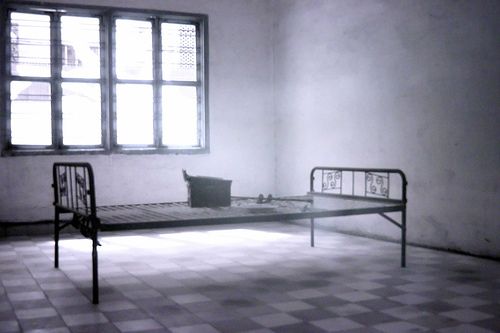
Habib was interrogated by the country’s Intelligence Director, General Omar Suleiman…. Suleiman took a personal interest in anyone suspected of links with Al Qaeda. As Habib had visited Afghanistan shortly before  9/11, he was under suspicion. Habib was repeatedly zapped with high-voltage electricity, immersed in water up to his nostrils, beaten, his fingers were broken and he was hung from metal hooks.

That treatment wasn’t enough for Suleiman, so:

To loosen Habib’s tongue, Suleiman ordered a guard to murder a gruesomely shackled Turkistan prisoner in front of Habib – and he did, with a vicious karate kick.

After Suleiman’s men extracted Habib’s confession, he was transferred back to US custody, where he eventually was imprisoned at Guantanamo. His “confession” was then used as evidence in his Guantanamo trial.

Click to continue reading the full article on Egypt’s new VP, Omar Suleiman.

Written by Stephen Soldz, psychoanalyst, psychologist, public health researcher, and faculty member at the Boston Graduate School of Psychoanalysis. He edits the Psyche, Science, and Society blog. Soldz is a founder of the Coalition for an Ethical Psychology, one of the organizations working to change American Psychological Association policy on participation in abusive interrogations; he served as a psychological consultant on several Gutanamo trials. Currently Soldz is President of Psychologists for Social Responsibility [PsySR] and a Consultant to Physicians for Human Rights.

© COPYRIGHT COMMONDREAMS, 2011

Photograph by hermmermferm
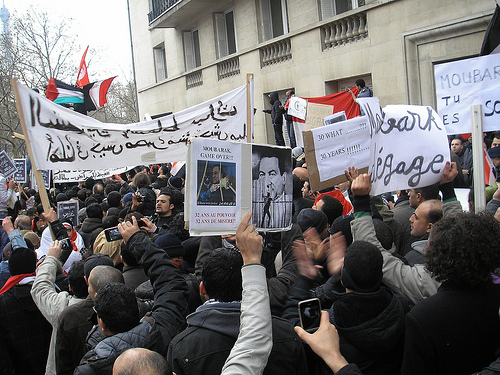
Revolution: Egypt Protest Death Toll Passes 100

HARAKAH DAILY–  At least 100 Egyptian protesters have been killed during clashes with police as the explosion of anger at President Hosni Mubarak continues to rock the North African country.

Medical sources stated on Saturday that over 100 people, including 23 protesters in the port city of Alexandria have lost their lives in streets fighting with police forces across Egypt since the outbreak of anti-government protests, while 13 people were killed and 75 others injured in the flash point city of Suez, along the strategic Suez Canal.

According to medical sources, at least 1,030 protesters have been injured as mass protests remain unabated across the country for a fifth consecutive day.

The worst unrest in Egypt’s history appeared to be ceaseless and police have reportedly fired tear gas and rubber bullets at the protesters.

The fall-out comes after a curfew from 6 p.m. to 7 a.m. was imposed Friday in Cairo, Suez and Alexandria.

In another development, Mohamed El Baradei, one of Mubarak’s fiercest critics and a former head of the International Atomic Energy Agency, was detained by Egyptian police after appearing on the streets in the capital Cairo.

ElBaradei has promised that the street protests will continue with even more intensity until Mubarak resigns.

Continue reading about the Eqyptian Revolution.

Photo by flickr user Jacques Delarue

© COPYRIGHT HARAKAH DAILY, 2011

“Lock & Load” Rhetoric of US Politics Isn’t Just a Metaphor

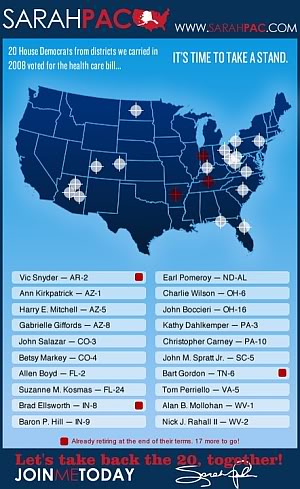
HUFFINGTON POST – I’m not saying that putting a bullseye on Arizona Democrat Rep. Gabrielle Giffords’ congressional race – as Sarah Palin did – was an explicit or intentional invitation to violence. Nor am I saying that the “Get on Target for Victory” events held by the guy Giffords beat – “Help remove Gabrielle Giffords from office Shoot a fully automatic M16 with Jesse Kelly” – was the reason her assassin went after her. This tragedy is still unfolding, and the questions of motive and incitement will be argued about for a long time to come.

But I am saying that the “lock and load”/”take up your arms” rhetoric of American politics isn’t just an overheated metaphor. For years, the language of sports has dominated political journalism, and discourse about hardball and the horserace and the rest of the macho athletic lexicon has been a factor in the trivialization of our public sphere. This has helped dumb down democracy, making a serious national discussion about anything important too wonky for words.

The “second amendment solution,” though, does something worse than make politics a branch of entertainment. It makes it a blood sport. I know politics ain’t beanbag. But words have consequences, rhetoric shapes reality, and much as we like to believe that we are creatures of reason, there is something about our species’ limbic system and lizard brainstems that makes us susceptible to irrational fantasies.

If you’re worried that violent video games may make kids prone to bad behavior; if you think that mysogenic and homophobic rap lyrics are dangerous to society; if you believe that a nipple in a Superbowl halftime show is a threat to our moral fabric – then surely you should also fear that the way public and media figures have framed political participation as a shooting gallery imagery is just as potentially lethal.

Article by Marty Kaplan, Director of the Norman Lear Center and Professor at the USC Annenberg School

© 2011 Huffington Post


Posted in Uncategorized | 1 Reply

IDF May Be Using Most Dangerous Type of Tear Gas

HAARETZ (ISRAEL) – Questions are surfacing about Israel’s use of tear-gas grenades, as security officials investigate the recent death of a protester at the weekly demonstration near the separation fence at the West Bank village of Bil’in. A 36-year-old woman, Jawaher Abu Rahmah, died on Saturday morning.

The medical report filed in the Ramallah hospital where Abu Rahmah was taken shows that her death was caused by respiratory failure resulting from the inhalation of tear gas.

Haaretz obtained the medical report on Sunday from Jawaher’s brother, Ahmed Abu Rahmah.

Jawaher Abu Rahmah was the sister of Bassem Abu Rahmah, who was killed in April 2009 when Israeli soldiers fired a tear-gas grenade at his chest at a demonstration at the fence in Bil’in. Ahmed Abu Rahmah has three surviving brothers; their father died five years ago.

“My entire family is ruined,” he said on Sunday. “The whole house feels a sense of catastrophe.” He said he bears no hatred toward Israelis. “They are people just like myself. We don’t seek vengeance against Israel. We want the return of our lands, and the struggle won’t end until our property is restored.”

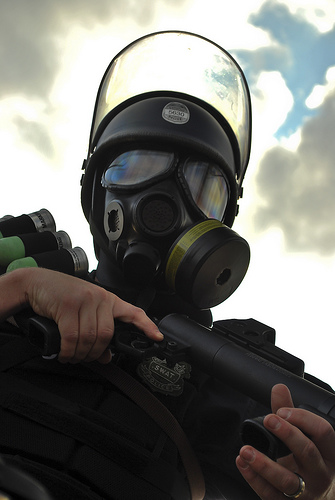
The Israel Defense Forces uses crowd-dispersal tear gas known as CS, which was developed half a century ago in Britain and the United States. It is used by armies and police forces around the world. In recent years, a number of studies have cast doubts about this type of gas; there have been reports of several deaths caused by the inhalation CS tear gas.

Click to read full article on IDF use of dangerous tear gas.

© Copyright 2011 Haaretz  

Article written by Avi Issacharoff and Anshel Pfeffer

Photograph by flickr user Mark Z.

Posted in Uncategorized | 1 Reply

The Cocaine Trade- How it’s Made and How it Moves

The following is an excerpt from an article called The Mystery of the Tainted Cocaine, Part II: How It’s Made, How It Moves, and Who Might Be Cutting It with a Deadly Cattle-Deworming Drug

THE STRANGER Diego was 23 years old, a poor Colombian living in a poor section of Cali, when his girlfriend had the baby. He was broke—everybody was broke—but his grandmother knew where he could earn some money: He could go work the coca plantations in the hinterlands like she had. She could get him a job working for FARC (Fuerzas Armadas Revolucionarias de Colombia, Colombia’s Marxist-Leninist guerrilla army), which was better than working for the right-wing paramilitaries.

Diego is not his real name, and he’s currently living in a different Latin American country—otherwise, he said, he wouldn’t be talking to me.

“Not one person I met out there used cocaine,” Diego said. “We would chew on the leaves—to kill the hunger, the fatigue, to stop the pain of the work. You’d get bit by spiders and scorpions, mosquitoes or snakes, and you’d chew so you wouldn’t feel the pain. Some people believed the coca leaves would stop the poison and save your life.”

At his peak earning period, Diego was making the equivalent of US$600 per month. “Back then, that was good cash and it was fast,” he said. It was incredibly dangerous, too: People would go back home with wads of money, usually to bring to their families, and get robbed and killed along the way, sometimes by the same people they’d been working with in the fields for four or five months. When Diego traveled, he always went with an entourage of uncles or cousins.

After a while, Diego graduated from the fields to the “factory,” which was more like a shed, where he helped turn the raw leaves into cocaine paste. “Making the paste is gnarly,” his girlfriend said. “That’s where the real scars come in.”

“There’s a big pool with all the leaves, a big wood tub,” Diego explained. Workers would pour leaves into the tub, stomp them down, and then add gasoline to extract the cocaine alkaloids. “That’s the easiest way for the government to find the camps,” Diego said. “Gasoline is expensive, and most farmers don’t use that much—sugarcane and bananas are all farmed by hand—so you find whoever’s buying vats and vats of gasoline.”

They’d lay a tarp over the tub for 24 hours, with someone stirring the gasoline-coca stew every four or five hours. Then they’d taste the brew to see if it was strong enough. If it numbed the tongue, it was good. If not, it needed more chemicals. Diego doesn’t remember exactly which chemicals they used: “There were a lot of chemicals.” Eventually, they’d pull the plug on the tubs, collect the cocainized gasoline, add ammonia and sulfuric acid, and chemically reduce the brew into a paste that was taken elsewhere to be turned into cocaine hydrochloride—powder.

Diego and the other workers were encouraged to spit into the tubs holding gas and coca, and even pass spit-mugs around the camp, under the premise that saliva helped the extraction process. Workers were also encouraged to ash their cigarettes into the vats, perhaps because traditional coca chewers sometimes added a dab of quicklime or the ash of burned quinoa plants to their wad of coca. (Diego said he wasn’t sure why.)

Then there were the unauthorized additives. “Sometimes we’d piss or shit in the vats, just to be fuckers,” Diego said. “Only the rich use cocaine, and we thought it was funny.”

The territory where Diego was working—he still isn’t 100 percent sure where they were—was a death zone. The paramilitaries and guerrillas were fighting upriver, and he said that sometimes when he went to fetch water, he’d see dead bodies or severed limbs floating past. “I often heard people say things like ‘Yesterday I saw four bodies going down,'” Diego said. “All the time, people were talking about bodies. A lot of times they were tied together, big groups of people.”

Stories circulated from the guerrillas to the workers about small bands of soldiers who “went to make some business away from the group” and were savaged by larger groups of paramilitaries: “First they cut their hands off, then they cut their legs, and then they’d kill them.” The threat of infighting and defection was constant, as workers felt the tempting urge to abscond with packages of paste and sell them on their own.

Then, of course, there was the guerrilla war. In nearby villages, guerrillas and paramilitaries enforced curfews, telling villagers to “go to bed early, because if we see anyone walking around after 10:00 p.m., we’ll kill them.” They also went from village to village, Diego said, conscripting boys for their armies, sometimes leaving notes under people’s doors ordering them to bring their sons to the town center (the church, the plaza) at a certain time. If anyone refused, the soldiers might return to murder the entire family.

***

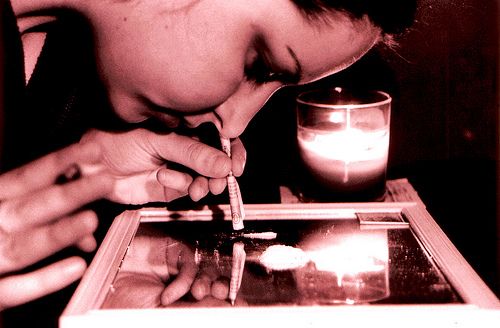
Diego never worked on the hydrochloride processing, the most chemically advanced and sensitive part of the process—the stage when the paste is turned into powder and, presumably, the stage at which levamisole, a cattle-deworming medicine that’s been showing up in the world’s cocaine supply, is added. As covered in the first part of this series—”The Mystery of the Tainted Cocaine,” August 19—the DEA reported finding levamisole in 73.2 percent of cocaine seized in the United States in 2009, up from a paltry 1.9 percent in 2005. The DEA has also found levamisole-tainted cocaine in busts in Colombia and even in the plastic laminate on glossy calendars shipped into the U.S.—the laminate itself is impregnated with cocaine. (The DEA has agents working across Latin America.) This indicates that levamisole is being added at the source, in the labs where the paste is turned to powder.

When levamisole is ingested by humans, it can trigger a catastrophic immune-system crash called agranulocytosis; it has led to an unknown number of hospitalizations and multiple deaths among cocaine users in the past two years. Physicians in Seattle have reported seeing the same cocaine users land in the hospital with agranulocytosis on multiple occasions.

Levamisole is an unusual—and unprecedented—cutting agent because it’s more expensive than other cuts, it makes some customers sick, and it’s being cut into the cocaine before it hits the United States. Smugglers typically prefer to move pure product, which is less bulky and results in less chance of detection. “The Mystery of the Tainted Cocaine” offered a few theories about why South American drug manufacturers (mostly Colombian) are cutting their cocaine with levamisole.

A quick review of those theories:

1. Levamisole might produce a cocainelike stimulant effect either on its own or in conjunction with cocaine (in 2004, racehorses treated with levamisole were found to metabolize the deworming drug into an amphetamine-like stimulant called aminorex), meaning the product could produce a more substantial high with less pure cocaine.

2. Levamisole, unlike other cutting agents, retains the iridescent, fish-scale sheen of pure cocaine, making it easier to visually pass off levamisole-tainted cocaine as pure.

3. Levamisole passes the “bleach test,” a quick street test that reveals cuts like sugar or lidocaine (but, because of a chemical anomaly, not levamisole).

4. Levamisole is a bulking agent for crack. Making crack involves purifying cocaine and washing out the cutting agents, but levamisole molecules slip through this process—meaning a dealer can produce more volume of crack with less pure cocaine.

***

Read the full article on The Mystery of the Tainted Cocaine, Part II: How It’s Made, How It Moves, and Who Might Be Cutting It with a Deadly Cattle-Deworming Drug

Written by Brendan Kiley

Photo by Flickr user Andronicusmax

© COPYRIGHT THE STRANGER, 2010