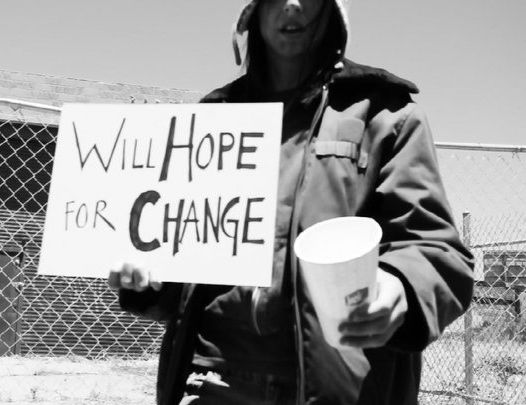
One Million US Public School Students Homeless

WSWS– A report released in July by the advocacy groups National Association for the Education of Homeless Children and Youth (NAEHCY) and First Focus reveals the explosive growth of homelessness among public school students during the economic crisis.

Based on Federal data from the US Department of Education, the number of students identified as homeless by public school districts rose by more than 40 percent between the 2006-2007 school year and 2008-2009, to 956,914. The figure has almost assuredly passed one million in the current school year.

That well over one million public school students are homeless is a damning indictment of the entire social order. The staggering growth in student homelessness took place simultaneously with the transfer of trillions of dollars in public funds to Wall Street, overseen by the administrations of former President George W. Bush and current President Barack Obama.

No part of the country was spared. NAEHCY and First Focus found that 70 percent of school districts reported an increase in homelessness since 2007-2008, and 39 percent reported enrolling more homeless students in the first six months of the 2009-2010 school year than in the entire previous year.

The worst affected states have been Texas and Iowa, with increases of 139 and 136 percent, respectively, between the 2006-2007 and 2008-2009 school year. Other hard-hit states include New Mexico (91 percent), Kansas (88 percent), New Jersey (84 percent), New York and South Dakota (73 percent), and Georgia (72 percent). Of the 50 states plus the District of Columbia, 13 registered increases of child homelessness of 50 percent or more.

In Delaware, one out of every forty students was homeless last year. “These children share bedrooms with extended family, check in to cheap motels, and sleep in cars or shelters,” the Delaware Online reports. “Some are with their parents. Others go it alone.”

School districts in major metropolitan areas like Chicago, Detroit, and New York are especially plagued by high levels of student homelessness. The Chicago Public Schools reported a 28 percent rise in homeless students from November 2007 to November 2008. At the end of the 2007-2008 school year, a record 10,642 CPS students were homeless. (See “Over ten thousand public school students homeless in Chicago”)

The numbers of homeless students are likely higher than the report indicates. “Every year we’re doing a better job at locating [homeless students],” John Elliott of Chesterfield County Public Schools in Virginia said. “[B]ut it’s not something a lot of people want to come forward and talk about, especially if you’ve lost your home in a foreclosure. You don’t really want a lot of people to know about that.”

Chesterfield County public schools saw a 45 percent increase in student homelessness between the last academic year and the current one. “Of the 526 students that the school system identified as homeless last year, most are in families who are ‘doubling up,’ meaning they are living in a temporary situation with friends, relatives or other families and have no permanent address,” according to the Chesterfield Observer. “Ninety-six students spent the school year living in motels. ‘Can you imagine living with parents and three or four children in one motel room…and trying to do homework?’ Elliott asks.”

Other children were living in homeless shelters, and at least one family in each of the county’s schools was living out of cars “or in similarly bleak circumstances.”

The Obama administration temporarily doubled the funding for combating student homelessness through the American Recovery and Reinvestment Act—to the miserly sum of $70 million. Even so, less than one in five of the nation’s school districts received any aid to deal with the growth of homeless students. Limited as it is, this extra funding is all but certain to be removed with the expiration of the federal stimulus.

Concern is growing among educators that none of the underlying causes of student homelessness—access to steady employment, affordable housing, transportation, and healthcare and other vital services—have been addressed. They point to the obvious fact that children who have no homes to return to after school face an enormous obstacle to learning.

“These kids have a lot more stress,” Kathleen Kropf of Macomb County (Michigan) Intermediate School District told The Voice, a local newspaper. “They know what is going on at home, if their parents have lost their jobs or their homes are in foreclosure. How can a child do well in school and on their tests if they have not eaten or are not sleeping or they are sick?” Macomb schools have seen an increase in student homelessness of over 50 percent since 2007.

The rapid growth in student homelessness is no accident. It is the inevitable result of policies consciously pursued by the Obama administration and both big business parties, which have ruled out any measures to address the social crisis, instead adopting policies designed to shift the full burden of the economic crisis onto the working class.

Photo by Neema Sadeghi

© COPYRIGHT WSWS, 2010

Ban TV to Protect Children’s Health, Top Psychologist Says

DAILY MAIL– TV should be banned for toddlers and severely rationed for other youngsters to protect their health and family life, a leading psychologist will tell MEPs today. Dr Aric Sigman claims that millions of children spending hours slumped in front of TVs and computers is ‘the greatest unacknowledged health scandal of our time’.

He says it is linked to ills ranging from obesity and heart disease to poor grades and lack of empathy. Some British children spend as much as seven-and-a-half hours a day in front of a screen  –  the equivalent of a full year of 24-hour days by the age of seven.

Dr Sigman, an Associate Fellow of the British Psychological Society, believes that the youngest children, whose brains are undergoing massive development, should not watch any TV at all. From the ages of three to 12, boys and girls should be limited to an hour a day, rising to an hour and a half for teenagers.

The psychologist will tell an EU parliamentary working group on the ‘quality of childhood’ that TVs and computers should be kept out of bedrooms until a child is 15.

‘Governments throughout Europe regularly advise their citizens on the most intimate health matters: from daily grams of salt intake and units of alcohol to number of sexual partners,’ he will say.

‘Yet when it comes to children’s main waking activity, politicians are mysteriously lost for words.

‘Irrespective of what our children are watching or doing on the screen, a clear relationship is emerging between daily hours of screen time and negative medical, psychological, behavioural and educational consequences.

‘The more hours per day, the more likely the risk of these negative consequences and the greater their intensity.

Continue reading about Banning the TV.

Photo by Nathan Janes of UNPLUG THE SIGNAL

© COPYRIGHT DAILY MAIL, 2010

Posted in Uncategorized | 1 Reply

Consumers Find Ways to Spend Less and Find Happiness

NY TIMES– She had so much. A two-bedroom apartment. Two cars. Enough wedding china to serve two dozen people.

Yet Tammy Strobel wasn’t happy. Working as a project manager with an investment management firm in Davis, Calif., and making about $40,000 a year, she was, as she put it, caught in the “work-spend treadmill.”

So one day she stepped off.

Inspired by books and blog entries about living simply, Ms. Strobel and her husband, Logan Smith, both 31, began donating some of their belongings to charity. As the months passed, out went stacks of sweaters, shoes, books, pots and pans, even the television after a trial separation during which it was relegated to a closet. Eventually, they got rid of their cars, too. Emboldened by a Web site that challenges consumers to live with just 100 personal items, Ms. Strobel winnowed down her wardrobe and toiletries to precisely that number.

Her mother called her crazy.

Today, three years after Ms. Strobel and Mr. Smith began downsizing, they live in Portland, Ore., in a spare, 400-square-foot studio with a nice-sized kitchen. Mr. Smith is completing a doctorate in physiology; Ms. Strobel happily works from home as a Web designer and freelance writer. She owns four plates, three pairs of shoes and two pots. With Mr. Smith in his final weeks of school, Ms. Strobel’s income of about $24,000 a year covers their bills. They are still car-free but have bikes. One other thing they no longer have: $30,000 of debt.

Ms. Strobel’s mother is impressed. Now the couple have money to travel and to contribute to the education funds of nieces and nephews. And because their debt is paid off, Ms. Strobel works fewer hours, giving her time to be outdoors, and to volunteer, which she does about four hours a week for a nonprofit outreach program called Living Yoga.

“The idea that you need to go bigger to be happy is false,” she says. “I really believe that the acquisition of material goods doesn’t bring about happiness.”

While Ms. Strobel and her husband overhauled their spending habits before the recession, legions of other consumers have since had to reconsider their own lifestyles, bringing a major shift in the nation’s consumption patterns.

“We’re moving from a conspicuous consumption — which is ‘buy without regard’ — to a calculated consumption,” says Marshal Cohen, an analyst at the NPD Group, the retailing research and consulting firm.

Amid weak job and housing markets, consumers are saving more and spending less than they have in decades, and industry professionals expect that trend to continue. Consumers saved 6.4 percent of their after-tax income in June, according to a new government report. Before the recession, the rate was 1 to 2 percent for many years. In June, consumer spending and personal incomes were essentially flat compared with May, suggesting that the American economy, as dependent as it is on shoppers opening their wallets and purses, isn’t likely to rebound anytime soon.

On the bright side, the practices that consumers have adopted in response to the economic crisis ultimately could — as a raft of new research suggests — make them happier. New studies of consumption and happiness show, for instance, that people are happier when they spend money on experiences instead of material objects, when they relish what they plan to buy long before they buy it, and when they stop trying to outdo the Joneses.

If consumers end up sticking with their newfound spending habits, some tactics that retailers and marketers began deploying during the recession could become lasting business strategies. Among those strategies are proffering merchandise that makes being at home more entertaining and trying to make consumers feel special by giving them access to exclusive events and more personal customer service.

While the current round of stinginess may simply be a response to the economic downturn, some analysts say consumers may also be permanently adjusting their spending based on what they’ve discovered about what truly makes them happy or fulfilled.

Read full article about Consumers Finding Ways to Spend Less and Find Happiness.

© COPYRIGHT NY TIMES, 2010

Photo by flickr user epSos.de

50% of Americans Have Less Than $2,000 Banked for Retirement

ALTERNET– The days of quietly retiring with a nest egg built up from years of savings from a long career on the verge of disappearing. For tens of millions of Americans, facing rising costs, shrinking incomes and growing debts they already have disappeared.

“One out of three working Americans does not have retirement savings beyond Social Security, and about 35% of those over 65 rely almost totally on Social Security alone,” Dallas Salisbury, president of the Alliance for Investor Education and the Employee Benefit Research Institute (EBRI), explained to AlterNet.

“Of the remaining two-thirds of working Americans that have some retirement savings,  27 percent report less than $1,000, 16 percent between $1,000 and $9,999, 11 percent between $10,000 and $24,999, 12 percent between $25,000-$49,999, and 36 percent $50,000 or more.” Perhaps the most shocking number is that half of Americans have $2,000 or less saved for retirement. 

Crunch the numbers and you end up with a retirement myth, rather than a money-maker.  We face a colder economic reality: Not only are there no astronomical retirement returns coming down the financial pike, but what nuts and nest-eggs families have set aside for their futures have been mostly sucked dry

“Individuals need to follow the advice of the ages,” said Salisbury. “Spend less than you earn by 25 percent, and save for your future. This keeps your lifestyle from getting ahead of your income.”

While saving 1/4 of our shrinking incomes sounds nigh on impossible in this economic climate, many are watching their savings getting squandered by bad fund managers. One retirement Ponzi scheme starting to worry the Senate Special Committee on Aging, according to an aide who asked not to be named, are target-date funds, a financial instrument . They’re basically mutual funds that try to play equities and stocks in their early years before settling into more conservative investments like cash and fixed-income before maturing, so as not to give their investors heart attacks on the date of their retirement.

Read full article about Americans Having Nothing to Bank on for Retirement.

© COPYRIGHT ALTERNET, 2010

Photo by flickr user Bugsyho

Odds of Dying in a Terrorist Attack in America

EYEWASH STATION – After 9/11, the fear of another attack on U.S. soil cleanly supplanted the fear of having one’s penis chopped off by a vengeful lover in the pantheon of irrational American fears. While we’re constantly being told that another attack is imminent and that radical Islamic fundamentalists are two steps away from establishing a caliphate in Branson, Missouri, just how close are they? How do the odds of dying in a terrorist attack stack up against the odds of dying in other unfortunate situations? Well, let’s take a look.

The following ratios were compiled using data from 2004 National Safety Council (NSC) Estimates, a report based on data from The National Center for Health Statistics and the U.S. Census Bureau. In addition, 2003 mortality data from the Center for Disease Control (CDC) was used.

You are 13 times more likely to die in a railway accident than from a terrorist attack

You are 12,571 times more likely to die from cancer than from a terrorist attack

You are six times more likely to die from hot weather than from a terrorist attack

You are eight times more likely to die from accidental electrocution than from a terrorist attack

You are 11,000 times more likely to die in an airplane accident than from a terrorist plot involving an airplane

You are 87 times more likely to drown than die in a terrorist attack

You are 404 times more likely to die in a fall than from a terrorist attack

You are 17,600 times more likely to die from heart disease than from a terrorist attack

You are 1048 times more likely to die from a car accident than from a terrorist attack

You are 12 times more likely to die from accidental suffocation in bed than from a terrorist attack

You are nine times more likely to choke to death on your own vomit than die in a terrorist attack

You are eight times more likely to be killed by a police officer than by a terrorist