

GM Crops Created Superweed

weedsGUARDIAN– Modified genes from crops in a GM crop trial have transferred into local wild plants, creating a form of herbicide-resistant “superweed”.

The cross-fertilisation between GM oilseed rape, a brassica, and a distantly related plant, charlock, had been discounted as virtually impossible by scientists with the environment department. It was found during a follow up to the government’s three-year trials of GM crops which ended two years ago.

The new form of charlock was growing among many others in a field which had been used to grow GM rape. When scientists treated it with lethal herbicide it showed no ill-effects. Unlike the results of the original trials, which were the subject of large-scale press briefings from scientists, the discovery of hybrid plants that could cause a serious problem to farmers has not been announced.

The scientists also collected seeds from other weeds in the oilseed rape field and grew them in the laboratory. They found that two – both wild turnips – were herbicide resistant. The five scientists from the Centre for Ecology and Hydrology, the government research station at Winfrith in Dorset, placed their findings on the department’s website last week.

Continue reading about GM Crops Created Superweed

© The Guardian, 2005

Photo by flickr user dvs
“Extra Nutritious” Genetically Engineered Food Years Away

GE foodWASHINGTON POST– For years, advocates of agricultural biotechnology have promised a future in which foods will be genetically engineered to give more nutrition and to prevent chronic diseases, in which crops will be modified to thrive in salty soil or hot or dry climates and in which consumers will benefit directly from science’s ability to tweak other characteristics of plants.

So far, however, that has generally not happened, and the main beneficiaries of agricultural biotechnology remain farmers battling pests and weeds that threaten staple crops such as soybeans, corn and cotton, as well as the companies that develop and produce genetically modified seeds.

But last week, consumers were reminded of what might be available in the future. Researchers at the British-government-sponsored John Innes Center announced that they had developed a purple tomato that has high levels of beneficial anthocyanins — antioxidants known to neutralize potentially harmful oxygen molecules, or free radicals, in the body and reduce the risk of heart disease and cancer. The genes for the purple tomato came from snapdragons.

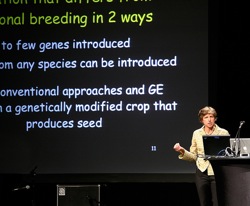
The creators of the purple tomato, a team led by Cathie Martin, tested their fruit in cancer-susceptible mice and found that the animals on a diet of 10 percent powdered purple tomatoes in their pellets lived significantly longer than those eating powdered normal red tomatoes. Her findings were published in the journal Nature Biotechnology.

Continue reading about “Extra Nutritious” Genetically Engineered Food Years Away.

© Washington Post, 2008

Photo by flickr user Pop!Tech
